
The center of worship to God with provisions made for atonement of sins was designed perfectly by God before the Israelites knew they were leaving town! All the materials needed by the skilled artisans, weavers, and those skilled in woodwork and precious metal overlaying, according to God’s specific design, were readily available! God provided. God knew before they knew what would be needed. Before crossing the Red Sea, God commanded the Israelites to take all that would be needed from the hands of those who called God’s People their slaves. And their Egyptian neighbors gave readily! Let’s refresh our memories…
“The Israelites did as Moses instructed and asked the Egyptians for articles of silver and gold and for clothing. 36 The Lord had made the Egyptians favorably disposed toward the people, and they gave them what they asked for; so they plundered the Egyptians.” Exodus 12:35-36
This passage gives us a realization just how much gold, silver, and bronze that God’s people carried out of Egypt to be used in God’s Design for His portable place of meeting with Him. Here are the portions used translated into our system of measurement today:
- Gold: The weight of the gold was a little over a ton or about 1 metric ton.
- Bronze: About 2 1/2 tons or about 2.4 metric tons.
- Silver: About 44 pounds or about 20 kilograms.
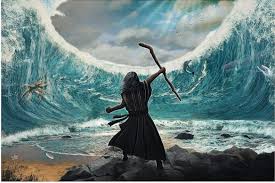
No wonder God provided dry land to cross the Red Sea! Just the weight of their Egyptian plunder on their carts would have created a traffic jam if they got stuck in the mud! And this doesn’t include the amounts they kept for themselves after God said to stop giving, we have enough to build!
Yesterday, we talked about God being in the details. God is always in the details! God is the chief Designer of Details! God loves helping us in all the details of our lives today! God knows what we need to do today so that we can fulfil what God’s plan will be for tomorrow. Could this be why Jesus emphasized the “don’t worry” part of his sermon on the Mount? Probably, because we so easily forget that God, not us, is the One in control and is in all the details! When we say, “God’s got this”, do we really believe it?
“Therefore I tell you, do not worry about your life, what you will eat or drink; or about your body, what you will wear. Is not life more than food, and the body more than clothes? Look at the birds of the air; they do not sow or reap or store away in barns, and yet your heavenly Father feeds them. Are you not much more valuable than they? Can any one of you by worrying add a single hour to your life?

“And why do you worry about clothes? See how the flowers of the field grow. They do not labor or spin. Yet I tell you that not even Solomon in all his splendor was dressed like one of these. If that is how God clothes the grass of the field, which is here today and tomorrow is thrown into the fire, will he not much more clothe you—you of little faith? So do not worry, saying, ‘What shall we eat?’ or ‘What shall we drink?’ or ‘What shall we wear?’ For the pagans run after all these things, and your heavenly Father knows that you need them. But seek first his kingdom and his righteousness, and all these things will be given to you as well. Therefore do not worry about tomorrow, for tomorrow will worry about itself. Each day has enough trouble of its own.”—Jesus, Matthew 6:25-34

Like me, I’m sure that you could tell wonderful stories of God’s provision—even before you knew you would need it! I can and have many times in these writings. God not only provides, God protects us by shutting doors, (and the windows), of those things that will hinder our relationship with Him and do harm to our hearts, minds, and souls.
There are many trials provided by our imperfect world that will test our faith—we don’t need to add more pain through trials produced of our own making by foolishly disobeying God! Trust and obey!
Exodus 38
The Altar of Burnt Offering
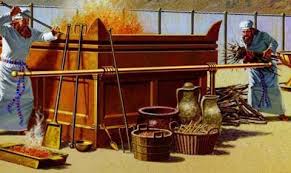
38 They built the altar of burnt offering of acacia wood, three cubits high; it was square, five cubits long and five cubits wide. 2 They made a horn at each of the four corners, so that the horns and the altar were of one piece, and they overlaid the altar with bronze. 3 They made all its utensils of bronze—its pots, shovels, sprinkling bowls, meat forks and firepans. 4 They made a grating for the altar, a bronze network, to be under its ledge, halfway up the altar. 5 They cast bronze rings to hold the poles for the four corners of the bronze grating. 6 They made the poles of acacia wood and overlaid them with bronze. 7 They inserted the poles into the rings so they would be on the sides of the altar for carrying it. They made it hollow, out of boards.
The Basin for Washing
8 They made the bronze basin and its bronze stand from the mirrors of the women who served at the entrance to the tent of meeting.
The Courtyard
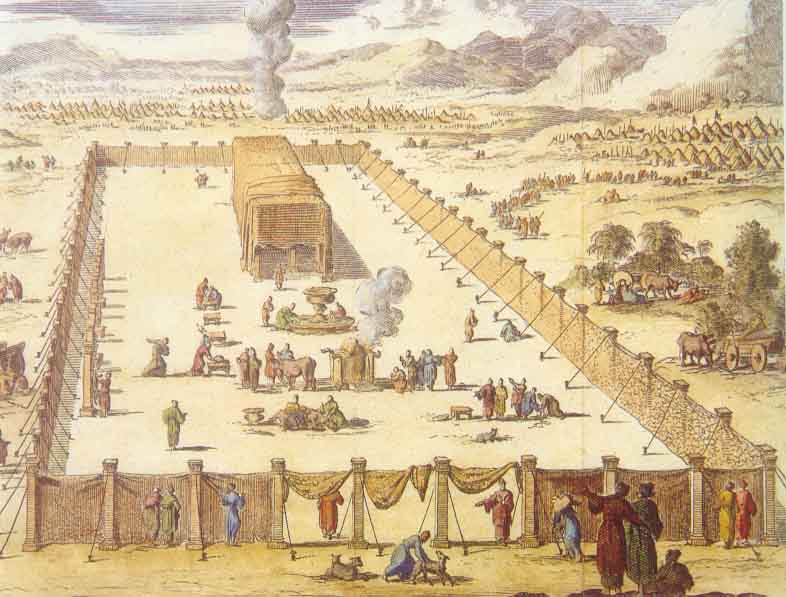
9 Next they made the courtyard. The south side was a hundred cubits long and had curtains of finely twisted linen, 10 with twenty posts and twenty bronze bases, and with silver hooks and bands on the posts. 11 The north side was also a hundred cubits long and had twenty posts and twenty bronze bases, with silver hooks and bands on the posts.
12 The west end was fifty cubits wide and had curtains, with ten posts and ten bases, with silver hooks and bands on the posts. 13 The east end, toward the sunrise, was also fifty cubits wide. 14 Curtains fifteen cubits long were on one side of the entrance, with three posts and three bases, 15 and curtains fifteen cubits long were on the other side of the entrance to the courtyard, with three posts and three bases. 16 All the curtains around the courtyard were of finely twisted linen. 17 The bases for the posts were bronze. The hooks and bands on the posts were silver, and their tops were overlaid with silver; so all the posts of the courtyard had silver bands.
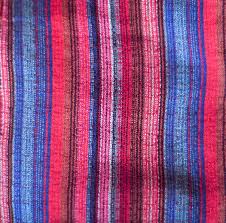
18 The curtain for the entrance to the courtyard was made of blue, purple and scarlet yarn and finely twisted linen—the work of an embroiderer. It was twenty cubits long and, like the curtains of the courtyard, five cubits high, 19 with four posts and four bronze bases. Their hooks and bands were silver, and their tops were overlaid with silver. 20 All the tent pegs of the tabernacle and of the surrounding courtyard were bronze.

The Materials Used
21 These are the amounts of the materials used for the tabernacle, the tabernacle of the covenant law, which were recorded at Moses’ command by the Levites under the direction of Ithamar son of Aaron, the priest. 22 (Bezalel son of Uri, the son of Hur, of the tribe of Judah, made everything the Lord commanded Moses; 23 with him was Oholiab son of Ahisamak, of the tribe of Dan—an engraver and designer, and an embroiderer in blue, purple and scarlet yarn and fine linen.) 24 The total amount of the gold from the wave offering used for all the work on the sanctuary was 29 talents and 730 shekels, according to the sanctuary shekel.
25 The silver obtained from those of the community who were counted in the census was 100 talents and 1,775 shekels, according to the sanctuary shekel— 26 one beka per person, that is, half a shekel, according to the sanctuary shekel, from everyone who had crossed over to those counted, twenty years old or more, a total of 603,550 men. 27 The 100 talents of silver were used to cast the bases for the sanctuary and for the curtain—100 bases from the 100 talents, one talent for each base. 28 They used the 1,775 shekels to make the hooks for the posts, to overlay the tops of the posts, and to make their bands.
29 The bronze from the wave offering was 70 talents and 2,400 shekels. 30 They used it to make the bases for the entrance to the tent of meeting, the bronze altar with its bronze grating and all its utensils, 31 the bases for the surrounding courtyard and those for its entrance and all the tent pegs for the tabernacle and those for the surrounding courtyard.
WHAT DO WE LEARN—HOW DO WE RESPOND?
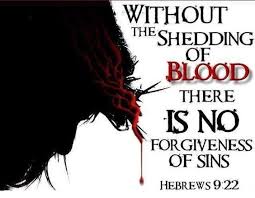
“In fact, the law requires that nearly everything be cleansed with blood, and without the shedding of blood there is no forgiveness.” Hebrews 9:22
The bronze altar was a place of bloodshed and death, for “without shedding of blood there is no forgiveness”—pause and let those words sink deep. If a sinner could manage to enter the tabernacle courtyard and wash in the laver, that wouldn’t save him. Nor would he be forgiven if he entered the Holy Place and ate the bread or burned the incense. The way into the presence of God began at the bronze altar, where innocent victims (unblemished animals offered as a sacrifice) died for guilty sinners.
This brings us once again to Calvary where the Son of God died for the sins of the world, once and for all sinners. (See Matthew 26:26–28; John 1:29; 3:14–16; Romans 5:8; 1 Peter 2:24). Jesus, the one who knew no sin and was without sin, took all the sins of the world upon his shoulders and willingly laid down his life in sacrifice for our sins. Jesus paid it all. We come to the altar today to tell Jesus thank you with a repentant, humbled heart of faith that believes He removed all our sins so that we could be free from them—forever!
How do we respond?
- Believe in all the details that God designed from the beginning until now that led to our salvation.
- Seek God and ask for His wisdom to follow all His details that include receiving His love, remaining in His love, so that we may love Him back and love each other with His love in us.
- Follow Jesus in all the details that He provided in His Word to us. Jesus is the Word! (John 1:1)
- Live redeemed lives with expectant hope of eternal life that dissolves our propensity to worry and fear.
Lord,
You have provided all we need to live with expectant Hope. Our future is secured because you fulfilled all the details to provide for us. Thank you for removing our sins as we repent them to you. Thank you for being in all the details of my life. I trust you with my life because you are Life!
In Jesus Name, for our good, and Your Glory, Amen!

 Daily Manna (Coffee with Jesus)