

It was not fun when the chicken pox spread throughout our children’s elementary school near the close of the school year. We spent the first weeks of summer vacation tending to the itchy, swollen rashes that wreaked havoc on their skin. “I even itch on the inside” was the pitiful cry of one of our kids. I didn’t know there was an epidemic until it came to our house. I didn’t notice anything wrong until I bathed both of our girls in the same tub of water and saw the first bumps on our oldest daughter. By then it was too late. Both were exposed, then later our son. The days of isolation for all of us was challenging but we got through it.
Skin diseases are noticed by anyone glancing at you and immediately signal that something might be wrong. We all work hard to avoid being exposed to what might be spreading, don’t we? In the days of Moses, it was imperative for God to create a system for regulating the health of the hundreds of thousands of people traveling together through the desert wilderness. Imagine it! There are no doctors, as such. So, God gave medical oversight to His priests who will have the authority to examine skin abnormalities to prevent the spreading of disease. They are under the leading and guidance of The Great Physician who created us. God, as always, is very detailed.
Leviticus 13
Regulations About Defiling Skin Diseases

The Lord said to Moses and Aaron, 2 “When anyone has a swelling or a rash or a shiny spot on their skin that may be a defiling skin disease, they must be brought to Aaron the priest or to one of his sons who is a priest. 3 The priest is to examine the sore on the skin, and if the hair in the sore has turned white and the sore appears to be more than skin deep, it is a defiling skin disease. When the priest examines that person, he shall pronounce them ceremonially unclean. 4 If the shiny spot on the skin is white but does not appear to be more than skin deep and the hair in it has not turned white, the priest is to isolate the affected person for seven days. 5 On the seventh day the priest is to examine them, and if he sees that the sore is unchanged and has not spread in the skin, he is to isolate them for another seven days. 6 On the seventh day the priest is to examine them again, and if the sore has faded and has not spread in the skin, the priest shall pronounce them clean; it is only a rash. They must wash their clothes, and they will be clean. 7 But if the rash does spread in their skin after they have shown themselves to the priest to be pronounced clean, they must appear before the priest again. 8 The priest is to examine that person, and if the rash has spread in the skin, he shall pronounce them unclean; it is a defiling skin disease.

9 “When anyone has a defiling skin disease, they must be brought to the priest. 10 The priest is to examine them, and if there is a white swelling in the skin that has turned the hair white and if there is raw flesh in the swelling, 11 it is a chronic skin disease and the priest shall pronounce them unclean. He is not to isolate them, because they are already unclean.
12 “If the disease breaks out all over their skin and, so far as the priest can see, it covers all the skin of the affected person from head to foot, 13 the priest is to examine them, and if the disease has covered their whole body, he shall pronounce them clean. Since it has all turned white, they are clean. 14 But whenever raw flesh appears on them, they will be unclean. 15 When the priest sees the raw flesh, he shall pronounce them unclean. The raw flesh is unclean; they have a defiling disease. 16 If the raw flesh changes and turns white, they must go to the priest. 17 The priest is to examine them, and if the sores have turned white, the priest shall pronounce the affected person clean; then they will be clean.

18 “When someone has a boil on their skin and it heals, 19 and in the place where the boil was, a white swelling or reddish-white spot appears, they must present themselves to the priest. 20 The priest is to examine it, and if it appears to be more than skin deep and the hair in it has turned white, the priest shall pronounce that person unclean. It is a defiling skin disease that has broken out where the boil was. 21 But if, when the priest examines it, there is no white hair in it and it is not more than skin deep and has faded, then the priest is to isolate them for seven days. 22 If it is spreading in the skin, the priest shall pronounce them unclean; it is a defiling disease. 23 But if the spot is unchanged and has not spread, it is only a scar from the boil, and the priest shall pronounce them clean.
24 “When someone has a burn on their skin and a reddish-white or white spot appears in the raw flesh of the burn, 25 the priest is to examine the spot, and if the hair in it has turned white, and it appears to be more than skin deep, it is a defiling disease that has broken out in the burn. The priest shall pronounce them unclean; it is a defiling skin disease. 26 But if the priest examines it and there is no white hair in the spot and if it is not more than skin deep and has faded, then the priest is to isolate them for seven days. 27 On the seventh day the priest is to examine that person, and if it is spreading in the skin, the priest shall pronounce them unclean; it is a defiling skin disease. 28 If, however, the spot is unchanged and has not spread in the skin but has faded, it is a swelling from the burn, and the priest shall pronounce them clean; it is only a scar from the burn.
29 “If a man or woman has a sore on their head or chin, 30 the priest is to examine the sore, and if it appears to be more than skin deep and the hair in it is yellow and thin, the priest shall pronounce them unclean; it is a defiling skin disease on the head or chin. 31 But if, when the priest examines the sore, it does not seem to be more than skin deep and there is no black hair in it, then the priest is to isolate the affected person for seven days. 32 On the seventh day the priest is to examine the sore, and if it has not spread and there is no yellow hair in it and it does not appear to be more than skin deep, 33 then the man or woman must shave themselves, except for the affected area, and the priest is to keep them isolated another seven days. 34 On the seventh day the priest is to examine the sore, and if it has not spread in the skin and appears to be no more than skin deep, the priest shall pronounce them clean. They must wash their clothes, and they will be clean. 35 But if the sore does spread in the skin after they are pronounced clean, 36 the priest is to examine them, and if he finds that the sore has spread in the skin, he does not need to look for yellow hair; they are unclean. 37 If, however, the sore is unchanged so far as the priest can see, and if black hair has grown in it, the affected person is healed. They are clean, and the priest shall pronounce them clean.

38 “When a man or woman has white spots on the skin, 39 the priest is to examine them, and if the spots are dull white, it is a harmless rash that has broken out on the skin; they are clean.
40 “A man who has lost his hair and is bald is clean. 41 If he has lost his hair from the front of his scalp and has a bald forehead, he is clean. 42 But if he has a reddish-white sore on his bald head or forehead, it is a defiling disease breaking out on his head or forehead. 43 The priest is to examine him, and if the swollen sore on his head or forehead is reddish-white like a defiling skin disease, 44 the man is diseased and is unclean. The priest shall pronounce him unclean because of the sore on his head.
45 “Anyone with such a defiling disease must wear torn clothes, let their hair be unkempt, cover the lower part of their face and cry out, ‘Unclean! Unclean!’ 46 As long as they have the disease, they remain unclean. They must live alone; they must live outside the camp.
Regulations About Defiling Molds
47 “As for any fabric that is spoiled with a defiling mold—any woolen or linen clothing, 48 any woven or knitted material of linen or wool, any leather or anything made of leather— 49 if the affected area in the fabric, the leather, the woven or knitted material, or any leather article, is greenish or reddish, it is a defiling mold and must be shown to the priest. 50 The priest is to examine the affected area and isolate the article for seven days. 51 On the seventh day he is to examine it, and if the mold has spread in the fabric, the woven or knitted material, or the leather, whatever its use, it is a persistent defiling mold; the article is unclean. 52 He must burn the fabric, the woven or knitted material of wool or linen, or any leather article that has been spoiled; because the defiling mold is persistent, the article must be burned.
53 “But if, when the priest examines it, the mold has not spread in the fabric, the woven or knitted material, or the leather article, 54 he shall order that the spoiled article be washed. Then he is to isolate it for another seven days. 55 After the article has been washed, the priest is to examine it again, and if the mold has not changed its appearance, even though it has not spread, it is unclean. Burn it, no matter which side of the fabric has been spoiled. 56 If, when the priest examines it, the mold has faded after the article has been washed, he is to tear the spoiled part out of the fabric, the leather, or the woven or knitted material. 57 But if it reappears in the fabric, in the woven or knitted material, or in the leather article, it is a spreading mold; whatever has the mold must be burned. 58 Any fabric, woven or knitted material, or any leather article that has been washed and is rid of the mold, must be washed again. Then it will be clean.”
59 These are the regulations concerning defiling molds in woolen or linen clothing, woven or knitted material, or any leather article, for pronouncing them clean or unclean.
**The Hebrew word for defiling skin disease, traditionally translated “leprosy,” was used for various diseases affecting the skin.
WHAT DO WE LEARN—HOW DO WE RESPOND?

We learn that leprosy was the most dreaded skin disease of all to God’s people. They believed it was infectious so to guard the healthy from exposing others in among family and friends; they were to immediately isolate themselves by living outside the camp until they died of the disease. Leprosy was a flesh-eating disease that caused fear among those who had it or saw it. There was no sign of relief, only an impending slow death. Knowing this makes the healing of Jesus of those with leprosy even more miraculous and compassionately wonderful!
Jesus, The Great Healer, came to heal, save, and set the captive free from not only sin but from being ostracized from the community. Jesus demonstrated the love of God when He showed compassion for the outcasts that no one else dared to touch or come near. Some family members would leave food for the infected but would not touch or extend their love to them in any other way or they would be considered unclean. Imagine being told by Jesus, “who touched them” with His healing Hand to go now and tell the priests you are well! Now, we know the reason they must go the priest who will examine them with authority to pronounce them clean so they can reenter the neighborhood!

How like leprosy is sin! “When desire has conceived, it gives birth to sin; and sin, when it is full-grown, brings forth death” (James 1:15). Sin is also a progressive disease that hinders our growth of an intimate relationship with God that He lovingly desires with us.
Sin unexamined, undiagnosed, and unhealed by not believing in Jesus who died for our sins; affects all those around us and will also lead to death if left unchecked and unresolved. We have a choice of eternal life and a growing relationship with God because of Jesus’ work on the cross—or death.
Warren Wiersbe writes;
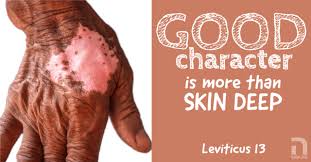
“Sin is more than skin-deep. “The heart is deceitful above all things, and desperately wicked. Who can know it?” (Jeremiah 17:9). The word translated “wicked” in Jeremiah 17:9 means “sick” and can be translated “beyond cure.” Sin is not a surface problem that can be solved with simple remedies, like trying to cure cancer with hand lotion. Sin comes from within, from fallen human nature; unless the heart is changed, there can be no solving of the sin problem. Paul wrote, “I know that in me (that is, in my flesh) nothing good dwells; for to will is present with me, but how to perform what is good I do not find” (Romans 7:18). Those who talk about the “innate goodness of man” know neither the Bible nor their own hearts.”–Wiersbe Study Bible
Why this parallel discussion of skin and sin? As skin illnesses had to be examined by priests and confirmed as clean or unclean; God’s Holy Spirit examines our hearts, minds, and souls; “diagnosing” us of the status of our spiritual health and relationship with God daily.

Jesus told His disciples of God’s Holy Spirit who God would send when Jesus ascended to heaven. God, the Father, Jesus, the Son, and now the Holy Spirit—THREE in one Person, contributing to the spiritual health of our beings created in His image. Amazing!
This truth is a lot to internalize for lost humanity. But when we truly believe what God says about who He is; who Jesus is and what He did to save us; with who the Holy Spirit is and that He lives within us to guide us to spiritual health; we are found!

“All have sinned and fall short of the glory of God,” Paul writes. (Romans 3:23) But the remedy to cleanse us of all sin, to be remembered no more, is accomplished by humbly uttering the words, “I believe you, Jesus. I believe that you died in my place for my sins. My desire is to now follow what you say is right and good. I want to know you, dear Jesus, who is the Way to eternal life with God, our Father. Thank you, for all you have done to give me a healthier spiritual life that knows no bounds in growing in your love, mercy, and grace.” In Jesus Name, Amen, I believe. Our high priest then declares us clean.
Lord,
I believe. And I’m listening.

 Daily Manna (Coffee with Jesus)