

“Cleanliness is next to Godliness,” Grandma Lacquement would often say to guilt me into washing my hands before meals after being outside with farm animals or fishing at the ponds! Grit under my fingernails was not acceptable to Grandma who served delicious meals to us! Dirt on my overalls needed to be brushed off and muddy shoes left at the door before I could join them at the table. Since Grandma was an avid Bible reader, and I felt “next to God”, I assumed this phrase was from God!
While the exact phrase “cleanliness is next to Godliness” does not appear in the Bible, the scriptures emphasize the importance of cleanliness. We learned throughout Leviticus God’s directives with details of various purification rituals required to maintain cleanliness. These rituals were not only about physical hygiene but also about spiritual purification.
The saying “cleanliness is next to godliness” suggests that being clean is nearly as important as being morally upright. It also implies the significance of maintaining personal hygiene and a tidy living environment without passing diseases. In Christianity, however, this idea isn’t just about keeping our bodies and homes clean. It also means keeping our hearts and minds clean. This internal cleanliness involves virtues like kindness, honesty, and faith.

As we read Numbers 5 today of the consequences of uncleanliness let us ask the Holy Spirit to examine our own hearts and evaluate our internal cleanliness. Is our thought life virtuous; thinking, being, and doing what is right and good? Are our heart’s intentions for our good and for God’s glory? Cleanliness means being kind to others, telling the truth, and helping those in need. These good actions and attitudes make our hearts pure. When our hearts are pure, we are more like God wants us to be. The Bible teaches that God looks at the heart, not just our outward actions. So, being clean inside is very important to our faith!
Yes, faith is also a big part of internal cleanliness. Having strong faith means trusting in God and believing in His teachings. It means praying to seek God first, reading the Bible for understanding and application, as we strive to live like Jesus taught us. When we have strong faith, we are spiritually clean. This helps us feel closer to God and live in a way that honors Him. So, “Cleanliness is next to Godliness” reminds us to keep our hearts and minds clean with good virtues and strong faith.
Numbers 5
The Purity of the Camp
The Lord said to Moses, 2 “Command the Israelites to send away from the camp anyone who has a defiling skin disease or a discharge of any kind, or who is ceremonially unclean because of a dead body. 3 Send away male and female alike; send them outside the camp so they will not defile their camp, where I dwell among them.” 4 The Israelites did so; they sent them outside the camp. They did just as the Lord had instructed Moses.
Restitution for Wrongs
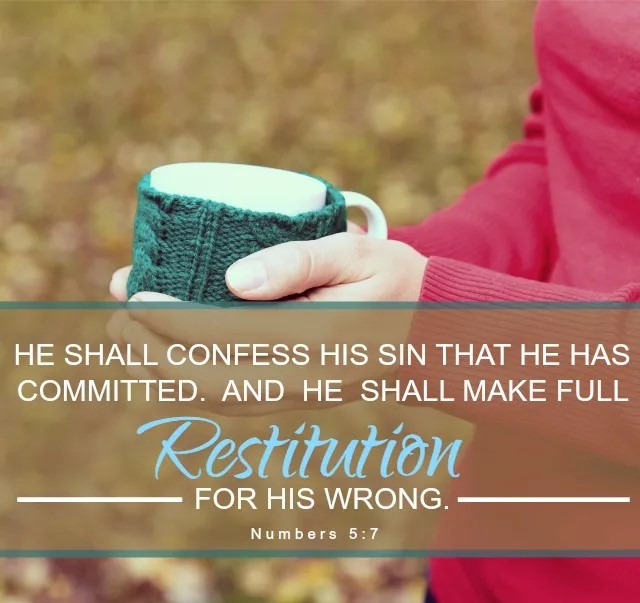
5 The Lord said to Moses, 6 “Say to the Israelites: ‘Any man or woman who wrongs another in any way and so is unfaithful to the Lord is guilty 7 and must confess the sin they have committed. They must make full restitution for the wrong they have done, add a fifth of the value to it and give it all to the person they have wronged. 8 But if that person has no close relative to whom restitution can be made for the wrong, the restitution belongs to the Lord and must be given to the priest, along with the ram with which atonement is made for the wrongdoer. 9 All the sacred contributions the Israelites bring to a priest will belong to him. 10 Sacred things belong to their owners, but what they give to the priest will belong to the priest.’”
The Test for an Unfaithful Wife
11 Then the Lord said to Moses, 12 “Speak to the Israelites and say to them: ‘If a man’s wife goes astray and is unfaithful to him 13 so that another man has sexual relations with her, and this is hidden from her husband and her impurity is undetected (since there is no witness against her and she has not been caught in the act), 14 and if feelings of jealousy come over her husband and he suspects his wife and she is impure—or if he is jealous and suspects her even though she is not impure— 15 then he is to take his wife to the priest. He must also take an offering of a tenth of an ephah of barley flour on her behalf. He must not pour olive oil on it or put incense on it, because it is a grain offering for jealousy, a reminder-offering to draw attention to wrongdoing.
16 “‘The priest shall bring her and have her stand before the Lord. 17 Then he shall take some holy water in a clay jar and put some dust from the tabernacle floor into the water. 18 After the priest has had the woman stand before the Lord, he shall loosen her hair and place in her hands the reminder-offering, the grain offering for jealousy, while he himself holds the bitter water that brings a curse. 19 Then the priest shall put the woman under oath and say to her, “If no other man has had sexual relations with you and you have not gone astray and become impure while married to your husband, may this bitter water that brings a curse not harm you. 20 But if you have gone astray while married to your husband and you have made yourself impure by having sexual relations with a man other than your husband”— 21 here the priest is to put the woman under this curse—“may the Lord cause you to become a curse among your people when he makes your womb miscarry and your abdomen swell. 22 May this water that brings a curse enter your body so that your abdomen swells or your womb miscarries.”
“‘Then the woman is to say, “Amen. So be it.”

23 “‘The priest is to write these curses on a scroll and then wash them off into the bitter water. 24 He shall make the woman drink the bitter water that brings a curse, and this water that brings a curse and causes bitter suffering will enter her. 25 The priest is to take from her hands the grain offering for jealousy, wave it before the Lord and bring it to the altar. 26 The priest is then to take a handful of the grain offering as a memorial offering and burn it on the altar; after that, he is to have the woman drink the water. 27 If she has made herself impure and been unfaithful to her husband, this will be the result: When she is made to drink the water that brings a curse and causes bitter suffering, it will enter her, her abdomen will swell and her womb will miscarry, and she will become a curse. 28 If, however, the woman has not made herself impure, but is clean, she will be cleared of guilt and will be able to have children.
29 “‘This, then, is the law of jealousy when a woman goes astray and makes herself impure while married to her husband, 30 or when feelings of jealousy come over a man because he suspects his wife. The priest is to have her stand before the Lord and is to apply this entire law to her. 31 The husband will be innocent of any wrongdoing, but the woman will bear the consequences of her sin.’”
WHAT DO WE LEARN—HOW DO WE RESPOND?

The concepts of “clean” and “unclean” were vital to sustaining daily life in Israel. Cleanliness involved much more than personal hygiene; it involved being acceptable to God in what they ate, what they wore, and how they conducted themselves at home and in public. The Israelites were in the infancy of their faith, and God used familiar pictures to teach them spiritual truth. He compared sin to disease and defilement and holiness to health and cleanliness (Leviticus 11–15). Unclean people were put out of the camp until they had met the ceremonial requirements for reentry. This was for the protection of the healthy.

In the New Testament, the emphasis shifts more towards inner purity. Jesus teaches that it is not just the outward cleanliness that matters but the purity of the heart. For example; In Matthew 23:25-26, Jesus criticizes the Pharisees for focusing on outward cleanliness while neglecting the cleanliness of their hearts: “Woe to you, teachers of the law and Pharisees, you hypocrites! You clean the outside of the cup and dish, but inside they are full of greed and self-indulgence. Blind Pharisee! First clean the inside of the cup and dish, and then the outside also will be clean.” The priests had all but forgotten God and had lived their lives without Him, demanding from the people what they did not deserve as compensation. God’s system for restitution, atonement, and forgiveness had broken down in translation and application. Jesus, God’s Son, came to set them straight!
Our response as believers in Jesus today is to maintain cleanliness in daily life as an expression of our respect for God’s creation, which includes our bodies. We were “made in the image of God”! The Apostle Paul reminds us in 1 Corinthians 6:19-20 that our bodies are temples of the Holy Spirit and should be treated with respect: “Do you not know that your bodies are temples of the Holy Spirit, who is in you, whom you have received from God? You are not your own; you were bought at a price. Therefore, honor God with your bodies.” This principle extends to our living environments as well. Keeping our homes and surroundings clean reflects our respect for the blessings God has given us to steward or manage. It also creates an environment conducive to worship and fellowship with others! A clean home can be a place where God’s presence is felt while love and hospitality is extended to others.
In addition to physical cleanliness, believers in Jesus are called to pursue spiritual cleanliness. This involves asking the Holy Spirit to guide us in examining our hearts and minds regularly and seeking forgiveness and cleansing from God. Psalm 51:10 is a beautiful prayer that I pray daily and hold dear as I seek God: “Create in me a pure heart, O God, and renew a steadfast spirit within me.” This verse highlights the importance of seeking God’s help in maintaining spiritual purity.

Staying clean is a discipline well worth the investment! May our first thought as we rise each morning be communication with the God who loves us and sent His Son to save us! Paul writes in 1 Thessalonians 5:17 to “pray without ceasing,” which implies quick, inner prayers throughout the day. These honest prayers reflect our desire to be led by God in all the details of life and can be as simple as expressing gratitude or seeking guidance in a moment of need.
Daily reading the Bible is essential to staying “attached to the Vine” of our existence in Truth as a believer! The Bible is daily manna for our souls!
Sharing the Truth with friends who also believe or are on their way to believing is vital to our growing faith while maintaining spiritual cleanliness and wellness. We need each other! Paul speaks of this need often with ways to help each other! All these disciplines help us to stay connected to God and to live lives that reflect His holiness.

Lord,
Cleanse my heart, remove all that does not belong. Renew my mind with your Truth. Transform my behaviors so I will be more like you today than yesterday. Refresh my soul with your tender mercies of correction for today. Restore the joy of your salvation always at work within me. Create in me a pure heart, O Lord.
In Jesus Name, Amen

 Daily Manna (Coffee with Jesus)