

“Wasn’t that the best burger in the world that we had back at the Egyptian Burger Palace?!” “AND, we have never had fish that tasted so good since leaving that part of the country!” “The home we lived in twenty years ago was by far the best place to live—better than this tent!” “Why can’t we have what we had?” “We are not a maximum comfort.” “This desert is too hot and dusty.” “I didn’t sign up for this trip!” “And, just how many times can we eat this manna from heaven that takes no effort on our part to collect each day?!” “Waah…” “I want to go back to where the fish was free—slavery, torture, and bondage wasn’t so bad…”

Wait, what now? What did you just say to Me? God is not pleased with grumbling and complaining. In fact, complaining on the journey will delay the trip and cause irreparable damages in some instances to the Chosen. God who is longsuffering in his compassion for His people, sends a warning fire outside the camp, but will then provide some meat for the journey to go with their manna. Our God is relentlessly faithful—even when we are not.
Grumbling to and about the God who created us, wants the best for us, provides all we need and more and who protects and rescues us from our enemies is dishonored with every word of complaint, worry, overthinking, grumbling, and distain from us over temporary circumstances. We either trust God or we don’t. What we truly believe about God is reflected in what we think, say, and do in challenging circumsstances. There’s no way around it—we just can’t hide it—God knows our hearts!
Numbers 11
Fire From the Lord
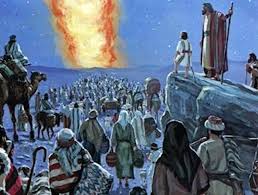
Now the people complained about their hardships in the hearing of the Lord, and when he heard them, his anger was aroused. Then fire from the Lord burned among them and consumed some of the outskirts of the camp. 2 When the people cried out to Moses, he prayed to the Lord and the fire died down. 3 So that place was called Taberah, because fire from the Lord had burned among them.
Quail From the Lord
4 The rabble with them began to crave other food, and again the Israelites started wailing and said, “If only we had meat to eat! 5 We remember the fish we ate in Egypt at no cost—also the cucumbers, melons, leeks, onions and garlic. 6 But now we have lost our appetite; we never see anything but this manna!”
7 The manna was like coriander seed and looked like resin. 8 The people went around gathering it, and then ground it in a hand mill or crushed it in a mortar. They cooked it in a pot or made it into loaves. And it tasted like something made with olive oil. 9 When the dew settled on the camp at night, the manna also came down.

10 Moses heard the people of every family wailing at the entrance to their tents. The Lord became exceedingly angry, and Moses was troubled. 11 He asked the Lord, “Why have you brought this trouble on your servant? What have I done to displease you that you put the burden of all these people on me? 12 Did I conceive all these people? Did I give them birth? Why do you tell me to carry them in my arms, as a nurse carries an infant, to the land you promised on oath to their ancestors? 13 Where can I get meat for all these people? They keep wailing to me, ‘Give us meat to eat!’ 14 I cannot carry all these people by myself; the burden is too heavy for me. 15 If this is how you are going to treat me, please go ahead and kill me—if I have found favor in your eyes—and do not let me face my own ruin.”

16 The Lord said to Moses: “Bring me seventy of Israel’s elders who are known to you as leaders and officials among the people. Have them come to the tent of meeting, that they may stand there with you. 17 I will come down and speak with you there, and I will take some of the power of the Spirit that is on you and put it on them. They will share the burden of the people with you so that you will not have to carry it alone.
18 “Tell the people: ‘Consecrate yourselves in preparation for tomorrow, when you will eat meat. The Lord heard you when you wailed, “If only we had meat to eat! We were better off in Egypt!” Now the Lord will give you meat, and you will eat it. 19 You will not eat it for just one day, or two days, or five, ten or twenty days, 20 but for a whole month—until it comes out of your nostrils and you loathe it—because you have rejected the Lord, who is among you, and have wailed before him, saying, “Why did we ever leave Egypt?”’”
21 But Moses said, “Here I am among six hundred thousand men on foot, and you say, ‘I will give them meat to eat for a whole month!’ 22 Would they have enough if flocks and herds were slaughtered for them? Would they have enough if all the fish in the sea were caught for them?”
23 The Lord answered Moses, “Is the Lord’s arm too short?Now you will see whether or not what I say will come true for you.”
24 So Moses went out and told the people what the Lord had said. He brought together seventy of their elders and had them stand around the tent. 25 Then the Lord came down in the cloud and spoke with him, and he took some of the power of the Spirit that was on him and put it on the seventy elders. When the Spirit rested on them, they prophesied—but did not do so again.
26 However, two men, whose names were Eldad and Medad, had remained in the camp. They were listed among the elders, but did not go out to the tent. Yet the Spirit also rested on them, and they prophesied in the camp. 27 A young man ran and told Moses, “Eldad and Medad are prophesying in the camp.”

28 Joshua son of Nun, who had been Moses’ aide since youth, spoke up and said, “Moses, my lord, stop them!”
29 But Moses replied, “Are you jealous for my sake? I wish that all the Lord’s people were prophets and that the Lord would put his Spirit on them!” 30 Then Moses and the elders of Israel returned to the camp.

31 Now a wind went out from the Lord and drove quail in from the sea. It scattered them up to two cubits deep all around the camp, as far as a day’s walk in any direction. 32 All that day and night and all the next day the people went out and gathered quail. No one gathered less than ten homers. Then they spread them out all around the camp. 33 But while the meat was still between their teeth and before it could be consumed, the anger of the Lord burned against the people, and he struck them with a severe plague. 34 Therefore the place was named Kibroth Hattaavah, because there they buried the people who had craved other food.
35 From Kibroth Hattaavah the people traveled to Hazeroth and stayed there.
WHAT DO WE LEARN—HOW DO WE RESPOND?

Moses was the first to hear the whiny wailings of God’s People. “Can’t you do something, Moses?” “Where’s the beef?” “We want meat!” “Go tell God what we want!”
Moses response? “Just kill me now, God!”
The Middle Man Moses heard it all. Having been a pastor’s wife and a leader in ministry myself, I easily and readily feel the pain of Moses who is grieved over the grumblings of the people in his care. Moses is frustrated, so painfully frustrated in fact, that he does indeed go to God, like the people said to do; but Moses has very different questions for God. God had holy, profound answers that helped Moses beyond his humanness. “Gather 70 elders who will stand with you.” “I will speak and pour out the power of my spirit over them.” Wow! Let that sink in…
“I sought the Lord and He heard and He answered,
I sought the Lord and He heard and He answered,
I sought the Lord and He heard and He answered,
That’s why I trust Him, that’s why I trust Him…”
Can you hear “Trust in God” by Elevation Worship playing in the background of this story of God in our lives?

I ponder this often. Many of us in the God’s church jump to conclusions and ask the wrong questions of leaders and of God. We approach problems with human first attempts of blame, explain, and reframe. We want to first place blame it on someone—even God, Himself! We want circumstances, pain, troubles and even death explained so we surmise, assume, and presume answers with our limited human brains. When all else fails; we reframe the situation so that it fits into our own understanding of what life should be in our estimation and evaluation. Yikes. And then we grumble when these tactics don’t satisfy our need to know. Ugh. Humbled again.

How about humbly asking God what HE wants? (Pause, reflect, repent, ask, be still and listen.) How about asking God what He wants us to learn, know, and apply to our lives as we trust and obey Him? How about trusting God no matter what is happening around us? Moses is the leader of hundreds of thousands of people who goes immediately to God for answers. God heard and He answered—in power! That’s how God works on our behalf!
Do not read into what I am about to say with political fervor. It is not my intent to make a political statement but to express a mournful, spiritual concern over our behaviors as believers that grieved my heart in this decade. Our worldwide Covid Calamity tested our faith, resolve, trust, and most of all, our witness to a world in need of a Savior. I was disappointed and heartbroken observing and hearing distasteful, unbiblical comments from believers of Jesus—attenders, part of the Body of Christ, called church. Instead of showing compassion for all people, obeying those in authority; we grumbled and whined over the situation of restrictions placed upon us for our own protection! We took sides and fought with each other rudely over how to minister to people in ways to keep covid from spreading in efforts to keep people safe. As church leaders, we heard it all, along with “if you just had enough faith…you would let us do what we want to do.” And like Moses, we might have mumbled, “just kill me, now, Lord.”

Through it all, many of us missed great opportunities to show the love of God through Jesus’ example to a dying world—both physically and spiritually. But many of us, instead, proved to the world that church is not for them. Where is the love? People are still seeking.
The people who complain the most about God and their spiritual leaders end up coming to those leaders for help! How gracious Moses was to intercede on their behalf, and how like our Lord Jesus Christ, when from the cross He prayed; “Father, forgive them, for they do not know what they do” (Luke 23:34). More than once when Israel sinned, it was the intercession of Moses that stayed God’s hand of judgment. On one occasion, Moses even offered to die so that Israel might be spared (Exodus 32:30–35). Isn’t this what Jesus did for us? Die in our place? (The answer is yes.)


How tragic it is when professed believers in churches crave substitutes from the world instead of desiring the heavenly manna of the Word of God (Matthew 4:4; John 6:66–69). It isn’t always enemies outside the local church who do the damage but counterfeiters who get inside the church fellowship (Acts 20:28–30; 3 John 9–11). These intruders might march with the church crowd and act like they are God’s people, but they don’t have an appetite for spiritual things, and eventually their true allegiance is revealed (1 John 2:18, 19). “All have sinned and fall short of the glory of God” in living our lives. So, be careful in judging and especially in critcizing. Jesus taught, “we must take the log from our own eye before taking the splinter from another’s eye” in criticism and sarcastic judgement. This deed blocks our view of God.

So, we learn that it is a serious mistake to complain against the Lord, attack His servants, and ask for “religious substitutes” that satisfy our fleshly desires. These murmurers in Israel were eventually judged by God and used by Paul as a warning to the churches today (1 Corinthians 10:10). “Do all things without complaining and disputing” (Philippians 2:14). An unthankful heart makes it easier for people to commit all kinds of sins (Romans 1:21). Gratitude deflects our grumpy attitude.
Few experiences discourage God’s servants more than people criticizing them unjustly and complaining about the blessings the Lord has given. I’ve heard it said by an elder; “Want a better pastor? Pray for him/her.”

“The Lord had warned Israel that the way they treated the daily manna would be a test of their obedience to His Word. In rejecting the manna, Israel really rejected the Lord, and it was this rebellious attitude that invited the judgment of God. This reminds us that the way we treat God’s Word is the way we treat the Lord Himself. To ignore the Word, treat it carelessly, or willfully disobey it is to ask for the discipline of God (Hebrews 12:5–11). Instead of feeding on the things of the world that bring death, let’s cultivate an appetite for the holy Word of God (Job 23:12; Psalm 1:1; Jeremiah 15:16; Matthew 4:4; Luke 10:38–42; 1 Peter 2:1–3).”—Warren Wiersbe, Wiersbe Study Bible
Lord, God of Heaven and Earth,
Help us. Lead us. Bless us and keep us; may your face shine on us and be gracious to us; and may the Lord turn your face toward us and give us peace. Thank you, Lord.
In Jesus Name, for our good and Your Glory, Amen

 Daily Manna (Coffee with Jesus)