
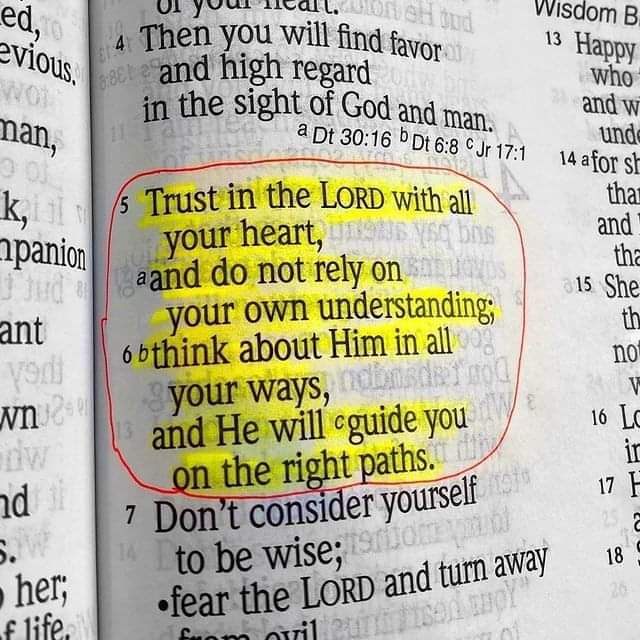
“Lord, God, we have looked over all possibilities and have arrived at this place.” It has all we need and want! It will satisfy all our needs to flourish in this world. If you love us like you say, I’m sure you will give this to us. It just makes sense…to us. I’m sure you will agree with our reasoning.
Our prayers can be less than admirable when we place our limited perspective above God’s all-knowing view of the world. We are told through God’s Word that it is good to come to Him with a humbled, sincere heart as we “present all our requests to God” but we must listen to His response and comply with His detailed answers. God’s view is from a higher, greater place that humans can only slightly imagine. We can only see what is in front of us. God sees what lies ahead. Listen to God. He listens to us!
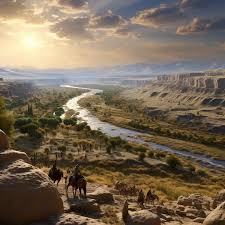
Three of the twelve tribes of Israel have come to Moses with what seems to them as a perfectly reasonable request. They are asking to reside east rather than west of the Jordan to purposely secure their flocks in simple livestock pens. The pens’ four stone walls would be built tall enough to keep out predatory animals and thieves. Then the men of the tribes would be free to help the other nine tribes west of the Jordan. Makes sense, right?
Moses, (who has experience in placing self before God and punished for it with God commanding that he and his generation would not enter the Promised Land) asked that the tribes that took land on the east side of the Jordan would help the other tribes on the western side to conquer their land. If they refused to do this, Moses said they would be sinning against the Lord and their sin would find them out. –A stern warning!
Let see how they will respond…
Numbers 32
The Transjordan Tribes
The Reubenites and Gadites, who had very large herds and flocks, saw that the lands of Jazer and Gilead were suitable for livestock. 2 So they came to Moses and Eleazar the priest and to the leaders of the community, and said, 3 “Ataroth, Dibon, Jazer, Nimrah, Heshbon, Elealeh, Sebam, Nebo and Beon— 4 the land the Lord subdued before the people of Israel—are suitable for livestock, and your servants have livestock. 5 If we have found favor in your eyes,” they said, “let this land be given to your servants as our possession. Do not make us cross the Jordan.”
6 Moses said to the Gadites and Reubenites, “Should your fellow Israelites go to war while you sit here? 7 Why do you discourage the Israelites from crossing over into the land the Lord has given them? 8 This is what your fathers did when I sent them from Kadesh Barnea to look over the land. 9 After they went up to the Valley of Eshkol and viewed the land, they discouraged the Israelites from entering the land the Lord had given them. 10 The Lord’s anger was aroused that day and he swore this oath: 11 ‘Because they have not followed me wholeheartedly, not one of those who were twenty years old or more when they came up out of Egypt will see the land I promised on oath to Abraham, Isaac and Jacob— 12 not one except Caleb son of Jephunneh the Kenizzite and Joshua son of Nun, for they followed the Lord wholeheartedly.’ 13 The Lord’s anger burned against Israel and he made them wander in the wilderness forty years, until the whole generation of those who had done evil in his sight was gone.
14 “And here you are, a brood of sinners, standing in the place of your fathers and making the Lord even more angry with Israel. 15 If you turn away from following him, he will again leave all this people in the wilderness, and you will be the cause of their destruction.”
16 Then they came up to him and said, “We would like to build pens here for our livestock and cities for our women and children. 17 But we will arm ourselves for battle and go ahead of the Israelites until we have brought them to their place. Meanwhile our women and children will live in fortified cities, for protection from the inhabitants of the land. 18 We will not return to our homes until each of the Israelites has received their inheritance. 19 We will not receive any inheritance with them on the other side of the Jordan, because our inheritance has come to us on the east side of the Jordan.”
20 Then Moses said to them, “If you will do this—if you will arm yourselves before the Lord for battle 21 and if all of you who are armed cross over the Jordan before the Lord until he has driven his enemies out before him— 22 then when the land is subdued before the Lord, you may return and be free from your obligation to the Lord and to Israel. And this land will be your possession before the Lord.
23 “But if you fail to do this, you will be sinning against the Lord; and you may be sure that your sin will find you out. 24 Build cities for your women and children, and pens for your flocks, but do what you have promised.”
25 The Gadites and Reubenites said to Moses, “We your servants will do as our lord commands. 26 Our children and wives, our flocks and herds will remain here in the cities of Gilead. 27 But your servants, every man who is armed for battle, will cross over to fight before the Lord, just as our lord says.”
28 Then Moses gave orders about them to Eleazar the priest and Joshua son of Nun and to the family heads of the Israelite tribes. 29 He said to them, “If the Gadites and Reubenites, every man armed for battle, cross over the Jordan with you before the Lord, then when the land is subdued before you, you must give them the land of Gilead as their possession. 30 But if they do not cross over with you armed, they must accept their possession with you in Canaan.”
31 The Gadites and Reubenites answered, “Your servants will do what the Lord has said. 32 We will cross over before the Lord into Canaan armed, but the property we inherit will be on this side of the Jordan.”
33 Then Moses gave to the Gadites, the Reubenites and the half-tribe of Manasseh son of Joseph the kingdom of Sihon king of the Amorites and the kingdom of Og king of Bashan—the whole land with its cities and the territory around them.
34 The Gadites built up Dibon, Ataroth, Aroer, 35 Atroth Shophan, Jazer, Jogbehah, 36 Beth Nimrah and Beth Haran as fortified cities, and built pens for their flocks. 37 And the Reubenites rebuilt Heshbon, Elealeh and Kiriathaim, 38 as well as Nebo and Baal Meon (these names were changed) and Sibmah. They gave names to the cities they rebuilt.
39 The descendants of Makir son of Manasseh went to Gilead, captured it and drove out the Amorites who were there. 40 So Moses gave Gilead to the Makirites, the descendants of Manasseh, and they settled there. 41 Jair, a descendant of Manasseh, captured their settlements and called them Havvoth Jair. 42 And Nobah captured Kenath and its surrounding settlements and called it Nobah after himself.
WHAT DO WE LEARN—HOW DO WE RESPOND?

“Your sins will find you out.” Have you found this to be true? I have. Most humans do for our hearts hunger for God but our sin stands in the way of our view of God. Until we reconcile with God, His Holy Spirit will disrupt our sleep of rest and removes our peace. Why? Because God wants to take away your sin. Can a mom or dad stand idly by while drugs invade their child? Can God sit idly as sin poisons His child? God’s desire is that “no one perish” but have eternal life with Him. So, God will not rest until we do what David did: confess our fault. (2 Samuel 12)
Have you ever known people who thought that they were getting away with sin—and facing no consequences? And what about you and I? Ever thought that we’d fooled our Father God? Consider the words of warning from Moses to the leaders of these three tribes who wanted to stay east of the Jordan: Our sin will always find us out. Far better to talk to God about it, confess it, and have it removed “as far as the east is from the west.”
We trust and stand on the promises of God. Does God trust our promises made? God promised His people land. Three tribes wanted to stay east of Jordan; but they had a reasonable plan and presented it to God. They promised God to help all of the Israelite family fight for their inherited land promised by God on the other side of the Jordan if they could dwell on the east side.
A successful community or nation depends not only on keeping our word and trusting God for victory; it also depends on the loyalty of people to each other. It would seem that the three tribes upheld their promise to God and to His people. Consider Moses’ concern; it was a terrible sin for any of the tribes to retreat from conflict and fail to do their part in conquering the land. Just as the ten spies had discouraged the whole nation at Kadesh Barnea, and led the people into thirty-eight wasted years, so these two tribes could discourage Israel by quitting at the very borders of their inheritance.

Moses repeats their promise with a passionate warning. If they didn’t keep their promise, they would be sinning against the Lord, and their sin would catch up with them! Their sin would be failure to keep their vow and unwillingness to assist their brothers and sisters in the task God had called them to do. The land they requested was theirs, but they would lose it if they didn’t keep their promise.
The three and half tribes drove out the enemies, built pens for their herds, and places of safety for their families. But we can’t help wondering if these Transjordanic tribes made a wise choice. They were outside the land of promise and separated from the rest of the nation. They made their choice only based on personal gain: The land was good for their flocks and herds. Like Lot, they were walking by sight and not by faith (Genesis 13:10, 11). The tribes did keep their promise, but in spite of that, their location across the Jordan created some problems that we will discover later. (Joshua 22).

According to Hebrews 4, claiming the inheritance in the Promised Land is an illustration of the different ways believers today relate to the will of God and the inheritance He has for us now in Jesus Christ.
Some people are like the older generation of Israelites that perished in their wandering and never entered the land. Others are like the ten spies who visited the land and saw its wealth but failed to enter in. The Transjordanic tribes entered the land but didn’t stay there. They preferred to live on the border and raise their cattle.
God wants His people to be like the new generation that trusted God, entered the land, claimed the victory, and enjoyed the blessings.
There’s more here in this passage than meets the eye—but there always is.
Lord,
Thank you for teaching us how to respond to you as fully committed servants with complete trust and faith in You. We might see limited options for fulfilling what you asked us to be and do; but you must have the final say. You know all that lies ahead for us! May our hope, faith, and love be built on Jesus’ love and righteousness. Help us to be more like the One who saved us and set us free—the Promised Messiah! Thank you, thank you, thank you! Speak to our hearts…I’m listening.
In Jesus Name, For Your Glory, Amen

 Daily Manna (Coffee with Jesus)