

“While Jesus was in Bethany in the home of Simon the Leper, a woman came to him with an alabaster jar of very expensive perfume, which she poured on his head as he was reclining at the table.
When the disciples saw this, they were indignant. “Why this waste?” they asked. “This perfume could have been sold at a high price and the money given to the poor.”
Aware of this, Jesus said to them, “Why are you bothering this woman? She has done a beautiful thing to me. The poor you will always have with you, but you will not always have me. When she poured this perfume on my body, she did it to prepare me for burial. Truly I tell you, wherever this gospel is preached throughout the world, what she has done will also be told, in memory of her.” Matthew 26:6-13

Jesus immediately came to the defense of Mary because He always protects His own. He rebuked Judas and the other disciples and praised Mary for her loving act of devotion. Nothing given to Jesus in love is ever wasted. Her act of worship not only brought joy to the heart of Jesus and fragrance to the house but also blessing to the whole world. Her devotion encourages us to love and serve Christ with our very best. Such service blesses others in ways that perhaps we will know nothing about until we see Him.
So, we assume poverty can never be overcome, right? It’s a problem that simply can’t be solved, right? Wrong thinking—wrong questions.
Yes, in fact, it just so happens that in saying “The poor you will always have with you,” Jesus was quoting another well-known Biblical phrase – from a well-known passage of the Jewish Torah. Everyone hearing Jesus speak back then would have caught on. We will read this quote today: “If among you, one of your brothers should become poor, in any of your towns within your land that the Lord your God is giving you, you shall not harden your heart or shut your hand against your poor brother, but you shall open your hand to him and lend him sufficient for his need, whatever it may be…For the poor you will always have with you in the land. Therefore I command you, ‘You shall open wide your hand to your brother, to the needy and to the poor, in your land.’” (Deuteronomy 15:7-11)

So, reading Jesus’ words in their original context you can see that His words were meant to spur our generosity towards the poor. “Open wide your hand!” The command to be open-handed towards the poor comes directly from God himself—not apathy and tight-fistedness as we use these words to mean today. So, the next time someone says, “The poor you will always have with you…” Be sure to complete the sentence: “Therefore I command you, ‘You shall open wide your hand to your brother, to the needy and to the poor, in your land.”
Read the same passage from the gospel of John to gain even more insight! Jesus says these words to rebuke Judas who was scornful towards a woman for pouring out her perfume on Jesus. Judas did not say this because he cared about the poor but because he was a thief; as keeper of the money bag, he used to help himself to what was put into it. (John 12:6). So, when we use Jesus’ words to justify not caring about the poor, we are actually repeating the very sin of Judas himself, who was robbing the poor. Yikes!
Let’s go even deeper—(no excuses, just open minds)

Of course, this posture of generosity and open-handedness from Torah to the Master Teacher parallels the rest of Jesus’ life and teachings, starting with the revolutionary song sung by Mary while Jesus was still in the womb:
“He has filled the hungry with good things, and the rich he has sent away empty.” (Luke 1:53)
You can see Jesus fulfilling this prophecy in the feeding of the 5000. “The crowd all ate and were “filled”. (John 6:12) The need of 5000 hungry people was met in that place and time because one little boy was willing to be “open-handed” towards the poor and needy.
Deuteronomy 15
The Year for Canceling Debts

At the end of every seven years you must cancel debts. 2 This is how it is to be done: Every creditor shall cancel any loan they have made to a fellow Israelite. They shall not require payment from anyone among their own people, because the Lord’s time for canceling debts has been proclaimed. 3 You may require payment from a foreigner, but you must cancel any debt your fellow Israelite owes you. 4 However, there need be no poor people among you, for in the land the Lord your God is giving you to possess as your inheritance, he will richly bless you, 5 if only you fully obey the Lord your God and are careful to follow all these commands I am giving you today. 6 For the Lord your God will bless you as he has promised, and you will lend to many nations but will borrow from none. You will rule over many nations but none will rule over you.

7 If anyone is poor among your fellow Israelites in any of the towns of the land the Lord your God is giving you, do not be hardhearted or tightfisted toward them. 8 Rather, be openhanded and freely lend them whatever they need. 9 Be careful not to harbor this wicked thought: “The seventh year, the year for canceling debts, is near,” so that you do not show ill will toward the needy among your fellow Israelites and give them nothing. They may then appeal to the Lord against you, and you will be found guilty of sin. 10 Give generously to them and do so without a grudging heart; then because of this the Lord your God will bless you in all your work and in everything you put your hand to. 11 There will always be poor people in the land. Therefore I command you to be openhanded toward your fellow Israelites who are poor and needy in your land.
Freeing Servants

12 If any of your people—Hebrew men or women—sell themselves to you and serve you six years, in the seventh year you must let them go free. 13 And when you release them, do not send them away empty-handed. 14 Supply them liberally from your flock, your threshing floor and your winepress. Give to them as the Lord your God has blessed you. 15 Remember that you were slaves in Egypt and the Lord your God redeemed you. That is why I give you this command today.
16 But if your servant says to you, “I do not want to leave you,” because he loves you and your family and is well off with you, 17 then take an awl and push it through his earlobe into the door, and he will become your servant for life. Do the same for your female servant.
18 Do not consider it a hardship to set your servant free, because their service to you these six years has been worth twice as much as that of a hired hand. And the Lord your God will bless you in everything you do.
The Firstborn Animals

19 Set apart for the Lord your God every firstborn male of your herds and flocks. Do not put the firstborn of your cows to work, and do not shear the firstborn of your sheep. 20 Each year you and your family are to eat them in the presence of the Lord your God at the place he will choose. 21 If an animal has a defect, is lame or blind, or has any serious flaw, you must not sacrifice it to the Lord your God. 22 You are to eat it in your own towns. Both the ceremonially unclean and the clean may eat it, as if it were gazelle or deer. 23 But you must not eat the blood; pour it out on the ground like water.
WHAT DO WE LEARN—HOW DO WE RESPOND?
Jesus can be seen from Genesis to Revelation. Don’t forget that.
God’s love for us prompts Him to give. “For God so loved the world that he gave his one and only Son, that whoever believes in him shall not perish but have eternal life. For God did not send his Son into the world to condemn the world, but to save the world through him.” John 3:16-17
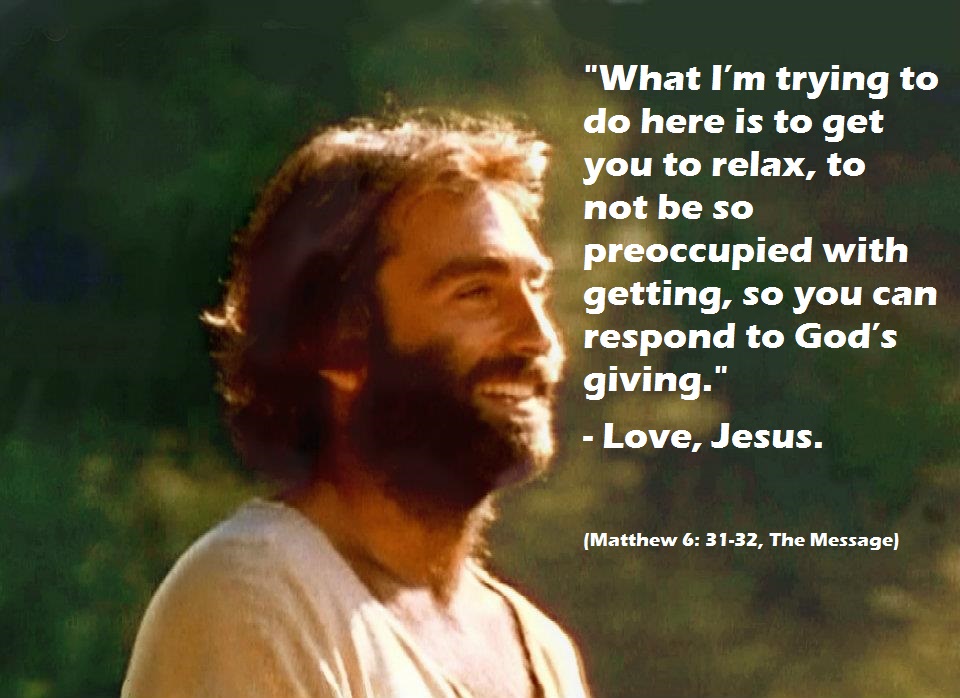
God’s love is in all who believe Jesus for God is love. Our love for God who lives in us in power, the power of His Holy Spirit leading us, guides our response to God in our giving to others. Are we like Judas or Jesus? Are we holding back or giving all? Pause, take all the time you need—I am. Every day of our lives we are given opportunities to give from pure hearts of praise for our God who so generously gives to us!
Jesus taught with words that stirred all hearts, minds, and souls to action. Giving like God has given to us as demonstrated by Jesus, His Son so beautifully and willingly brings me to my knees in pure gratitude. I don’t deserve all He has given to me and has done for me. I gratefully love and praise God for he has met me where I am and refused to leave me there. I have discovered that He is the only One I really need. The poor among us might be super materially rich but poor in knowing the God who gives.
God LOVES a cheerful giver is more that a Sunday School phrase to put on the wall! Giving is in God’s DNA that is passed on to all He has created in His image. Mm.

Oh, but wait, there’s more!
Later, after Jesus’ death, the early believers also took these teachings on open-handedness seriously: And God’s grace was so powerfully at work in them all that there were NO needy persons among them. For from time to time those who owned land or houses sold them, brought the money from the sales, and put it at the apostles’ feet, and it was distributed to anyone who had need. (Acts 4:34-35)
There were no needy persons among them! Poverty was eradicated in their midst. That was the natural outcome of taking Jesus’ teachings seriously. Jesus’ upside-down Kingdom is here and He is calling us to be part of it that includes getting in on the giving! The poor among us are going to be lifted up around us. The hungry are going to be fed. All because God gave first. We are called, actually commanded, to be open-handed but it begins with an open, honest, sincere heart.

So, what are we waiting for? Every day is the day of jubilee—for Christ has risen! He paid all our debts of sin and took our shame in the process! By His Spirit we will rise! So, above all, may Jesus be honored as we give back to God who so generously gave to us. To God be the glory who teaches us how to give in Jesus Name.
Lord,
Lead us to give from hearts of love for You first and then others. We want to get in on the giving gene passed on to us who believe and follow you.
In Jesus Name, Amen

 Daily Manna (Coffee with Jesus)