

DID YOU KNOW…
Long before Disney’s production, the original “Beauty and the Beast” was a fairy tale written by the French novelist Gabrielle-Suzanne Barbot de Villeneuve and published in 1740. Villeneuve’s lengthy version was abridged, rewritten, and published by French novelist Jeanne-Marie Leprince de Beaumont in 1756 to produce the most commonly retold version. Throughout the centuries variants of the tale are known across Europe. In France, for example, Zémire and Azor is an operatic version of the story, written by Jean-François Marmontel and composed by André Grétry in 1771, which had enormous success into the 19th century. According to researchers at universities in Durham and Lisbon, the story originated about 4,000 years ago.
THE ORIGINAL STORY: A widowed merchant lives in a mansion in a city with his twelve children: six sons and six daughters. All his daughters are very beautiful, but the youngest, Beauty, is the loveliest. Beauty is also kind and pure of heart; her elder sisters, in contrast, are cruel, selfish, and jealous of Beauty. The merchant and his children become poor when their house burns down, and his ships are lost. The family of thirteen is forced to move to a small cottage in the countryside and work for a living.

Two years later, the merchant hears that one of his trade ships has returned. Before leaving to retrieve it, and possibly their fortune, he asks his children if they wish for him to bring any gifts back for them. His oldest daughters ask for clothing, jewels, and the finest dresses possible as they think that his wealth has returned. Beauty asks for nothing but her father to return home safely, but when he insists on buying her a present, she is satisfied with the promise of a rose.
When he arrives to the port to see his ship the merchant is dismayed to learn that his colleagues have already sold the cargo, thus leaving him penniless and unable to buy his daughters’ presents. During his trip back home the merchant becomes lost in a vicious snowstorm. Seeking shelter, he comes upon a castle surrounded by lifelike statues. Seeing that no one is home, the merchant sneaks in and finds tables inside laden with food and drink, which seem to have been left for him by the castle’s invisible owner. The merchant accepts this gift and spends the night there.
he next morning, he is about to leave when he sees a rose garden and recalls that Beauty had desired a rose. The merchant quickly plucks the loveliest rose he can find. He is then confronted by a hideous “Beast” who tries to kill him for stealing his most precious possession even after accepting his hospitality. The merchant begs to be let go, revealing that he had only picked the rose as a gift for his youngest daughter. The Beast agrees to let him go, but only if he brings one of his daughters back to live with the Beast instead. He makes it clear that she must agree while under no illusions about her predicament.
The merchant is upset, but accepts this condition for the sake of his own life. The Beast sends him on his way with wealth, jewels, and fine clothes for his sons and daughters, and stresses that he must not lie to his daughters.
Upon arriving home, the merchant hands Beauty the rose she requested and informs her that it had a terrible price, before relaying what had happened during his absence. Her brothers say that they will go to the castle and fight the Beast, while his older daughters refuse to leave and place blame on Beauty, urging her to right her own wrong. The merchant forbids his children from ever going near the Beast. But Beauty willingly decides to go to the Beast’s castle, moving her father who remembers a Romani fortune-teller’s prophecy about his youngest daughter making his household lucky.

Once they arrive at the castle, the Beast receives Beauty with great ceremony. The merchant is sent home with a reward. The Beast gives Beauty lavish clothing, food and entertainment along with animal servants. He visits her each evening to ask her how she is doing. Although they converse at length, he seems unable to express himself well, leading her to assume he is not intelligent. Every night he asks Beauty to let him sleep with her: and she refuses. After each proposal Beauty dreams of a handsome stranger who is imprisoned in the castle, along with an apparition of a fairy who tells her not to be deceived by appearances.
For several months Beauty lives a life of luxury at the Beast’s castle. Her feelings for the man in her dreams and her gratitude toward the Beast come into conflict. When the Beast asks her what is wrong, she pleads homesickness and he sadly allows her to leave, warning her that if she does not return within two months he will die of a broken heart. The Beast gives her an enchanted ring allowing her to return home instantly.
Her sisters are jealous of her good wealth and her brothers demand that she stay home and not go back. But Beauty thinks of the Beast’s broken heart and returns to him. Once she is back in the castle, Beauty’s fears are confirmed as she finds the Beast near death in a cave on the grounds. Seeing this, Beauty is distraught, realizing that she loves him. She fetches water from a nearby spring, which she uses to resuscitate him.
The next night when the Beast proposes, Beauty agrees to marry him. The sky is lit up by a magical fireworks show. That night he goes to bed with her, falling into an enchanted sleep as soon as he lies down. When Beauty wakes up next to him the next morning she finds that the Beast has transformed into the unknown man from her dreams. AND there is a back story to complete that explains the chain of events that led to the marriage of Beauty and the Beast! You can read “the rest of the story” at Wikipedia Encyclopedia!

It only takes one with a pure heart to resolve conflict who wants the best for all concerned. In our story of God in the life of David, Abigal is that person, the intelligent, quick-thinking Beauty who is married to Nabal, a grumpy, cruel, Beast of a man.
1 Samuel 25
David, Nabal and Abigail
Now Samuel died, and all Israel assembled and mourned for him; and they buried him at his home in Ramah. Then David moved down into the Desert of Paran.
2 A certain man in Maon, who had property there at Carmel, was very wealthy. He had a thousand goats and three thousand sheep, which he was shearing in Carmel. 3 His name was Nabal and his wife’s name was Abigail. She was an intelligent and beautiful woman, but her husband was surly and mean in his dealings—he was a Calebite.
4 While David was in the wilderness, he heard that Nabal was shearing sheep. 5 So he sent ten young men and said to them, “Go up to Nabal at Carmel and greet him in my name. 6 Say to him: ‘Long life to you! Good health to you and your household! And good health to all that is yours!
7 “‘Now I hear that it is sheep-shearing time. When your shepherds were with us, we did not mistreat them, and the whole time they were at Carmel nothing of theirs was missing. 8 Ask your own servants and they will tell you. Therefore be favorable toward my men, since we come at a festive time. Please give your servants and your son David whatever you can find for them.’”
9 When David’s men arrived, they gave Nabal this message in David’s name. Then they waited.

10 Nabal answered David’s servants, “Who is this David? Who is this son of Jesse? Many servants are breaking away from their masters these days. 11 Why should I take my bread and water, and the meat I have slaughtered for my shearers, and give it to men coming from who knows where?”
12 David’s men turned around and went back. When they arrived, they reported every word. 13 David said to his men, “Each of you strap on your sword!” So they did, and David strapped his on as well. About four hundred men went up with David, while two hundred stayed with the supplies.
14 One of the servants told Abigail, Nabal’s wife, “David sent messengers from the wilderness to give our master his greetings, but he hurled insults at them. 15 Yet these men were very good to us. They did not mistreat us, and the whole time we were out in the fields near them nothing was missing. 16 Night and day they were a wall around us the whole time we were herding our sheep near them. 17 Now think it over and see what you can do, because disaster is hanging over our master and his whole household. He is such a wicked man that no one can talk to him.”

18 Abigail acted quickly. She took two hundred loaves of bread, two skins of wine, five dressed sheep, five seahs of roasted grain, a hundred cakes of raisins and two hundred cakes of pressed figs, and loaded them on donkeys. 19 Then she told her servants, “Go on ahead; I’ll follow you.” But she did not tell her husband Nabal.
20 As she came riding her donkey into a mountain ravine, there were David and his men descending toward her, and she met them. 21 David had just said, “It’s been useless—all my watching over this fellow’s property in the wilderness so that nothing of his was missing. He has paid me back evil for good. 22 May God deal with David, be it ever so severely, if by morning I leave alive one male of all who belong to him!”
23 When Abigail saw David, she quickly got off her donkey and bowed down before David with her face to the ground. 24 She fell at his feet and said: “Pardon your servant, my lord, and let me speak to you; hear what your servant has to say. 25 Please pay no attention, my lord, to that wicked man Nabal. He is just like his name—his name means Fool, and folly goes with him. And as for me, your servant, I did not see the men my lord sent. 26 And now, my lord, as surely as the Lord your God lives and as you live, since the Lord has kept you from bloodshed and from avenging yourself with your own hands, may your enemies and all who are intent on harming my lord be like Nabal. 27 And let this gift, which your servant has brought to my lord, be given to the men who follow you.

28 “Please forgive your servant’s presumption. The Lord your God will certainly make a lasting dynasty for my lord, because you fight the Lord’s battles, and no wrongdoing will be found in you as long as you live. 29 Even though someone is pursuing you to take your life, the life of my lord will be bound securely in the bundle of the living by the Lord your God, but the lives of your enemies he will hurl away as from the pocket of a sling. 30 When the Lord has fulfilled for my lord every good thing he promised concerning him and has appointed him ruler over Israel, 31 my lord will not have on his conscience the staggering burden of needless bloodshed or of having avenged himself. And when the Lord your God has brought my lord success, remember your servant.”

32 David said to Abigail, “Praise be to the Lord, the God of Israel, who has sent you today to meet me. 33 May you be blessed for your good judgment and for keeping me from bloodshed this day and from avenging myself with my own hands. 34 Otherwise, as surely as the Lord, the God of Israel, lives, who has kept me from harming you, if you had not come quickly to meet me, not one male belonging to Nabal would have been left alive by daybreak.”
35 Then David accepted from her hand what she had brought him and said, “Go home in peace. I have heard your words and granted your request.”
36 When Abigail went to Nabal, he was in the house holding a banquet like that of a king. He was in high spirits and very drunk. So she told him nothing at all until daybreak. 37 Then in the morning, when Nabal was sober, his wife told him all these things, and his heart failed him and he became like a stone. 38 About ten days later, the Lord struck Nabal and he died.
39 When David heard that Nabal was dead, he said, “Praise be to the Lord, who has upheld my cause against Nabal for treating me with contempt. He has kept his servant from doing wrong and has brought Nabal’s wrongdoing down on his own head.”
Then David sent word to Abigail, asking her to become his wife. 40 His servants went to Carmel and said to Abigail, “David has sent us to you to take you to become his wife.”
41 She bowed down with her face to the ground and said, “I am your servant and am ready to serve you and wash the feet of my lord’s servants.” 42 Abigail quickly got on a donkey and, attended by her five female servants, went with David’s messengers and became his wife. 43 David had also married Ahinoam of Jezreel, and they both were his wives. 44 But Saul had given his daughter Michal, David’s wife, to Paltiel son of Laish, who was from Gallim.
WHAT DO WE LEARN—HOW DO WE RESPOND?

There are so many lessons to learn in God’s story of David, Abigail and Nabal that teach us with reminders of better ways to respond to each other. Consider these opportunities of response:
- We may work with “beasts” at work who are surly and mean who deliver consistent negative put downs. Do we deliver meaner comebacks with an effort to put them in their place?
- We might have that one extended family member that we avoid like the plague because of their plague of comments served on a plate of steamy sarcasm. Do seethe with anger and hold grudges against them?
- There might be that person at church who judges harshly and gossips unmercifully. Do we join in as a team sport?
Truth is, everyone has a backstory. This is not an excuse for cruel behavior but merely a fact of life that requires consideration when responding to the beasts in our lives. We can tame a lot of beasts by offering what they seek most—unconditional love with a listening ear. But how? I’m glad you asked…
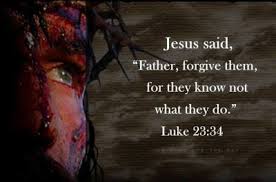
Jesus gives us perfect examples of response:
Jesus taught his followers to respond to others with love, forgiveness, and compassion, even towards enemies and those who mistreat them. This includes turning the other cheek, blessing those who curse them, and praying for those who persecute them. Jesus emphasized serving others, showing mercy, and seeking reconciliation.
Jesus also warned us about judging others because we will be judged in the same manner. Don’t dish out what might be served up to you later in larger portions! Only Jesus is our High Priest, Advocate, and Judge. Jesus is God in the flesh who knows our hearts, our backstories, and our personalities with how we think and will respond. God forgives, forgets, and wants His very best for each one of His created. God is merciful, kind, compassionate, and full of love and grace. To be more like Jesus, we must learn to think and respond like Jesus demonstrated for us.

The gospels overflow with Jesus’ response to the lost, broken, unloved, poor, plagued outcasts of society, abused and hurt from the inside out. Jesus dealt with the “beasts” who were oppressive to others as He walked on earth with His followers. He reminded religious bullies compassionately of what God desired most—for their hearts to return to Him. He fulfilled all God’s saying through His prophets of how His people should respond to those who oppose them with examples of putting those words into action.
Peter, the Rock upon whom Jesus built His church, learned and applied Jesus’ lessons well. He writes;

To this you were called, because Christ suffered for you, leaving you an example, that you should follow in his steps.
“He committed no sin,
and no deceit was found in his mouth.”
When they hurled their insults at him, he did not retaliate; when he suffered, he made no threats. Instead, he entrusted himself to him who judges justly. (1 Peter 2:21–23 NIV)
Pause, reflect prayerfully, allow the Holy Spirit to speak to our hearts…
What is my first thought of response when I’m insulted? Especially when insulted for being a follower of Jesus? Our natural tendency is to insult back, right? And all too often, we give in to that desire, responding to an insult with an insult. But Peter, who learned from Jesus, tells us that there is a better way to respond.
Jesus suffered on our behalf. And He did; Jesus demonstrated the love of God in His response. When Jesus was insulted, He did not respond with insult or threaten those who beat Him and hung Him on a cross. There was no fault to be found in anything He said or did in response to insults and suffering. Instead, He entrusted himself to God, the one who judges justly. Jesus chose to allow the Father to respond for him. “May Your Will be done” were words of resolution to God before going to the cross. He trusted God completely.

Therefore, when someone insults us because of our faith in Jesus; we have a choice. We can insult them back and “beat them over the head” with the Scriptures we know. But when we take that approach; we are failing to follow Jesus’ example. Yes, He quoted scriptures when tempted by Satan our real Enemy in the spiritual rhelms. But when we demonstrate to the one insulting us that we are no different than they are with anger and resentment, we are justifying their rejection of the God we serve. In fact, Jesus showed us how not to retaliate. We can respond to insult with blessing (1 Peter 3:9). That will confuse the one insulting us while demonstrating to them that we are different because of Jesus living in us. We then show them that just maybe there is something to the God we claim to love and serve.
Jesus, who is Peace, taught us to be Peace. Matthew 5:44 says to “love your enemies,” and Matthew 5:9 says peacemakers will be blessed. Luke 6:28 even says, “Bless those who curse you, pray for those who mistreat you.” Abigail demonstrated this truth.

Here are the extended words of Jesus with how to respond perfectly to each other;
“You have heard that it was said, ‘Eye for eye, and tooth for tooth.’ But I tell you, do not resist an evil person. If anyone slaps you on the right cheek, turn to them the other cheek also. And if anyone wants to sue you and take your shirt, hand over your coat as well. If anyone forces you to go one mile, go with them two miles. Give to the one who asks you, and do not turn away from the one who wants to borrow from you.
“You have heard that it was said, ‘Love your neighbor[i] and hate your enemy.’ But I tell you, love your enemies and pray for those who persecute you, that you may be children of your Father in heaven. He causes his sun to rise on the evil and the good, and sends rain on the righteous and the unrighteous. If you love those who love you, what reward will you get? Are not even the tax collectors doing that? And if you greet only your own people, what are you doing more than others? Do not even pagans do that? Be perfect, therefore, as your heavenly Father is perfect.”—Jesus, Matthew 5:38-48.
Oh Lord,
Forgive us our sins as we forgive those who sin against us. Lead us not into temptations of revenge, grudge holding, or resentment but DELIVER us from all evil and evil’s schemes to divide us. Help us by your power working in us.
In Jesus Name, Amen

 Daily Manna (Coffee with Jesus)