
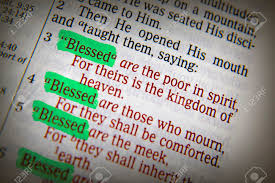
When we hear of the death of a loved one; we immediately begin to mourn their passing. Jesus taught those who congregated on the mountain that day that we are “blessed when we mourn.” When death comes; we realize our immortality as humans. It is a time when believers, saved by the grace, draw near to God who is the Creator of Life, the One who decides the perfect time of passing for each one of us. “Blessed are those who mourn, for they will be comforted,” Jesus teaches on the mountain, Matthew 5:8.
I once read of a legend of a certain culture group who believed that those who are in mourning are considered closest to God at that time of weeping over their loved one. The people line up to give their prayer requests to those who mourn because they feel God is very close to them because in their mourning. Individuals in the community feel the mourners are very near the heart of God and are being specifically heard.

The Good News: God hears every prayer we pray. He answers with His best for us.
“Because he bends down to listen, I will pray as long as I have breath!
Death wrapped its ropes around me; the terrors of the grave overtook me.
I saw only trouble and sorrow.
Then I called on the name of the Lord: ‘Please, Lord, save me!’ How kind the Lord is! How good he is! So merciful, this God of ours!” Psalm 116:1-5
Our prayers are not forgotten.
“And when he had taken it, the four living creatures and the twenty-four elders fell down before the Lamb. Each one had a harp and they were holding golden bowls full of incense, which are the prayers of God’s people.” Revelation 5:8
The concept of stored prayers assures believers that their prayers are not in vain, even if they don’t see immediate results. God treasures and remembers every prayer.

The lament of Ecclesiastes 3 reminds us “there is a time for everything, and a season for every activity under the heavens:
a time to be born and a time to die, a time to plant and a time to uproot,
a time to kill and a time to heal, a time to tear down and a time to build,
a time to weep and a time to laugh, a time to mourn and a time to dance,
a time to scatter stones and a time to gather them,
a time to embrace and a time to refrain from embracing,
a time to search and a time to give up, a time to keep and a time to throw away,
a time to tear and a time to mend, a time to be silent and a time to speak,
a time to love and a time to hate, a time for war and a time for peace.
What do workers gain from their toil? I have seen the burden God has laid on the human race. He has made everything beautiful in its time. He has also set eternity in the human heart; yet no one can fathom what God has done from beginning to end. I know that there is nothing better for people than to be happy and to do good while they live. That each of them may eat and drink, and find satisfaction in all their toil—this is the gift of God. I know that everything God does will endure forever; nothing can be added to it and nothing taken from it. God does it so that people will fear him.” Ecclesiastes 3:1-14
David’s first response to hearing of the death of King Saul and his beloved friend, Jonathan is to mourn. David, the Singer, sings a lament for the fallen as his instinctive response and commands others to sing it with him.
2 Samuel 1
David Hears of Saul’s Death

After the death of Saul, David returned from striking down the Amalekites and stayed in Ziklag two days. 2 On the third day a man arrived from Saul’s camp with his clothes torn and dust on his head. When he came to David, he fell to the ground to pay him honor.
3 “Where have you come from?” David asked him.
He answered, “I have escaped from the Israelite camp.”
4 “What happened?” David asked. “Tell me.”
“The men fled from the battle,” he replied. “Many of them fell and died. And Saul and his son Jonathan are dead.”
5 Then David said to the young man who brought him the report, “How do you know that Saul and his son Jonathan are dead?”
6 “I happened to be on Mount Gilboa,” the young man said, “and there was Saul, leaning on his spear, with the chariots and their drivers in hot pursuit. 7 When he turned around and saw me, he called out to me, and I said, ‘What can I do?’
8 “He asked me, ‘Who are you?’
“‘An Amalekite,’ I answered.
9 “Then he said to me, ‘Stand here by me and kill me! I’m in the throes of death, but I’m still alive.’
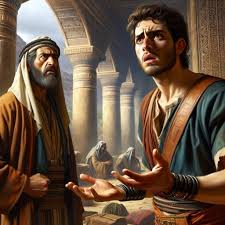
10 “So I stood beside him and killed him, because I knew that after he had fallen he could not survive. And I took the crown that was on his head and the band on his arm and have brought them here to my lord.”
11 Then David and all the men with him took hold of their clothes and tore them. 12 They mourned and wept and fasted till evening for Saul and his son Jonathan, and for the army of the Lord and for the nation of Israel, because they had fallen by the sword.
13 David said to the young man who brought him the report, “Where are you from?”
“I am the son of a foreigner, an Amalekite,” he answered.
14 David asked him, “Why weren’t you afraid to lift your hand to destroy the Lord’s anointed?”
15 Then David called one of his men and said, “Go, strike him down!” So he struck him down, and he died. 16 For David had said to him, “Your blood be on your own head. Your own mouth testified against you when you said, ‘I killed the Lord’s anointed.’”
David’s Lament for Saul and Jonathan

17 David took up this lament concerning Saul and his son Jonathan, 18 and he ordered that the people of Judah be taught this lament of the bow (it is written in the Book of Jashar):
19 “A gazelle lies slain on your heights, Israel.
How the mighty have fallen!
20 “Tell it not in Gath,
proclaim it not in the streets of Ashkelon,
lest the daughters of the Philistines be glad,
lest the daughters of the uncircumcised rejoice.
21 “Mountains of Gilboa,
may you have neither dew nor rain,
may no showers fall on your terraced fields.
For there the shield of the mighty was despised,
the shield of Saul—no longer rubbed with oil.
22 “From the blood of the slain,
from the flesh of the mighty,
the bow of Jonathan did not turn back,
the sword of Saul did not return unsatisfied.
23 Saul and Jonathan—
in life they were loved and admired,
and in death they were not parted.
They were swifter than eagles,
they were stronger than lions.
24 “Daughters of Israel,
weep for Saul,
who clothed you in scarlet and finery,
who adorned your garments with ornaments of gold.
25 “How the mighty have fallen in battle!
Jonathan lies slain on your heights.
26 I grieve for you, Jonathan my brother;
you were very dear to me.
Your love for me was wonderful,
more wonderful than that of women.
27 “How the mighty have fallen!
The weapons of war have perished!”
WHAT DO WE LEARN—HOW DO WE RESPOND?
What “song” do we sing in our mourning of a loved one who has passed? It depends on who we trust with all your heart, mind, and soul and from whom we seek comfort and peace.

“In God’s plan every life is long enough, and every death is timely. And though you and I might wish for a longer life, God knows better.
And—this is important—though you and I may wish a longer life for our loved ones, they don’t. Ironically, the first to accept God’s decision of death is the one who dies.
While we are shaking heads in disbelief, they are lifting hands in worship. While we are mourning at a grave, they are marveling at heaven. While we are questioning God, they are praising God.
“But, Max, what of those who die with no faith? My husband never prayed. My grandpa never worshiped. My mother never opened a Bible, much less her heart. What about the ones who never believed?”
How do we know they didn’t?
Who among us is privy to a person’s final thoughts? Who among us knows what transpires in those final moments? Are you sure no prayer was offered? Eternity can bend the proudest knees. Could a person stare into the yawning canyon of death without whispering a plea for mercy? And could our God, who is partial to the humble, resist it?
He couldn’t on Calvary. The confession of the thief on the cross was both a first and final one. But Christ heard it. Christ received it. Maybe you never heard your loved one confess Christ, but who’s to say Christ didn’t?

We don’t know the final thoughts of a dying soul, but we know this. We know our God is a good God. “The Lord is not slow in keeping his promise, as some understand slowness. Instead he is patient with you, not wanting anyone to perish, but everyone to come to repentance” (2 Peter 3:9). He wants your loved one in heaven more than you do. And he usually gets what he wants.
You know what else God wants? He wants you to face your sorrow. Denial and dismissal are not a part of God’s grief therapy.
David faced his. When he learned of the death of Saul and Jonathan, David and the entire army tore their clothing, wept aloud, and fasted until sunset. His lament was intense and public. David not only sang this dirge, he “ordered that the people of Judah be taught this lament…” –Max Lucado, Encouraging Word Bible Commentary
From the words of David—

“Yea, though I walk through the valley of the shadow of death, I will fear no evil; For You are with me; Your rod and Your staff, they comfort me.” Psalm 23
“Blessed are those who mourn for they will be comforted.”—Jesus, Matthew 5:8
Lord,
Just to know how much you love and care for us when we mourn the passing of loved ones from this life to your arms brings peace to our souls. Your love and compassion pour over us as a true blessing of your intimacy with us. Thank you for your love, mercy, and grace when we mourn. May our mourning turn to joy as we remember and praise you for the lives of those we enjoyed for a while here will also be seen in heaven someday soon.
In Jesus Name, Amen

 Daily Manna (Coffee with Jesus)