

What is honor? Honor comes with actions of integrity. Webster defines honor as having good reputation of being fair and trustworthy in relationships with others. One who consistently treats others fairly with their best builds trust with all who know them. A good reputation builds the high esteem, respect, and recognition from the public. Most truly honorable people are surprised when given honor and recognition for their service.
Example in our world: A person who becomes an appointed judge has been recognized first as a servant of integrity of the law. This person is respected as being a person of fairness with knowledge and obedience to the law. Therefore, this person is placed in a position to judge offenders of the law and are called “Your Honor.”

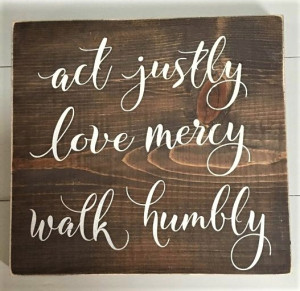
Honorable people of integrity do honorable tasks that serve others without the thought of getting what they want in return. Honor is not a form of manipulation. Honor is earned by consistent behavior—the behavior described by Micah, God’s Prophet. Micah 6:8 is a well-known verse that summarizes what God requires of humans: “to act justly, to love mercy, and to walk humbly with God.” Micah emphasizes that God desires actions that reflect righteousness and compassion, not just religious rituals, or sacrifices. It is not an act of manipulation that results in greed for a higher position in life. Walking humbly with God means that we surrender to His will and do what He says. Surrender is giving God all glory, honor, and praise!
The manipulation of humans who perform tasks and deeds in serving those in high positions for the sole purpose of gaining power, position, or payback for themselves is not honorable at all. David, “a man after the heart of God,” honorably judges the acts of men who want it all and will do anything to get it. David sees through their manipulation of “look what I did for you” for the purpose to find favor with the new king.
2 Samuel 4
Ish-Bosheth Murdered
When Ish-Bosheth son of Saul heard that Abner had died in Hebron, he lost courage, and all Israel became alarmed. 2 Now Saul’s son had two men who were leaders of raiding bands. One was named Baanah and the other Rekab; they were sons of Rimmon the Beerothite from the tribe of Benjamin—Beeroth is considered part of Benjamin, 3 because the people of Beeroth fled to Gittaim and have resided there as foreigners to this day.
4 (Jonathan son of Saul had a son who was lame in both feet. He was five years old when the news about Saul and Jonathan came from Jezreel. His nurse picked him up and fled, but as she hurried to leave, he fell and became disabled. His name was Mephibosheth.)
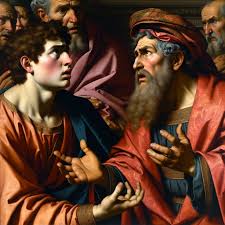
5 Now Rekab and Baanah, the sons of Rimmon the Beerothite, set out for the house of Ish-Bosheth, and they arrived there in the heat of the day while he was taking his noonday rest. 6 They went into the inner part of the house as if to get some wheat, and they stabbed him in the stomach. Then Rekab and his brother Baanah slipped away.
7 They had gone into the house while he was lying on the bed in his bedroom. After they stabbed and killed him, they cut off his head. Taking it with them, they traveled all night by way of the Arabah. 8 They brought the head of Ish-Bosheth to David at Hebron and said to the king, “Here is the head of Ish-Bosheth son of Saul, your enemy, who tried to kill you. This day the Lord has avenged my lord the king against Saul and his offspring.”

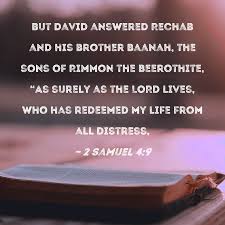
9 David answered Rekab and his brother Baanah, the sons of Rimmon the Beerothite, “As surely as the Lord lives, who has delivered me out of every trouble, 10 when someone told me, ‘Saul is dead,’ and thought he was bringing good news, I seized him and put him to death in Ziklag. That was the reward I gave him for his news! 11 How much more—when wicked men have killed an innocent man in his own house and on his own bed—should I not now demand his blood from your hand and rid the earth of you!”
12 So David gave an order to his men, and they killed them. They cut off their hands and feet and hung the bodies by the pool in Hebron. But they took the head of Ish-Bosheth and buried it in Abner’s tomb at Hebron.
WHAT DO WE LEARN—HOW DO WE RESPOND?
Going deeper, pausing the realize truly who God is, we must wonder who we are kidding? God knows every heart—yours and mine. There is nothing we can possibly hide from God—no feeling, thought, pretense, emotion, or act resulting from all the “feels”! We must realize the depth of God’s knowing and run to Him for the help, wisdom and guidance He is so generous to give us.
Stop, think, then ask God before doing anything for God or for others so that what we do is what God wants us to be and do. When we do, we are on the path of “walking humbly” with God!
David pursued God at this time; seeking to walk humbly with God. Because of David’s pursuit, God gave him wisdom, insight and understanding as the new king. The account of Baanah and Rechab reminds us of the Amalekite (2 Samuel 1) who claimed to have killed Saul. These two men were minor officers in Abner’s army who thought they could earn rewards and promotion from David if they killed Ishbosheth. As with the Amalekite, they were wrong. David was not going to take the throne by strategic manipulations. He was waited for God’s timing. That’s what one who walks humbly with God does!

Walking with God doesn’t mean we will never stumble on the path. This happens when our focus on God turns to gaze at the world around us.
When our kids were younger we would takes them on hikes of discovery while vacationing in new places. As parents, we would walk ahead of them, pointing out all the jagged rocks that could trip up young feet. We loved them and wanted them to enjoy the journey. We also warned them to avoid pain from falling.
Despite all our warnings, as they naturally and eagerly looked at all that caught their eyes around them, things they had never seen before, they would trip. I always had Band-Aids! Sometimes, they were distracted, pausing long enough to lose step with us. We were never far away and allowed them to pause to study what caught their eyes for a little bit as we waited. But sometimes they would panic if and when they lost sight of us and call out. We were always close enough to hear them and lead them back on the path.
God does that for all of us! God’s is forever compassionate. His relentless love never fails and always comes after us. God is with us always to guide us back on our walk with Him.
David’s response to these dishonorable men of manipulation made it clear that at no time in his career had he ever broken God’s commandment by murdering somebody to accomplish his purposes. God had watched over David and protected him during ten years of exile and now more than seven years as king in Hebron.
“How much more—when wicked men have killed an innocent man in his own house and on his own bed—should I not now demand his blood from your hand and rid the earth of you!”—David’s words to the manipulators. Unfortunately, as we will read later, David failed to maintain his integrity, lost his focus on God; so, this very statement came back to haunt him. David’s life is another example for us of the biblical warning, “So, if you think you are standing firm, be careful that you don’t fall! 1 Corinthians 10:12
What is our response to God today?
Lord,
We can become dishonorable when we think we have all our “ducks in a row” and begin to rely on our own past accomplishments and deeds of goodness. Only you are good! We need you and ask for your wisdom and help as we daily surrender to you, your will and purposes, for our good and your glory! Cleanse our hearts, renew our minds, refresh our souls, and restore the joy of your salvation consistently at work within us as we strive to walk humbly with you! Thank you for the peace you generously give us in surrender to your will. You are Giver of Life so we trust our lives to you! To you be all glory, honor, and praise!
In Jesus Name, Amen

 Daily Manna (Coffee with Jesus)