

“What a day that will be, When my Jesus I shall see,
And I look upon His face, The One who saved me by His grace;
When He takes me by the hand, And leads me through the Promised Land,
What a day, glorious day that will be.” (Composed by Jim Hill, 1955)
Are we truly ready for that day? When Jesus comes to take us to our forever home, what will be our instinctive response? Will we truly be in awe as we gaze on the glory that surrounds Him? Will our mouths utter praise immediately? Or will we automatically say, “oh, wait a sec, I’ll be right there, I just have to finish this.” Mm.
Even though King David followed by his son, King Solomon were historical factual people, living in the old covenant days, God’s story with their responses and their actions of obedience to God are used to teach and represent the character of God to us. Reading the Old Testament, as we have been doing over the past few months, give us all the details of how to worship God alone.
With specified details for God’s anointed priest advocates; they received offerings of sacrifice to cover over the sins of the people. The process was called atonement. The process was detailed for quality control purposes. Animals such as lambs, goats, bulls, and birds had to be “without blemish; the first of the flock” to be acceptable in the eyes of the Lord. (See Leviticus) The sacrifice had to cost the giver. Then designated priests were given detailed instructions to ceremoniously place the sin of the people on animals. Depending on the sin or kind of offering depended on the actions taken.
The animal offerings were put to death quickly, the blood drained, then the meat burned on a roaring fire. This was “an aroma pleasing to God.” Only then could the sacrifice for sins be complete and the forgiveness of God be given. Sin cannot be in or occupy the same place where God resides and abides. One must go and that one is sin—Sin repented and atoned.
God had a continual plan of redemption for sin. Later, in the New Covenant, it would involve giving a part of Himself as the once and for all sacrifice for all the sins of the world. God’s New Covenant with His people would remove sin, “to be remembered no more”! Jesus, His Son was that Plan. Jesus, came down from heaven and was born to a virgin, Mary espoused to Joseph. He grew in stature and loved to be in His Father’s house, The Temple, deemed by Him as the “House of prayer for all nations.” Known as the Son of Man but also the Son of God, he began to preach Truth to a dark, confused world in ways they had never heard before!
Even religious leaders who sat and debated scripture all day long were confused and lost because they didn’t really know God; they just knew of God. That’s why most didn’t recognize Jesus when He came and moved into the neighborhoods of humanity to love, serve, heal, and teach who God really is and what He expects from His people. And who they didn’t know—they feared—so they plotted against Him.

Only Jesus, who knew no sin, would then be the perfect candidate to be the perfect sacrifice for the removal of sin. It would cost God His one and only Son, to remove the sins of you and me and everyone else in the world who believe Jesus was the one to save us from death! But His love led the Way to be saved!
“For God so loved the world that he gave his one and only Son, that whoever believes in him shall not perish but have eternal life. For God did not send his Son into the world to condemn the world, but to save the world through him.” John 3:16-17
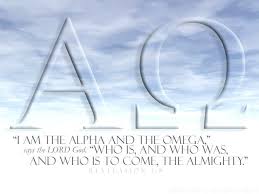
Jesus, “alpha and omega,” was with God at the beginning of creation and He will come back at the end of the age with fire from heaven with the Word of God (the sword of truth) in his mouth! As God’s Son, Jesus was/is/always will be the promised Messiah, proclaimed by the prophets of God centuries earlier as The ONE who will save us. He did and He will come back soon. Jesus ties the work of the Old Covenant to the New Covenant. The Old Testament continually and repeatedly points to Christ. God’s Word says we won’t know the time or the place; but all who believe will immediately recognize Him when He comes.
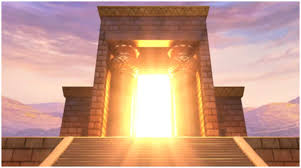
God’s people saw and recognized the glory of God filling the new Temple! The Lord answered Solomon’s request by sending fire from heaven to consume the sacrifices on the altar, and once again the glory of God filled the house. God responds in power—always has and always will! And He’s doing it again! God had sent fire from heaven when Aaron the priest had blessed the people (Lev. 9:23, 24) and when Elijah the prophet had called upon God (1 Kings 18:38). Here God sent fire when Solomon the king offered his prayer and his sacrifices to the Lord. The people all responded by bowing to the ground in reverence to God. Imagine the sound of thousands of people shouting, “For He is good, for His mercy endures forever” (v.3). God had accepted the prayer of the king and the worship of the people!
2 Chronicles 7
The Dedication of the Temple
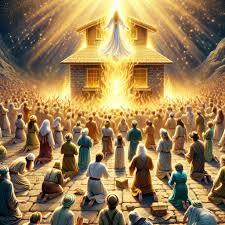
When Solomon finished praying, fire came down from heaven and consumed the burnt offering and the sacrifices, and the glory of the Lord filled the temple. 2 The priests could not enter the temple of the Lord because the glory of the Lord filled it. 3 When all the Israelites saw the fire coming down and the glory of the Lord above the temple, they knelt on the pavement with their faces to the ground, and they worshiped and gave thanks to the Lord, saying,
“He is good; his love endures forever.”
4 Then the king and all the people offered sacrifices before the Lord. 5 And King Solomon offered a sacrifice of twenty-two thousand head of cattle and a hundred and twenty thousand sheep and goats. So the king and all the people dedicated the temple of God. 6 The priests took their positions, as did the Levites with the Lord’s musical instruments, which King David had made for praising the Lord and which were used when he gave thanks, saying, “His love endures forever.” Opposite the Levites, the priests blew their trumpets, and all the Israelites were standing.
7 Solomon consecrated the middle part of the courtyard in front of the temple of the Lord, and there he offered burnt offerings and the fat of the fellowship offerings, because the bronze altar he had made could not hold the burnt offerings, the grain offerings and the fat portions.
8 So Solomon observed the festival at that time for seven days, and all Israel with him—a vast assembly, people from Lebo Hamath to the Wadi of Egypt. 9 On the eighth day they held an assembly, for they had celebrated the dedication of the altar for seven days and the festival for seven days more. 10 On the twenty-third day of the seventh month he sent the people to their homes, joyful and glad in heart for the good things the Lord had done for David and Solomon and for his people Israel.
The Lord Appears to Solomon

11 When Solomon had finished the temple of the Lord and the royal palace, and had succeeded in carrying out all he had in mind to do in the temple of the Lord and in his own palace, 12 the Lord appeared to him at night and said:
“I have heard your prayer and have chosen this place for myself as a temple for sacrifices.
13 “When I shut up the heavens so that there is no rain, or command locusts to devour the land or send a plague among my people, 14 if my people, who are called by my name, will humble themselves and pray and seek my face and turn from their wicked ways, then I will hear from heaven, and I will forgive their sin and will heal their land. 15 Now my eyes will be open and my ears attentive to the prayers offered in this place. 16 I have chosen and consecrated this temple so that my Name may be there forever. My eyes and my heart will always be there.

17 “As for you, if you walk before me faithfully as David your father did, and do all I command, and observe my decrees and laws, 18 I will establish your royal throne, as I covenanted with David your father when I said, ‘You shall never fail to have a successor to rule over Israel.’
19 “But if you turn away and forsake the decrees and commands I have given you and go off to serve other gods and worship them, 20 then I will uproot Israel from my land, which I have given them, and will reject this temple I have consecrated for my Name. I will make it a byword and an object of ridicule among all peoples. 21 This temple will become a heap of rubble. All who pass by will be appalled and say, ‘Why has the Lord done such a thing to this land and to this temple?’ 22 People will answer, ‘Because they have forsaken the Lord, the God of their ancestors, who brought them out of Egypt, and have embraced other gods, worshiping and serving them—that is why he brought all this disaster on them.’”
WHAT DO WE LEARN—HOW DO WE RESPOND?

I’ve read recently how one believer responded to our world’s current condition by composing a song meant to be praise to God with hope for us as we wait on the return of Jesus! “Days of Elijah” stirs our hearts as we wonder at times just how bad and sinful will the world be before Jesus comes? But when we read of the “old days” in the Old Testament and into the New Testament and learn of extreme oppression with violence, and persecution that lead to death for those who believed; we realize it is beginning to happen but has not fully arrived yet. “Be aware,” says the Word who is Jesus; and “guard your hearts”! The best stand to take in our world is to focus on WHO’S coming back and set our hearts, minds, and souls firmly on Him who delivered us by paying our debt of sin in full! Trust and obey Jesus, for there really is no better way to live!
“These are the days of Elijah, Declaring the word of the Lord
And these are the days of your servant Moses, Righteousness being restored
And though these are days of great trial, Of famine and darkness and sword
Still, we are the voice in the desert crying, Prepare ye the way of the Lord
Behold He comes riding on the clouds, Shining like the sun at the trumpet call
Lift your voice, it’s the year of jubilee, And out of Zion’s hill salvation comes!”
The words of the composer, Robin Mark, “Days of Elijah” explains;

I found myself despairing about the state of the world and, in prayer, began asking God if He was really in control and what sort of days were we living in. I felt in my spirit that He replied to my prayer by saying that indeed He was very much in control and that the days we were living in were special times when He would require Christians to be filled with integrity and to stand up for Him just like Elijah did, particularly with the prophets of Baal. “These are ‘Elijah’ days.” Elijah’s story is in the book of Kings and you can read how he felt isolated and alone in the culture in which he lived. But God told him to stand up and speak for Him.
We also needed to be a holy and just people and hence the reference to the “days of your servant Moses,” meaning that righteousness and right living was important in all our attitudes and works. Now, we are under grace and not under law, but the righteousness that comes by faith can be no less than the moral law that Moses brought direct from God. It has not been superseded. In fact Jesus told us that our “righteousness must exceed that of the Pharisees”, who were the most ardent followers of Gods laws as presented by Moses. Jesus was after righteous, servant hearts, of course, that desired to live holy lives for Him.
“Days of great trial, of famine, darkness and sword” is a reflection of the apparent times in which we live when still thousands of people die every day from starvation, malnutrition and war. In the midst of it all, we are called to make a declaration of what and who we believe in.
The second verse refers to the restoration of unity of the body, what Jesus prayed for – “that they may be one even as I and the Father are one…” by reference to Ezekiel’s prophetic vision of the valley of the dry bones becoming flesh and being knit together. There are lots of interpretations of this picture, but one of a united church rising up in unity and purpose, is a powerful call on us in these days.
The restoration of praise and worship to the Church is represented by “the days of your servant David”. Some folks use the term “Restoration Theology” to describe this restoring of attributes to the church. But in the song it’s mainly a picture of worship
Of course David didn’t get to build the structural temple (that’s why the word in the song line is “rebuild”), that was left to Solomon his son, but David was used by God to introduce a revised form of worship, praise and thanksgiving into, firstly, his little tent which he pitched around the Ark of the covenant (the presence of God) and then the temple that Solomon his son built.
This worship, unlike the Mosaic Tabernacle, involved many people being able to come into Gods presence and worship him openly. (In Moses time only one man, the high priest, could enter the Holy of Holies, once a year. David’s tent was a picture of how Christ would enable us to come right into Gods presence, through his sacrifice, and worship openly there). –Robin Mark, Composer
“And these are the days of Ezekiel, The dry bones becoming as flesh
And these are the days of your servant David, Rebuilding a temple of praise
And these are the days of the harvest, Oh, the fields are as white in Your world
And we are the laborers in Your vineyard, Declaring the word of the Lord
Behold He comes riding on the clouds Shining like the sun at the trumpet call
Lift your voice, it’s the year of jubilee And out of Zion’s hill salvation comes!”
There is no one like our God!
Lord,
Each day I come to you with a mind to learn; you teach me and fill the temple of my heart with your glory! Thank you, thank you, thank you! And you do it again and again and again! There is no one like You!
In Jesus Name, Amen

 Daily Manna (Coffee with Jesus)