

In any court of law there is one who stand accused and one who does the accusing. A judge hears the case of each one and decides if the case should go to trial where more evidence will be brought forward from the accused and the accuser. A jury of regular people are then chosen to stand with the judge to decide the fate of the accused. Innocent or guilty. If only there was someone who knows the accused better than they know themselves to act as mediator for justice with mercy and grace. Mm, who could that be?

In the beginning of Job’s answer to his second friend’s accusing comments with counsel; Job responds with; “But how can mere mortals prove their innocence before God?” Job knows God is all powerful, the Creator of the Universe, the Maker of humans in His own image, and has authority over all the earth; but he cannot give in to thinking he has done nothing wrong. After all, Job is known as a righteous man who does all the right things in the eyes of God and men. But is Job perfect, without sin like Jesus, in the eyes of God? We might be seeing a pattern of pride in Job’s responses. What is going on here, ask Job, that would explain my current suffering?
Job 9
Then Job replied:
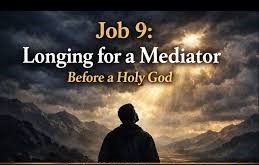
2 “Indeed, I know that this is true.
But how can mere mortals prove their innocence before God?
3 Though they wished to dispute with him,
they could not answer him one time out of a thousand.
4 His wisdom is profound, his power is vast.
Who has resisted him and come out unscathed?
5 He moves mountains without their knowing it
and overturns them in his anger.
6 He shakes the earth from its place
and makes its pillars tremble.
7 He speaks to the sun and it does not shine;
he seals off the light of the stars.
8 He alone stretches out the heavens
and treads on the waves of the sea.
9 He is the Maker of the Bear and Orion,
the Pleiades and the constellations of the south.
10 He performs wonders that cannot be fathomed,
miracles that cannot be counted.
11 When he passes me, I cannot see him;
when he goes by, I cannot perceive him.
12 If he snatches away, who can stop him?
Who can say to him, ‘What are you doing?’
13 God does not restrain his anger;
even the cohorts of Rahab cowered at his feet.
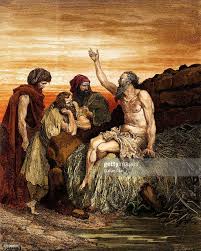
14 “How then can I dispute with him?
How can I find words to argue with him?
15 Though I were innocent, I could not answer him;
I could only plead with my Judge for mercy.
16 Even if I summoned him and he responded,
I do not believe he would give me a hearing.
17 He would crush me with a storm
and multiply my wounds for no reason.
18 He would not let me catch my breath
but would overwhelm me with misery.
19 If it is a matter of strength, he is mighty!
And if it is a matter of justice, who can challenge him?
20 Even if I were innocent, my mouth would condemn me;
if I were blameless, it would pronounce me guilty.
21 “Although I am blameless,
I have no concern for myself;
I despise my own life.
22 It is all the same; that is why I say,
‘He destroys both the blameless and the wicked.’
23 When a scourge brings sudden death,
he mocks the despair of the innocent.
24 When a land falls into the hands of the wicked,
he blindfolds its judges.
If it is not he, then who is it?

25 “My days are swifter than a runner;
they fly away without a glimpse of joy.
26 They skim past like boats of papyrus,
like eagles swooping down on their prey.
27 If I say, ‘I will forget my complaint,
I will change my expression, and smile,’
28 I still dread all my sufferings,
for I know you will not hold me innocent.
29 Since I am already found guilty,
why should I struggle in vain?
30 Even if I washed myself with soap
and my hands with cleansing powder,
31 you would plunge me into a slime pit
so that even my clothes would detest me.
32 “He is not a mere mortal like me that I might answer him,
that we might confront each other in court.
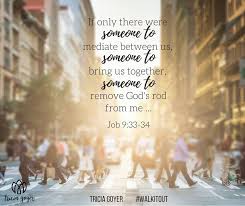
33 If only there were someone to mediate between us,
someone to bring us together,
34 someone to remove God’s rod from me,
so that his terror would frighten me no more.
35 Then I would speak up without fear of him,
but as it now stands with me, I cannot.
WHAT DO WE LEARN—HOW DO WE RESPOND?

We have all felt a bit like Job when things of life don’t go they way we planned, when expected expenses occur with bills that are beyond our means, when our children get deathly sick, or when relationships fall apart for no apparent reason at that moment. Life stinks and most often unexplainable. We cry out to God but we are timid with our questions because God IS GOD!
In this chapter and in chapter ten we read that Job had questions—three, that arose from his misery, suffering, and mourning over his losses of family, health, and fortune.
- How can I be righteous before God?” (9:1–13) along with a follow up humbled question; “How can mere mortals prove their innocence before God?
- “How can I meet God in court?” (9:14–35) God is the Almighty Judge who knows all! If only there were someone to mediate between us, someone to bring us together, someone to remove God’s rod from me… (Do you know who that Someone is? Jesus!)
- “Why was I born?” (10:1–22; see v. 18). We can see how these questions connect. Job is righteous, but he feels he must prove it. How can a mortal man prove himself righteous before the Lord? Can he take God to court? But if God doesn’t step in and testify on Job’s behalf, what is the purpose of all this suffering? Why was Job even born? Only to suffer?
“Throughout the Book of Job, we constantly see legal language about charges, arguments, and defenses. Job was serious about wanting to face God in court, even though he had no one to represent him. “But I would speak to the Almighty, and I desire to reason with God” (13:3). “Even so, I will defend my own ways before Him” (13:15). “I have prepared my case, I know that I shall be vindicated” (13:18). He felt that God was not treating him justly. “If I cry out concerning wrong, I am not heard. If I cry aloud, there is no justice” (19:7). God had “taken away” his “justice” (27:2), and Job demanded an opportunity to be heard before the throne of God. But when the opportunity came, Job had nothing to say.
In the end, Job discovers that even our deepest longings to be justified (or to justify ourselves) before God fail to recognize our inability to stand before Him on our merits or hold Him accountable. These longings are satisfied by God freely, not because we demand satisfaction from Him.” Warren Wiersbe, Wiersbe Study Bible
“Nor is there any mediator,”Job exclaims. The Hebrew word translated “mediator” means “to act as umpire.” The mediator is the one with authority to set the day when competing parties must come together to settle their dispute. In the East, the mediator would put his hands on the heads of the two disputing parties to remind them that he was the one with the authority to settle the question. Job longed for somebody who could do this for him and God.
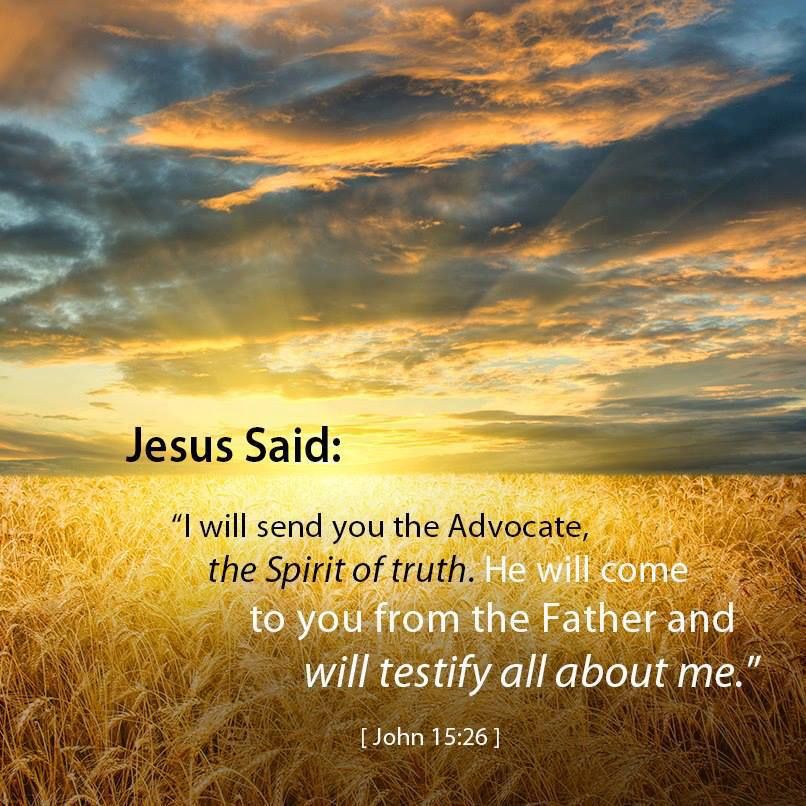
Jesus is the mediator that Job was pleading for centuries earlier (Job 16:21). But it was not time for Jesus, Messiah, to be revealed as Savior and Lord of all who believe. As we continue our journey through the Old Testament Word; we see Jesus as the Word! We must always remember that God/Jesus/Holy Spirit are three-in-one Person—from beginning to end. I’m sure Jesus saw Job’s plight along with the testing of God’s relationship with Job. The Holy Spirit work was to lead Job to truth then as He does for us now.
Max Lucado explains the relationship of Mediator then and now;
“No one but the high priest entered the Most Holy Place. No one. To do so meant death. Two of Aaron’s sons died when they entered the Most Holy Place to offer sacrifices to the Lord (see Lev 16:1–2). In no uncertain terms, the curtain declared: “This far and no farther!”
What did fifteen hundred years of a curtain-draped Most Holy Place communicate? Simple. God is holy, separate from us, and unapproachable. Even Moses was told, “You cannot see my face, for no one may see me and live” (Ex 33:20). God is holy, and we are sinners, and there is a distance between us.
Isn’t this our problem? We know God is good. We know we are not, and we feel far from God. The ancient words of Job are ours, “If only there were someone to mediate between us, someone to bring us together” (Job 9:33).
Oh, but there is! Jesus hasn’t left us with an unapproachable God. Yes, God is holy. Yes, we are sinful. But, yes, yes, yes, Jesus is our mediator. Is not a mediator one who “goes between”? Wasn’t Jesus the curtain between us and God? And wasn’t his flesh torn? What appeared to be the cruelty of man was actually the sovereignty of God.
We are welcome to enter into God’s presence—any day, any time. God has removed the barrier that separates us from him. The barrier of sin? Down. He has removed the curtain.—Lucado, Encouraging Word Bible

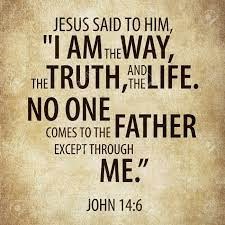
Jesus is the Word in the Word from beginning to end. Jesus is the Way to Truth with Life forever for all who believe—all because of God’s great love for us.
“For God so loved the world that he gave his one and only Son, that whoever believes in him shall not perish but have eternal life. For God did not send his Son into the world to condemn the world, but to save the world through him.” John 3:16-17

Like Job, sometimes we can fall into the trap of doing all the right things but miss the joy, peace, and contentment of having and enjoying a right relationship with God through Jesus Christ, His Son. It’s not about what is happening to us as much as it is what is happening in us where God has complete reign of our hearts, minds, and souls.
Lord,
I surrender. I am a doer who spends too much time evaluating what is done when more time needs to be spent on our the purity of our relationship. Help me to be still, let go, and know you more.
In Jesus Name, Amen

 Daily Manna (Coffee with Jesus)