

In our constantly changing world; we seek a peace that does not change with the shifting wind. As mankind consistently invents new products and promote them as being much better than the product you currently have, we feel less than and left out and fall into discontent. We seek contentment.
When relationships we trust one day become fleeting the next, we take stock of ourselves in the confusion. It is then we seek love and acceptance. As the world turns, as it was created to do, we seek simple over complicated.
As we age, we seek more wisdom, insight, and understanding than ever before as the world tells us we now unable to keep up. All these thoughts come from a mind twisted by our view of the world with our own assumptions, guilt, presumptions, regret and bitterness from lack of control of the narrative of our own story. Judgement of others becomes our new game in town when we cannot explain life. Somehow judgement soothes our own lack of achieving and self-worth.
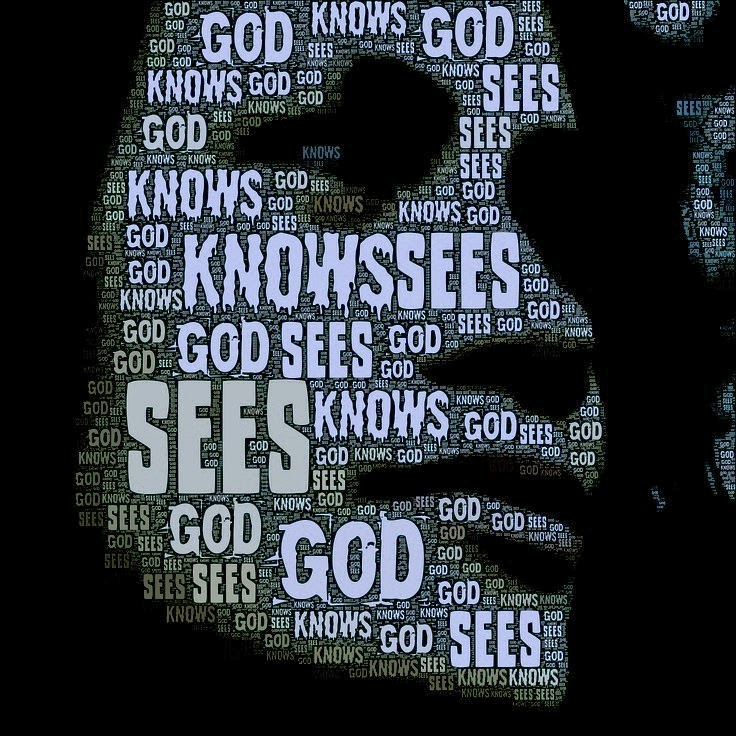
Only God can stop the madness of our thinking and subsequent actions and reactions to life that can deepen the hurt others feel in life’s calamities. We do not know the full story of anyone. Only God does. So, instead of telling others what we surmise about any given situation; how about listening to the hurt without any form of judgement and extend the love of God who has forgiven us? Maybe we should work harder on keeping talk and walk simple by loving more and judging less as we point the Way to Truth who gives Life eternal to all who believe.
Zophar is the last friend to speak to Job’s situation. Unsympathetic, Zophar tried to convince Job that his troubles stemmed from a hidden sin. Zophar believed that God was punishing Job for this sin. What we learn from the story of God working through Job is that no one can claim complete understanding of God’s ways.
Job 11
Zophar
Then Zophar the Naamathite replied:

2 “Are all these words to go unanswered?
Is this talker to be vindicated?
3 Will your idle talk reduce others to silence?
Will no one rebuke you when you mock?
4 You say to God, ‘My beliefs are flawless
and I am pure in your sight.’
5 Oh, how I wish that God would speak,
that he would open his lips against you
6 and disclose to you the secrets of wisdom,
for true wisdom has two sides.
Know this: God has even forgotten some of your sin.

7 “Can you fathom the mysteries of God?
Can you probe the limits of the Almighty?
8 They are higher than the heavens above—what can you do?
They are deeper than the depths below—what can you know?
9 Their measure is longer than the earth
and wider than the sea.
10 “If he comes along and confines you in prison
and convenes a court, who can oppose him?
11 Surely he recognizes deceivers;
and when he sees evil, does he not take note?
12 But the witless can no more become wise
than a wild donkey’s colt can be born human.

13 “Yet if you devote your heart to him
and stretch out your hands to him,
14 if you put away the sin that is in your hand
and allow no evil to dwell in your tent,
15 then, free of fault, you will lift up your face;
you will stand firm and without fear.
16 You will surely forget your trouble,
recalling it only as waters gone by.
17 Life will be brighter than noonday,
and darkness will become like morning.
18 You will be secure, because there is hope;
you will look about you and take your rest in safety.
19 You will lie down, with no one to make you afraid,
and many will court your favor.
20 But the eyes of the wicked will fail,
and escape will elude them;
their hope will become a dying gasp.”
WHAT DO WE LEARN—HOW DO WE RESPOND?
We all do it. We wonder, analyze, problem solve, judge, with hopes of a fix so we and our friends can get back to “normal.” The following story I found this morning from Max Lucado’s Encouraging Word Bible, parallels the story of the friends who stood by to judge, correct, and analyze Job’s life of calamites. Read and see what you think…
“Once there was an old man who lived in a tiny village. Although poor, he was envied by all, for he owned a beautiful white horse. Even the king coveted his treasure. A horse like this had never been seen before—such was its splendor, its majesty, its strength.
People offered fabulous prices for the steed, but the old man always refused. “This horse is not a horse to me,” he would tell them. “It is a person. How could you sell a person? He is a friend, not a possession. How could you sell a friend?” The man was poor, and the temptation was great. But he never sold the horse.

One morning he found that the horse was not in the stable. All the village came to see him. “You old fool,” they scoffed, “we told you that someone would steal your horse. We warned you that you would be robbed. You are so poor. How could you ever hope to protect such a valuable animal? It would have been better to have sold him. You could have gotten whatever price you wanted. No amount would have been too high. Now the horse is gone, and you’ve been cursed with misfortune.”
The old man responded, “Don’t speak too quickly. Say only that the horse is not in the stable. That is all we know; the rest is judgment. If I’ve been cursed or not, how can you know? How can you judge?”
The people contested, “Don’t make us out to be fools! We may not be philosophers, but great philosophy is not needed. The simple fact that your horse is gone is a curse.”
The old man spoke again. “All I know is that the stable is empty, and the horse is gone. The rest I don’t know. Whether it be a curse or a blessing, I can’t say. All we can see is a fragment. Who can say what will come next?”
The people of the village laughed. They thought that the man was crazy. They had always thought he was a fool; if he wasn’t, he would have sold the horse and lived off the money. But instead, he was a poor woodcutter, an old man still cutting firewood and dragging it out of the forest and selling it. He lived hand to mouth in the misery of poverty. Now he had proven that he was, indeed, a fool.
After fifteen days, the horse returned. He hadn’t been stolen; he had run away into the forest. Not only had he returned, he had brought a dozen wild horses with him. Once again, the village people gathered around the woodcutter and spoke. “Old man, you were right, and we were wrong. What we thought was a curse was a blessing. Please forgive us.”

The man responded, “Once again, you go too far. Say only that the horse is back. State only that a dozen horses returned with him, but don’t judge. How do you know if this is a blessing or not? You see only a fragment. Unless you know the whole story, how can you judge? You read only one page of a book. Can you judge the whole book? You read only one word of a phrase. Can you understand the entire phrase?
“Life is so vast, yet you judge all of life with one page or one word. All you have is a fragment! Don’t say that this is a blessing. No one knows. I am content with what I know. I am not perturbed by what I don’t.”
“Maybe the old man is right,” they said to one another. So they said little. But down deep, they knew he was wrong. They knew it was a blessing. Twelve wild horses had returned with one horse. With a little bit of work, the animals could be broken and trained and sold for much money.
The old man had a son, an only son. The young man began to break the wild horses. After a few days, he fell from one of the horses and broke both legs. Once again, the villagers gathered around the old man and cast their judgments.
“You were right,” they said. “You proved you were right. The dozen horses were not a blessing. They were a curse. Your only son has broken his legs, and now in your old age you have no one to help you. Now you are poorer than ever.”
The old man spoke again. “You people are obsessed with judging. Don’t go so far. Say only that my son broke his legs. Who knows if it is a blessing or a curse? No one knows. We only have a fragment. Life comes in fragments.”
It so happened that a few weeks later the country engaged in war against a neighboring country. All the young men of the village were required to join the army. Only the son of the old man was excluded, because he was injured. Once again, the people gathered around the old man, crying and screaming because their sons had been taken. There was little chance that they would return. The enemy was strong, and the war would be a losing struggle. They would never see their sons again.

“You were right, old man,” they wept. “God knows you were right. This proves it. Your son’s accident was a blessing. His legs may be broken, but at least he is with you. Our sons are gone forever.”
The old man spoke again. “It is impossible to talk with you. You always draw conclusions. No one knows. Say only this. Your sons had to go to war, and mine did not. No one knows if it is a blessing or a curse. No one is wise enough to know. Only God knows.”
When someone else suffers, ask God for wisdom to be an instrument of His healing. Remember that no matter what you feel, God is always good! And it is God who always knows exactly how to respond to our needs.

Lord,
You are God. We are not. Life is as simple as that. Cleanse our hearts, remove all that is not of you. Renew our minds, transform our behaviors. Refresh our souls with your new tender mercies that feed our souls to respond with mercy. Restore the joy of your salvation at work within us for our good and your glory! May your peace rule our hearts. May our focus be fixed on You.
In Jesus Name, Amen

 Daily Manna (Coffee with Jesus)