
INQUIRING MINDS WANT TO KNOW

FACT:  The God of David is the same God who is with us today!

So, the questions we must daily ask ourselves prayerfully and honestly are: 

  • Do I really believe all that God say to be really real? 
  • Do I truly believe that His Son, Jesus redeemed me from all my sins, now and forever? 
  • Do I believe that God’s Holy Spirit lives in me to help me in all decisions I will face today?
  • Will I seek God first to inquire of the Lord, like David, before doing anything of significance today?
  • Do I truly believe God can do anything and nothing is impossible with God?
  • When God answers with a command, will I trust and obey Him, no matter what?

Our response to God and others will reflect our true belief in God.  Our daily reactions to life will allow others to see God’s glory at work—or not.

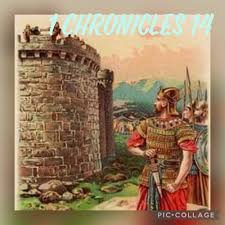
1 Chronicles 14

David’s House and Family

Now Hiram king of Tyre sent messengers to David, along with cedar logs, stonemasons, and carpenters to build a palace for him. And David knew that the Lord had established him as king over Israel and that his kingdom had been highly exalted for the sake of his people Israel.

In Jerusalem David took more wives and became the father of more sons and daughters. These are the names of the children born to him there: Shammua, Shobab, Nathan, SolomonIbhar, Elishua, Elpelet, Nogah, Nepheg, Japhia, Elishama, Beeliada and Eliphelet.

David Defeats the Philistines

When the Philistines heard that David had been anointed king over all Israel, they went up in full force to search for him, but David heard about it and went out to meet them. Now the Philistines had come and raided the Valley of Rephaim; 10 so David inquired of God: “Shall I go and attack the Philistines? Will you deliver them into my hands?”

The Lord answered him, “Go, I will deliver them into your hands.”
11 So David and his men went up to Baal Perazim, and there he defeated them. He said, “As waters break out, God has broken out against my enemies by my hand.” So that place was called Baal Perazim. 12 The Philistines had abandoned their gods there, and David gave orders to burn them in the fire.

13 Once more the Philistines raided the valley; 14 so David inquired of God again, and God answered him, “Do not go directly after them, but circle around them and attack them in front of the poplar trees. 15 As soon as you hear the sound of marching in the tops of the poplar trees, move out to battle, because that will mean God has gone out in front of you to strike the Philistine army.” 16 So David did as God commanded him, and they struck down the Philistine army, all the way from Gibeon to Gezer.

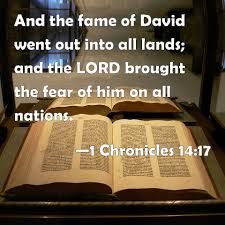
17 So David’s fame spread throughout every land, and the Lord made all the nations fear him.

WHAT DO WE LEARN—HOW DO WE RESPOND?
King David inquires of the Lord before going to battle.  Known for being “a man after the heart of God,” David’s habit is to ask God first before doing anything of significance in his work to protect the people of God as King of Israel. 

History tells us that (See 2 Samuel 5:11–16), from a practical point of view, the Phoenicians needed to be on good terms with the Israelites because Israel could easily block the trade route to Tyre, and the Phoenicians depended on Israelite farmers for their food. (See Acts 12:20.) David interpreted Hiram’s kindness as another indication that the Lord had indeed established him on the throne of Israel.
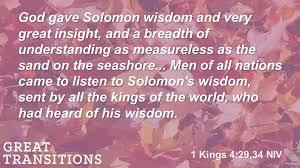
The House of David is not without sin. David’s character flaws of desiring and obtaining many wives and the consequences of his sin is not recorded in the chronicles of his life but are told in the book of Samuel. His first son with Bathsheba, the stolen wife of Urriah, one of David’s loyal soldiers, would die soon after he was born.  Some of his other sons would turn against him.  Solomon, his son who succeeded him was known to be the wisest king in the world but we wonder his wisdom in holding the record of the number of wives in his household! The sins of the father were the sins of the son. The Law (Deuteronomy 17:17) clearly stated that the king was not to multiply wives, but both David and Solomon ignored this law, and both paid dearly for their disobedience.
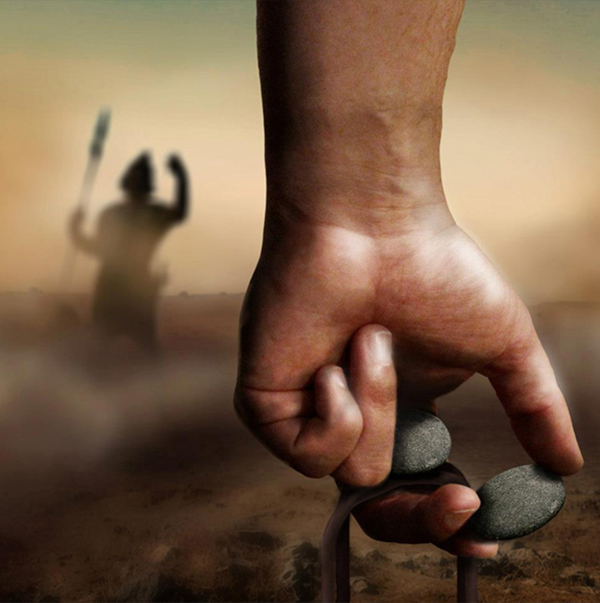
When David became king of the whole nation of Israel, the Philistines knew he was their enemy, and they attacked him—often! When it came to reoccurring wars with the Philistines; King David knew that the real battle to protect God’s People belonged to the Lord. That’s why it was David’s habit to “inquire of the Lord” before going to war with an enemy that only God could overcome. David knew his own weaknesses but he also knew his God and His mighty power over all and in all who believe God. (See 1 Samuel 5:17-25)

The same David who fought the giant, Goliath who defied the living God of Israel, fights only by God’s direction with help.

We have battles daily with forces we cannot see but must be ready to fight. 

Paul, the Apostle, taught that our real enemy is not the flesh and blood people who are face to face with us as we live each day. The “underlayer,” beneath the surface of our outer layer of what is seen by others, is a desire to satisfy self—a strong pull used by the Enemy of God whose desire is to cause division through distraction and deception with the goal to dismantle and destroy our faith in God!  Paul writes a warning to the church of believers in Jesus—
“For our struggle is not against flesh and blood, but against the rulers, against the authorities, against the powers of this dark world and against the spiritual forces of evil in the heavenly realms.” Ephesians 6:12

Paul warning explains how this inner desire to respond with hateful, conniving, unkind, and manipulative words cause real struggles within the Body of believers and with the outside world as well come from Satan and his demons. But with God’s Holy Spirit, inquiring how HE wants us to respond can overcome this evil that can enslave us if we allow him to take over our lives!

Satan is our real adversary today. If you think Satan is just myth; then you have already lost a major battle!  But there is hope!  Believe that Jesus came to overcome and defeat the Enemy.  These spiritual forces, such as rulers, authorities, and powers of darkness, are considered the real adversaries but they are no match for our Savior, King Jesus, who defeated him in the war for our very lives while removing all the sins of the world who believes in Jesus! 

Though the war has been won; Satan continues to invite us daily into unending skirmishes for our faith.  Paul also tells us how to be prepared for these skirmishes knowing the war has already been won by Jesus!
Therefore put on the full armor of God, so that when the day of evil comes, you may be able to stand your ground, and after you have done everything, to stand.Stand firm then, with the belt of truth buckled around your waist, with the breastplate of righteousness in place, and with your feet fitted with the readiness that comes from the gospel of peace. In addition to all this, take up the shield of faith, with which you can extinguish all the flaming arrows of the evil one. 17 Take the helmet of salvation and the sword of the Spirit, which is the word of God.

And pray in the Spirit on all occasions with all kinds of prayers and requests. With this in mind, be alert and always keep on praying for all the Lord’s people.” Ephesians 6:13-18

David knew his battles belonged to the Lord.  Our battles with evil also belong to God who sent His Son to defeat the Enemy of God once and for all. There is no one like our God!  That’s why our battles are first fought on our knees before God, inquiring of Him what to be and then do in the battle.

Believe, repent, be saved for eternity for the war has already been won. 

Live like redeemed people with expectant Hope whose God is the Lord forever!

Lord,

You have stirred our hearts once more by Your Word that challenges and corrects our thinking.  Thank you, Holy Spirit for guiding again this morning to Truth!  Cleanse our hearts, renew our minds, refresh our souls and restore the joy of your salvation at work within us, making us fit for battle against the Enemy.  May your will be done today as always.

In Jesus Name, Amen

Posted in Uncategorized | Tagged , , , , | Leave a comment

SAME RULES APPLY

As a high schooler, I was among those who carefully boxed up and moved all the hymn and gospel song books, educational materials, piano, dishes, Bibles, communion plates, bowls for feet washing, and all other items from the old building to our beautiful, newly built church building in another location.  All those items for teaching the Word of God built on the promises of God, became holy when used for the worship of God.  Memories of souls saved in the old building flooded the hearts of those who remembered meeting God there in their beginning of their walk with God.  Now it was time for new beginnings with the same God who still requires us to be holy as he is holy.  The same rules apply as we revere God with awe with a healthy fear-filled respect that comes from knowing how great our God is with respect for His tools of ministry.

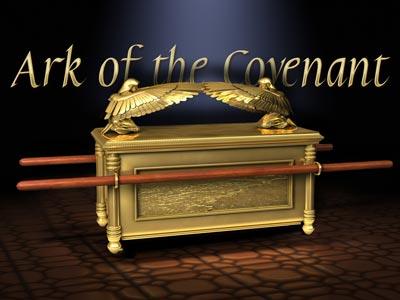
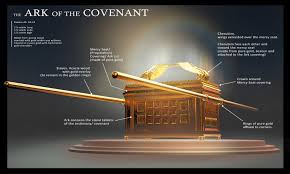
David, who is now King, decides the Ark of the Covenant, holy unto God which represented God and symbolized all that God had done for His people, should be moved closer to where he now lives as King of Israel.  The Ark of the Covenant had items that represented the promises of God to His people.  The Ark was holy unto God. God gave them specific rules concerning the Ark of the Covenant given to them through Moses. The rules still applied when trying to move the Ark in David’s times.

The One thing we can rely on when we put our all our trust in God. His love, ways, and commands are the same and do not change. God is holy and we must be holy before Him.  In a world where each day we wake to new changes and rules of behaviors by our government, social groups, and among our friends and even our families; God is constant and unchanging in His love and care for us.  Comfort and peace abides in knowing that God does not change.

God’s commands signify His love and amplify His perfect holiness. David will learn quickly exactly how important this is this truth about God. Have we learned the depth of holiness of our perfect God?  Our behaviors will reflect the depth of awe we have of God whether inside the church building, among friends after leaving our worship of God, at home or in the workplace during the week.  God is Holy and that never changes.

1 Chronicles 13

Bringing Back the Ark

David conferred with each of his officers, the commanders of thousands and commanders of hundreds. He then said to the whole assembly of Israel, “If it seems good to you and if it is the will of the Lord our God, let us send word far and wide to the rest of our people throughout the territories of Israel, and also to the priests and Levites who are with them in their towns and pasturelands, to come and join us. Let us bring the ark of our God back to us, for we did not inquire of it during the reign of Saul.” The whole assembly agreed to do this, because it seemed right to all the people.

So David assembled all Israel, from the Shihor River in Egypt to Lebo Hamath, to bring the ark of God from Kiriath Jearim. David and all Israel went to Baalah of Judah (Kiriath Jearim) to bring up from there the ark of God the Lord, who is enthroned between the cherubim—the ark that is called by the Name.

They moved the ark of God from Abinadab’s house on a new cart, with Uzzah and Ahio guiding it. David and all the Israelites were celebrating with all their might before God, with songs and with harps, lyres, timbrels, cymbals and trumpets.

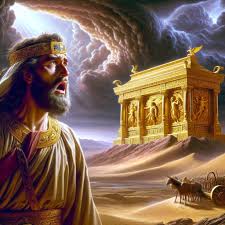
When they came to the threshing floor of Kidon, Uzzah reached out his hand to steady the ark, because the oxen stumbled10 The Lord’s anger burned against Uzzah, and he struck him down because he had put his hand on the ark. So he died there before God.

11 Then David was angry because the Lord’s wrath had broken out against Uzzah, and to this day that place is called Perez Uzzah.

12 David was afraid of God that day and asked, “How can I ever bring the ark of God to me?” 13 He did not take the ark to be with him in the City of David. Instead, he took it to the house of Obed-Edom the Gittite. 14 The ark of God remained with the family of Obed-Edom in his house for three months, and the Lord blessed his household and everything he had.

WHAT DO WE LEARN—HOW DO WE RESPOND?

David was honest before God in his own anger.  He didn’t think God’s actions toward a man simply trying to keep the Ark for sliding off the cart should lead to Uzzah’s death but he didn’t follow the holy rules for carrying the Ark that was holy unto God.  It seemed unfair and unjust to David who assigned this task to Uzzah.  Maybe this jolted our thinking as we read it, too! Rules are given with a purpose by God. 

Consider this:  God had given specific instructions concerning the sacred objects (see Numbers 4:15). God said he would put to death anyone who touched the ark.  There it is—in black and white. Here is something to consider; David became angry at God, but was his anger justified?  It was David’s own neglect that brought God’s severe action. Could David’s ego, “I want the Ark to be where I am,” a bit too much for God?

When we don’t agree with the One who calls the shots, our reaction is often the same as David’s—anger, bitterness, with instant words of “that’s not fair, God!” But David’s heart quickly calmed as he remembers his real intent was to honor God.

Warren Wiersbe writes;

“According to the writer of Chronicles, David appears to move the ark to Jerusalem as the first order of business, but 2 Samuel describes a lot of building that went on before David decided to bring the ark to the capital city. The Chronicler was intent on showing David’s actions in relation to God and His eventual temple in Jerusalem. Not only did this move consolidate the spiritual and governmental center of the nation, it also indicated that David wanted to send the message that Israel would no longer neglect the things of God.” –Wiersbe Study Bible

“Certainly the death of Uzza was a tragic event, but it underscores the history of care that had always been connected with the ark. In their haste to bring the ark to Jerusalem, people were recruited to help who may not have been Levites. Good intentions are not an excuse for ignoring clear instructions. The handling of the ark was a divine assignment for the tribe of Levi (see Numbers 4:1–20). No evidence is given that Abinadab was a Levite or that his sons Uzza and Ahio were even qualified to be near the ark, let alone touch it.” –Wiersbe Study Bible

Our response today—Do not ignore or set aside God’s Word for good intentions.

Seek first God and His Will in all the details of our lives that He enjoys giving His voice to with discernment and wisdom!  We should not ignore the clear teaching of Scripture regarding the church, the world, and the mission of those who claim to follow Jesus. Adding on churchy rules to please ourselves or with the intention we think are good to seduce others to come to “our church” is not pleasing to God.  Be honest before God and the people of the world in need of a Savior for it is Truth they seek!

Inventing ungodly (unscriptural) standards and then following them “religiously” flies in the face of God’s insistence that He will not change His mind about what He wants us to believe and the way He wants His people to live.

The Apostle Paul compassionately writes from his jail cell to the church, inspired by God’s Holy Spirit;

“As a prisoner for the Lord, then, I urge you to live a life worthy of the calling you have received. Be completely humble and gentle; be patient, bearing with one another in love. Make every effort to keep the unity of the Spirit through the bond of peace. There is one body and one Spirit, just as you were called to one hope when you were called; one Lord, one faith, one baptismone God and Father of all, who is over all and through all and in all.” Ephesians 4:1-6 (read the whole book to get the bigger picture!)

Manmade rules that divide the church and lead to behaviors of exclusion are probably not of God.

Lord,

This was a tough lesson to sort through but we have done our best to hear you.  May all that we think, say and do be refined first by your Holy Spirit.  Help us to think before we speak with words that are on your mind. Thank you for saving our souls and redeeming us for life eternal with you!

In Jesus Name, Amen

Posted in Uncategorized | Tagged , , , , | Leave a comment

OF ONE MIND WITH UNDIVIDED LOYALTY

There is a plethora of books, archived magazine articles, along with online sound bites on social media on how to be a great leader.  Most are written and published by great leaders who have been given a platform after their successes to tell us how they got there only after proving themselves to be great by the world around them.  Yes, that was along sentence.  Seriously, though, isn’t that what we look for first in a leader—a person who has already succeeded?

Who isn’t curious to know how they did what you are trying to do now as a leader? I confess; I was and I still am a questioner.  I question, not to criticize, but to relentlessly glean from those I trust. In my interviewing, I am seeking to learn. My questions are intended to go beyond what we see on the surface of a leader’s persona of success to discover their deeper motives, true feelings, asking about their past history that brought them to where they are now as revered, trustworthy leaders who others listen to and follow. 

David is one of those leaders who I would have loved to sit down and interview.  Wouldn’t you? The chronicles of his life show why God chose him to be the next king.  God knew the boy, David, sent by his father to do the lowliest job of all in the family—tend the sheep.  He was the youngest male, not worthy of much else, until God decided otherwise.  God saw and knew his heart.  As David cared for the sheep; he would sing songs of praise to His Shepherd who watched over him with power and might. 

Though chosen, anointed, and set apart from among David’s older brothers to be king; the pathway to the throne would not be easy.  Over the years, of gathering knowledge from leaders in various parts of the world, leaders who were considered trusted and revered, one characteristic stood out—they walked humbly with God. But they became humbled by God through past difficulties in their lives.  Those humbled by past sufferings learned to fully rely on God to walk with them through the challenging times. It was those humbly experiences that drew them closer to God. They become more and more equipped by God as men and women who served rather than seeking to be served. They had a heightened awareness of others’ needs with empathy and compassion. 

Godly leaders successfully recognize and realize more quickly than others the plight and needs of others and come to their aid with real help because they, too have suffered and know where their help came from—God! They also know what anxious fear feels like and can share from the heart the One and Only who can relieve fear and anxious thoughts!  

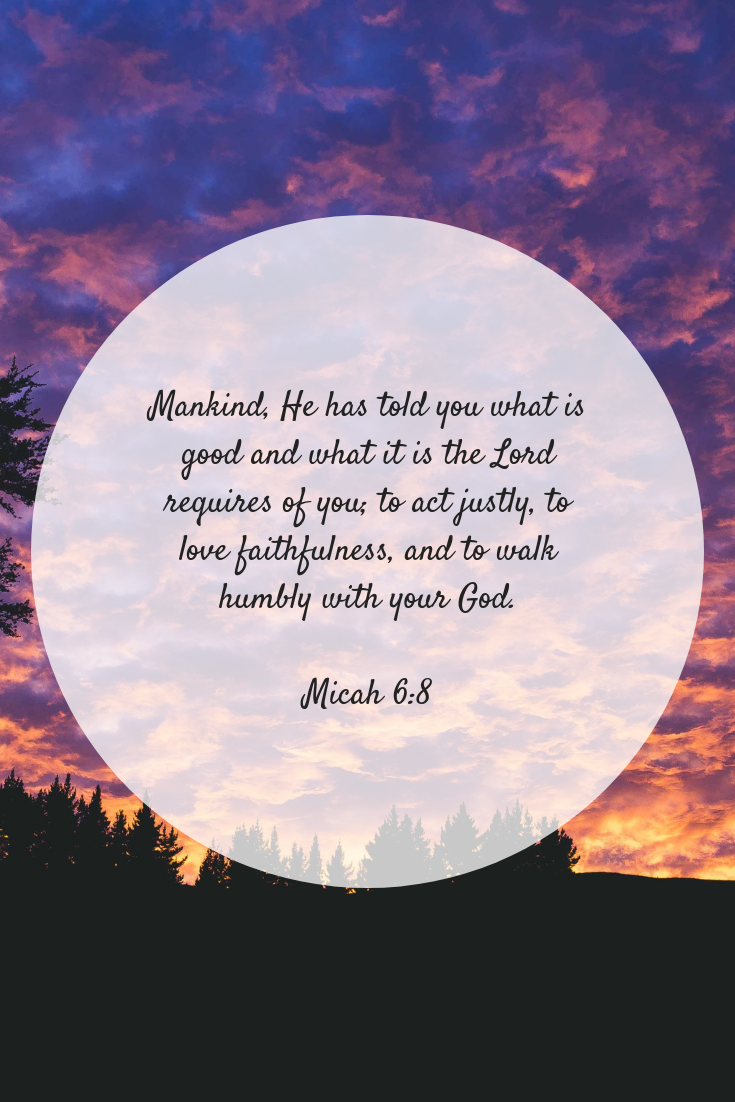
To walk humbly with God is what the prophet Micah says God requires of all of us.  Suffering leads us to walk humbly with God. Perseverance through suffering leads us to strong, relentless faith in God. (James 1) The resulting outcome:  Godly leaders trust and obey God with all that is within them without thinking how it will benefit them but as the way to love God back for all He has done for them (and us).  The person who seeks justice for others in God’s view of life, who loves His mercy and is merciful to others seem to be prerequisites for walking humbly with God. (Micah 6:8)

God notices humility and opposes the proud.  God sees the heart of those who are undivided in loyalty and of one mind, committed fully to Him and supports them. (2 Chronicles 16:9)

People notice the one who pursues God and are attracted to leaders who know God and follow what He says. Most people are distracted to arrogant, know-it-alls, who live only for themselves and demand self-glorification. (James 4:6)

1 Chronicles 12

Warriors Join David

These were the men who came to David at Ziklag, while he was banished from the presence of Saul son of Kish (they were among the warriors who helped him in battle; they were armed with bows and were able to shoot arrows or to sling stones right-handed or left-handed; they were relatives of Saul from the tribe of Benjamin):

Ahiezer their chief and Joash the sons of Shemaah the Gibeathite; Jeziel and Pelet the sons of Azmaveth; Berakah, Jehu the Anathothite, and Ishmaiah the Gibeonite, a mighty warrior among the Thirty, who was a leader of the Thirty; Jeremiah, Jahaziel, Johanan, Jozabad the Gederathite, Eluzai, Jerimoth, Bealiah, Shemariah and Shephatiah the Haruphite; Elkanah, Ishiah, Azarel, Joezer and Jashobeam the Korahites; and Joelah and Zebadiah the sons of Jeroham from Gedor.

Some Gadites defected to David at his stronghold in the wilderness. They were brave warriors, ready for battle and able to handle the shield and spear. Their faces were the faces of lions, and they were as swift as gazelles in the mountains.

Ezer was the chief, Obadiah the second in command, Eliab the third, 10 Mishmannah the fourth, Jeremiah the fifth, 11 Attai the sixth, Eliel the seventh, 12 Johanan the eighth, Elzabad the ninth, 13 Jeremiah the tenth and Makbannai the eleventh.

14 These Gadites were army commanders; the least was a match for a hundred, and the greatest for a thousand. 15 It was they who crossed the Jordan in the first month when it was overflowing all its banks, and they put to flight everyone living in the valleys, to the east and to the west.

16 Other Benjamites and some men from Judah also came to David in his stronghold17 David went out to meet them and said to them, “If you have come to me in peace to help me, I am ready for you to join me. But if you have come to betray me to my enemies when my hands are free from violence, may the God of our ancestors see it and judge you.”

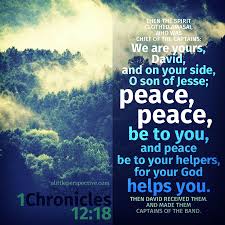
18 Then the Spirit came on Amasai, chief of the Thirty, and he said:

“We are yours, David! We are with you, son of Jesse!
Success, success to you, and success to those who help you, for your God will help you.”

So David received them and made them leaders of his raiding bands.

19 Some of the tribe of Manasseh defected to David when he went with the Philistines to fight against Saul. (He and his men did not help the Philistines because, after consultation, their rulers sent him away. They said, “It will cost us our heads if he deserts to his master Saul.”) 20 When David went to Ziklag, these were the men of Manasseh who defected to him: Adnah, Jozabad, Jediael, Michael, Jozabad, Elihu and Zillethai, leaders of units of a thousand in Manasseh. 21 They helped David against raiding bands, for all of them were brave warriors, and they were commanders in his army. 22 Day after day men came to help David, until he had a great army, like the army of God.

Others Join David at Hebron

23 These are the numbers of the men armed for battle who came to David at Hebron to turn Saul’s kingdom over to him, as the Lord had said:

24 from Judah, carrying shield and spear—6,800 armed for battle;

25 from Simeon, warriors ready for battle—7,100;

26 from Levi—4,600, 27 including Jehoiada, leader of the family of Aaron, with 3,700 men, 28 and Zadok, a brave young warrior, with 22 officers from his family;

29 from Benjamin, Saul’s tribe—3,000, most of whom had remained loyal to Saul’s house until then;

30 from Ephraim, brave warriors, famous in their own clans—20,800;

31 from half the tribe of Manasseh, designated by name to come and make David king—18,000;

32 from Issachar, men who understood the times and knew what Israel should do—200 chiefs, with all their relatives under their command;

33 from Zebulun, experienced soldiers prepared for battle with every type of weapon, to help David with undivided loyalty—50,000;

34 from Naphtali—1,000 officers, together with 37,000 men carrying shields and spears;

35 from Dan, ready for battle—28,600;

36 from Asher, experienced soldiers prepared for battle—40,000;

37 and from east of the Jordan, from Reuben, Gad and the half-tribe of Manasseh, armed with every type of weapon—120,000.

38 All these were fighting men who volunteered to serve in the ranks. They came to Hebron fully determined to make David king over all Israel. All the rest of the Israelites were also of one mind to make David king39 The men spent three days there with David, eating and drinking, for their families had supplied provisions for them. 40 Also, their neighbors from as far away as Issachar, Zebulun and Naphtali came bringing food on donkeys, camels, mules and oxen. There were plentiful supplies of flour, fig cakes, raisin cakes, wine, olive oil, cattle and sheep, for there was joy in Israel.

WHAT DO WE LEARN—HOW DO WE RESPOND?

The Holy Spirit of God makes all the difference!

One of the distinct differences between God’s dealings with people during Old Testament times and New Testament times has to do with the work of the Holy Spirit. In this passage of David’s life as a new leader; we read how God’s Spirit coming on Amasai to bless David and declare the allegiance of the thirty elite warriors. God moved in the lives of particular people to carry out detailed, specific actions knowing David would trust and obey Him!       

We can rely on God’s Holy Spirit to make a difference always!

As believers in Jesus; we can expect and rely on God’s Holy Spirit’s presence at the exact point of saying yes to Jesus! (1 Corinthians 12–14). Today, God’s Spirit continues His intimate work in us, enabling all by His power working in us to live abundantly and free as redeemed people (Romans 8:2) as we spread the gospel (Acts 1:8) of Jesus Christ!

God guides; God provides.  God gives exactly what we need when we need it most. God did it for David and He still does it for us! Trust and obey for there’s no other way—to walk humbly with our God.

Lord,

Thank you for the chronicled facts of the lives you led to accomplish your will and purposes then—leading to the coming of our King Jesus!  There is no one like our God!  You are Sovereign. You are Savior, Protector, Provider, Healer, Counselor and You are the peace we seek and the love we cherish. Thank you, thank you, thank you!

To you be the glory, honor, and praise forevermore!

In Jesus Name, Amen

Posted in Uncategorized | Tagged , , , , | Leave a comment

The Chronicle of a King

If you are reading and studying along with us; you might be wondering what the word chronicle means. I looked it up for us. The simple definition has been provided so the word, chornicle, does not get in the way of our understanding of God’s Word for us today.  A chronicle record is a factual written account of important or historical events in the order of their occurrence.  It is not an analysis or interpretation of those events but merely a historical record of account arranged in chronological order of the time and occurrences. A later example would be reading a chronicle of the Civil War that took place in our country.  Those who stood out above the rest because of their acts of bravery that changed the outcome of their nation are typically listed.

Now we come to the chronicle summary of King David’s reign, the shepherd boy who became King of Israel because he was known as a “man who ran after the heart of God.”  David had to fight a lot of battles even after the fall of King Saul before becoming God’s newly appointed King and taking the throne. 

It is good to note that Our King of kings and Lord of lords, Jesus, our Savior will be born to Mary and Joseph who both born in the hereditary line of David. It was foretold that the Messiah would come from the “line of King David.” Chronicles of the wars, battles, thrones of great men and women who ruled for a time, riches given and taken, along with all manmade kingdoms will all pass away when Jesus comes back to claim His own as the Kingdom of God forever.  Hold that thought as we read.

1 Chronicles 11

David Becomes King Over Israel

All Israel came together to David at Hebron and said, “We are your own flesh and blood. In the past, even while Saul was king, you were the one who led Israel on their military campaigns. And the Lord your God said to you, ‘You will shepherd my people Israel, and you will become their ruler.’”

When all the elders of Israel had come to King David at Hebron, he made a covenant with them at Hebron before the Lord, and they anointed David king over Israel, as the Lord had promised through Samuel.

David Conquers Jerusalem

David and all the Israelites marched to Jerusalem (that is, Jebus). The Jebusites who lived there said to David, “You will not get in here.” Nevertheless, David captured the fortress of Zion—which is the City of David.

David had said, “Whoever leads the attack on the Jebusites will become commander in chief.” Joab son of Zeruiah went up first, and so he received the command.

David then took up residence in the fortress, and so it was called the City of David. He built up the city around it, from the terraces to the surrounding wall, while Joab restored the rest of the city. And David became more and more powerful, because the Lord Almighty was with him.

David’s Mighty Warriors

10 These were the chiefs of David’s mighty warriors—they, together with all Israel, gave his kingship strong support to extend it over the whole land, as the Lord had promised— 11 this is the list of David’s mighty warriors:

Jashobeam, a Hakmonite, was chief of the officers; he raised his spear against three hundred men, whom he killed in one encounter.

12 Next to him was Eleazar son of Dodai the Ahohite, one of the three mighty warriors. 13 He was with David at Pas Dammim when the Philistines gathered there for battle. At a place where there was a field full of barley, the troops fled from the Philistines. 14 But they took their stand in the middle of the field. They defended it and struck the Philistines down, and the Lord brought about a great victory.

15 Three of the thirty chiefs came down to David to the rock at the cave of Adullam, while a band of Philistines was encamped in the Valley of Rephaim. 16 At that time David was in the stronghold, and the Philistine garrison was at Bethlehem. 17 David longed for water and said, “Oh, that someone would get me a drink of water from the well near the gate of Bethlehem!” 18 So the Three broke through the Philistine lines, drew water from the well near the gate of Bethlehem and carried it back to David. But he refused to drink it; instead, he poured it out to the Lord. 19 “God forbid that I should do this!” he said. “Should I drink the blood of these men who went at the risk of their lives?” Because they risked their lives to bring it back, David would not drink it.

Such were the exploits of the three mighty warriors.

20 Abishai the brother of Joab was chief of the Three. He raised his spear against three hundred men, whom he killed, and so he became as famous as the Three. 21 He was doubly honored above the Three and became their commander, even though he was not included among them.

22 Benaiah son of Jehoiada, a valiant fighter from Kabzeel, performed great exploits. He struck down Moab’s two mightiest warriors. He also went down into a pit on a snowy day and killed a lion. 23 And he struck down an Egyptian who was five cubits tall. Although the Egyptian had a spear like a weaver’s rod in his hand, Benaiah went against him with a club. He snatched the spear from the Egyptian’s hand and killed him with his own spear. 24 Such were the exploits of Benaiah son of Jehoiada; he too was as famous as the three mighty warriors. 25 He was held in greater honor than any of the Thirty, but he was not included among the Three. And David put him in charge of his bodyguard.

26 The mighty warriors were: Asahel the brother of Joab, Elhanan son of Dodo from Bethlehem, 27 Shammoth the Harorite, Helez the Pelonite, 28 Ira son of Ikkesh from Tekoa, Abiezer from Anathoth, 29 Sibbekai the Hushathite, Ilai the Ahohite, 30 Maharai the Netophathite, Heled son of Baanah the Netophathite, 31 Ithai son of Ribai from Gibeah in Benjamin, Benaiah the Pirathonite, 32 Hurai from the ravines of Gaash, Abiel the Arbathite, 33 Azmaveth the Baharumite, Eliahba the Shaalbonite, 34 the sons of Hashem the Gizonite, Jonathan son of Shagee the Hararite, 35 Ahiam son of Sakar the Hararite, Eliphal son of Ur, 36 Hepher the Mekerathite, Ahijah the Pelonite, 37 Hezro the Carmelite, Naarai son of Ezbai, 38 Joel the brother of Nathan, Mibhar son of Hagri, 39 Zelek the Ammonite, Naharai the Berothite, the armor-bearer of Joab son of Zeruiah, 40 Ira the Ithrite, Gareb the Ithrite, 41 Uriah the Hittite, Zabad son of Ahlai, 42 Adina son of Shiza the Reubenite, who was chief of the Reubenites, and the thirty with him,

43 Hanan son of Maakah, Joshaphat the Mithnite, 44 Uzzia the Ashterathite, Shama and Jeiel the sons of Hotham the Aroerite, 45 Jediael son of Shimri, his brother Joha the Tizite, 46 Eliel the Mahavite, Jeribai and Joshaviah the sons of Elnaam, Ithmah the Moabite, 47 Eliel, Obed and Jaasiel the Mezobaite.

WHAT DO WE LEARN—HOW DO WE RESPOND?

By the time David moved to capture Jerusalem, he had already been king of Israel for seven years. The Lord must have guided David in a special way when he chose Jerusalem to be his capital because Jerusalem would play a strategic role in the working out of God’s great plan of salvation. God had promised the Israelites that He would appoint a place where they could come to worship Him (Deuteronomy 12:1–7). Jerusalem was that place before Jesus came to teach of the Kingdom of God.

Zion is the New Jerusalem; the City in the Kingdom of God!

The writer of Hebrews explains;

“You have not come to a mountain that can be touched and that is burning with fire; to darkness, gloom and storm;to a trumpet blast or to such a voice speaking words that those who heard it begged that no further word be spoken to them, because they could not bear what was commanded: “If even an animal touches the mountain, it must be stoned to death.”The sight was so terrifying that Moses said, “I am trembling with fear.”

But you have come to Mount Zion, to the city of the living God, the heavenly Jerusalem. You have come to thousands upon thousands of angels in joyful assembly, to the church of the firstborn, whose names are written in heaven. You have come to God, the Judge of all, to the spirits of the righteous made perfect, 24 to Jesus the mediator of a new covenant, and to the sprinkled blood that speaks a better word than the blood of Abel.” Hebrews 12:18-24

The church now sees the earthly Jerusalem as a divided city, a city of traditions in conflict; but the heavenly Jerusalem as a symbol of the covenant of grace in Christ Jesus and the eternal home of His people.

See Revelation 21–22 for more chronicles of true facts from Jesus who revealed Truth to John! God has set His King, Jesus, on the throne (Psalm 2:6), and one day He will speak in His wrath and judge those who oppose Him and His truth.

Here is a glimpse of our future written down in John’s Revelation from Jesus;

Then I saw “a new heaven and a new earth,” for the first heaven and the first earth had passed away, and there was no longer any sea. I saw the Holy City, the new Jerusalem, coming down out of heaven from God, prepared as a bride beautifully dressed for her husband. And I heard a loud voice from the throne saying, “Look! God’s dwelling place is now among the people, and he will dwell with them. They will be his people, and God himself will be with them and be their God. ‘He will wipe every tear from their eyes. There will be no more death’ or mourning or crying or pain, for the old order of things has passed away.”

He who was seated on the throne said, “I am making everything new!” Then he said, “Write this down, for these words are trustworthy and true.”—John from Jesus, Revelation 21:1-5

“I have installed my king on Zion, my holy mountain.” Psalm 2:6

God is speaking of Jesus, His Son, who was, is, and always will be our eternal king—written by the Psalmist, David, centuries earlier!

Yes, God has everything under His sovereign control—even if we don’t see, hear, or feel it, God IS in the details of our lives.  Gods love never changes.  God never fails. And God is always with us.  That’s the Truth!  And Jesus? He is at the Center of it all!

Lord,

Our prayer this morning; Open our eyes, help us to intentionally listen for your voice with determined, relentless focus on what we have learned through your Word.  May we see you at work, fulfilling  Your Plan of redemption in each one You have created.  Here is my life.  Use me as your physical hands and feet to point the Way to Your salvation and help to overcome.  You are King of my life!  You are the One I trust because you are Life to me!  May the Kingdom of God dwell in me.

In Jesus Name, Amen
Posted in Uncategorized | Tagged , , , , | Leave a comment

WHEN GOD STEPS IN—

Saul, a Benjamite son, the tribe listed last among the twelve tribes of Israel, was chosen to be the first King of Israel. The people clamored, begged, and pleaded with God to give them a king to rule over them. God advised through his prophets that His people knew not what they are doing for a king would bring on them more troubles.  But still they pleaded so God gave them a king.  Saul was a humble herder of donkeys, living in a remote area.  Saul knew God and revered Him—until he didn’t.

God stepped in and chose Saul to be anointed by Samuel as the first king God’s people longed for, thinking a king would solve all their problems.  God was with Saul and helped him win the battles necessary to secure the land and freedom for God’s people.  With great successes, however, Saul’s ego became his god. He no longer trusted or obeyed God’s specific directions and guidance through the prophet Samuel.  (See 1 Samuel)

In a few paragraphs a great man (in his own eyes) fell to the enemy he formerly defeated.  But God stepped in and chose a new king; David— “a man after the heart of God.”  King David is the new ruler who had to fight his way through battles of evil control, the jealousies of his older brothers at home, and others who didn’t think a shepherd boy could rule a kingdom.  But God stepped in and gave David all he needed to fight all the “giants” who defiled God and His plan.

Remember, what is written at the end of each king’s reign in First and Second Kings? The reign ends with “all that was accomplished is written in the annuals”. The books of Chronicles are the result of God’s people precisely writing it all down. That’s why we can dig for the riches of the realty of how God worked in the lives of ordinary people to accomplish His extraordinary Plan.  His people didn’t always get it completely right because each one was a fallible human with flaws.  But we learn great lesson from our God who used their mistakes and sins for His glory and our good!

When God steps in, course corrections are made to fulfill His Plan. God’s love, compassion, and mercy never change for his beloved.  We learn that forgiveness is His character and habit of behavior for those who humble themselves before Him.  God’s story is relevant to us as it shows our weaknesses, given to Him, are made strong by God’s mighty power.  God is sovereign which means God is in all and over all. Nothing escapes God’s notice.  God will always want his best for us in all circumstances as we wait for His will.  We also learn that God disciplines those He loves by stepping in to provide the way back to Him. 

The Bible is the story of God and His Plan to save us from ourselves and from the evil hovering around us whose desire is to enslave us in sin.  When God steps in, life is seen from a new perspective–God’s view of us.  He sees us as redeemed, free, loved, children of the Father, full of His glory.  Yes, citizens of the Kingdom of God are full of people whose hearts are fully committed to God with eagerness to trust and obey Him. 

Life changes when God steps in!   

Saul Takes His Life

Now the Philistines fought against Israel; the Israelites fled before them, and many fell dead on Mount Gilboa. The Philistines were in hot pursuit of Saul and his sons, and they killed his sons Jonathan, Abinadab and Malki-Shua. The fighting grew fierce around Saul, and when the archers overtook him, they wounded him.

Saul said to his armor-bearer, “Draw your sword and run me through, or these uncircumcised fellows will come and abuse me.”

But his armor-bearer was terrified and would not do it; so Saul took his own sword and fell on itWhen the armor-bearer saw that Saul was dead, he too fell on his sword and died. So Saul and his three sons died, and all his house died together.

When all the Israelites in the valley saw that the army had fled and that Saul and his sons had died, they abandoned their towns and fled. And the Philistines came and occupied them.

The next day, when the Philistines came to strip the dead, they found Saul and his sons fallen on Mount Gilboa. They stripped him and took his head and his armor, and sent messengers throughout the land of the Philistines to proclaim the news among their idols and their people. 10 They put his armor in the temple of their gods and hung up his head in the temple of Dagon.

11 When all the inhabitants of Jabesh Gilead heard what the Philistines had done to Saul, 12 all their valiant men went and took the bodies of Saul and his sons and brought them to Jabesh. Then they buried their bones under the great tree in Jabesh, and they fasted seven days.

13 Saul died because he was unfaithful to the Lord; he did not keep the word of the Lord and even consulted a medium for guidance, 14 and did not inquire of the Lord. So the Lord put him to death and turned the kingdom over to David son of Jesse.

WHAT DO WE LEARN—HOW DO WE RESPOND?

“After Saul’s death, David was anointed king of Judah. Even so, it was more than seven years later before he ruled over all of Israel. That seven-year period was marked by civil war and Philistine domination.

Failure results when people forsake God. We must choose to follow and fight for the kingdom that follows God rather than the one that forsakes him.

Make God your refuge. Not your job, your spouse, your reputation, or your retirement account. Make God your refuge. Let him, not Saul, encircle you. Let him be the ceiling that breaks the sunshine, the walls that stop the wind, the foundation on which you stand.

A cave dweller addressed our church recently. He bore the smell of Adullam. He’d just buried his wife, and his daughter was growing sicker by the day. Yet, in the dry land he found God. I wrote his discovery on the flyleaf of my Bible: “You’ll never know that Jesus is all you need until Jesus is all you have.”

Wilderness survivors find refuge in God’s presence.

They also discover community among God’s people.

Strong congregations are populated with current and former cave dwellers, people who know the terrain of Adullam. They told a few lies in Nob. They went loopy in Gath. And they haven’t forgotten it. And because they haven’t, they imitate David: They make room for you.

Are you in the wilderness? Crawl into God the way a fugitive would a cave. Find refuge in God’s presence.

Find comfort in his people. Cast your hat in a congregation of folks who are one gift of grace removed from tragedy, addiction, and disaster. Seek community in the church of Adullam.

Refuge in God’s presence. Comfort in God’s people. Your keys for wilderness survival. Do this, and, who knows, in the midst of this desert you may write your sweetest psalms.

Which side are you on? Which kingdom do you fight for? Speak for? Pray for? Pray for the fortitude to stand for God’s kingdom, even if it brings personal loss to you.” –Max Lucado, The Encouraging Word Bible

Lord,

Because I am overwhelmed by your Word; I’m praying the Psalm of David to you,

Lord, hear my prayer, listen to my cry for mercy; in your faithfulness and righteousness come to my relief.
Do not bring your servant into judgment, for no one living is righteous before you.
The enemy pursues me, he crushes me to the ground; he makes me dwell in the darkness like those long dead.
So my spirit grows faint within me; my heart within me is dismayed.
I remember the days of long ago; I meditate on all your works and consider what your hands have done.
I spread out my hands to you; I thirst for you like a parched land.

Answer me quickly, Lord; my spirit fails.
Do not hide your face from me or I will be like those who go down to the pit.
Let the morning bring me word of your unfailing love, for I have put my trust in you.
Show me the way I should go, for to you I entrust my life.
Rescue me from my enemies, Lord, for I hide myself in you.
Teach me to do your will, for you are my God; may your good Spirit lead me on level ground.

For your name’s sake, Lord, preserve my life; in your righteousness, bring me out of trouble.
In your unfailing love, silence my enemies; destroy all my foes, for I am your servant.

In Jesus Name, Amen

Posted in Uncategorized | Tagged , , , , | Leave a comment

COUNTING AND COUNTED

“All present and accounted for, sir!” If counting was not important to God, the book of Numbers and Chronicles might not have made it among the collection of books called God’s Word, the Bible. “Count the cost before you build,” “count the men able to fight before you go to war” against the enemy. Count the heads of all the families.  Count the utensils and tools for worship in the Tent of Meeting as they go in and out. Place guards at all the doors—north, south, east, and west. We might trust God but it seems we cannot trust always trust other humans so we count. So, maybe God tells us to count to hold each other accountable to Him.

The families of Israel who lived in Jerusalem after the captivity were counted and recorded. God holds his people accountable for the stewardship of their belongings. Each person must contribute to God’s work and to the upkeep of his house.  Yes, counting is important to God and to us!

The returning exiles were not great in number, but each person counted. The priests were “very able men.” The long, difficult journey back to the homeland had a definite, defining effect on the nation in exile. Those willing to endure the hardship tended to be the kind of people who could be counted on to help restore the nation of Israel, God’s chosen people. Endurance builds and increases our faith, writes James; 

“Count it all joy, my brothers and sisters, whenever you face trials of many kinds, because you know that the testing of your faith produces perseverance. Let perseverance finish its work so that you may be mature and complete, not lacking anything.” James 1:2-4 

Coming home after years of exile by those willing to endure the journey were counted because each one counted to God.

1 Chronicles 9

All Israel was listed in the genealogies recorded in the book of the kings of Israel and Judah. They were taken captive to Babylon because of their unfaithfulness.

The People in Jerusalem

Now the first to resettle on their own property in their own towns were some Israelites, priests, Levites and temple servants.

Those from Judah, from Benjamin, and from Ephraim and Manasseh who lived in Jerusalem were: Uthai son of Ammihud, the son of Omri, the son of Imri, the son of Bani, a descendant of Perez son of Judah.

Of the Shelanites: Asaiah the firstborn and his sons.

Of the Zerahites: Jeuel.

The people from Judah numbered 690.

Of the Benjamites: Sallu son of Meshullam, the son of Hodaviah, the son of Hassenuah; Ibneiah son of Jeroham; Elah son of Uzzi, the son of Mikri; and Meshullam son of Shephatiah, the son of Reuel, the son of Ibnijah. The people from Benjamin, as listed in their genealogy, numbered 956. All these men were heads of their families.

10 Of the priests: Jedaiah; Jehoiarib; Jakin; 11 Azariah son of Hilkiah, the son of Meshullam, the son of Zadok, the son of Meraioth, the son of Ahitub, the official in charge of the house of God; 12 Adaiah son of Jeroham, the son of Pashhur, the son of Malkijah; and Maasai son of Adiel, the son of Jahzerah, the son of Meshullam, the son of Meshillemith, the son of Immer.

13 The priests, who were heads of families, numbered 1,760. They were able men, responsible for ministering in the house of God.

14 Of the Levites: Shemaiah son of Hasshub, the son of Azrikam, the son of Hashabiah, a Merarite; 15 Bakbakkar, Heresh, Galal and Mattaniah son of Mika, the son of Zikri, the son of Asaph; 16 Obadiah son of Shemaiah, the son of Galal, the son of Jeduthun; and Berekiah son of Asa, the son of Elkanah, who lived in the villages of the Netophathites.

17 The gatekeepers: Shallum, Akkub, Talmon, Ahiman and their fellow Levites, Shallum their chief 18 being stationed at the King’s Gate on the east, up to the present time. These were the gatekeepers belonging to the camp of the Levites. 19 Shallum son of Kore, the son of Ebiasaph, the son of Korah, and his fellow gatekeepers from his family (the Korahites) were responsible for guarding the thresholds of the tent just as their ancestors had been responsible for guarding the entrance to the dwelling of the Lord. 20 In earlier times Phinehas son of Eleazar was the official in charge of the gatekeepers, and the Lord was with him21 Zechariah son of Meshelemiah was the gatekeeper at the entrance to the tent of meeting.

22 Altogether, those chosen to be gatekeepers at the thresholds numbered 212. They were registered by genealogy in their villages. The gatekeepers had been assigned to their positions of trust by David and Samuel the seer23 They and their descendants were in charge of guarding the gates of the house of the Lord—the house called the tent of meeting. 24 The gatekeepers were on the four sides: east, west, north and south. 25 Their fellow Levites in their villages had to come from time to time and share their duties for seven-day periods. 26 But the four principal gatekeepers, who were Levites, were entrusted with the responsibility for the rooms and treasuries in the house of God. 27 They would spend the night stationed around the house of God, because they had to guard it; and they had charge of the key for opening it each morning.

28 Some of them were in charge of the articles used in the temple service; they counted them when they were brought in and when they were taken out. 29 Others were assigned to take care of the furnishings and all the other articles of the sanctuary, as well as the special flour and wine, and the olive oil, incense and spices. 30 But some of the priests took care of mixing the spices31 A Levite named Mattithiah, the firstborn son of Shallum the Korahite, was entrusted with the responsibility for baking the offering bread. 32 Some of the Kohathites, their fellow Levites, were in charge of preparing for every Sabbath the bread set out on the table.

33 Those who were musicians, heads of Levite families, stayed in the rooms of the temple and were exempt from other duties because they were responsible for the work day and night.

34 All these were heads of Levite families, chiefs as listed in their genealogy, and they lived in Jerusalem.

The Genealogy of Saul

35 Jeiel the father of Gibeon lived in Gibeon.  His wife’s name was Maakah, 36 and his firstborn son was Abdon, followed by Zur, Kish, Baal, Ner, Nadab, 37 Gedor, Ahio, Zechariah and Mikloth. 38 Mikloth was the father of Shimeam. They too lived near their relatives in Jerusalem.

39 Ner was the father of Kish, Kish the father of Saul, and Saul the father of Jonathan, Malki-Shua, Abinadab and Esh-Baal.

40 The son of Jonathan: Merib-Baal, (also known as Mephibosheth) who was the father of Micah. 41 The sons of Micah: Pithon, Melek, Tahrea and Ahaz. 42 Ahaz was the father of Jadah, Jadah was the father of Alemeth, Azmaveth and Zimri, and Zimri was the father of Moza. 43 Moza was the father of Binea; Rephaiah was his son, Eleasah his son and Azel his son. 44 Azel had six sons, and these were their names: Azrikam, Bokeru, Ishmael, Sheariah, Obadiah and Hanan. These were the sons of Azel.

WHAT DO WE LEARN—HOW DO WE RESPOND?

One couple in a church we served years ago became our faithful good friends who served alongside us as God led us. We lived near each other and helped each other. So when we saw smoke rising from the location of their home, knowing they were away for the weekend, we drove to their home to check on their property.  Sure enough, fire engulfed most of their home. Most of their belongings were lost or damaged by fire.  We waited at their home for our friends to come back from their trip.  Some of their family were also summoned.  We wanted to be with them when they arrived to help them process what happened.  But this couple blessed us and those around them!

Being a couple of strong faith, their first words were; “Was anyone hurt”? We told them no. The next comment through tears, “Good. Stuff can be replaced and restored.” Followed by, “I’m glad we were not home and that all who fought the fire are safe.” “Thanks to God and to each one of you who helped.”

Thoughts of restoring what was lost with God’s help guided their journey in the coming days and months. Their worry and anxious thoughts came forward as they took inventory as a count for their insurance company. But they turned to God in prayer over the paperwork, and God gave them peace.  That’s what God does as we place all our trust in Him as we work “to endure through trials” here on earth.  Everyone will go through trials in an imperfect world.  Trials can teach us or make us joyless and dull.  Our response to trials matters.  God uses these temporary trials to build a forever faith in Him! Endurance is the doable strength by faith in God’s Holy Spirit power living and working deep within us.

From our trials on earth, we might be able to get a taste of how these returning exiles, oppressed by their Babylonian captors, may have felt as they returned home to devastation.  All they once knew was gone. But those who endured, faced with the seemingly overwhelming restoration and rebuilding of their homeland, with all they once knew being burned and destroyed, sought the Lord for help.

“Trusted or entrusted” is used often in this chapter as leaders were appointed. One of the timeless marks of faith maturity in people is a strong commitment to personal integrity upon which others can rely. We might pause to ask ourselves, “Can I be counted on?”

Trust Me first, says God.  God never fails and always does what He says. We cannot use the words always and never with humans but we can with God! Trust God to raise up His called out leaders who trust Him with hearts are fully committed to Him! God knows!

Lord,

Thank you for lessons of endurance through trials, disappointments of life here, with your amazing power to turn ashes into beauty over and over again.  Why would we trust, fully trust, anyone else but you?  I do not know. Cleanse our hearts, renew our minds, refresh our souls, and restore the joy of your salvation within us—no matter that the circumstances or our present trials!  I trust you, God, the Father, Jesus, the Son, and the Holy Spirit! To you be the glory, honor, and praise forever and ever, Amen

Posted in Uncategorized | Tagged , , , , | Leave a comment

HUMBLE BEGINNINGS

We see many humble people rise to greatness as leaders because they love God, know His ways and tell the truth.  Humbled beginnings keeps their hearts in check to put others interests above their own.  Humble people are trustworthy because have been where you are now—living humbly content with what you have been given to manage. They know what you are going through to survive.  But relationships, character, integrity, and that once embedded humility turns sour when they forget where they came.  The life of contentment, the desire to help others because of your love for them is replaced with wanting more for yourself.  Pride with the side effects of envy, jealousy, and greed overcomes their being and floods their hearts, minds, and souls with wanting to be served by all who come into their presence.  All that was good goes bad when self-satisfaction takes over. 

The devil applauds the arrogance of once humbled people as it breaks God’s heart.

Speaking of arrogance, where did the first king of Israel come from?  The lowly, last tribe mentioned of Benjamin! Benjamin was Jacob/Israel’s youngest son so his tribe is listed last. The first king of Israel, Saul, came from this tribe, so the genealogy quickly narrows to Saul’s family background.  We previously read Saul’s story, his relationship with God, his arrogant disobedience of God because he wanted to be the god of the world which would lead to his demise in the book of Samuel.  Here is were he came from; 

1 Chronicles 8

The Genealogy of Saul the Benjamite

8 Benjamin was the father of Bela his firstborn, Ashbel the second son, Aharah the third, Nohah the fourth and Rapha the fifth.

The sons of Bela were: Addar, Gera, Abihud, Abishua, Naaman, Ahoah, Gera, Shephuphan and Huram.

These were the descendants of Ehud, who were heads of families of those living in Geba and were deported to Manahath: Naaman, Ahijah, and Gera, who deported them and who was the father of Uzza and Ahihud.

Sons were born to Shaharaim in Moab after he had divorced his wives Hushim and Baara. By his wife Hodesh he had Jobab, Zibia, Mesha, Malkam, 10 Jeuz, Sakia and Mirmah. These were his sons, heads of families. 11 By Hushim he had Abitub and Elpaal.

12 The sons of Elpaal: Eber, Misham, Shemed (who built Ono and Lod with its surrounding villages), 13 and Beriah and Shema, who were heads of families of those living in Aijalon and who drove out the inhabitants of Gath.

14 Ahio, Shashak, Jeremoth, 15 Zebadiah, Arad, Eder, 16 Michael, Ishpah and Joha were the sons of Beriah. 17 Zebadiah, Meshullam, Hizki, Heber, 18 Ishmerai, Izliah and Jobab were the sons of Elpaal. 19 Jakim, Zikri, Zabdi, 20 Elienai, Zillethai, Eliel, 21 Adaiah, Beraiah and Shimrath were the sons of Shimei.

22 Ishpan, Eber, Eliel, 23 Abdon, Zikri, Hanan, 24 Hananiah, Elam, Anthothijah, 25 Iphdeiah and Penuel were the sons of Shashak.  26 Shamsherai, Shehariah, Athaliah, 27 Jaareshiah, Elijah and Zikri were the sons of Jeroham. 28 All these were heads of families, chiefs as listed in their genealogy, and they lived in Jerusalem.

29 Jeiel the father of Gibeon lived in Gibeon.  His wife’s name was Maakah, 30 and his firstborn son was Abdon, followed by Zur, Kish, Baal, Ner, Nadab, 31 Gedor, Ahio, Zeker 32 and Mikloth, who was the father of Shimeah. They too lived near their relatives in Jerusalem.

33 Ner was the father of Kish, Kish the father of Saul, and Saul the father of Jonathan, Malki-Shua, Abinadab and Esh-Baal.

34 The son of Jonathan: Merib-Baal, (Also known as Mephibosheth), who was the father of Micah.

35 The sons of Micah: Pithon, Melek, Tarea and Ahaz.

36 Ahaz was the father of Jehoaddah, Jehoaddah was the father of Alemeth, Azmaveth and Zimri, and Zimri was the father of Moza. 37 Moza was the father of Binea; Raphah was his son, Eleasah his son and Azel his son.

38 Azel had six sons, and these were their names: Azrikam, Bokeru, Ishmael, Sheariah, Obadiah and Hanan. All these were the sons of Azel.

39 The sons of his brother Eshek: Ulam his firstborn, Jeush the second son and Eliphelet the third. 40 The sons of Ulam were brave warriors who could handle the bow. They had many sons and grandsons—150 in all.

All these were the descendants of Benjamin.

WHAT DO WE LEARN—HOW DO WE RESPOND?

Where we come from is not as important as Who we love, admire, trust, and obey.

The story of Saul is also the story of Jonathan, his son.  The story of Saul’s rise to the throne and his eventual fall from God’s favor is told in 1 Samuel 9–31.

Saul’s son Jonathan is one of the most outstanding characters in the Bible. Jonathan’s friendship with David was one of the constants in David’s life until Jonathan was killed in battle alongside his father. Jonathan’s story saturates 1 Samuel 14–31 with integrity, genuine friendship, and exemplary loyalty. Having a friend like Jonathan is one of life’s greatest treasures. 

Think about it—Saul came from the lowly, last tribe mentioned, with humble beginnings.  We knew God and followed what He said until he didn’t.  With God’s success through him as King of Israel; Saul developed a taste for being served rather than being of service to God’s people.  Saul felt like he knew better than God and would not totally obey what God told him to do.  Jonathan, however, born a Prince as the King’s Son had every physical need met but lived a life of integrity.

What is our response to God? Is our response based on our circumstances or our faith and commitment to God?  Does it really matter where we came from?  Or is it more important where we are going—with God in the lead?

Romans 12:1-2 tells us what to be first (on offering to God) and then do (God’s perfect, pleasing will) guided by God’s Holy Spirit. This is walking humbly with God—one of His requirements.  “He has shown you, O man, what is good; and what does the Lord require of you? But to do justice, to love kindness, and to walk humbly with your God”. Micah 6:8. The prophet speaks God’s words so that we will know God more so we can be more like Him in His characteristics of righteous actions, compassion, with a humble relationship God.  Our relationship with God will affectively govern our relationship with others whom God loves and created—all over the world! 

For God so loved the world that he gave his one and only Son, that whoever believes in him shall not perish but have eternal life. 17 For God did not send his Son into the world to condemn the world, but to save the world through him.” John 3;16-17

Remember it was God’s people who cried for a king to lead them. They wanted to be like the nations around them who did not know or trust God as God.  God gave them what they asked for but allowed them to live the consequences of putting all their worship and dependence in a human king.

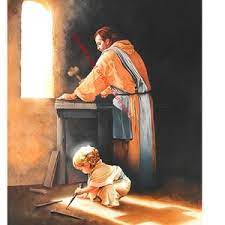
For us, only Jesus, who was without sin, sent to redeem us, is King. Jesus willingly obeyed God as he laid down His life to die for our sins.  Jesus put others interests ahead of his own.  He came to serve; not to be served.  Jesus was born to a carpenter and his espoused wife who humbly walked with God.  Jesus lived humbly and walked with God, too.  He was God in flesh. Jesus met with God often, communed with God in prayer conversation, asking God for His will and direction first before doing anything of significance for others. 

Jesus completed His mission on earth to seek and to save the lost while fulfilling every detail The Law by becoming the once and for all Sacrifice for the sins of the world—as written centuries earlier by God’s prophets! Jesus gave his life so we could live freely without the bondage of our sins. God gave Jesus all authority in heaven and on earth upon rising from death to life as KING of kings and LORD of lords. 

Jesus is our Hope of eternal life now and forever.  With God’s authority in His Son, Jesus commands (not suggests as a church activity) but commands all who believe; “…go and make disciples of all nationsbaptizing them in the name of the Father and of the Son and of the Holy Spirit, and teaching them to obey everything I have commanded you.” 

Jesus gives this command with a promise: “And surely I am with you always, to the very end of the age.”  We can count on this blessed assurance!  God’s Holy Spirit who lives in us gives us the words to say with His spirit of love, mercy, and grace!  Jesus in us also guides us to think and behave more like Him as LORD of our lives!

Speaking of Hope—

Chapter 9 is a bit of a leap forward in history, bypassing the years of kingly rule and the years of captivity in Babylon to list the families that returned to Judah from exile. This accounting would fit best at the end of this book, but this flash forward serves as an encouraging note that the cycle of unfaithfulness and sinfulness that accompanied the monarchy and the painful punishment of exile finally ended.

Words of hope for the returning exiles were as significant as the promises we have about Christ’s return. And seeing how God kept His promises in the past renews our own sense of hope.


Lord,

Thank you for being with us always. Thank you for listening to us and then teaching us truth that enriches our thoughts and affects our responsive behaviors to You. Thank you for living in us to guide us first to Truth—You; and then shaping us to Your will and purpose for us.  There is no one like you in all the earth! That is why I want to be more like you in every way.  I love you, Lord, with all my heart, mind, and soul.  You are God alone; I am not.

In Jesus Name, Amen
Posted in Uncategorized | Tagged , , , , | Leave a comment

NAMES WITH MEANING—REAL PEOPLE OF SIGNIFICANCE

Chronicles is a great place to look for a name with meaning and significance!  Names were not just plucked from previous family names it seems; but original names. What a father named his son was influenced by what was occurring in his life at the time of his son’s birth. Where, when, and how he was born “named” the son. 

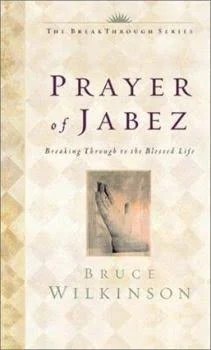
Consider Jabez, for example, whose birth was uber painful and difficult for his mother. So, the parents named him Jabez which meant “he causes pain.”  Pain with childbirth is to be expected, so this pain must have been tremendous to have been named “Pain”!  (See 1 Chronicles 4:9-10) Not wanting to be known as a “pain”; Jabez prayed to God asking “Oh, that you would bless me and enlarge my territory! Let your hand be with me, and keep me from harm so that I will be free from pain.” God answered Jabez’s plea as he was known as “more honorable than his brothers.”  People respected Jabez who honored and revered God!  Bruce Wilkenson made the story of Jabez famous as he was led by God to pause in the named descendants to center on the word said about this person who caused pain.  Read Wilkenson’s book, “The Prayer of Jabez,” his personal testimony, and may you will be as encouraged as I was when I read it.   (The Prayer of Jabez: Breaking Through to the Blessed Life, by Bruce Wilkinson published in 2000 by Multnomah Books)

But what about daughters? There was a man named Zelophehad, “who only had daughters”—five of them!  We don’t know their names but from the records kept; we learn that these are the bold daughters from the tribe of Manasseh who petitioned a land allotment from Moses after their father died in the wilderness with no male heirs (see Numbers 27:1–11).  Moses heard their plea, asked God for wisdom, and formed a plan for their care. 

These five bold daughters, their story hidden within the named descendants of the original sons of Jacob who composed the twelve tribes of Israel, petitioned Moses (and God) to change the laws concerning land ownership so they would be protected. God, through Moses listened and a new provision made! 

Later, their case came up before Moses again because the people in their tribe foresaw that they might marry outside their clan and transfer land ownership to outsiders. God settled the matter in Numbers 36:1–12.

Two significant social principles were established: Women could inherit land, and the lands belonging to one tribe had to remain that tribe’s territory.

But, that’s not all…

Sheerah was a descendant of Ephraim who built two towns. She joins Deborah the judge (Judges 4), Miriam the worship leader (Exodus 15:20, 21), the daughters of Zelophehad, and the diligent woman of Proverbs 31 as women who achieved much in a male-dominated society. God’s Word reports the efforts and accomplishments of these women as worthy in themselves, not just because they were accomplished by women. To God be the glory who shows no favorites. God deeply loves every person He has created, both male and female. “For the eyes of the LORD run to and fro throughout the whole earth, to give strong support to those whose heart is blameless toward him. (2 Chronicles 16:9) 

Among the meaningful names, look for the significance of a life dedicated to God.

1 Chronicles 7

Issachar

The sons of Issachar: Tola, Puah, Jashub and Shimron—four in all.

The sons of Tola: Uzzi, Rephaiah, Jeriel, Jahmai, Ibsam and Samuel—heads of their families. During the reign of David, the descendants of Tola listed as fighting men in their genealogy numbered 22,600.

The son of Uzzi: Izrahiah.

The sons of Izrahiah: Michael, Obadiah, Joel and Ishiah. All five of them were chiefs. According to their family genealogy, they had 36,000 men ready for battle, for they had many wives and children.

The relatives who were fighting men belonging to all the clans of Issachar, as listed in their genealogy, were 87,000 in all.

Benjamin

Three sons of Benjamin: Bela, Beker and Jediael.

The sons of Bela: Ezbon, Uzzi, Uzziel, Jerimoth and Iri, heads of families—five in all. Their genealogical record listed 22,034 fighting men.

The sons of Beker: Zemirah, Joash, Eliezer, Elioenai, Omri, Jeremoth, Abijah, Anathoth and Alemeth. All these were the sons of Beker. Their genealogical record listed the heads of families and 20,200 fighting men.

10 The son of Jediael: Bilhan.

The sons of Bilhan: Jeush, Benjamin, Ehud, Kenaanah, Zethan, Tarshish and Ahishahar. 11 All these sons of Jediael were heads of families. There were 17,200 fighting men ready to go out to war.  12 The Shuppites and Huppites were the descendants of Ir, and the Hushites the descendants of Aher.

Naphtali

13 The sons of Naphtali: Jahziel, Guni, Jezer and Shillem—the descendants of Bilhah.

Manasseh

14 The descendants of Manasseh: Asriel was his descendant through his Aramean concubine. She gave birth to Makir the father of Gilead15 Makir took a wife from among the Huppites and Shuppites. His sister’s name was Maakah. Another descendant was named Zelophehad, who had only daughters. 16 Makir’s wife Maakah gave birth to a son and named him Peresh. His brother was named Sheresh, and his sons were Ulam and Rakem.

17 The son of Ulam: Bedan.

These were the sons of Gilead son of Makir, the son of Manasseh. 18 His sister Hammoleketh gave birth to Ishhod, Abiezer and Mahlah. 19 The sons of Shemida were: Ahian, Shechem, Likhi and Aniam.

Ephraim

20 The descendants of Ephraim: Shuthelah, Bered his son, Tahath his son, Eleadah his son, Tahath his son, 21 Zabad his son and Shuthelah his son.

Ezer and Elead were killed by the native-born men of Gath, when they went down to seize their livestock. 22 Their father Ephraim mourned for them many days, and his relatives came to comfort him. 23 Then he made love to his wife again, and she became pregnant and gave birth to a son. He named him Beriah,because there had been misfortune in his family. 24 His daughter was Sheerah, who built Lower and Upper Beth Horon as well as Uzzen Sheerah.

25 Rephah was his son, Resheph his son, Telah his son, Tahan his son, 26 Ladan his son, Ammihud his son, Elishama his son, 27 Nun his son and Joshua his son.

28 Their lands and settlements included Bethel and its surrounding villages, Naaran to the east, Gezer and its villages to the west, and Shechem and its villages all the way to Ayyah and its villages. 29 Along the borders of Manasseh were Beth Shan, Taanach, Megiddo and Dor, together with their villages. The descendants of Joseph son of Israel lived in these towns.

Asher

30 The sons of Asher: Imnah, Ishvah, Ishvi and Beriah. Their sister was Serah.

31 The sons of Beriah: Heber and Malkiel, who was the father of Birzaith. 32 Heber was the father of Japhlet, Shomer and Hotham and of their sister Shua. 33 The sons of Japhlet: Pasak, Bimhal and Ashvath. These were Japhlet’s sons. 34 The sons of Shomer: Ahi, Rohgah, Hubbah and Aram. 35 The sons of his brother Helem: Zophah, Imna, Shelesh and Amal. 36 The sons of Zophah: Suah, Harnepher, Shual, Beri, Imrah, 37 Bezer, Hod, Shamma, Shilshah, Ithran and Beera. 38 The sons of Jether: Jephunneh, Pispah and Ara. 39 The sons of Ulla: Arah, Hanniel and Rizia. 40 All these were descendants of Asher—heads of families, choice men, brave warriors, and outstanding leaders. The number of men ready for battle, as listed in their genealogy, was 26,000.

WHAT DO WE LEARN—HOW DO WE RESPOND?

Names have meaning; people have significance in God. 

Jesus came to fulfill the law of God by being The Law that removes our sins by His once and for all sacrifice. For all who believe God’s Son redeemed us and set us free from our sins are given a new life with new names of significance—Beloved, Sons and Daughters of the most High God, children of God, the Father, Forgive, Redeemed, and most of all, “joint heirs with Jesus Christ”! That’s who we are as new citizens of the Kingdom of God where Jesus is King of kings and Lord of lords!  Can I get an amen!?!

In the final fulfillment and restoration of the people of God through our Lord Jesus Christ, there are no disenfranchised “minorities”—all God’s people receive their inheritance of God’s promises in Christ Jesus. How do I know? The Bible tells me so:

So in Christ Jesus you are all children of God through faith, for all of you who were baptized into Christ have clothed yourselves with Christ. There is neither Jew nor Gentile, neither slave nor free, nor is there male and female, for you are all one in Christ Jesus. 29 If you belong to Christ, then you are Abraham’s seed, and heirs according to the promise. Galatians 3:26–29.

“Now if we are children, then we are heirs—heirs of God and co-heirs with Christ, if indeed we share in his sufferings in order that we may also share in his glory.” Romans 8:17

Lord,

Thank you for your encouraging words this morning that real meaning to our ordinary lives lived for you.  It is you who does extraordinary miracles through lives whose hearts are fully committed to you.  I am one of them. I love you with all my heart, mind, and soul.  To you be the glory!  Lead me, Lord.  Be in every detail of my life today.  May others see your glory in me.

In Jesus Name, Amen
Posted in Uncategorized | Tagged , , , , | Leave a comment

THE LEVITES: SET APART BY GOD

If you are still reading this daily manna blog, you among those with strong faith with endurance as we plough through all the names listed in Chronicles!  Thank you!  I know this has been laborious; but I also think that each name needs to be read as this was a person God created and loved deeply. 

Whether these people fully trusted Him or not; God loved them.  Whether each one obeyed Him or turned from Him to do their own thing—God mentions them in His Word as a demonstration of His love and discipline for His created whom He loves. Names represent someone God loves.

Their names are “on record” as being part of a bigger picture. Not all are mentioned who walked the earth in any given era.  But those who are listed are mentioned for a specific reason sometimes known only to God. We must realize that as we read the names of real people, often with their response to God in certain circumstances; we learn that their story of imperfect living in relationship with a perfect God has meaning for us today. 

Here is the big picture, plain and simple enough for a Kindergarten student to understand. God wants us to know the basics of life with Him:  

  • God was first.  Jesus was with Him from the first.  God’s Holy Spirit was there as well. 
  • God/Jesus/Holy Spirit—all God in One Person—The Holy Trinity.
  • God created the world—from the heavens to the depths of earth.
  • God created male and female.  He created them in “His own image” with a created place in our hearts to love and commune with Him freely. 
  • God’s love and compassion for his created humans never changes or fails us. It is not in His nature or character.
  • God guides and provides for His created. God desires His best which is always greater than what we can produce on our own. 
  • There is an angel, Satan, who was kicked out of heaven for trying to be God. He and his warring demons are the number one Enemy of God and His created.  Mankind will forever be tempted by the Enemy of God. However, those who believe, love, trust and obey God will overcome the Enemy.

From the beginning; God had a Plan of rescue and redemption from this Enemy who will say and do anything to distract us from God and destroy our faith in God. The first humans to fall for the enemy’s lies were Adam and Eve.  They fell for evil; but God had a plan for their new way of life. They were kicked out of the garden but God’s love form them never gave up on them. He had a plan. The Plan included sacrifice of their best for God’s atonement for their sin. 

God’s people were specifically instructed to give their “first” and best lamb, born without blemish, from their flocks, to the appointed Levite priests who were given even more specific directions of how to sacrifice this lamb in the process to “cover” over the sins of His people who offered their lamb to God.

For today’s passage we learn that an individual’s lineage was very important in Bible times. A person’s tribe determined where that person would live or what occupation he or she would pursue.  The Levites were designate, set apart by God to serve in the temple. The prophets of God will proclaim the coming of the Messiah (One who saves) from the line of David. Though careful records were kept, the genealogical listings in 1 Chronicles were considered a condensed version, with certain names, lines, and generations omitted.  Rather than merely listing names, several times the genealogy reveals glimpses into individuals’ lives. It mentions small acts of faith, small deeds of kindness, and even “small” sins. Many of these people used their years on earth to serve God.  

1 Chronicles 6

Levi

The sons of Levi: Gershon, Kohath and Merari.

The sons of Kohath: Amram, Izhar, Hebron and Uzziel.

The children of Amram: Aaron, Moses and Miriam.

The sons of Aaron: Nadab, Abihu, Eleazar and Ithamar.

Eleazar was the father of Phinehas, Phinehas the father of Abishua, Abishua the father of Bukki, Bukki the father of Uzzi, Uzzi the father of Zerahiah, Zerahiah the father of Meraioth, Meraioth the father of Amariah, Amariah the father of Ahitub, Ahitub the father of Zadok, Zadok the father of Ahimaaz, Ahimaaz the father of Azariah, Azariah the father of Johanan, 10 Johanan the father of Azariah (it was he who served as priest in the temple Solomon built in Jerusalem),

11 Azariah the father of Amariah, Amariah the father of Ahitub, 12 Ahitub the father of Zadok, Zadok the father of Shallum, 13 Shallum the father of Hilkiah, Hilkiah the father of Azariah, 14 Azariah the father of Seraiah, and Seraiah the father of Jozadak.  15Jozadak was deported when the Lord sent Judah and Jerusalem into exile by the hand of Nebuchadnezzar.

16 The sons of Levi: Gershon, Kohath and Merari.

17 These are the names of the sons of Gershon: Libni and Shimei.

18 The sons of Kohath: Amram, Izhar, Hebron and Uzziel.

19 The sons of Merari: Mahli and Mushi.

These are the clans of the Levites listed according to their fathers:

20 Of Gershon: Libni his son, Jahath his son, Zimmah his son, 21 Joah his son, Iddo his son, Zerah his son and Jeatherai his son.

22 The descendants of Kohath: Amminadab his son, Korah his son, Assir his son, 23 Elkanah his son, Ebiasaph his son, Assir his son, 24 Tahath his son, Uriel his son, Uzziah his son and Shaul his son.

25 The descendants of Elkanah: Amasai, Ahimoth, 26 Elkanah his son, Zophai his son, Nahath his son, 27 Eliab his son, Jeroham his son, Elkanah his son and Samuel his son.[e]

28 The sons of Samuel: Joel the firstborn and Abijah the second son.

29 The descendants of Merari: Mahli, Libni his son, Shimei his son, Uzzah his son, 30 Shimea his son, Haggiah his son and Asaiah his son.

The Temple Musicians

31 These are the men David put in charge of the music in the house of the Lord after the ark came to rest there. 32 They ministered with music before the tabernacle, the tent of meeting, until Solomon built the temple of the Lord in Jerusalem. They performed their duties according to the regulations laid down for them.

33 Here are the men who served, together with their sons:

From the Kohathites: Heman, the musician, the son of Joel, the son of Samuel, 34 the son of Elkanah, the son of Jeroham, the son of Eliel, the son of Toah, 35 the son of Zuph, the son of Elkanah, the son of Mahath, the son of Amasai, 36 the son of Elkanah, the son of Joel, the son of Azariah, the son of Zephaniah, 37 the son of Tahath, the son of Assir, the son of Ebiasaph, the son of Korah, 38 the son of Izhar, the son of Kohath, the son of Levi, the son of Israel; 39 and Heman’s associate Asaph, who served at his right hand:

Asaph son of Berekiah, the son of Shimea, 40 the son of Michael, the son of Baaseiah, the son of Malkijah, 41 the son of Ethni, the son of Zerah, the son of Adaiah, 42 the son of Ethan, the son of Zimmah, the son of Shimei, 43 the son of Jahath, the son of Gershon, the son of Levi; 44 and from their associates, the Merarites, at his left hand: Ethan son of Kishi, the son of Abdi, the son of Malluk, 45 the son of Hashabiah, the son of Amaziah, the son of Hilkiah, 46 the son of Amzi, the son of Bani, the son of Shemer, 47 the son of Mahli, the son of Mushi, the son of Merari, the son of Levi.

48 Their fellow Levites were assigned to all the other duties of the tabernacle, the house of God. 49 But Aaron and his descendants were the ones who presented offerings on the altar of burnt offering and on the altar of incense in connection with all that was done in the Most Holy Place, making atonement for Israel, in accordance with all that Moses the servant of God had commanded.

50 These were the descendants of Aaron: Eleazar his son, Phinehas his son, Abishua his son, 51 Bukki his son, Uzzi his son, Zerahiah his son, 52 Meraioth his son, Amariah his son, Ahitub his son, 53 Zadok his son and Ahimaaz his son.

54 These were the locations of their settlements allotted as their territory (they were assigned to the descendants of Aaron who were from the Kohathite clan, because the first lot was for them):

55 They were given Hebron in Judah with its surrounding pasturelands. 56 But the fields and villages around the city were given to Caleb son of Jephunneh.

57 So the descendants of Aaron were given Hebron (a city of refuge), and Libnah, Jattir, Eshtemoa, 58 Hilen, Debir, 59 Ashan, Juttah and Beth Shemesh, together with their pasturelands60 And from the tribe of Benjamin they were given Gibeon, Geba, Alemeth and Anathoth, together with their pasturelands.

The total number of towns distributed among the Kohathite clans came to thirteen.

61 The rest of Kohath’s descendants were allotted ten towns from the clans of half the tribe of Manasseh.

62 The descendants of Gershon, clan by clan, were allotted thirteen towns from the tribes of Issachar, Asher and Naphtali, and from the part of the tribe of Manasseh that is in Bashan.

63 The descendants of Merari, clan by clan, were allotted twelve towns from the tribes of Reuben, Gad and Zebulun.

64 So the Israelites gave the Levites these towns and their pasturelands65 From the tribes of Judah, Simeon and Benjamin they allotted the previously named towns.

66 Some of the Kohathite clans were given as their territory towns from the tribe of Ephraim.

67 In the hill country of Ephraim they were given Shechem (a city of refuge), and Gezer, 68 Jokmeam, Beth Horon, 69 Aijalon and Gath Rimmon, together with their pasturelands.

70 And from half the tribe of Manasseh the Israelites gave Aner and Bileam, together with their pasturelands, to the rest of the Kohathite clans.

71 The Gershonites received the following: From the clan of the half-tribe of Manasseh they received Golan in Bashan and also Ashtaroth, together with their pasturelands;

72 from the tribe of Issachar they received Kedesh, Daberath, 73 Ramoth and Anem, together with their pasturelands;

74 from the tribe of Asher they received Mashal, Abdon, 75 Hukok and Rehob, together with their pasturelands;

76 and from the tribe of Naphtali they received Kedesh in Galilee, Hammon and Kiriathaim, together with their pasturelands.

77 The Merarites (the rest of the Levites) received the following: From the tribe of Zebulun they received Jokneam, Kartah, Rimmono and Tabor, together with their pasturelands; 78 from the tribe of Reuben across the Jordan east of Jericho they received Bezer in the wilderness, Jahzah, 79 Kedemoth and Mephaath, together with their pasturelands;

80 and from the tribe of Gad they received Ramoth in Gilead, Mahanaim, 81 Heshbon and Jazer, together with their pasturelands.

WHAT DO WE LEARN—HOW DO WE RESPOND?

God’s Word teaches us how to do it right with demonstrations of how others did it wrong. If we read God’s Word, asking for His Spirit to guide us to what God wants us to know and learn; we discover that God does indeed provide all the “hows” with His “you should and you shall.”

“You have heard it said; but I say to you…” Not only did Jesus come to earth to save the lost without God and be the ultimate, willingly sacrifice for our sins once and for all the world; Jesus taught us how to live humbly with God with each step we take!  Yes, God knew mankind needed clarification of His Law because over centuries; the overly religious, without a real relationship with God, Levites fell for unholy practices that muddy the waters of Truth.  (Matthew 5-7)

Jesus who is God and is Truth lovingly taught men, women, and children with compassionate, uncondemning love. He taught us “how to live” as citizens of the Kingdom of God.  Over centuries of abusing the first plan of sacrifice as a way to line the pockets of priests and others; God had the ultimate Plan in place.

The ultimate Plan from the beginning of time was to send Jesus, His Son, a part of Himself, to earth to seek and to save the lost without God.  The Plan was foretold by God’s prophets but most people didn’t understand the words or meaning because their faith was weak, ears dulled by the noise of the world, and their hearts hardened by sin. 

Jesus did not come to earth with the pageantry of a royal king but as a venerable infant born to two loving parents who loved, trusted, and obeyed God.  What a lesson Jesus taught us in humility with even His birth!  It was a miraculous birth, as God’s Spirit hovered over Mary and made it happen inside her womb. Some still have hard time believing this, but God does not hold back His love or faithfulness even when we are not faithful to Him.  God’s Plan to save us happened because what God says always happens!  Great is His faithfulness!

God demonstrated His love and compassion for us by giving us His Son, a part of Himself, to be the final, once and for all sacrifice for our sins. This too is elementary teaching: Our sin blocks our view of and relationship with our Holy God. Our sins hold us in bondage until we repent of them to Jesus who removes them and sets us free! Get a grip on Jesus. Let go of everything else.  Jesus changes everything!

So, what is our response to a loving Father who gave His Son to die for our sins?

Pause, pray, repent, believe, love Him back, trust and obey for there’s no other way to live with expectant hope for eternal life that can begin right now, where you are, in the middle of life’s circumstances.  Thank God for names of people we did not know but had had a place in God’s heart.

Come to Jesus, know God to know real love. Love God, love each other as commanded, go tell others the Truth they are dying to hear!  May God’s Holy Spirit lead us to Truth daily!  May His peace rule our hearts today!  Open up all lines of communication with God—Jesus IS coming back, you know!  To God be the glory!

In Jesus Name, Amen
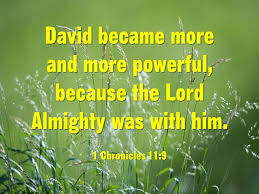
Posted in Uncategorized | Tagged , , , , | Leave a comment

WHATS IN A NAME?

What is in a name placed upon an infant at birth? Plenty!  It is interesting how many people will go to the Bible to find a name for their soon to be born child.  Believers in God and follow in His ways look for names that hold special meaning.  They look for people who trusted and obeyed God. Names are associated with stories in God’s Word. Names are who God created, molded, and shaped to give meaning to the lives of others while giving glory to His Name!

Names are significant and easily recognized by all the world as names of strength, power, and wisdom. Adam, for example, means “first man” created. Eve means the first female.  What human wouldn’t want to be an Adam or an Eve and be considered important simply because their names mean “first”?  How about being named Samson whose name is synonymous with great strength?  How about Mary whose name means purity, the one who delivered our Lord? Or a Moses who was a Friend of God, Joshua a man of God who relied on God for courage and strength?  How about a David (most common name along with John in our family), “a man after the heart of God”?  John, a fisherman, called himself the “beloved” disciple of Jesus even though all Jesus’ disciples and followers were His beloved—even Judas who betrayed him.  Not very many people name their children Judas! (Or Benedict Arnold, another traitor in history!)

Throughout history names are important and have meaning to those who named them.  God name His Son, Jesus.  Everyone may not know Jesus personally but most have heard of His Name!  In fact, God named quite a few of His people, who He would use to declare His glory and help people reconnect with Him! Remember the aging Abraham and Sarah, and much later Zechariah and Elizabeth? These parents would find out from God that they were miraculously “with child.”  God told aging Zecharaiah, that they would have a child who would “prepare the way of the Lord, and his name was to be John.  Mary, mother of Jesus, was Elizabeth’s cousin. They would console, comfort, and encourage each other as they praised God together over the birth of their sons, John and Jesus!  God is such a good God who provides and protects those He has called—by Name!

:

Yes, names are important and hold special meaning.  How amazing are these names in the Bible when we fully realize that these humans are real people with true stories of God’s strength, wisdom, power, redemption, restoration, peace, joy within them—all because of His unending, relentless, unconditional love and faithfulness for all who believe, love, and follow Him.

We are created by God in His own image.  He knows us by name! Don’t ever forget that!

1 Chronicles 5

Reuben

The sons of Reuben the firstborn of Israel (he was the firstborn, but when he defiled his father’s marriage bed, his rights as firstborn were given to the sons of Joseph son of Israel; so he could not be listed in the genealogical record in accordance with his birthright, and though Judah was the strongest of his brothers and a ruler came from him, the rights of the firstborn belonged to Joseph)— the sons of Reuben the firstborn of Israel: Hanok, Pallu, Hezron and Karmi.

The descendants of Joel:Shemaiah his son, Gog his son, Shimei his son, Micah his son, Reaiah his son, Baal his son, and Beerah his son, whom Tiglath-Pileser king of Assyria took into exile. Beerah was a leader of the Reubenites. Their relatives by clans, listed according to their genealogical records:

Jeiel the chief, Zechariah, and Bela son of Azaz, the son of Shema, the son of Joel. They settled in the area from Aroer to Nebo and Baal Meon. To the east they occupied the land up to the edge of the desert that extends to the Euphrates River, because their livestock had increased in Gilead. 10 During Saul’s reign they waged war against the Hagrites, who were defeated at their hands; they occupied the dwellings of the Hagrites throughout the entire region east of Gilead.

Gad

11 The Gadites lived next to them in Bashan, as far as Salekah: 12 Joel was the chief, Shapham the second, then Janai and Shaphat, in Bashan.

13 Their relatives, by families, were:  Michael, Meshullam, Sheba, Jorai, Jakan, Zia and Eber—seven in all. 14 These were the sons of Abihail son of Huri, the son of Jaroah, the son of Gilead, the son of Michael, the son of Jeshishai, the son of Jahdo, the son of Buz. 15 Ahi son of Abdiel, the son of Guni, was head of their family.

16 The Gadites lived in Gilead, in Bashan and its outlying villages, and on all the pasturelands of Sharon as far as they extended.  17 All these were entered in the genealogical records during the reigns of Jotham king of Judah and Jeroboam king of Israel.

18 The Reubenites, the Gadites and the half-tribe of Manasseh had 44,760 men ready for military service—able-bodied men who could handle shield and sword, who could use a bow, and who were trained for battle. 19 They waged war against the Hagrites, Jetur, Naphish and Nodab. 20 They were helped in fighting them, and God delivered the Hagrites and all their allies into their hands, because they cried out to him during the battle. He answered their prayers, because they trusted in him. 21 They seized the livestock of the Hagrites—fifty thousand camels, two hundred fifty thousand sheep and two thousand donkeys. They also took one hundred thousand people captive, 22 and many others fell slain, because the battle was God’s. And they occupied the land until the exile.

The Half-Tribe of Manasseh

23 The people of the half-tribe of Manasseh were numerous; they settled in the land from Bashan to Baal Hermon, that is, to Senir (Mount Hermon).

24 These were the heads of their families: Epher, Ishi, Eliel, Azriel, Jeremiah, Hodaviah and Jahdiel. They were brave warriors, famous men, and heads of their families. 25 But they were unfaithful to the God of their ancestors and prostituted themselves to the gods of the peoples of the land, whom God had destroyed before them. 26 So the God of Israel stirred up the spirit of Pul king of Assyria (that is, Tiglath-Pileser king of Assyria), who took the Reubenites, the Gadites and the half-tribe of Manasseh into exile. He took them to Halah, Habor, Hara and the river of Gozan, where they are to this day.

WHAT DO WE LEARN—HOW DO WE RESPOND?

An individual’s lineage was very important in Bible times. A person’s tribe determined where that person would live or what occupation he or she would pursue (for example, Levites served in the temple). Prophecies stated that the Messiah would come from the line of David. Though careful records were kept, the genealogical listings in 1 Chronicles were considered a condensed version, with certain names, lines, and generations omitted. Rather than merely listing names, several times the genealogy reveals glimpses into individuals’ lives. Jabez, for instant, whose name meant “pain” cried out to God and asked not to cause pain to others but to be blessed by God; God granted his request! (1 Chronicles 4:9-10). This is what we look for among those listed!  In the “chronicled records” are mentioned small acts of faith, small deeds of kindness, and even sins committed. We learn much by these named people! Many used their years on earth to serve God!

Pause, Pray, Respond

How will we be remembered? When they say our name, what will they think?

What will our names represent to succeeding generations?  Faith, love, trust, and obedience to God or falling for all the Deceiver tells us to be and do?

What we truly believe will be reflected in our behaviors.  Will we be known, not as perfect, but as perfectly forgiven and grateful to God?

Take all the time you need to think this over—I am.

Lord,

Thank you for give life along with names with meaning and significance. Names are important to you. But the named people are even more precious to you.  The world may call us many things, but when you speak, you call us beloved.  Thank you, thank you, thank you!  May your glory be seen in me.

In Jesus Name, Amen
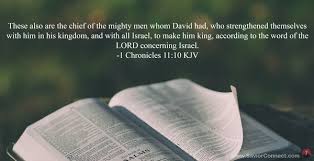
Posted in Uncategorized | Tagged , , , , | Leave a comment