
WORSHIP—AUDIENCE OF ONE, BENEFIT FOR ALL

The devil loves to promote divisive behaviors among God’s people.  He loves using his limited arsenal in his war against God by using the behaviors of competition, comparison, confusion while coaching leaders to jockey for position and become so busy in God’s work, they miss what is slowly happening to them.  Through the ages, these tools of self-destruction can be seen.  Evil’s tool box drives in nails of self-centered behaviors while the polar opposites tools from God’s tool box builds and benefits all people.

The more intimately our relationship grows with Jesus, the more closely intimate we become to each other.  We have God-centered goals that benefit all who believe.  We change our minds about self and think more like Jesus who laid aside his glory for the mission to save us.  (See Philippians 2)

The wild and crazy Corinthians have enough knowledge to be dangerous.  Evil knows that and feeds on their immaturities which are motivated by self-interests.  Paul cares enough to confront the corruption of self-centeredness within the Body of Christ.  He readily and directly responds to behaviors that draw attention to self but are not for the benefit of all.  He teaches ways to learn, speak and live Truth as redeemed people when gathered as the Body. 

You can easily see that evil is at work in individual lives, having fun confusing the crazy Corinthians in their self-righteous behaviors.  Does that happen today?  Yes, it does.  Many believers fall for the same lies evil hands out like candy to entice us to “have it our way” so we can be seen as “holier” than those around us.  We like to hear our own voices so sometimes we say things just to get attention.  We pray louder so others will hear how close we are to God.  We even serve with less than stellar motivations—all for the glory of self.  “It makes me feel good to serve” is an example. 

True story.  Years ago, we loaned our church facility to another church who needed a baptism tank to baptize their new converts.  Of course, we said yes.  We stayed until the service was over so we could drain the tank for Sunday services the next day.  And besides, what believer doesn’t enjoy seeing someone be baptized? What we observed, however, was similar to what Paul is talking about in our passage for today.  The service began traditionally with praise songs before the candidates were baptized.  A message was said but interspersed with loud comments that interrupted the train of thought of the message.  After the candidates were baptized, the “coaching” began.  A young man stands out to me even now as I write this.  He was saved by Jesus.  Truth.  He was baptized publicly to declare his new allegiance to Jesus.  Truth.  He was surrounded by the Body to encourage him in his new walk.  Truth.  But then, an obvious influencer of the Body of believers stood by him and prayed in a language no one could understand or interrupt.  The young man’s face of joy and peace turned to confusion and questioning with a frown.  Over and over, she pounded him to “get into the Spirit”.  “Let the Spirit take over.”  Followed by, “You, don’t have it, yet, keep trying”.  She got louder and louder, I guess so the Spirit would hear her?

Friends, I know I’m dabbling into things that divide us into denominations over semantics but that is not my intent.  Can you see how the devil used a woman of influence to immediately discourage a new believer who had given his life to Christ?  Her prayer language according to Paul is between her and the Lord.  I am not disputing that.  Please do not hear what I am not saying.  Her words did not benefit the Body, nor did it encourage a young man who was just reborn and baptized.  The young man, who didn’t “get the Spirit” in the older woman’s judgement, sat down dejected and sad.  I wanted to cry for him.  I did cry for him.

CORINTHIANS—CALLED AND SENT

1 Corinthians 14, The Message

(Emphasis mine)

1-3 Go after a life of love as if your life depended on it—because it does. Give yourselves to the gifts God gives you. Most of all, try to proclaim his truth. If you praise him in the private language of tongues, God understands you but no one else does, for you are sharing intimacies just between you and him. But when you proclaim his truth in everyday speech, you’re letting others in on the truth so that they can grow and be strong and experience his presence with you.

4-5 The one who prays using a private “prayer language” certainly gets a lot out of it, but proclaiming God’s truth to the church in its common language brings the whole church into growth and strength. I want all of you to develop intimacies with God in prayer, but please don’t stop with that. Go on and proclaim his clear truth to others. It’s more important that everyone have access to the knowledge and love of God in language everyone understands than that you go off and cultivate God’s presence in a mysterious prayer language—unless, of course, there is someone who can interpret what you are saying for the benefit of all.

6-8 Think, friends: If I come to you and all I do is pray privately to God in a way only he can understand, what are you going to get out of that? If I don’t address you plainly with some insight or truth or proclamation or teaching, what help am I to you? If musical instruments—flutes, say, or harps—aren’t played so that each note is distinct and in tune, how will anyone be able to catch the melody and enjoy the music?

If the trumpet call can’t be distinguished, will anyone show up for the battle?

9-12 So if you speak in a way no one can understand, what’s the point of opening your mouth? There are many languages in the world and they all mean something to someone. But if I don’t understand the language, it’s not going to do me much good. It’s no different with you. Since you’re so eager to participate in what God is doing, why don’t you concentrate on doing what helps everyone in the church?

13-17 So, when you pray in your private prayer language, don’t hoard the experience for yourself. Pray for the insight and ability to bring others into that intimacy. If I pray in tongues, my spirit prays but my mind lies fallow, and all that intelligence is wasted. So what’s the solution? The answer is simple enough. Do both. I should be spiritually free and expressive as I pray, but I should also be thoughtful and mindful as I pray. I should sing with my spirit, and sing with my mind. If you give a blessing using your private prayer language, which no one else understands, how can some outsider who has just shown up and has no idea what’s going on know when to say “Amen”? Your blessing might be beautiful, but you have very effectively cut that person out of it.

18-19 I’m grateful to God for the gift of praying in tongues that he gives us for praising him, which leads to wonderful intimacies we enjoy with him. I enter into this as much or more than any of you. But when I’m in a church assembled for worship, I’d rather say five words that everyone can understand and learn from than say ten thousand that sound to others like gibberish.

20-25 To be perfectly frank, I’m getting exasperated with your childish thinking. How long before you grow up and use your head—your adult head? It’s all right to have a childlike unfamiliarity with evil; a simple no is all that’s needed there. But there’s far more to saying yes to something. Only mature and well-exercised intelligence can save you from falling into gullibility. It’s written in Scripture that God said,

In strange tongues
    and from the mouths of strangers
I will preach to this people,
    but they’ll neither listen nor believe.

So where does it get you, all this speaking in tongues no one understands? It doesn’t help believers, and it only gives unbelievers something to gawk at. Plain truth-speaking, on the other hand, goes straight to the heart of believers and doesn’t get in the way of unbelievers. If you come together as a congregation and some unbelieving outsiders walk in on you as you’re all praying in tongues, unintelligible to each other and to them, won’t they assume you’ve taken leave of your senses and get out of there as fast as they can? But if some unbelieving outsiders walk in on a service where people are speaking out God’s truth, the plain words will bring them up against the truth and probe their hearts. Before you know it, they’re going to be on their faces before God, recognizing that God is among you.

26-33 So here’s what I want you to do. When you gather for worship, each one of you be prepared with something that will be useful for all: Sing a hymn, teach a lesson, tell a story, lead a prayer, provide an insight. If prayers are offered in tongues, two or three’s the limit, and then only if someone is present who can interpret what you’re saying. Otherwise, keep it between God and yourself. And no more than two or three speakers at a meeting, with the rest of you listening and taking it to heart. Take your turn, no one person taking over. Then each speaker gets a chance to say something special from God, and you all learn from each other. If you choose to speak, you’re also responsible for how and when you speak. When we worship the right way, God doesn’t stir us up into confusion; he brings us into harmony. This goes for all the churches—no exceptions.

34-36 Wives must not disrupt worship, talking when they should be listening, asking questions that could more appropriately be asked of their husbands at home. God’s Book of the law guides our manners and customs here. Wives have no license to use the time of worship for unwarranted speaking. Do you—both women and men—imagine that you’re a sacred oracle determining what’s right and wrong? Do you think everything revolves around you?
37-38 If any one of you thinks God has something for you to say or has inspired you to do something, pay close attention to what I have written. This is the way the Master wants it. If you won’t play by these rules, God can’t use you. Sorry.

39-40 Three things, then, to sum this up: When you speak forth God’s truth, speak your heart out. Don’t tell people how they should or shouldn’t pray when they’re praying in tongues that you don’t understand. Be courteous and considerate in everything.

WHAT WE LEARN—

  • Lead with God’s love, as it our lives depended it, because they do!  Jesus is central to all we are and all we do, is in and over all, and is for the benefit of all. 
  • “…when you proclaim his truth in everyday speech, you’re letting others in on the truth so that they can grow and be strong and experience his presence with you.”
  • “Since you’re so eager to participate in what God is doing, why don’t you concentrate on doing what helps everyone in the church?”
  • “When you gather for worship, each one of you be prepared with something that will be useful for all…”
  • “When you speak forth God’s truth, speak your heart out. Don’t tell people how they should or shouldn’t pray when they’re praying in tongues that you don’t understand.”
  • “Be courteous and considerate in everything.”

I get it, don’t you?  To God be the glory.  Always.

Lord,

We often get in the way of your love, mercy and grace in others and for that I repent. As “mature” believers, we sometimes think we are better than a new believer who comes to us for help.  May we always point people to you, the One and Only who is Perfect in every way, and not ourselves. Help us to mentor without forgetting our own sinfulness.  May we encourage others by lifting them up, not shaming them.   Help us to love like you love us.  May our first thought be your love.  Always.  May our words be led by You, for the benefit of all, or not said.  Teach us Lord, for we are still under construction.  None of us has arrived.  We are all still becoming.

In Jesus Name, For His glory, Amen

Posted in Uncategorized | Tagged , , | Leave a comment

WHAT’S LOVE GOT TO DO WITH IT?

You must understand, though the touch of your hand
Makes my pulse react
That it’s only the thrill of boy meeting girl
Opposites attract
It’s physical
Only logical
You must try to ignore that it means more than that

Oh-oh, what’s love got to do, got to do with it?
What’s love but a second-hand emotion?
What’s love got to do, got to do with it?
Who needs a heart when a heart can be broken?

This popular 80’s hit sung by Tina Turner tried to tell us that love is just a “second hand emotion”, a brief thrillful reaction between male and female, and that it is only “physical”.  Even though the beat and performance are attracting, the words are lies.  To say that “you must try to ignore that it means more than that” explains Tina’s tumultuous life of never knowing or finding real love.

What is real love?  What does love do?  Who has it?  Where can we secure it?  How can we live love? 

John, the beloved disciple of Jesus, says it all begins with God for God is love—real love, the foundation of love.

“Dear friends, let us love one another, for love comes from God. Everyone who loves has been born of God and knows God. Whoever does not love does not know God, because God is love.”  1 John 4:7-8, NIV

The world is looking for love “in all the wrong places” (yes, another song).  Paul answers all the above questions above about what love is and isn’t, how to love, who has it and the importance of living God’s perfect love.  Take the time to read Paul’s words, inspired by God’s love, slowly, carefully and prayerfully…

CORINTHIANS—CALLED AND SENT

1 Corinthians 13, The Message

The Way of Love

If I speak with human eloquence and angelic ecstasy but don’t love, I’m nothing but the creaking of a rusty gate.

If I speak God’s Word with power, revealing all his mysteries and making everything plain as day, and if I have faith that says to a mountain, “Jump,” and it jumps, but I don’t love, I’m nothing.

3-7 If I give everything I own to the poor and even go to the stake to be burned as a martyr, but I don’t love, I’ve gotten nowhere. So, no matter what I say, what I believe, and what I do, I’m bankrupt without love.

Love never gives up.
Love cares more for others than for self.
Love doesn’t want what it doesn’t have.
Love doesn’t strut,
Doesn’t have a swelled head,
Doesn’t force itself on others,
Isn’t always “me first,”
Doesn’t fly off the handle,
Doesn’t keep score of the sins of others,
Doesn’t revel when others grovel,
Takes pleasure in the flowering of truth,
Puts up with anything,
Trusts God always,
Always looks for the best,
Never looks back,
But keeps going to the end.

8-10 Love never dies. Inspired speech will be over some day; praying in tongues will end; understanding will reach its limit. We know only a portion of the truth, and what we say about God is always incomplete. But when the Complete arrives, our incompletes will be canceled.

11 When I was an infant at my mother’s breast, I gurgled and cooed like any infant. When I grew up, I left those infant ways for good.

12 We don’t yet see things clearly. We’re squinting in a fog, peering through a mist. But it won’t be long before the weather clears and the sun shines bright! We’ll see it all then, see it all as clearly as God sees us, knowing him directly just as he knows us!

13 But for right now, until that completeness, we have three things to do to lead us toward that consummation: Trust steadily in God, hope unswervingly, love extravagantly. And the best of the three is love.

Lord,

Thank you for loving us perfectly, without conditions, limitlessly, while knowing us completely!  I trust you with my life.  You are life to me.  My hope is in You.  Help me to love others extravagantly like you love us.

In Jesus Name, For Your Glory, Amen.

This is how God showed his love among us: He sent his one and only Son into the world that we might live through him. This is love: not that we loved God, but that he loved us and sent his Son as an atoning sacrifice for our sins. Dear friends, since God so loved us, we also ought to love one another. No one has ever seen God; but if we love one another, God lives in us and his love is made complete in us.”     1 John 4:9-12, NIV

One of my all-time favorite songs of truth is from Whiteheart…Let Your FIRST Thought be Love!  This will be playing in my head today…

Somehow, someone has hurt you again
And said things and done things you don’t understand
You don’t understand
It’s easy, just to think of your pride
So easy, to get angry inside

But let your first thought
Let your very first thought be love
Let your first thought
Let your very first thought be love, be love
Let it be love

Some people go looking for trouble to start
Oh but those people are hiding a lonely heart
They’ve got lonely hearts
So listen, listen to their silent cries
And touch them with the warmth in your eyes

And let your first thought
Let your very first thought be love
Let your first thought
Let your very first thought be love, be love

Posted in Uncategorized | Tagged , , , , | 2 Comments

PRIVILEDGED PART OF THE WHOLE!

“Susan, how do you pull it all together?”  I’m often asked that question after a large event given to me to organize comes to an end—and it always surprises me!  My first thought is, I didn’t do this, did you not see all the people who did?!  But, my simple answer is nearly always, “It’s a God-thing”.  However, if the person asking the question gives me an opportunity to explain; it can become a teachable moment to explain the “whole” picture.  

Confession.  I didn’t always understand the principle of parts of the whole. Mm, maybe that’s why I didn’t readily understand working with fractions until I became a teacher!  God gifted me with a servant’s heart.  I want to help others and do so readily, without thinking.  This is a strength, but before fully maturing, it was and can still be a weakness.  Let me explain.  Randy was called to leave public school teaching to become the pastor of the church we attended.  God also called me to help him. Sounds good so far, right?

The church had gone through troubles with many people leaving.  We were left with less than twenty people.  Called and equipped by God to “do this”, we jumped in with both feet to provide children and youth ministry, worship music, once a month fellowships with themes to attract people, along with all the rest.  Lots of ministry.  Staff of one with one volunteer.  We were younger then, lots of energy, but not so wise.

Let me help you see this “confession’ clearly as I describe a Sunday morning.  While Randy taught Sunday school for adults, I taught all ages of kids who came with them.  A few minutes before SS ended, I brought the kids with me into the worship area so I could lead worship while playing the piano—myself!  After leading worship, I would take the younger kids back to their area to sing and do activities while Randy preached the sermon.  When it was time to finish with a worship song, I brought the kiddos back into worship to sit near me so I could go back to the piano to play and lead the last song. 

WHY did I do this every Sunday?  Being immature, along with a servant’s heart, I felt I was doing this for them.  I wanted them to know and grow in Jesus so much that I didn’t ask for help.  And I was exhausted.  We were raising three kids of our own.  I was a public school teacher, too.  But, what was I modeling to those I served? 

One day, God halted me in my tracks as I read Paul’s writings.  I was convicted by His Holy Spirit.  I saw His Body of Believers more that way Jesus saw them.  God had given me help, I just had not noticed.  A collection of gifted people were ready to do their part and I thought I was serving them by doing it all myself.  Wrong!  Lesson learned. 

Discovery:  The people grew as they served, each doing their part, working together as the whole Body of Christ!

Paul explains this phenomenon best.  Paul taught the church that we are all “significant parts” of the whole Body of Christ.  We are not perfect, but Jesus, who works in and through us, is.  HE brings all the parts together, standing on His foundation of salvation, to build the Whole—In Him, For Him.  He does this because this is the best way for us to grow and mature in his character.  As we mature, we begin to bear the “fruits” of His labor of work in us.  The fruits of His Holy Spirit are noticeable and expressible gifts of His character!  (See Galatians 5 for the list!)

As a leader in different areas of ministry as well as public school teaching, God taught me early on, passed on by previous generations, how to “pull it all together” in Jesus Name, for His glory.  I am merely a part of the Whole Body of Christ.  Realizing my role helps me to do what pleases God most—loving and serving with each other. 

You will discover that Paul, inspired by God’s Holy Spirit, teaches this “parts of the Whole” many times in his letters to the church.  Paul knew his part; do we know our part? 

Do we know why we do our part? 

“He makes the whole body fit together perfectly. As each part does its own special work, it helps the other parts grow, so that the whole body is healthy and growing and full of love.”  Ephesians 4:16, NLT

CORINTHIANS—CALLED AND SENT

1 Corinthians 12, The Message

Spiritual Gifts

1-3 What I want to talk about now is the various ways God’s Spirit gets worked into our lives. This is complex and often misunderstood, but I want you to be informed and knowledgeable. Remember how you were when you didn’t know God, led from one phony god to another, never knowing what you were doing, just doing it because everybody else did it? It’s different in this life. God wants us to use our intelligence, to seek to understand as well as we can. For instance, by using your heads, you know perfectly well that the Spirit of God would never prompt anyone to say “Jesus be damned!” Nor would anyone be inclined to say “Jesus is Master!” without the insight of the Holy Spirit.

4-11 God’s various gifts are handed out everywhere; but they all originate in God’s Spirit. God’s various ministries are carried out everywhere; but they all originate in God’s Spirit. God’s various expressions of power are in action everywhere; but God himself is behind it all. Each person is given something to do that shows who God is: Everyone gets in on it, everyone benefits. All kinds of things are handed out by the Spirit, and to all kinds of people! The variety is wonderful:

wise counsel

clear understanding

simple trust

healing the sick

miraculous acts

proclamation

distinguishing between spirits

tongues

interpretation of tongues.

All these gifts have a common origin, but are handed out one by one by the one Spirit of God. He decides who gets what, and when.

12-13 You can easily enough see how this kind of thing works by looking no further than your own body. Your body has many parts—limbs, organs, cells—but no matter how many parts you can name, you’re still one body. It’s exactly the same with Christ. By means of his one Spirit, we all said good-bye to our partial and piecemeal lives. We each used to independently call our own shots, but then we entered into a large and integrated life in which he has the final say in everything. (This is what we proclaimed in word and action when we were baptized.) Each of us is now a part of his resurrection body, refreshed and sustained at one fountain—his Spirit—where we all come to drink. The old labels we once used to identify ourselves—labels like Jew or Greek, slave or free—are no longer useful. We need something larger, more comprehensive.

14-18 I want you to think about how all this makes you more significant, not less. A body isn’t just a single part blown up into something huge. It’s all the different-but-similar parts arranged and functioning together. If Foot said, “I’m not elegant like Hand, embellished with rings; I guess I don’t belong to this body,” would that make it so? If Ear said, “I’m not beautiful like Eye, transparent and expressive; I don’t deserve a place on the head,” would you want to remove it from the body? If the body was all eye, how could it hear? If all ear, how could it smell? As it is, we see that God has carefully placed each part of the body right where he wanted it.

19-24 But I also want you to think about how this keeps your significance from getting blown up into self-importance. For no matter how significant you are, it is only because of what you are a part of. An enormous eye or a gigantic hand wouldn’t be a body, but a monster. What we have is one body with many parts, each its proper size and in its proper place. No part is important on its own. Can you imagine Eye telling Hand, “Get lost; I don’t need you”? Or, Head telling Foot, “You’re fired; your job has been phased out”? As a matter of fact, in practice it works the other way—the “lower” the part, the more basic, and therefore necessary. You can live without an eye, for instance, but not without a stomach. When it’s a part of your own body you are concerned with, it makes no difference whether the part is visible or clothed, higher or lower. You give it dignity and honor just as it is, without comparisons. If anything, you have more concern for the lower parts than the higher. If you had to choose, wouldn’t you prefer good digestion to full-bodied hair?

25-26 The way God designed our bodies is a model for understanding our lives together as a church: every part dependent on every other part, the parts we mention and the parts we don’t, the parts we see and the parts we don’t. If one part hurts, every other part is involved in the hurt, and in the healing. If one part flourishes, every other part enters into the exuberance.

27-31 You are Christ’s body—that’s who you are! You must never forget this. Only as you accept your part of that body does your “part” mean anything. You’re familiar with some of the parts that God has formed in his church, which is his “body”:

apostles

prophets

teachers

miracle workers

healers

helpers

organizers

those who pray in tongues.

But it’s obvious by now, isn’t it, that Christ’s church is a complete Body and not a gigantic, unidimensional Part? It’s not all Apostle, not all Prophet, not all Miracle Worker, not all Healer, not all Prayer in Tongues, not all Interpreter of Tongues. And yet some of you keep competing for so-called “important” parts.

But now I want to lay out a far better way for you. 

**The “far better way” is expressed in our next exciting episode of “Who we are and How we behave” to please God as the part of the whole Body of Christ!   See you tomorrow, you’ll simply “LOVE” it!  (Hint, hint.)

Lord,

Thank you for caring enough to confront and correct me so many years ago.  Thank you for bringing me back to this lesson when I need it most.  Thank you for saving my soul with consistent work on my maturing character traits.  I love you, Lord.  I love your people.  Help us to grow as one in You.  I know how much this pleases you when we do our individual parts together in unity with Your Holy Spirit.  What a blessing to you!  Our goal.

In Jesus Name, For Your Glory, Amen

Posted in Uncategorized | Tagged , , , | Leave a comment

RESPECT

My grandpa rarely reprimanded his grandkids; but on one occasion, he had to take control of breakfast table situation quickly.  My cousins and I were spending time at Grandpa and Grandma’s farm as we did often.  We loved coming to the farm with all the experiences of feeding the animals, going fishing, riding horses, wandering over many acres of land while enjoying a bit of freedom from our parents. We loved and honored our grandparents but also felt we could get by with less than perfect behavior.  We took advantage of our grandparents’ unconditional love.  I admit it. 

At the breakfast table the first morning of our visit, our set-free attitudes developed into loud, obnoxious talking, competing for the attention of our grandparents (who were already listening), trying to be the funniest while being a little sloppy with our manners. (Okay, a LOT sloppy with our manners!) Then it happened.  The thing that crossed the line.  My oldest cousin told a hilarious (to us) story that made his younger sister choke on her oatmeal sending a spray of this half-eaten concoction across the table to land on our faces in disgust.  We laughed and cried loudly, shouting “Eww!”.  Grandpa took control and have us a “look” I would never forget.  Silence followed. Then I saw the twinkle in Grandma’s eyes of immediate forgiveness while she cleaned up the mess.  The meal continued with smiles but with much more respect.

We had crossed the line of honor and respect for the meal Grandma worked hard to prepare that morning.  We settled down to what we knew was right and learned quickly that respect is giving honor to the one who loves and serves you, takes care of you and provides for all that is in front of you.  My grandparents, by example, ultimately taught us that all honor goes to God, the Provider of all that we need.

In our next passage, Paul must step in and teach the wild and crazy Corinthians to settle down, leave worldview thinking and divisive, disrupting behaviors aside, and learn better manners while observing the Lord’s Supper.  They had forgotten WHY they were gathering in the first place.  They had forgotten the One who died for their sins.  The church gathered to eat, drink and be merry in a brawl for the ages, worse than my oatmeal experience!  Honor and respect were nowhere to be seen.  Paul steps in with the “look” (I can feel it) and a reminder of what Jesus expects and deserves as we remember His act of grace.

CORINTHIANS—CALLED AND SENT

1 Corinthians 11, The Message

To Honor God

1-2 It pleases me that you continue to remember and honor me by keeping up the traditions of the faith I taught you. All actual authority stems from Christ.

3-9 In a marriage relationship, there is authority from Christ to husband, and from husband to wife. The authority of Christ is the authority of God. Any man who speaks with God or about God in a way that shows a lack of respect for the authority of Christ, dishonors Christ. In the same way, a wife who speaks with God in a way that shows a lack of respect for the authority of her husband, dishonors her husband. Worse, she dishonors herself—an ugly sight, like a woman with her head shaved. This is basically the origin of these customs we have of women wearing head coverings in worship, while men take their hats off. By these symbolic acts, men and women, who far too often butt heads with each other, submit their “heads” to the Head: God.

10-12 Don’t, by the way, read too much into the differences here between men and women. Neither man nor woman can go it alone or claim priority. Man was created first, as a beautiful shining reflection of God—that is true. But the head on a woman’s body clearly outshines in beauty the head of her “head,” her husband. The first woman came from man, true—but ever since then, every man comes from a woman! And since virtually everything comes from God anyway, let’s quit going through these “who’s first” routines.

13-16 Don’t you agree there is something naturally powerful in the symbolism—a woman, her beautiful hair reminiscent of angels, praying in adoration; a man, his head bared in reverence, praying in submission? I hope you’re not going to be argumentative about this. All God’s churches see it this way; I don’t want you standing out as an exception.

17-19 Regarding this next item, I’m not at all pleased. I am getting the picture that when you meet together it brings out your worst side instead of your best! First, I get this report on your divisiveness, competing with and criticizing each other. I’m reluctant to believe it, but there it is. The best that can be said for it is that the testing process will bring truth into the open and confirm it.

20-22 And then I find that you bring your divisions to worship—you come together, and instead of eating the Lord’s Supper, you bring in a lot of food from the outside and make pigs of yourselves. Some are left out, and go home hungry. Others have to be carried out, too drunk to walk. I can’t believe it! Don’t you have your own homes to eat and drink in? Why would you stoop to desecrating God’s church? Why would you actually shame God’s poor? I never would have believed you would stoop to this. And I’m not going to stand by and say nothing.

23-26 Let me go over with you again exactly what goes on in the Lord’s Supper and why it is so centrally important. I received my instructions from the Master himself and passed them on to you. The Master, Jesus, on the night of his betrayal, took bread. Having given thanks, he broke it and said,

This is my body, broken for you.
Do this to remember me.

After supper, he did the same thing with the cup:

This cup is my blood, my new covenant with you.
Each time you drink this cup, remember me.

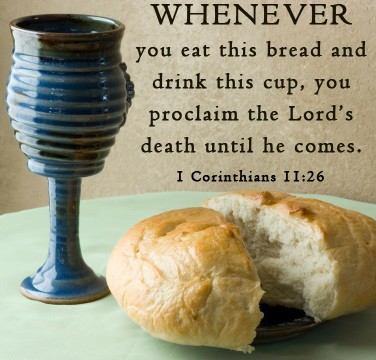
What you must solemnly realize is that every time you eat this bread and every time you drink this cup, you reenact in your words and actions the death of the Master. You will be drawn back to this meal again and again until the Master returns. You must never let familiarity breed contempt.

27-28 Anyone who eats the bread or drinks the cup of the Master irreverently is like part of the crowd that jeered and spit on him at his death. Is that the kind of “remembrance” you want to be part of? Examine your motives, test your heart, come to this meal in holy awe.

29-32 If you give no thought (or worse, don’t care) about the broken body of the Master when you eat and drink, you’re running the risk of serious consequences. That’s why so many of you even now are listless and sick, and others have gone to an early grave. If we get this straight now, we won’t have to be straightened out later on. Better to be confronted by the Master now than to face a fiery confrontation later.

33-34 So, my friends, when you come together to the Lord’s Table, be reverent and courteous with one another. If you’re so hungry that you can’t wait to be served, go home and get a sandwich. But by no means risk turning this Meal into an eating and drinking binge or a family squabble. It is a spiritual meal—a love feast.

The other things you asked about, I’ll respond to in person when I make my next visit.

WHAT DO WE LEARN? WHO WE HONOR AND RESPECT—

All authority comes from Jesus, who is Head of the Church (all gathered believers).  His authority comes from God, our Creator, who created all, is in all, knows all and loves all.

We dishonor Him when we divide, criticize, compare and compete with each other.  

We are disrespectful when we come to His Table with sin in our hearts, unforgiveness of others, selfish thinking while spewing “oatmeal” of gossip and slander that divides the Body of Christ.

The Body of Honor and Respect is Jesus, Savior and Lord.  Worth reading again…

Let me go over with you again exactly what goes on in the Lord’s Supper and why it is so centrally important. I received my instructions from the Master himself and passed them on to you. The Master, Jesus, on the night of his betrayal, took bread. Having given thanks, he broke it and said,

This is my body, broken for you.
Do this to remember me.

After supper, he did the same thing with the cup:

This cup is my blood, my new covenant with you.
Each time you drink this cup, remember me.”

Camp on these words—”Anyone who eats the bread or drinks the cup of the Master irreverently is like part of the crowd that jeered and spit on him at his death”.

How?  “Examine your motives, test your heart, come to this meal in holy awe”.

“So, my friends, when you come together to the Lord’s Table, be reverent and courteous with one another.”

“It is a spiritual meal—a love feast.”  It is a “full of Christ meal”, not of ritualistic routine but a meal of obedience, remembrance with hearts of gratitude, full of love, honor and respect for the One and Only who loves us most and gave His life for ours.  We show respect for Him when we respect and honor each other not only at His Table but in our daily lives.  At the beginning of each new day, come to Communion with Jesus at His Table of Grace, then do what He taught us—Love God, Love Each Other.

Lord,

Thank you for all you have done, are doing to teach us now and what you will do as you move us through each learning experience to maturity of your love because of your never-ending mercy and marvelous grace.  I love you with all my heart, mind and soul.  I give you all honor, praise and respect!

In Jesus Name, For Your Glory, Amen!

Posted in Uncategorized | Tagged , | Leave a comment

A LOOK BACK TO MOVE FORWARD

Looking back at how God has blessed us with his love, mercy and grace, saved us from our sins by the blood shed by His Son, Jesus, then taught us lessons that challenged us to grow and mature in His holy character, we actually discover how far we still need to go.  The more we grow in His love, the more we want to know about Him.  The more we discover the true depths of His love for us, we learn to love others more deeply in the distinct ways He loves us—full of mercy and grace, without conditions, never ending and limitless.

Be looking back, we also realize how far we have come—or not.  With the help of God’s Holy Spirit, we evaluate our growth and realize we want to grow more.  God is always there to guide us to His best life for us.  Every day.

Paul is taking believers of the Corinthian church on a journey toward a more devoted, intimate relationship with Jesus by looking back at all God has already provided for His people.  There are some great “teachable moments” in this message of hope, our living Hope and Solid Rock foundation, Jesus Christ.   

CORINTHIANS—CALLED AND SENT

1 Corinthians 10, The Message

(Emphasis mine)

 1-5 Remember our history, friends, and be warned. All our ancestors were led by the providential Cloud and taken miraculously through the Sea. They went through the waters, in a baptism like ours, as Moses led them from enslaving death to salvation life. They all ate and drank identical food and drink, meals provided daily by God. They drank from the Rock, God’s fountain for them that stayed with them wherever they were. And the Rock was Christ. But just experiencing God’s wonder and grace didn’t seem to mean much—most of them were defeated by temptation during the hard times in the desert, and God was not pleased.

6-10 The same thing could happen to us. We must be on guard so that we never get caught up in wanting our own way as they did. And we must not turn our religion into a circus as they did—“First the people partied, then they threw a dance.” We must not be sexually promiscuous—they paid for that, remember, with 23,000 deaths in one day! We must never try to get Christ to serve us instead of us serving him; they tried it, and God launched an epidemic of poisonous snakes. We must be careful not to stir up discontent; discontent destroyed them.

11-12 These are all warning markers—danger!—in our history books, written down so that we don’t repeat their mistakes. Our positions in the story are parallel—they at the beginning, we at the end—and we are just as capable of messing it up as they were. Don’t be so naive and self-confident. You’re not exempt. You could fall flat on your face as easily as anyone else. Forget about self-confidence; it’s useless. Cultivate God-confidence.

13 No test or temptation that comes your way is beyond the course of what others have had to face. All you need to remember is that God will never let you down; he’ll never let you be pushed past your limit; he’ll always be there to help you come through it.

14 So, my very dear friends, when you see people reducing God to something they can use or control, get out of their company as fast as you can.

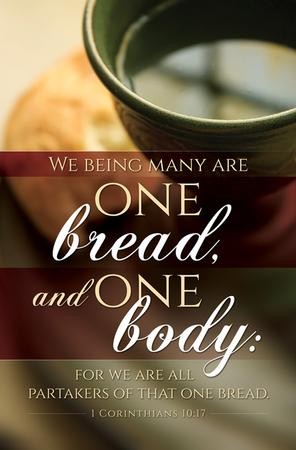
15-18 I assume I’m addressing believers now who are mature. Draw your own conclusions: When we drink the cup of blessing, aren’t we taking into ourselves the blood, the very life, of Christ? And isn’t it the same with the loaf of bread we break and eat? Don’t we take into ourselves the body, the very life, of Christ? Because there is one loaf, our many-ness becomes one-ness—Christ doesn’t become fragmented in us. Rather, we become unified in him. We don’t reduce Christ to what we are; he raises us to what he is. That’s basically what happened even in old Israel—those who ate the sacrifices offered on God’s altar entered into God’s action at the altar.

19-22 Do you see the difference? Sacrifices offered to idols are offered to nothing, for what’s the idol but a nothing? Or worse than nothing, a minus, a demon! I don’t want you to become part of something that reduces you to less than yourself. And you can’t have it both ways, banqueting with the Master one day and slumming with demons the next. Besides, the Master won’t put up with it. He wants us—all or nothing. Do you think you can get off with anything less?

23-24 Looking at it one way, you could say, “Anything goes. Because of God’s immense generosity and grace, we don’t have to dissect and scrutinize every action to see if it will pass muster.” But the point is not to just get by. We want to live well, but our foremost efforts should be to help others live well.

25-28 With that as a base to work from, common sense can take you the rest of the way. Eat anything sold at the butcher shop, for instance; you don’t have to run an “idolatry test” on every item. “The earth,” after all, “is God’s, and everything in it.” That “everything” certainly includes the leg of lamb in the butcher shop. If a nonbeliever invites you to dinner and you feel like going, go ahead and enjoy yourself; eat everything placed before you. It would be both bad manners and bad spirituality to cross-examine your host on the ethical purity of each course as it is served. On the other hand, if he goes out of his way to tell you that this or that was sacrificed to god or goddess so-and-so, you should pass. Even though you may be indifferent as to where it came from, he isn’t, and you don’t want to send mixed messages to him about who you are worshiping.

29-30 But, except for these special cases, I’m not going to walk around on eggshells worrying about what small-minded people might say; I’m going to stride free and easy, knowing what our large-minded Master has already said. If I eat what is served to me, grateful to God for what is on the table, how can I worry about what someone will say? I thanked God for it and he blessed it!

31-33 So eat your meals heartily, not worrying about what others say about you—you’re eating to God’s glory, after all, not to please them. As a matter of fact, do everything that way, heartily and freely to God’s glory. At the same time, don’t be callous in your exercise of freedom, thoughtlessly stepping on the toes of those who aren’t as free as you are. I try my best to be considerate of everyone’s feelings in all these matters; I hope you will be, too.

WHAT WE LEARN TO GROW ON—

(With commentary excerpts interspersed from Warren Wiersbe)

Balance experience with caution.  Paul reminded the experienced believers who were strong in the faith that they had better not grow overconfident.  “Don’t be so naive and self-confident. You’re not exempt. You could fall flat on your face as easily as anyone else. Forget about self-confidence; it’s useless. Cultivate God-confidence.”

I’m reminded of Solomon’s wisdom, “Pride goes before a fall.”  (Proverb 16:18)

Privileges were no guarantee of success (vv. 1–4). Israel had been delivered from Egypt by the power of God, just as the Christian believer has been redeemed from sin. (In 1 Cor. 5:7–8, Paul had already related Passover to salvation.)

There are dangers to maturity as well as to immaturity, and one of them is overconfidence. When we think we are strong, we discover that we are weak.

Good beginnings do not guarantee good endings. The Jews experienced God’s miracles, and yet they failed when they were tested in the wilderness. Experience must always be balanced with caution, for we never come to the place in our Christian walk where we are free from temptation and potential failure.

We can almost hear some of the “strong” Corinthians asking, “But what does that have to do with us?” Paul then pointed out that the Corinthian church was guilty of the same sins that the Jews committed. Because of their lust for evil things, the Corinthians were guilty of immorality (1 Cor. 6), idolatry (1 Cor. 8; 10), and murmuring against God (2 Cor. 12:20–21). Like the nation of Israel, they were tempting God and just “daring Him” to act.  Yikes!

Paul was not suggesting that his readers might lose their salvation, but he was afraid that some of them would be “castaways” (1 Cor. 9:27), disapproved of God and unable to receive any reward.

I heard about a pastor who gave a series of sermons on “The Sins of the Saints.” One member of the church, apparently under conviction, disapproved of the series and told the pastor so. “After all,” she said, “sin in the life of a Christian is different from sin in the life of an unsaved person.” “Yes, it is,” the pastor replied. “It’s worse!”

Sin in the church today is far more serious, because we have Israel’s example to learn from, and we are living “at the end of the ages.” To sin against the law is one thing; to sin against grace is quite something else.

God can enable us to overcome temptation if we obey His Word (vv. 13–22). God permits us to be tempted because He knows how much we can take; and He always provides a way to escape if we will trust Him and take advantage of it. The believer who thinks he can stand may fall; but the believer who flees will be able to stand. 

Dear Friends, we love the illustration Paul gives us about staying in communion with God.  He used the Lord’s Supper as an illustration. When the believer partakes of the cup and loaf at the Lord’s table, he is, in a spiritual way, having fellowship with the body and blood of Christ. By remembering Christ’s death, the believer enters into a communion with the risen Lord.  Read that again, we are in close communion with the One and Only who saved us from all sin.  Christ is our confidence, our ONLY confidence!

Freedom must be balanced by responsibility—the maturing factor.  To begin with, we have a responsibility to our fellow believers in the church (1 Cor. 10:23–30). We are responsible to build others up in the faith and to seek their advantage. Philippians 2:1–4 gives the same admonition. While we do have freedom in Christ, we are not free to harm another believer.

Concerning the recurring “meat” question—Paul explains, “Why should I not enjoy food for which I give thanks? Why should my liberty be curtailed because of another person’s weak conscience?” His reply introduced the second responsibility we have: We are responsible to glorify God in all things (1 Cor. 10:31). We cannot glorify God by causing another Christian to stumble. To be sure, our own conscience may be strong enough for us to participate in some activity and not be harmed. But we dare not use our freedom in Christ in any way that will injure a fellow Christian.

But there is a third responsibility that ties in with the first two: We are responsible to seek to win the lost (1 Cor. 10:32–33). We must not make it difficult either for Jews or Gentiles to trust the Lord, or for other members of the church to witness for the Lord. We must not live to seek our own benefit, but also the benefit of others, that they might be saved.  (Our ultimate focus.)

By the way, when Paul wrote, “I please all men in all things” (1 Cor. 10:33), he was not suggesting that he was a compromiser or a man-pleaser (see Gal. 1:10). He was affirming the fact that his life and ministry were centered on helping others rather than on promoting himself and his own desires.

In other words, don’t be callous, be kind.  Always.

Lord,

Wow, there was a lot to learn in this passage this morning!  Help me to center all my thoughts on You with ears to hear you along with confidence in You to obey you first and last.  Always.  May I be led by your love.

In Jesus Name, For His Glory, Amen.

Posted in Uncategorized | Tagged , , | Leave a comment

CALLED TO NOT MISS A THING!

As we read our next passage of Paul’s compelling ministry journey, I am reminded of a gospel song by The Martins.  This group of two sisters and a brother sing from the heart as they deliver the Good News to all who will listen.  This song touches my heart in my own calling to “go and tell”.

“I Don’t Want to Miss a Thing”

Leaving this place getting ready to go
Gotta get moving cause there’s something I know
God’s got a plan, got a blessing in store
So put me in the middle of the will of the Lord

Having my fill of the pushing away
It was me who was running, it was Him who stayed
Now I want it bad and I know what this means
Lining up with him, sure don’t wanna miss a thing

Don’t wanna miss the joy, don’t wanna miss the peace
Don’t wanna miss the power, don’t wanna miss a thing
I’m gonna get while the gettin’s good
Follow His heart like I know I should
No I don’t want, don’t wanna miss a thing

Setting my sights on the heavenly prize
Seeing my life through spiritual eyes
I’m breaking out of a worldly mode
Heading on down a less traveled road

I’ll walk through the fire just to see His face
Won’t trade my freedom for a temporal place
He may be moving in mysterious ways
But I’m moving with Him for the rest of my days

Don’t wanna miss the joy, don’t wanna miss the peace
Don’t wanna miss the power, don’t wanna miss a thing
I’m gonna get while the gettin’s good
Follow His heart like I know I should
No I don’t want, don’t wanna miss a thing

Don’t want to miss the mark (no no no)
Don’t want to go astray
Don’t want to waste the chance
Don’t want to lose the way

Don’t wanna miss the joy, don’t wanna miss the peace
Don’t wanna miss the power, don’t wanna miss a thing
Well, I’m gonna get while the gettin’s good
Follow His heart like I know I should
No I don’t want, don’t wanna miss a thing
No No No, I don’t want, don’t wanna miss a thing
No No, I don’t want….don’t want to miss a thing

I do not want to miss a single thing!

I hear this in the background as Paul writes of the authority, peace, joy that compels him by Jesus, in the Name of Jesus, to preach the Good News of salvation from Jesus!  Paul runs the race, constantly training in the Word, listening and obeying the Holy Spirit of God.  He is writing what God inspires him to write while most times sitting in jail for doing exactly what Jesus commissioned and compels Paul to do.  Jesus met him on the road to Damacus, changed his whole way of thinking (the calling), prepared him then commissioned with His authority to go and preach (the sending).  (See Acts 9.)

I am also reminded of the words of Jesus as began this spreading of the gospel of salvation from the mountain top, giving His authority as given to him to those who will continue His work on earth…as he ascended back to heaven;

The Great Commission

Then the eleven disciples left for Galilee, going to the mountain where Jesus had told them to go. When they saw him, they worshiped him—but some of them doubted!

Jesus came and told his disciples, “I have been given all authority in heaven and on earth. Therefore, go and make disciples of all the nations, baptizing them in the name of the Father and the Son and the Holy Spirit. Teach these new disciples to obey all the commands I have given you. And be sure of this: I am with you always, even to the end of the age.” –Jesus, Matthew 28:16-20, NLT

Paul was commissioned and compelled to speak, whether paid or unpaid with care for his physical needs, whether jailed or moving from town to town to those who needed to know the Messiah come, dealing with critics and unbelievers along the way.  Paul does not want to miss a thing of Jesus’ calling so others will know Jesus, too, saved by the grace of God!  Paul does not personally want to miss a thing in his own daily living, guided by the Holy Spirit.  “I’ve become just about every sort of servant there is in my attempts to lead those I meet into a God-saved life. I did all this because of the Message. I didn’t just want to talk about it; I wanted to be in on it!

NOTE TO SELF…All who believe and call on the name of Jesus are saved for eternity with God.  All of us are called and sent, by Jesus’ authority, with His compelling compassion to speak His words so others will know Jesus, too.  Jesus is not a secret to be hidden away! 

Dear Friends, don’t we all want “to be in on it”, like Paul? 

Pause to pray, asking God what HE wants.  Take all the time you need.  The outcome of our behaviors will reveal and reflect who we really believe and compels to do what we do. 

Personally, I don’t wanna miss a thing! 

CORINTHIANS—CALLED AND SENT

1 Corinthians 9, The Message

(Emphasis in bold, mind)

1-2 And don’t tell me that I have no authority to write like this. I’m perfectly free to do this—isn’t that obvious? Haven’t I been given a job to do? Wasn’t I commissioned to this work in a face-to-face meeting with Jesus, our Master? Aren’t you yourselves proof of the good work that I’ve done for the Master? Even if no one else admits the authority of my commission, you can’t deny it. Why, my work with you is living proof of my authority!

3-7 I’m not shy in standing up to my critics. We who are on missionary assignments for God have a right to decent accommodations, and we have a right to support for us and our families. You don’t seem to have raised questions with the other apostles and our Master’s brothers and Peter in these matters. So, why me? Is it just Barnabas and I who have to go it alone and pay our own way? Are soldiers self-employed? Are gardeners forbidden to eat vegetables from their own gardens? Don’t dairy farmers get to drink their fill from the pail?

8-12 I’m not just sounding off because I’m irritated. This is all written in the scriptural law. Moses wrote, “Don’t muzzle an ox to keep it from eating the grain when it’s threshing.” Do you think Moses’ primary concern was the care of farm animals? Don’t you think his concern extends to us? Of course. Farmers plow and thresh expecting something when the crop comes in. So if we have planted spiritual seed among you, is it out of line to expect a meal or two from you? Others demand plenty from you in these ways. Don’t we who have never demanded deserve even more?

12-14 But we’re not going to start demanding now what we’ve always had a perfect right to. Our decision all along has been to put up with anything rather than to get in the way or detract from the Message of Christ. All I’m concerned with right now is that you not use our decision to take advantage of others, depriving them of what is rightly theirs. You know, don’t you, that it’s always been taken for granted that those who work in the Temple live off the proceeds of the Temple, and that those who offer sacrifices at the altar eat their meals from what has been sacrificed? Along the same lines, the Master directed that those who spread the Message be supported by those who believe the Message.

15-18 Still, I want it made clear that I’ve never gotten anything out of this for myself, and that I’m not writing now to get something. I’d rather die than give anyone ammunition to discredit me or question my motives. If I proclaim the Message, it’s not to get something out of it for myself. I’m compelled to do it, and doomed if I don’t! If this was my own idea of just another way to make a living, I’d expect some pay. But since it’s not my idea but something solemnly entrusted to me, why would I expect to get paid? So am I getting anything out of it? Yes, as a matter of fact: the pleasure of proclaiming the Message at no cost to you. You don’t even have to pay my expenses!

19-23 Even though I am free of the demands and expectations of everyone, I have voluntarily become a servant to any and all in order to reach a wide range of people: religious, nonreligious, meticulous moralists, loose-living immoralists, the defeated, the demoralized—whoever. I didn’t take on their way of life. I kept my bearings in Christ—but I entered their world and tried to experience things from their point of view. I’ve become just about every sort of servant there is in my attempts to lead those I meet into a God-saved life. I did all this because of the Message. I didn’t just want to talk about it; I wanted to be in on it!

24-25 You’ve all been to the stadium and seen the athletes race. Everyone runs; one wins. Run to win. All good athletes train hard. They do it for a gold medal that tarnishes and fades. You’re after one that’s gold eternally.

26-27 I don’t know about you, but I’m running hard for the finish line. I’m giving it everything I’ve got. No lazy living for me! I’m staying alert and in top condition. I’m not going to get caught napping, telling everyone else all about it and then missing out myself.

WHAT WE LEARN…

“If I proclaim the Message, it’s not to get something out of it for myself. I’m compelled to do it, and doomed if I don’t!”

“I don’t know about you, but I’m running hard for the finish line. I’m giving it everything I’ve got. No lazy living for me! I’m staying alert and in top condition. I’m not going to get caught napping, telling everyone else all about it and then missing out myself.”

Oh Lord,

I love you with all my heart, mind and soul.  Because of our communion each morning, I am compelled to learn from Your Word, grow by direction of Your Holy Spirit and listen to You guide me through living each day for you.  You live in us.  You call and send us.  You provide opportunities to tell your Good News.  I know you are with us, compelling us to run this race and not miss a thing of your glory and power working in us.  Thank you, Lord.  I listening!

In Jesus Name, Amen

Posted in Uncategorized | Tagged , , | Leave a comment

WHERE’S THE BEEF?

Many years ago, there was a famous, often repeated commercial about meat.  A mature lady would go up the counter of a competitor’s fast-food chain and shout, “Where’s the beef?”  The slogan’s suggestion was obvious.  The fast food she tried was deficient in its beef product alluding to the fact that her favorite burger place did have the desired meat.  The commercial wasn’t so much about the meat as it was putting down the competition.

Are we like that as Believers in Jesus?  Can we become competitive in seeking holiness?  Do we hurt each other in this competitive to be the best?  Paul answers that question.  He shows us it’s not about the meat.  It’s also not worth the “beef” or argument about meat.  It’s all about our heart’s motive, sensitivity and compassion.

CORINTHIANS—CALLED AND SENT

1 Corinthians 8, The Message

Freedom with Responsibility

1-3 The question keeps coming up regarding meat that has been offered up to an idol: Should you attend meals where such meat is served, or not? We sometimes tend to think we know all we need to know to answer these kinds of questions—but sometimes our humble hearts can help us more than our proud minds. We never really know enough until we recognize that God alone knows it all.

4-6 Some people say, quite rightly, that idols have no actual existence, that there’s nothing to them, that there is no God other than our one God, that no matter how many of these so-called gods are named and worshiped they still don’t add up to anything but a tall story. They say—again, quite rightly—that there is only one God the Father, that everything comes from him, and that he wants us to live for him. Also, they say that there is only one Master—Jesus the Messiah—and that everything is for his sake, including us. Yes. It’s true.

In strict logic, then, nothing happened to the meat when it was offered up to an idol. It’s just like any other meat. I know that, and you know that. But knowing isn’t everything. If it becomes everything, some people end up as know-it-alls who treat others as know-nothings. Real knowledge isn’t that insensitive.

We need to be sensitive to the fact that we’re not all at the same level of understanding in this. Some of you have spent your entire lives eating “idol meat,” and are sure that there’s something bad in the meat that then becomes something bad inside of you. An imagination and conscience shaped under those conditions isn’t going to change overnight.

8-9 But fortunately God doesn’t grade us on our diet. We’re neither commended when we clean our plate nor reprimanded when we just can’t stomach it. But God does care when you use your freedom carelessly in a way that leads a fellow believer still vulnerable to those old associations to be thrown off track.

10 For instance, say you flaunt your freedom by going to a banquet thrown in honor of idols, where the main course is meat sacrificed to idols. Isn’t there great danger if someone still struggling over this issue, someone who looks up to you as knowledgeable and mature, sees you go into that banquet? The danger is that he will become terribly confused—maybe even to the point of getting mixed up himself in what his conscience tells him is wrong.

11-13 Christ gave up his life for that person. Wouldn’t you at least be willing to give up going to dinner for him—because, as you say, it doesn’t really make any difference? But it does make a difference if you hurt your friend terribly, risking his eternal ruin! When you hurt your friend, you hurt Christ. A free meal here and there isn’t worth it at the cost of even one of these “weak ones.” So, never go to these idol-tainted meals if there’s any chance it will trip up one of your brothers or sisters.

WHAT DO WE LEARN?

We can only know and understand small pieces of life.  God knows it all.  Know God.

“…our humble hearts can help us more than our proud minds.”

“Real knowledge isn’t that insensitive.”

God doesn’t grade us on our diet.  (Hallelujah!)  God looks at the heart and sees the truth.  He always has and always will.  From the heart, comes the motive for everything we do. 

Christ gave up his life for that person. Wouldn’t you at least be willing to give up going to dinner for him—because, as you say, it doesn’t really make any difference? But it does make a difference if you hurt your friend terribly, risking his eternal ruin! When you hurt your friend, you hurt Christ.

Be still and know God.  Let God take the lead in all we think, say or do.  The closer we come to Jesus, the closer we become to our brothers and sisters who believe.  This bears repeating, like a commercial over and over in our heads, “When you hurt your friend, you hurt Christ.”

It’s not about the meat, it’s about pleasing Jesus, our Savior and who wants to be Lord of our lives.  The more He becomes Lord over our lives, the more we become like the One we follow.

Lord,

Help us to understand what you are teaching us today as we live in this highly oversensitive, overthinking world.  It’s not about us.  It’s about YOU honing your character in us so we think more of others than ourselves. Help us all to love like you love, show compassion and mercy like you extended to us while we humbly walk with You, the One who knows it all.  That’s the meat of our existence!

In Jesus Name, Amen

Posted in Uncategorized | Tagged , , , , , | Leave a comment

MAY ALL (Single or Married) BE TO THE GLORY OF GOD!

We live in a “Corinth” world of sexual perversion where evil thoughts confuse minds and draw us farther away from what God wants for us.  We must always remember that all God wants is HIS best life for us which is life forever with Him.  With God, we are protected “under the shadow of his wings” like an eagle protecting her brood.  With God, all our needs are provided for daily as we walk with Him.  With God’s Plan we are saved from all our sins because of His Son, Jesus who sacrificed His life for ours.  So come at this reading from Paul with God’s point of view as He looks over us with His amazing love that goes deeper and wider than we can imagine. 

As we study 1 Corinthians 7, please keep in mind that Paul is replying to definite questions posed to him from the Corinthian congregation. He is not spelling out a complete “theology of marriage” in one chapter.

CORINTHIANS—CALLED AND SENT

1 Corinthians 7, The Message

To Be Married, to Be Single . . .

Now, getting down to the questions you asked in your letter to me. First, is it a good thing to have sexual relations?

2-6 Certainly—but only within a certain context. It’s good for a man to have a wife, and for a woman to have a husband. Sexual drives are strong, but marriage is strong enough to contain them and provide for a balanced and fulfilling sexual life in a world of sexual disorder. The marriage bed must be a place of mutuality—the husband seeking to satisfy his wife, the wife seeking to satisfy her husband. Marriage is not a place to “stand up for your rights.” Marriage is a decision to serve the other, whether in bed or out. Abstaining from sex is permissible for a period of time if you both agree to it, and if it’s for the purposes of prayer and fasting—but only for such times. Then come back together again. Satan has an ingenious way of tempting us when we least expect it. I’m not, understand, commanding these periods of abstinence—only providing my best counsel if you should choose them.

Sometimes I wish everyone were single like me—a simpler life in many ways! But celibacy is not for everyone any more than marriage is. God gives the gift of the single life to some, the gift of the married life to others.

8-9 I do, though, tell the unmarried and widows that singleness might well be the best thing for them, as it has been for me. But if they can’t manage their desires and emotions, they should by all means go ahead and get married. The difficulties of marriage are preferable by far to a sexually tortured life as a single.

10-11 And if you are married, stay married. This is the Master’s command, not mine. If a wife should leave her husband, she must either remain single or else come back and make things right with him. And a husband has no right to get rid of his wife.

12-14 For the rest of you who are in mixed marriages—Christian married to non-Christian—we have no explicit command from the Master. So this is what you must do. If you are a man with a wife who is not a believer but who still wants to live with you, hold on to her. If you are a woman with a husband who is not a believer but he wants to live with you, hold on to him. The unbelieving husband shares to an extent in the holiness of his wife, and the unbelieving wife is likewise touched by the holiness of her husband. Otherwise, your children would be left out; as it is, they also are included in the spiritual purposes of God.

15-16 On the other hand, if the unbelieving spouse walks out, you’ve got to let him or her go. You don’t have to hold on desperately. God has called us to make the best of it, as peacefully as we can. You never know, wife: The way you handle this might bring your husband not only back to you but to God. You never know, husband: The way you handle this might bring your wife not only back to you but to God.

17 And don’t be wishing you were someplace else or with someone else. Where you are right now is God’s place for you. Live and obey and love and believe right there. God, not your marital status, defines your life. Don’t think I’m being harder on you than on the others. I give this same counsel in all the churches.

18-19 Were you Jewish at the time God called you? Don’t try to remove the evidence. Were you non-Jewish at the time of your call? Don’t become a Jew. Being Jewish isn’t the point. The really important thing is obeying God’s call, following his commands.

20-22 Stay where you were when God called your name. Were you a slave? Slavery is no roadblock to obeying and believing. I don’t mean you’re stuck and can’t leave. If you have a chance at freedom, go ahead and take it. I’m simply trying to point out that under your new Master you’re going to experience a marvelous freedom you would never have dreamed of. On the other hand, if you were free when Christ called you, you’ll experience a delightful “enslavement to God” you would never have dreamed of.

23-24 All of you, slave and free both, were once held hostage in a sinful society. Then a huge sum was paid out for your ransom. So please don’t, out of old habit, slip back into being or doing what everyone else tells you. Friends, stay where you were called to be. God is there. Hold the high ground with him at your side.

25-28 The Master did not give explicit direction regarding virgins, but as one much experienced in the mercy of the Master and loyal to him all the way, you can trust my counsel. Because of the current pressures on us from all sides, I think it would probably be best to stay just as you are. Are you married? Stay married. Are you unmarried? Don’t get married. But there’s certainly no sin in getting married, whether you’re a virgin or not. All I am saying is that when you marry, you take on additional stress in an already stressful time, and I want to spare you if possible.

29-31 I do want to point out, friends, that time is of the essence. There is no time to waste, so don’t complicate your lives unnecessarily. Keep it simple—in marriage, grief, joy, whatever. Even in ordinary things—your daily routines of shopping, and so on. Deal as sparingly as possible with the things the world thrusts on you. This world as you see it is fading away.

32-35 I want you to live as free of complications as possible. When you’re unmarried, you’re free to concentrate on simply pleasing the Master. Marriage involves you in all the nuts and bolts of domestic life and in wanting to please your spouse, leading to so many more demands on your attention. The time and energy that married people spend on caring for and nurturing each other, the unmarried can spend in becoming whole and holy instruments of God. I’m trying to be helpful and make it as easy as possible for you, not make things harder. All I want is for you to be able to develop a way of life in which you can spend plenty of time together with the Master without a lot of distractions.

36-38 If a man has a woman friend to whom he is loyal but never intended to marry, having decided to serve God as a “single,” and then changes his mind, deciding he should marry her, he should go ahead and marry. It’s no sin; it’s not even a “step down” from celibacy, as some say. On the other hand, if a man is comfortable in his decision for a single life in service to God and it’s entirely his own conviction and not imposed on him by others, he ought to stick with it. Marriage is spiritually and morally right and not inferior to singleness in any way, although as I indicated earlier, because of the times we live in, I do have pastoral reasons for encouraging singleness.

39-40 A wife must stay with her husband as long as he lives. If he dies, she is free to marry anyone she chooses. She will, of course, want to marry a believer and have the blessing of the Master. By now you know that I think she’ll be better off staying single. The Master, in my opinion, thinks so, too.

WHAT IS LEARNED?

Some liberal critics have accused Paul of being against both marriage and women. These accusations are not true, of course.  Rather, he was referring to what Jesus taught when He was on earth (Matt. 5:31–32; 19:1–12; Mark 10:1–12; Luke 16:18). Paul had to answer some questions that Jesus never discussed; but when a question arose that the Lord had dealt with, Paul referred to His words. Instead of disclaiming inspiration, Paul claimed that what he wrote was equal in authority to what Christ taught.  In other words, Paul took his cues from His Master, Jesus Christ with the guidance of His Holy Spirit living in Paul.

Marriage requires a measure of maturity, and age is no guarantee of maturity.

Paul emphasized living for the Lord. He did not suggest that it was impossible for a man or a woman to be married and serve God acceptably, because we know too many people who have done it.  As if he were doing premarital counseling, he is suggesting that two people, devoted to the Lord and His work, will need to consider that obstacles and family distractions ahead of time and be able to deal with life together with God. 

It is possible to please both the Lord and your mate, if you are yielded to Christ and obeying the Word. Many of us have discovered that a happy home and satisfying marriage are a wonderful encouragement in the difficulties of Christian service.  Randy and I have been married for over 50 years now.  Most of those years, from our early twenties, were dedicated to God and His work.  We helped each other in our callings from God.  Together we were stronger.

Finally, remember that marriage is for life (vv. 39–40). It is God’s will that the marriage union be permanent, a lifetime commitment. There is no place in Christian marriage for a “trial marriage,” nor is there any room for the “escape hatch” attitude: “If the marriage doesn’t work, we can always get a divorce.”  Randy and I cringed when we would hear these words in his premarital counseling of couples.

For this reason, marriage must be built on something sturdier than good looks, money, romantic excitement, and social acceptance. There must be Christian commitment, character, and maturity. There must be a willingness to grow, to learn from each other, to forgive and forget, to minister to one another. The kind of love Paul described in 1 Corinthians 13 is what is needed to cement two lives together.

God has put “walls” around marriage, not to make it a prison, but to make it a safe fortress. The person who considers marriage a prison should not get married. When two people are lovingly and joyfully committed to each other—and to their Lord—the experience of marriage is one of enrichment and enlargement. They grow together and discover the richness of serving the Lord as a team in their home and church.  As stated earlier, Randy and I are a team “that no man can come between”.  We are God’s and God is ours.

While both Paul and Jesus leave room for divorce under certain conditions, this can never be God’s first choice for a couple. God hates divorce (Mal. 2:14–16), and certainly no believer should consider divorce until all avenues of reconciliation have been patiently explored.  God comes from the point of view of complete love for all of us.

In summary, each person must ask himself or herself the following questions if marriage is being contemplated:

1. What is my gift from God?

2. Am I marrying a believer?

3. Are the circumstances such that marriage is right?

4. How will marriage affect my service for Christ?

5. Am I prepared to enter into this union for life?

Lord,

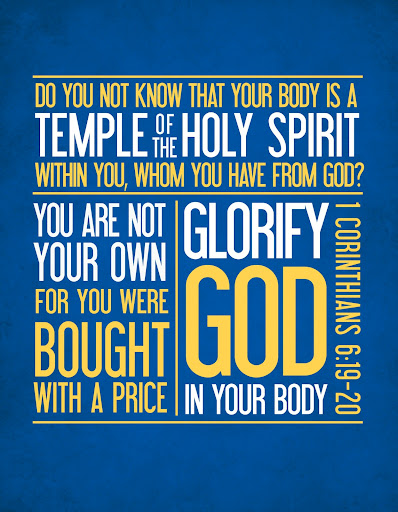
Thank you for this lesson that tells us of the nuts and bolts of marriage and of singleness.  Thank you for your Holy Spirit who lives in us to guide us to Your Best Life for all of us.  Help us to hear you with minds ready to obey you.  Put blinders on our eyes so we are not distracted by worldview thinking.  Help us to consider all obstacles and pitfalls before making the leap of marriage.  But over all may we trust you, dear Jesus, in every decision we make in life.  God, you have us. God, you have our backs.  Why follow anyone else but You who created the universe with the Perfect Plan to save us and give us your best?  I love you, Lord, heart, mind, body and soul.  My body—Your Temple.  It’s you first.

In Jesus Name, For Your Glory, Amen.   

Posted in Uncategorized | Tagged , , | Leave a comment

HOW DARE YOU!

As loving parents who see there kids about to do something that will cause great pain or even lead to death, we get right to the point and bluntly shout, “Stop that, now!”  “Stop!”  “Take my hand, NOW!”  Right?

With the same love as a parent, Paul is blunt as he gets right to the point quickly in this part of his letter to the believers in Corinth.  The city is full of sin behaviors, unbelievers in God who worship idols, indulge in sexual promiscuity to the point of abuse, dishonoring each other in all kinds of perverted ways, along with taking each other to court for every disagreement.  It is not surprising that this behavior is carried into the new church of people who are young in the faith and who have not fully left that life behind.  They have carried in the “old, dead life behaviors” and are trying to attach it to their new, growing life in Christ. 

Paul tells them in no uncertain language that the old, dead, worldly Corinthian life behaviors have to go because they do not match their new belief!  He tells them what to do, how to live for Christ, which honors God.  He helps them (and us) to realize the depth of God’s love as He cherishes our own bodies in which He wants to live and abide. 

CORINTHIANS—CALLED AND SENT

1 Corinthians 6, The Message

1-4 And how dare you take each other to court! When you think you have been wronged, does it make any sense to go before a court that knows nothing of God’s ways instead of a family of Christians? The day is coming when the world is going to stand before a jury made up of followers of Jesus. If someday you are going to rule on the world’s fate, wouldn’t it be a good idea to practice on some of these smaller cases? Why, we’re even going to judge angels! So why not these everyday affairs? As these disagreements and wrongs surface, why would you ever entrust them to the judgment of people you don’t trust in any other way?

5-6 I say this as bluntly as I can to wake you up to the stupidity of what you’re doing. Is it possible that there isn’t one levelheaded person among you who can make fair decisions when disagreements and disputes come up? I don’t believe it. And here you are taking each other to court before people who don’t even believe in God! How can they render justice if they don’t believe in the God of justice?

7-8 These court cases are a black eye on your community. Wouldn’t it be far better to just take it, to let yourselves be wronged and forget it? All you’re doing is providing fuel for more wrong, more injustice, bringing more hurt to the people of your own spiritual family.

9-11 Don’t you realize that this is not the way to live? Unjust people who don’t care about God will not be joining in his kingdom. Those who use and abuse each other, use and abuse sex, use and abuse the earth and everything in it, don’t qualify as citizens in God’s kingdom. A number of you know from experience what I’m talking about, for not so long ago you were on that list. Since then, you’ve been cleaned up and given a fresh start by Jesus, our Master, our Messiah, and by our God present in us, the Spirit.

12 Just because something is technically legal doesn’t mean that it’s spiritually appropriate. If I went around doing whatever I thought I could get by with, I’d be a slave to my whims.

13 You know the old saying, “First you eat to live, and then you live to eat”? Well, it may be true that the body is only a temporary thing, but that’s no excuse for stuffing your body with food, or indulging it with sex. Since the Master honors you with a body, honor him with your body!

14-15 God honored the Master’s body by raising it from the grave. He’ll treat yours with the same resurrection power. Until that time, remember that your bodies are created with the same dignity as the Master’s body. You wouldn’t take the Master’s body off to a whorehouse, would you? I should hope not.

16-20 There’s more to sex than mere skin on skin. Sex is as much spiritual mystery as physical fact. As written in Scripture, “The two become one.” Since we want to become spiritually one with the Master, we must not pursue the kind of sex that avoids commitment and intimacy, leaving us more lonely than ever—the kind of sex that can never “become one.” There is a sense in which sexual sins are different from all others. In sexual sin we violate the sacredness of our own bodies, these bodies that were made for God-given and God-modeled love, for “becoming one” with another. Or didn’t you realize that your body is a sacred place, the place of the Holy Spirit? Don’t you see that you can’t live however you please, squandering what God paid such a high price for? The physical part of you is not some piece of property belonging to the spiritual part of you. God owns the whole works. So let people see God in and through your body.

WHAT DO WE LEARN—WHAT LEAPS OFF THE PAGE!

“God honored the Master’s body by raising it from the grave. He’ll treat yours with the same resurrection power. Until that time, remember that your bodies are created with the same dignity as the Master’s body. You wouldn’t take the Master’s body off to a whorehouse, would you? I should hope not.”

SAME DIGNITY as the Master’s Body—Friends, this goes much deeper than the lessons preached at church camp…”Don’t take fellow believers to court”, “Don’t have sex until marriage”, along with other don’ts.  Look deeper into what God is saying through Paul.  We hear God telling us the Truth and the Reason why He sent His Son to save us—

“You are mine, bought at the high price of the sacrifice of My Son, not just your heart, mind and soul—ALL of you which includes your body in which I created.  So, don’t take me where I cannot go with you.”

Before we go or do anything what if we first asked, “Is this a place or experience God will be honored?  That’s the bottom line of Paul’s warning to all of us who truly believe who want to grow more intimately in our relationship with God.

God so loved the world that HE GAVE His Son to save us from all sin.  Our thanks to Him is displayed in our behaviors.  God wants us to give back ALL of who we are to Him.  “God owns the whole works. So let people see God in and through your body.”  (See also Romans 12:1-2).

It’s all about God and His Son living in and through us.  “Just because something is technically legal doesn’t mean that it’s spiritually appropriate.”  Good advice and well played, Paul.

Lord,

I offer my life to you, all that I am, all you created me to be, all the good with all the bad that needs work.  I am your work and you are not finished with me, yet.  I realize that full well.  Each day brings new opportunities to grow as I serve, to grow as I learn to love like you love us, as I grow more intimate in our relationship.  I really don’t want to go where you are not honored.  I don’t want to go where you have not sent me.  I want what you want for me, Your best, in exchange for the worst in me.  You are amazing, Lord!  Your love is amazing!  May I honor you with all my heart, mind and soul housed in this body you have created.  All of me belongs to you.

In Jesus Name, For Your Glory, Amen

Posted in Uncategorized | Tagged , | Leave a comment

WHEN WE CAN’T LET IT GO

Corinth was a rough and tumble city filled with the worship of many gods and evil practices.  Many, not all, who came to know God through Jesus merely added Him to their traditions of idol worship of an exhaustive list of gods.  They also continued to live the sins that were acceptable to the unbelieving world.  So, it is no wonder these sins were brought into the new church who were learning to follow in the ways of God.  It was a confusing time.

So, Paul, motivated with the love of Jesus, writes a letter to the leaders to help them understand that sin has to be dealt with but with the motive of saving the sinner!  Please note that this is a huge difference between the Pharisaical motives of power with suppressive and hypocritical judgements with man-made rules; instead this came from a broken heart for their brothers and sisters caught up in the world of sin that would destroy them.

Brokenhearted Paul made the motive clear—”You want him on his feet and forgiven before the Master on the Day of Judgment.”  God-led leaders care enough to confront the sinner so that he/she does not continue in sin.  It breaks God’s heart when we sin.  It breaks our hearts when our brothers and sisters are caught in sin that will destroy their relationship to God.  Only with the love of God and the authority of Jesus should leaders confront, but care enough to do so!  Not for you but for the brother or sister so the church Body can be made whole through Jesus’ forgiveness.  Unity is threatened in the Body of Christ when we don’t care enough to confront the sinner but leaders must be led by God, with His Holy Spirit of His love, motivated for the benefit of the sinner, giving ultimate glory to God who forgives because of Jesus. 

Paul shows the church how to do this with love for the sinner which is who Jesus was, is and always will be…” Friend to the sinners”.  The precise phrase — “friend of sinners” — is mentioned twice in the Gospels, in Matthew 11:19 and Luke 7:34. They called Jesus this because it was true. He was a friend of sinners. Jesus himself said that he didn’t come for the spiritually healthy, but for the sick. “I have not come to call the righteous but sinners to repentance” (Luke 5:31–32).

Just like he greeted children that others thought were a nuisance, he welcomed sinners that others didn’t (Matthew 19:14; Luke 7:37–39). He looked at them, as Mark says he did with the rich young man, and he loved them (Mark 10:21). He had compassion on them. And most glorious of all, he wielded his authority to speak those wondrous words, “Your sins are forgiven” (Luke 7:48).

This is all very important for us because, as some have noted recently, we Christians pattern our lives after Jesus’s example. He has, after all, sent us into the world in the same Spirit of his own mission (John 20:21–22).  As humbly, forgiven people, we are to lovingly point people to Jesus for His forgiveness.  All people. Jesus saves.  Only Jesus.

CORINTHIANS—CALLED AND SENT

1 Corinthians 5, The Message

The Mystery of Sex

1-2 I also received a report of scandalous sex within your church family, a kind that wouldn’t be tolerated even outside the church: One of your men is sleeping with his stepmother. And you’re so above it all that it doesn’t even faze you! Shouldn’t this break your hearts? Shouldn’t it bring you to your knees in tears? Shouldn’t this person and his conduct be confronted and dealt with?

3-5 I’ll tell you what I would do. Even though I’m not there in person, consider me right there with you, because I can fully see what’s going on. I’m telling you that this is wrong. You must not simply look the other way and hope it goes away on its own. Bring it out in the open and deal with it in the authority of Jesus our Master. Assemble the community—I’ll be present in spirit with you and our Master Jesus will be present in power. Hold this man’s conduct up to public scrutiny. Let him defend it if he can! But if he can’t, then out with him! It will be totally devastating to him, of course, and embarrassing to you. But better devastation and embarrassment than damnation. You want him on his feet and forgiven before the Master on the Day of Judgment.

6-8 Your flip and callous arrogance in these things bothers me. You pass it off as a small thing, but it’s anything but that. Yeast, too, is a “small thing,” but it works its way through a whole batch of bread dough pretty fast. So get rid of this “yeast.” Our true identity is flat and plain, not puffed up with the wrong kind of ingredient. The Messiah, our Passover Lamb, has already been sacrificed for the Passover meal, and we are the Unraised Bread part of the Feast. So let’s live out our part in the Feast, not as raised bread swollen with the yeast of evil, but as flat bread—simple, genuine, unpretentious.

9-13 I wrote you in my earlier letter that you shouldn’t make yourselves at home among the sexually promiscuous. I didn’t mean that you should have nothing at all to do with outsiders of that sort. Or with criminals, whether blue- or white-collar. Or with spiritual phonies, for that matter. You’d have to leave the world entirely to do that! But I am saying that you shouldn’t act as if everything is just fine when a friend who claims to be a Christian is promiscuous or crooked, is flip with God or rude to friends, gets drunk or becomes greedy and predatory. You can’t just go along with this, treating it as acceptable behavior. I’m not responsible for what the outsiders do, but don’t we have some responsibility for those within our community of believers? God decides on the outsiders, but we need to decide when our brothers and sisters are out of line and, if necessary, clean house.

Lord,

We have learned that we cannot confront unless we love.  Help us to love like you love us.  Help us to care enough to confront our brother or sister with your love in us, guiding us.  I am reminded from Paul to speak Truth in the Spirit of your love in us.  May our motives always be to redirect our friends to you to be saved and restored by you.

In Jesus Name, Amen

Posted in Uncategorized | Tagged , | Leave a comment