
CHOOSING UP SIDES

Before any game is played; sides must be chosen.  Two teams are decided within any large group; then the game begins.  You know how it goes—from the Garden of Eden to now—we still choose up sides. Our first thought as a child, eager to play is, who will choose me? Whose side will we I be on? Will I be chosen first, second, or last? Choosing is awkward at times but knowing whose side you are on makes all the difference in how you will play the game, right?!

We all choose up sides!  We choose which side we will take when opposing views present themselves in conversation.  We will “side” with those who agree with our belief system concerning the topic at hand.

We choose up sides between good and evil with every decision we make and every action we take in our daily lives.  So, whose side are you on?  Choose this day whom you will serve, says Joshua to God’s people who were fearful of the enemy. (Joshua 24:15) So, it is extremely important to make the choice—God or the opposing Enemy of Darkness? It’s a matter of life or death. Who do we want to believe and follow?  Our behavior will certainly reveal what we truly believe—especially when put under the spotlight of pressure by those who want to know whose side we’re on. Who and what we decide affects the decision of others who look to us for truth. Wow.

David chose to be kind to the new king of the Ammonites (the opposing team) but his efforts are assumed to be evil.  Assumptions and presumptions are the greatest roadblocks to honest communication in building community even today!  We assume what others think therefore we presume how they will act toward us before the first word is spoken. “All have sinned and fall short of the glory of God” with these habits that deter all relationships. These habits are not the way to peace with each other or with God.  Read on…

2 Samuel 10

David Defeats the Ammonites

In the course of time, the king of the Ammonites died, and his son Hanun succeeded him as king. David thought, “I will show kindness to Hanun son of Nahash, just as his father showed kindness to me.” So David sent a delegation to express his sympathy to Hanun concerning his father.

When David’s men came to the land of the Ammonites, the Ammonite commanders said to Hanun their lord, “Do you think David is honoring your father by sending envoys to you to express sympathy? Hasn’t David sent them to you only to explore the city and spy it out and overthrow it?” So Hanun seized David’s envoys, shaved off half of each man’s beard, cut off their garments at the buttocks, and sent them away.

When David was told about this, he sent messengers to meet the men, for they were greatly humiliated. The king said, “Stay at Jericho till your beards have grown, and then come back.”

When the Ammonites realized that they had become obnoxious to David, they hired twenty thousand Aramean foot soldiers from Beth Rehob and Zobah, as well as the king of Maakah with a thousand men, and also twelve thousand men from Tob.

On hearing this, David sent Joab out with the entire army of fighting menThe Ammonites came out and drew up in battle formation at the entrance of their city gate, while the Arameans of Zobah and Rehob and the men of Tob and Maakah were by themselves in the open country.

Joab saw that there were battle lines in front of him and behind him; so he selected some of the best troops in Israel and deployed them against the Arameans. 10 He put the rest of the men under the command of Abishai his brother and deployed them against the Ammonites. 11 Joab said, “If the Arameans are too strong for me, then you are to come to my rescue; but if the Ammonites are too strong for you, then I will come to rescue you. 12 Be strong, and let us fight bravely for our people and the cities of our God. The Lord will do what is good in his sight.”

13 Then Joab and the troops with him advanced to fight the Arameans, and they fled before him. 14 When the Ammonites realized that the Arameans were fleeing, they fled before Abishai and went inside the city. So Joab returned from fighting the Ammonites and came to Jerusalem.

15 After the Arameans saw that they had been routed by Israel, they regrouped. 16 Hadadezer had Arameans brought from beyond the Euphrates River; they went to Helam, with Shobak the commander of Hadadezer’s army leading them.

17 When David was told of this, he gathered all Israel, crossed the Jordan and went to Helam. The Arameans formed their battle lines to meet David and fought against him. 18 But they fled before Israel, and David killed seven hundred of their charioteers and forty thousand of their foot soldiers. He also struck down Shobak the commander of their army, and he died there. 19 When all the kings who were vassals of Hadadezer saw that they had been routed by Israel, they made peace with the Israelites and became subject to them.

So the Arameans were afraid to help the Ammonites anymore.

WHAT DO WE LEARN—HOW DO WE RESPOND?

Once again (see chapter 9), David wanted to show kindness, but this time his attempt led to war instead of peace. His overtures to his neighbor were misunderstood, and David had to defend his own honor as well as the honor of the Lord and His people. David the warrior was also a man who understood the principle of peace.

Jesus taught about peace, both inner peace and peace between people. While his teachings sometimes involved conflict due to his message of truth, his core message emphasized love, forgiveness, and reconciliation, all essential components of peace. Listen to Jesus, trust and obey what HE says. Jesus is the only Way to reconcile with God, who is the Truth we seekand the One who gives all who believe eternal Life! (John 14:6)  Jesus knows peace because He is Peace.

Consider this wisdom: “Trust in the Lord with all your heart and lean not on your own understanding; in all your ways submit to him, and he will make your paths straight.” Proverbs 3:5-6. Reading a Proverb a day is a great way to gain wisdom in “choosing sides.” Wisdom is simply defined as obtaining practical “skills for living”. Wisdom commands that we do not “follow our hearts!” Jesus taught us to follow the desires of the heart of God!  David was a man after the heart of God.  Assuming, presuming, while “following our own hearts” as we learn in this passage; does not lead to peace.  Jesus the Prince of Peace is the One who gives us the gift of His peace when we believe and follow Him.  Peace begins with knowing Jesus.

Biblical Principles of Peace: (Excerpts from author, Fred Bittner)

  • Peace is a product of God’s designMay God himself, the God of peace, sanctify you through and through. May your whole spirit, soul and body be kept blameless at the coming of our Lord Jesus Christ — 1 Thessalonians 5:23 (NIV).
  • Peace comes from knowing Jesus and is not linked to external circumstances.  “For God was pleased to have all his fullness dwell in him, and through him to reconcile to himself all things, whether things on earth or things in heaven, by making peace through his blood, shed on the cross — Colossians 1:19-20 (NIV).
  • Peace is a vital part of our relationship with the Holy Spirit.  “But the fruit of the Spirit is love, joy, peace, forbearance, kindness, goodness, faithfulness, gentleness and self-control. Against such things there is no law. — Galatians 5:22
  • Peace is not ours to keep, but ours to share. “Blessed are the peacemakers, for they will be called Children of God”. —Jesus, Matthew 5:9 (NIV). The peace of God must be evident in us. Others need to see what we have and desire to have it. Then we must be peacemakers, able to share the love of God with a troubled world. Jesus calls us to be the Light in a dark world who needs the Savior!  (Matthew 5:14-16)
  • Peace is demonstrated to the world through a healthy Church. “Finally, brothers and sisters, rejoice! Strive for full restoration, encourage one another, be of one mind, live in peace. And the God of love and peace will be with you. — 2 Corinthians 13:11 (NIV).  Church fights hurt the cause of Christ. To that end the Bible says, “Let us therefore make every effort to do what leads to peace and to mutual edification” — Romans 14:19 (NIV).
  • Peace is not determined by possessions, or circumstances. The pursuit of peace is more important than the pursuit of possessions, money, or fame. Peace is not determined by where we live, or how much we own. “Whatever you have learned or received or heard from me, or seen in me—put it into practice. And the God of peace will be with you…I have learned the secret of being content in any and every situation, whether well fed or hungry, whether living in plenty or in want. I can do all this through him who gives me strength. — Philippians 4:9,12-13 (NIV).
  • God’s Peace is to be sought above all other possessions.

“Better a dry crust with peace and quiet than a house full of feasting, with strife.” Proverbs 17:1

“So then we pursue the things which make for peace and the building up of one another.” Romans 14:19

“Pursue peace with all men, and the sanctification without which no one will see the Lord.” Hebrews 12:14

  • If you want to be blessed, become a peacemaker.  “Peacemakers who sow in peace reap a harvest of righteousness — James 3:18 (NIV).

Peace is a gift from God that keeps on giving!  Peace is not obtained on our own. Our peace was bought at a price—Jesus, God’s One and Only Son.  Jesus is the peace we seek in every detail of life because He IS peace and He delivers His peace upon request. “I have told you these things, so that in me you may have peace. In this world you will have trouble. But take heart! I have overcome the world.”—Jesus, John 16:33

“Peace I leave with you; my peace I give to you. Not as the world gives do I give to you. Let not your hearts be troubled, neither let them be afraid.”—Jesus, John 14:27 ESV

How will we respond?

One of my favorite authors, Dr. David Jeremiah writes in Sanctuary, “All too often we lose our peace in the midst of tragedy and the circumstances of life. When we do that, we have nothing to offer a watching world. If a neighbor comes to us distraught over tragedy and finds us just as undone, what testimony have we given about the peace of Christ, which He promised? It is the Christians in a community who should be able to offer a word of encouragement and comfort during difficult times. But we can only do that if we possess the peace of Christ-that peace which He purchased for us at the price of His own blood.” –David Jeremiah, “Sanctuary”

“If it is possible, as much as depends on you, live peaceably with all men.” Romans 12:18  Peace begins and ends with knowing Jesus and believing in Him.

I’m choosing the side of Peace; how about you?

Lord,

Give us your wisdom and peace.  Help us to avoid the sins of assuming we know what others think and presuming what they will do.  Teach us your ways of truthful communication filled with unconditional love. Thank you for saving my soul and making me whole.  Guide me in all I think, say, and do today.  Thank you, thank you, thank you!

In Jesus Name, Amen
Posted in Uncategorized | Tagged , , , , | Leave a comment

GOD LEADS TO THOSE IN NEED

“Is there anyone I can show kindness to today, Lord?”  Wow, what would happen if we prayed that pray honestly with a willing heart ready to jump into action? God readily answers a prayer like that with those who need an extra dose of encouragement! I have seen God do it through others and through me! If more compassion is needed to see and listen more intently and bolster our resolve to serve God by serving others, then prayer this prayer; “Lord, break my heart of those things that break yours.”  Praying these words will immediately change our life perspective of the world around us and open our eyes to see the real needs of our world.  Along with that prayer, God delivers the power, guidance, ability, and plan of wisdom to deliver help quickly to those who need it most at just the right time and in the right spirit—His Holy Spirit.  No need for a committee meeting to meet common needs of humanity.  God has it covered by making us His hands and feet!  Listen to His Holy Spirit who guides us to truth and God’s agenda for each new day.

David, a man after God’s own heart, has the Spirit of God in him. God guides David to remember his promise to his best friend for life—Jonathan, son of Saul.  “Is anyone left that I can show kindness for Jonatan’s sake?” David asks with intent and God delivers.  God then gives David a plan to fulfill that promise in a very practical way—take care of Jonathan’s crippled son for life.

2 Samuel 9

David and Mephibosheth

David asked, “Is there anyone still left of the house of Saul to whom I can show kindness for Jonathan’s sake?”

Now there was a servant of Saul’s household named Ziba. They summoned him to appear before David, and the king said to him, “Are you Ziba?”

“At your service,” he replied.

The king asked, “Is there no one still alive from the house of Saul to whom I can show God’s kindness?”

Ziba answered the king, “There is still a son of Jonathan; he is lame in both feet.”

“Where is he?” the king asked.

Ziba answered, “He is at the house of Makir son of Ammiel in Lo Debar.”

So King David had him brought from Lo Debar, from the house of Makir son of Ammiel.

When Mephibosheth son of Jonathan, the son of Saul, came to David, he bowed down to pay him honor.

David said, “Mephibosheth!”

“At your service,” he replied.

“Don’t be afraid,” David said to him, “for I will surely show you kindness for the sake of your father Jonathan. I will restore to you all the land that belonged to your grandfather Saul, and you will always eat at my table.”

Mephibosheth bowed down and said, “What is your servant, that you should notice a dead dog like me?”

Then the king summoned Ziba, Saul’s steward, and said to him, “I have given your master’s grandson everything that belonged to Saul and his family. 10 You and your sons and your servants are to farm the land for him and bring in the crops, so that your master’s grandson may be provided for. And Mephibosheth, grandson of your master, will always eat at my table.” (Now Ziba had fifteen sons and twenty servants.)

11 Then Ziba said to the king, “Your servant will do whatever my lord the king commands his servant to do.” So Mephibosheth ate at David’s table like one of the king’s sons.

12 Mephibosheth had a young son named Mika, and all the members of Ziba’s household were servants of Mephibosheth. 13 And Mephibosheth lived in Jerusalem, because he always ate at the king’s table; he was lame in both feet.

WHAT DO WE LEARN—HOW DO WE RESPOND?

People with challenging disabilities were thought to be unworthy, deemed outcasts of society, worthless, and even sinful in this particular biblical age. “You must have done something wrong to live with this marked disability” was the common thinking. For David to look past all of that to see only Johnathan’s son, who he loved demonstrates the glorious grace of our God to us because of Jesus sacrifice to all!  In fact, the story of David and Mephibosheth is a striking picture of salvation by grace. There is beauty that emerges in the intimate, loving relationship between God and David that demonstrates what can happen to one who truly inquires and listens to God often. It wonderfully shows how David was led to remember and follow through on his covenant with Jonathan—friends for life and now to his son.  This is a picture-perfect example of God’s compassion and love without conditions.

During the course of our lives, we will come across many people who have needs that we are able to meet. What will be our response? Don’t assume someone else will meet that need.

Pray, asking Gods’ Holy Spirit to prompt us daily. God will respond to us with someone who needs what God has given us to share and pass on.  This is what it means to join God in HIS work of love, mercy, and grace as we walk humbly with God always ready to respond, “At Your Service, Lord!” 

Our lifestyle will indeed reveal our life source.  Walking with God means living in harmony with God’s Spirit with a grateful heart and an expectant hope, saying; “What’s next, Papa?”  Wait, what now, you ask?  I’m glad you asked. One of my favorite ways to explain this harmony with God’s Holy Spirit is found in Romans 8:15-17. Read this scripture from Eugene Peterson’s, The Message, to fully understand this concept;

“This resurrection life you received from God is not a timid, grave-tending life. It’s adventurously expectant, greeting God with a childlike ‘What’s next, Papa?’ God’s Spirit touches our spirits and confirms who we really are. We know who he is, and we know who we are: Father and children. And we know we are going to get what’s coming to us – an unbelievable inheritance! We go through exactly what Christ goes through. If we go through the hard times with him, then we’re certainly going to go through the good times with him!” –Paul, to the church, Romans 8:15-17.

Need help?  Romans 12 gives us specific, practical ways to serve God by serving others. We have no excuse, really, to go, tell, share, and make disciples who go, tell, share and make other disciples who extend kindness, encouragement, grace, love, mercy, and generosity—in order to be more and more in every way like Christ!  This is church—a group of Christ followers who want to be like Him.

Paul continues….

“God knew what he was doing from the very beginning. He decided from the outset to shape the lives of those who love him along the same lines as the life of his Son. The Son stands first in the line of humanity he restored. We see the original and intended shape of our lives there in him. After God made that decision of what his children should be like, he followed it up by calling people by name. After he called them by name, he set them on a solid basis with himself. And then, after getting them established, he stayed with them to the end, gloriously completing what he had begun.

So, what do you think? With God on our side like this, how can we lose? If God didn’t hesitate to put everything on the line for us, embracing our condition and exposing himself to the worst by sending his own Son, is there anything else he wouldn’t gladly and freely do for us? And who would dare tangle with God by messing with one of God’s chosen? Who would dare even to point a finger? The One who died for us—who was raised to life for us!—is in the presence of God at this very moment sticking up for us. Do you think anyone is going to be able to drive a wedge between us and Christ’s love for us? There is no way! Not trouble, not hard times, not hatred, not hunger, not homelessness, not bullying threats, not backstabbing, not even the worst sins listed in Scripture:

They kill us in cold blood because they hate you.
We’re sitting ducks; they pick us off one by one.

None of this fazes us because Jesus loves us. I’m absolutely convinced that nothing—nothing living or dead, angelic or demonic, today or tomorrow, high or low, thinkable or unthinkable—absolutely nothing can get between us and God’s love because of the way that Jesus our Master has embraced us. Romans 8:29-39, MSG

Lord,

Thank you for this picture of your grace through David.  But the greatest of all is the unending, wonderfully amazing grace you poured out from the cross for each one of us. Thank for those who met my need and pointed me to you. Thank you for guiding me to those in need even today. Thank you for providing all we need to share with those in need physically, emotionally, mentally, and spiritually. Thank you for inviting us to your work of salvation for all! I’m your servant and I’m listening for what’s next, Abba!

In Jesus Name, Amen

Posted in Uncategorized | Tagged , , , , | Leave a comment

THE BATTLE AND THE VICTORY BELONGS TO THE LORD!

The known world of enemies who opposed the nation of Israel from the beginning of entering the “Promised Land” given to them by God has now been subdued.  It was God who raised up a shepherd boy to be a warrior king over His people. It was God who gave told David what to do and when to do it. Because of David’s faith in God; “The Lord gave David victory wherever he went.”

These defeated nations, especially the evil Philistines, had been constant military and religious threat to Israel. By defeating the enemies of Israel; David’s kingdom flourished. Under his leadership, Israel grew to ten times its original size. David was in a “sweet spot” doing the will of God.  He knew no defeat on the battlefield nor insurrection in his court.

Israel was finally at peace. The people were grateful to David. They were in awe of his accomplishments as a military leader as well as King who knew, loved, and served God.  David consistently gave praise to God who provided the victory. But, now what? How will David, a man after God’s own heart, but still a human, handle the notoriety of all these victories provided by God?  How will he handle the great wealth he has acquired from defeating his enemies who were the enemies of God? 

Every leader whom God has raised up to lead his people is tempted by the Enemy to shift their thinking from giving praise to God to seeking self-glorification through the praises of adoring people.  In fact most times it is in times of peace that we fall to thinking we are the reason for victory as we rest on the adorations of those around us. We begin to think all praises are due to us, thinking we provided the peace. We cross the line when we think nothing can bring us down or take us out. Because suddenly, without warning, we fall to thinking we can do nothing wrong. The grand idea comes to us that we truly “can have it all, when we want it, because we deserve it.” Sound familiar?

“All have sinned and fall short of the glory of God” in all kinds of ways at one time or another when we believe that we, ourselves, are the reason for success and victory. (Romans 3:23) What Paul wrote to the church reminds us that all humans have committed sin and therefore cannot achieve perfect righteousness or God’s standard of holiness on their own. God knew humans are not perfect so God made a Way for us to be perfectly forgiven and redeemed from our folly of sin. God did for us that we cannot do for ourselves—remove sin. We cannot earn or purchased redemption for our sins on our own by our own efforts.  Only Jesus, the Perfect One without sin, could sacrificially stand in our place of punishment and fully absorb our debt of sin so that we can be made clean and holy before God. 

Let us learn from David…while giving praise to God!

2 Samuel 8

David’s Victories

In the course of time, David defeated the Philistines and subdued them, and he took Metheg Ammah from the control of the Philistines.

David also defeated the Moabites. He made them lie down on the ground and measured them off with a length of cord. Every two lengths of them were put to death, and the third length was allowed to live. So the Moabites became subject to David and brought him tribute.

Moreover, David defeated Hadadezer son of Rehob, king of Zobah, when he went to restore his monument at the Euphrates River. David captured a thousand of his chariots, seven thousand charioteers and twenty thousand foot soldiers. He hamstrung all but a hundred of the chariot horses.

When the Arameans of Damascus came to help Hadadezer king of Zobah, David struck down twenty-two thousand of them. He put garrisons in the Aramean kingdom of Damascus, and the Arameans became subject to him and brought tribute. The Lord gave David victory wherever he went.

David took the gold shields that belonged to the officers of Hadadezer and brought them to Jerusalem. From Tebah and Berothai, towns that belonged to Hadadezer, King David took a great quantity of bronze.

When Tou king of Hamath heard that David had defeated the entire army of Hadadezer, 10 he sent his son Joram to King David to greet him and congratulate him on his victory in battle over Hadadezer, who had been at war with Tou. Joram brought with him articles of silver, of gold and of bronze.

11 King David dedicated these articles to the Lord, as he had done with the silver and gold from all the nations he had subdued: 12 Edom and Moab, the Ammonites and the Philistines, and Amalek. He also dedicated the plunder taken from Hadadezer son of Rehob, king of Zobah.

13 And David became famous after he returned from striking down eighteen thousand Edomites in the Valley of Salt.

14 He put garrisons throughout Edom, and all the Edomites became subject to David. The Lord gave David victory wherever he went.

David’s Officials

15 David reigned over all Israel, doing what was just and right for all his people. 16 Joab son of Zeruiah was over the army; Jehoshaphat son of Ahilud was recorder; 17 Zadok son of Ahitub and Ahimelek son of Abiathar were priests; Seraiah was secretary; 18 Benaiah son of Jehoiada was over the Kerethites and Pelethites; and David’s sons were priests.

WHAT DO WE LEARN—HOW DO WE RESPOND?

The Lord had promised Israel the land from the border of Egypt to the Euphrates River (See the references, Genesis 15:17–21; Deuteronomy 1:6–8; 11:24; 1 Kings 4:20, 21). God used David to help fulfill the promise. Israel had lost territory to her enemies during the reign of King Saul, and David recaptured it. But he also expanded Israel’s borders and acquired land that hadn’t been conquered in Joshua’s day (Joshua 13:1–7). A man of faith, David believed God’s promises and acted upon them for the blessing of his people.

When God gives us the victory over all that sin has taken from us in the past; how do we respond?  Prayerfully and carefully recall what God did to set us free and thank Him!  Ask God what He wants to do in and through us that will help others know Him and be set free!  God gives victory over sin to all who believe!  (Romans 12 will help us know what practical steps to take!)

Winning battles is one thing, and managing the affairs of the growing nation is quite another; and here David proved himself capable. He ruled with justice and righteousness and served all the people. David also demonstrated his capabilities in appointing wise and skilled advisors and subordinates to help him. God loves righteousness and justice and requires us to follow suit as believers.

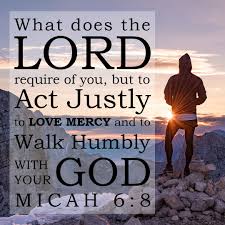
“He has shown you, O mortal, what is good. And what does the Lord require of you?
To act justly and to love mercy and to walk humbly with your God.” Micah 6:8

David indeed was a man after God’s own heart.  Are we—in all we think, say, and do?

God’s victories through his servant David also meant peace and safety for the people of Israel so they could live normal lives and not be constantly threatened by their neighbors. Israel had a great work to perform on earth in bearing witness to the true and living God and bringing the written Scriptures of the Messiah who comes into the world. Furthermore, the plunder filled the treasury of the Lord so that the materials were for David’s son, Solomon to later build the temple of God!

We, as God’s church, believers in Jesus, do not use military weapons to fight God’s battles; but fully lean on the direction and power of God’s Holy Spirit who lives in the temple of our hearts!  With the faith and courage of David, we are taught to “put on the full armor of God, so that you can take your stand against the devil’s schemes,” (Ephesians 6).  This spiritual armor fits us for service in pointing the lost to Jesus within our families, among our friends, and anyone else who have fallen for the Enemy while avoiding the Enemy ourselves!  “Go and make disciples” is the command Jesus gave to us with all authority from God.  The command was delivered with a promise, “And surely I am with you always, to the very end of the age.” (Matthew 28:20)

Believe, repent, and be saved for eternity.  Then go tell others!

Lord,

Thank for reminding us that our faith and resolve can be just as relentless as David’s and all the other imperfect people you called for your specific purpose. Thank you for who you are and all you do because of your great love for us.  Only you can fully cleanse our hearts, renew our minds, and refresh our souls. Only you can make us holy and fit for your service.  Only you can restore the joy of your salvation at work within us; the joy that is eternal and never ceases to lift our faith and give us hope. Thank you for your peace and joy in all circumstances.  You are God and there is no one like you!  Thank you for being with us always as we love you and others with your love embedded in our hearts.

In Jesus Name, Amen

Posted in Uncategorized | Tagged , , , , | Leave a comment

WE PLAN—GOD DECIDES!

We humans have a kink in our armor—Self.  As God leads us to success in completing the mission He gave us to do while providing all that we needed within and without to do it; we think we should do more!  So, in our excitement; we think of more “good” things to accomplish, thinking we will really wow and impress God with bigger and better ways to please Him.  But does it become at this point all about God or about us? 

Do we stop in our dreaming and imagining to ask God what He wants?  This would be the BEST way to honor God! We might plan great and glorious strategies of accomplishments with our first thought being to give back to God what He has so graciously given to us. But we step over the line and out of God’s will when our dreams escalate in ways that bring glory and notoriety to us.  “Look what I did, in Jesus Name,” grieves the Holy Spirit of God who lives in us. Daivd is about to learn that lesson! His adviser, Nathan, prophet of God, will stand ready to tell David what God wants.  How will David respond?

2 Samuel 7

God’s Promise to David

After the king was settled in his palace and the Lord had given him rest from all his enemies around him, he said to Nathan the prophet, “Here I am, living in a house of cedar, while the ark of God remains in a tent.”

Nathan replied to the king, “Whatever you have in mind, go ahead and do it, for the Lord is with you.”

But that night the word of the Lord came to Nathan, saying:

“Go and tell my servant David, ‘This is what the Lord says: Are you the one to build me a house to dwell in? I have not dwelt in a house from the day I brought the Israelites up out of Egypt to this day. I have been moving from place to place with a tent as my dwelling. Wherever I have moved with all the Israelites, did I ever say to any of their rulers whom I commanded to shepherd my people Israel, “Why have you not built me a house of cedar?”’

“Now then, tell my servant David, ‘This is what the Lord Almighty says: I took you from the pasture, from tending the flock, and appointed you ruler over my people Israel. I have been with you wherever you have gone, and I have cut off all your enemies from before you. Now I will make your name great, like the names of the greatest men on earth. 10 And I will provide a place for my people Israel and will plant them so that they can have a home of their own and no longer be disturbed. Wicked people will not oppress them anymore, as they did at the beginning 11 and have done ever since the time I appointed leaders[a] over my people Israel. I will also give you rest from all your enemies.

“‘The Lord declares to you that the Lord himself will establish a house for you: 12 When your days are over and you rest with your ancestors, I will raise up your offspring to succeed you, your own flesh and blood, and I will establish his kingdom13 He is the one who will build a house for my Name, and I will establish the throne of his kingdom forever. 14 I will be his father, and he will be my son. When he does wrong, I will punish him with a rod wielded by men, with floggings inflicted by human hands. 15 But my love will never be taken away from him, as I took it away from Saul, whom I removed from before you. 16 Your house and your kingdom will endure forever before me]; your throne will be established forever.’”
17 Nathan reported to David all the words of this entire revelation.

David’s Prayer

18 Then King David went in and sat before the Lord, and he said:

“Who am I, Sovereign Lord, and what is my family, that you have brought me this far? 19 And as if this were not enough in your sight, Sovereign Lord, you have also spoken about the future of the house of your servant—and this decree, Sovereign Lord, is for a mere human!

20 “What more can David say to you? For you know your servant, Sovereign Lord. 21 For the sake of your word and according to your will, you have done this great thing and made it known to your servant.

22 “How great you are, Sovereign Lord! There is no one like you, and there is no God but you, as we have heard with our own ears. 23 And who is like your people Israel—the one nation on earth that God went out to redeem as a people for himself, and to make a name for himself, and to perform great and awesome wonders by driving out nations and their gods from before your people, whom you redeemed from Egypt? 24 You have established your people Israel as your very own forever, and you, Lord, have become their God.

25 “And now, Lord God, keep forever the promise you have made concerning your servant and his house. Do as you promised, 26 so that your name will be great forever. Then people will say, ‘The Lord Almighty is God over Israel!’ And the house of your servant David will be established in your sight.

27 “Lord Almighty, God of Israel, you have revealed this to your servant, saying, ‘I will build a house for you.’ So your servant has found courage to pray this prayer to you. 28 Sovereign Lord, you are God! Your covenant is trustworthy, and you have promised these good things to your servant. 29 Now be pleased to bless the house of your servant, that it may continue forever in your sight; for you, Sovereign Lord, have spoken, and with your blessing the house of your servant will be blessed forever.”

WHAT DO WE LEARN—HOW DO WE RESPOND?

David plans—God decides. David is submissive to the will of God. David responds to God’s prophecy and direction through Nathan by sitting before the Lord in humble surrender to His will.

How do we respond when our grand plans created in a committee of our church leader peers are changed drastically by our Sovereign God who demonstrates in various ways what HE wants which is always the best for all concerned and truly gives Him glory? 

Do we respond with grumbling and complaining;

“But Lord, we created, we dreamed, we imagine and envisioned what you wanted and designed a great plan to achieve it—in your Name for your glory.  Lord, we even prayed for you to bless our plans!  Why isn’t this pleasing you? Why aren’t you helping us? Why is our dream not your desire?”  I hope we readily see the folly of this thinking, at least I pray we do! “All have sinned and fall short of the glory of God” in this thinking that is full of self. So, how can we avoid this thinking that may begin with good intentions?  Consider: If God didn’t tell us then He isn’t in it; therefore it isn’t a blessed activity of God’s will and purpose to achieve it!

Jesus didn’t do anything of significance without first going to His Father, God—Our God!  Throughout the gospels the writers report that Jesus left often from the ministry to lost people to get alone to a “solitary place” to sit before God (like David just did) in prayer.  Jesus modeled the spiritual discipline of going before God, asking what He wanted him to do before doing it. Jesus often told others it is God who directs Him.  “I do only what my father tells me” is a quote from Jesus found in the Gospel of John. Jeus is telling all those around him that His actions and teachings are aligned with God’s will, as he acts only in accordance with what he has been instructed or shown by God, his Father. This statement emphasizes Jesus’ obedience and the divine nature of his mission. How closely aligned to this is our response to Our Father in heaven?

Stop, pause to prayerfully consider;  Are we practicing the spiritual discipline of being with God before doing anything for God?

Jesus, pressed by his observant disciples who wanted to be more like Jesus in their prayers, modeled this prayer;

“Our Father in heaven, hallowed be your name.
Your kingdom come, your will be done, on earth as it is in heaven. Give us this day our daily bread, and forgive us our debts, as we also have forgiven our debtors. And lead us not into temptation, but deliver us from evil.”—Jesus, Matthew 6:9-13 ESV

Jesus’ prayer of agony in Gethsemane, knowing what He was about to go through to complete God’s mission to save us still prayed— “Father, if you are willing, take this cup from me; yet not my will, but yours be done.”—Jesus, Luke 22:42, NIV

Friends, we must always seek God and His will first, not after our plans have failed but first, asking what God wants us to be and do as HE works in us to accomplish His plan.  When we “sit before the Lord” like David; and ultimately like Jesus, God reveals His plan and purpose with a promise—God does what He says He will do! Every. Time.

I loved Paul’s amazing prayer of encouragement for God’s churches:

For this reason I kneel before the Father, from whom every family in heaven and on earth derives its name. I pray that out of his glorious riches he may strengthen you with power through his Spirit in your inner being, so that Christ may dwell in your hearts through faith. And I pray that you, being rooted and established in love, may have power, together with all the Lord’s holy people, to grasp how wide and long and high and deep is the love of Christ, and to know this love that surpasses knowledge—that you may be filled to the measure of all the fullness of God.

Now to him who is able to do immeasurably more than all we ask or imagine, according to his power that is at work within us, to him be glory in the church and in Christ Jesus throughout all generations, forever! Amen.”—Paul, Ephesians 3:14-21, NIV

Now to him who is able to do immeasurably more than all we ask or imagine, according to his power that is at work within us”.  This verse emphasizes God’s ability to do far more than what is asked or even conceived of, highlighting His limitless power and grace. It’s a reminder that when trusting in God, one can expect outcomes exceeding their expectations.  So, therefore, if we want to truly be more like Jesus—first pray expectantly like Jesus, asking God what HE wants—it will save us a lot of precious time—time we should spend telling others about Him!

Lord,

Thank you for reminding us that our plans are puny compared to your plan with purpose to save humanity from our sins with the promise of eternal life!  God, set my agenda and reveal your purpose for me for today in your plan. May your will be done in all the details of my life—for you are Life to me!

In Jesus Name, Amen
Posted in Uncategorized | Tagged , , , , | Leave a comment

THE DANCE

Every time we embark on a drive, whether to gather supplies or to go on a trip across the countryside; we make judgements of all others who are also driving on the road with us.  We remark about the crazy traffic that stalls at times at busy intersections.  We wonder why seemingly confused people with little regard for those around them still haven’t learned “the dance” of driving.  The term “the dance” can be used metaphorically to describe the fluid, coordinated, and often almost subconscious interactions that occur on the road when driving, especially when it comes to navigating complex situations like merging into traffic or yielding at intersections. 

Driving “the dance” is not a matter of leading; it is submitting to the circumstances with full attention to what lies ahead while attentively watching everyone around you.  We call it the “dance” for good reason.  Experienced drivers who know the “dance” maneuver traffic patiently and skillfully.  Experience comes from knowing the road ahead, anticipating what others drivers might do, with the intelligence to take turns, allowing for the mistakes others might make while avoiding the foolishness of road rage that leads to accidents and possible injury.  Knowing “the dance” of driving in heavy traffic saves lives!

When all kinds of humans with varied abilities and selfish attitudes get behind the steering wheel of a large vehicle, many go on a “power trip,” losing sight of the “the dance.”  Those on power trips think they are in full control of not only their vehicle but of all those driving on the road with them.  Power trips distract from a peaceful, enjoyable journey to our planned destination.

As the newly anointed and crowned king; David performs a sacred dance of praise to God who chose him.  He designates two trusted men to “drive” the Ark of God by ox cart back to Jerusalem from a place where it had been held in “captivity” by Israel’s enemies.  Unfortunately, the drivers didn’t know or remember all the rules of the road in transporting the Ark of God. These instructions were given by God to Moses and detailed in the Books of Exodus and Numbers. 

But, Uzzah’s death that didn’t deter David’s heart for God!  Driven by his overwhelming love for God; David burst into glorious praise and thanksgiving for all that God had done in and through him.  David’s dance demonstrated the fullness of his gratitude as he danced before God with relentless, unashamed, joyful praise. “I praise you with all that is within me.” Psalm 103:1

2 Samuel 6

The Ark Brought to Jerusalem

David again brought together all the able young men of Israel—thirty thousandHe and all his men went to Baalah in Judah to bring up from there the ark of God, which is called by the Name, the name of the Lord Almighty, who is enthroned between the cherubim on the ark. They set the ark of God on a new cart and brought it from the house of Abinadab, which was on the hill. Uzzah and Ahio, sons of Abinadab, were guiding the new cart with the ark of God on it, and Ahio was walking in front of it. David and all Israel were celebrating with all their might before the Lord, with castanets, harps, lyres, timbrels, sistrums and cymbals.

When they came to the threshing floor of Nakon, Uzzah reached out and took hold of the ark of God, because the oxen stumbled. The Lord’s anger burned against Uzzah because of his irreverent act; therefore God struck him down, and he died there beside the ark of God.

Then David was angry because the Lord’s wrath had broken out against Uzzah, and to this day that place is called Perez Uzzah.

David was afraid of the Lord that day and said, “How can the ark of the Lord ever come to me?” 10 He was not willing to take the ark of the Lord to be with him in the City of David. Instead, he took it to the house of Obed-Edom the Gittite. 11 The ark of the Lord remained in the house of Obed-Edom the Gittite for three months, and the Lord blessed him and his entire household.

12 Now King David was told, “The Lord has blessed the household of Obed-Edom and everything he has, because of the ark of God.” So David went to bring up the ark of God from the house of Obed-Edom to the City of David with rejoicing. 13 When those who were carrying the ark of the Lord had taken six steps, he sacrificed a bull and a fattened calf. 14 Wearing a linen ephod, David was dancing before the Lord with all his might, 15 while he and all Israel were bringing up the ark of the Lord with shouts and the sound of trumpets.

16 As the ark of the Lord was entering the City of DavidMichal daughter of Saul watched from a window. And when she saw King David leaping and dancing before the Lord, she despised him in her heart.

17 They brought the ark of the Lord and set it in its place inside the tent that David had pitched for it, and David sacrificed burnt offerings and fellowship offerings before the Lord. 18 After he had finished sacrificing the burnt offerings and fellowship offerings, he blessed the people in the name of the Lord Almighty19 Then he gave a loaf of bread, a cake of dates and a cake of raisins to each person in the whole crowd of Israelites, both men and women. And all the people went to their homes.

20 When David returned home to bless his household, Michal daughter of Saul came out to meet him and said, “How the king of Israel has distinguished himself today, going around half-naked in full view of the slave girls of his servants as any vulgar fellow would!”

21 David said to Michal, “It was before the Lord, who chose me rather than your father or anyone from his house when he appointed me ruler over the Lord’s people Israel—I will celebrate before the Lord. 22 I will become even more undignified than this, and I will be humiliated in my own eyes. But by these slave girls you spoke of, I will be held in honor.”

23 And Michal daughter of Saul had no children to the day of her death.

WHAT DO WE LEARN—HOW DO WE RESPOND?

The phrase “I will praise you with all that is within me” signifies a complete and wholehearted expression of praise and adoration to God, encompassing all aspects of one’s being. We were created to praise God!  All living creatures were created to give God praise.  Praising God involves every part of your life, including thoughts, emotions, words, and physical actions, maybe even dancing. Yes, friends, praise might lead to dancing!  Dancing, in this context, is a physical expression of joy, thanksgiving, and surrender to God—not bringing others’ attention to us but merely as a response to God.

In the Bible, dancing is depicted as a joyful and unreserved way to express praise to God, as seen in the example of King David dancing before the Ark of the Lord. It’s a physical act of inner worship resulting in a powerful testimony to God as we express our faith in God.  

Pause, pray, and allow God’s Holy Spirit to teach us and lead us to all that is true.

  • Do we really know the dance of our Lord, our God? 
  • Do we know the “rules” that guide us to selfless, humbled praise found in God’s Word?
  • Does our response to God draw attention to God or us?
  • God’s knows our hearts, do we?  We must be completely honest with God. God is the One and Only to be praised and honored.  “He is the treasure that we seek.”  God is our all in all!

Research facts: 

  • When they used a new cart drawn by oxen, they were following the pattern of the pagan Philistines; not the pattern given to Moses on Mount Sinai (Numbers 4). The lesson here is obvious: God’s work must be done in God’s way if it is to have God’s blessing.
  • David danced enthusiastically in worship before the Lord and dressed for the occasion in a priestly linen ephod. His wife, Michal, possibly still grieving her father Saul’s death, accused him of shamelessly exposing himself; but 1 Chronicles 15:27 informs us that he was also wearing a royal robe under the ephod. Though not from the tribe of Levi, David was acting as both king and priest—a picture of Jesus, the Son of David, who holds both offices “in the order of Melchizedek” (Hebrews 6:20—8:13; see also Psalm 110).
  • David’s dance was personal and sincere, and he did it before the Lord as he celebrated the coming of His presence into the capital city. 
  • When the ark was safely installed in the tent, David blessed the people (another priestly act) and gave each person some bread and flesh (or wine) and a cake of raisins.
  • Michal’s barrenness was a blessing from the Lord as this prevented Saul’s family line from continuing in Israel and therefore threatening the throne of David. God, in His Sovereignty, kept the lineage of David apart from any other dynasty because David’s line would culminate in the birth of the Messiah, Jesus Christ!

God knows what He’s doing—We must trust Him with all the details of our lives!

May we dance unashamed before our Lord, driven by His love for us and our love for Him, as we praise Him with all that is within us!

Lord,

Thank you for the demonstration of a holy dance by David, your chosen and anointed king. Thank you for Your Plan to save us. Thank you, Jesus, for willingly taking my place to pay by debt of sin. Thank you, Holy Spirit, for guiding us to truth in this passage.  May your power within us help us to live for you in all they ways that please you and give you praise! I love you with all that is within me!

In Jesus Name, Amen
Posted in Uncategorized | Tagged , , , , | Leave a comment

NEW KING—WHO DOES WHAT GOD SAYS!

“For I know the plans I have for you,” declares the Lord, “plans to prosper you and not to harm you, plans to give you hope and a future.” Jeremiah 29:11

We love to recite this holy passage when we are in the throughs of trying to attain personal goals given by God but are stymied by setbacks along the journey.  Most of us who grew up memorizing this verse fall back on these words as encouragement when our walk with God gets rocky.  We are guilty, however, of taking this verse out of context at times and using it as a “lucky charm or chant” to feel better about our current circumstances. 

We need to read the whole story!  God’s prophet at that time, Jeremiah, wrote these words to a troubled, downtrodden people who had been taken from their homeland and forced to live in Babylon—a culture ungodly evil. This captivity happened because of their disobedience to God, shoving God out of their daily lives, neglecting a relationship with Him, so He allowed the exile to occur.  Now, they are living with the consequences of their disobedience. 

But God intervenes because “His compassions they fail not.” God commanded His prophet, Jeremiah, to write these words of encouragement to His beloved depressed and oppressed people. Jeremiah reminded them of who they are in God with a plea for them to return to God.  Yes, they have sinned but God is not finished with them yet and there is still time to repent and turn back to God.  The enslaved, surviving exiles needed to hear exactly what God had to say to them.  God wanted them to know HE has a greater purpose for their lives even in their current circumstances.  “I KNOW the plans I have for you.”  Where God is; there will always be Hope.  As soon as we commit to God, Hope arrives!  Jeremiah’s words of hope reminded them that God was designing a good plan with a hopeful future.

Do human struggles precede God’s intervention to His glorious hope?

Meanwhile, centuries earlier than Jeremiah’s days, God reveals his plan and purpose in David after years of struggling as one considered to be the “least and not worthy” in his own family or in his community. Yes, he was gifted at composing songs and playing his lyre which soothed King Saul’s insanity—but a warrior and then king?  

Why did God choose David?  Why did God take time to mold and shape David first as a good shepherd and then a giant slayer? Why did God allow David to spend years as a fugitive on the run from Saul who was jealous of him?  God is this part of the plan—struggle before victory? The answer lies with our heart condition.  “God looks at the heart”, Samuel is told when choosing David.  God knew David’s heart was fully committed to him which meant David was teachable.  God equipped this young shepherd boy to mature as a warrior and King because of his willing, obedient, teachable spirit.  This is what God looks for in the lives of His created.

“For the eyes of the Lord range throughout the earth to strengthen those whose hearts are fully committed to him.” 2 Chronicles 16:9

God knows exactly what we need when we need it most.  God’s plan is not to destroy us but to bring us to full, undivided attention, a trusting commitment, with a desire to obey Him.  When God has our undivided attention with a heart fully committed to Him, his glory explodes with HIS purpose with a plan for us that give us hope and reveals our future!

Saul just didn’t “get it” (relationship with God) nor did he get the memo (God’s plan).  Therefore, Saul had been “the people’s king” but he wasn’t the Lord’s first choice, for God had given him as a judgment against Israel because they wanted to be like the other nations (1 Samuel 8) who had kings. The Lord loved His people and knew they needed a shepherd, so he equipped David to be their king. Unlike Saul, a Benjaminite, David was from the royal tribe of Judah (Genesis 49:10) and was born and raised in Bethlehem. Because of this, God was able to establish the dynasty that brought the Messiah Jesus Christ into the world, who also was born in Bethlehem.

Never forget:  In the midst of trouble and chaos, God is working to design a future for us that is full of hope, peace, and success.

Here are some of the answers to why David is chosen: 

David is a man after the heart of God. He inquires of God asking what He wants him to do. David listens and then “he did what God commanded him to do.” Is it any wonder why God provides all David needs to fulfill His plan for His people?  All the tribes of Israel now recognize David as their king.  David now fully realizes his position as King of Israel as another king honors his kingship with an act of generosity by building a new palace for him!

2 Samuel 5

David Becomes King Over Israel

All the tribes of Israel came to David at Hebron and said, “We are your own flesh and blood. In the past, while Saul was king over us, you were the one who led Israel on their military campaigns. And the Lord said to you, ‘You will shepherd my people Israel, and you will become their ruler.’”

When all the elders of Israel had come to King David at Hebron, the king made a covenant with them at Hebron before the Lord, and they anointed David king over Israel.

David was thirty years old when he became king, and he reigned forty years. In Hebron he reigned over Judah seven years and six months, and in Jerusalem he reigned over all Israel and Judah thirty-three years.

David Conquers Jerusalem

The king and his men marched to Jerusalem to attack the Jebusites, who lived there. The Jebusites said to David, “You will not get in here; even the blind and the lame can ward you off.” They thought, “David cannot get in here.” Nevertheless, David captured the fortress of Zion—which is the City of David.

On that day David had said, “Anyone who conquers the Jebusites will have to use the water shaft to reach those ‘lame and blind’ who are David’s enemies.” That is why they say, “The ‘blind and lame’ will not enter the palace.”

David then took up residence in the fortress and called it the City of David. He built up the area around it, from the terraces inward. 10 And he became more and more powerful, because the Lord God Almighty was with him.

11 Now Hiram king of Tyre sent envoys to David, along with cedar logs and carpenters and stonemasons, and they built a palace for David12 Then David knew that the Lord had established him as king over Israel and had exalted his kingdom for the sake of his people Israel.

13 After he left Hebron, David took more concubines and wives in Jerusalem, and more sons and daughters were born to him14 These are the names of the children born to him there: Shammua, Shobab, Nathan, Solomon, 15 Ibhar, Elishua, Nepheg, Japhia, 16 Elishama, Eliada and Eliphelet.

David Defeats the Philistines

17 When the Philistines heard that David had been anointed king over Israel, they went up in full force to search for him, but David heard about it and went down to the stronghold. 18 Now the Philistines had come and spread out in the Valley of Rephaim; 19 so David inquired of the Lord, “Shall I go and attack the Philistines? Will you deliver them into my hands?”

The Lord answered him, “Go, for I will surely deliver the Philistines into your hands.”

20 So David went to Baal Perazim, and there he defeated them. He said, “As waters break out, the Lord has broken out against my enemies before me.” So that place was called Baal Perazim. 21 The Philistines abandoned their idols there, and David and his men carried them off.

22 Once more the Philistines came up and spread out in the Valley of Rephaim; 23 so David inquired of the Lord, and he answered, “Do not go straight up, but circle around behind them and attack them in front of the poplar trees. 24 As soon as you hear the sound of marching in the tops of the poplar trees, move quickly, because that will mean the Lord has gone out in front of you to strike the Philistine army.” 25 So David did as the Lord commanded him, and he struck down the Philistines all the way from Gibeon to Gezer.

WHAT DO WE LEARN—HOW DO WE RESPOND?

To sum things up for today, read the words of Max Lucado as he teaches and reminds us of the full and complete plan and purpose of God revealed by God’s Word;

“God is doing in our generation what he did in ancient Egypt: redeeming a remnant of people. In his final book God reiterates his vision: “A great multitude that no one could count, from every nation, tribe, people, and language, standing before the throne and before the Lamb. They were wearing white robes and were holding palm branches in their hands. And they cried out in a loud voice: ‘Salvation belongs to our God, who sits on the throne, and to the Lamb’ ” (Revelation 7:9–10).

This dream drives the heart of God. His purpose from all eternity is to prepare a family to indwell the kingdom of God. “ ‘I know the plans I have for you,’ declares the LORD, ‘plans to prosper you and not to harm you, plans to give you hope and a future’ ” (Jeremiah 29:11, emphasis added). Oh, the beauty of the thrice-repeated word plans. God is plotting for our good. In all the setbacks and slipups, he is ordaining the best for our future. Every event of our days is designed to draw us toward our God and our destiny.

To the degree that we believe and accept his vision for our lives, we will get through life. When people junk us into the pit, we will stand up. God can use this for good. When family members sell us out, we will climb to our feet. God will recycle this pain. Falsely accused? Wrongly imprisoned? Utterly abandoned? We may stumble, but we do not fall. Why? God “works out everything in conformity with the purpose of his will” (Ephesians 1:11). Everything means everything. No exceptions. Everything in your life is leading to a climactic moment in which Jesus will “reconcile to himself all things, whether things on earth or things in heaven, by making peace through his blood, shed on the cross” (Colossians 1:20).—Max Lucado, Encouraging Word Bible

Our Response?  It’s personal.

Pause to communicate with God.  Ask God what He wants. Then surrender to His agenda as we walk humbly with God all day long.  With expectant hope, watch as His glory unfolds as He reveals his purpose and plan—His work in us. Praises will automatically follow by those who hearts are fully committed to God.

Lord,

Thank you for your Word that give us Hope and a Future with you—all because of Jesus’ willing but struggling sacrifice so that our debt of sin was paid in full.  Without sacrifice and resurrection from death, there is no hope.  Jesus, you are our Hope! Thank you, thank you, thank you!

In Jesus Name, Amen
Posted in Uncategorized | Tagged , , , , | Leave a comment

HONOR

What is honor?  Honor comes with actions of integrity.  Webster defines honor as having good reputation of being fair and trustworthy in relationships with others.  One who consistently treats others fairly with their best builds trust with all who know them.  A good reputation builds the high esteem, respect, and recognition from the public. Most truly honorable people are surprised when given honor and recognition for their service.

Example in our world:  A person who becomes an appointed judge has been recognized first as a servant of integrity of the law. This person is respected as being a person of fairness with knowledge and obedience to the law.  Therefore, this person is placed in a position to judge offenders of the law and are called “Your Honor.” 

Honorable people of integrity do honorable tasks that serve others without the thought of getting what they want in return.  Honor is not a form of manipulation. Honor is earned by consistent behavior—the behavior described by Micah, God’s Prophet.  Micah 6:8 is a well-known verse that summarizes what God requires of humans: “to act justly, to love mercy, and to walk humbly with God.” Micah emphasizes that God desires actions that reflect righteousness and compassion, not just religious rituals, or sacrifices. It is not an act of manipulation that results in greed for a higher position in life.  Walking humbly with God means that we surrender to His will and do what He says. Surrender is giving God all glory, honor, and praise!

The manipulation of humans who perform tasks and deeds in serving those in high positions for the sole purpose of gaining power, position, or payback for themselves is not honorable at all.  David, “a man after the heart of God,” honorably judges the acts of men who want it all and will do anything to get it. David sees through their manipulation of “look what I did for you” for the purpose to find favor with the new king.

2 Samuel 4

Ish-Bosheth Murdered

When Ish-Bosheth son of Saul heard that Abner had died in Hebron, he lost courage, and all Israel became alarmed. Now Saul’s son had two men who were leaders of raiding bands. One was named Baanah and the other Rekab; they were sons of Rimmon the Beerothite from the tribe of Benjamin—Beeroth is considered part of Benjamin, because the people of Beeroth fled to Gittaim and have resided there as foreigners to this day.
(Jonathan son of Saul had a son who was lame in both feet. He was five years old when the news about Saul and Jonathan came from Jezreel. His nurse picked him up and fled, but as she hurried to leave, he fell and became disabledHis name was Mephibosheth.)

Now Rekab and Baanah, the sons of Rimmon the Beerothite, set out for the house of Ish-Bosheth, and they arrived there in the heat of the day while he was taking his noonday rest. They went into the inner part of the house as if to get some wheat, and they stabbed him in the stomach. Then Rekab and his brother Baanah slipped away.

They had gone into the house while he was lying on the bed in his bedroom. After they stabbed and killed him, they cut off his head. Taking it with them, they traveled all night by way of the Arabah. They brought the head of Ish-Bosheth to David at Hebron and said to the king, “Here is the head of Ish-Bosheth son of Saul, your enemy, who tried to kill you. This day the Lord has avenged my lord the king against Saul and his offspring.”

David answered Rekab and his brother Baanah, the sons of Rimmon the Beerothite, “As surely as the Lord lives, who has delivered me out of every trouble, 10 when someone told me, ‘Saul is dead,’ and thought he was bringing good news, I seized him and put him to death in Ziklag. That was the reward I gave him for his news! 11 How much more—when wicked men have killed an innocent man in his own house and on his own bed—should I not now demand his blood from your hand and rid the earth of you!”

12 So David gave an order to his men, and they killed them. They cut off their hands and feet and hung the bodies by the pool in Hebron. But they took the head of Ish-Bosheth and buried it in Abner’s tomb at Hebron.

WHAT DO WE LEARN—HOW DO WE RESPOND?

Going deeper, pausing the realize truly who God is, we must wonder who we are kidding?  God knows every heart—yours and mine.  There is nothing we can possibly hide from God—no feeling, thought, pretense, emotion, or act resulting from all the “feels”!  We must realize the depth of God’s knowing and run to Him for the help, wisdom and guidance He is so generous to give us

Stop, think, then ask God before doing anything for God or for others so that what we do is what God wants us to be and do. When we do, we are on the path of “walking humbly” with God!

David pursued God at this time; seeking to walk humbly with God. Because of David’s pursuit, God gave him wisdom, insight and understanding as the new king.  The account of Baanah and Rechab reminds us of the Amalekite (2 Samuel 1) who claimed to have killed Saul. These two men were minor officers in Abner’s army who thought they could earn rewards and promotion from David if they killed Ishbosheth. As with the Amalekite, they were wrong. David was not going to take the throne by strategic manipulations. He was waited for God’s timing.  That’s what one who walks humbly with God does!

Walking with God doesn’t mean we will never stumble on the path. This happens when our focus on God turns to gaze at the world around us. 

When our kids were younger we would takes them on hikes of discovery while vacationing in new places.  As parents, we would walk ahead of them, pointing out all the jagged rocks that could trip up young feet.  We loved them and wanted them to enjoy the journey. We also warned them to avoid pain from falling.

Despite all our warnings, as they naturally and eagerly looked at all that caught their eyes around them, things they had never seen before, they would trip. I always had Band-Aids! Sometimes, they were distracted, pausing long enough to lose step with us. We were never far away and allowed them to pause to study what caught their eyes for a little bit as we waited.  But sometimes they would panic if and when they lost sight of us and call out.  We were always close enough to hear them and lead them back on the path. 

God does that for all of us! God’s is forever compassionate. His relentless love never fails and always comes after us. God is with us always to guide us back on our walk with Him.

David’s response to these dishonorable men of manipulation made it clear that at no time in his career had he ever broken God’s commandment by murdering somebody to accomplish his purposes. God had watched over David and protected him during ten years of exile and now more than seven years as king in Hebron.

How much more—when wicked men have killed an innocent man in his own house and on his own bed—should I not now demand his blood from your hand and rid the earth of you!”—David’s words to the manipulators.  Unfortunately, as we will read later, David failed to maintain his integrity, lost his focus on God; so, this very statement came back to haunt him. David’s life is another example for us of the biblical warning, “So, if you think you are standing firm, be careful that you don’t fall! 1 Corinthians 10:12

What is our response to God today?

Lord,

We can become dishonorable when we think we have all our “ducks in a row” and begin to rely on our own past accomplishments and deeds of goodness. Only you are good!  We need you and ask for your wisdom and help as we daily surrender to you, your will and purposes, for our good and your glory!  Cleanse our hearts, renew our minds, refresh our souls, and restore the joy of your salvation consistently at work within us as we strive to walk humbly with you! Thank you for the peace you generously give us in surrender to your will.  You are Giver of Life so we trust our lives to you! To you be all glory, honor, and praise!

In Jesus Name, Amen

Posted in Uncategorized | Tagged , , , , | Leave a comment

AS ONE FALLS ANOTHER RISES

There seems to be “born-leaders” who rise up in any group of people gathers to work, play, or just be in conversation.  If you observe people long enough, like I enjoy doing, we see from young to old a leader will always come forward to guide the group.  In fact, where two or three are gathered, a leader is among them and will begin to lead and influence the group within minutes.  Who we follow makes a difference in our lives and in the lives of those we live and work alongside.  Who we lead also is detrimental to the quality of lives of those led.  The greater question to consider is:  Who leads the leader?

Who is the real leader of the house of Saul?

Who is the real leader of the house of David? 

Our passage today helps us to see the greater purpose and plan of God who is the One and Only Sovereign Leader of all His People. What HE says happens.  David seeks the heart of God, inquires of God and listens to his direction, and then trusts and obeys what God says.  David will rise as Abner gives in to David as the anointed King of Israel. 

Watch closely, as Abner, once the devoted and loyal commander of the house of Saul, who took it upon himself to anoint the least son of Saul to be king, but later realizes that David is indeed the anointed one of God to be the next King of Israel. Abner’s inner integrity takes over his being. God has a way of changing hearts.

Abner comes to David to make peace with a bonus. Abner, a man of influence, promises to command all who followed him and the house of Saul to now follow and be loyal to the house of David! We admire Abner for this act of noble character. However, read what happens next!    

2 Samuel 3

The war between the house of Saul and the house of David lasted a long time. David grew stronger and stronger, while the house of Saul grew weaker and weaker.

Sons were born to David in Hebron:

His firstborn was Amnon the son of Ahinoam of Jezreel;

his second, Kileab the son of Abigail the widow of Nabal of Carmel;

the third, Absalom the son of Maakah daughter of Talmai king of Geshur;

the fourth, Adonijah the son of Haggith;

the fifth, Shephatiah the son of Abital;

and the sixth, Ithream the son of David’s wife Eglah.

These were born to David in Hebron.

Abner Goes Over to David

During the war between the house of Saul and the house of David, Abner had been strengthening his own position in the house of SaulNow Saul had had a concubine named Rizpah daughter of Aiah. And Ish-Bosheth said to Abner, “Why did you sleep with my father’s concubine?”

Abner was very angry because of what Ish-Bosheth said. So he answered, “Am I a dog’s head—on Judah’s side? This very day I am loyal to the house of your father Saul and to his family and friends. I haven’t handed you over to David. Yet now you accuse me of an offense involving this woman! May God deal with Abner, be it ever so severely, if I do not do for David what the Lord promised him on oath 10 and transfer the kingdom from the house of Saul and establish David’s throne over Israel and Judah from Dan to Beersheba.” 11 Ish-Bosheth did not dare to say another word to Abner, because he was afraid of him.

12 Then Abner sent messengers on his behalf to say to David, “Whose land is it? Make an agreement with me, and I will help you bring all Israel over to you.”

13 “Good,” said David. “I will make an agreement with you. But I demand one thing of you: Do not come into my presence unless you bring Michal daughter of Saul when you come to see me.” 14 Then David sent messengers to Ish-Bosheth son of Saul, demanding, “Give me my wife Michal, whom I betrothed to myself for the price of a hundred Philistine foreskins.”

15 So Ish-Bosheth gave orders and had her taken away from her husband Paltiel son of Laish. 16 Her husband, however, went with her, weeping behind her all the way to Bahurim. Then Abner said to him, “Go back home!” So he went back.

17 Abner conferred with the elders of Israel and said, “For some time you have wanted to make David your king. 18 Now do it! For the Lord promised David, ‘By my servant David I will rescue my people Israel from the hand of the Philistines and from the hand of all their enemies.’”

19 Abner also spoke to the Benjamites in person. Then he went to Hebron to tell David everything that Israel and the whole tribe of Benjamin wanted to do. 20 When Abner, who had twenty men with him, came to David at Hebron, David prepared a feast for him and his men. 21 Then Abner said to David, “Let me go at once and assemble all Israel for my lord the king, so that they may make a covenant with you, and that you may rule over all that your heart desires.” So David sent Abner away, and he went in peace.

Joab Murders Abner

22 Just then David’s men and Joab returned from a raid and brought with them a great deal of plunder. But Abner was no longer with David in Hebron, because David had sent him away, and he had gone in peace. 23 When Joab and all the soldiers with him arrived, he was told that Abner son of Ner had come to the king and that the king had sent him away and that he had gone in peace.

24 So Joab went to the king and said, “What have you done? Look, Abner came to you. Why did you let him go? Now he is gone! 25 You know Abner son of Ner; he came to deceive you and observe your movements and find out everything you are doing.”

26 Joab then left David and sent messengers after Abner, and they brought him back from the cistern at Sirah. But David did not know it. 27 Now when Abner returned to Hebron, Joab took him aside into an inner chamber, as if to speak with him privately. And there, to avenge the blood of his brother Asahel, Joab stabbed him in the stomach, and he died.

28 Later, when David heard about this, he said, “I and my kingdom are forever innocent before the Lord concerning the blood of Abner son of Ner29 May his blood fall on the head of Joab and on his whole family! May Joab’s family never be without someone who has a running sore or leprosy or who leans on a crutch or who falls by the sword or who lacks food.”

30 (Joab and his brother Abishai murdered Abner because he had killed their brother Asahel in the battle at Gibeon.)

31 Then David said to Joab and all the people with him, “Tear your clothes and put on sackcloth and walk in mourning in front of Abner.” King David himself walked behind the bier. 32 They buried Abner in Hebron, and the king wept aloud at Abner’s tomb. All the people wept also.

33 The king sang this lament for Abner:

“Should Abner have died as the lawless die?
34     Your hands were not bound,
    your feet were not fettered.
You fell as one falls before the wicked.”

And all the people wept over him again.

35 Then they all came and urged David to eat something while it was still day; but David took an oath, saying, “May God deal with me, be it ever so severely, if I taste bread or anything else before the sun sets!”

36 All the people took note and were pleased; indeed, everything the king did pleased them. 37 So on that day all the people there and all Israel knew that the king had no part in the murder of Abner son of Ner.

38 Then the king said to his men, “Do you not realize that a commander and a great man has fallen in Israel this day? 39 And today, though I am the anointed king, I am weak, and these sons of Zeruiah are too strong for me. May the Lord repay the evildoer according to his evil deeds!”

WHAT DO WE LEARN—HOW DO WE RESPOND?

We must recall for understanding that David used to live in fortress of King Saul. As a young man David played his lyre and sang his songs to soothe Saul when he was depressed and moody.  David and Saul’s son Jonathan became best friends for life.    David saw most who came and went from the house of Saul and was very observant of who they were inside and out.  So, David knew Abner as Saul’s trusted and noble commander of Saul’s army.  He knew how powerful he was and how gifted he was as a commander of the forces.  David also met and fell in love with Saul’s daughter Michal who he later married and adored but was no longer able to be with because of Saul’s hunt to kill him.

War and Peace. Full circle.  Abner gives in to David’s leadership because he realizes that David is led by God. Michal is reunited with David.  All is well until one of David’s men, Joab, is out to seek revenge for the death of his brother, a victim of war and of Abner.

Who led Abner to make peace?  Who led David to forgive and agree to peace?

Who led Joab to destroy the peace to seek revenge?

Real change is an inside job. We might alter things a day or two with money and systems, but the heart of the matter is and always will be the matter of the heart.

Max Lucado writes;

Our problem is sin. Not finances. Not budgets. Not overcrowded prisons or drug dealers. Our problem is sin. We are in rebellion against our Creator. We are separated from our Father. We are cut off from the source of life. A new president or policy won’t fix that. It can only be solved by God.

That’s why the Bible uses drastic terms like conversion, repentance, with lost and found.  Society may renovate, but only God recreates.”

Abner sought to be led by “the man after God’s own heart”—David.  When what or who you once believed proves to be false; God intervenes to guide us back to Him. God knows our hearts.  Have you noticed that in your life?  I certainly have in my life.

At this point of the story of God; we’d like to think that Abner once knew God and began to question Saul’s rejection of God. But he remained loyal Saul who trusted Abner with his life. Abner tried to hang on, even appointing Saul’s son as king; but it became increasingly evident that David was anointed by God to be King of Israel. 

Only God know the hearts of men and women.  Jesus makes all things new with redemption for our hearts.

Our response? Consider carefully and prayerfully who is leading our life right now?  God or the Prince of Darkness?  Whether we are currently leaders or followers (and we do both at certain times, according to certain situations); who is our greatest influencer of Truth? 

May God’s Holy Spirit convict us of the course corrections in our thinking, saying, and doing that need to be made. When asked, God will give us the power of His Spirit to overcome evil and make those changes much needed in our lives. To God be the glory!

Lord,

Thank you for alerting us to our own weaknesses of the heart while filling us with your Truth.  Cleanse our hearts of all that does not belong.  Renew our minds to more closely match your what you think is best for us.  Refresh our souls with your new, tender mercies. Restore the joy of your salvation that is consistently at work within us.

In Jesus Name, Amen

Posted in Uncategorized | Tagged , , , , | Leave a comment

TWO MEN—TWO AGENDAS

“In his accession to the throne of Israel, David illustrates the career of Jesus Christ, the Son of David. Like David the shepherd, Jesus came first as a humble servant and was anointed king privately. Like David the exile, Jesus is King today but doesn’t yet reign on the throne of David. Like Saul in David’s day, Satan is still free to obstruct God’s work and oppose God’s people. One day, Jesus will return in glory, Satan will be imprisoned, and Jesus will reign in His glorious kingdom (Revelation 19:11—20:6). God’s people today faithfully pray, “Your Kingdom come soon” (Matthew 6:10) and eagerly await the return of their King.” Warren Wiersbe, Wiersbe Study Bible Commentary

Every time there is a changing of the guard in leadership; we humans are challenged to adjust to “new rules and standards.” A former pastor leaves and a new pastor comes to our church.  What do we do?  We welcome with him/her with a delicious potluck but we also stand in judgement until the new pastor proves worthy of our attention and loyalty.  As a former teacher, I observed all the staff watching every move made and word said from a new principal. Becoming a new member of a church staff a few years ago, I felt all eyes on me—judging me to see if I was up to the task of their expectations.

Some of us live for change. Most of us do not like change, especially if comfort is our goal and our current position is one we prefer to keep.

Abner, best friend and “right-hand man of King Saul, grieves for him.  As former second in command, he precedes as Saul would—on his own, without inquiring of God. Abner decides who the next king will be!  Let’s see how this works out for him. 

David, on the other hand, after mourning Saul and Jonathan, inquired of the Lord of his next steps to take.

Two men with two separate agendas.

2 Samuel 2

David Anointed King Over Judah

In the course of time, David inquired of the Lord. “Shall I go up to one of the towns of Judah?” he asked.

The Lord said, “Go up.”

David asked, “Where shall I go?”

“To Hebron,” the Lord answered.

So David went up there with his two wives, Ahinoam of Jezreel and Abigail, the widow of Nabal of Carmel. David also took the men who were with him, each with his family, and they settled in Hebron and its townsThen the men of Judah came to Hebron, and there they anointed David king over the tribe of Judah.

When David was told that it was the men from Jabesh Gilead who had buried Saul, he sent messengers to them to say to them, “The Lord bless you for showing this kindness to Saul your master by burying him. May the Lord now show you kindness and faithfulness, and I too will show you the same favor because you have done this. Now then, be strong and brave, for Saul your master is dead, and the people of Judah have anointed me king over them.”

War Between the Houses of David and Saul

Meanwhile, Abner son of Ner, the commander of Saul’s army, had taken Ish-Bosheth son of Saul and brought him over to Mahanaim. He made him king over Gilead, Ashuri and Jezreel, and also over Ephraim, Benjamin and all Israel.

10 Ish-Bosheth son of Saul was forty years old when he became king over Israel, and he reigned two years. The tribe of Judah, however, remained loyal to David. 11 The length of time David was king in Hebron over Judah was seven years and six months.

12 Abner son of Ner, together with the men of Ish-Bosheth son of Saul, left Mahanaim and went to Gibeon. 13 Joab son of Zeruiah and David’s men went out and met them at the pool of Gibeon. One group sat down on one side of the pool and one group on the other side.

14 Then Abner said to Joab, “Let’s have some of the young men get up and fight hand to hand in front of us.”

“All right, let them do it,” Joab said.

15 So they stood up and were counted off—twelve men for Benjamin and Ish-Bosheth son of Saul, and twelve for David. 16 Then each man grabbed his opponent by the head and thrust his dagger into his opponent’s side, and they fell down together. So that place in Gibeon was called Helkath Hazzurim.

17 The battle that day was very fierce, and Abner and the Israelites were defeated by David’s men.

18 The three sons of Zeruiah were there: Joab, Abishai and Asahel. Now Asahel was as fleet-footed as a wild gazelle. 19 He chased Abner, turning neither to the right nor to the left as he pursued him. 20 Abner looked behind him and asked, “Is that you, Asahel?”

“It is,” he answered.

21 Then Abner said to him, “Turn aside to the right or to the left; take on one of the young men and strip him of his weapons.” But Asahel would not stop chasing him.

22 Again Abner warned Asahel, “Stop chasing me! Why should I strike you down? How could I look your brother Joab in the face?”

23 But Asahel refused to give up the pursuit; so Abner thrust the butt of his spear into Asahel’s stomach, and the spear came out through his back. He fell there and died on the spot. And every man stopped when he came to the place where Asahel had fallen and died.

24 But Joab and Abishai pursued Abner, and as the sun was setting, they came to the hill of Ammah, near Giah on the way to the wasteland of Gibeon. 25 Then the men of Benjamin rallied behind Abner. They formed themselves into a group and took their stand on top of a hill.

26 Abner called out to Joab, “Must the sword devour forever? Don’t you realize that this will end in bitterness? How long before you order your men to stop pursuing their fellow Israelites?”

27 Joab answered, “As surely as God lives, if you had not spoken, the men would have continued pursuing them until morning.”

28 So Joab blew the trumpet, and all the troops came to a halt; they no longer pursued Israel, nor did they fight anymore.

29 All that night Abner and his men marched through the Arabah. They crossed the Jordan, continued through the morning hours and came to Mahanaim.

30 Then Joab stopped pursuing Abner and assembled the whole army. Besides Asahel, nineteen of David’s men were found missing. 31 But David’s men had killed three hundred and sixty Benjamites who were with Abner. 32 They took Asahel and buried him in his father’s tomb at Bethlehem. Then Joab and his men marched all night and arrived at Hebron by daybreak.

WHAT DO WE LEARN—HOW DO WE RESPOND?

The people of Jabesh Gilead didn’t choose to submit to David but instead followed Abner and Saul’s weak son Ishbosheth. They allowed their affection for Saul to blind them to God’s plan for the nation. They had a good motive, but they made a bad choice.

How often in the history of the church have God’s people allowed human affection and appreciation to overrule the will of God! Jesus Christ is King, and He deserves our submission, loyalty, and obedience. To put human leaders ahead of God’s anointed King is to create division and weakness in the ranks of the Lord’s followers and invite multiplied problems for the Lord’s people.

Remember when God commanded Samuel all those years ago to go to Jesse’s house for the king to follow Saul resided there? God led him there to anoint a new king for Israel.  After passing over all the other older sons of Jesse, God’s Spirit fell upon Samuel with these words from God: “The Lord does not look at the things people look at. People look at the outward appearance, but the Lord looks at the heart.” (1 Samuel 16) Samuel, faithful servant, priest, and prophet of God was told to anoint the youngest of Jesse’s sons—David, a shepherd boy, who sought the heart of God daily.

Two men.  Two separate agendas.  Who would you follow? Saul’s Abner or God’s David?  I have seen so many choose an Abner by popular opinion so that the comfort of “this is the way we’ve always done it” would not be changed as opposed to someone God has chosen to stir our hearts to transform to His will.  Choosing an Abner never goes as well when it is not God’s will.   

However, choosing a David whose heart seeks the heart of God and His direction fills other hearts for God with joyful expectations for what God will do in our midst!  I’m currently attending and serving in a church led by godly men and women seeking the heart of God. God is responding to their faith with great power, not normally seen or heard of in the church community! God is moving in mighty ways that is not common but miraculous! Hundreds are coming to Jesus, repenting of their sins, seeking His will, and being baptized—and we are allowed to see God’s glory at work!  To God be the glory!

But some attenders are complaining of a crowded parking lot or waiting in line to check in their kids to a ministry that reaches over 400 kids weekly while souls who walked in darkness are now walking in the Light of God’s love. It’s all about perspective and reveling in growing pains to be solved!

Two agendas are presented to us daily, my dear friends.  Which agenda will we choose? 

Will we choose the comfort of sameness, self-acquired power, and current position, demanding that our self-perceived needs are met as we hold what we have tightly with both fists?

OR do we completely surrender to God’s will be done in His time, in His way, for His glory, so others will know and follow Jesus, His Son, who died for all, once and for all, so no one perishes in the darkness?  Is God’s will and desire the NO ONE perish but have eternal life!  (2 Peter 3:9)

Choose this day whom you will serve.  It’s a matter of life or death. Choose wisely.  Read Romans 12 for specific ways to be and do the will of God. God’s Holy Spirit lives in us to help us be all that God created us to be with His love in our hearts.

Lord,

Thank you for this lesson that stirs our hearts to repentance of self.  I choose You. I love you because you first loved me and died and rose again to give me redemption with hope of eternal life with you! There is no one like you—why choose anything or anyone else but you?  I do not know.  I’m yours. I’m listening for your answer as I inquire of your agenda for me today.

In Jesus Name, Amen

Posted in Uncategorized | Tagged , , , , | Leave a comment

MOURNING THE MIGHTY WHO HAVE FALLEN

When we hear of the death of a loved one; we immediately begin to mourn their passing.  Jesus taught those who congregated on the mountain that day that we are “blessed when we mourn.”  When death comes; we realize our immortality as humans.  It is a time when believers, saved by the grace, draw near to God who is the Creator of Life, the One who decides the perfect time of passing for each one of us.  “Blessed are those who mourn, for they will be comforted,” Jesus teaches on the mountain, Matthew 5:8. 

I once read of a legend of a certain culture group who believed that those who are in mourning are considered closest to God at that time of weeping over their loved one.  The people line up to give their prayer requests to those who mourn because they feel God is very close to them because in their mourning.  Individuals in the community feel the mourners are very near the heart of God and are being specifically heard. 

The Good News:  God hears every prayer we pray. He answers with His best for us.

“Because he bends down to listen, I will pray as long as I have breath!
Death wrapped its ropes around me; the terrors of the grave overtook me.
    I saw only trouble and sorrow.
Then I called on the name of the Lord: ‘Please, Lord, save me!’ How kind the Lord is! How good he is!  So merciful, this God of ours!” Psalm 116:1-5

Our prayers are not forgotten.

“And when he had taken it, the four living creatures and the twenty-four elders fell down before the Lamb. Each one had a harp and they were holding golden bowls full of incense, which are the prayers of God’s people.” Revelation 5:8

The concept of stored prayers assures believers that their prayers are not in vain, even if they don’t see immediate results. God treasures and remembers every prayer. 

The lament of Ecclesiastes 3 reminds us “there is a time for everything, and a season for every activity under the heavens:

a time to be born and a time to die, a time to plant and a time to uproot,
a time to kill and a time to heal, a time to tear down and a time to build,
a time to weep and a time to laugh, a time to mourn and a time to dance,
a time to scatter stones and a time to gather them,

a time to embrace and a time to refrain from embracing,
a time to search and a time to give up, a time to keep and a time to throw away,
a time to tear and a time to mend, a time to be silent and a time to speak,
a time to love and a time to hate, a time for war and a time for peace.

What do workers gain from their toil? I have seen the burden God has laid on the human race. He has made everything beautiful in its time. He has also set eternity in the human heart; yet no one can fathom what God has done from beginning to end. I know that there is nothing better for people than to be happy and to do good while they live. That each of them may eat and drink, and find satisfaction in all their toil—this is the gift of GodI know that everything God does will endure forever; nothing can be added to it and nothing taken from it. God does it so that people will fear him.” Ecclesiastes 3:1-14

David’s first response to hearing of the death of King Saul and his beloved friend, Jonathan is to mourn.  David, the Singer, sings a lament for the fallen as his instinctive response and commands others to sing it with him.

2 Samuel 1

David Hears of Saul’s Death

After the death of Saul, David returned from striking down the Amalekites and stayed in Ziklag two days. On the third day a man arrived from Saul’s camp with his clothes torn and dust on his head. When he came to David, he fell to the ground to pay him honor.

“Where have you come from?” David asked him.

He answered, “I have escaped from the Israelite camp.”

“What happened?” David asked. “Tell me.”

“The men fled from the battle,” he replied. “Many of them fell and died. And Saul and his son Jonathan are dead.”

Then David said to the young man who brought him the report, “How do you know that Saul and his son Jonathan are dead?”

“I happened to be on Mount Gilboa,” the young man said, “and there was Saul, leaning on his spear, with the chariots and their drivers in hot pursuit. When he turned around and saw me, he called out to me, and I said, ‘What can I do?’

“He asked me, ‘Who are you?’

“‘An Amalekite,’ I answered.

“Then he said to me, ‘Stand here by me and kill me! I’m in the throes of death, but I’m still alive.’

10 “So I stood beside him and killed him, because I knew that after he had fallen he could not survive. And I took the crown that was on his head and the band on his arm and have brought them here to my lord.”

11 Then David and all the men with him took hold of their clothes and tore them. 12 They mourned and wept and fasted till evening for Saul and his son Jonathan, and for the army of the Lord and for the nation of Israel, because they had fallen by the sword.

13 David said to the young man who brought him the report, “Where are you from?”

“I am the son of a foreigner, an Amalekite,” he answered.

14 David asked him, “Why weren’t you afraid to lift your hand to destroy the Lord’s anointed?”

15 Then David called one of his men and said, “Go, strike him down!” So he struck him down, and he died. 16 For David had said to him, “Your blood be on your own head. Your own mouth testified against you when you said, ‘I killed the Lord’s anointed.’”

David’s Lament for Saul and Jonathan

17 David took up this lament concerning Saul and his son Jonathan18 and he ordered that the people of Judah be taught this lament of the bow (it is written in the Book of Jashar):

19 “A gazelle lies slain on your heights, Israel.
    How the mighty have fallen!

20 “Tell it not in Gath,
    proclaim it not in the streets of Ashkelon,
lest the daughters of the Philistines be glad,
    lest the daughters of the uncircumcised rejoice.

21 “Mountains of Gilboa,
    may you have neither dew nor rain,
    may no showers fall on your terraced fields.
For there the shield of the mighty was despised,
    the shield of Saul—no longer rubbed with oil.

22 “From the blood of the slain,
    from the flesh of the mighty,
the bow of Jonathan did not turn back,
    the sword of Saul did not return unsatisfied.
23 Saul and Jonathan—
    in life they were loved and admired,
    and in death they were not parted.
They were swifter than eagles,
    they were stronger than lions.

24 “Daughters of Israel,
    weep for Saul,
who clothed you in scarlet and finery,
    who adorned your garments with ornaments of gold.

25 “How the mighty have fallen in battle!
    Jonathan lies slain on your heights.
26 I grieve for you, Jonathan my brother;
    you were very dear to me.
Your love for me was wonderful,
    more wonderful than that of women.

27 “How the mighty have fallen!
    The weapons of war have perished!”

WHAT DO WE LEARN—HOW DO WE RESPOND?

What “song” do we sing in our mourning of a loved one who has passed?  It depends on who we trust with all your heart, mind, and soul and from whom we seek comfort and peace. 

“In God’s plan every life is long enough, and every death is timely. And though you and I might wish for a longer life, God knows better.

And—this is important—though you and I may wish a longer life for our loved ones, they don’t. Ironically, the first to accept God’s decision of death is the one who dies.

While we are shaking heads in disbelief, they are lifting hands in worship. While we are mourning at a grave, they are marveling at heaven. While we are questioning God, they are praising God.

“But, Max, what of those who die with no faith? My husband never prayed. My grandpa never worshiped. My mother never opened a Bible, much less her heart. What about the ones who never believed?”

How do we know they didn’t?

Who among us is privy to a person’s final thoughts? Who among us knows what transpires in those final moments? Are you sure no prayer was offered? Eternity can bend the proudest knees. Could a person stare into the yawning canyon of death without whispering a plea for mercy? And could our God, who is partial to the humble, resist it?

He couldn’t on Calvary. The confession of the thief on the cross was both a first and final one. But Christ heard it. Christ received it. Maybe you never heard your loved one confess Christ, but who’s to say Christ didn’t?

We don’t know the final thoughts of a dying soul, but we know this. We know our God is a good God. “The Lord is not slow in keeping his promise, as some understand slowness. Instead he is patient with you, not wanting anyone to perish, but everyone to come to repentance” (2 Peter 3:9). He wants your loved one in heaven more than you do. And he usually gets what he wants.

You know what else God wants? He wants you to face your sorrow. Denial and dismissal are not a part of God’s grief therapy.

David faced his. When he learned of the death of Saul and Jonathan, David and the entire army tore their clothing, wept aloud, and fasted until sunset. His lament was intense and public. David not only sang this dirge, he “ordered that the people of Judah be taught this lament…” –Max Lucado, Encouraging Word Bible Commentary

From the words of David—

“Yea, though I walk through the valley of the shadow of death, I will fear no evil; For You are with me; Your rod and Your staff, they comfort me.” Psalm 23

“Blessed are those who mourn for they will be comforted.”—Jesus, Matthew 5:8

Lord,

Just to know how much you love and care for us when we mourn the passing of loved ones from this life to your arms brings peace to our souls. Your love and compassion pour over us as a true blessing of your intimacy with us. Thank you for your love, mercy, and grace when we mourn. May our mourning turn to joy as we remember and praise you for the lives of those we enjoyed for a while here will also be seen in heaven someday soon.

In Jesus Name, Amen

Posted in Uncategorized | Tagged , , , , | Leave a comment