
MOVE IN DAY! 

I will never forget that day!  We were filled with excitement because our dream of what it would be like to live in a new home with practical spaces for our current needs in ministry were being realized!  As we packed up our stuff and moved into our new home the vision became reality. From previous plans of our builder; we modified a plan that would fit the growing needs of our family.  We planned to use this home in our ministry of training young adults, welcoming visiting missionaries, and hosting small groups.  There was also space enough to invite our growing family with grandkids over for the night.  It was indeed a time of praise for all God had provided with expectant hope for how He will use this space for His glory.  We prayed for God’s blessing as we dedicated our home to Him to be used for His work.  Our hearts were full for what God was doing.

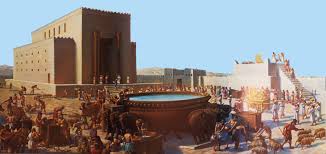
Now that the Temple has been built, it is move in day, bringing in all the tools of God’s work.  The Ark of the Covenant was brought in by the priests according to God’s specific instructions from the days of Moses.  After lavishly constructing and decorating the temple, King Solomon offered a prayer of thanksgiving and blessing to God. He praised God and prayed for the people.  We can hear the excitement in his words as he recalls the past history of God’s people and gives God glory for the His promises fulfilled.  But we know that God is not finished yet, there is still a Promise to come and He is Jesus. 

As he finished his blessing, Solomon said that God had given rest to his people and had kept His good promises.  Did King Solomon think God was finished?  Did the king think he was finished?

The Ark Brought to the Temple
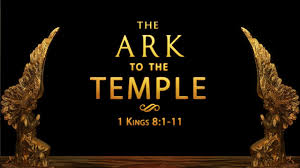
Then King Solomon summoned into his presence at Jerusalem the elders of Israel, all the heads of the tribes and the chiefs of the Israelite families, to bring up the ark of the Lord’s covenant from Zion, the City of DavidAll the Israelites came together to King Solomon at the time of the festival in the month of Ethanim, the seventh month.

When all the elders of Israel had arrived, the priests took up the arkand they brought up the ark of the Lord and the tent of meeting and all the sacred furnishings in it. The priests and Levites carried them upand King Solomon and the entire assembly of Israel that had gathered about him were before the ark, sacrificing so many sheep and cattle that they could not be recorded or counted.
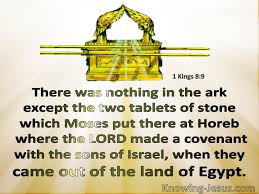
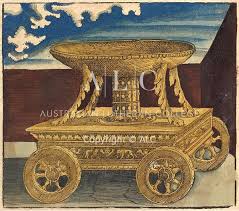
The priests then brought the ark of the Lord’s covenant to its place in the inner sanctuary of the temple, the Most Holy Place, and put it beneath the wings of the cherubim. The cherubim spread their wings over the place of the ark and overshadowed the ark and its carrying poles. These poles were so long that their ends could be seen from the Holy Place in front of the inner sanctuary, but not from outside the Holy Place; and they are still there today. There was nothing in the ark except the two stone tablets that Moses had placed in it at Horeb, where the Lord made a covenant with the Israelites after they came out of Egypt.

10 When the priests withdrew from the Holy Place, the cloud filled the temple of the Lord. 11 And the priests could not perform their service because of the cloud, for the glory of the Lord filled his temple.

12 Then Solomon said, “The Lord has said that he would dwell in a dark cloud; 13 I have indeed built a magnificent temple for you, a place for you to dwell forever.”

14 While the whole assembly of Israel was standing there, the king turned around and blessed them. 15 Then he said:
“Praise be to the Lord, the God of Israel, who with his own hand has fulfilled what he promised with his own mouth to my father David. For he said, 16 ‘Since the day I brought my people Israel out of Egypt, I have not chosen a city in any tribe of Israel to have a temple built so that my Name might be there, but I have chosen David to rule my people Israel.’

17 “My father David had it in his heart to build a temple for the Name of the Lord, the God of Israel. 18 But the Lord said to my father David, ‘You did well to have it in your heart to build a temple for my Name. 19 Nevertheless, you are not the one to build the temple, but your son, your own flesh and blood—he is the one who will build the temple for my Name.’

20 “The Lord has kept the promise he made: I have succeeded David my father and now I sit on the throne of Israel, just as the Lord promised, and I have built the temple for the Name of the Lord, the God of Israel. 21 I have provided a place there for the ark, in which is the covenant of the Lord that he made with our ancestors when he brought them out of Egypt.”

Solomon’s Prayer of Dedication

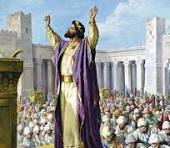
22 Then Solomon stood before the altar of the Lord in front of the whole assembly of Israel, spread out his hands toward heaven 23 and said:
“Lord, the God of Israel, there is no God like you in heaven above or on earth below—you who keep your covenant of love with your servants who continue wholeheartedly in your way. 24 You have kept your promise to your servant David my father; with your mouth you have promised and with your hand you have fulfilled it—as it is today.

25 “Now Lord, the God of Israel, keep for your servant David my father the promises you made to him when you said, ‘You shall never fail to have a successor to sit before me on the throne of Israel, if only your descendants are careful in all they do to walk before me faithfully as you have done.’ 26 And now, God of Israel, let your word that you promised your servant David my father come true.

27 “But will God really dwell on earth? The heavens, even the highest heaven, cannot contain you. How much less this temple I have built! 28 Yet give attention to your servant’s prayer and his plea for mercy, Lord my God. Hear the cry and the prayer that your servant is praying in your presence this day. 29 May your eyes be open toward this temple night and day, this place of which you said, ‘My Name shall be there,’ so that you will hear the prayer your servant prays toward this place. 30 Hear the supplication of your servant and of your people Israel when they pray toward this place. Hear from heaven, your dwelling place, and when you hear, forgive.
31 “When anyone wrongs their neighbor and is required to take an oath and they come and swear the oath before your altar in this temple, 32 then hear from heaven and act. Judge between your servants, condemning the guilty by bringing down on their heads what they have done, and vindicating the innocent by treating them in accordance with their innocence.

33 “When your people Israel have been defeated by an enemy because they have sinned against you, and when they turn back to you and give praise to your name, praying and making supplication to you in this temple, 34 then hear from heaven and forgive the sin of your people Israel and bring them back to the land you gave to their ancestors.

35 “When the heavens are shut up and there is no rain because your people have sinned against you, and when they pray toward this place and give praise to your name and turn from their sin because you have afflicted them, 36 then hear from heaven and forgive the sin of your servants, your people Israel. Teach them the right way to live, and send rain on the land you gave your people for an inheritance.

37 “When famine or plague comes to the land, or blight or mildew, locusts or grasshoppers, or when an enemy besieges them in any of their cities, whatever disaster or disease may come, 38 and when a prayer or plea is made by anyone among your people Israel—being aware of the afflictions of their own hearts, and spreading out their hands toward this temple— 39 then hear from heaven, your dwelling place. Forgive and act; deal with everyone according to all they do, since you know their hearts (for you alone know every human heart), 40 so that they will fear you all the time they live in the land you gave our ancestors.
41 “As for the foreigner who does not belong to your people Israel but has come from a distant land because of your name— 42 for they will hear of your great name and your mighty hand and your outstretched arm—when they come and pray toward this temple, 43 then hear from heaven, your dwelling place. Do whatever the foreigner asks of you, so that all the peoples of the earth may know your name and fear you, as do your own people Israel, and may know that this house I have built bears your Name.

44 “When your people go to war against their enemies, wherever you send them, and when they pray to the Lord toward the city you have chosen and the temple I have built for your Name, 45 then hear from heaven their prayer and their plea, and uphold their cause.

46 “When they sin against you—for there is no one who does not sin—and you become angry with them and give them over to their enemies, who take them captive to their own lands, far away or near; 47 and if they have a change of heart in the land where they are held captive, and repent and plead with you in the land of their captors and say, ‘We have sinned, we have done wrong, we have acted wickedly’; 48 and if they turn back to you with all their heart and soul in the land of their enemies who took them captive, and pray to you toward the land you gave their ancestors, toward the city you have chosen and the temple I have built for your Name; 49 then from heaven, your dwelling place, hear their prayer and their plea, and uphold their cause. 50 And forgive your people, who have sinned against you; forgive all the offenses they have committed against you, and cause their captors to show them mercy; 51 for they are your people and your inheritance, whom you brought out of Egypt, out of that iron-smelting furnace.
52 “May your eyes be open to your servant’s plea and to the plea of your people Israel, and may you listen to them whenever they cry out to you. 53 For you singled them out from all the nations of the world to be your own inheritance, just as you declared through your servant Moses when you, Sovereign Lord, brought our ancestors out of Egypt.”

54 When Solomon had finished all these prayers and supplications to the Lord, he rose from before the altar of the Lord, where he had been kneeling with his hands spread out toward heaven. 55 He stood and blessed the whole assembly of Israel in a loud voice, saying:

56 “Praise be to the Lord, who has given rest to his people Israel just as he promised. Not one word has failed of all the good promises he gave through his servant Moses. 57 May the Lord our God be with us as he was with our ancestors; may he never leave us nor forsake us. 58 May he turn our hearts to him, to walk in obedience to him and keep the commands, decrees and laws he gave our ancestors. 59 And may these words of mine, which I have prayed before the Lord, be near to the Lord our God day and night, that he may uphold the cause of his servant and the cause of his people Israel according to each day’s need, 60 so that all the peoples of the earth may know that the Lord is God and that there is no other. 61 And may your hearts be fully committed to the Lord our God, to live by his decrees and obey his commands, as at this time.”

The Dedication of the Temple
62 Then the king and all Israel with him offered sacrifices before the Lord. 63 Solomon offered a sacrifice of fellowship offerings to the Lord: twenty-two thousand cattle and a hundred and twenty thousand sheep and goats. So the king and all the Israelites dedicated the temple of the Lord.

64 On that same day the king consecrated the middle part of the courtyard in front of the temple of the Lord, and there he offered burnt offerings, grain offerings and the fat of the fellowship offerings, because the bronze altar that stood before the Lord was too small to hold the burnt offerings, the grain offerings and the fat of the fellowship offerings.

65 So Solomon observed the festival at that time, and all Israel with him—a vast assembly, people from Lebo Hamath to the Wadi of Egypt. They celebrated it before the Lord our God for seven days and seven days more, fourteen days in all. 66 On the following day he sent the people away. They blessed the king and then went home, joyful and glad in heart for all the good things the Lord had done for his servant David and his people Israel.

WHAT DO WE LEARN—HOW DO WE RESPOND?
Truth: God was, is, and always will be God.  There is no one like God.  Never will there be anyone else like God—though the Enemy has tried to take God’s place and still tries to distract us from God.  God loves His people and that love never changes. God is faithful to His people even when they are not.  When people lose their way; God provides the Way.  God’s love is so great that it is hard for our human minds to fully grasp; because we have yet to understand how deep, wide, and long the Father’s love is for us; but His love grows in us none the less! 

Because of His love; forgiveness is God’s habit.  Our response to God’s love is to humbly surrender, ask, repent, and love Him back with all that is within us.  All is forgiven and we move into a new life with God!  God’s Holy Spirit immediately moves into our being to help us in our steady walk with God!  How can we love God back? Our obedience to what He says is the best way to express our love for God, not from fear of punishment but from gratitude for saving our souls through Jesus, His Son!
It is God’s desire that no one perish from their sins that lead to death.  In the days of Moses; God provided a way of atonement (covering) for sin through the sacrifices of unblemished animals upon the Altar designed for that purpose.  Priests were called, cleansed, anointed, and dedicated from the Levite tribe to provide this atonement in very specific ways by God.  The tools for sacrifice along with the altar built are part of the Temple design.  Forgiveness of sins must be done to come into God’s Presence.  That has not changed.  God and our sins cannot occupy the same space.
What has changed is the process.  If we think the glorious Temple erected by the orders of King Solomon as directed by God was great and glorious; then we haven’t seen or heard of the greatest gift of God yet!  Through the ages, God had another Plan in place since the beginning of time—His Son, Jesus. Jesus, God in the flesh, moved into the neighborhood of humanity who were lost, sick, confused by religion and rituals that no longer led to God.  He lived among a people brokenhearted, poor, and deemed outcasts.  All God’s people were oppressed by a government who did not know God.  There seemed to be no way out—until Jesus, the Promise of Eternal Life: “I am the way and the truth and the life. No one comes to the Father except through me.”—Jesus, John 14:6  Love, mercy, and grace came down and gifted us with all we have ever needed in the form of a perfect, without sin, Savior and Lord who removed our sins forever!  “For it is by grace you have been saved, through faith—and this is not from yourselves, it is the gift of God”—Paul, Ephesians 2:8  God did for us through Jesus what we could not do for ourselves.
The Temple is builtGod’s people are moving in with grateful praise and thanksgiving, but the Best is yet to come!  And we are invited to come to Him and move into His love, receive His forgiveness, and walk humbly with our God.  “For God so loved the world that he gave his one and only Son, that whoever believes in him shall not perish but have eternal life. For God did not send his Son into the world to condemn the world, but to save the world through him.” John 3:16-17

Lord,

Thank you, thank you, thank you.  To you be the glory, honor, and praise forever and ever, Amen!

Posted in Uncategorized | Tagged , , , , | Leave a comment

WHEN THE WORK IS COMPLETE; WHAT’S NEXT?

It has been said that there is greater joy in the journey than upon the arrival at our destination.  Mm.  But it seems that it all depends on our motives reflected in our attitudes in the journey.  There is a special unexplained, unspeakable, eternal joy that God give us for each day’s agenda; but it comes only by trusting and obey His will. This joy overflows when we seek an intimate loving relationship with God first.  It is a joy that builds and leads us to a holy contentment no matter what current circumstances dictate.  This heaven bound eternal joy is not found in completion of tasks, pleasing people, or even the gift of great wealth in moments of time on our journeys; it is found in God through Jesus Christ who removed all our repented sins and set us free to grow our relationship with God who is the joy we long for and seek.  

God’s eternal joy is freedom from the ugly pride and arrogance that can seep in when our accomplishments are successful but we think we did it all on our own.  Joy is freedom from wallowing in envy and jealousy of what our neighbors have that we do not. God’s joy is freedom from judging others, holding grudges against those who hurt us, and letting go of all worry and discontentment that tries to steal our joy. These are all traits of our real Enemy who goal is to take our joy of Jesus and replace it with fear and anxiety. 

Real joy is found in knowing Jesus, giving all we have and all we are to Jesus, with keen focus on God’s plan and purpose for us with expectant, obedient hearts.  Pure, unadulterated joy, comes from asking God what HE wants instead of telling God our demands and then doing what He says to be and do. “Be still and know that I am God” (Psalm 46:10) means to let go of what we think and hold onto with a tight grasp and seeking God’s view and perspective of Life and Truth.

Centuries later, another builder, Nehimiah, called by God to rebuild the Temple that was destroyed by the Enemies of God, reminded the workers who were tired in the work but not of the work; “Do not grieve, for the joy of the Lord is your strength.” Nehimiah 8:10 This verse emphasizes that joy is not a fleeting emotion but a source of strength derived from a relationship with God. There IS joy in the journey until we meet God face to face and arrive at our final destination with Jesus.  Jesus said, “I’m going to prepare a place for you.”  Can we say to Him, We’re not there yet, but we are on our way; and we need your help!

A trait that sustains holy joy in the journey is thanksgiving to God for all the ways He sustains us by His strength, provision, and protection as He carries us through all the circumstances of this life.  “Consider it pure joy, my brothers and sisters, whenever you face trials of many kinds, because you know that the testing of your faith produces perseverance. Let perseverance finish its work so that you may be mature and complete, not lacking anything.” James 1:2-4 God uses life momentary circumstances to teach us all we need to know our way to Him!  Be grateful for the lessons!  Listen to Him in the trial for some of God’s best work in us comes from our humbled attitudes brought on by our trials.

The work on the temple structure was completed in seven years, but Hiram and his crew took several more years to decorate the interior and construct the furnishings. While they were busy at the temple, Solomon designed and built a palace for himself that was a combination of personal residence, city hall, armory, and official reception center. Later he wrote, “I made my works great, I built myself houses, and planted myself vineyards” (Ecclesiastes 2:4), but he found it meaningless, “vanity and grasping for the wind” (Ecclesiastes 7:11). King Solomon learned much from building the Temple of God. The greatest lesson?  Remove the “I.”  Vanity and pride are not traits pleasing to God nor do they provide the joy King Solomon sought in the Lord.

1 Kings 7

Solomon Builds His Palace

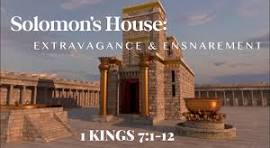
It took Solomon thirteen years, however, to complete the construction of his palaceHe built the Palace of the Forest of Lebanon a hundred cubits long, fifty wide and thirty high, with four rows of cedar columns supporting trimmed cedar beams. It was roofed with cedar above the beams that rested on the columns—forty-five beams, fifteen to a row. Its windows were placed high in sets of three, facing each other. All the doorways had rectangular frames; they were in the front part in sets of three, facing each other.

He made a colonnade fifty cubits long and thirty wide. In front of it was a portico, and in front of that were pillars and an overhanging roof.

He built the throne hall, the Hall of Justice, where he was to judge, and he covered it with cedar from floor to ceiling. And the palace in which he was to live, set farther back, was similar in design. Solomon also made a palace like this hall for Pharaoh’s daughter, whom he had married.

All these structures, from the outside to the great courtyard and from foundation to eaves, were made of blocks of high-grade stone cut to size and smoothed on their inner and outer faces. 10 The foundations were laid with large stones of good quality, some measuring ten cubits and some eight. 11 Above were high-grade stones, cut to size, and cedar beams. 12 The great courtyard was surrounded by a wall of three courses of dressed stone and one course of trimmed cedar beams, as was the inner courtyard of the temple of the Lord with its portico.

The Temple’s Furnishings

13 King Solomon sent to Tyre and brought Huram14 whose mother was a widow from the tribe of Naphtali and whose father was from Tyre and a skilled craftsman in bronze. Huram was filled with wisdom, with understanding and with knowledge to do all kinds of bronze work. He came to King Solomon and did all the work assigned to him.

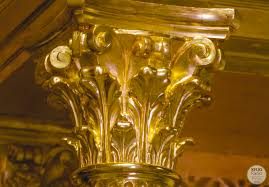
15 He cast two bronze pillars, each eighteen cubits high and twelve cubits in circumference. 16 He also made two capitals of cast bronze to set on the tops of the pillars; each capital was five cubits high. 17 A network of interwoven chains adorned the capitals on top of the pillars, seven for each capital. 18 He made pomegranates in two rows encircling each network to decorate the capitals on top of the pillars. He did the same for each capital. 19 The capitals on top of the pillars in the portico were in the shape of lilies, four cubits high. 20 On the capitals of both pillars, above the bowl-shaped part next to the network, were the two hundred pomegranates in rows all around. 21 He erected the pillars at the portico of the temple. The pillar to the south he named Jakin and the one to the north Boaz. 22 The capitals on top were in the shape of lilies. And so the work on the pillars was completed.

23 He made the Sea of cast metal, circular in shape, measuring ten cubits from rim to rim and five cubits high. It took a line of thirty cubits to measure around it. 24 Below the rim, gourds encircled it—ten to a cubit. The gourds were cast in two rows in one piece with the Sea.

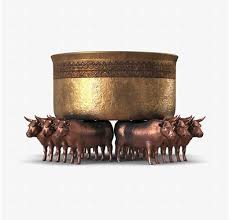
25 The Sea stood on twelve bulls, three facing north, three facing west, three facing south and three facing east. The Sea rested on top of them, and their hindquarters were toward the center. 26 It was a handbreadth in thickness, and its rim was like the rim of a cup, like a lily blossom. It held two thousand baths.

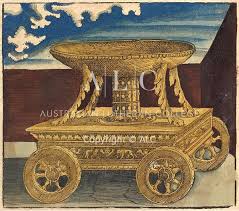
27 He also made ten movable stands of bronze; each was four cubits long, four wide and three high. 28 This is how the stands were made: They had side panels attached to uprights. 29 On the panels between the uprights were lions, bulls and cherubim—and on the uprights as well. Above and below the lions and bulls were wreaths of hammered work. 30 Each stand had four bronze wheels with bronze axles, and each had a basin resting on four supports, cast with wreaths on each side. 31 On the inside of the stand there was an opening that had a circular frame one cubit deep. This opening was round, and with its basework it measured a cubit and a half. Around its opening there was engraving. The panels of the stands were square, not round. 32 The four wheels were under the panels, and the axles of the wheels were attached to the stand. The diameter of each wheel was a cubit and a half. 33 The wheels were made like chariot wheels; the axles, rims, spokes and hubs were all of cast metal.

34 Each stand had four handles, one on each corner, projecting from the stand. 35 At the top of the stand there was a circular band half a cubit deep. The supports and panels were attached to the top of the stand. 36 He engraved cherubim, lions and palm trees on the surfaces of the supports and on the panels, in every available space, with wreaths all around. 37 This is the way he made the ten stands. They were all cast in the same molds and were identical in size and shape.

38 He then made ten bronze basins, each holding forty baths and measuring four cubits across, one basin to go on each of the ten stands. 39 He placed five of the stands on the south side of the temple and five on the north. He placed the Sea on the south side, at the southeast corner of the temple. 40 He also made the pots and shovels and sprinkling bowls.

So Huram finished all the work he had undertaken for King Solomon in the temple of the Lord: 41 the two pillars; the two bowl-shaped capitals on top of the pillars; the two sets of network decorating the two bowl-shaped capitals on top of the pillars; 42 the four hundred pomegranates for the two sets of network (two rows of pomegranates for each network decorating the bowl-shaped capitals on top of the pillars); 43 the ten stands with their ten basins; 44 the Sea and the twelve bulls under it; 45 the pots, shovels and sprinkling bowls.

All these objects that Huram made for King Solomon for the temple of the Lord were of burnished bronze. 46 The king had them cast in clay molds in the plain of the Jordan between Sukkoth and Zarethan. 47 Solomon left all these things unweighed, because there were so many; the weight of the bronze was not determined.

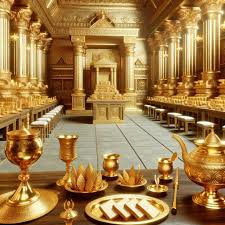
48 Solomon also made all the furnishings that were in the Lord’s temple: the golden altar; the golden table on which was the bread of the Presence; 49 the lampstands of pure gold (five on the right and five on the left, in front of the inner sanctuary); the gold floral work and lamps and tongs; 50 the pure gold basins, wick trimmers, sprinkling bowls, dishes and censers; and the gold sockets for the doors of the innermost room, the Most Holy Place, and also for the doors of the main hall of the temple.

51 When all the work King Solomon had done for the temple of the Lord was finished, he brought in the things his father David had dedicated—the silver and gold and the furnishings—and he placed them in the treasuries of the Lord’s temple.

WHAT DO WE LEARN—HOW DO WE RESPOND?

All that King Solomon had came from God who owns it all.  Even the king’s wisdom was given to Him by God!  God built all that King Solomon accomplished.

Warren Wiersbe writes;

“Because of the abundance of these cedar pillars from Lebanon, the structure was known as “the House of the Forest of Lebanon.” The assembly hall was no doubt used for official government occasions. In this hall, Solomon displayed two hundred large shields and three hundred smaller shields, all made of wood covered with gold. Because gold is too soft to provide protection, these shields were not used in battle but were there to impress visitors. They were taken from the building only when displayed on special ceremonial occasions.” –Wiersbe Study Bible

God as the Source of Strength

“The two pillars were named “Jachin” (“He establishes”) and “Boaz” (“in Him is strength”) and they stood outside the entrance to the Holy Place—Jachin to the south and Boaz to the north. The pillars bore witness to the Israelite people that God had established their nation and that Israel’s faith in Jehovah was the source of their strength.”—Wiersbe Study Bible

Considering that gold overlay covered the inside walls and floors, the furniture, the doors, and the cherubim, this had to be a very costly building. Yet all this beauty was destroyed and this wealth was confiscated when the Babylonian army captured Jerusalem and destroyed the temple (Jeremiah 52).  God allowed it because His people abandoned Him and turned to their own wicked ways.

It costs to follow God with all our hearts, minds, and souls; but it costs even more to not trust and obey Him.

Lord,

Your story through your people teach us more about You and how our story fits into your plan.  Lord, I’m yours and I’m listening to you speak to my heart by Your Holy Spirit today. Lead and guide all we think, say, and do.  May your will be done in ways that we declare your glory. Thank you, thank you, thank you!

In Jesus Name, Amen

Posted in Uncategorized | Tagged , , , , | Leave a comment

SEVEN YEARS OF HARD PHYSICAL LABOR

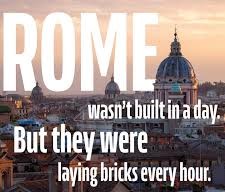
“Rome wasn’t built in a day” is a phrase still today to mean that important achievements, complex projects, or great things take time, patience, and consistent effort to complete and cannot be rushed. The phrase serves as a reminder to be patient when things are not progressing as quickly as desired and that significant accomplishments require a long-term commitment. 

Imagine watching the Temple in construction with detailed carvings in stone and wood, overlaid by gold all done by human hands.  There were no heavy equipment machines to push, tug, and pull large stones, specifically cut for the Temple.  No, all were tediously positioned in just the right place by human brute strength, using carts, ropes, and pullies.  It is no wonder that wise Solomon rotated the workmen so that only one-third of the workforce lived away from home at a time, giving much needed rest and time with family that kept the moral and the muscles of the workers strong!

New church buildings are built brick by brick.  As I shared yesterday, after the ground breaking ceremony and the debt of the land paid off a few years later; I then watched as an anxious, impatient teenager as brick by brick was laid upon the solid concrete foundation. I realized then that workers must have a plan and then materials obtained.  The real work begins when the plan and resources come together with a foreman to oversee each part of the work.

Construction of any major building is accomplished brick by brick, beam by beam, put into place upon a firm foundation on the outside.  When that work is accomplished and the building is “in the dry” with a roof over the top; the inside work begins.  My grandfather, who was an elder in the church, as well as a professional carpenter, consented to be the Foreman of our church building project.  Everyone trusted him with both his professional abilities as well as his spiritual mentorship. God has a way of putting the right people in the right place at the right time for our good and His glory.

OUTSIDE IN AND INSIDE OUT

Many who passed by thought the church was complete by looking at the outside only; but the tedious, detailed, inside work took even more time to accomplish in preparation for the real work of God on the inside of all hearts who would come to this building dedicated to God.

Building a structure where people come to meet God in pray, worship, teaching, while growing their relationship with God, is not accomplished in a day, a week, or even a year but over a lifetime. It begins, brick by brick, stone by stone being laid on the solid rock foundation of Jesus Christ. 

God will remind Solomon, during the work, of the real reason for the Temple with the outcomes of love and obedience to God.  We often need to be reminded of why we attend church, too, or it becomes all to quickly a habit without substance.

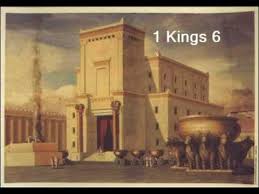
1 Kings 6

Solomon Builds the Temple

In the four hundred and eightieth year after the Israelites came out of Egypt, in the fourth year of Solomon’s reign over Israel, in the month of Ziv, the second month, he began to build the temple of the Lord.

The temple that King Solomon built for the Lord was sixty cubits long, twenty wide and thirty high. The portico at the front of the main hall of the temple extended the width of the temple, that is twenty cubits, and projected ten cubits from the front of the temple. He made narrow windows high up in the temple walls. Against the walls of the main hall and inner sanctuary he built a structure around the building, in which there were side rooms. The lowest floor was five cubits wide, the middle floor six cubits and the third floor seven. He made offset ledges around the outside of the temple so that nothing would be inserted into the temple walls.

In building the temple, only blocks dressed at the quarry were used, and no hammer, chisel or any other iron tool was heard at the temple site while it was being built.

The entrance to the lowest floor was on the south side of the temple; a stairway led up to the middle level and from there to the third. So he built the temple and completed it, roofing it with beams and cedar planks. 10 And he built the side rooms all along the temple. The height of each was five cubits, and they were attached to the temple by beams of cedar.

11 The word of the Lord came to Solomon: 12 “As for this temple you are building, if you follow my decrees, observe my laws and keep all my commands and obey them, I will fulfill through you the promise I gave to David your father. 13 And I will live among the Israelites and will not abandon my people Israel.”

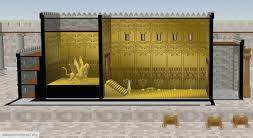
14 So Solomon built the temple and completed it. 15 He lined its interior walls with cedar boards, paneling them from the floor of the temple to the ceiling, and covered the floor of the temple with planks of juniper. 16 He partitioned off twenty cubits at the rear of the temple with cedar boards from floor to ceiling to form within the temple an inner sanctuary, the Most Holy Place. 17 The main hall in front of this room was forty cubits long. 18 The inside of the temple was cedar, carved with gourds and open flowers. Everything was cedar; no stone was to be seen.

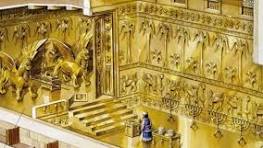
19 He prepared the inner sanctuary within the temple to set the ark of the covenant of the Lord there. 20 The inner sanctuary was twenty cubits long, twenty wide and twenty high. He overlaid the inside with pure gold, and he also overlaid the altar of cedar. 21 Solomon covered the inside of the temple with pure gold, and he extended gold chains across the front of the inner sanctuary, which was overlaid with gold. 22 So he overlaid the whole interior with gold. He also overlaid with gold the altar that belonged to the inner sanctuary.

23 For the inner sanctuary he made a pair of cherubim out of olive wood, each ten cubits high. 24 One wing of the first cherub was five cubits long, and the other wing five cubits—ten cubits from wing tip to wing tip. 25 The second cherub also measured ten cubits, for the two cherubim were identical in size and shape. 26 The height of each cherub was ten cubits. 27 He placed the cherubim inside the innermost room of the temple, with their wings spread out. The wing of one cherub touched one wall, while the wing of the other touched the other wall, and their wings touched each other in the middle of the room. 28 He overlaid the cherubim with gold.

29 On the walls all around the temple, in both the inner and outer rooms, he carved cherubim, palm trees and open flowers. 30 He also covered the floors of both the inner and outer rooms of the temple with gold.

31 For the entrance to the inner sanctuary he made doors out of olive wood that were one fifth of the width of the sanctuary. 32 And on the two olive-wood doors he carved cherubim, palm trees and open flowers, and overlaid the cherubim and palm trees with hammered gold. 33 In the same way, for the entrance to the main hall he made doorframes out of olive wood that were one fourth of the width of the hall. 34 He also made two doors out of juniper wood, each having two leaves that turned in sockets. 35 He carved cherubim, palm trees and open flowers on them and overlaid them with gold hammered evenly over the carvings.

36 And he built the inner courtyard of three courses of dressed stone and one course of trimmed cedar beams.

37 The foundation of the temple of the Lord was laid in the fourth year, in the month of Ziv. 38 In the eleventh year in the month of Bul, the eighth month, the temple was finished in all its details according to its specifications. He had spent seven years building it.

WHAT DO WE LEARN—HOW DO WE RESPOND?

We must always lean into God’s wisdom and knowledge given to us from Peter and Paul, called and sent by God to be planters and builders of people, called “church,” who are built on the solid foundation of believing in Jesus Christ as God’s Son. We believe Jesus died for our sins, resurrected from death to life, appeared to his disciples to declare the glory of God who raised Him, demonstrating eternal life for all who believe, trust, and obey Jesus. Allow God’s Holy Spirit to lead us to all Truth.  Jesus is the Head of the Body.  We are the Body of Christ.  We are Temple in which God/Jesus/Holy Spirit takes up residence as our Life source.

WHO WE ARE—

Living Stones

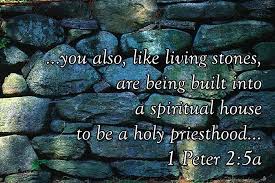
“As you come to him, the living Stone—rejected by humans but chosen by God and precious to him—you also, like living stones, are being built into a spiritual house to be a holy priesthood, offering spiritual sacrifices acceptable to God through Jesus Christ. For in Scripture it says:

“See, I lay a stone in Zion, a chosen and precious cornerstone, and the one who trusts in him will never be put to shame.”

Now to you who believe, this stone is precious. But to those who do not believe, ‘The stone the builders rejected has become the cornerstone and,

‘A stone that causes people to stumble and a rock that makes them fall.’

They stumble because they disobey the message—which is also what they were destined for.” –Peter, 1 Peter 2:4-8

Royal Priesthood in Christ

“But you are a chosen peoplea royal priesthood, a holy nation, God’s special possession, that you may declare the praises of him who called you out of darkness into his wonderful light.”—Peter, 1 Peter 2:9

The Body of Christ

“Just as a body, though one, has many parts, but all its many parts form one body, so it is with Christ.”—Paul, 1 Corinthians 12:12

“But God has put the body together, giving greater honor to the parts that lacked it, so that there should be no division in the body, but that its parts should have equal concern for each other. If one part suffers, every part suffers with it; if one part is honored, every part rejoices with it.Now you are the body of Christ, and each one of you is a part of it.”—Paul, 1 Corinthians 12: 24-27

Joint heirs with Christ!

And speaking of Rome not built in a day,Paul preaches that “For those who are led by the Spirit of God are the children of God. The Spirit you received does not make you slaves, so that you live in fear again; rather, the Spirit you received brought about your adoption to sonship. And by him we cry, “Abba, Father.” The Spirit himself testifies with our spirit that we are God’s children. Now if we are children, then we are heirs—heirs of God and co-heirs with Christ, if indeed we share in his sufferings in order that we may also share in his glory.” Romans 8:14-17

WHAT WE DO—

Reconciled to lead others to reconcile with God

“Therefore, if anyone is in Christ, the new creation has come: The old has gone, the new is here! All this is from God, who reconciled us to himself through Christ and gave us the ministry of reconciliation: that God was reconciling the world to himself in Christ, not counting people’s sins against them. And he has committed to us the message of reconciliation. We are therefore Christ’s ambassadors, as though God were making his appeal through usWe implore you on Christ’s behalf: Be reconciled to God. God made him who had no sin to be sin for us, so that in him we might become the righteousness of God.”—Paul, 2 Corinthians 5:

Commanded and Commissioned by God through Jesus

“Therefore go and make disciples of all nations, baptizing them in the name of the Father and of the Son and of the Holy Spirit, and teaching them to obey everything I have commanded you. And surely I am with you always, to the very end of the age.”—Jesus, Matthew 28:19-20

We the people are God’s church, the Body of Christ.  We are far from perfect but we are perfectly forgiven.  God is not as concerned with our perfection but for our progress in becoming more and more in every way like Christ. 

Our Source of Life

“I want to know Christ—yes, to know the power of his resurrection and participation in his sufferings, becoming like him in his death, and so, somehow, attaining to the resurrection from the dead. Not that I have already obtained all this, or have already arrived at my goal, but I press on to take hold of that for which Christ Jesus took hold of me. Brothers and sisters, I do not consider myself yet to have taken hold of it. But one thing I do: Forgetting what is behind and straining toward what is ahead, I press on toward the goal to win the prize for which God has called me heavenward in Christ Jesus.”—Paul, Philippians 3:10-14

Lord,

Take hold of me and transform me daily, brick by brick. I know this will take a lifetime until I see you face to face.

In Jesus Name, Amen

Posted in Uncategorized | Tagged , , , , | Leave a comment

THE TIME IS RIGHT! PREPARE TO BUILD!

I was in elementary school when the people of our church met on a section of ground just outside Oklahoma City.  At that time, I didn’t fully realize what was going on but I certainly felt the excitement of the grownups who gathered there in a tight, holy circle.  The pastor and elders were in the center of the circle with shovels.  As I kid, I didn’t know what was going to happen next on that cold, wintery day; but I was glad I was there.  The smiles on the faces of men and women declared their expectant hope in what God was doing and would do next. 

After the reading of scripture, the men prayed for God’s blessing on this dedicated ground.  They prayed for God’s timing, power, and wisdom in building a place where people would be welcomed and taught to know, love, believe and follow Jesus. The people were taught to be God’s light to this community. They prayed fervently and passionately for God’s will to be done in every detail of the building process.  Then, beginning with the pastor followed by the elders, they ceremoniously, one by one, put the shovel in the ground to turn over the dirt to symbolize the beginning of the process to build.  God led His people to this place.  God led this small group through all the preparations and finances to build a church (people) built within us on the foundation of faith with the Cornerstone declared to be Jesus Christ.  Jesus the One who redeemed us and gave us purpose.  Yes, I will never forget that moment in time.  It is etched in my memory.  When we follow God and His timing; God does great things that are beyond our wildest dreams and imaginations.  May God’s Kingdom come; His will be done.

THE HOUSE THAT DAVID’S SON BUILT

King Solomon has been given the go ahead from God to begin the building of the Temple, a place of worship of God. How exciting for the King to begin the gathering of materials!  As a wise leader, following the directions of David, his father; King Soloman began with securing resources, to add to what David had saved for this moment.  King Solomon turned to he knew had the best for God’s Temple.

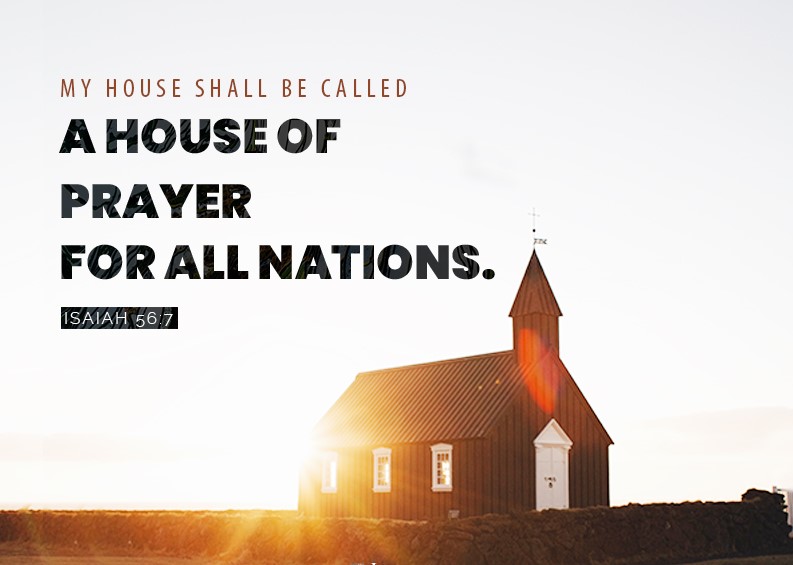
God’s timing is perfect.  King Solomon is “at rest” from battles and wars.  He can fully focus on the Temple that David wanted to build but God told him, no, not now.  Your son will build it.  According to Scripture, God’s will and design for His Temple is that it be a House of Prayer for all who seek Him.  To meet with God, listen to Him, talk with Him with humble honest is what God seeks.  No other purpose is greater.

It is important to note that God told David, “I don’t need a house;” it is God’s people who need a sacred place, away from ordinary to be with our God. While humans want bigger, better, and best in what it looks like; God’s prophet Isaiah proclaims and describes God’s real purposes for His Temple, His House;

And foreigners who bind themselves to the Lord to minister to him, to love the name of the Lord, and to be his servants, all who keep the Sabbath without desecrating it and who hold fast to my covenant—these I will bring to my holy mountain and give them joy in my house of prayer.  Their burnt offerings and sacrifices will be accepted on my altar; for my house will be called a house of prayer for all nations.” Isaiah 56:6-7

Will God’s plan and purpose for His Temple prevail? Stay tuned from building to completion to entering…we have only just begun the story of God and His Temple through Solomon.

1 Kings 5

Preparations for Building the Temple

When Hiram king of Tyre heard that Solomon had been anointed king to succeed his father David, he sent his envoys to Solomon, because he had always been on friendly terms with David. Solomon sent back this message to Hiram:

“You know that because of the wars waged against my father David from all sides, he could not build a temple for the Name of the Lord his God until the Lord put his enemies under his feet. But now the Lord my God has given me rest on every side, and there is no adversary or disaster. I intend, therefore, to build a temple for the Name of the Lord my God, as the Lord told my father David, when he said, ‘Your son whom I will put on the throne in your place will build the temple for my Name.’

“So give orders that cedars of Lebanon be cut for me. My men will work with yours, and I will pay you for your men whatever wages you set. You know that we have no one so skilled in felling timber as the Sidonians.”

When Hiram heard Solomon’s message, he was greatly pleased and said, “Praise be to the Lord today, for he has given David a wise son to rule over this great nation.”

So Hiram sent word to Solomon:

“I have received the message you sent me and will do all you want in providing the cedar and juniper logs. My men will haul them down from Lebanon to the Mediterranean Sea, and I will float them as rafts by sea to the place you specify. There I will separate them and you can take them away. And you are to grant my wish by providing food for my royal household.”

10 In this way Hiram kept Solomon supplied with all the cedar and juniper logs he wanted, 11 and Solomon gave Hiram twenty thousand cors of wheat as food for his household, in addition to twenty thousand baths of pressed olive oil. Solomon continued to do this for Hiram year after year. 12 The Lord gave Solomon wisdom, just as he had promised him. There were peaceful relations between Hiram and Solomon, and the two of them made a treaty.

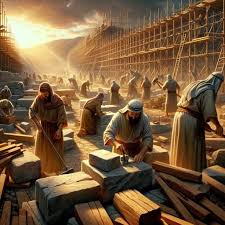
13 King Solomon conscripted laborers from all Israel—thirty thousand men. 14 He sent them off to Lebanon in shifts of ten thousand a month, so that they spent one month in Lebanon and two months at home. Adoniram was in charge of the forced labor. 15 Solomon had seventy thousand carriers and eighty thousand stonecutters in the hills, 16 as well as thirty-three hundred foremen who supervised the project and directed the workers. 17 At the king’s command they removed from the quarry large blocks of high-grade stone to provide a foundation of dressed stone for the temple. 18 The craftsmen of Solomon and Hiram and workers from Byblos cut and prepared the timber and stone for the building of the temple.

WHAT DO WE LEARN—HOW DO WE RESPOND?

King Solomon was gifted first with wisdom (his request) with God’s wisdom came great wealth (God’s blessing). God’s purpose for David, with God’s leading, was to bring “all His enemies under his feet” and bring the twelve tribes of Israel back together as one.  In gratitude, David wanted to build a Temple for God that would be so much greater than the former Tent of Meeting set apart for God by God through Moses. God said no to David, but yes to his son, Solomon.  Now, in time of peace, by God’s will, David’s desire for a Temple to God will be fulfilled in Solomon, a temple glorious and magnificent.  “Only the best” will do is the King’s mantra. But what does the “best” mean to God?

During the temple construction, God reaffirmed to Solomon the promise he had previously made to David. It was predicated on Solomon obeying the Lord’s laws and commands.  It’s a wonderful day indeed when we stop working for God and begin working with God. (Go ahead, read the sentence again). David’s legacy to his son was to gather materials and artisans in preparation for the Temple project.  This prep work gave Solomon a starting point to begin God’s plan with His purpose given to David.

As any pastor and church board can attest, building programs are not easy, and they either bring out the best or the worst in God’s people. But like Moses who supervised the building of the tabernacle, Solomon had a great deal going for him. Both men knew that God had chosen them to direct the work and that He would enable them to finish successfully. Both leaders had an incredible amount of wealth and materials at their disposal before they started, and both received the construction plans from the Lord Himself. Both were blessed to have leaders who gave generously to support the project.

What should remain on our minds when God leads us to undertake a great building project is the “why” and “the cost.”  Jesus taught; “For who would begin construction of a building without first calculating the cost to see if there is enough money to finish it?” (Luke 14:28). Jesus used a construction project to illustrate the decision to follow Him. Every life project should be undertaken by seeking God’s guidance, practicing good stewardship, and recruiting capable and trusted help along the way. These steps of wisdom won’t necessarily make the project easy, but they will make difficult challenges achievable.

Kings and kingdoms will all pass away, but there’s something about that Name—

In the history of God’s people, this very Temple will be destroyed and desecrated by the Babylonians, barbaric enemies of God. God will allow it because His people have turned their backs on God in disobedience to God.  The Temple became a beautiful site to see but lost its original purpose.  Another Temple, even greater than this one will be built later in Jerusalem by another king but for his glory and recognition. In fact, it will become a “den of thieves” by the Son of God, Jesus who will grieve heavily over the Temple leaders and those who come to the Temple for what is supposed to be the House of Prayer, a “meeting place” with God.

Yes, centuries later, Jesus and his disciples, will walk through the rebuilt Temple. The disciples of lowly heritage will be impressed at its beautiful structure but Jesus will not only warn them of putting too much stock in buildings as he grieves and become righteously angry over what God’s Temple has become. 

Jesus used this very moment to prophesy its destruction, shifting their focus from physical buildings to spiritual truth.  Matthew, one of those disciples, will write later of the incident at the Temple;

“Jesus entered the temple courts and drove out all who were buying and selling there. He overturned the tables of the money changers and the benches of those selling doves.  ‘It is written, he said to them, ‘My house will be called a house of prayer,’ but you are making it ‘a den of robbers’”.

The blind and the lame came to him at the temple, and he healed them. But when the chief priests and the teachers of the law saw the wonderful things he did and the children shouting in the temple courts, ‘Hosanna to the Son of David,’ they were indignant. ‘Do you hear what these children are saying?’ they asked him.

Yes, replied Jesus, ‘have you never read, ‘From the lips of children and infants you, Lord, have called forth your praise’?

And he left them and went out of the city to Bethany, where he spent the night.” Matthew 21:12-17

God’s Temple Built on the Foundation of Jesus Christ—

“Don’t you know that you yourselves are God’s temple and that God’s Spirit dwells in your midst? If anyone destroys God’s temple, God will destroy that person; for God’s temple is sacred, and you together are that temple.”—Paul to the church, 1 Corinthians 3:16-17

The statement “the temple of God is within you” is a core Christian believers’ concept which teaches that believers’ bodies are inhabited by God’s Holy Spirit and are, therefore, sacred. This means the presence of God is not limited to external structures but resides within individuals, emphasizing spiritual significance and the call to live a holy life that honors God’s presence. 

Paul further explains; “Do you not know that your bodies are temples of the Holy Spirit, who is in you, whom you have received from God? You are not your own; you were bought at a price. Therefore honor God with your bodies.”—Paul to the church in Corinth who were fighting, committing sexual sins, and worshiping idols along with God. 1 Corinthians 6:19-20 It would be eye-opening to read the whole chapter (maybe both letters to the Corinthians) to get the full picture of how together, we form the Body of Christ!

Paul brings this point home as he witnesses to the leaders in Athens;

“The God who made the world and everything in it is the Lord of heaven and earth and does not live in temples built by human hands. And he is not served by human hands, as if he needed anything. Rather, he himself gives everyone life and breath and everything else. From one man he made all the nations, that they should inhabit the whole earth; and he marked out their appointed times in history and the boundaries of their lands. God did this so that they would seek him and perhaps reach out for him and find him, though he is not far from any one of us. ‘For in him we live and move and have our being. As some of your own poets have said, ‘We are his offspring.’

Therefore since we are God’s offspring, we should not think that the divine being is like gold or silver or stone—an image made by human design and skill. In the past God overlooked such ignorance, but now he commands all people everywhere to repent. For he has set a day when he will judge the world with justice by the man he has appointed. He has given proof of this to everyone by raising him from the dead.” Acts 17:24-31

Our response?

Believe, repent, be saved for eternity—this is the beginning place of building the Temple of God within us.  God’s Holy Spirit will guide our temple building with the wisdom we need to make our temple a place God desires to dwell within.  As we grow we will begin to bear the fruits of God’s character; “love, joy, peace, forbearance, kindness, goodness, faithfulness, gentleness, and self-control.” Galatians 5:22-23.  Seek first God and all these traits will be added to lives who seek these treasures from God.  The Lord will answer when we come to Him.

Lord,

Thank you, thank you, thank you for the lessons we must learn from you to be more like you in every way. Thank you for cleansing our hearts, renewing our minds, refreshing our souls, and making us whole from brokenness. Thank you for restoring and sustaining the joy of Your Holy Presence living in us while molding and shaping us to be all you created us to be.

In Jesus Name, Amen

Posted in Uncategorized | Tagged , , , , | 2 Comments

LEADING WITH GOD’S WISDOM

The greatest act of wisdom is to first ask God for His wisdom with a heart that humbly seeks God’s help and direction.  A wise leader who asks God for wisdom knows they need wisdom beyond their own human thinking and perspective. Leaders who know God and see God at work in His glorious ways depend on God’s wisdom to lead them in all the details of life.  The more wisdom God gives develops a hunger and thirst for even more of God and His wisdom.  Leaders who love God enough to first ask God what He thinks is right and good before doing anything of significance are blessed because deep in their souls, they know they need God most of all.   

The second greatest act of wisdom is to know that all the glory, honor, and praise goes to God for it is HIS wisdom that gives us success do.  Our wisdom relies on listening, trusting, and obeying what God tells us to do. 

Embrace God’s wisdom as you would a loving Friend.  Seek wisdom as a precious jewel to be desired and acquired!  Wisdom, (skills for living life well), is a daily discipline of self-reflection with the help of God’s Holy Spirit as our chief advisor.  This discipline involves learning from all our experiences of failures and successes.  Wisdom is seeking guidance from trusted sources who love God and want God’s best for all who believe and trust Him. Wisdom thrives in those who yield to God with humbled, teachable spirits, who practice humility, with efforts to apply wisdom in daily life.  God’s wisdom is crucial for living life in His ways for His purpose.  Ultimately, wisdom is a daily journey, not a destination, and requires ongoing effort and a willingness to grow.

God gave Solomon a great gift of His wisdom because he asked for wisdom beyond anything else. Solomon’s wisdom from God became known around the world.  How will Solomon use this gift of miraculous insight and understanding give with God’s wisdom?  Who will get the praise for Solomon’s wisdom?  Will Solomon cling to the gift of God’s wisdom in his personal life with humility or will pride from the praise of others lead him astray?  Before we judge we must ask ourselves, do we ask for God’s wisdom then trust and obey what He says in our lives?  These are questions to ponder, pray over, and consider as we continue our study of Solomon—known first for his wisdom beyond any man on earth in his time.    

“Trust in the Lord with all your heart, And lean not on your own understanding;
In all your ways acknowledge Him, And He shall direct your paths.” Proverbs 3:5-6                  

1 Kings 4

Solomon’s Officials and Governors

So King Solomon ruled over all Israel. And these were his chief officials:

Azariah son of Zadok—the priest; Elihoreph and Ahijah, sons of Shisha—secretaries; Jehoshaphat son of Ahilud—recorder; Benaiah son of Jehoiada—commander in chief; Zadok and Abiathar—priests; Azariah son of Nathan—in charge of the district governors; Zabud son of Nathan—a priest and adviser to the king; Ahishar—palace administrator; Adoniram son of Abda—in charge of forced labor.

Solomon had twelve district governors over all Israel, who supplied provisions for the king and the royal household. Each one had to provide supplies for one month in the year. These are their names:

Ben-Hur—in the hill country of Ephraim; Ben-Deker—in Makaz, Shaalbim, Beth Shemesh and Elon Bethhanan; 10 Ben-Hesed—in Arubboth (Sokoh and all the land of Hepher were his); 11 Ben-Abinadab—in Naphoth Dor (he was married to Taphath daughter of Solomon); 12 Baana son of Ahilud—in Taanach and Megiddo, and in all of Beth Shan next to Zarethan below Jezreel, from Beth Shan to Abel Meholah across to Jokmeam; 13 Ben-Geber—in Ramoth Gilead (the settlements of Jair son of Manasseh in Gilead were his, as well as the region of Argob in Bashan and its sixty large walled cities with bronze gate bars); 14 Ahinadab son of Iddo—in Mahanaim; 15 Ahimaaz—in Naphtali (he had married Basemath daughter of Solomon); 16 Baana son of Hushai—in Asher and in Aloth; 17 Jehoshaphat son of Paruah—in Issachar; 18 Shimei son of Ela—in Benjamin; 19 Geber son of Uri—in Gilead (the country of Sihon king of the Amorites and the country of Og king of Bashan). He was the only governor over the district.

Solomon’s Daily Provisions

20 The people of Judah and Israel were as numerous as the sand on the seashore; they ate, they drank and they were happy. 21 And Solomon ruled over all the kingdoms from the Euphrates River to the land of the Philistines, as far as the border of Egypt. These countries brought tribute and were Solomon’s subjects all his life.

22 Solomon’s daily provisions were thirty cors of the finest flour and sixty cors of meal, 23 ten head of stall-fed cattle, twenty of pasture-fed cattle and a hundred sheep and goats, as well as deer, gazelles, roebucks and choice fowl. 24 For he ruled over all the kingdoms west of the Euphrates River, from Tiphsah to Gaza, and had peace on all sides. 25 During Solomon’s lifetime Judah and Israel, from Dan to Beersheba, lived in safety, everyone under their own vine and under their own fig tree.

26 Solomon had four thousand stalls for chariot horses, and twelve thousand horses.

27 The district governors, each in his month, supplied provisions for King Solomon and all who came to the king’s table. They saw to it that nothing was lacking28 They also brought to the proper place their quotas of barley and straw for the chariot horses and the other horses.

Solomon’s Wisdom

29 God gave Solomon wisdom and very great insight, and a breadth of understanding as measureless as the sand on the seashore30 Solomon’s wisdom was greater than the wisdom of all the people of the East, and greater than all the wisdom of Egypt. 31 He was wiser than anyone else, including Ethan the Ezrahite—wiser than Heman, Kalkol and Darda, the sons of Mahol. And his fame spread to all the surrounding nations. 32 He spoke three thousand proverbs and his songs numbered a thousand and five. 33 He spoke about plant life, from the cedar of Lebanon to the hyssop that grows out of walls. He also spoke about animals and birds, reptiles and fish. 34 From all nations people came to listen to Solomon’s wisdom, sent by all the kings of the world, who had heard of his wisdom.

WHAT DO WE LEARN—HOW DO WE RESPOND?

Solomon carefully lived by God’s rules, and God gave him success. Solomon asked God for wisdom, and with it, God gave him economic prosperity and fame.

God expects all people to use their gifts to do his will. When they do, everyone else benefits.

If you were given Solomon’s opportunity to ask for anything, what would you choose? Would your requests benefit others if God granted them?

Principles of Wise Leaders

Wise leader divide the work.  David was a gifted administrator as we learned from our study of his life in 2 Samuel, and his son inherited some of that ability. Even though Solomon was given wisdom from God along with the authority to be king after David; he wouldn’t be able to handle the affairs of the kingdom alone.

A wise leader chooses capable associates and empowers them to use their own gifts and thereby serve the Lord and the people.  All people benefit from a wise leader!  Remember Moses’ father-in-law, Jethro, who told Moses it was not good for him to do the work alone? Great advice for all who seek to lead with wisdom.

Wise leaders seek God’s will and purpose for them continually.  They remember God’s promises are everlasting.  The enlarged Kingdom that Solomon now rules began with God’s promise to Abraham, “On that day the Lord made a covenant with Abram and said, ‘To your descendants I give this land, from the Wadi of Egypt to the great river, the Euphrates…’”, Genesis 15:18. God’s promise was repeated to Moses in Exodus 23:31; Deuteronomy 1:7, 8; and to Joshua, Joshua 1:4). Solomon leads a Kingdom built by God’s work in and through his ancestor’s obedience to God.

Wise leaders know their limitations as humans and depend exclusively on God.  God was, is and always will be God.  We are not God. This realization alone humbles us.  We need Jesus’ redemption with God’s Holy Spirit power to build our faith as we committedly believe, follow, trust, and obey Him.  Those who know God know His love. (1 John 4) It is the Love of God that lights the path to Him and guides us to humbly walk with God. To God be the glory, honor, and praise forever and ever, Amen!
Solomon proudly sought more than he needed which was unwise.  Yes, peace and prosperity reigned while Solomon was king, but no matter how successful everything appeared to citizens and visitors, all was not well in the kingdom. During the period between his ascension to the throne and his dedication of the temple, Solomon appears to have walked with the Lord and sought to please Him. But Solomon didn’t have the steadfast devotion to God that had characterized his father, David, “a man after the heart of God”.  Solomon’s acquisition of hundreds of pagan wives were planting seeds in his heart that would bear bitter fruit.

Stay tuned!  There is much more to learn and grow from in God’s story through King Solomon.

Lord,

I cry out for your wisdom, insight and understanding in all the details of my life this morning.  I know you will provide wisdom for us because of your promise to us to ask, seek and knock and the door will be open to us. Thank you for this gift provided by your sacrifice to redeem us of sins that reconciled us to walk boldly into your throne room to ask. Daily you provide Gift upon gift, giving us all we need on earth to live for and with you!  I’m yours. I’m listening.  I trust you will all my life for you are Life to me! Lead me.

In Jesus Name, Amen

Posted in Uncategorized | Tagged , , , , | Leave a comment

WISDOM OF GOD

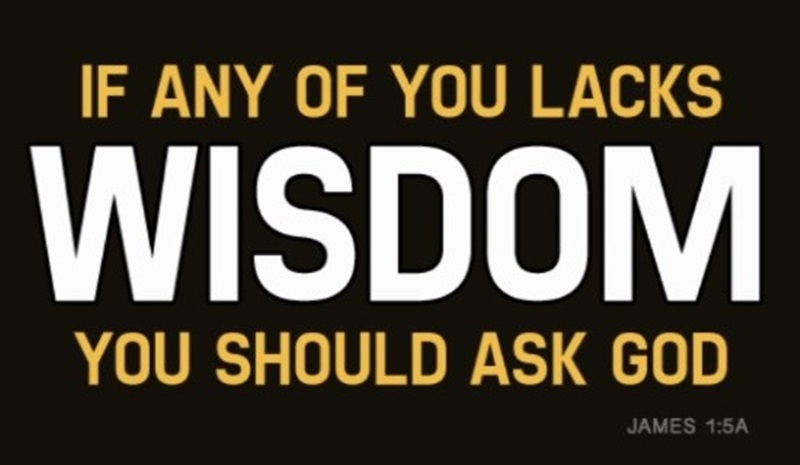
“If any of you lacks wisdom, you should ask God, who gives generously to all without finding fault, and it will be given to you.” James 1:5

Most of us know this verse well if you grew up going to Sunday School and Youth group.  This verse was one of most memorized and quoted in our childhoods.  But plucking one verse from God’s Word does not explain the full wisdom of it all!  When we read the rest of James letter to believers, we discover even more gems of wisdom God wants us to ask from him along with reasons why we must then apply this wealth of God’s wisdom in our lives!  “But when you ask, you must believe and not doubt, because the one who doubts is like a wave of the sea, blown and tossed by the wind. That person should not expect to receive anything from the Lord. Such a person is double-minded and unstable in all they do.” James 1:6-8

Just do it! James continues, “Do not merely listen to the word, and so deceive yourselves. Do what it says. Anyone who listens to the word but does not do what it says is like someone who looks at his face in a mirror and, after looking at himself, goes away and immediately forgets what he looks like.” James 1:22-24 James, deemed by biblical scholars as the earthly brother of Jesus, did not believe in Him until later, when Jesus’ work to redeem us was accomplished at the cross.  James knew what it is like to live in doubt.  Then when he believed in Jesus as Son of God come to save us; he knew what it was like to live in trust. James chose to believe Jesus as the way to GodJames chose to seek God’s wisdom in all the details of life. God gave James what he was seeking. James then lived with a heart, mind, and soul fully committed to trust and obey Him. Inspired by God, James’ testimony and message is God-given wisdom for us as we walk with God, trusting Him in all circumstances.

In our next passage, Solomon, son of David, realizes what he needs most as the new young King of Israel.  So, he asks God for wisdom.  Good choice, Solomon!  You could have asked for anything—but you chose the wisdom of God!

Solomon Asks for Wisdom

Solomon made an alliance with Pharaoh king of Egypt and married his daughter. He brought her to the City of David until he finished building his palace and the temple of the Lord, and the wall around Jerusalem. The people, however, were still sacrificing at the high places, because a temple had not yet been built for the Name of the Lord. Solomon showed his love for the Lord by walking according to the instructions given him by his father David, except that he offered sacrifices and burned incense on the high places.

The king went to Gibeon to offer sacrifices, for that was the most important high place, and Solomon offered a thousand burnt offerings on that altar. At Gibeon the Lord appeared to Solomon during the night in a dream, and God said, “Ask for whatever you want me to give you.”

Solomon answered, “You have shown great kindness to your servant, my father David, because he was faithful to you and righteous and upright in heart. You have continued this great kindness to him and have given him a son to sit on his throne this very day.

“Now, Lord my God, you have made your servant king in place of my father David. But I am only a little child and do not know how to carry out my duties. Your servant is here among the people you have chosen, a great people, too numerous to count or number. So give your servant a discerning heart to govern your people and to distinguish between right and wrong. For who is able to govern this great people of yours?”

10 The Lord was pleased that Solomon had asked for this11 So God said to him, “Since you have asked for this and not for long life or wealth for yourself, nor have asked for the death of your enemies but for discernment in administering justice, 12 I will do what you have asked. I will give you a wise and discerning heart, so that there will never have been anyone like you, nor will there ever be. 13 Moreover, I will give you what you have not asked for—both wealth and honor—so that in your lifetime you will have no equal among kings. 14 And if you walk in obedience to me and keep my decrees and commands as David your father did, I will give you a long life.” 15 Then Solomon awoke—and he realized it had been a dream.

He returned to Jerusalem, stood before the ark of the Lord’s covenant and sacrificed burnt offerings and fellowship offerings. Then he gave a feast for all his court.

A Wise Ruling

16 Now two prostitutes came to the king and stood before him. 17 One of them said, “Pardon me, my lord. This woman and I live in the same house, and I had a baby while she was there with me18 The third day after my child was born, this woman also had a baby. We were alone; there was no one in the house but the two of us.

19 “During the night this woman’s son died because she lay on him. 20 So she got up in the middle of the night and took my son from my side while I your servant was asleep. She put him by her breast and put her dead son by my breast. 21 The next morning, I got up to nurse my son—and he was dead! But when I looked at him closely in the morning light, I saw that it wasn’t the son I had borne.”

22 The other woman said, “No! The living one is my son; the dead one is yours.”

But the first one insisted, “No! The dead one is yours; the living one is mine.” And so they argued before the king.

23 The king said, “This one says, ‘My son is alive and your son is dead,’ while that one says, ‘No! Your son is dead and mine is alive.’”

24 Then the king said, “Bring me a sword.” So they brought a sword for the king. 25 He then gave an order: “Cut the living child in two and give half to one and half to the other.”

26 The woman whose son was alive was deeply moved out of love for her son and said to the king, “Please, my lord, give her the living baby! Don’t kill him!”

But the other said, “Neither I nor you shall have him. Cut him in two!”

27 Then the king gave his ruling: “Give the living baby to the first woman. Do not kill him; she is his mother.”

28 When all Israel heard the verdict the king had given, they held the king in awe, because they saw that he had wisdom from God to administer justice.

WHAT DO WE LEARN—HOW DO WE RESPOND?

The world we live in is not fair, righteous, good, or perfect. It hasn’t been since the fall of Adam and Eve to deny God as the only wise one and follow their own desires.  Satan, God’s enemy tempted them, but they had a choice to choose what God said or what was presented before them that was not of God.  From their first sin of disobedience to God; sin gave birth to more hate filled sins of jealousy, envy, selfishness, pride, arrogance, manipulation of others to get what we think we deserve.  Sin’s behaviors are completely opposite of God’s ways to live.

Solomon was wise enough to ask for wisdom! God’s wisdom gives birth to more wisdom in navigating life in an imperfect world. “…they held the king in awe, because they saw that he had wisdom from God to administer justice.”  People are in awe of God’s wisdom!

Jesus sought God and his wisdom and direction with every breath he took on earth.  Jesus wanted his disciples to seek God and his wisdom, too.  Knowing what was about to happen to Jesus with mock trials, false accusations, beatings beyond what any human should, followed by being nailed to a cross of shame and knowing these acts of violence against Jesus would rock their worlds; Jesus asks his followers, Do you now believe?” Jesus replied. “A time is coming and in fact has come when you will be scattered, each to your own home. You will leave me all alone. Yet I am not alone, for my Father is with me. “I have told you these things, so that in me you may have peace. In this world you will have trouble. But take heart! I have overcome the world.”

Now, imagine James, who saw and experienced.  Imagine James, now with a change of heart, putting all his trust in Jesus as Son of God, his Savior, writing the following words;

“James, a servant of God and of the Lord Jesus Christ, To the twelve tribes scattered among the nations: Greetings.

Consider it pure joy, my brothers and sisters, whenever you face trials of many kinds, because you know that the testing of your faith produces perseverance. Let perseverance finish its work so that you may be mature and complete, not lacking anything. If any of you lacks wisdom, you should ask God, who gives generously to all without finding fault, and it will be given to you.” James 1:1-5

Joy? After all you saw and experienced, James, pure joy?  We question it until we receive it in the middle of our own trials. There is nothing gained from running hard to avoid troubles and trials. But there is everything to gain when we believe what Jesus did for us. Because of Jesus, we can trade our sorrows that sin produces for the joy Jesus provides because of the sacrifice of His life to remove our sins!  My sins, not in part but the whole!  Redemption is Joy eternal, unchanging, and stable. Not like the winds of unbelief!  This Joy comes from Jesus defeat of death to resurrected life which completed the mission to remove the sins of the world. For all who believe; it is joy that resides deep inside us and it is unspeakable, indescribable, and glorious—for this joy is salvation from God—pure joy!

God’s love for us fills us with this Joy! God’s plan includes teaching us His joy in all circumstances.  Joy, love, peace are keys to endurance and perseverance here until we see Jesus face to face there.  “We can rejoice, too, when we run into problems and trials, for we know that they help us develop endurance.”—Paul, Romans 5:3

Romans 8:38-39: This joy filled passage explicitly states that nothing, including “neither death nor life, neither angels nor demons, neither the present nor the future, nor any powers, neither height nor depth, nor anything else in all creation, will be able to separate us from the love of God that is in Christ Jesus our Lord”. This declaration emphasizes the unwavering and unbreakable nature of God’s love for those who are in Christ Jesus.

God is Love, Joy, and Peace eternal who pours out His wisdom to those who ask.    

Our response?  Ask God for His wisdom with a desire to do what He says when He says it. Live in expectant hope as He pours out all He knows we need when we need it most. This is the treasure we seek—God’s glory at work in all the details of our lives!

“Blessed is the one who perseveres under trial because, having stood the test, that person will receive the crown of life that the Lord has promised to those who love him.” James 1:12

Lord,

I cry out for your wisdom this morning. You know the trials we face.  I trust you for bringing us through it all with help to endure to preserve it ways that build our faith. You are God. We are not. All my trust is in you. You are everything we need.  You have already given us more than enough.  Thank you, thank you, thank you!

In Jesus Name, Amen

Posted in Uncategorized | Tagged , , , , | Leave a comment

WISDOM IN THE TRANSFER OF LEADERSHIP

When a powerful, influential, successful leader steps down from the position; the next person who has been chosen will have a time of transition that will challenge all who work alongside him or her. Their leadership must be established quickly so that the former working goal of the organization can be carried on efficiently and successfully.  New leadership will bring new thoughts of how things will be done but the goal is the same.  Wise leaders will not attempt to change the goal; but will surround themselves with people who not only know the goal of the organization but are also loyal and therefore helpful to the new leader who wants the best for the people they serve.

Wise, successful leaders in transition will not begin their time with “throwing the baby out with the bath water,” (discarding something valuable along with other things that are inessential or undesirable), with sweeping changes that confuse and distract people from the goal.  They will instead establish themselves first with the people in community so that the people working for and with them will know they are valuable and appreciated.  Wise leaders are servant leaders who are willing to serve those they lead with help, tools, and even their own hands and feet in service to them.

Wise leaders take time to know who they lead.  Much wisdom and care to know who you lead is important.  Discerning who are goal seekers and who are not makes a difference in the life of a goal-oriented organization.  Once established, over a period of time; changes in how to accomplish the goal are easier to embrace because the people have gotten to know the leader’s heart and mind which helps the people understand why the changes are necessary to continue to accomplish the main goal of their existence.

Wise leaders prepare the way for their successors.  David prepared Soloman to succeed him. David gave final instructions to Solomon that would ensure success. Upon death, the great King David exhorted his son: Obey God, follow him, and be kind to others.  As we read and study God’s story through King Solomon, we will see if Soloman, like David, followed the heart of God—or not. 

The goal:  Love God with all heart, all your mind, and all your soul. Obey His command to love others like He loves us.  What would happen if we gripped the goal?!

1 Kings 2

David’s Charge to Solomon

When the time drew near for David to die, he gave a charge to Solomon his son.

“I am about to go the way of all the earth,” he said. “So be strong, act like a man, and observe what the Lord your God requires: Walk in obedience to him, and keep his decrees and commands, his laws and regulations, as written in the Law of Moses. Do this so that you may prosper in all you do and wherever you go and that the Lord may keep his promise to me: ‘If your descendants watch how they live, and if they walk faithfully before me with all their heart and soul, you will never fail to have a successor on the throne of Israel.’

“Now you yourself know what Joab son of Zeruiah did to me—what he did to the two commanders of Israel’s armies, Abner son of Ner and Amasa son of Jether. He killed them, shedding their blood in peacetime as if in battle, and with that blood he stained the belt around his waist and the sandals on his feet. Deal with him according to your wisdom, but do not let his gray head go down to the grave in peace.

“But show kindness to the sons of Barzillai of Gilead and let them be among those who eat at your table. They stood by me when I fled from your brother Absalom.

“And remember, you have with you Shimei son of Gera, the Benjamite from Bahurim, who called down bitter curses on me the day I went to Mahanaim. When he came down to meet me at the Jordan, I swore to him by the Lord: ‘I will not put you to death by the sword.’ But now, do not consider him innocent. You are a man of wisdom; you will know what to do to him. Bring his gray head down to the grave in blood.”

10 Then David rested with his ancestors and was buried in the City of David. 11 He had reigned forty years over Israel—seven years in Hebron and thirty-three in Jerusalem. 12 So Solomon sat on the throne of his father David, and his rule was firmly established.

Solomon’s Throne Established

13 Now Adonijah, the son of Haggith, went to Bathsheba, Solomon’s mother. Bathsheba asked him, “Do you come peacefully?”

He answered, “Yes, peacefully.” 14 Then he added, “I have something to say to you.”

“You may say it,” she replied.

15 “As you know,” he said, “the kingdom was mine. All Israel looked to me as their king. But things changed, and the kingdom has gone to my brother; for it has come to him from the Lord. 16 Now I have one request to make of you. Do not refuse me.”

“You may make it,” she said.

17 So he continued, “Please ask King Solomon—he will not refuse you—to give me Abishag the Shunammite as my wife.”

18 “Very well,” Bathsheba replied, “I will speak to the king for you.”

19 When Bathsheba went to King Solomon to speak to him for Adonijah, the king stood up to meet her, bowed down to her and sat down on his throne. He had a throne brought for the king’s mother, and she sat down at his right hand.

20 “I have one small request to make of you,” she said. “Do not refuse me.”

The king replied, “Make it, my mother; I will not refuse you.”

21 So she said, “Let Abishag the Shunammite be given in marriage to your brother Adonijah.”

22 King Solomon answered his mother, “Why do you request Abishag the Shunammite for Adonijah? You might as well request the kingdom for him—after all, he is my older brother—yes, for him and for Abiathar the priest and Joab son of Zeruiah!”

23 Then King Solomon swore by the Lord: “May God deal with me, be it ever so severely, if Adonijah does not pay with his life for this request! 24 And now, as surely as the Lord lives—he who has established me securely on the throne of my father David and has founded a dynasty for me as he promised—Adonijah shall be put to death today!” 25 So King Solomon gave orders to Benaiah son of Jehoiada, and he struck down Adonijah and he died.

26 To Abiathar the priest the king said, “Go back to your fields in Anathoth. You deserve to die, but I will not put you to death now, because you carried the ark of the Sovereign Lord before my father David and shared all my father’s hardships.” 27 So Solomon removed Abiathar from the priesthood of the Lord, fulfilling the word the Lord had spoken at Shiloh about the house of Eli.

28 When the news reached Joab, who had conspired with Adonijah though not with Absalom, he fled to the tent of the Lord and took hold of the horns of the altar. 29 King Solomon was told that Joab had fled to the tent of the Lord and was beside the altar. Then Solomon ordered Benaiah son of Jehoiada, “Go, strike him down!”

30 So Benaiah entered the tent of the Lord and said to Joab, “The king says, ‘Come out!’”

But he answered, “No, I will die here.”

Benaiah reported to the king, “This is how Joab answered me.”

31 Then the king commanded Benaiah, “Do as he says. Strike him down and bury him, and so clear me and my whole family of the guilt of the innocent blood that Joab shed. 32 The Lord will repay him for the blood he shed, because without my father David knowing it he attacked two men and killed them with the sword. Both of them—Abner son of Ner, commander of Israel’s army, and Amasa son of Jether, commander of Judah’s army—were better men and more upright than he. 33 May the guilt of their blood rest on the head of Joab and his descendants forever. But on David and his descendants, his house and his throne, may there be the Lord’s peace forever.”

34 So Benaiah son of Jehoiada went up and struck down Joab and killed him, and he was buried at his home out in the country. 35 The king put Benaiah son of Jehoiada over the army in Joab’s position and replaced Abiathar with Zadok the priest.

36 Then the king sent for Shimei and said to him, “Build yourself a house in Jerusalem and live there, but do not go anywhere else. 37 The day you leave and cross the Kidron Valley, you can be sure you will die; your blood will be on your own head.”

38 Shimei answered the king, “What you say is good. Your servant will do as my lord the king has said.” And Shimei stayed in Jerusalem for a long time.

39 But three years later, two of Shimei’s slaves ran off to Achish son of Maakah, king of Gath, and Shimei was told, “Your slaves are in Gath.” 40 At this, he saddled his donkey and went to Achish at Gath in search of his slaves. So Shimei went away and brought the slaves back from Gath.

41 When Solomon was told that Shimei had gone from Jerusalem to Gath and had returned, 42 the king summoned Shimei and said to him, “Did I not make you swear by the Lord and warn you, ‘On the day you leave to go anywhere else, you can be sure you will die’? At that time you said to me, ‘What you say is good. I will obey.’ 43 Why then did you not keep your oath to the Lord and obey the command I gave you?”

44 The king also said to Shimei, “You know in your heart all the wrong you did to my father David. Now the Lord will repay you for your wrongdoing. 45 But King Solomon will be blessed, and David’s throne will remain secure before the Lord forever.”

46 Then the king gave the order to Benaiah son of Jehoiada, and he went out and struck Shimei down and he died.

The kingdom was now established in Solomon’s hands.

WHAT DO WE LEARN—HOW DO WE RESPOND?

Blessed is the person whose heart is right with God, whose conscience is clear and who can look back and say with our Lord, “I have glorified You on the earth. I have finished the work which You have given Me to do” (John 17:4). This is what David desired most for his son, Soloman.

David’s words parallel those of Moses when he commissioned Joshua. First, Moses passionately told Joshua to “be a man” and face his responsibilities with courage and faith (Deuteronomy 31:1–8); then Moses gave the law to the priests and cautioned the people (including Joshua) to know it and obey it. The king was expected to be familiar with the Law and the covenant (Deuteronomy 17:14–20), for in obeying God’s Word he would find His wisdom, strength, and blessing.  This is the goal of anyone called of God as His leader and follower in His Kingdom work!

David reminded Solomon of the promise of God.  David told his son of the special covenant the Lord had made concerning the Davidic dynasty (see 2 Samuel 7:1–17). David warned Solomon that disobeying God’s law would bring chastening and sorrow to himself and the land, (which David knew first hand); but if he obeyed God’s commandments, God would bless him and the people. More importantly, God would see to it that there was always a descendant of David sitting on the throne.

David mentors young Solomon.  David not only remembered dangerous men like Joab and Shimei, but he also remembered helpful men like Barzillai, who had provided him and his people with what they needed when they fled from Absalom (2 Samuel 17:27–29). Remembering those who have served well, honoring them, and holding them in high esteem is appropriate. But we should also be watchful of deceivers and learn from our past mistakes or missteps. Soloman heard David and took his words to heart. When Solomon had Joab killed, he wasn’t simply acting in revenge in the place of his father David. Solomon explained that the death of Joab took away the stain of the innocent blood that Joab, a rogue warrior, had shed when he had killed Abner and Amasa—two loyal leaders. 

In the best of situations, when the former leader blesses and mentors the next leader, the transition can still be tedious and challenging.  But, as we all learn, the leader who seeks God’s wisdom (being) and does what God requires of us (doing) God will lead the leader to shepherd God’s people well.  This is called success in God’s Kingdom.  And what does God require of all of us? “To act justly and to love mercy and to walk humbly with your God” Micah 6:8. Love God. Love each other as I have commanded you. –Jesus

Lord,

Thank you for helping us find ourselves in your stories of love, mercy, and grace.  Some seek you are blessed; those who do not will not succeed in the end. We need your wisdom.

Thank you for telling the messes made by your people make along with your mercy given. “All have sinned and fall short of your glorious living” and I am one of them. Thank you for showing me your mercy in my messes that served later to declare your goodness, love, mercy, and grace by your forgiveness. What a mighty and glorious God we love and serve!  There is truly no one like you!  Lead me. Guide my walk with you again today.

In Jesus Name, Amen

Posted in Uncategorized | Tagged , , , , | Leave a comment

NEW KING—NEW KINGDOM

Remember the games we used to play as kids in our neighborhood? I’m speaking of a time before tech.  I remember the kids as well as our game playing vividly.  No matter what we did, there was always a leader who told us the rules of the game before beginning play.  If that leader was called home by a parent, no worries, a new leader would emerge immediately.  However, sometimes a twist on the game would be invented by the new leader with new rules created on the fly. Wanting to play no matter what, we carried on without thinking.  We chose up sides and went along with the new rules until we were losing; then we interjected a protest with a new rule when things weren’t going our way.

By observing children at play, whether it be in the neighborhood or on a school playground; we learn much about natural human behaviors.  We discover, some children are trained to be very principled in game playing. Some children want all things to be fair and will fight for equality. Some don’t care about any rules, and selfishly just want to win at all costs.  And then there are some who demand to be the leader when a leader is already present.  They also demand that everyone must follow what he/she says or they will take all their toys and go home.  The latter are usually the spoiled ones whose parents have lost control in disciplining them.  “I’m king of the world,” they shout for all to hear and obey.

When David’s life and reign drew to a close, his sons competed for his throne. David appointed Solomon as his heir over all the other sons.  As we study David’s life, we observe that David served well as a king, he often failed as a parent…and husband. We can be successful in our public life and a failure in private. We learn that God is first, and next to God is our spouse, then our children.  Our families should be our first ministry priority.  In David’s house, not so much.  From our study of 1 Samuel and 2 Samuel we learn that within David’s house there is incest, deceit, and one daughter raped, which resulted in another son murdered by his half-brother. The palace from within was in turmoil.  As David life comes to an end, due to old age; it was time for David to step up.  And he does, led by God.  David was not perfect; but still sought the heart of God.

1 Kings 1

Adonijah Sets Himself Up as King

When King David was very old, he could not keep warm even when they put covers over him. So his attendants said to him, “Let us look for a young virgin to serve the king and take care of him. She can lie beside him so that our lord the king may keep warm.”

Then they searched throughout Israel for a beautiful young woman and found Abishag, a Shunammite, and brought her to the king. The woman was very beautiful; she took care of the king and waited on him, but the king had no sexual relations with her.

Now Adonijah, whose mother was Haggith, put himself forward and said, “I will be king.” So he got chariots and horses ready, with fifty men to run ahead of him. (His father had never rebuked him by asking, “Why do you behave as you do?” He was also very handsome and was born next after Absalom.)

Adonijah conferred with Joab son of Zeruiah and with Abiathar the priest, and they gave him their support. But Zadok the priest, Benaiah son of Jehoiada, Nathan the prophet, Shimei and Rei and David’s special guard did not join Adonijah.

Adonijah then sacrificed sheep, cattle and fattened calves at the Stone of Zoheleth near En Rogel. He invited all his brothers, the king’s sons, and all the royal officials of Judah, 1but he did not invite Nathan the prophet or Benaiah or the special guard or his brother Solomon.

11 Then Nathan asked Bathsheba, Solomon’s mother, “Have you not heard that Adonijah, the son of Haggith, has become king, and our lord David knows nothing about it? 12 Now then, let me advise you how you can save your own life and the life of your son Solomon. 13 Go in to King David and say to him, ‘My lord the king, did you not swear to me your servant: “Surely Solomon your son shall be king after me, and he will sit on my throne”? Why then has Adonijah become king?’ 14 While you are still there talking to the king, I will come in and add my word to what you have said.”

15 So Bathsheba went to see the aged king in his room, where Abishag the Shunammite was attending him. 16 Bathsheba bowed down, prostrating herself before the king.

“What is it you want?” the king asked.

17 She said to him, “My lord, you yourself swore to me your servant by the Lord your God: ‘Solomon your son shall be king after me, and he will sit on my throne.’ 18 But now Adonijah has become king, and you, my lord the king, do not know about it. 19 He has sacrificed great numbers of cattle, fattened calves, and sheep, and has invited all the king’s sons, Abiathar the priest and Joab the commander of the army, but he has not invited Solomon your servant. 20 My lord the king, the eyes of all Israel are on you, to learn from you who will sit on the throne of my lord the king after him. 21 Otherwise, as soon as my lord the king is laid to rest with his ancestors, I and my son Solomon will be treated as criminals.”

22 While she was still speaking with the king, Nathan the prophet arrived23 And the king was told, “Nathan the prophet is here.” So he went before the king and bowed with his face to the ground.

24 Nathan said, “Have you, my lord the king, declared that Adonijah shall be king after you, and that he will sit on your throne? 25 Today he has gone down and sacrificed great numbers of cattle, fattened calves, and sheep. He has invited all the king’s sons, the commanders of the army and Abiathar the priest. Right now they are eating and drinking with him and saying, ‘Long live King Adonijah!’ 26 But me your servant, and Zadok the priest, and Benaiah son of Jehoiada, and your servant Solomon he did not invite. 27 Is this something my lord the king has done without letting his servants know who should sit on the throne of my lord the king after him?”

David Makes Solomon King

28 Then King David said, “Call in Bathsheba.” So she came into the king’s presence and stood before him.

29 The king then took an oath: “As surely as the Lord lives, who has delivered me out of every trouble, 30 I will surely carry out this very day what I swore to you by the Lord, the God of Israel: Solomon your son shall be king after me, and he will sit on my throne in my place.”

31 Then Bathsheba bowed down with her face to the ground, prostrating herself before the king, and said, “May my lord King David live forever!”

32 King David said, “Call in Zadok the priest, Nathan the prophet and Benaiah son of Jehoiada.” When they came before the king, 33 he said to them: “Take your lord’s servants with you and have Solomon my son mount my own mule and take him down to Gihon. 34 There have Zadok the priest and Nathan the prophet anoint him king over Israel. Blow the trumpet and shout, ‘Long live King Solomon!’ 35 Then you are to go up with him, and he is to come and sit on my throne and reign in my place. I have appointed him ruler over Israel and Judah.”

36 Benaiah son of Jehoiada answered the king, “Amen! May the Lord, the God of my lord the king, so declare it. 37 As the Lord was with my lord the king, so may he be with Solomon to make his throne even greater than the throne of my lord King David!”

38 So Zadok the priest, Nathan the prophet, Benaiah son of Jehoiada, the Kerethites and the Pelethites went down and had Solomon mount King David’s mule, and they escorted him to Gihon. 39 Zadok the priest took the horn of oil from the sacred tent and anointed Solomon. Then they sounded the trumpet and all the people shouted, “Long live King Solomon!” 40 And all the people went up after him, playing pipes and rejoicing greatly, so that the ground shook with the sound.

41 Adonijah and all the guests who were with him heard it as they were finishing their feast. On hearing the sound of the trumpet, Joab asked, “What’s the meaning of all the noise in the city?”

42 Even as he was speaking, Jonathan son of Abiathar the priest arrived. Adonijah said, “Come in. A worthy man like you must be bringing good news.”

43 “Not at all!” Jonathan answered. “Our lord King David has made Solomon king. 44 The king has sent with him Zadok the priest, Nathan the prophet, Benaiah son of Jehoiada, the Kerethites and the Pelethites, and they have put him on the king’s mule, 45 and Zadok the priest and Nathan the prophet have anointed him king at Gihon. From there they have gone up cheering, and the city resounds with it. That’s the noise you hear. 46 Moreover, Solomon has taken his seat on the royal throne47 Also, the royal officials have come to congratulate our lord King David, saying, ‘May your God make Solomon’s name more famous than yours and his throne greater than yours!’ And the king bowed in worship on his bed 48 and said, ‘Praise be to the Lord, the God of Israel, who has allowed my eyes to see a successor on my throne today.’”

49 At this, all Adonijah’s guests rose in alarm and dispersed. 50 But Adonijah, in fear of Solomon, went and took hold of the horns of the altar. 51 Then Solomon was told, “Adonijah is afraid of King Solomon and is clinging to the horns of the altar. He says, ‘Let King Solomon swear to me today that he will not put his servant to death with the sword.’”

52 Solomon replied, “If he shows himself to be worthy, not a hair of his head will fall to the ground; but if evil is found in him, he will die.” 53 Then King Solomon sent men, and they brought him down from the altar. And Adonijah came and bowed down to King Solomon, and Solomon said, “Go to your home.”

WHAT DO WE LEARN—HOW DO WE RESPOND?

Jesus taught and demonstrated that to become a leader we must first become a servant.  We don’t serve hoping for a higher position of leadership; we serve because it is in our hearts to help others for no reason at all, expecting nothing in return.  Jesus frequently highlighted that true greatness lies in serving others, not being served, and demonstrated this through his actions, like washing his disciples’ feet. (John 13) He taught that loving others, even enemies, and showing compassion, especially to the vulnerable, is a reflection of God’s love within us.  Service follows love.

Without God’s love—we are merely making a lot of noise in our lives without accomplishing anything of significance that truly helps others.  “We are all show; but no go,” in other words.  The Apostle Paul, to the church, teaches us, “If I speak in the tongues of men or of angels, but do not have love, I am only a resounding gong or a clanging cymbal. If I have the gift of prophecy and can fathom all mysteries and all knowledge, and if I have a faith that can move mountains, but do not have love, I am nothing. If I give all I possess to the poor and give over my body to hardship that I may boast, but do not have love, I gain nothing. 1 Corinthians 13:1-3 

God sees inside our hearts and knows all the thoughts in our minds. God created us!  So, it is important to evaluate our inner motivations often.  We need help and God provides His help. Ask the Holy Spirit, our God-given Counselor, to do a heart check daily!  What is the motivation of our hearts as we serve others?  Are we more concerned with performance that please others rather than God?  Is position more important than serving?  Do we bully people with guilt or demands so they will follow us; or do we wait upon the Lord?  Jesus has an answer to this dilemma of thinking.  Two of beloved disciples were fighting over who would sit with Jesus in eternity.  They fought over who would be the greatest among the other disciples.  Yikes.  But we all do it from time to time until we are reminded that seeking position does not get us closer to Jesus.  Quite the opposite.  Here’s the story of James and John:

“Then James and John, the sons of Zebedee, came over and spoke to him. “Teacher,” they said, “we want you to do us a favor.”

36 What is your request?” he asked.

37 They replied, “When you sit on your glorious throne, we want to sit in places of honor next to you, one on your right and the other on your left.”

38 But Jesus said to them, “You don’t know what you are asking! Are you able to drink from the bitter cup of suffering I am about to drink? Are you able to be baptized with the baptism of suffering I must be baptized with?”

39 “Oh yes,” they replied, “we are able!”

Then Jesus told them, “You will indeed drink from my bitter cup and be baptized with my baptism of suffering. 40 But I have no right to say who will sit on my right or my left. God has prepared those places for the ones he has chosen.”

41 When the ten other disciples heard what James and John had asked, they were indignant. 42 So Jesus called them together and said, “You know that the rulers in this world lord it over their people, and officials flaunt their authority over those under them. 43 But among you it will be different. Whoever wants to be a leader among you must be your servant, 44 and whoever wants to be first among you must be the slave of everyone else. 45 For even the Son of Man came not to be served but to serve others and to give his life as a ransom for many.” Mark 10:35-45, NLT

Is our life’s pursuit to know Jesus, to more like Him in every way, AND to share in His sufferings? (See Philippians 2 and 3) Or is our goal to fulfill our selfish need to be lauded as the best leader in the land of our existence which is so fleeting in our fickle world? It’s our choice. We must choose wisely.  An old hymn of my youth is a good reminder of our walk with God, our top priority of life; “Stepping in the Light”

Trying to walk in the steps of the Savior,
Trying to follow our Savior and King,
Shaping our lives by His blessed example,
Happy, how happy, the songs that we bring.

How beautiful to walk in the steps of the Savior,
Stepping in the light,
Stepping in the light;
How beautiful to walk in the steps of the Savior,
Led in paths of light.

Pressing more closely to Him who is leading
When we are tempted to turn from the way,
Trusting the arm that is strong to defend us,
Happy, how happy, our praises each day. 

Solomon, known above all for his Godly wisdom, showed mercy to his brother and allowed him to return to his home in Jerusalem but with constant surveillance.  There is much more to learn in our study of the human Kings! 

Today and always; remember we serve THE KING of kings and LORD of lords—King Jesus. 

Lord,

Thank you for convicting us of motivations that lead nowhere we want to be.  Lead us not into temptations; but deliver us from evil and evil’s schemes to distract our walk from light to dark.  Light our path and we will follow your lead.

In Jesus Name, Amen

Posted in Uncategorized | Tagged , , , , | Leave a comment

DO WHAT GOD SAYS WITHOUT WHY

There are times in every believer’s life that God will lead us to say or do something that doesn’t make sense to us at the time.  We might follow His lead but put our own twist on the command of God.  God’s Holy Spirit might prompt us to go see a certain person at a specific time, but we procrastinate and end up just texting them later with polite, generic words.  God might lead us to do a work that is not what we think is in our “wheelhouse” of ability or responsibility.  So, we might tell someone else of the need who is better fitted, we think, for the task.  Or God may prompt us to reach out to a person who is not like  us and invite them to our home for a meal.  But we decide instead to send them a note of encouragement.

Sometimes God says clearly what to do and when to do it; but our first response, with a little whine, is “why, Lord?” “Why me?” “Why do we need to do this?” “What’s the point?”  As parents, who are “training up a child in the way he/she should go;” we hear this often!  God knows and hears our whine, too!

As children of God, we say we want to be good and do good in this world but we give back less than our best at times. God, who is Good, the only One who is Good, invites us to join Him in His great work but our reply is less than good.  We look at His invitation as a burden instead of a holy privilege! Then, we give him our least effort resulting in merely a sprinkle of good that should have been God’s best work in and through us.  God is training us to more like Him in every way.  But our whining with wanting to know why with every word God speaks frustrates God’s molding and shaping of us.  I’m guilty.  How about you?

2 Samuel 24

David Enrolls the Fighting Men

24 Again the anger of the Lord burned against Israel, and he incited David against them, saying, “Go and take a census of Israel and Judah.”

So the king said to Joab and the army commanders with him, “Go throughout the tribes of Israel from Dan to Beersheba and enroll the fighting men, so that I may know how many there are.”

But Joab replied to the king, “May the Lord your God multiply the troops a hundred times over, and may the eyes of my lord the king see it. But why does my lord the king want to do such a thing?”

The king’s word, however, overruled Joab and the army commanders; so they left the presence of the king to enroll the fighting men of Israel.

After crossing the Jordan, they camped near Aroer, south of the town in the gorge, and then went through Gad and on to Jazer. They went to Gilead and the region of Tahtim Hodshi, and on to Dan Jaan and around toward Sidon. Then they went toward the fortress of Tyre and all the towns of the Hivites and Canaanites. Finally, they went on to Beersheba in the Negev of Judah.

After they had gone through the entire land, they came back to Jerusalem at the end of nine months and twenty days.

Joab reported the number of the fighting men to the king: In Israel there were eight hundred thousand able-bodied men who could handle a sword, and in Judah five hundred thousand.

10 David was conscience-stricken after he had counted the fighting men, and he said to the Lord, “I have sinned greatly in what I have done. Now, Lord, I beg you, take away the guilt of your servant. I have done a very foolish thing.”

11 Before David got up the next morning, the word of the Lord had come to Gad the prophet, David’s seer: 12 “Go and tell David, ‘This is what the Lord says: I am giving you three options. Choose one of them for me to carry out against you.’”

13 So Gad went to David and said to him, “Shall there come on you three years of famine in your land? Or three months of fleeing from your enemies while they pursue you? Or three days of plague in your land? Now then, think it over and decide how I should answer the one who sent me.”

14 David said to Gad, “I am in deep distress. Let us fall into the hands of the Lord, for his mercy is great; but do not let me fall into human hands.”

15 So the Lord sent a plague on Israel from that morning until the end of the time designated, and seventy thousand of the people from Dan to Beersheba died. 16 When the angel stretched out his hand to destroy Jerusalem, the Lord relented concerning the disaster and said to the angel who was afflicting the people, “Enough! Withdraw your hand.” The angel of the Lord was then at the threshing floor of Araunah the Jebusite.

17 When David saw the angel who was striking down the people, he said to the Lord, “I have sinned; I, the shepherd, have done wrong. These are but sheep. What have they done? Let your hand fall on me and my family.”

David Builds an Altar

18 On that day Gad went to David and said to him, “Go up and build an altar to the Lord on the threshing floor of Araunah the Jebusite.” 19 So David went up, as the Lord had commanded through Gad. 20 When Araunah looked and saw the king and his officials coming toward him, he went out and bowed down before the king with his face to the ground.

21 Araunah said, “Why has my lord the king come to his servant?”

“To buy your threshing floor,” David answered, “so I can build an altar to the Lord, that the plague on the people may be stopped.”

22 Araunah said to David, “Let my lord the king take whatever he wishes and offer it up. Here are oxen for the burnt offering, and here are threshing sledges and ox yokes for the wood. 23 Your Majesty, Araunah gives all this to the king.” Araunah also said to him, “May the Lord your God accept you.”

24 But the king replied to Araunah, “No, I insist on paying you for it. I will not sacrifice to the Lord my God burnt offerings that cost me nothing.”

So David bought the threshing floor and the oxen and paid fifty shekels of silver for them. 25 David built an altar to the Lord there and sacrificed burnt offerings and fellowship offerings. Then the Lord answered his prayer in behalf of the land, and the plague on Israel was stopped.

WHAT DO WE LEARN—HOW DO WE RESPOND?

God told David to take a census. But David instead told his commanders to draft an army of fighting men across the land of Israel and Judah.  David’s commander, Joab asked “why” as he saw no point in doing that tedious, long work.  David’s disobedience caused God’s people pain and suffering.  Our sin affects all those around us.

God is the great Giver. God is the great Provider, Healer, and Protector. He is the Fount of every blessing. God is absolutely generous and utterly dependable. God is always with us and guides us while providing for us to accomplish His will in and through us.  The resounding and recurring message of Scripture from God is clear: God owns it all. God created all. God shares it all. Trust him, not stuff! So, when God who knows all because He created all tells us to say something or prompts us by His Holy Spirit to do something— “Just do it or say it.”  God always has a purpose and plan!

We wrap up both books of Samuel with this last piece of God’s wisdom from Samuel to Saul when he disobeyed God’s direct command;

“Does the Lord delight in burnt offerings and sacrifices as much as in obeying the Lord? To obey is better than sacrifice, and to heed is better than the fat of rams.” 1 Samuel 15:22

Saul thought that his disobedience was that great of a sin and  could always be erased with another religious offering…offerings that didn’t cost much to him. 

David knew immediately his sin of disobedience, “I have sinned against the Lord.” David then purchased a place to render a holy sacrifice to the Lord. “I will not sacrifice to the Lord my God burnt offerings that cost me nothing.”

Ponder the differences between the heart of Saul and the heart of David. God sees and knows our hearts, sometimes better than we know ourselves.  Ask for the heart of Jesus daily as we walk humbly with God in all we think, say, and do.

When God invites or commands; do exactly what He says from a heart, mind, and soul committed to Him who loved us first.  What an honor and privilege to loving serve our King of kings and Lord of lords!  Real servants of the Most High do not ask why! 

Lord,

Forgive us our sins of laziness, doing less that what you tell us to be and do. Lead us to higher ground thinking as we expectantly wait on your Word of direction.  Thank you for inviting us to your work for it is indeed a holy privilege to serve you with your love in our hearts.  I no longer need to know why as I trust and obey you with my life for you are Life to me.

In Jesus Name, Amen

Posted in Uncategorized | Tagged , , , , | Leave a comment

ONE LAST PSALM

When godly men and women begin the journey from earth to heaven, family and friends who know them well pick up on the wisdom of their “last words.” They may not realize it at the time the words are said but they will remember later, when they are gone from this life.  I still cling to the legacy of words said by my grandparents and parents as “last words of wisdom.”  The thoughts, words, and actions in the final days carry meaning and significance for those also waiting with expectant hope for life eternal with God who sent His Son to save us and clear the path to God.  What will be our final words, have we ever thought about it?  Do our lives reflect the glory of God in us?  Are our words of praise and thanks to God for all he has done in and through us in all circumstances? What if we are taken from earth to heaven suddenly, was our faith obvious by our testimony and behavior?  Do our loved ones know with whom we stand firm in faith?  Will they know who God is by what we say and how we love?  Pondering.

Our last words might be said today or tomorrow, or next week; we do not know the time and place.  What we do know is what we think, say, and do will be remembered by those left behind to carry on in their journeys of faith.  Will our words be about the division of our stuff or will our utterances be to declare the glory and majesty of the God who owns it all, is in all, because He created all—and He loves all. He helps all who love Him back decidedly and committedly. Will our last words tell our loved ones to seek a relationship with God because of all the relationships we will have on earth, an intimate, loving relationship with God is the most important one of all?!  God’s Son, Jesus, provided this relationship through sacrifice because of God’s love for us.  To God be the glory, honor, and praise forever and ever, Amen!  Thank you, Father, thank you Jesus, and thank you Holy Spirit!  Go tell it on the mountain, in the valley, at the workplace, in your church, among friends but most of all, tell your family.
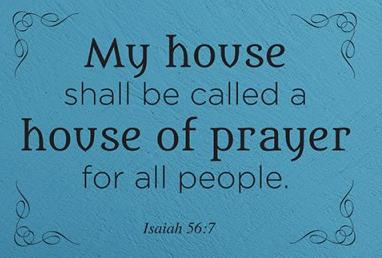
At least seventy-three of the psalms in the book of Psalms are assigned to David, but his last one is found only here in 2 Samuel 23. The phrase “the last words of David” means “his last inspired written words from the Lord.” The psalm may have been written during the closing days of David’s life. Since the theme of the psalm is godly leadership, he may have written it especially for Solomon, but it has much to say to all of God’s people today. One who knows the Lord well, speaks His words.  It is well with David’s soul.  Is it well with our souls today?

2 Samuel 23

David’s Last Words

These are the last words of David:

“The inspired utterance of David son of Jesse,
    the utterance of the man exalted by the Most High,
the man anointed by the God of Jacob,
    the hero of Israel’s songs:

The Spirit of the Lord spoke through me;
    his word was on my tongue.
The God of Israel spoke,
    the Rock of Israel said to me:
When one rules over people in righteousness,
    when he rules in the fear of God,
he is like the light of morning at sunrise
    on a cloudless morning,
like the brightness after rain
    that brings grass from the earth.’

If my house were not right with God,
    surely he would not have made with me an everlasting covenant,
    
arranged and secured in every part;
surely he would not bring to fruition my salvation
    and grant me my every desire.
But evil men are all to be cast aside like thorns,
    which are not gathered with the hand.
Whoever touches thorns
    uses a tool of iron or the shaft of a spear;
    they are burned up where they lie.”

David’s Mighty Warriors

These are the names of David’s mighty warriors:

Josheb-Basshebeth, a Tahkemonite, was chief of the Three; he raised his spear against eight hundred men, whom he killed in one encounter.

Next to him was Eleazar son of Dodai the Ahohite. As one of the three mighty warriors, he was with David when they taunted the Philistines gathered at Pas Dammim for battle. Then the Israelites retreated, 10 but Eleazar stood his ground and struck down the Philistines till his hand grew tired and froze to the sword. The Lord brought about a great victory that day. The troops returned to Eleazar, but only to strip the dead.

11 Next to him was Shammah son of Agee the Hararite. When the Philistines banded together at a place where there was a field full of lentils, Israel’s troops fled from them. 12 But Shammah took his stand in the middle of the field. He defended it and struck the Philistines down, and the Lord brought about a great victory.

13 During harvest time, three of the thirty chief warriors came down to David at the cave of Adullam, while a band of Philistines was encamped in the Valley of Rephaim. 14 At that time David was in the stronghold, and the Philistine garrison was at Bethlehem. 15 David longed for water and said, “Oh, that someone would get me a drink of water from the well near the gate of Bethlehem!” 16 So the three mighty warriors broke through the Philistine lines, drew water from the well near the gate of Bethlehem and carried it back to David. But he refused to drink it; instead, he poured it out before the Lord. 17 “Far be it from me, Lord, to do this!” he said. “Is it not the blood of men who went at the risk of their lives?” And David would not drink it.

Such were the exploits of the three mighty warriors.

18 Abishai the brother of Joab son of Zeruiah was chief of the Three. He raised his spear against three hundred men, whom he killed, and so he became as famous as the Three. 19 Was he not held in greater honor than the Three? He became their commander, even though he was not included among them.

20 Benaiah son of Jehoiada, a valiant fighter from Kabzeel, performed great exploits. He struck down Moab’s two mightiest warriors. He also went down into a pit on a snowy day and killed a lion. 21 And he struck down a huge Egyptian. Although the Egyptian had a spear in his hand, Benaiah went against him with a club. He snatched the spear from the Egyptian’s hand and killed him with his own spear. 22 Such were the exploits of Benaiah son of Jehoiada; he too was as famous as the three mighty warriors23 He was held in greater honor than any of the Thirty, but he was not included among the Three. And David put him in charge of his bodyguard.

24 Among the Thirty were:

Asahel the brother of Joab, Elhanan son of Dodo from Bethlehem, 25 Shammah the Harodite, Elika the Harodite, 26 Helez the Paltite,Ira son of Ikkesh from Tekoa, 27 Abiezer from Anathoth,Sibbekai[f] the Hushathite, 28 Zalmon the Ahohite,Maharai the Netophathite, 29 Heledson of Baanah the Netophathite,Ithai son of Ribai from Gibeah in Benjamin, 30 Benaiah the Pirathonite,Hiddaifrom the ravines of Gaash, 31 Abi-Albon the Arbathite,Azmaveth the Barhumite, 32 Eliahba the Shaalbonite, the sons of Jashen,Jonathan 33 son of Shammah the Hararite,Ahiam son of Sharar the Hararite, 34 Eliphelet son of Ahasbai the Maakathite,Eliam son of Ahithophel the Gilonite, 35 Hezro the Carmelite,Paarai the Arbite, 36 Igal son of Nathan from Zobah,the son of Hagri, 37 Zelek the Ammonite,Naharai the Beerothite, the armor-bearer of Joab son of Zeruiah, 38 Ira the Ithrite,Gareb the Ithrite 39 and Uriah the Hittite.There were thirty-seven in all.

WHAT DO WE LEARN—HOW DO WE RESPOND?

Here’s a thought; what would be our last psalm/song to God as a witness of Him to others that would form our legacy of faith?  I’m going to work on that as I meditate on David’s last words.  I challenge you, dear friends, to do the same!  May God’s words from within us.
For words to flow freely; we learn from David that we must first seek God with a desire to know Him, run after God with desire to be near Him and be still before God to inquire of Him before doing anything of significance for Him.  This pursuit, longing, and love of God is what it takes to have the heart of God growing within us. Only then will His Song penetrate our hearts and become a part of us.

David’s life is bonus lesson for leaders:

“God empowers those whom He calls, and He anointed David with His Spirit (1 Samuel 16:12, 13). That’s why so many gifted men came to David and joined his band when he was in the wilderness. To be an effective leader and to be able to recruit and train other leaders takes more than talent and training. Jesus reminded His disciples, “without Me you can do nothing” (John 15:5). Religious leaders who follow the principles of what the world calls “success” rarely accomplish anything permanent that glorifies God. “But he who does the will of God abides forever” (1 John 2:17). To be educated by human beings is good, but to be called, trained, and raised up by the Lord is so much more important.” –Warren Wiersbe, Wiersbe Study Bible Commentary

Without righteousness and the fear and awe of God, a leader becomes a dictator and abuses God’s people, driving them like cattle instead of leading them like sheep. David was a shepherd first and became a ruler who served and a servant who ruled, and he had the welfare of his people on his heart. What a delight it is to follow a spiritual leader who brings out the best in us and helps us produce fruit for the glory of God!

Awe of God was a constant for David—

Whatever God put in David’s hands He used to honor God and help God’s people—sling, sword, harp, scepter, and even a cup of water. When David looked into the cup, he didn’t see water; he saw the blood of the three men who had risked their lives for him. (Verses 15-17) David turned the cave into a Temple of worship to God as he gave honor to his men.  All leaders need to follow David’s example and let their followers know how much they appreciate them and the sacrifices they make.

Beyond David’s legacy of faith, God will choose two of David’s descendants who were also devoted to God. The virgin Mary espoused to Joseph, both from the line of David were chosen to carry the embryo the Son of God within her and then with the help of Joseph, deliver Him as the Son of Man.  This took place in another cave in Bethlehem centuries later.  Jesus, the One promised by God through His prophets truly came as God in the flesh to seek and to save the lost, “setting the captives to sin free.” Jesus told of the establishment of the new Kingdom of God that would reverse and revolutionize the thinking of mankind forever!  But it took sacrifice on His part to do this.

Jesus gave himself as a sacrifice for us. He was the drink offering poured out for us! (See Psalm 22:14; Isaah 53:12). Paul used the image of the drink offering to describe his own dedication to the Lord (Philippians 2:17; 2 Timothy 4:6). Pouring out a drink offering or giving help to others may seem like small gestures at first; but doing small things because we love Christ turns them into great things. According to Jesus, whenever we show love and kindness to others and seek to meet their needs, we give Him a cup of cold water (Matthew 25:34–40). 

Are we willing to be poured out for others?  Pause to pray.

Lord,

Thank you for the lessons from the life of David that bring us to our knees in awe of you. Cleanse our hearts, renew our minds, refresh our souls with your tender mercies fresh each morning. Restore the joy of your salvation consistently at work within us to make us more like you and less like the world. “Let the morning bring word of your unfailing love for I put all my trust in you.”  May what I pour out today be pleasing to you and helpful to others.

In Jesus Name, Amen

Posted in Uncategorized | Tagged , , , , | Leave a comment