
WISDOM IN THE TRANSFER OF LEADERSHIP

When a powerful, influential, successful leader steps down from the position; the next person who has been chosen will have a time of transition that will challenge all who work alongside him or her. Their leadership must be established quickly so that the former working goal of the organization can be carried on efficiently and successfully.  New leadership will bring new thoughts of how things will be done but the goal is the same.  Wise leaders will not attempt to change the goal; but will surround themselves with people who not only know the goal of the organization but are also loyal and therefore helpful to the new leader who wants the best for the people they serve.

Wise, successful leaders in transition will not begin their time with “throwing the baby out with the bath water,” (discarding something valuable along with other things that are inessential or undesirable), with sweeping changes that confuse and distract people from the goal.  They will instead establish themselves first with the people in community so that the people working for and with them will know they are valuable and appreciated.  Wise leaders are servant leaders who are willing to serve those they lead with help, tools, and even their own hands and feet in service to them.

Wise leaders take time to know who they lead.  Much wisdom and care to know who you lead is important.  Discerning who are goal seekers and who are not makes a difference in the life of a goal-oriented organization.  Once established, over a period of time; changes in how to accomplish the goal are easier to embrace because the people have gotten to know the leader’s heart and mind which helps the people understand why the changes are necessary to continue to accomplish the main goal of their existence.
Wise leaders prepare the way for their successors.  David prepared Soloman to succeed him. David gave final instructions to Solomon that would ensure success. Upon death, the great King David exhorted his son: Obey God, follow him, and be kind to others.  As we read and study God’s story through King Solomon, we will see if Soloman, like David, followed the heart of God—or not. 

The goal:  Love God with all heart, all your mind, and all your soul. Obey His command to love others like He loves us.  What would happen if we gripped the goal?!

1 Kings 2

David’s Charge to Solomon

When the time drew near for David to die, he gave a charge to Solomon his son.
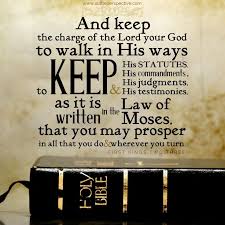
“I am about to go the way of all the earth,” he said. “So be strong, act like a man, and observe what the Lord your God requires: Walk in obedience to him, and keep his decrees and commands, his laws and regulations, as written in the Law of Moses. Do this so that you may prosper in all you do and wherever you go and that the Lord may keep his promise to me: ‘If your descendants watch how they live, and if they walk faithfully before me with all their heart and soul, you will never fail to have a successor on the throne of Israel.’

“Now you yourself know what Joab son of Zeruiah did to me—what he did to the two commanders of Israel’s armies, Abner son of Ner and Amasa son of Jether. He killed them, shedding their blood in peacetime as if in battle, and with that blood he stained the belt around his waist and the sandals on his feet. Deal with him according to your wisdom, but do not let his gray head go down to the grave in peace.

“But show kindness to the sons of Barzillai of Gilead and let them be among those who eat at your table. They stood by me when I fled from your brother Absalom.

“And remember, you have with you Shimei son of Gera, the Benjamite from Bahurim, who called down bitter curses on me the day I went to Mahanaim. When he came down to meet me at the Jordan, I swore to him by the Lord: ‘I will not put you to death by the sword.’ But now, do not consider him innocent. You are a man of wisdom; you will know what to do to him. Bring his gray head down to the grave in blood.”

10 Then David rested with his ancestors and was buried in the City of David. 11 He had reigned forty years over Israel—seven years in Hebron and thirty-three in Jerusalem. 12 So Solomon sat on the throne of his father David, and his rule was firmly established.

Solomon’s Throne Established
13 Now Adonijah, the son of Haggith, went to Bathsheba, Solomon’s mother. Bathsheba asked him, “Do you come peacefully?”

He answered, “Yes, peacefully.” 14 Then he added, “I have something to say to you.”

“You may say it,” she replied.

15 “As you know,” he said, “the kingdom was mine. All Israel looked to me as their king. But things changed, and the kingdom has gone to my brother; for it has come to him from the Lord. 16 Now I have one request to make of you. Do not refuse me.”

“You may make it,” she said.

17 So he continued, “Please ask King Solomon—he will not refuse you—to give me Abishag the Shunammite as my wife.”

18 “Very well,” Bathsheba replied, “I will speak to the king for you.”

19 When Bathsheba went to King Solomon to speak to him for Adonijah, the king stood up to meet her, bowed down to her and sat down on his throne. He had a throne brought for the king’s mother, and she sat down at his right hand.

20 “I have one small request to make of you,” she said. “Do not refuse me.”

The king replied, “Make it, my mother; I will not refuse you.”

21 So she said, “Let Abishag the Shunammite be given in marriage to your brother Adonijah.”
22 King Solomon answered his mother, “Why do you request Abishag the Shunammite for Adonijah? You might as well request the kingdom for him—after all, he is my older brother—yes, for him and for Abiathar the priest and Joab son of Zeruiah!”

23 Then King Solomon swore by the Lord: “May God deal with me, be it ever so severely, if Adonijah does not pay with his life for this request! 24 And now, as surely as the Lord lives—he who has established me securely on the throne of my father David and has founded a dynasty for me as he promised—Adonijah shall be put to death today!” 25 So King Solomon gave orders to Benaiah son of Jehoiada, and he struck down Adonijah and he died.

26 To Abiathar the priest the king said, “Go back to your fields in Anathoth. You deserve to die, but I will not put you to death now, because you carried the ark of the Sovereign Lord before my father David and shared all my father’s hardships.” 27 So Solomon removed Abiathar from the priesthood of the Lord, fulfilling the word the Lord had spoken at Shiloh about the house of Eli.

28 When the news reached Joab, who had conspired with Adonijah though not with Absalom, he fled to the tent of the Lord and took hold of the horns of the altar. 29 King Solomon was told that Joab had fled to the tent of the Lord and was beside the altar. Then Solomon ordered Benaiah son of Jehoiada, “Go, strike him down!”

30 So Benaiah entered the tent of the Lord and said to Joab, “The king says, ‘Come out!’”

But he answered, “No, I will die here.”

Benaiah reported to the king, “This is how Joab answered me.”

31 Then the king commanded Benaiah, “Do as he says. Strike him down and bury him, and so clear me and my whole family of the guilt of the innocent blood that Joab shed. 32 The Lord will repay him for the blood he shed, because without my father David knowing it he attacked two men and killed them with the sword. Both of them—Abner son of Ner, commander of Israel’s army, and Amasa son of Jether, commander of Judah’s army—were better men and more upright than he. 33 May the guilt of their blood rest on the head of Joab and his descendants forever. But on David and his descendants, his house and his throne, may there be the Lord’s peace forever.”

34 So Benaiah son of Jehoiada went up and struck down Joab and killed him, and he was buried at his home out in the country. 35 The king put Benaiah son of Jehoiada over the army in Joab’s position and replaced Abiathar with Zadok the priest.

36 Then the king sent for Shimei and said to him, “Build yourself a house in Jerusalem and live there, but do not go anywhere else. 37 The day you leave and cross the Kidron Valley, you can be sure you will die; your blood will be on your own head.”

38 Shimei answered the king, “What you say is good. Your servant will do as my lord the king has said.” And Shimei stayed in Jerusalem for a long time.

39 But three years later, two of Shimei’s slaves ran off to Achish son of Maakah, king of Gath, and Shimei was told, “Your slaves are in Gath.” 40 At this, he saddled his donkey and went to Achish at Gath in search of his slaves. So Shimei went away and brought the slaves back from Gath.
41 When Solomon was told that Shimei had gone from Jerusalem to Gath and had returned, 42 the king summoned Shimei and said to him, “Did I not make you swear by the Lord and warn you, ‘On the day you leave to go anywhere else, you can be sure you will die’? At that time you said to me, ‘What you say is good. I will obey.’ 43 Why then did you not keep your oath to the Lord and obey the command I gave you?”

44 The king also said to Shimei, “You know in your heart all the wrong you did to my father David. Now the Lord will repay you for your wrongdoing. 45 But King Solomon will be blessed, and David’s throne will remain secure before the Lord forever.”

46 Then the king gave the order to Benaiah son of Jehoiada, and he went out and struck Shimei down and he died.

The kingdom was now established in Solomon’s hands.

WHAT DO WE LEARN—HOW DO WE RESPOND?

Blessed is the person whose heart is right with God, whose conscience is clear and who can look back and say with our Lord, “I have glorified You on the earth. I have finished the work which You have given Me to do” (John 17:4). This is what David desired most for his son, Soloman.
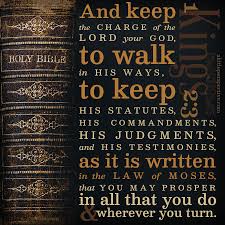
David’s words parallel those of Moses when he commissioned Joshua. First, Moses passionately told Joshua to “be a man” and face his responsibilities with courage and faith (Deuteronomy 31:1–8); then Moses gave the law to the priests and cautioned the people (including Joshua) to know it and obey it. The king was expected to be familiar with the Law and the covenant (Deuteronomy 17:14–20), for in obeying God’s Word he would find His wisdom, strength, and blessing.  This is the goal of anyone called of God as His leader and follower in His Kingdom work!

David reminded Solomon of the promise of God.  David told his son of the special covenant the Lord had made concerning the Davidic dynasty (see 2 Samuel 7:1–17). David warned Solomon that disobeying God’s law would bring chastening and sorrow to himself and the land, (which David knew first hand); but if he obeyed God’s commandments, God would bless him and the people. More importantly, God would see to it that there was always a descendant of David sitting on the throne.
David mentors young Solomon.  David not only remembered dangerous men like Joab and Shimei, but he also remembered helpful men like Barzillai, who had provided him and his people with what they needed when they fled from Absalom (2 Samuel 17:27–29). Remembering those who have served well, honoring them, and holding them in high esteem is appropriate. But we should also be watchful of deceivers and learn from our past mistakes or missteps. Soloman heard David and took his words to heart. When Solomon had Joab killed, he wasn’t simply acting in revenge in the place of his father David. Solomon explained that the death of Joab took away the stain of the innocent blood that Joab, a rogue warrior, had shed when he had killed Abner and Amasa—two loyal leaders. 
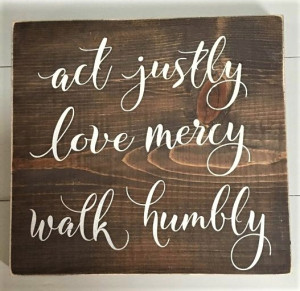
In the best of situations, when the former leader blesses and mentors the next leader, the transition can still be tedious and challenging.  But, as we all learn, the leader who seeks God’s wisdom (being) and does what God requires of us (doing) God will lead the leader to shepherd God’s people well.  This is called success in God’s Kingdom.  And what does God require of all of us? “To act justly and to love mercy and to walk humbly with your God” Micah 6:8. Love God. Love each other as I have commanded you. –Jesus

Lord,

Thank you for helping us find ourselves in your stories of love, mercy, and grace.  Some seek you are blessed; those who do not will not succeed in the end. We need your wisdom.
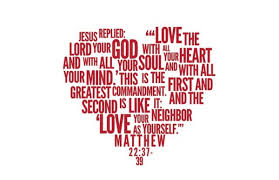
Thank you for telling the messes made by your people make along with your mercy given. “All have sinned and fall short of your glorious living” and I am one of them. Thank you for showing me your mercy in my messes that served later to declare your goodness, love, mercy, and grace by your forgiveness. What a mighty and glorious God we love and serve!  There is truly no one like you!  Lead me. Guide my walk with you again today.

In Jesus Name, Amen

Posted in Uncategorized | Tagged , , , , | Leave a comment

NEW KING—NEW KINGDOM

Remember the games we used to play as kids in our neighborhood? I’m speaking of a time before tech.  I remember the kids as well as our game playing vividly.  No matter what we did, there was always a leader who told us the rules of the game before beginning play.  If that leader was called home by a parent, no worries, a new leader would emerge immediately.  However, sometimes a twist on the game would be invented by the new leader with new rules created on the fly. Wanting to play no matter what, we carried on without thinking.  We chose up sides and went along with the new rules until we were losing; then we interjected a protest with a new rule when things weren’t going our way.

By observing children at play, whether it be in the neighborhood or on a school playground; we learn much about natural human behaviors.  We discover, some children are trained to be very principled in game playing. Some children want all things to be fair and will fight for equality. Some don’t care about any rules, and selfishly just want to win at all costs.  And then there are some who demand to be the leader when a leader is already present.  They also demand that everyone must follow what he/she says or they will take all their toys and go home.  The latter are usually the spoiled ones whose parents have lost control in disciplining them.  “I’m king of the world,” they shout for all to hear and obey.

When David’s life and reign drew to a close, his sons competed for his throne. David appointed Solomon as his heir over all the other sons.  As we study David’s life, we observe that David served well as a king, he often failed as a parent…and husband. We can be successful in our public life and a failure in private. We learn that God is first, and next to God is our spouse, then our children.  Our families should be our first ministry priority.  In David’s house, not so much.  From our study of 1 Samuel and 2 Samuel we learn that within David’s house there is incest, deceit, and one daughter raped, which resulted in another son murdered by his half-brother. The palace from within was in turmoil.  As David life comes to an end, due to old age; it was time for David to step up.  And he does, led by God.  David was not perfect; but still sought the heart of God.

1 Kings 1

Adonijah Sets Himself Up as King

When King David was very old, he could not keep warm even when they put covers over him. So his attendants said to him, “Let us look for a young virgin to serve the king and take care of him. She can lie beside him so that our lord the king may keep warm.”

Then they searched throughout Israel for a beautiful young woman and found Abishag, a Shunammite, and brought her to the king. The woman was very beautiful; she took care of the king and waited on him, but the king had no sexual relations with her.

Now Adonijah, whose mother was Haggith, put himself forward and said, “I will be king.” So he got chariots and horses ready, with fifty men to run ahead of him. (His father had never rebuked him by asking, “Why do you behave as you do?” He was also very handsome and was born next after Absalom.)

Adonijah conferred with Joab son of Zeruiah and with Abiathar the priest, and they gave him their support. But Zadok the priest, Benaiah son of Jehoiada, Nathan the prophet, Shimei and Rei and David’s special guard did not join Adonijah.

Adonijah then sacrificed sheep, cattle and fattened calves at the Stone of Zoheleth near En Rogel. He invited all his brothers, the king’s sons, and all the royal officials of Judah, 1but he did not invite Nathan the prophet or Benaiah or the special guard or his brother Solomon.

11 Then Nathan asked Bathsheba, Solomon’s mother, “Have you not heard that Adonijah, the son of Haggith, has become king, and our lord David knows nothing about it? 12 Now then, let me advise you how you can save your own life and the life of your son Solomon. 13 Go in to King David and say to him, ‘My lord the king, did you not swear to me your servant: “Surely Solomon your son shall be king after me, and he will sit on my throne”? Why then has Adonijah become king?’ 14 While you are still there talking to the king, I will come in and add my word to what you have said.”

15 So Bathsheba went to see the aged king in his room, where Abishag the Shunammite was attending him. 16 Bathsheba bowed down, prostrating herself before the king.

“What is it you want?” the king asked.

17 She said to him, “My lord, you yourself swore to me your servant by the Lord your God: ‘Solomon your son shall be king after me, and he will sit on my throne.’ 18 But now Adonijah has become king, and you, my lord the king, do not know about it. 19 He has sacrificed great numbers of cattle, fattened calves, and sheep, and has invited all the king’s sons, Abiathar the priest and Joab the commander of the army, but he has not invited Solomon your servant. 20 My lord the king, the eyes of all Israel are on you, to learn from you who will sit on the throne of my lord the king after him. 21 Otherwise, as soon as my lord the king is laid to rest with his ancestors, I and my son Solomon will be treated as criminals.”

22 While she was still speaking with the king, Nathan the prophet arrived23 And the king was told, “Nathan the prophet is here.” So he went before the king and bowed with his face to the ground.

24 Nathan said, “Have you, my lord the king, declared that Adonijah shall be king after you, and that he will sit on your throne? 25 Today he has gone down and sacrificed great numbers of cattle, fattened calves, and sheep. He has invited all the king’s sons, the commanders of the army and Abiathar the priest. Right now they are eating and drinking with him and saying, ‘Long live King Adonijah!’ 26 But me your servant, and Zadok the priest, and Benaiah son of Jehoiada, and your servant Solomon he did not invite. 27 Is this something my lord the king has done without letting his servants know who should sit on the throne of my lord the king after him?”

David Makes Solomon King

28 Then King David said, “Call in Bathsheba.” So she came into the king’s presence and stood before him.

29 The king then took an oath: “As surely as the Lord lives, who has delivered me out of every trouble, 30 I will surely carry out this very day what I swore to you by the Lord, the God of Israel: Solomon your son shall be king after me, and he will sit on my throne in my place.”

31 Then Bathsheba bowed down with her face to the ground, prostrating herself before the king, and said, “May my lord King David live forever!”

32 King David said, “Call in Zadok the priest, Nathan the prophet and Benaiah son of Jehoiada.” When they came before the king, 33 he said to them: “Take your lord’s servants with you and have Solomon my son mount my own mule and take him down to Gihon. 34 There have Zadok the priest and Nathan the prophet anoint him king over Israel. Blow the trumpet and shout, ‘Long live King Solomon!’ 35 Then you are to go up with him, and he is to come and sit on my throne and reign in my place. I have appointed him ruler over Israel and Judah.”

36 Benaiah son of Jehoiada answered the king, “Amen! May the Lord, the God of my lord the king, so declare it. 37 As the Lord was with my lord the king, so may he be with Solomon to make his throne even greater than the throne of my lord King David!”

38 So Zadok the priest, Nathan the prophet, Benaiah son of Jehoiada, the Kerethites and the Pelethites went down and had Solomon mount King David’s mule, and they escorted him to Gihon. 39 Zadok the priest took the horn of oil from the sacred tent and anointed Solomon. Then they sounded the trumpet and all the people shouted, “Long live King Solomon!” 40 And all the people went up after him, playing pipes and rejoicing greatly, so that the ground shook with the sound.

41 Adonijah and all the guests who were with him heard it as they were finishing their feast. On hearing the sound of the trumpet, Joab asked, “What’s the meaning of all the noise in the city?”

42 Even as he was speaking, Jonathan son of Abiathar the priest arrived. Adonijah said, “Come in. A worthy man like you must be bringing good news.”

43 “Not at all!” Jonathan answered. “Our lord King David has made Solomon king. 44 The king has sent with him Zadok the priest, Nathan the prophet, Benaiah son of Jehoiada, the Kerethites and the Pelethites, and they have put him on the king’s mule, 45 and Zadok the priest and Nathan the prophet have anointed him king at Gihon. From there they have gone up cheering, and the city resounds with it. That’s the noise you hear. 46 Moreover, Solomon has taken his seat on the royal throne47 Also, the royal officials have come to congratulate our lord King David, saying, ‘May your God make Solomon’s name more famous than yours and his throne greater than yours!’ And the king bowed in worship on his bed 48 and said, ‘Praise be to the Lord, the God of Israel, who has allowed my eyes to see a successor on my throne today.’”

49 At this, all Adonijah’s guests rose in alarm and dispersed. 50 But Adonijah, in fear of Solomon, went and took hold of the horns of the altar. 51 Then Solomon was told, “Adonijah is afraid of King Solomon and is clinging to the horns of the altar. He says, ‘Let King Solomon swear to me today that he will not put his servant to death with the sword.’”

52 Solomon replied, “If he shows himself to be worthy, not a hair of his head will fall to the ground; but if evil is found in him, he will die.” 53 Then King Solomon sent men, and they brought him down from the altar. And Adonijah came and bowed down to King Solomon, and Solomon said, “Go to your home.”

WHAT DO WE LEARN—HOW DO WE RESPOND?

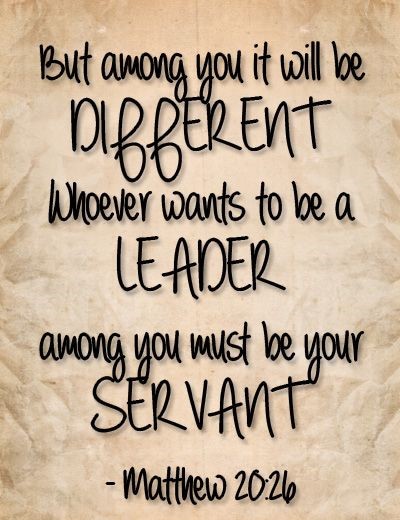
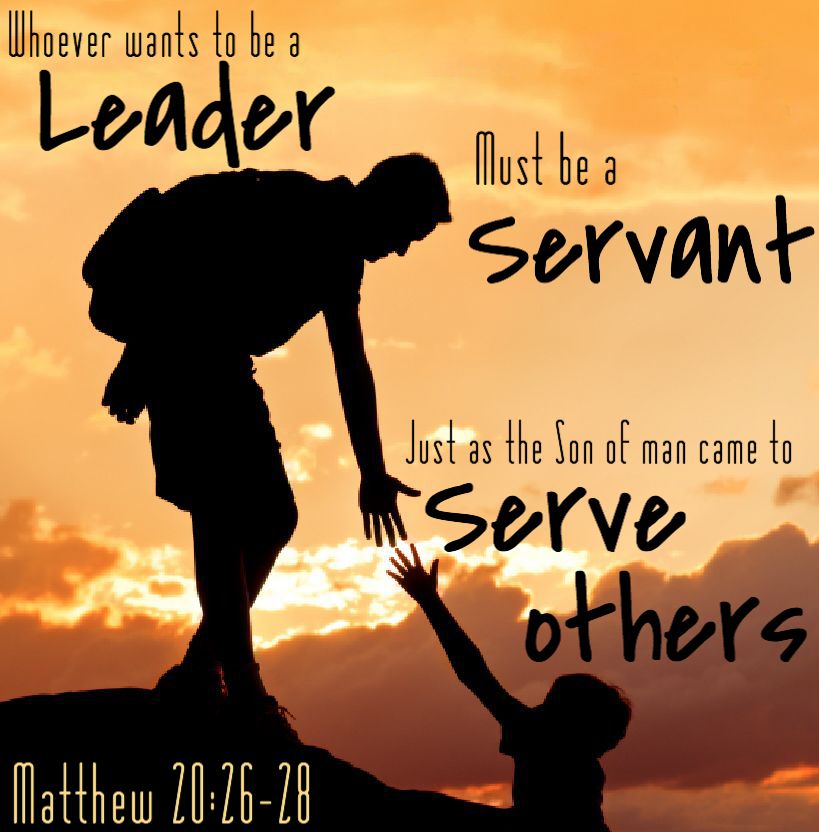
Jesus taught and demonstrated that to become a leader we must first become a servant.  We don’t serve hoping for a higher position of leadership; we serve because it is in our hearts to help others for no reason at all, expecting nothing in return.  Jesus frequently highlighted that true greatness lies in serving others, not being served, and demonstrated this through his actions, like washing his disciples’ feet. (John 13) He taught that loving others, even enemies, and showing compassion, especially to the vulnerable, is a reflection of God’s love within us.  Service follows love.

Without God’s love—we are merely making a lot of noise in our lives without accomplishing anything of significance that truly helps others.  “We are all show; but no go,” in other words.  The Apostle Paul, to the church, teaches us, “If I speak in the tongues of men or of angels, but do not have love, I am only a resounding gong or a clanging cymbal. If I have the gift of prophecy and can fathom all mysteries and all knowledge, and if I have a faith that can move mountains, but do not have love, I am nothing. If I give all I possess to the poor and give over my body to hardship that I may boast, but do not have love, I gain nothing. 1 Corinthians 13:1-3 

God sees inside our hearts and knows all the thoughts in our minds. God created us!  So, it is important to evaluate our inner motivations often.  We need help and God provides His help. Ask the Holy Spirit, our God-given Counselor, to do a heart check daily!  What is the motivation of our hearts as we serve others?  Are we more concerned with performance that please others rather than God?  Is position more important than serving?  Do we bully people with guilt or demands so they will follow us; or do we wait upon the Lord?  Jesus has an answer to this dilemma of thinking.  Two of beloved disciples were fighting over who would sit with Jesus in eternity.  They fought over who would be the greatest among the other disciples.  Yikes.  But we all do it from time to time until we are reminded that seeking position does not get us closer to Jesus.  Quite the opposite.  Here’s the story of James and John:

“Then James and John, the sons of Zebedee, came over and spoke to him. “Teacher,” they said, “we want you to do us a favor.”

36 What is your request?” he asked.

37 They replied, “When you sit on your glorious throne, we want to sit in places of honor next to you, one on your right and the other on your left.”

38 But Jesus said to them, “You don’t know what you are asking! Are you able to drink from the bitter cup of suffering I am about to drink? Are you able to be baptized with the baptism of suffering I must be baptized with?”

39 “Oh yes,” they replied, “we are able!”

Then Jesus told them, “You will indeed drink from my bitter cup and be baptized with my baptism of suffering. 40 But I have no right to say who will sit on my right or my left. God has prepared those places for the ones he has chosen.”

41 When the ten other disciples heard what James and John had asked, they were indignant. 42 So Jesus called them together and said, “You know that the rulers in this world lord it over their people, and officials flaunt their authority over those under them. 43 But among you it will be different. Whoever wants to be a leader among you must be your servant, 44 and whoever wants to be first among you must be the slave of everyone else. 45 For even the Son of Man came not to be served but to serve others and to give his life as a ransom for many.” Mark 10:35-45, NLT

Is our life’s pursuit to know Jesus, to more like Him in every way, AND to share in His sufferings? (See Philippians 2 and 3) Or is our goal to fulfill our selfish need to be lauded as the best leader in the land of our existence which is so fleeting in our fickle world? It’s our choice. We must choose wisely.  An old hymn of my youth is a good reminder of our walk with God, our top priority of life; “Stepping in the Light”

Trying to walk in the steps of the Savior,
Trying to follow our Savior and King,
Shaping our lives by His blessed example,
Happy, how happy, the songs that we bring.

How beautiful to walk in the steps of the Savior,
Stepping in the light,
Stepping in the light;
How beautiful to walk in the steps of the Savior,
Led in paths of light.

Pressing more closely to Him who is leading
When we are tempted to turn from the way,
Trusting the arm that is strong to defend us,
Happy, how happy, our praises each day. 

Solomon, known above all for his Godly wisdom, showed mercy to his brother and allowed him to return to his home in Jerusalem but with constant surveillance.  There is much more to learn in our study of the human Kings! 

Today and always; remember we serve THE KING of kings and LORD of lords—King Jesus. 

Lord,

Thank you for convicting us of motivations that lead nowhere we want to be.  Lead us not into temptations; but deliver us from evil and evil’s schemes to distract our walk from light to dark.  Light our path and we will follow your lead.

In Jesus Name, Amen
Posted in Uncategorized | Tagged , , , , | Leave a comment

DO WHAT GOD SAYS WITHOUT WHY

There are times in every believer’s life that God will lead us to say or do something that doesn’t make sense to us at the time.  We might follow His lead but put our own twist on the command of God.  God’s Holy Spirit might prompt us to go see a certain person at a specific time, but we procrastinate and end up just texting them later with polite, generic words.  God might lead us to do a work that is not what we think is in our “wheelhouse” of ability or responsibility.  So, we might tell someone else of the need who is better fitted, we think, for the task.  Or God may prompt us to reach out to a person who is not like  us and invite them to our home for a meal.  But we decide instead to send them a note of encouragement.

Sometimes God says clearly what to do and when to do it; but our first response, with a little whine, is “why, Lord?” “Why me?” “Why do we need to do this?” “What’s the point?”  As parents, who are “training up a child in the way he/she should go;” we hear this often!  God knows and hears our whine, too!

As children of God, we say we want to be good and do good in this world but we give back less than our best at times. God, who is Good, the only One who is Good, invites us to join Him in His great work but our reply is less than good.  We look at His invitation as a burden instead of a holy privilege! Then, we give him our least effort resulting in merely a sprinkle of good that should have been God’s best work in and through us.  God is training us to more like Him in every way.  But our whining with wanting to know why with every word God speaks frustrates God’s molding and shaping of us.  I’m guilty.  How about you?

2 Samuel 24

David Enrolls the Fighting Men

24 Again the anger of the Lord burned against Israel, and he incited David against them, saying, “Go and take a census of Israel and Judah.”

So the king said to Joab and the army commanders with him, “Go throughout the tribes of Israel from Dan to Beersheba and enroll the fighting men, so that I may know how many there are.”

But Joab replied to the king, “May the Lord your God multiply the troops a hundred times over, and may the eyes of my lord the king see it. But why does my lord the king want to do such a thing?”

The king’s word, however, overruled Joab and the army commanders; so they left the presence of the king to enroll the fighting men of Israel.

After crossing the Jordan, they camped near Aroer, south of the town in the gorge, and then went through Gad and on to Jazer. They went to Gilead and the region of Tahtim Hodshi, and on to Dan Jaan and around toward Sidon. Then they went toward the fortress of Tyre and all the towns of the Hivites and Canaanites. Finally, they went on to Beersheba in the Negev of Judah.

After they had gone through the entire land, they came back to Jerusalem at the end of nine months and twenty days.

Joab reported the number of the fighting men to the king: In Israel there were eight hundred thousand able-bodied men who could handle a sword, and in Judah five hundred thousand.

10 David was conscience-stricken after he had counted the fighting men, and he said to the Lord, “I have sinned greatly in what I have done. Now, Lord, I beg you, take away the guilt of your servant. I have done a very foolish thing.”

11 Before David got up the next morning, the word of the Lord had come to Gad the prophet, David’s seer: 12 “Go and tell David, ‘This is what the Lord says: I am giving you three options. Choose one of them for me to carry out against you.’”

13 So Gad went to David and said to him, “Shall there come on you three years of famine in your land? Or three months of fleeing from your enemies while they pursue you? Or three days of plague in your land? Now then, think it over and decide how I should answer the one who sent me.”

14 David said to Gad, “I am in deep distress. Let us fall into the hands of the Lord, for his mercy is great; but do not let me fall into human hands.”

15 So the Lord sent a plague on Israel from that morning until the end of the time designated, and seventy thousand of the people from Dan to Beersheba died. 16 When the angel stretched out his hand to destroy Jerusalem, the Lord relented concerning the disaster and said to the angel who was afflicting the people, “Enough! Withdraw your hand.” The angel of the Lord was then at the threshing floor of Araunah the Jebusite.

17 When David saw the angel who was striking down the people, he said to the Lord, “I have sinned; I, the shepherd, have done wrong. These are but sheep. What have they done? Let your hand fall on me and my family.”

David Builds an Altar

18 On that day Gad went to David and said to him, “Go up and build an altar to the Lord on the threshing floor of Araunah the Jebusite.” 19 So David went up, as the Lord had commanded through Gad. 20 When Araunah looked and saw the king and his officials coming toward him, he went out and bowed down before the king with his face to the ground.

21 Araunah said, “Why has my lord the king come to his servant?”

“To buy your threshing floor,” David answered, “so I can build an altar to the Lord, that the plague on the people may be stopped.”

22 Araunah said to David, “Let my lord the king take whatever he wishes and offer it up. Here are oxen for the burnt offering, and here are threshing sledges and ox yokes for the wood. 23 Your Majesty, Araunah gives all this to the king.” Araunah also said to him, “May the Lord your God accept you.”

24 But the king replied to Araunah, “No, I insist on paying you for it. I will not sacrifice to the Lord my God burnt offerings that cost me nothing.”

So David bought the threshing floor and the oxen and paid fifty shekels of silver for them. 25 David built an altar to the Lord there and sacrificed burnt offerings and fellowship offerings. Then the Lord answered his prayer in behalf of the land, and the plague on Israel was stopped.

WHAT DO WE LEARN—HOW DO WE RESPOND?

God told David to take a census. But David instead told his commanders to draft an army of fighting men across the land of Israel and Judah.  David’s commander, Joab asked “why” as he saw no point in doing that tedious, long work.  David’s disobedience caused God’s people pain and suffering.  Our sin affects all those around us.

God is the great Giver. God is the great Provider, Healer, and Protector. He is the Fount of every blessing. God is absolutely generous and utterly dependable. God is always with us and guides us while providing for us to accomplish His will in and through us.  The resounding and recurring message of Scripture from God is clear: God owns it all. God created all. God shares it all. Trust him, not stuff! So, when God who knows all because He created all tells us to say something or prompts us by His Holy Spirit to do something— “Just do it or say it.”  God always has a purpose and plan!

We wrap up both books of Samuel with this last piece of God’s wisdom from Samuel to Saul when he disobeyed God’s direct command;

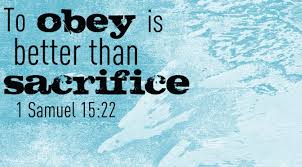
“Does the Lord delight in burnt offerings and sacrifices as much as in obeying the Lord? To obey is better than sacrifice, and to heed is better than the fat of rams.” 1 Samuel 15:22

Saul thought that his disobedience was that great of a sin and  could always be erased with another religious offering…offerings that didn’t cost much to him. 

David knew immediately his sin of disobedience, “I have sinned against the Lord.” David then purchased a place to render a holy sacrifice to the Lord. “I will not sacrifice to the Lord my God burnt offerings that cost me nothing.”

Ponder the differences between the heart of Saul and the heart of David. God sees and knows our hearts, sometimes better than we know ourselves.  Ask for the heart of Jesus daily as we walk humbly with God in all we think, say, and do.

When God invites or commands; do exactly what He says from a heart, mind, and soul committed to Him who loved us first.  What an honor and privilege to loving serve our King of kings and Lord of lords!  Real servants of the Most High do not ask why! 

Lord,

Forgive us our sins of laziness, doing less that what you tell us to be and do. Lead us to higher ground thinking as we expectantly wait on your Word of direction.  Thank you for inviting us to your work for it is indeed a holy privilege to serve you with your love in our hearts.  I no longer need to know why as I trust and obey you with my life for you are Life to me.

In Jesus Name, Amen

Posted in Uncategorized | Tagged , , , , | Leave a comment

ONE LAST PSALM

When godly men and women begin the journey from earth to heaven, family and friends who know them well pick up on the wisdom of their “last words.” They may not realize it at the time the words are said but they will remember later, when they are gone from this life.  I still cling to the legacy of words said by my grandparents and parents as “last words of wisdom.”  The thoughts, words, and actions in the final days carry meaning and significance for those also waiting with expectant hope for life eternal with God who sent His Son to save us and clear the path to God.  What will be our final words, have we ever thought about it?  Do our lives reflect the glory of God in us?  Are our words of praise and thanks to God for all he has done in and through us in all circumstances? What if we are taken from earth to heaven suddenly, was our faith obvious by our testimony and behavior?  Do our loved ones know with whom we stand firm in faith?  Will they know who God is by what we say and how we love?  Pondering.

Our last words might be said today or tomorrow, or next week; we do not know the time and place.  What we do know is what we think, say, and do will be remembered by those left behind to carry on in their journeys of faith.  Will our words be about the division of our stuff or will our utterances be to declare the glory and majesty of the God who owns it all, is in all, because He created all—and He loves all. He helps all who love Him back decidedly and committedly. Will our last words tell our loved ones to seek a relationship with God because of all the relationships we will have on earth, an intimate, loving relationship with God is the most important one of all?!  God’s Son, Jesus, provided this relationship through sacrifice because of God’s love for us.  To God be the glory, honor, and praise forever and ever, Amen!  Thank you, Father, thank you Jesus, and thank you Holy Spirit!  Go tell it on the mountain, in the valley, at the workplace, in your church, among friends but most of all, tell your family.

At least seventy-three of the psalms in the book of Psalms are assigned to David, but his last one is found only here in 2 Samuel 23. The phrase “the last words of David” means “his last inspired written words from the Lord.” The psalm may have been written during the closing days of David’s life. Since the theme of the psalm is godly leadership, he may have written it especially for Solomon, but it has much to say to all of God’s people today. One who knows the Lord well, speaks His words.  It is well with David’s soul.  Is it well with our souls today?

2 Samuel 23

David’s Last Words

These are the last words of David:

“The inspired utterance of David son of Jesse,
    the utterance of the man exalted by the Most High,
the man anointed by the God of Jacob,
    the hero of Israel’s songs:

The Spirit of the Lord spoke through me;
    his word was on my tongue.
The God of Israel spoke,
    the Rock of Israel said to me:
When one rules over people in righteousness,
    when he rules in the fear of God,
he is like the light of morning at sunrise
    on a cloudless morning,
like the brightness after rain
    that brings grass from the earth.’

If my house were not right with God,
    surely he would not have made with me an everlasting covenant,
    
arranged and secured in every part;
surely he would not bring to fruition my salvation
    and grant me my every desire.
But evil men are all to be cast aside like thorns,
    which are not gathered with the hand.
Whoever touches thorns
    uses a tool of iron or the shaft of a spear;
    they are burned up where they lie.”

David’s Mighty Warriors

These are the names of David’s mighty warriors:

Josheb-Basshebeth, a Tahkemonite, was chief of the Three; he raised his spear against eight hundred men, whom he killed in one encounter.

Next to him was Eleazar son of Dodai the Ahohite. As one of the three mighty warriors, he was with David when they taunted the Philistines gathered at Pas Dammim for battle. Then the Israelites retreated, 10 but Eleazar stood his ground and struck down the Philistines till his hand grew tired and froze to the sword. The Lord brought about a great victory that day. The troops returned to Eleazar, but only to strip the dead.

11 Next to him was Shammah son of Agee the Hararite. When the Philistines banded together at a place where there was a field full of lentils, Israel’s troops fled from them. 12 But Shammah took his stand in the middle of the field. He defended it and struck the Philistines down, and the Lord brought about a great victory.

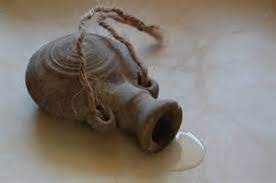
13 During harvest time, three of the thirty chief warriors came down to David at the cave of Adullam, while a band of Philistines was encamped in the Valley of Rephaim. 14 At that time David was in the stronghold, and the Philistine garrison was at Bethlehem. 15 David longed for water and said, “Oh, that someone would get me a drink of water from the well near the gate of Bethlehem!” 16 So the three mighty warriors broke through the Philistine lines, drew water from the well near the gate of Bethlehem and carried it back to David. But he refused to drink it; instead, he poured it out before the Lord. 17 “Far be it from me, Lord, to do this!” he said. “Is it not the blood of men who went at the risk of their lives?” And David would not drink it.

Such were the exploits of the three mighty warriors.

18 Abishai the brother of Joab son of Zeruiah was chief of the Three. He raised his spear against three hundred men, whom he killed, and so he became as famous as the Three. 19 Was he not held in greater honor than the Three? He became their commander, even though he was not included among them.

20 Benaiah son of Jehoiada, a valiant fighter from Kabzeel, performed great exploits. He struck down Moab’s two mightiest warriors. He also went down into a pit on a snowy day and killed a lion. 21 And he struck down a huge Egyptian. Although the Egyptian had a spear in his hand, Benaiah went against him with a club. He snatched the spear from the Egyptian’s hand and killed him with his own spear. 22 Such were the exploits of Benaiah son of Jehoiada; he too was as famous as the three mighty warriors23 He was held in greater honor than any of the Thirty, but he was not included among the Three. And David put him in charge of his bodyguard.

24 Among the Thirty were:

Asahel the brother of Joab, Elhanan son of Dodo from Bethlehem, 25 Shammah the Harodite, Elika the Harodite, 26 Helez the Paltite,Ira son of Ikkesh from Tekoa, 27 Abiezer from Anathoth,Sibbekai[f] the Hushathite, 28 Zalmon the Ahohite,Maharai the Netophathite, 29 Heledson of Baanah the Netophathite,Ithai son of Ribai from Gibeah in Benjamin, 30 Benaiah the Pirathonite,Hiddaifrom the ravines of Gaash, 31 Abi-Albon the Arbathite,Azmaveth the Barhumite, 32 Eliahba the Shaalbonite, the sons of Jashen,Jonathan 33 son of Shammah the Hararite,Ahiam son of Sharar the Hararite, 34 Eliphelet son of Ahasbai the Maakathite,Eliam son of Ahithophel the Gilonite, 35 Hezro the Carmelite,Paarai the Arbite, 36 Igal son of Nathan from Zobah,the son of Hagri, 37 Zelek the Ammonite,Naharai the Beerothite, the armor-bearer of Joab son of Zeruiah, 38 Ira the Ithrite,Gareb the Ithrite 39 and Uriah the Hittite.There were thirty-seven in all.

WHAT DO WE LEARN—HOW DO WE RESPOND?

Here’s a thought; what would be our last psalm/song to God as a witness of Him to others that would form our legacy of faith?  I’m going to work on that as I meditate on David’s last words.  I challenge you, dear friends, to do the same!  May God’s words from within us.

For words to flow freely; we learn from David that we must first seek God with a desire to know Him, run after God with desire to be near Him and be still before God to inquire of Him before doing anything of significance for Him.  This pursuit, longing, and love of God is what it takes to have the heart of God growing within us. Only then will His Song penetrate our hearts and become a part of us.

David’s life is bonus lesson for leaders:

“God empowers those whom He calls, and He anointed David with His Spirit (1 Samuel 16:12, 13). That’s why so many gifted men came to David and joined his band when he was in the wilderness. To be an effective leader and to be able to recruit and train other leaders takes more than talent and training. Jesus reminded His disciples, “without Me you can do nothing” (John 15:5). Religious leaders who follow the principles of what the world calls “success” rarely accomplish anything permanent that glorifies God. “But he who does the will of God abides forever” (1 John 2:17). To be educated by human beings is good, but to be called, trained, and raised up by the Lord is so much more important.” –Warren Wiersbe, Wiersbe Study Bible Commentary

Without righteousness and the fear and awe of God, a leader becomes a dictator and abuses God’s people, driving them like cattle instead of leading them like sheep. David was a shepherd first and became a ruler who served and a servant who ruled, and he had the welfare of his people on his heart. What a delight it is to follow a spiritual leader who brings out the best in us and helps us produce fruit for the glory of God!

Awe of God was a constant for David—

Whatever God put in David’s hands He used to honor God and help God’s people—sling, sword, harp, scepter, and even a cup of water. When David looked into the cup, he didn’t see water; he saw the blood of the three men who had risked their lives for him. (Verses 15-17) David turned the cave into a Temple of worship to God as he gave honor to his men.  All leaders need to follow David’s example and let their followers know how much they appreciate them and the sacrifices they make.

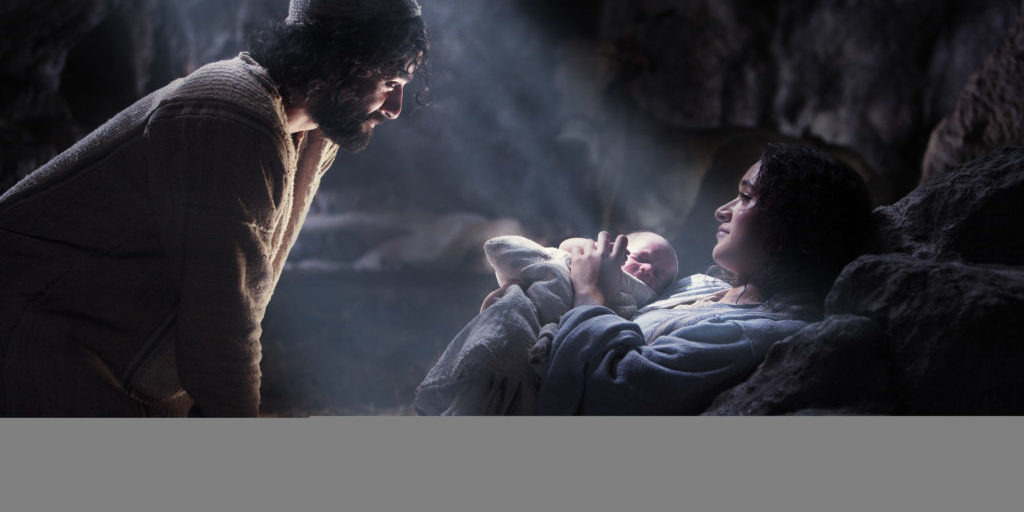
Beyond David’s legacy of faith, God will choose two of David’s descendants who were also devoted to God. The virgin Mary espoused to Joseph, both from the line of David were chosen to carry the embryo the Son of God within her and then with the help of Joseph, deliver Him as the Son of Man.  This took place in another cave in Bethlehem centuries later.  Jesus, the One promised by God through His prophets truly came as God in the flesh to seek and to save the lost, “setting the captives to sin free.” Jesus told of the establishment of the new Kingdom of God that would reverse and revolutionize the thinking of mankind forever!  But it took sacrifice on His part to do this.

Jesus gave himself as a sacrifice for us. He was the drink offering poured out for us! (See Psalm 22:14; Isaah 53:12). Paul used the image of the drink offering to describe his own dedication to the Lord (Philippians 2:17; 2 Timothy 4:6). Pouring out a drink offering or giving help to others may seem like small gestures at first; but doing small things because we love Christ turns them into great things. According to Jesus, whenever we show love and kindness to others and seek to meet their needs, we give Him a cup of cold water (Matthew 25:34–40). 

Are we willing to be poured out for others?  Pause to pray.

Lord,

Thank you for the lessons from the life of David that bring us to our knees in awe of you. Cleanse our hearts, renew our minds, refresh our souls with your tender mercies fresh each morning. Restore the joy of your salvation consistently at work within us to make us more like you and less like the world. “Let the morning bring word of your unfailing love for I put all my trust in you.”  May what I pour out today be pleasing to you and helpful to others.

In Jesus Name, Amen
Posted in Uncategorized | Tagged , , , , | Leave a comment

PAUSING TO PRAISE GOD!

Before reading 2 Samuel 22, the next chapter in our reading and study of 2 Samuel, I spend time alone with God in the quiet of the first hour of the day.  This is a daily, much needed discipline that keeps my thinking on “higher ground.”  I journal my talk with God as I am easily distracted by my scattered thoughts.  Today, as I often do, I woke with a song on my heart from God. These songs come from a heart who seeks God.

Because I grew up in a very musical family, always involved in leading worship, from childhood through adulthood, God uses songs to get my attention. From my past childhood through adulthood, God uses songs of worship to encourage and comfort me for each new day as I praise Him! These songs give me the words to say to the One I have given my life to, songs that truly give glory and praise to God.  I love how God works in me like that! I love His gift of music with beautiful harmonies that pour out rich meaning for us while giving us words to worship and adore Him.  We were created to worship God! No doubt!

God gives men and women the words that declare His glory! “Wonderful Words of Life,” was the song I woke to this morning. The harmonies of this song were playing in the background as I prayed today, a hymn of my youth. I can still hear my Grandpa Lacquement leading the congregation in my mind!  I hear the tenor and bass from my dad and uncle. I hear the strong alto voice of my mom while my aunt carried the melody. Both were piano players.  I hear the rest of the congregation lift their voices in praise to our King of kings and Lord of lords!  Yes, these are wonderful words indeed on repeat in my mind!

Sing them over again to me
Wonderful words of life
Let me more of their beauty see
Wonderful words of life
Words of life and beauty
Teach me faith and duty

Beautiful words, wonderful words
Wonderful words of life
Beautiful words, wonderful words
Wonderful words of life

Christ, the blessed One, gives to all
Wonderful words of life
Sinner, list to the loving call
Wonderful words of life
All so freely given
Wooing us to heaven

Beautiful words, wonderful words
Wonderful words of life
Beautiful words, wonderful words
Wonderful words of life

Words of life and beauty
Teach me faith and duty

Beautiful words, wonderful words
Wonderful words of life
Beautiful words, wonderful words
Wonderful words of life

David was a great king, chosen by God because David was first a man “after the heart of God” as a lowly shepherd boy.  But David was not always a perfect man. David knew when he had grieved God with his sins and would repent. But there was a time when God used Nathan to admonish proud, arrogant David of his sin with Bathsheba and of her husband Uriah—first adultery followed by murder.  David was repentant to God first, “I have sinned against God” and knew consequences would follow.  David strayed but knew to come back to God, repent of his sins, and “inquire of God” once more before doing anything of significance for God and the people he led.  

We love David because he was gifted as a musician who wrote many songs of repentance, praise, holiness, the goodness of God, and many other wonderful, honest words of a life lived for and with God!  Here is one of David’s best; tucked into 2 Samuel for all to “sing” as we pause to just praise God!

2 Samuel 22

David’s Song of Praise

David sang to the Lord the words of this song when the Lord delivered him from the hand of all his enemies and from the hand of Saul. He said:

“The Lord is my rock, my fortress and my deliverer;
    my God is my rock, in whom I take refuge,
    my shield and the horn of my salvation.
He is my stronghold, my refuge and my savior—
    from violent people you save me.

“I called to the Lord, who is worthy of praise,
    and have been saved from my enemies.
The waves of death swirled about me;
    the torrents of destruction overwhelmed me.
The cords of the grave coiled around me;
    the snares of death confronted me.

“In my distress I called to the Lord;
    I called out to my God.
From his temple he heard my voice;
    my cry came to his ears.
The earth trembled and quaked,
    the foundations of the heavens shook;
    they trembled because he was angry.
Smoke rose from his nostrils;
    consuming fire came from his mouth,
    burning coals blazed out of it.
10 He parted the heavens and came down;
    dark clouds were under his feet.
11 He mounted the cherubim and flew;
    he soared on the wings of the wind.
12 He made darkness his canopy around him—
    the dark rain clouds of the sky.
13 Out of the brightness of his presence
    bolts of lightning blazed forth.
14 The Lord thundered from heaven;
    the voice of the Most High resounded.
15 He shot his arrows and scattered the enemy,
    with great bolts of lightning he routed them.
16 The valleys of the sea were exposed
    and the foundations of the earth laid bare
at the rebuke of the Lord,
    at the blast of breath from his nostrils.

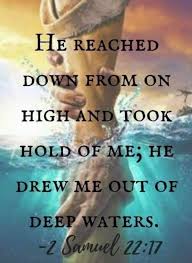
17 “He reached down from on high and took hold of me;
    he drew me out of deep waters.

18 He rescued me from my powerful enemy,
    from my foes, who were too strong for me.
19 They confronted me in the day of my disaster,
    but the Lord was my support.
20 He brought me out into a spacious place;
    he rescued me because he delighted in me.

21 “The Lord has dealt with me according to my righteousness;
    according to the cleanness of my hands he has rewarded me.
22 For I have kept the ways of the Lord;
    I am not guilty of turning from my God.
23 All his laws are before me;
    I have not turned away from his decrees.
24 I have been blameless before him
    and have kept myself from sin.
25 The Lord has rewarded me according to my righteousness,
    according to my cleanness in his sight.

26 “To the faithful you show yourself faithful,
    to the blameless you show yourself blameless,
27 to the pure you show yourself pure,
    but to the devious you show yourself shrewd.
28 You save the humble,
    but your eyes are on the haughty to bring them low.
29 You, Lord, are my lamp;
    the Lord turns my darkness into light.

30 With your help I can advance against a troop;
    with my God I can scale a wall.

31 “As for God, his way is perfect:
    The Lord’s word is flawless;
    he shields all who take refuge in him.
32 For who is God besides the Lord?
    And who is the Rock except our God?
33 It is God who arms me with strength
    and keeps my way secure.
34 He makes my feet like the feet of a deer;
    he causes me to stand on the heights.
35 He trains my hands for battle;
    my arms can bend a bow of bronze.
36 You make your saving help my shield;
    your help has made me great.
37 You provide a broad path for my feet,
    so that my ankles do not give way.

38 “I pursued my enemies and crushed them;
    I did not turn back till they were destroyed.
39 I crushed them completely, and they could not rise;
    they fell beneath my feet.
40 You armed me with strength for battle;
    you humbled my adversaries before me.
41 You made my enemies turn their backs in flight,
    and I destroyed my foes.
42 They cried for help, but there was no one to save them—
    to the Lord, but he did not answer.
43 I beat them as fine as the dust of the earth;
    I pounded and trampled them like mudin the streets.

44 “You have delivered me from the attacks of the peoples;
    you have preserved me as the head of nations.
People I did not know now serve me,
45     foreigners cower before me;
    as soon as they hear of me, they obey me.
46 They all lose heart;
    they come trembling from their strongholds.

47 “The Lord lives! Praise be to my Rock!
    Exalted be my God, the Rock, my Savior!
48 He is the God who avenges me,
    who puts the nations under me,
49     who sets me free from my enemies.
You exalted me above my foes;
    from a violent man you rescued me.
50 Therefore I will praise you, Lord, among the nations;
    I will sing the praises of your name.

51 “He gives his king great victories;
    he shows unfailing kindness to his anointed,
    to David and his descendants forever.”

WHAT DO WE LEARN—HOW DO WE RESPOND?

What God did for David; He does for us! “All have sinned and fall short of the glory of God,” writes Paul, (Romans 3:23). No one is good. “But God demonstrated His own love for us in this; while were yet sinners, Christ died for us.” (Romans 5:8) Every human on earth has sinned.  God knows because He sees our hearts. God knows each one of us by name.  In fact, God’s Word, the words of life and beauty of truth, tells us our name is written on the very palm of His Hand! (Isaiah 49:16)

God also knows our propensity to sin.  God created a plan from the beginning of creation to save us.  Jesus was there with Him and knew the plan.  That Plan was to remove our sins once and for all.  For centuries, sin was “covered” by animal sacrifice; but did not remove sin. The better, more complete way to deal with sin was Jesus, the perfect human sacrifice.  Jesus, Son of Man and Son of God, was the only one without sin.  He was the only one perfectly qualified and worthy to take our place of punishment and take our sins upon himself.  He became our sin and carried those sins willingly to the cross of shame and humiliation—all for us. 

“Come down from the cross and save yourself,” the crowd shouted with jeers to Jesus. These were people who knew not what they were doing.  But Jesus knew.  Jesus had each one of us on his mind and that is why Jesus held firm and did not come down although He had the power to do just that! How do we know?  Just before fulfilling His mission to save us; He prayed for his current disciples and followers, then He prayed for us—to be one with God as He was, He prayed that we would be One with each other. (John 17)

Jesus was/is/always will be the only Way to reconcile us back to God. Jesus’ death on the cross was payment in full for the removal of all the sins of the world. “Whoever” believed and repented of sins would have their sins removed! Forever! It is not God’s desire for anyone to perish but have eternal life with Him!  Can I get an amen?!

We have a God who loves, forgives, removes, and restores! “For God so loved the world that he gave his one and only Son, that whoever believes in him shall not perish but have eternal life. For God did not send his Son into the world to condemn the world, but to save the world through him.” –Jesus, John 3:16-17  God also gave His Holy Spirit to help us throughout life here as we prepare for life forever there with God!

These are the wonderful words that give Life! 

This is a reason to pause to praise right now!  To God be the glory, honor, and praise forever and ever, Amen

Posted in Uncategorized | Tagged , , , , | Leave a comment

OF WARS AND FAMINES

“You will hear of wars and rumors of wars, but see to it that you are not alarmed. Such things must happen, but the end is still to come. Nation will rise against nation, and kingdom against kingdom. There will be famines and earthquakes in various places. All these are the beginning of birth pains.

Then you will be handed over to be persecuted and put to death, and you will be hated by all nations because of me. At that time many will turn away from the faith and will betray and hate each other, and many false prophets will appear and deceive many people. Because of the increase of wickedness, the love of most will grow cold, but the one who stands firm to the end will be saved.” –Jesus, Matthew 24:6-14

The last four chapters of this book are an appendix. They record many events that occurred earlier in David’s reign. We should note that David remembered the pledge he had made to Jonathan that he would preserve his family forever. David’s grace is seen in the way he continued that pledge by showing grace to Mephibosheth.

2 Samuel 21

The Gibeonites Avenged

During the reign of David, there was a famine for three successive years; so David sought the face of the Lord. The Lord said, “It is on account of Saul and his blood-stained house; it is because he put the Gibeonites to death.”

The king summoned the Gibeonites and spoke to them. (Now the Gibeonites were not a part of Israel but were survivors of the Amorites; the Israelites had sworn to spare them, but Saul in his zeal for Israel and Judah had tried to annihilate them.) David asked the Gibeonites, “What shall I do for you? How shall I make atonement so that you will bless the Lord’s inheritance?”

The Gibeonites answered him, “We have no right to demand silver or gold from Saul or his family, nor do we have the right to put anyone in Israel to death.”

“What do you want me to do for you?” David asked.

They answered the king, “As for the man who destroyed us and plotted against us so that we have been decimated and have no place anywhere in Israel, let seven of his male descendants be given to us to be killed and their bodies exposed before the Lord at Gibeah of Saul—the Lord’s chosen one.”

So the king said, “I will give them to you.”

The king spared Mephibosheth son of Jonathan, the son of Saul, because of the oath before the Lord between David and Jonathan son of SaulBut the king took Armoni and Mephibosheth, the two sons of Aiah’s daughter Rizpah, whom she had borne to Saul, together with the five sons of Saul’s daughter Merab, whom she had borne to Adriel son of Barzillai the Meholathite. He handed them over to the Gibeonites, who killed them and exposed their bodies on a hill before the Lord. All seven of them fell together; they were put to death during the first days of the harvest, just as the barley harvest was beginning.

10 Rizpah daughter of Aiah took sackcloth and spread it out for herself on a rock. From the beginning of the harvest till the rain poured down from the heavens on the bodies, she did not let the birds touch them by day or the wild animals by night. 11 When David was told what Aiah’s daughter Rizpah, Saul’s concubine, had done, 12 he went and took the bones of Saul and his son Jonathan from the citizens of Jabesh Gilead. (They had stolen their bodies from the public square at Beth Shan, where the Philistines had hung them after they struck Saul down on Gilboa.) 13 David brought the bones of Saul and his son Jonathan from there, and the bones of those who had been killed and exposed were gathered up.

14 They buried the bones of Saul and his son Jonathan in the tomb of Saul’s father Kish, at Zela in Benjamin, and did everything the king commanded. After that, God answered prayer in behalf of the land.

Wars Against the Philistines

15 Once again there was a battle between the Philistines and Israel. David went down with his men to fight against the Philistines, and he became exhausted. 16 And Ishbi-Benob, one of the descendants of Rapha, whose bronze spearhead weighed three hundred shekels and who was armed with a new sword, said he would kill David. 17 But Abishai son of Zeruiah came to David’s rescue; he struck the Philistine down and killed him. Then David’s men swore to him, saying, “Never again will you go out with us to battle, so that the lamp of Israel will not be extinguished.”

18 In the course of time, there was another battle with the Philistines, at Gob. At that time Sibbekai the Hushathite killed Saph, one of the descendants of Rapha.

19 In another battle with the Philistines at Gob, Elhanan son of Jair the Bethlehemite killed the brother of Goliath the Gittite, who had a spear with a shaft like a weaver’s rod.

20 In still another battle, which took place at Gath, there was a huge man with six fingers on each hand and six toes on each foot—twenty-four in all. He also was descended from Rapha. 21 When he taunted Israel, Jonathan son of Shimeah, David’s brother, killed him.

22 These four were descendants of Rapha in Gath, and they fell at the hands of David and his men.

WHAT DO WE LEARN—HOW DO WE RESPOND?

Wars, famines, earthquakes are natural occurrences on our imperfect, wicked planet. Many happenings on this earth will change the backdrop of living here. But those who seek the Lord, as David did, and follow what God says is the way to live our lives with expectant hope. Our living Hope is our resurrected Jesus who is the pathway to our forever home with God.  Jesus is indeed the Way, the Truth, and the Life!  Be Hope to others, pointing the way to Jesus!

Know this; through it all, God remains unchanged in His love and promises, His Word stands firm and forever, and His faithful mercy and grace never fails. Yes, in the end, when Jesus comes back for all who believe, follow, and trust Him with all their hearts, minds, and souls—God/Jesus wins.  God’s grace wins even now and forever!

So, seek God first and listen to what He says. Turn our focus with full attention to pleasing Him in all we think, say and do instead of trying to please fickle, imperfect people who reside in our changeable world around us.

Believe in His son, Jesus who came to earth to seek and to save the lost, heal, and forgive.  Strive to “be more like Jesus” for this is our calling as ambassadors of Christ!   “Instead, we will speak the truth in love, growing in every way more and more like Christ, who is the head of his body, the church.” Ephesians 4:15

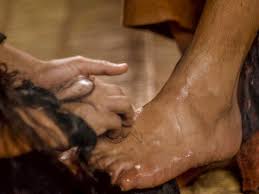
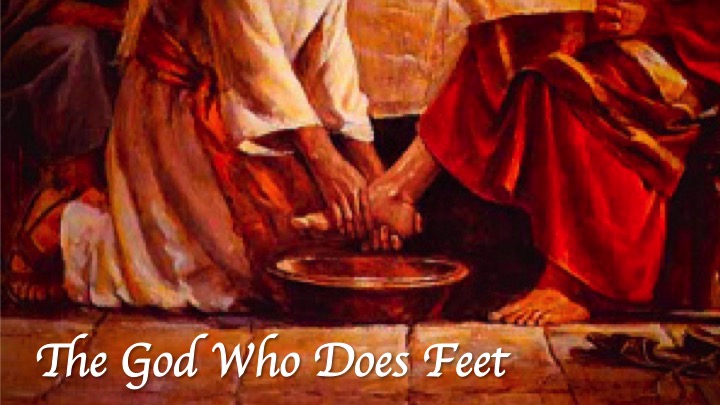
The phrase “as I have done for you, do likewise” from Jesus as He washed the feet of His disciples, even Judas, is a command of active love, urging followers to emulate the example of our Lord; particularly in acts of service, humility, and love. John 13 tells of Jesus who demonstrated the “full extent of His love” and emphasizes the importance of mirroring His love, extending mercy, will giving grace, and forgiveness to others “as I have forgiven you.”  Jesus tells his followers to “Love each other as I have loved you” which is the greatest proof of God’s love in us.  (1 John 4:7-8)

Jesus perfectly and fully demonstrated God’s love, His mercy of forgiveness, and His generous, unending, limitless grace as he took our place for our sins, providing full pardon from our sins! Yes, embrace the grace!  Through it all, “in times like these”, we have a Savior and Lord—and Jesus is His Name!  Jesus is the Grace we need and is more than enough for us to see God in His glory! 

Yes, Grace wins. Always remember that Jesus says, “My grace is deeper than your sins.”

Embrace the Grace freely offered.  Then extend God’s grace to others as David did to Mephibosheth.  David remembered his promise for the rest of his life. Is there someone in your circle of friends and family who needs some extra kindness right now? God’s Holy Spirit will prompt us as God gives opportunity, ability and provisions when we ask in Jesus Name. “I’ve seen it with my own eyes” and life. 

Lord,

Thank you for Your Word of grace amid wars and famines.  Thank for your loving faithfulness to us—even we are less than faithful to you. Thank you for loving us the way you do—full of your boundless mercy and unchanging grace. Thank you, thank you, thank you.  I’m yours and I’m listening.

In Jesus Name, Amen
Posted in Uncategorized | Tagged , , , , | Leave a comment

WISDOM SAVES LIVES! 

“Wait a second, before we do this, can we stop and think about the outcomes this action will cause?  What if we…”  How many times have you heard one voice suddenly stand up in a heated committee meeting to declare a pause with words of wisdom delivered in such a way that it changed the whole course of thinking? The “new plan” offered by a quiet person from the back of the room often causes a momentary calm as minds are changed from “off with their heads” to “oh, I see what you’re saying.”
“That would be a better approach to solving our problem and ultimately accomplishing our real goal.”

I have been in many meetings of the mind such as these in my former professions as a leader and a follower.  The pause is welcome.  The pause with words of wisdom is God’s intervention.

King Saul was a Benjamite.  Since the death of Saul, the house of Benjamin had been a rival of David since he became king of Israel. Old jealousies and bitterness prompted Sheba, also a Benjamite, to call for a revolt against David. In doing so, Sheba hoped to take the monarchy by force and return it to the house of Benjamin.  Sheba was adamant and determined in his quest. He called upon the Israelites to follow him and rebel against King David. David, who had just defeated Absalom’s rebellion, put down Sheba’s rebellion as well—but it came about when a wise woman stepped forward just  before the bloodshed of hundreds with a better plan.  She convinced Joab and her city to give the head of Sheba to Joab, the commander of David’s army.

2 Samuel 20

Sheba Rebels Against David

Now a troublemaker named Sheba son of Bikri, a Benjamite, happened to be there. He sounded the trumpet and shouted,

We have no share in David,
    no part in Jesse’s son!
Every man to his tent, Israel!”

So all the men of Israel deserted David to follow Sheba son of Bikri. But the men of Judah stayed by their king all the way from the Jordan to Jerusalem.

When David returned to his palace in Jerusalem, he took the ten concubines he had left to take care of the palace and put them in a house under guard. He provided for them but had no sexual relations with them. They were kept in confinement till the day of their death, living as widows.

Then the king said to Amasa, “Summon the men of Judah to come to me within three days, and be here yourself.” But when Amasa went to summon Judah, he took longer than the time the king had set for him.

David said to Abishai, “Now Sheba son of Bikri will do us more harm than Absalom did. Take your master’s men and pursue him, or he will find fortified cities and escape from us.” So Joab’s men and the Kerethites and Pelethites and all the mighty warriors went out under the command of Abishai. They marched out from Jerusalem to pursue Sheba son of Bikri.

While they were at the great rock in Gibeon, Amasa came to meet them. Joab was wearing his military tunic, and strapped over it at his waist was a belt with a dagger in its sheath. As he stepped forward, it dropped out of its sheath.

Joab said to Amasa, “How are you, my brother?” Then Joab took Amasa by the beard with his right hand to kiss him. 10 Amasa was not on his guard against the dagger in Joab’s hand, and Joab plunged it into his belly, and his intestines spilled out on the ground. Without being stabbed again, Amasa died. Then Joab and his brother Abishai pursued Sheba son of Bikri.

11 One of Joab’s men stood beside Amasa and said, “Whoever favors Joab, and whoever is for David, let him follow Joab!” 12 Amasa lay wallowing in his blood in the middle of the road, and the man saw that all the troops came to a halt there. When he realized that everyone who came up to Amasa stopped, he dragged him from the road into a field and threw a garment over him. 13 After Amasa had been removed from the road, everyone went on with Joab to pursue Sheba son of Bikri.

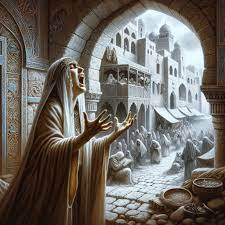
14 Sheba passed through all the tribes of Israel to Abel Beth Maakah and through the entire region of the Bikrites, who gathered together and followed him. 15 All the troops with Joab came and besieged Sheba in Abel Beth Maakah. They built a siege ramp up to the city, and it stood against the outer fortifications. While they were battering the wall to bring it down, 16 a wise woman called from the city, “Listen! Listen! Tell Joab to come here so I can speak to him.” 17 He went toward her, and she asked, “Are you Joab?”

“I am,” he answered.

She said, “Listen to what your servant has to say.”

“I’m listening,” he said.

18 She continued, “Long ago they used to say, ‘Get your answer at Abel,’ and that settled it. 19 We are the peaceful and faithful in Israel. You are trying to destroy a city that is a mother in Israel. Why do you want to swallow up the Lord’s inheritance?”

20 “Far be it from me!” Joab replied, “Far be it from me to swallow up or destroy! 21 That is not the case. A man named Sheba son of Bikri, from the hill country of Ephraim, has lifted up his hand against the king, against David. Hand over this one man, and I’ll withdraw from the city.”

The woman said to Joab, “His head will be thrown to you from the wall.”

22 Then the woman went to all the people with her wise advice, and they cut off the head of Sheba son of Bikri and threw it to Joab. So he sounded the trumpet, and his men dispersed from the city, each returning to his home. And Joab went back to the king in Jerusalem.

David’s Officials

23 Joab was over Israel’s entire army; Benaiah son of Jehoiada was over the Kerethites and Pelethites; 24 Adoniram was in charge of forced labor; Jehoshaphat son of Ahilud was recorder; 25 Sheva was secretary; Zadok and Abiathar were priests; 26 and Ira the Jairite was David’s priest.

WHAT DO WE LEARN—HOW DO WE RESPOND?

Has God called you to stand up and speak for him in the middle of chaos to offer His words of wisdom?  Fear not, God is with those who speak for Him.  Yes, it’s a scary thing to do but if it is God leading; He provides where He guides.  He gives us the words while calming the room by the power of His Holy Spirit.  He gives strength and wisdom to his servant prophets with ears of understanding to accomplish His will and purpose.  God prepares hearts with the softening agent of His Spirit to receive His message of wisdom and truth. That’s how God works! I seen with my own eyes and on occasion have been the one to  deliver His words while shaking in my boots!  HIS words, not mine!

INTERESTING TO KNOW—

“For the third time in the “David story,” a woman changed the course of events. Abigail was the first (1 Samuel 25), and the woman of Tekoa was the second (2 Samuel 14). Here in chapter 20, the wise woman called to Joab from the wall and assured him that her city was not in league with any rebels and therefore didn’t deserve to be attacked. Perhaps she was thinking about the law in Deuteronomy 20:10–16 requiring that a city first be given an offer of peace before it was attacked. When Joab explained that it was only Sheba he was after, she persuaded the citizens to kill the rebel leader and save the city. Sheba wasn’t a scapegoat, however; as a rebel against the king, he deserved to be slain. Sheba wanted to be head of the army, but instead, his head was thrown over the wall to the army.” –Warren Wiersbe, Wiersbe Study Bible

When God wants to change public opinion to conform His will; He will use those whose hearts are fully committed Him.  “For the eyes of the Lord range throughout the earth to strengthen those whose hearts are fully committed to him.” 2 Chronicles 16:9

Yes, but God will sometimes use unbelievers in the process and details to accomplish His plan. We see many examples through His Word! Herod, Pilate, the religious leaders in Jesus’ day, as well as David’s life with wise women with a plan to stop needless bloodshed.  God intervenes in ways that is often beyond our thinking.  But know this above all—seek the wisdom of God.

To seek the wisdom of God, the Bible directs you to ask God for it, study His word, and fear Him. Specifically, James 1:5 encourages asking God for wisdom, as He gives generously. Proverbs emphasizes that the fear of the Lord is the beginning of wisdom. Fear spoken of here means to be in awe of our God who created all, knows all and is in all. Additionally, seeking wisdom involves understanding God’s word and applying it to your life, which includes seeking knowledge and understanding from Him. Before reading God’s Word, we must first seek our God of the Word. Ask His Holy Spirit who lives inside us to guide us as we read.  God answers prayers like this—I’ve seen it and heart it with my own eyes and ears!

Wisdom defined are “skills for living.” If we are seeking to walk with God; we must seek His wisdom!  Makes sense, right?  “For the Lord gives wisdom; from his mouth come knowledge and understanding.” Proverbs 2:6  “Wisdom is supreme; therefore get wisdom. Though it cost all you have, get understanding.” Proverbs 4:7 “If any of you lacks wisdom, you should ask God, who gives generously to all without finding fault, and it will be given to you.” James 1:5 

God requires us to “seek justice, love mercy and walk humbly with God.” (Micah 6:8) 1 Peter 5:6 encourages believers to “Humble yourselves, therefore, under God’s mighty hand, that he may lift you up in due time.” Other verses like James 4:10, Luke 14:11, Proverbs 22:4, and Psalm 25:9 also highlight the benefits of humility and the consequences of pride. See Philippians 2 for our Perfect Example of humility from Jesus our Savior and Lord!

Lord,

You are all we need, in truth more than enough, to be and do what you desire from us. Thank you, thank you, thank you! Continue to give us your wisdom throughout this day in all the details of our lives as we desire to do your will and purpose for your glory as well as our good.

In Jesus Name, Amen
Posted in Uncategorized | Tagged , , , , | Leave a comment

CROSSING OVER WITH THE KING

“I’m crossing over—who will go with me?”  The battles between Israel and Judah are ceasing for a time.  Absalom is dead.  David is grieving his son but knows he must carry on his work as God’s designated King of Israel.  David goes about the work to bring the two opposing groups of God’s people back together as one.  The term “crossing over” is mentioned often in this passage and is significant to me today.  It means much more than physically crossing over the river Jordan. Crossing the Jordan has become the line of demarcation of loyalty.  Are you crossing over with me as king or not? Whose side are you on?  With whom are you loyal to and trust with your life?  “I will provide for you when you cross over with me,” King David declares.

David took refuge in Judah when Absalom revolted against the king and his father.  While overly grieving his son, he is reminded by Joab to encourage those who were loyal to David in battle. This passage indicates how David made his gratitude known to all who were loyal to him.  David must cross over the Jordan with his family and all his stuff but first he knows that before returning to Jerusalem; David must reach out to bring those who supported Absalom with the purpose to bring them back into the kingdom of Israel. Unity is David’s new agenda.

When we are loving each other, serving with no thought of how it looks or what we will get from it; God’s love grows and matures in us.  Unity of the Body of Christ pleases God who gives us the power and the means to obtain this “Oneness” in Him.

2 Samuel 19

Joab was told, “The king is weeping and mourning for Absalom.” And for the whole army the victory that day was turned into mourning, because on that day the troops heard it said, “The king is grieving for his son.” The men stole into the city that day as men steal in who are ashamed when they flee from battle. The king covered his face and cried aloud, “O my son Absalom! O Absalom, my son, my son!”

Then Joab went into the house to the king and said, “Today you have humiliated all your men, who have just saved your life and the lives of your sons and daughters and the lives of your wives and concubines. You love those who hate you and hate those who love you. You have made it clear today that the commanders and their men mean nothing to you. I see that you would be pleased if Absalom were alive today and all of us were dead. Now go out and encourage your men. I swear by the Lord that if you don’t go out, not a man will be left with you by nightfall. This will be worse for you than all the calamities that have come on you from your youth till now.”

So the king got up and took his seat in the gateway. When the men were told, “The king is sitting in the gateway,” they all came before him.

Meanwhile, the Israelites had fled to their homes.

David Returns to Jerusalem

Throughout the tribes of Israel, all the people were arguing among themselves, saying, “The king delivered us from the hand of our enemies; he is the one who rescued us from the hand of the Philistines. But now he has fled the country to escape from Absalom; 10 and Absalom, whom we anointed to rule over us, has died in battle. So why do you say nothing about bringing the king back?”

11 King David sent this message to Zadok and Abiathar, the priests: “Ask the elders of Judah, ‘Why should you be the last to bring the king back to his palace, since what is being said throughout Israel has reached the king at his quarters? 12 You are my relatives, my own flesh and blood. So why should you be the last to bring back the king?’ 13 And say to Amasa, ‘Are you not my own flesh and blood? May God deal with me, be it ever so severely, if you are not the commander of my army for life in place of Joab.’”

14 He won over the hearts of the men of Judah so that they were all of one mind. They sent word to the king, “Return, you and all your men.” 15 Then the king returned and went as far as the Jordan.

Now the men of Judah had come to Gilgal to go out and meet the king and bring him across the Jordan. 16 Shimei son of Gera, the Benjamite from Bahurim, hurried down with the men of Judah to meet King David. 17 With him were a thousand Benjamites, along with Ziba, the steward of Saul’s household, and his fifteen sons and twenty servants. They rushed to the Jordan, where the king was. 18 They crossed at the ford to take the king’s household over and to do whatever he wished.

When Shimei son of Gera crossed the Jordan, he fell prostrate before the king 19 and said to him, “May my lord not hold me guilty. Do not remember how your servant did wrong on the day my lord the king left Jerusalem. May the king put it out of his mind. 20 For I your servant know that I have sinned, but today I have come here as the first from the tribes of Joseph to come down and meet my lord the king.”

21 Then Abishai son of Zeruiah said, “Shouldn’t Shimei be put to death for this? He cursed the Lord’s anointed.”

22 David replied, “What does this have to do with you, you sons of Zeruiah? What right do you have to interfere? Should anyone be put to death in Israel today? Don’t I know that today I am king over Israel?” 23 So the king said to Shimei, “You shall not die.” And the king promised him on oath.

24 Mephibosheth, Saul’s grandson, also went down to meet the king. He had not taken care of his feet or trimmed his mustache or washed his clothes from the day the king left until the day he returned safely. 25 When he came from Jerusalem to meet the king, the king asked him, “Why didn’t you go with me, Mephibosheth?”

26 He said, “My lord the king, since I your servant am lame, I said, ‘I will have my donkey saddled and will ride on it, so I can go with the king.’ But Ziba my servant betrayed me. 27 And he has slandered your servant to my lord the king. My lord the king is like an angel of God; so do whatever you wish. 28 All my grandfather’s descendants deserved nothing but death from my lord the king, but you gave your servant a place among those who eat at your table. So what right do I have to make any more appeals to the king?”

29 The king said to him, “Why say more? I order you and Ziba to divide the land.”

30 Mephibosheth said to the king, “Let him take everything, now that my lord the king has returned home safely.”

31 Barzillai the Gileadite also came down from Rogelim to cross the Jordan with the king and to send him on his way from there. 32 Now Barzillai was very old, eighty years of age. He had provided for the king during his stay in Mahanaim, for he was a very wealthy man. 33 The king said to Barzillai, “Cross over with me and stay with me in Jerusalem, and I will provide for you.”

34 But Barzillai answered the king, “How many more years will I live, that I should go up to Jerusalem with the king? 35 I am now eighty years old. Can I tell the difference between what is enjoyable and what is not? Can your servant taste what he eats and drinks? Can I still hear the voices of male and female singers? Why should your servant be an added burden to my lord the king? 36 Your servant will cross over the Jordan with the king for a short distance, but why should the king reward me in this way? 37 Let your servant return, that I may die in my own town near the tomb of my father and mother. But here is your servant Kimham. Let him cross over with my lord the king. Do for him whatever you wish.”

38 The king said, “Kimham shall cross over with me, and I will do for him whatever you wish. And anything you desire from me I will do for you.”

39 So all the people crossed the Jordan, and then the king crossed over. The king kissed Barzillai and bid him farewell, and Barzillai returned to his home.

40 When the king crossed over to Gilgal, Kimham crossed with him. All the troops of Judah and half the troops of Israel had taken the king over.

41 Soon all the men of Israel were coming to the king and saying to him, “Why did our brothers, the men of Judah, steal the king away and bring him and his household across the Jordan, together with all his men?”

42 All the men of Judah answered the men of Israel, “We did this because the king is closely related to us. Why are you angry about it? Have we eaten any of the king’s provisions? Have we taken anything for ourselves?”

43 Then the men of Israel answered the men of Judah, “We have ten shares in the king; so we have a greater claim on David than you have. Why then do you treat us with contempt? Weren’t we the first to speak of bringing back our king?”

But the men of Judah pressed their claims even more forcefully than the men of Israel.

WHAT DO WE LEARN—HOW DO WE RESPOND?

Years of intrigue and intertribal conflict left Israel a deeply divided nation, and there was a desperate need for a strong display of unity and loyalty. God desires that his people be unified and avoid petty squabbles, arguments and fights over minor issues. 

What is our response?  We must focus on Christ who makes us One. Jesus is the Prince of Peace.  Jesus unites us as the Body of Christ who saved us and set us free to love like He loves us! Jesus, our designated by God, King of kings and Lord of lords, was the embodiment of love, mercy, and grace which leads to unity of the Body—His church. Jesus taught, “Seek first God…” to acquire God’s Kingdom thinking with His purposes. God is the One who brings all together as one in Jesus, His Son!  Jesus demonstrated this unity with God. Jesus aligned all His thinking, being, and doing with God who told him exactly who to be with what he must do.

Jesus set aside his own agenda for God’s Will and Plan with humbled, willing obedience to God, the Father.  Jesus knew this “looking to the interest of others” would require sacrifice for His was the Sacrifice for our sins.  Jesus powerfully demonstrated God’s powerful, relentless love as Jesus took on the role of a servant, bending down low to wash the feet of his followers—all of them, even his betrayer, Judas! 

We serve a Savior and Lord who washes feet!  “Do likewise,” says Jesus.  This act of Jesus was the perfect example of love and service to each other.  When we love God, love each other, and serve with gladness; there is less time to grumble and squabble. 

A crisis will bring out the best in some people and the worst in others. As Jesus put it, “Every kingdom divided against itself is brought to desolation, every city or house divided against itself will not stand” (Matthew 12:25). 

Lord,

When we look up from arguments to look full into your wonderful face our minds see the foolishness of the trivial that blocks the view of all that is the majesty of You.  The things of earth do grow strangely dim when we truly focus on who you are. Our eyes open wider in awe of you as we suddenly see a glimpse of the glorious unity of Father/Son/Holy Spirit who loves us, works within us, with mercy and grace. Oh Lord, we are so petty in our thinking, please forgive us and set us back on the path to your glory righteousness. Remove all the obstacles that make us stumble.  Bring us into your blessed unity as we give all our hearts, minds, and souls to you.  Make your desires be ours.

In Jesus Name, Amen

Posted in Uncategorized | Tagged , , , , | Leave a comment

UNSHAKABLE, RELENTLESS LOVE

Family ties truly bind us for life. No matter the circumstances blood is truly thicker than water when enemies rise up against our family members. “Blood is thicker than water” is a proverb in English meaning that familial bonds will always be stronger than other relationships. 

Historically, a similar proverb in German first appeared in a different form in the medieval German beast epic Reinhart Fuchs (c. 1180; English: Reynard the Fox) by Heinrich der Glîchezære. The 13th-century Heidelberg manuscript reads in part, “ouch hoer ich sagen, das sippe blůt von wazzere niht verdirbet“. In English it reads, “I also hear it said that kin-blood is not spoiled by water.” Jacob Grimm suggests that this saying, which is not read anywhere else, means that the bonds of family blood are not erased by the waters of baptism, and so the raven Diezelin will have inherited his father’s outlook despite having been christened. 

In 1412, the English priest John Lydgate observed in Troy Book, “For naturelly blod wil ay of kynde / Draw unto blod, wher he may it fynde.

William Jenkyn referenced the proverb in its modern form in a 1652 sermon: “Blood is thicker (we say) then [sic] water; and truly the blood of Christ beautifying any of our friends and children, should make us prefer them before those, between whom and us there’s only a watery relation of nature.” 

As a former elementary public school teacher and later as a youth and family director; all forms of “family” came into view.  I observed that family produced a strong, unbreakable bond—even in abusive situations.  For example, a young boy, abused by his dad, would not testify against him. His comment, “But, he’s my dad.”  Some children carried heavy loads but the most resilient were those who continued to loyally love despite the circumstance life had given them.  Do not read that a child should stay in an abusive situation. I am not saying that, and in fact I was in a position to help children be removed from the home until parents could get the help they needed.  What I am saying is that the love between a child and a parent is strong and almost unbreakable in human nature.  There may be times of turmoil and disagreements but “they’re still our dad, mom, brother, sister…”

I think about the families who I have encountered in my vocations of service this morning when I think of the fractured bond between David and his rebellious son, Absalom. Absalom hated David, had little to no respect for his father, and arrogantly sought to take over the throne given by God to David. 

In revenge, Absalom murdered his half-brother, Amnon, who raped Tamar their half-sister. (2 Samuel 13) Absalom held a grudge and was bitter over the fact that David unknowingly allowed the rape of his sister, Tamar, when he fell for Amnon’s trickery that allowed it to happen. This is one messed up family! 

Absalom fought against his father in all kinds of ways, seeking to become the next king, demanding to get what he thought he deserved.  His arrogance, however, was repaid with complete humiliation on the battlefield.  Pulled off his mule, let to hang in a tree by his own hair; made him a perfect target for David’s men to finish him off. 

At the news of Absalom’s demise; David immediately grieved for his son, with a heart saying “if only I had died instead of you.”  Why?  Because, not matter what, Absalom was still the son of David who he relentlessly loved with an unbreakable bond.  It is God who teaches us to love like that.

2 Samuel 18

David mustered the men who were with him and appointed over them commanders of thousands and commanders of hundreds. David sent out his troops, a third under the command of Joab, a third under Joab’s brother Abishai son of Zeruiah, and a third under Ittai the Gittite. The king told the troops, “I myself will surely march out with you.”

But the men said, “You must not go out; if we are forced to flee, they won’t care about us. Even if half of us die, they won’t care; but you are worth ten thousand of us. It would be better now for you to give us support from the city.”

The king answered, “I will do whatever seems best to you.”

So the king stood beside the gate while all his men marched out in units of hundreds and of thousands. The king commanded Joab, Abishai and Ittai, “Be gentle with the young man Absalom for my sake.” And all the troops heard the king giving orders concerning Absalom to each of the commanders.

David’s army marched out of the city to fight Israel, and the battle took place in the forest of Ephraim. There Israel’s troops were routed by David’s men, and the casualties that day were great—twenty thousand men. The battle spread out over the whole countryside, and the forest swallowed up more men that day than the sword.

Now Absalom happened to meet David’s men. He was riding his mule, and as the mule went under the thick branches of a large oak, Absalom’s hair got caught in the tree. He was left hanging in midair, while the mule he was riding kept on going.

10 When one of the men saw what had happened, he told Joab, “I just saw Absalom hanging in an oak tree.”

11 Joab said to the man who had told him this, “What! You saw him? Why didn’t you strike him to the ground right there? Then I would have had to give you ten shekels of silver and a warrior’s belt.”

12 But the man replied, “Even if a thousand shekels were weighed out into my hands, I would not lay a hand on the king’s son. In our hearing the king commanded you and Abishai and Ittai, ‘Protect the young man Absalom for my sake.’ 13 And if I had put my life in jeopardy—and nothing is hidden from the king—you would have kept your distance from me.”

14 Joab said, “I’m not going to wait like this for you.” So he took three javelins in his hand and plunged them into Absalom’s heart while Absalom was still alive in the oak tree. 15 And ten of Joab’s armor-bearers surrounded Absalom, struck him and killed him.

16 Then Joab sounded the trumpet, and the troops stopped pursuing Israel, for Joab halted them. 17 They took Absalom, threw him into a big pit in the forest and piled up a large heap of rocks over him. Meanwhile, all the Israelites fled to their homes.

18 During his lifetime Absalom had taken a pillar and erected it in the King’s Valley as a monument to himself, for he thought, “I have no son to carry on the memory of my name.” He named the pillar after himself, and it is called Absalom’s Monument to this day.

David Mourns

19 Now Ahimaaz son of Zadok said, “Let me run and take the news to the king that the Lord has vindicated him by delivering him from the hand of his enemies.”

20 “You are not the one to take the news today,” Joab told him. “You may take the news another time, but you must not do so today, because the king’s son is dead.”

21 Then Joab said to a Cushite, “Go, tell the king what you have seen.” The Cushite bowed down before Joab and ran off.

22 Ahimaaz son of Zadok again said to Joab, “Come what may, please let me run behind the Cushite.”

But Joab replied, “My son, why do you want to go? You don’t have any news that will bring you a reward.”

23 He said, “Come what may, I want to run.”

So Joab said, “Run!” Then Ahimaaz ran by way of the plain and outran the Cushite.

24 While David was sitting between the inner and outer gates, the watchman went up to the roof of the gateway by the wall. As he looked out, he saw a man running alone. 25 The watchman called out to the king and reported it.

The king said, “If he is alone, he must have good news.” And the runner came closer and closer.

26 Then the watchman saw another runner, and he called down to the gatekeeper, “Look, another man running alone!”

The king said, “He must be bringing good news, too.”

27 The watchman said, “It seems to me that the first one runs like Ahimaaz son of Zadok.”

“He’s a good man,” the king said. “He comes with good news.”

28 Then Ahimaaz called out to the king, “All is well!” He bowed down before the king with his face to the ground and said, “Praise be to the Lord your God! He has delivered up those who lifted their hands against my lord the king.”

29 The king asked, “Is the young man Absalom safe?”

Ahimaaz answered, “I saw great confusion just as Joab was about to send the king’s servant and me, your servant, but I don’t know what it was.”

30 The king said, “Stand aside and wait here.” So he stepped aside and stood there.

31 Then the Cushite arrived and said, “My lord the king, hear the good news! The Lord has vindicated you today by delivering you from the hand of all who rose up against you.”

32 The king asked the Cushite, “Is the young man Absalom safe?”

The Cushite replied, “May the enemies of my lord the king and all who rise up to harm you be like that young man.”

33 The king was shaken. He went up to the room over the gateway and wept. As he went, he said: “O my son Absalom! My son, my son Absalom! If only I had died instead of you—O Absalom, my son, my son!”

WHAT DO WE LEARN—HOW DO WE RESPOND?

The armies of David and Absalom fought each other, resulting in Absalom’s death and David’s mourning for his son. David returned to Jerusalem and reached out to bring those who supported Absalom back into the kingdom of Israel.

God invented family.  God desires that His people who form families be unified and avoid petty squabbles, arguments, and fights over minor as well as major life issues. David is revered as one the greatest kings in history; but he was not perfect as a husband or father; He was not the perfect example to follow for his sons and daughters.  Could the difficulties in David’s family been avoided if David had not given in to his lustful temptation of Bathsheba?  Was David too busy being king to be a father to his sons and daughters?  We look at the story and assume many judgements while trying to reason some of the messy outcomes of this family.  However, as we do, we must take the spotlight off the mistakes made and place it on the lessons learned.  Then we need to seek God and with His help; examine our own lives.

It’s not too late to pause, reflect, and listen as the Holy Spirit helps us examine and evaluate our own relationships within our family. If we are parents; are we parenting in loving ways that honor God? If we are a husband or a wife; do we honor our them with unconditional love, not seeking the fix our faults, but instead seeing them as God meant us to value them—as gifts from God to us?!

Let’s be honest before God who knows all; then listen to His Spirit’s conviction and correction.  What is God saying to us personally?  “His power can make you what you ought to be…” the old hymn teaches.  “Let Him have His way with you.”

As long as we live and breathe on earth; it is never too late for us to make life course corrections that line up with God’s best for us and our families.  Our homes are our  giant-size privileges, our towering priority as we seek God’s will over our own selfish desires. Avoid making David’s tragic mistakes—Follow David’s example of humbled repentance to God.

“Have mercy on me, O God, according to your unfailing love;
according to your great compassion blot out my transgressions.
Wash away all my iniquity and cleanse me from my sin.

For I know my transgressions, and my sin is always before me.
Against you, you only, have I sinned and done what is evil in your sight;
so you are right in your verdict and justified when you judge.

Surely I was sinful at birth, sinful from the time my mother conceived me.
Yet you desired faithfulness even in the womb; you taught me wisdom in that secret place.

Cleanse me with hyssop, and I will be clean; wash me, and I will be whiter than snow.
Let me hear joy and gladness; let the bones you have crushed rejoice.
Hide your face from my sins and blot out all my iniquity.

Create in me a pure heart, O God, and renew a steadfast spirit within me.
Do not cast me from your presence or take your Holy Spirit from me.
Restore to me the joy of your salvation and grant me a willing spirit, to sustain me.

Then I will teach transgressors your ways, so that sinners will turn back to you.
Deliver me from the guilt of bloodshed, O God, you who are God my Savior,
    and my tongue will sing of your righteousness.
Open my lips, Lord, and my mouth will declare your praise.
You do not delight in sacrifice, or I would bring it; you do not take pleasure in burnt offerings.
My sacrifice, O God, is a broken spirit; a broken and contrite heart you, God, will not despise.

David’s psalm, written after his realizing the full impact of his sin with Bathsheba and Uriah. Psalm 51:1-17

Lord, God of all, Loving Father,

Thank you for the teaching found in your Word to us today. By your power, the power of your wonder-working blood in us; make us holy. We are members of your forever family as brothers and sisters who love you because you first loved us—relentlessly and forever—help us to love like you love us!  Your example, dear Jesus, was perfect!

In Jesus Name, Amen
Posted in Uncategorized | Tagged , , , , | Leave a comment

OPPOSING OPINIONS

It is hard to make wise decisions when your most trusted advisors disagree on what you should do.  I’ve been there; done that.  That’s why it is so important to seek God first and ask for HIS wisdom in choosing our mentors and advisors on earth. God will lead us to those who know Him, listen to Him, and deliver His words to us as spiritual advisors.  God is for us who believe and trust in Him.  God does not oppose us; rather His heart’s desire is His best for us in all the details of our lives.  When opposing advise is given to us; we must go back to God and ask for His best path to take.  God will not fail us; it is not in His character.  God is faithful—even when we are not.  So, trust God. Trust His direction from His Holy Spirit living in us who directs us to all that is truth.

I have learned that when in doubt, don’t!  Instead, it is time to pause and wait on God.  God is always at work.  At times, we must wait on the Lord God to do what He does best—His will to be done in His way in His time.  God clears the path for our next steps to take in the wait!  We make great mistakes when we seek advisors who only tell us what we want to hear or to simply to use us to get ahead in life. 

Seek God’s wisdom in choosing those who will tell us the God’s truth then lean on God’s Holy Spirit in us who trumps all human advisors on earth. When God’s Holy Spirit agrees with our spiritual advisors, then it is time to move forward. Until then —Be still and wait on the Lord.  Strength will rise when we wait upon the Lord…I feel a song coming to mind!

David believed God and trusted that His path would be perfect because God is perfect in every way.  David sang what He believed about God in Psalm 18…I suggest reading the entire psalm but here is an excerpt;

“As for God, his way is perfect: The Lord’s word is flawless; he shields all who take refuge in him.
For who is God besides the Lord? And who is the Rock except our God?
It is God who arms me with strength and keeps my way secure.
He makes my feet like the feet of a deer; he causes me to stand on the heights.
He trains my hands for battle; my arms can bend a bow of bronze.
You make your saving help my shield, and your right hand sustains me; your help has made me great
You provide a broad path for my feet
, so that my ankles do not give way.”           Psalm 18:30-35

Humanly speaking, if Absalom had followed Ahithophel’s plan, David would have been slain and Absalom’s problems solved. But David had prayed that God would turn Ahithophel’s counsel into foolishness (2 Samuel 15:31), and God used Hushai to accomplish just that purpose.  This is part one of the victory over David’s rebellious son, Absalom.

2 Samuel 17

Ahithophel said to Absalom, “I would choose twelve thousand men and set out tonight in pursuit of David. I would attack him while he is weary and weak. I would strike him with terror, and then all the people with him will flee. I would strike down only the king and bring all the people back to you. The death of the man you seek will mean the return of all; all the people will be unharmed.” This plan seemed good to Absalom and to all the elders of Israel.

But Absalom said, “Summon also Hushai the Arkite, so we can hear what he has to say as well.” When Hushai came to him, Absalom said, “Ahithophel has given this advice. Should we do what he says? If not, give us your opinion.”

Hushai replied to Absalom, “The advice Ahithophel has given is not good this time. You know your father and his men; they are fighters, and as fierce as a wild bear robbed of her cubs. Besides, your father is an experienced fighter; he will not spend the night with the troops. Even now, he is hidden in a cave or some other place. If he should attack your troops first, whoever hears about it will say, ‘There has been a slaughter among the troops who follow Absalom.’ 10 Then even the bravest soldier, whose heart is like the heart of a lion, will melt with fear, for all Israel knows that your father is a fighter and that those with him are brave.

11 “So I advise you: Let all Israel, from Dan to Beersheba—as numerous as the sand on the seashore—be gathered to you, with you yourself leading them into battle12 Then we will attack him wherever he may be found, and we will fall on him as dew settles on the ground. Neither he nor any of his men will be left alive. 13 If he withdraws into a city, then all Israel will bring ropes to that city, and we will drag it down to the valley until not so much as a pebble is left.”

14 Absalom and all the men of Israel said, “The advice of Hushai the Arkite is better than that of Ahithophel.” For the Lord had determined to frustrate the good advice of Ahithophel in order to bring disaster on Absalom.

15 Hushai told Zadok and Abiathar, the priests, “Ahithophel has advised Absalom and the elders of Israel to do such and such, but I have advised them to do so and so. 16 Now send a message at once and tell David, ‘Do not spend the night at the fords in the wilderness; cross over without fail, or the king and all the people with him will be swallowed up.’”

17 Jonathan and Ahimaaz were staying at En Rogel. A female servant was to go and inform them, and they were to go and tell King David, for they could not risk being seen entering the city. 18 But a young man saw them and told Absalom. So the two of them left at once and went to the house of a man in Bahurim. He had a well in his courtyard, and they climbed down into it. 19 His wife took a covering and spread it out over the opening of the well and scattered grain over it. No one knew anything about it.

20 When Absalom’s men came to the woman at the house, they asked, “Where are Ahimaaz and Jonathan?”

The woman answered them, “They crossed over the brook.” The men searched but found no one, so they returned to Jerusalem.

21 After they had gone, the two climbed out of the well and went to inform King David. They said to him, “Set out and cross the river at once; Ahithophel has advised such and such against you.” 22 So David and all the people with him set out and crossed the Jordan. By daybreak, no one was left who had not crossed the Jordan.

23 When Ahithophel saw that his advice had not been followed, he saddled his donkey and set out for his house in his hometown. He put his house in order and then hanged himself. So he died and was buried in his father’s tomb.

Absalom’s Death

24 David went to Mahanaim, and Absalom crossed the Jordan with all the men of Israel25 Absalom had appointed Amasa over the army in place of Joab. Amasa was the son of Jether, an Ishmaelite who had married Abigail the daughter of Nahash and sister of Zeruiah the mother of Joab. 26 The Israelites and Absalom camped in the land of Gilead.

27 When David came to Mahanaim, Shobi son of Nahash from Rabbah of the Ammonites, and Makir son of Ammiel from Lo Debar, and Barzillai the Gileadite from Rogelim 28 brought bedding and bowls and articles of pottery. They also brought wheat and barley, flour and roasted grain, beans and lentils, 29 honey and curds, sheep, and cheese from cows’ milk for David and his people to eat. For they said, “The people have become exhausted and hungry and thirsty in the wilderness.”

WHAT DO WE LEARN—HOW DO WE RESPOND?

Ahithophel’s matter-of-fact speech was forgotten as Hushai’s grand plan, punctuated with vivid mental pictures, gripped the hearts and minds of Absalom and his leaders. God had answered David’s prayer and confused the counsel of Ahithophel. Absalom would ride at the front of his army, intent on victory, but he would meet with humiliating defeat. “The LORD brings the counsel of the nations to nothing; He makes the plans of the peoples of no effect. The counsel of the LORD stands forever, the plans of His heart to all generations” (See Psalm 33:10, 11).

Both Ahithophel and Absalom ended up hanging from a tree. Ah, but we get ahead of the story…How tragic it is when a man or woman leads an exemplary and useful life and then fails dishonorably at the end. There are old fools as well as young fools, and Ahithophel was one of them. All of us need to pray that the Lord will help us to end well. 

Trust and obey God—He knows what He is doing!

Lord,

Your story teaches us again of how you work in the lives of all the humans you have created, making a bad situations suddenly work for good for those who love you. This always amaze me with wonder, unspeakable joy with thanksgiving.  You have provided many miraculous acts in my own life—throughout my life.  When I didn’t know what to do next; I knew where to turn—to you! Thank you for saving me and then sustaining me through all the circumstances of my life.  In my imperfections; Your glorious ways of perfection redeemed me and healed me and made we whole once more. Thank you, thank you, thank you! Lead me, Lord, for I am yours and I am listening.

In Jesus Name, Amen
Posted in Uncategorized | Tagged , , , , | Leave a comment