
Genesis – First, God
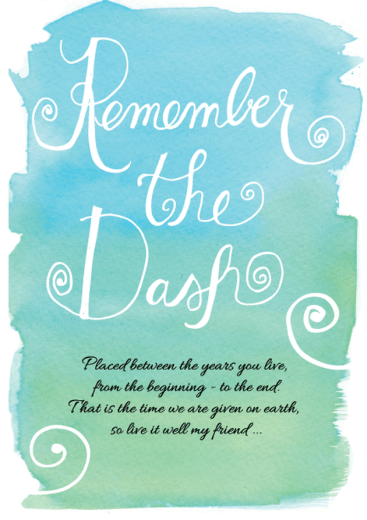
We will live and then we will die. That is the worldview of the life cycle. On our traditional grave marker will be the date we were born into this world, a dash, and then the date we depart. How will we live between these two important dates? Who are we and how are we living in the “dash”.
A poem has been written about living well in the dash between life and death. It was written by a mourning wife who’s husband had just died. Her tender words plead for people to think about being more kind, generous, respectful and loving in the “dash” between life and death. It is meaningful and thought provoking. I think of it as I read Genesis 25 that gives us a quick summary of the “dash” life of Abraham, Friend of God.
Observe these key character traits in Abraham’s “dash” living:
–Love God first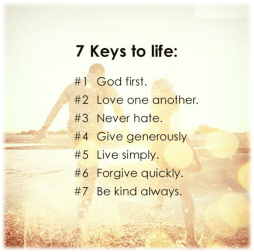
–Love Others
–Be kind and generous to family and friends
–Be humble
–Put others (Lot and family) ahead of your own gain
–Be wise in your dealings with neighbors and enemies
–Walk with God
–Listen to God
–Talk with God
–Repentant and Forgiven
“He died happy at a ripe old age, full of years, and was buried with his family.” Did he die “happy” because of these traits?
Is that how we will leave this earth…happy, blessed and fulfilled?
Who am I in the “dash”? What am I doing? Will I leave earth as Abraham did…happy and blessed?
Genesis 25, The Message
1-2 Abraham married a second time; his new wife was named Keturah. She gave birth to Zimran, Jokshan, Medan, Midian, Ishbak, and Shuah.
3 Jokshan had Sheba and Dedan.
Dedan’s descendants were the Asshurim, the Letushim, and the Leummim.
4 Midian had Ephah, Epher, Hanoch, Abida, and Eldaah—all from the line of Keturah.
5-6 But Abraham gave everything he possessed to Isaac. While he was still living, he gave gifts to the sons he had by his concubines, but then sent them away to the country of the east, putting a good distance between them and his son Isaac.
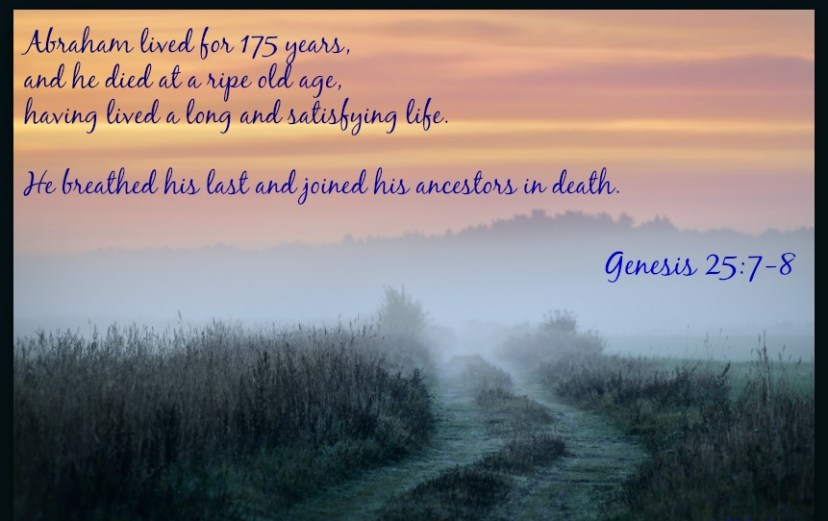 7-11 Abraham lived 175 years. Then he took his final breath. He died happy at a ripe old age, full of years, and was buried with his family. His sons Isaac and Ishmael buried him in the cave of Machpelah in the field of Ephron son of Zohar the Hittite, next to Mamre. It was the field that Abraham had bought from the Hittites. Abraham was buried next to his wife Sarah. After Abraham’s death, God blessed his son Isaac. Isaac lived at Beer Lahai Roi.
The Family Tree of Ishmael
12 This is the family tree of Ishmael son of Abraham, the son that Hagar the Egyptian, Sarah’s maid, bore to Abraham.
13-16 These are the names of Ishmael’s sons in the order of their births: Nebaioth, Ishmael’s firstborn, Kedar, Adbeel, Mibsam, Mishma, Dumah, Massa, Hadad, Tema, Jetur, Naphish, and Kedemah—all the sons of Ishmael. Their settlements and encampments were named after them. Twelve princes with their twelve tribes.
17-18 Ishmael lived 137 years. When he breathed his last and died he was buried with his family. His children settled down all the way from Havilah near Egypt eastward to Shur in the direction of Assyria. The Ishmaelites didn’t get along with any of their kin.
Jacob and Esau
19-20 This is the family tree of Isaac son of Abraham: Abraham had Isaac. Isaac was forty years old when he married Rebekah daughter of Bethuel the Aramean of Paddan Aram. She was the sister of Laban the Aramean.
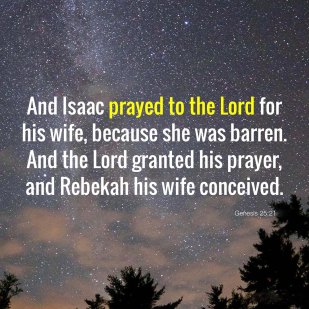 21-23 Isaac prayed hard to God for his wife because she was barren. God answered his prayer and Rebekah became pregnant. But the children tumbled and kicked inside her so much that she said, “If this is the way it’s going to be, why go on living?” She went to God to find out what was going on. God told her,
Two nations are in your womb,
two peoples butting heads while still in your body.
One people will overpower the other,
and the older will serve the younger.
24-26 When her time to give birth came, sure enough, there were twins in her womb. The first came out reddish, as if snugly wrapped in a hairy blanket; they named him Esau (Hairy). His brother followed, his fist clutched tight to Esau’s heel; they named him Jacob (Heel). Isaac was sixty years old when they were born.
 27-28 The boys grew up. Esau became an expert hunter, an outdoorsman. Jacob was a quiet man preferring life indoors among the tents. Isaac loved Esau because he loved his game, but Rebekah loved Jacob.
29-30 One day Jacob was cooking a stew. Esau came in from the field, starved. Esau said to Jacob, “Give me some of that red stew—I’m starved!” That’s how he came to be called Edom (Red).
31 Jacob said, “Make me a trade: my stew for your rights as the firstborn.”
32 Esau said, “I’m starving! What good is a birthright if I’m dead?”
33-34 Jacob said, “First, swear to me.” And he did it. On oath Esau traded away his rights as the firstborn. Jacob gave him bread and the stew of lentils. He ate and drank, got up and left. That’s how Esau shrugged off his rights as the firstborn.
WHAT WE LEARN FROM ABRAHAM’S “DASH”…
 Abraham’s “obituary” is found in verses 7-8. He died “in a good old age” as the Lord had promised him (Gen. 15:15). He had walked with the Lord for a century (12:4) and had been “the Friend of God” (James 2:23).
Old age is “good” if you have the blessing of the Lord on your life (Prov. 16:31). In spite of physical deterioration and weakness, we can enjoy His presence and do His will until the very end (2 Cor. 4:16–5:8).
Like Sarah before him, Abraham “died in faith.” For one hundred years, he had been a stranger and a pilgrim on the earth, seeking a heavenly country, and now his desires were fulfilled (Heb. 11:13-16). His life had not been an easy one, but he had walked by faith a day at a time, and the Lord had brought him through. Whenever Abraham failed the Lord, he returned to Him and started over again, and the Lord gave him a new beginning.
 He also died “full of years” (Gen. 25:8). This suggests more than a quantity of time; it suggests a quality of life.
James Strahan translates it “satisfied with life” (Hebrew Ideals, 197). Abraham, who was flourishing and fruitful to the very end, fulfilled the picture of old age given in Psalm 92:12-15.
How few people really experience joy and satisfaction when they reach old age! When they look back, it is with regret; when they look ahead, it is with fear; and when they look around, it is with complaint.
An anonymous wit claimed that he would rather be “over the hill” than under it. But death is not a threat to the person who trusts Jesus Christ and lives by His Word. Old age can be a time of rich experience in the Lord and wonderful opportunities to share Him with the next generation (Ps. 48:13-14; 78:5-7). Then, when death comes, you go to meet the Lord with joyful confidence.
God promised that Abraham would die “in peace” (Gen. 15:15), and he did. Welsh poet Dylan Thomas wrote that “old age should burn and rave at close of day,” but that is not the Christian approach to old age or death. Abraham was saved by faith (v. 6), so he had “peace with God” (Rom. 5:1). He had walked in the way of righteousness, so he experienced the peace of God (Isa. 32:17). The God who had guided him for a century would not forsake him at the very end (46:4).
Like everything else in life, to be successful in old age, you must start working at it very young. That is the counsel Solomon gives in Ecclesiastes 12. The chapter describes some of the inevitable physical problems of old age, but it also emphasizes that a godly life beginning in one’s youth is an investment that pays rich dividends when life draws to a close.
One day, you will be “gathered to your people.” If God’s people were your people in life, then you will be with them after death in the home that Jesus is now preparing (John 14:1-6). If the Christian family is not your “people,” then you will be with the crowd that is going to hell, and it is described in Revelation 21:8, 27. You had better make the right choice, because eternity is forever.
HOLY PAUSE
Where is my “dash” living leading me?
 THE WILL
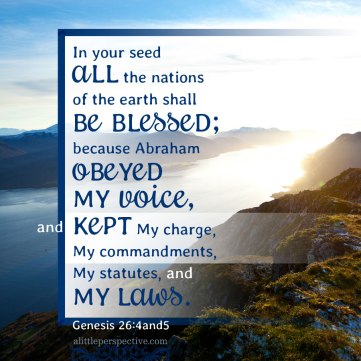
Abraham left his material wealth to his family and his spiritual wealth to the whole world, all who would believe on Jesus Christ. Isaac was God’s choice to carry on the covenant line. Keturah’s sons received gifts, but Isaac received the inheritance and the blessings of the covenant.
All who have trusted Jesus Christ “as Isaac was, are the children of promise” (Gal. 4:28). This means that we have a share in Abraham’s will! What did he leave us?
SAVED BY FAITH
To begin with, Abraham left us a clear witness of salvation through faith. Paul cited his example in Romans 4:1-5, relating it to Abraham’s experience in Genesis 15. Abraham could not have been saved by keeping the law because the law had not yet been given. He could not have been saved by the ritual of circumcision because God declared him to be righteous long before Abraham was circumcised. Like everybody else who has ever been saved, Abraham was saved by faith and by faith alone (Heb. 11; Gal. 3).
LIVE BY FAITH
Abraham also leaves us the example of a faithful life. James used Abraham to illustrate the importance of proving our faith by our works (James 2:14-26). Wherever Abraham went, he pitched his tent and built his altar, and he let the people of the land know that he was a worshiper of the true and living God. When he offered Isaac on the altar, Abraham proved his faith in God and his love for God. He was not saved by works, but he proved his faith by his works.
From Abraham, we learn how to walk by faith. True, he had his occasional lapses of faith, but the general manner of his life evidenced faith in God’s Word. “By faith Abraham … obeyed” (Heb. 11:8). “The pith, the essence of faith,” said Charles Spurgeon, “lies in this: a casting oneself on the promises.”
 True faith is our obedient response to the Word of God. God speaks, we hear Him and believe, and we do what He tells us to do. Abraham and Sarah held on to God’s promises and God rewarded their faith.
Finally, because of Abraham, we have a Savior. In the first verse of the New Testament (Matt. 1:1), Abraham’s name is joined with the names of David and Jesus Christ! God promised Abraham that through him all the world would be blessed (Gen. 12:1-3), and He has kept that promise.
There can be only one Abraham and Sarah in God’s great plan of redemption, but you and I have our tasks to perform in the will of God (Eph. 2:10).
OUR DASH
Today, at this very minute, we are writing our obituary and preparing our “last will and testament” as far as our spiritual heritage is concerned. Today we are getting ready for the last stage of life’s journey.
Are we making good preparations?
Are we living by faith?
“He has shown you, O mortal, what is good.
And what does the Lord require of you?
To act justly and to love mercy
and to walk humbly with your God”. (Micah 6:8, NIV)
Father God,
Your Friend, Abraham was not perfect, but He was still your forgiven Friend. You guided him meticulously through life. You promised a Savior through his genetic line and you delivered. Oh, how grateful we are that you did! This story of a man called Abraham is really all about you and your love, promises, provisions, power and protection that is offered to all of us. Thank you, Lord for this reminder of who YOU are. continue to transform me. Help me to live my “dash” well.
In Jesus Name, Amen
 The word “unanimous” was the key word for me. It would mean God was in this. It would mean that God led them to tell me that this was indeed God’s will for my life.
 Abraham was now an old man. God had blessed Abraham in every way.
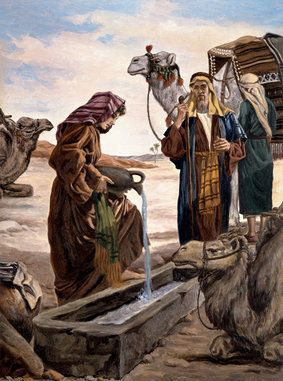
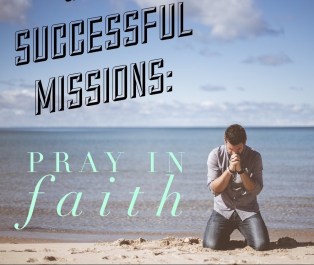 26-27 At this the man bowed in worship before God and prayed, “Blessed be God, God of my master Abraham: How generous and true you’ve been to my master; you’ve held nothing back. You led me right to the door of my master’s brother!”
 45-48 “I had barely finished offering this prayer, when Rebekah arrived, her jug on her shoulder. She went to the spring and drew water and I said, ‘Please, can I have a drink?’ She didn’t hesitate. She held out her jug and said, ‘Drink; and when you’re finished I’ll also water your camels.’ I drank, and she watered the camels. I asked her, ‘Whose daughter are you?’ She said, ‘The daughter of Bethuel whose parents were Nahor and Milcah.’ I gave her a ring for her nose, bracelets for her arms, and bowed in worship to God. I praised God, the God of my master Abraham who had led me straight to the door of my master’s family to get a wife for his son.
 58 She said, “I’m ready to go.”
 THINK ABOUT IT…
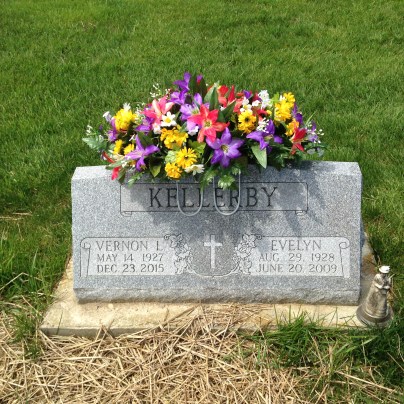 It is probably one of the hardest acts to do in life when you purchase enough land, from strangers, to bury your mom and then your dad. We live in Indiana. Ministry moved us here. We grew up in Oklahoma.
 Only a couple of years later, mom progressively lost strength. As she knew she was nearing the close of this chapter, she told Randy and I not take her body back to Oklahoma to be buried. “TOO expensive”, she said with a grin, even though the plot was paid for in Oklahoma by other family plots. “Purchase a plot of ground in a cemetery here”, she said. “I won’t really be there. I will be in a better place anyway, so it doesn’t matter.”
 -9 Then Abraham got up, bowed respectfully to the people of the land, the Hittites, and said, “If you’re serious about helping me give my wife a proper burial, intercede for me with Ephron son of Zohar. Ask him to sell me the cave of Machpelah that he owns, the one at the end of his land. Ask him to sell it to me at its full price for a burial plot, with you as witnesses.”
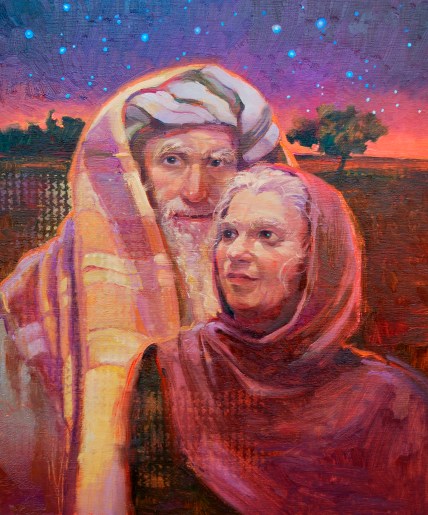 Sarah had been a good wife to Abraham and a good mother to Isaac. Yes, she had her faults, as we all do, but God called her a princess (Gen. 17:15) and listed her with the heroes and heroines of faith (Heb. 11:11). The apostle Peter named her as a good example for Christian wives to follow (1 Peter 3:1-6), and Paul used her to illustrate the grace of God in the life of the believer (Gal. 4:21-31).
 Sarah died in faith (Heb. 11:11, 13), so Abraham knew that she was in the Lord’s care. In the Old Testament, very little was revealed about the afterlife, but God’s people knew that God would receive them when they died (Ps. 73:24).
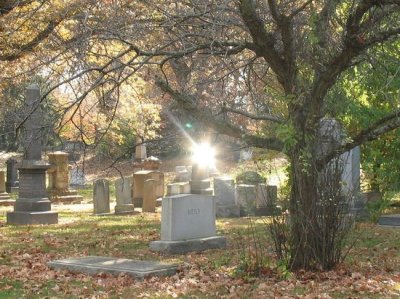 My mom, dad and both sets of grandparents knew this. I know this. I cling to what Jesus said,
 “Yes, I’m listening.”
 Our faith becomes faulty when we change our minds as our moods change. When we lead by our feelings, doubts easily slip in. We do things on our own to “help God”, especially when we think He forgot us or what He told us He would do in our lives.


 7 She also said,
 27-28 So the two of them made a covenant. Abraham took sheep and cattle and gave them to Abimelech. Abraham set aside seven sheep from his flock.
 While we are here on earth, we must expect both joy and sorrow, laughter and tears. You cannot have hills without valleys.
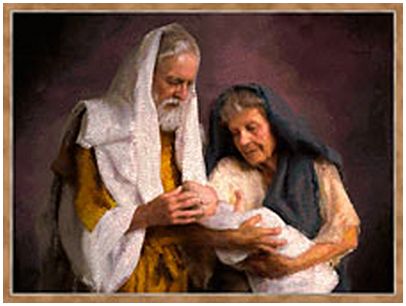
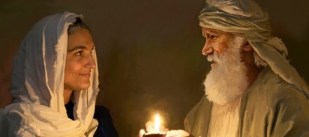
 Sarah had borne the burden of childlessness for many years, a heavy burden indeed in that culture and at that time. People must have smiled when they heard that her husband’s name was Abraham, “father of a multitude.” He was the father of one son, Ishmael, but that was far from a multitude, and Sarah had never given birth. But now all of her reproach was ended, and they were rejoicing in the arrival of their son.
 The birth of Isaac was certainly the revelation of God’s power. That was one reason why God waited so long: He wanted Abraham and Sarah to be “as good as dead” so that their son’s birth would be a miracle of God and not a marvel of human nature (Rom. 4:17-21).
 “No man in this world attains to freedom from any slavery except by entrance into some higher servitude,” said Phillips Brooks, and that “higher servitude” is personal surrender to Jesus Christ. No one is more free than the child of God who delights in God’s will and does it from the heart.
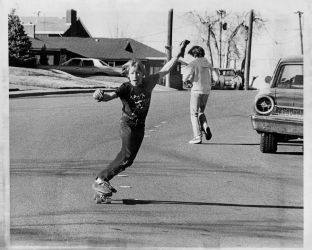 “What were you thinking?” How many times has this question been asked of us when we were kids right after doing foolish things? For example, going down a steep driveway with bulky tar strips dividing it in two places while barefoot on an old skateboard with actual skate wheels, not the kind we have today, was a bit challenging for me.

 1-2 Abraham traveled from there south to the Negev and settled down between Kadesh and Shur. While he was camping in Gerar, Abraham said of his wife Sarah, “She’s my sister.”
 4-5 Now Abimelech had not yet slept with her, hadn’t so much as touched her. He said, “Master, would you kill an innocent man? Didn’t he tell me, ‘She’s my sister’? And didn’t she herself say, ‘He’s my brother’? I had no idea I was doing anything wrong when I did this.”
 8-9 Abimelech was up first thing in the morning. He called all his house servants together and told them the whole story. They were shocked. Then Abimelech called in Abraham and said, “What have you done to us? What have I ever done to you that you would bring on me and my kingdom this huge offense? What you’ve done to me ought never to have been done.”
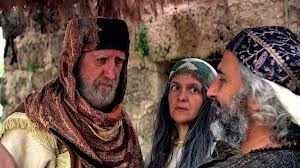 14-15 Then Abimelech gave Sarah back to Abraham, and along with her sent sheep and cattle and servants, both male and female. He said, “My land is open to you; live wherever you wish.”
 But before you draw some unwarranted conclusions, take time to consider the facts revealed in this event. Abraham’s failures were tragic, but from them we learn some valuable lessons to help us in our walk of faith.
 WHAT IS GOOD TO KNOW…
 The important thing is that we deal with our sins humbly and honestly, confess them to God, judge them and forsake them, and claim His promises of forgiveness (1 John 1:9; Mic. 7:18-19; Isa. 55:6-13).
 A fellow was stuck on his rooftop in a flood. He was praying to God for help. Soon a man in a rowboat came by and the fellow shouted to the man on the roof, “Jump in, I can save you.” The stranded fellow shouted back, “No, it’s OK, I’m praying to God and he is going to save me.” So the rowboat went on.
 1-2 The two angels arrived at Sodom in the evening. Lot was sitting at the city gate. He saw them and got up to welcome them, bowing before them and said, “Please, my friends, come to my house and stay the night. Wash up. You can rise early and be on your way refreshed.”
 10-11 But the two men reached out and pulled Lot inside the house, locking the door. Then they struck blind the men who were trying to break down the door, both leaders and followers, leaving them groping in the dark.
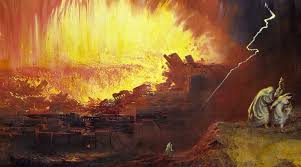 23 The sun was high in the sky when Lot arrived at Zoar.
 29 And that’s the story: When God destroyed the Cities of the Plain, he was mindful of Abraham and first got Lot out of there before he blasted those cities off the face of the Earth.
 FAITH AND WALK: LOT vs. ABRAHAM
 Who interceded for you when you were lost without God?
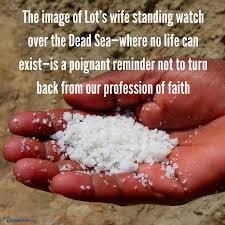 The first time God rescued Lot, he was a prisoner of war (14:12, 16), and he went right back into Sodom. That painful experience should have warned him that he was out of the will of God, but if Lot heard the warning, he certainly did not heed it. Now God has to take Lot by the hand and forcibly drag him out of Sodom! First, Lot lingered; then he argued; then he begged to be allowed to go his own way. Instead of being grateful for God’s mercy and obeying his rescuers, Lot resisted them and created trouble for them. In contrast, Abraham obeyed God’s will even to the point of offering up his own son.
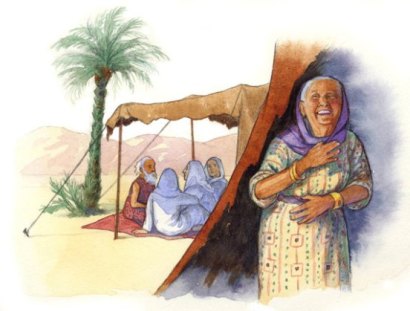 God will listen to an honest, sincere heart! Then why don’t we speak with the God of Creation, who knows all, with complete honesty, relieving our hearts of the burdens we carry? Sometimes in our religious words, God must be waiting patiently with thoughts of “Get the point, Susan”, I know what you need, just ask.
 “I didn’t laugh”, says fearful Sarah. God came back with, “Yes, you did.” We don’t know if, like kids, they went back and forth with, “Yes, you did” “No, I didn’t” “Yes, you laughed, I heard you”. In this episode in the school of faith, we learn we are to be honest and reverent with God
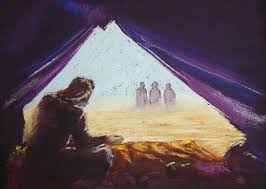 1-2 God appeared to Abraham at the Oaks of Mamre while he was sitting at the entrance of his tent. It was the hottest part of the day. He looked up and saw three men standing. He ran from his tent to greet them and bowed before them.
 10 One of them said, “I’m coming back about this time next year. When I arrive, your wife Sarah will have a son.” Sarah was listening at the tent opening, just behind the man.
 13-14 God said to Abraham, “Why did Sarah laugh saying, ‘Me? Have a baby? An old woman like me?’ Is anything too hard for God? I’ll be back about this time next year and Sarah will have a baby.”
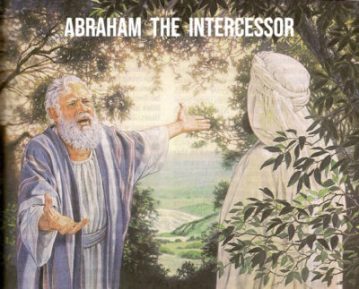
 23-25 Abraham confronted him, “Are you serious? Are you planning on getting rid of the good people right along with the bad? What if there are fifty decent people left in the city; will you lump the good with the bad and get rid of the lot? Wouldn’t you spare the city for the sake of those fifty innocents? I can’t believe you’d do that, kill off the good and the bad alike as if there were no difference between them. Doesn’t the Judge of all the Earth judge with justice?”
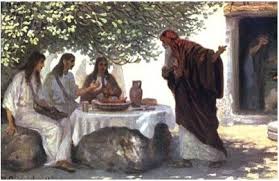 Abraham was taking his daily rest during the heat of the day when he saw three strangers approaching. Few people ever traveled when the sun was so hot, so Abraham was immediately both curious and courteous. Hospitality is the first law of the East, and Abraham faithfully obeyed it.
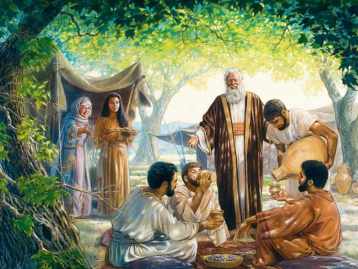 Abraham’s service was marked with humility. He bowed to his guests (Gen. 18:2), called himself a servant (vv. 3, 5), and called the feast only “a morsel of bread.” He served the three visitors and then stood near to be available if needed. He interrupted a comfortable afternoon nap to become a servant to three strangers, but because of that service, he received tremendous blessings for himself and his wife.
 The Lord had come all the way from heaven to give Abraham and Sarah an announcement: At that same time next year, Sarah would give birth to the promised son! The news was so incredible that Sarah laughed and questioned whether such a thing could happen to two elderly people. Abraham’s laughter had been born out of joyful faith (17:17), but Sarah’s laughter was marked by unbelief, even though she tried to deny it.
 Dear Heavenly Father,
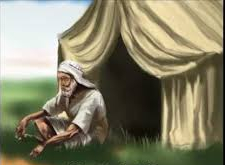
 Imagine you are serving Abram. You stay close to his tent, within the hearing of his voice, so that you don’t miss an order or command to do something that he asks. When he speaks you are quick to obey for this is what you do. It is who you are–a servant. Your entire life is devoted to please your master.
 As you are serving on an ordinary day, The God, the only God, of Abram shows up! You watch in awe as God speaks to your master. He tells Abram to “live entirely” for God. You see your master fall on his knees, face to the ground, in humble fear and holy reverence before God.

 15-16 God continued speaking to Abraham, “And Sarai your wife: Don’t call her Sarai any longer; call her Sarah. I’ll bless her—yes! I’ll give you a son by her! Oh, how I’ll bless her! Nations will come from her; kings of nations will come from her.”
 The secret of a perfect walk before God is a personal worship of God. Like Abraham, every believer must fall before the Lord and yield everything to Him. If He is El Shaddai–“God Almighty”–then who are we to resist His will?
 Since God’s covenant involved Abraham’s “seed,” it was fitting that the mark of the covenant be on the male organ of generation. Since all people are conceived in sin (Ps. 51:5), this special mark would remind them that they were accepted by God because of His gracious covenant. It was God who chose the Jews, not the Jews who chose God (Deut. 7:1-11), and He chose them to be a holy people.
 What does all of this mean to Christian believers today? The seal of our salvation is not an external rite but the presence of an internal witness in the person of the Holy Spirit of God (Eph. 1:13; 4:30; Rom. 8:9, 16). We have experienced a “spiritual circumcision” (Col. 2:9-12) that makes us part of the “true circumcision” (Phil. 3:1-3 nasb).
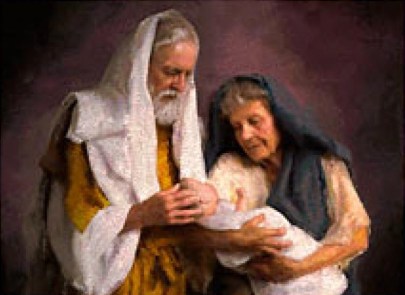 Ishmael represented the past, Isaac the future. Ishmael symbolized man’s fleshly way of accomplishing something for God, but Isaac was a miracle baby, born by the power of God.

 1-2 Sarai, Abram’s wife, hadn’t yet produced a child.
 13 She answered God by name, praying to the God who spoke to her, “You’re the God who sees me!
 The evidences of true biblical faith are:

