
John – God Speaks!

The events in this section occurred about two and a half months after those described in John 10:1–21. John put them together because in both messages, Jesus used the imagery of the shepherd and the sheep.
The “Feast of the Dedication” (Hanukkah, “the feast of lights”) takes place in December, near the time of the Christian Christmas celebration. The feast commemorates the rededication of the temple by Judas Maccabeus in 164 BC, after it had been desecrated by the Romans. This historical fact may bear a relationship to the words of Jesus in John 10:36, for He had been set apart (dedicated) by the Father and sent into the world. The Jewish leaders were celebrating a great event in history yet passing by a great opportunity right in their own temple!

The leaders surrounded Jesus in the temple so that He had to stop and listen to them. They had decided that it was time for a “showdown,” and they did not want Him to evade the issue any longer. “How long are You going to hold us in suspense?” they kept saying to Him. “Tell us plainly—are You the Messiah?”
John 10, New Living Translation
Jesus Claims to Be the Son of God
22 It was now winter, and Jesus was in Jerusalem at the time of Hanukkah, the Festival of Dedication. 23 He was in the Temple, walking through the section known as Solomon’s Colonnade. 24 The people surrounded him and asked, “How long are you going to keep us in suspense? If you are the Messiah, tell us plainly.”
 25 Jesus replied, “I have already told you, and you don’t believe me. The proof is the work I do in my Father’s name. 26 But you don’t believe me because you are not my sheep. 27 My sheep listen to my voice; I know them, and they follow me. 28 I give them eternal life, and they will never perish. No one can snatch them away from me, 29 for my Father has given them to me, and he is more powerful than anyone else. No one can snatch them from the Father’s hand. 30 The Father and I are one.”
31 Once again the people picked up stones to kill him. 32 Jesus said, “At my Father’s direction I have done many good works. For which one are you going to stone me?”
 33 They replied, “We’re stoning you not for any good work, but for blasphemy! You, a mere man, claim to be God.”
34 Jesus replied, “It is written in your own Scriptures that God said to certain leaders of the people, ‘I say, you are gods!’ 35 And you know that the Scriptures cannot be altered. So if those people who received God’s message were called ‘gods,’ 36 why do you call it blasphemy when I say, ‘I am the Son of God’? After all, the Father set me apart and sent me into the world. 37 Don’t believe me unless I carry out my Father’s work. 38 But if I do his work, believe in the evidence of the miraculous works I have done, even if you don’t believe me. Then you will know and understand that the Father is in me, and I am in the Father.”
39 Once again they tried to arrest him, but he got away and left them. 40 He went beyond the Jordan River near the place where John was first baptizing and stayed there awhile. 41 And many followed him. “John didn’t perform miraculous signs,” they remarked to one another, “but everything he said about this man has come true.” 42 And many who were there believed in Jesus.
WHAT DO WE LEARN?
Jesus explains a threefold relationship to His sheep. He has a LOVING relationship because He died for the sheep, as well as a LIVING relationship because He cares for the sheep. It is also a LASTING relationship, for He keeps His sheep and not a one is lost.
Jesus made a statement that He knew would startle His enemies and give them more reason to oppose Him (John 10:30). It was the “plain answer” that the religious leaders had asked for. “I and my Father are one” is as clear a statement of His deity as you will find anywhere in Scripture. This was even stronger than His statement that He had come down from heaven (John 6) or that He existed before Abraham ever lived (John 8:58).
The word ONE does not suggest that the Father and the Son are identical persons. Rather, it means that they are one in essence: the Father is God and the Son is God, but the Father is not the Son and the Son is not the Father. He is speaking about unity, not identity. (See John 17:21–24 for similar language.)
John 10:36 is crucial because it gives a double affirmation of the deity of Christ. First, the Father sanctified (set apart) the Son and sent Him into the world, and second, Jesus stated boldly, “I am the Son of God” (see John 5:25). He gave them the “plain answer” they asked for, but they would not believe it!
The common people continued to seek Jesus, and He continued to minister to them. It is worth noting that John the Baptist’s witness was still bearing fruit long after he was dead! His witness to Jesus Christ led many to trust the Savior. John was not a miracle worker, but he was a faithful witness who pointed to Jesus Christ.
 HOLY PAUSE
Have you responded personally to our Lord’s three great declarations recorded in this chapter?
He is the Door. Have you “entered in” by faith so that you are saved?
He is the Good Shepherd. Have you heard His voice and trusted Him? After all, He laid down His life for you! He is the Son of God.

Do you believe that? Have you given yourself to Him and received eternal life? Remember His stern warning:
“…unless you believe that I AM who I claim to be, you will die in your sins.” (John 8:24)
Dear Heavenly Father, Lord and Savior,
I believe. I’m listening for Your Voice. Guide my every thought and action today.
In Jesus Name, Amen
 Jesus came to a dark world with Truth. Truth was the Light that pierced the darkness and brought all lies out into the open. Truth is truth whether we choose to believe Him…or not. The people were divided over Jesus’ declarations of Who He was. People are still divided today. Jesus is Truth.
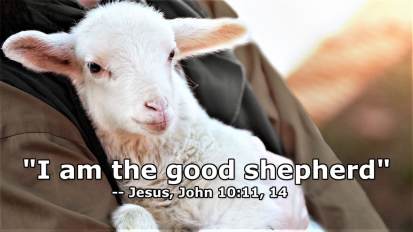
 –“I AM the Good Shepherd. The sheep hear My Voice.”
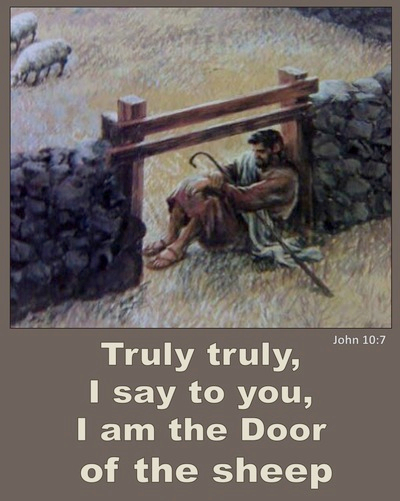 “I am the gate. If anyone enters by Me, he will be saved, and will go in and out and find pasture” (John 10:9).
 “I tell you the truth, anyone who sneaks over the wall of a sheepfold, rather than going through the gate, must surely be a thief and a robber! 2 But the one who enters through the gate is the shepherd of the sheep. 3 The gatekeeper opens the gate for him, and the sheep recognize his voice and come to him. He calls his own sheep by name and leads them out. 4 After he has gathered his own flock, he walks ahead of them, and they follow him because they know his voice. 5 They won’t follow a stranger; they will run from him because they don’t know his voice.”
 6 Those who heard Jesus use this illustration didn’t understand what he meant, 7 so he explained it to them: “I tell you the truth, I am the gate for the sheep. 8 All who came before me were thieves and robbers. But the true sheep did not listen to them. 9 Yes, I am the gate. Those who come in through me will be saved. They will come and go freely and will find good pastures. 10 The thief’s purpose is to steal and kill and destroy. My purpose is to give them a rich and satisfying life.
 14 “I am the good shepherd; I know my own sheep, and they know me, 15 just as my Father knows me and I know the Father. So I sacrifice my life for the sheep. 16 I have other sheep, too, that are not in this sheepfold. I must bring them also. They will listen to my voice, and there will be one flock with one shepherd.
 19 When he said these things, the people were again divided in their opinions about him. 20 Some said, “He’s demon possessed and out of his mind. Why listen to a man like that?” 21 Others said, “This doesn’t sound like a man possessed by a demon! Can a demon open the eyes of the blind?”
 Among preachers the word theology is used in their learning process. It is typically not used in a sermon. But why not? We all think something. That’s what theology is…what we think with the way we think about God. We shouldn’t let the word theology scare us. We should consider the implications of what our hearts, minds and souls think about God. That is sometimes scarier and will always be reflected in our behavior.

 They turned in their thinking from God to themselves. These theologians allowed rules and regulations be the highest authority in their lives. They become self proclaimed gods by creating even more detailed rules based on the rules so they could rule over those who didn’t know all the rules. Was that too much? Rules ruled over mankind but not God the Ruler of all. The Law intended to guide people and help them love God back was lost. Relationship with God was lost.
 As Jesus was walking along, he saw a man who had been blind from birth. 2 “Rabbi,” his disciples asked him, “why was this man born blind? Was it because of his own sins or his parents’ sins?”
 6 Then he spit on the ground, made mud with the saliva, and spread the mud over the blind man’s eyes. 7 He told him, “Go wash yourself in the pool of Siloam” (Siloam means “sent”). So the man went and washed and came back seeing!
 17 Then the Pharisees again questioned the man who had been blind and demanded, “What’s your opinion about this man who healed you?”
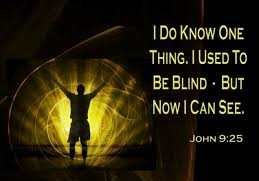 30 “Why, that’s very strange!” the man replied. “He healed my eyes, and yet you don’t know where he comes from? 31 We know that God doesn’t listen to sinners, but he is ready to hear those who worship him and do his will. 32 Ever since the world began, no one has been able to open the eyes of someone born blind. 33 If this man were not from God, he couldn’t have done it.”
 39 Then Jesus told him, “I entered this world to render judgment—to give sight to the blind and to show those who think they see that they are blind.”
 HOLY PAUSE

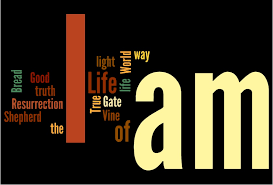 John – God Speaks!
 Jesus replied, “The one I have always claimed to be. 26 I have much to say about you and much to condemn, but I won’t. For I say only what I have heard from the one who sent me, and he is completely truthful.” 27 But they still didn’t understand that he was talking about his Father.
 31 Jesus said to the people who believed in him, “You are truly my disciples if you remain faithful to my teachings. 32 And you will know the truth, and the truth will set you free.”
 54 Jesus answered, “If I want glory for myself, it doesn’t count. But it is my Father who will glorify me. You say, ‘He is our God,’ 55 but you don’t even know him. I know him. If I said otherwise, I would be as great a liar as you! But I do know him and obey him. 56 Your father Abraham rejoiced as he looked forward to my coming. He saw it and was glad.”
 WHAT DO WE LEARN FROM JESUS?
 His statement found in John 8:58 can be translated, “Before Abraham came into being, I Am.” Again, this was another affirmation of His divine sonship, and the Jewish leaders received it as such. He had once again made Himself equal with God (John 5:18), and this was the sin of blasphemy, worthy of death (Lev. 24:16). Jesus was divinely protected and simply walked away. His hour had not yet come. We cannot help but admire His courage as He presented the truth and invited blind religious men to trust Him and be set free.
 It is truly a matter of life or death!
 To “follow” the Lord Jesus means to believe on Him, to trust Him, and the results are life and light for the believer. The unsaved are walking in darkness because they love darkness (John 3:17.). One of the major messages in this gospel is that the spiritual light is now shining, but people cannot comprehend it— and they try to put it out (John 1:4–5).
 12 Jesus spoke to the people once more and said, “I am the light of the world. If you follow me, you won’t have to walk in darkness, because you will have the light that leads to life.”
 14 Jesus told them, “These claims are valid even though I make them about myself. For I know where I came from and where I am going, but you don’t know this about me. 15 You judge me by human standards, but I do not judge anyone. 16 And if I did, my judgment would be correct in every respect because I am not alone. The Father who sent me is with me. 17 Your own law says that if two people agree about something, their witness is accepted as fact. 18 I am one witness, and my Father who sent me is the other.”
 THINK ABOUT IT…
 The religious elite, the learned, pious leaders of the community have bee bested by Jesus’s words and demeanor every time they encounter him. They talk doctrine and He talks salvation. They talk adhering to rules beyond The Law and He talks of the true intent of The Law of love, mercy and grace. They cannot seem to trap Jesus with words, so it’s time to down and dirty by demoralizing a woman and throwing her at the feet of Jesus as He is teaching!
 I’m wondering…are these words from Jesus spoken earlier, in the cover of darkness, going through Nicodemus’ mind while watching this woman, used as bait, in this grand scheme?

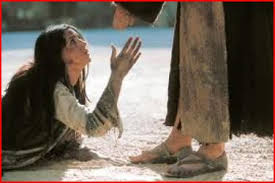 9 When the accusers heard this, they slipped away one by one, beginning with the oldest, until only Jesus was left in the middle of the crowd with the woman. 10 Then Jesus stood up again and said to the woman, “Where are your accusers? Didn’t even one of them condemn you?”
 We do not know what He wrote on the dirt floor of the temple. Was He simply reminding them that the Ten Commandments had been originally written “with the finger of God” and that He is God? Or was He perhaps reminding them of the warning in Jeremiah 17:13?
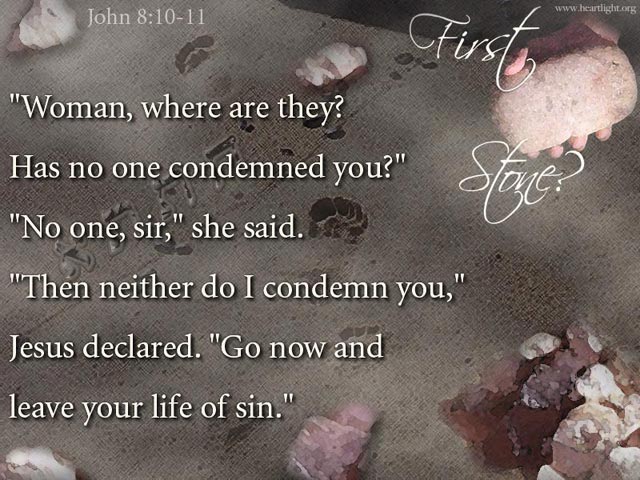 The woman, trembling, is waiting for the condemnation of Jesus.
 Warren Wiersbe relates, “we must not misinterpret this event to mean that Jesus was “easy on sin” or that He contradicted the law. For Jesus to forgive this woman meant that He had to one day die for her sins.”
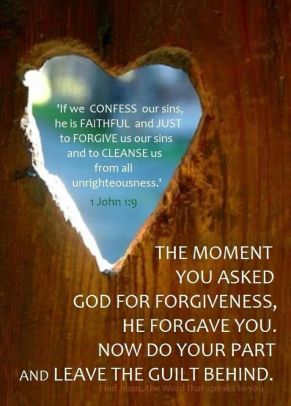
 We are going to dive right into the heart of this story about God and what He did and still does to redeem us daily. Because sometimes, and I do it myself, we continue to stone ourselves with rocks of self doubt, worry, guilt and generally thinking we will never be good enough. We get up from our altars of prayer for forgiveness and almost immediately we revisit the sin in our thoughts.
 I want to take some time to lay down these heavy rocks and lean into what it means to be redeemed by the blood of the Lamb, Jesus Christ! We’re going to lay down the jagged stones of guilt that makes us edgy and disagreeable.
 John – God Speaks!

 John 7, New Living Translation
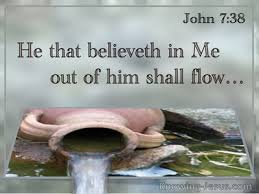 Our relationship becomes more intimate as we come to God through Jesus to commune (talk and listen) with Him. We tell him all that is in our hearts He himself created. We listen to all He has to say to us. We follow His best for our lives. He helps us wade through the troubles of this world with wisdom asked for and received. The more we talk, listen and obey the more intimate our relationship becomes. We find also that the closer we abide with him the closer and more intimate our relationships becomes with others.
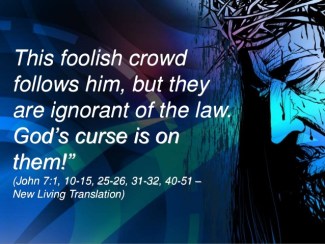 47 “Have you been led astray, too?” the Pharisees mocked. 48 “Is there a single one of us rulers or Pharisees who believes in him? 49 This foolish crowd follows him, but they are ignorant of the law. God’s curse is on them!”
 You cannot help but feel sorry for the people described in this chapter, people who responded to Jesus in the wrong ways. His half-brothers responded with disbelief, various people responded with debate, and the result was division. Had they willingly received the truth, and had they acted with sincere obedience, they would have ended up at the feet of Jesus, confessing Him as Messiah and Son of God.
 Imagine growing up in a deeply religious family who are at their place of worship “every time the doors are open”. This family probably helps out those in their community, as long as they are part of their community. This family is so devout that they will travel at their own expense to the “big city” to attend religious conventions with other religious families of their faith. The family works hard to obey all the rules. This family believes in doing the right things no matter what.
 Jesus knows their hearts. Jesus also knows the hearts of the crowd and the hearts of the religious elite who are in power. Jesus’ Father knows it is not time to reveal Jesus for Who He really is but speaks through Jesus at the event and at the synagogue. God’s word in Jesus who is the “word made flesh” speaks. Remember that thought.
 After this, Jesus traveled around Galilee. He wanted to stay out of Judea, where the Jewish leaders were plotting his death. 2 But soon it was time for the Jewish Festival of Shelters, 3 and Jesus’ brothers said to him, “Leave here and go to Judea, where your followers can see your miracles! 4 You can’t become famous if you hide like this! If you can do such wonderful things, show yourself to the world!” 5 For even his brothers didn’t believe in him.

 32 When the Pharisees heard that the crowds were whispering such things, they and the leading priests sent Temple guards to arrest Jesus. 33 But Jesus told them, “I will be with you only a little longer. Then I will return to the one who sent me. 34 You will search for me but not find me. And you cannot go where I am going.”
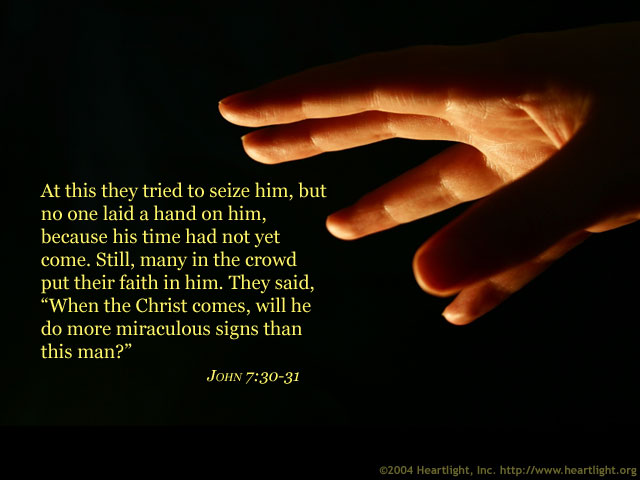 NOTE: Many people in the crowd of festival attenders would not be influenced by the attitude of the religious leaders at Jerusalem. You will note in John 7:20 that “the people” were amazed that anybody would want to kill Jesus! They were not up to date on all the gossip in the city and had to learn the hard way that Jesus was considered a lawbreaker by the officials.
 Children’s minds are not like adult minds. As a former first grade teacher I had to be careful how I explained new concepts because many times what I thought I was saying was not necessarily what they were hearing, picturing and interpreting in their minds. That’s why as teachers we ask many questions to clarify what the students are learning. We want to make sure they “get it” before moving on to the next step in the process.
 Jesus is teaching the masses who now followed after being fed in the wilderness with a few fish and loaves of bread, “I AM the Bread of Life. He takes his learners back to the manna days of Moses and God’s people who roamed the desert because of disobedience. Being the Master Teacher he begins with what they already know and tries to take them farther in their thinking.
 22 The next day the crowd that had stayed on the far shore saw that the disciples had taken the only boat, and they realized Jesus had not gone with them. 23 Several boats from Tiberias landed near the place where the Lord had blessed the bread and the people had eaten. 24 So when the crowd saw that neither Jesus nor his disciples were there, they got into the boats and went across to Capernaum to look for him. 25 They found him on the other side of the lake and asked, “Rabbi, when did you get here?”
 35 Jesus replied, “I am the bread of life. Whoever comes to me will never be hungry again. Whoever believes in me will never be thirsty. 36 But you haven’t believed in me even though you have seen me. 37 However, those the Father has given me will come to me, and I will never reject them. 38 For I have come down from heaven to do the will of God who sent me, not to do my own will.
 52 Then the people began arguing with each other about what he meant. “How can this man give us his flesh to eat?” they asked.
 The purpose of the sign was that He might preach the sermon. Again, it was a ministry of “grace and truth” (John 1:17). In grace, our Lord fed the hungry people, but in truth, He gave them the Word of God. They wanted the food but they did not want the truth, and, in the end, most of them abandoned Jesus and refused to walk with Him. He lost His crowd with one sermon!
 The preaching of the Word of God always leads to a sifting of the hearts of the listeners. God draws sinners to the Savior through the power of truth, His Word. Those who reject the Word will reject the Savior. Those who receive the Word will receive the Savior and experience the new birth, eternal life.

 The disciples are in choppy waters, miles from shore, too far to bail and swim, then the Son of God comes walking toward them and they are eager to let Him in the boat with them. He calms the sea. He calls out “Don’t be afraid. I am here!” And immediately they arrive at their destination.

 16 That evening Jesus’ disciples went down to the shore to wait for him. 17 But as darkness fell and Jesus still hadn’t come back, they got into the boat and headed across the lake toward Capernaum. 18 Soon a gale swept down upon them, and the sea grew very rough. 19 They had rowed three or four miles when suddenly they saw Jesus walking on the water toward the boat. They were terrified, 20 but he called out to them, “Don’t be afraid. I am here!” 21 Then they were eager to let him in the boat, and immediately they arrived at their destination!

