
Luke – Doors Wide Open!
Anyone ever go to church camp as a teen? Did you wonder why the appliances in the kitchen were old and barely working? Did you wonder why the dorms and other buildings were crooked and airy with holes, allowing small critters to come in at night and take up residence over the winter? Randy and I remember a ravine in the back of our church camp property where old appliances were dumped that just would work any longer. It was quite a graveyard. How did this happen? Why did this happen?
 People gave their leftovers to the work of salvation, changing the spiritual address of youth and young adults forever while helping them develop the most important relationship they will every have in their lives…an intimate, growing relationship with Jesus Christ! Even when we were young, Randy and I wondered why people gave broken down appliances to camp instead of investing in what worked. In some cases, old stoves were a safety hazard!
What about our thinking back then (and now) about giving to those on mission fields. Do we take or send new items or that which we have discarded? I know a true story of a church who saved their USED tea bags then sent them to missionaries as a “gift”.
Do we give all or our leftovers? What about those in our own communities? New or used from our own surplus? Jesus notices these differing attitudes in the Temple. He sees a widow who embraces giving in the way that pleases God and points her out to his disciples and others around him. She gave all and she gave quietly.
Luke 21, New Living Translation
The Widow’s Offering
 21 While Jesus was in the Temple, he watched the rich people dropping their gifts in the collection box. 2 Then a poor widow came by and dropped in two small coins.
3 “I tell you the truth,” Jesus said, “this poor widow has given more than all the rest of them. 4 For they have given a tiny part of their surplus, but she, poor as she is, has given everything she has.”
WHAT DO WE LEARN?
Jesus and his followers have arrived in Jerusalem. The work will go on until Jesus finishes the mission God sent Him to complete. The disciples are in awe of the beautiful structure around them. They do not see what Jesus sees. They do not notice what Jesus observes. It all started with the arrival in the temple of a poor widow with an offering for the Lord. Compared to the gifts of the rich men, her two copper coins seemed insignificant, but Jesus said that she gave more than all the others combined. “The widow’s mite” does not represent the LEAST we can give, but the MOST, our very all.
When it comes to our giving of time and money, God sees more than the portion; He also sees the proportion. Men see what is given, but God sees what is left, and by that He measures the gift and the condition of our hearts. Winston Churchill said, “We make a living by what we get, but we make a life by what we give.” He may have learned that from Jesus (Luke 6:38) or perhaps from Paul (2 Cor. 8:1–15).
The temple was a beautiful structure, embellished with many costly decorations that a poor widow could never give, and the disciples mentioned this to Jesus. But our Lord was not impressed. He told them that the day would come when the beautiful Jewish temple would be demolished (Luke 21:5–6). He had already announced that the city would be destroyed (Luke 19:41–44), but now He specifically mentioned the destruction of the temple.
Jesus Speaks about the Future
5 Some of his disciples began talking about the majestic stonework of the Temple and the memorial decorations on the walls. But Jesus said, 6 “The time is coming when all these things will be completely demolished. Not one stone will be left on top of another!”
7 “Teacher,” they asked, “when will all this happen? What sign will show us that these things are about to take place?”
8 He replied, “Don’t let anyone mislead you, for many will come in my name, claiming, ‘I am the Messiah,’ and saying, ‘The time has come!’ But don’t believe them. 9 And when you hear of wars and insurrections, don’t panic. Yes, these things must take place first, but the end won’t follow immediately.” 10 Then he added, “Nation will go to war against nation, and kingdom against kingdom. 11 There will be great earthquakes, and there will be famines and plagues in many lands, and there will be terrifying things and great miraculous signs from heaven.
12 “But before all this occurs, there will be a time of great persecution. You will be dragged into synagogues and prisons, and you will stand trial before kings and governors because you are my followers. 13 But this will be your opportunity to tell them about me. 14 So don’t worry in advance about how to answer the charges against you, 15 for I will give you the right words and such wisdom that none of your opponents will be able to reply or refute you! 16 Even those closest to you—your parents, brothers, relatives, and friends—will betray you. They will even kill some of you. 17 And everyone will hate you because you are my followers. 18 But not a hair of your head will perish! 19 By standing firm, you will win your souls.
 20 “And when you see Jerusalem surrounded by armies, then you will know that the time of its destruction has arrived. 21 Then those in Judea must flee to the hills. Those in Jerusalem must get out, and those out in the country should not return to the city. 22 For those will be days of God’s vengeance, and the prophetic words of the Scriptures will be fulfilled. 23 How terrible it will be for pregnant women and for nursing mothers in those days. For there will be disaster in the land and great anger against this people. 24 They will be killed by the sword or sent away as captives to all the nations of the world. And Jerusalem will be trampled down by the Gentiles until the period of the Gentiles comes to an end.
25 “And there will be strange signs in the sun, moon, and stars. And here on earth the nations will be in turmoil, perplexed by the roaring seas and strange tides. 26 People will be terrified at what they see coming upon the earth, for the powers in the heavens will be shaken. 27 Then everyone will see the Son of Man coming on a cloud with power and great glory. 28 So when all these things begin to happen, stand and look up, for your salvation is near!”
 29 Then he gave them this illustration: “Notice the fig tree, or any other tree. 30 When the leaves come out, you know without being told that summer is near. 31 In the same way, when you see all these things taking place, you can know that the Kingdom of God is near. 32 I tell you the truth, this generation will not pass from the scene until all these things have taken place. 33 Heaven and earth will disappear, but my words will never disappear.
34 “Watch out! Don’t let your hearts be dulled by carousing and drunkenness, and by the worries of this life. Don’t let that day catch you unaware, 35 like a trap. For that day will come upon everyone living on the earth. 36 Keep alert at all times. And pray that you might be strong enough to escape these coming horrors and stand before the Son of Man.”
37 Every day Jesus went to the Temple to teach, and each evening he returned to spend the night on the Mount of Olives. 38 The crowds gathered at the Temple early each morning to hear him.
MORE TO LEARN AND THINK ABOUT…(With the help of Warren Wiersbe, Commentator)
Jesus left the temple and went to the Mount of Olives, and there Peter, James, and John asked Him three questions: (1) When would the temple be destroyed? (2) What would be the sign of His coming? (3) What would be the sign of the end of the age?
The disciples thought that these three events would occur at the same time, but Jesus explained things differently. Actually, the temple would be destroyed first, and then there would be a long period of time before He would return and establish His kingdom on earth

Keep in mind that this was a message given to Jews by a Jew about the future of the Jewish nation. Though there are definite applications to God’s people today, the emphasis is on Jerusalem, the Jews, and the temple. Our Lord was not discussing His coming for the church, for that can occur at any time and no signs need precede it (1 Cor. 15:51–58; 1 Thess. 4:13–18).
Remember, the things Jesus described here are not signs of His soon return, because they have been going on for centuries. However, as the coming of the Lord draws near, these things will multiply and intensify. No matter what our views may be of the coming of the Lord, we all need to heed His three admonitions: “Don’t be deceived! Don’t be afraid! Don’t worry!”
If believers during that difficult age will be tempted to yield to the world and the flesh, Christians in this present age of comfort and affluence must face even greater dangers. We today do not know when our Lord will return, and it behooves us to be faithful and to be ready.

“I’m not looking for signs,” said the late Vance Havner; “I’m listening for a sound.” The sound of the trumpet! The shout of the archangel!
“Even so, come, Lord Jesus!” (Rev. 22:20).
All to Jesus I surrender
All to Him I freely give
I will ever love and trust Him
In His presence daily live
All to Jesus I surrender
Humbly at His feet I bow
Worldly pleasures all forsaken
Take me Jesus take me now
I surrender all
I surrender all
All to Thee my blessed Savior
I surrender all
All to Jesus I surrender
Make me Savior wholly Thine
Let me feel the Holy Spirit
Truly know that Thou art mine
All to Jesus I surrender…
In Jesus Name, Amen
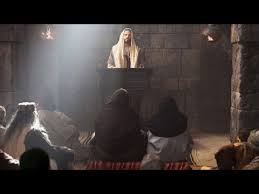
 The only explanation is that Messiah must be both God and man. As eternal God, Messiah is David’s Lord, but as man, He is David’s son.

 The second tragedy is that they rejected their own Messiah and voted to crucify Him. They led the nation into ruin because they would not admit their sins and confess Jesus Christ. Keep in mind that these men were “experts” in the Bible, yet they did not apply its truths to their own lives. Their religion was a matter of external observance, not internal transformation.





 What do we learn?

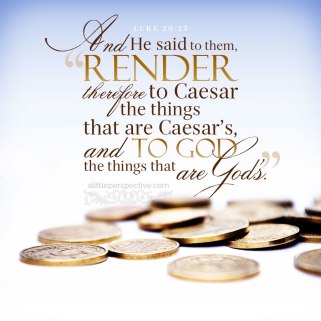
 20 Watching for their opportunity, the leaders sent spies pretending to be honest men. They tried to get Jesus to say something that could be reported to the Roman governor so he would arrest Jesus. 21 “Teacher,” they said, “we know that you speak and teach what is right and are not influenced by what others think. You teach the way of God truthfully. 22 Now tell us—is it right for us to pay taxes to Caesar or not?”



 So, they had no respect for Jesus. They criticized Him, refuted his authority and plotted to kill Him. They forgot God. Left God. When reminded of God by His One and Only Son, their hardened hearts, closed minds and sick souls plotted to kill the One sent from the Father.
 One day as Jesus was teaching the people and preaching the Good News in the Temple, the leading priests, the teachers of religious law, and the elders came up to him. 2 They demanded, “By what authority are you doing all these things? Who gave you the right?”
 17 Jesus looked at them and said, “Then what does this Scripture mean?
 But there was more to this series of questions than mere guile. The word translated “rejected” in Luke 9:22 (and also Luke 20:17) means “to reject after investigation.” It was required that the Jews carefully examine the Passover lambs from the tenth day to the fourteenth day to make sure they had no blemishes (Ex. 12:1–6). Jesus Christ, the Lamb of God (John 1:29), was watched and tested by His enemies during that final week, and yet in spite of what they saw and learned, they rejected Him.
 HOLY PAUSE…

 Jesus, Son of God, comes to God’s house to correct the lies and cheating of the common people in the courtyard leading to the Temple. The behaviors of the sellers of sacrifices had degraded to cheating the people who were coming seek God which was the opposite of what the Temple was built to be…a house of prayer. The “price of admission” was big business to fill the pockets of the corrupt.
 But Truth DOES exist! Truth, the only Truth, the unchanging Truth, is the Person of Jesus Christ! John explains Truth’s beginnings to us in his introduction of who God is and his relationship with His Son, Jesus Christ;
 The court of the Gentiles was the only place in the temple that was available to the Gentiles. There the Jews could witness to their “pagan” neighbors and tell them about the one true and living God. But instead of being devoted to evangelism, the area was used for a “religious marketplace” where Jews from other lands could exchange money and purchase approved sacrifices. The priests managed this business and made a good profit from it.
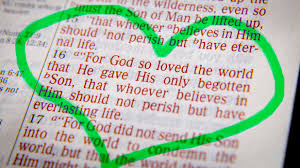 “For this is how God loved the world: He gave his one and only Son, so that everyone who believes in him will not perish but have eternal life.”
 “The secret is Christ in me, not me in a different set of circumstances.” — Elizabeth Elliot, Missionary
 “Don’t you realize that your body is the temple of the Holy Spirit, who lives in you and was given to you by God?”
 Those of us who have kids know that they love us best when they want something. Kids are kids. They think we don’t know their tricks of manipulation to get what they want or think they need. Parents want love and hugs so we fall for it at first until it goes over the top with doing tasks without being told, suddenly helping their siblings instead of fighting with them, doing their homework, or even washing the car! Yes, that happened once with one of our kids. Washing the car was certainly over the top! When “love” is expressed as a bargaining chip, we would sit them down so we could get to the heart of what is really going on…AFTER, they finish all these good activities, of course! (Smiling.)
 Jesus has gained a great deal of popularity because of His love, compassion for all people, and his miracles of restoration and life. He is like no other the world has ever seen. So in response, people burst into praise for Jesus. Jesus allows it but knows their hearts well for He is also God, sent from God in human form. He knows that many praise Him for only what He has done. Many praise Him for Who He is. He heard all their praise.
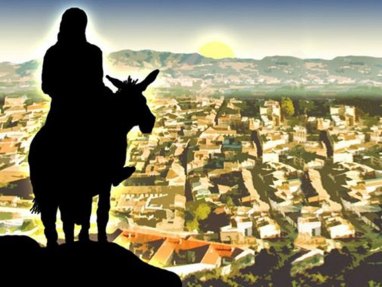
 28 After telling this story, Jesus went on toward Jerusalem, walking ahead of his disciples. 29 As he came to the towns of Bethphage and Bethany on the Mount of Olives, he sent two disciples ahead. 30 “Go into that village over there,” he told them. “As you enter it, you will see a young donkey tied there that no one has ever ridden. Untie it and bring it here. 31 If anyone asks, ‘Why are you untying that colt?’ just say, ‘The Lord needs it.’”
 Jesus Weeps over Jerusalem
 The second reason for this demonstration was to force the Jewish religious leaders to act. They had hoped to arrest Him after the Passover (Matt. 26:3–5), but God had ordained that His Son be slain on Passover as the “Lamb of God, which takes away the sin of the world” (John 1:29; and see 1 Cor. 5:7). Every previous attempt to arrest Jesus had failed because “his hour was not yet come” (John 7:30; 8:20; also see John 13:1; 17:1). When they saw this great public celebration, the leaders knew that they had to act, and the willing cooperation of Judas solved their problem for them (Matt. 26:14–16).
 No matter where Jesus looked, He found cause for weeping. If He looked BACK, He saw how the nation had wasted its opportunities and been ignorant of their “time of visitation.” If He looked within, He saw spiritual ignorance and blindness in the hearts of the people. They should have known who He was, for God had given them His Word and sent His messengers to prepare the way.

 20 “But the third servant brought back only the original amount of money and said, ‘Master, I hid your money and kept it safe. 21 I was afraid because you are a hard man to deal with, taking what isn’t yours and harvesting crops you didn’t plant.’
 It’s sad when a Christian is motivated by slavish fear instead of loving faith. While there is a proper “fear of the Lord” that should be in every Christian’s heart, that “fear”should be the respect of a loving child and not the dread of a frightened slave. “Nothing twists and deforms the soul more than a low or unworthy conception of God,” wrote Dr. A. W. Tozer. How important it is that we do the will of God from our hearts (Eph. 6:6).

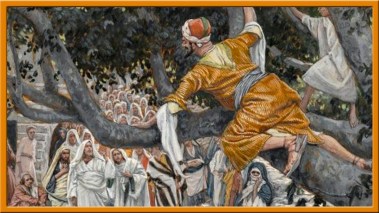
 There is so much more going on in this passage than a wee hearted man of small stature driven to see Jesus. Zacchaeus was a despised tax collector who had permission from the government to collect more than was required so he could make a living that suited him by skimming off the top. Being “chief” tax collector he had the ability to earn/take even more. So, you can imagine why he was hated by the common people. Zacchaeus was a Jewish man, hated by his own, and deemed a traitor of sorts for working for the Roman government…a sinner in the eyes of the religious elite. But, “the Lord he wanted to see”.
 WHO was seeking?
 Is Jesus, through His Holy Spirit, seeking you?

 The blind man spent his life begging on the street for a living. His sense of hearing, however, was great! He HEARD the noise of the crowd who was following the man everyone wanted to be close to because of the miracles that had witnessed. He asked what was happening.
 But he only shouted louder, “Son of David, have mercy on me!”

 “The “human editions” we have “read” in this chapter encourage us to put our faith in Jesus Christ, no matter what others may say or do. The widow was not discouraged by the indifferent attitude of the judge, nor the publican by the hypocritical attitude of the Pharisee. The parents brought their little ones to Jesus in spite of the selfish attitude of the apostles, and the blind men came to Jesus even though the crowd told them to keep quiet and stay put. Jesus always responds to faith and rewards those who believe.”


