
WHO DO YOU RUN TO?

Is it possible to fully comprehend how God thinks?  The Psalmist attempted more than once to get into the head of God’s mind and describe Him; but there are just not enough words—

“The Lord is high above all nations, and his glory above the heavens!
Who is like the Lord our God, who is seated on high,
who looks far down on the heavens and the earth?
He raises the poor from the dust and lifts the needy from the ash heap,
to make them sit with princes, with the princes of his people.
He gives the barren woman a home, making her the joyous mother of children.”   
 Psalm 113:4-9

“Where can I go from your Spirit? Where can I flee from your presence?
If I go up to the heavens, you are there; if I make my bed in the depths, you are there.
If I rise on the wings of the dawn, if I settle on the far side of the sea,
even there your hand will guide me, your right hand will hold me fast.

If I say, “Surely the darkness will hide me and the light become night around me,”
 even the darkness will not be dark to you; the night will shine like the day,
    for darkness is as light to you.

For you created my inmost being; you knit me together in my mother’s womb.
I praise you because I am fearfully and wonderfully made; your works are wonderful,
    I know that full well.”
Psalm 139:7-14

God is in the details. He created the world and everything in, above, and below it with meticulous, intricately designed detail! God knows all and is in all for He created all.  This is why God knows exactly what we need when we need it before we know!

God now reminds Joshua of His instructions to Moses to build safe places for people to run to in times of trouble as part of settling into the Promise Land.

God thinks of EVERYTHING!  Can I get an amen?!

Joshua 20

Cities of Refuge

Then the Lord said to Joshua: “Tell the Israelites to designate the cities of refuge, as I instructed you through Moses, so that anyone who kills a person accidentally and unintentionally may flee there and find protection from the avenger of blood. When they flee to one of these cities, they are to stand in the entrance of the city gate and state their case before the elders of that city. Then the elders are to admit the fugitive into their city and provide a place to live among them. 

If the avenger of blood comes in pursuit, the elders must not surrender the fugitive, because the fugitive killed their neighbor unintentionally and without malice aforethought. They are to stay in that city until they have stood trial before the assembly and until the death of the high priest who is serving at that time. Then they may go back to their own home in the town from which they fled.”

So they set apart Kedesh in Galilee in the hill country of Naphtali, Shechem in the hill country of Ephraim, and Kiriath Arba (that is, Hebron) in the hill country of Judah. East of the Jordan (on the other side from Jericho) they designated Bezer in the wilderness on the plateau in the tribe of Reuben, Ramoth in Gilead in the tribe of Gad, and Golan in Bashan in the tribe of Manasseh. Any of the Israelites or any foreigner residing among them who killed someone accidentally could flee to these designated cities and not be killed by the avenger of blood prior to standing trial before the assembly.

WHAT DO WE LEARN—HOW DO WE RESPOND?

“Innocent until proven guilty” is the basis of the American court system today. Where did we get this idea? From God’s Law given to Moses to write down for his people to follow.

God set up cities of refuge, places to run to in times of trouble, with protection for the innocent until their case was heard by consecrated Levites whose added responsibilities from God was to be judges as service to Him and His people. Because of the Levites’ position, they were not eligible to inherit land, but Joshua assigned them towns and pasturelands to provide for their needs within these cities of refuge. 

Because God is a just God who loves mercy, as aptly stated by Micah, the prophet later, God commands Joshua, as he did Moses, to set up a system for justice.

“He has shown you, O mortal, what is good. And what does the Lord require of you?
To act justly and to love mercy and to walk humbly with your God.”
Micah 6:8

God loves justice and mercy with relentless love for this people. So God, in His mercy, provides a safe place when unforeseen accidents occur!  There is no one like our God!

Pause to prayerfully consider—

  • Who do I run to first in times of trouble? 
  • When wrongly accused and harassed by those who want to do harm to me; who do I first ask to help me? 
  • Who do I run to when I need help and counsel when I feel no one is listening? 
  • Who is my number one “go to” person?
  • Who is my safe place, my refuge, and my hope?

A chorus of my childhood is now playing in my mind;

In times like these, you need a Savior
In times like these, you need an anchor
Be very sure, be very sure
Your anchor holds and grips the solid rock

This rock is Jesus, yes, he’s the one
This rock is Jesus, the only one
Be very sure, be very sure
Your anchor holds and grips the solid rock

(Songwriters: Ruth Caye Jones, In Times Like These lyrics © New Spring Publishing Inc., New Spring Publishing, Inc., Sung by George Beverly Shea)

Believe what God said He would do He did and still does! “For God so loved the world that he gave his one and only Son, that whoever believes in him shall not perish but have eternal life. For God did not send his Son into the world to condemn the world, but to save the world through him.” John 3:6-17

“While we were yet sinners; Christ died for us.” Romans 5:8 Repent and be rescued from the bondage of sin.

God is our refuge, a safe place to run to in times like these.  Jesus is our hope with the promise of eternal life!  Nothing in our lives escapes the notice of God. God is working on our behalf before we know we need Him.  This is one of many reasons why God is so amazing!  It seems fitting to close with a powerful, favorite psalm of mine—

Read these beautiful words as our prayer for today’s daily manna from God:

“God is our refuge and strength, an ever-present help in trouble.
Therefore we will not fear, though the earth give way and the mountains fall into the heart of the sea,though its waters roar and foam and the mountains quake with their surging.

There is a river whose streams make glad the city of God, the holy place where the Most High dwells. God is within her, she will not fall; God will help her at break of day.
Nations are in uproar, kingdoms fall; he lifts his voice, the earth melts.

The Lord Almighty is with us; the God of Jacob is our fortress.

Come and see what the Lord has done, the desolations he has brought on the earth.
He makes wars cease to the ends of the earth.
He breaks the bow and shatters the spear; he burns the shields with fire.

He says, “Be still, and know that I am God;
    I will be exalted among the nations,
    I will be exalted in the earth.”

The Lord Almighty is with us; the God of Jacob is our fortress.” (Psalm 46, NIV)

In Jesus Name, for our good and His glory, Amen

Posted in Uncategorized | Tagged , , , , | Leave a comment

DIVIDE AND CONQUER!

Divide and conquer!  This philosophy is used still in our daily lives as parents, teachers, leaders of companies, and even at your local fast-food place!  We divide responsibilities among those present to complete tasks, projects, and service more efficiently.  Moses learned from his mentor and father-in-law that trying to do the work alone “is not good.”  Jethro advised him to look at who is here with you and then assign pieces of the work God has given to you to others able and reliable to lead in smaller groups.  (See Exodus 18:17-24)

Most successfully efficient churches today are those who know this principle of dividing, I like to call the “spreading the blessings” of God’s work!  No one can or should boast that they did it by themselves—only by the grace of God and His people!  All God’s work is a group effort! Even Jesus had his disciples who were trained to train others!  We wouldn’t be here today if it were not for His teaching!  Later, Paul’s letters to churches expands this truth: “…speaking the truth in love, we will grow to become in every respect the mature body of him who is the head, that is, Christ. From him the whole body, joined and held together by every supporting ligament, grows and builds itself up in love, as each part does its work.” Ephesians 4:15-16—just one example of many!

So, it makes perfect sense when God parcels out the Promised Land to each of the Twelve Tribes and clans.  By dividing the land, the Israelites took possession, settled, prospered and grew throughout the land promised to them generations earlier.  (Covering two chapters so it is long.  We cannot leave anyone out for all people count to God!)

Joshua 18

Division of the Rest of the Land

The whole assembly of the Israelites gathered at Shiloh and set up the tent of meeting there. The country was brought under their control, but there were still seven Israelite tribes who had not yet received their inheritance.

So Joshua said to the Israelites: “How long will you wait before you begin to take possession of the land that the Lord, the God of your ancestors, has given you? Appoint three men from each tribe. I will send them out to make a survey of the land and to write a description of it, according to the inheritance of each. Then they will return to me. You are to divide the land into seven parts. Judah is to remain in its territory on the south and the tribes of Joseph in their territory on the north. After you have written descriptions of the seven parts of the land, bring them here to me and I will cast lots for you in the presence of the Lord our God. The Levites, however, do not get a portion among you, because the priestly service of the Lord is their inheritance. And Gad, Reuben and the half-tribe of Manasseh have already received their inheritance on the east side of the Jordan. Moses the servant of the Lord gave it to them.”

As the men started on their way to map out the land, Joshua instructed them, “Go and make a survey of the land and write a description of it. Then return to me, and I will cast lots for you here at Shiloh in the presence of the Lord.” So the men left and went through the land. They wrote its description on a scroll, town by town, in seven parts, and returned to Joshua in the camp at Shiloh. 10 Joshua then cast lots for them in Shiloh in the presence of the Lord, and there he distributed the land to the Israelites according to their tribal divisions.

Allotment for Benjamin

11 The first lot came up for the tribe of Benjamin according to its clans. Their allotted territory lay between the tribes of Judah and Joseph:

12 On the north side their boundary began at the Jordan, passed the northern slope of Jericho and headed west into the hill country, coming out at the wilderness of Beth Aven. 13 From there it crossed to the south slope of Luz (that is, Bethel) and went down to Ataroth Addar on the hill south of Lower Beth Horon.

14 From the hill facing Beth Horon on the south the boundary turned south along the western side and came out at Kiriath Baal (that is, Kiriath Jearim), a town of the people of Judah. This was the western side.

15 The southern side began at the outskirts of Kiriath Jearim on the west, and the boundary came out at the spring of the waters of Nephtoah. 16 The boundary went down to the foot of the hill facing the Valley of Ben Hinnom, north of the Valley of Rephaim. It continued down the Hinnom Valley along the southern slope of the Jebusite city and so to En Rogel. 17 It then curved north, went to En Shemesh, continued to Geliloth, which faces the Pass of Adummim, and ran down to the Stone of Bohan son of Reuben. 18 It continued to the northern slope of Beth Arabah and on down into the Arabah. 19 It then went to the northern slope of Beth Hoglah and came out at the northern bay of the Dead Sea, at the mouth of the Jordan in the south. This was the southern boundary.

20 The Jordan formed the boundary on the eastern side.

These were the boundaries that marked out the inheritance of the clans of Benjamin on all sides.

21 The tribe of Benjamin, according to its clans, had the following towns:

Jericho, Beth Hoglah, Emek Keziz, 22 Beth Arabah, Zemaraim, Bethel, 23 Avvim, Parah, Ophrah, 24 Kephar Ammoni, Ophni and Geba—twelve towns and their villages.

25 Gibeon, Ramah, Beeroth, 26 Mizpah, Kephirah, Mozah, 27 Rekem, Irpeel, Taralah, 28 Zelah, Haeleph, the Jebusite city (that is, Jerusalem), Gibeah and Kiriath—fourteen towns and their villages.

This was the inheritance of Benjamin for its clans.

Allotment for Simeon

Joshua 19 The second lot came out for the tribe of Simeon according to its clans. Their inheritance lay within the territory of Judah. It included:

Beersheba (or Sheba),[a] Moladah, Hazar Shual, Balah, Ezem, Eltolad, Bethul, Hormah, Ziklag, Beth Markaboth, Hazar Susah, Beth Lebaoth and Sharuhen—thirteen towns and their villages;

Ain, Rimmon, Ether and Ashan—four towns and their villages— and all the villages around these towns as far as Baalath Beer (Ramah in the Negev).

This was the inheritance of the tribe of the Simeonites, according to its clans. The inheritance of the Simeonites was taken from the share of Judah, because Judah’s portion was more than they needed. So the Simeonites received their inheritance within the territory of Judah.

Allotment for Zebulun

10 The third lot came up for Zebulun according to its clans:

The boundary of their inheritance went as far as Sarid. 11 Going west it ran to Maralah, touched Dabbesheth, and extended to the ravine near Jokneam. 12 It turned east from Sarid toward the sunrise to the territory of Kisloth Tabor and went on to Daberath and up to Japhia. 13 Then it continued eastward to Gath Hepher and Eth Kazin; it came out at Rimmon and turned toward Neah. 14 There the boundary went around on the north to Hannathon and ended at the Valley of Iphtah El. 15 Included were Kattath, Nahalal, Shimron, Idalah and Bethlehem. There were twelve towns and their villages.

16 These towns and their villages were the inheritance of Zebulun, according to its clans.

Allotment for Issachar

17 The fourth lot came out for Issachar according to its clans. 18 Their territory included:

Jezreel, Kesulloth, Shunem, 19 Hapharaim, Shion, Anaharath, 20 Rabbith, Kishion, Ebez, 21 Remeth, En Gannim, En Haddah and Beth Pazzez. 22 The boundary touched Tabor, Shahazumah and Beth Shemesh, and ended at the Jordan. There were sixteen towns and their villages.

23 These towns and their villages were the inheritance of the tribe of Issachar, according to its clans.

Allotment for Asher

24 The fifth lot came out for the tribe of Asher according to its clans. 25 Their territory included:

Helkath, Hali, Beten, Akshaph, 26 Allammelek, Amad and Mishal. On the west the boundary touched Carmel and Shihor Libnath. 27 It then turned east toward Beth Dagon, touched Zebulun and the Valley of Iphtah El, and went north to Beth Emek and Neiel, passing Kabul on the left. 28 It went to Abdon,[b] Rehob, Hammon and Kanah, as far as Greater Sidon. 29 The boundary then turned back toward Ramah and went to the fortified city of Tyre, turned toward Hosah and came out at the Mediterranean Sea in the region of Akzib, 30 Ummah, Aphek and Rehob. There were twenty-two towns and their villages.

31 These towns and their villages were the inheritance of the tribe of Asher, according to its clans.

Allotment for Naphtali

32 The sixth lot came out for Naphtali according to its clans:

33 Their boundary went from Heleph and the large tree in Zaanannim, passing Adami Nekeb and Jabneel to Lakkum and ending at the Jordan. 34 The boundary ran west through Aznoth Tabor and came out at Hukkok. It touched Zebulun on the south, Asher on the west and the Jordan[c] on the east. 35 The fortified towns were Ziddim, Zer, Hammath, Rakkath, Kinnereth, 36 Adamah, Ramah, Hazor, 37 Kedesh, Edrei, En Hazor, 38 Iron, Migdal El, Horem, Beth Anath and Beth Shemesh. There were nineteen towns and their villages.

39 These towns and their villages were the inheritance of the tribe of Naphtali, according to its clans.

Allotment for Dan

40 The seventh lot came out for the tribe of Dan according to its clans. 41 The territory of their inheritance included:

Zorah, Eshtaol, Ir Shemesh, 42 Shaalabbin, Aijalon, Ithlah, 43 Elon, Timnah, Ekron, 44 Eltekeh, Gibbethon, Baalath, 45 Jehud, Bene Berak, Gath Rimmon, 46 Me Jarkon and Rakkon, with the area facing Joppa.

47 (When the territory of the Danites was lost to them, they went up and attacked Leshem, took it, put it to the sword and occupied it. They settled in Leshem and named it Dan after their ancestor.)

48 These towns and their villages were the inheritance of the tribe of Dan, according to its clans.

Allotment for Joshua

49 When they had finished dividing the land into its allotted portions, the Israelites gave Joshua son of Nun an inheritance among them, 50 as the Lord had commanded. They gave him the town he asked for—Timnath Serah in the hill country of Ephraim. And he built up the town and settled there.

51 These are the territories that Eleazar the priest, Joshua son of Nun and the heads of the tribal clans of Israel assigned by lot at Shiloh in the presence of the Lord at the entrance to the tent of meeting. And so they finished dividing the land.

WHAT DO WE LEARN—HOW DO WE RESPOND?

Seven more tribes stand ready to receive their inheritance, which was administered by Joshua. He also took possession of the town Timnath.  Remember the Levites do not have the inheritance of land because they serve God people as priests who care for the Tent of Meeting with all the tasks and responsibilities concerning the sacrifices to God on behalf of His people.  They are allotted land around the Tent of Meeting for their animals that provide food for their families.

Note that the children of Israel could not exercise full dominion over the land as its new tenants until each tribe had been assigned its portions. When this occurred, then the nation as a whole began to rule and have authority on the earth as God’s representatives.

Our response and calling from God/Jesus/Holy Spirit. We are representatives of Jesus when we believe and are saved by His grace!  We have full authority from Him to go and teach others, baptizing them in His Name! (Matthew 28:20)

We are called to be reconciled to God and be ambassadors of Christ to all we meet!  “All this is from God, who reconciled us to himself through Christ and gave us the ministry of reconciliation: that God was reconciling the world to himself in Christ, not counting people’s sins against them. And he has committed to us the message of reconciliation. We are therefore Christ’s ambassadors, as though God were making his appeal through us. We implore you on Christ’s behalf: Be reconciled to God. God made him who had no sin to be sin for us, so that in him we might become the righteousness of God.” 2 Corinthians 5:18-21 In Jesus Name, for our good and His glory, Amen!

Posted in Uncategorized | Tagged , , , , | Leave a comment

GO—TAKE POSSESSION OF GOD’S PROMISE

More often that not, with tight fisted hands, we hold on for dear life what does not give life at all.  We hold on to things for the temporary pleasure they give until the newness fades and the excitement of owning it disappears.  We hold on to ideas that are dreamed only from a human perspective and later prove unreliable and untrue.  We hold on to what we think we want and should have until we see that what we cling to is hurting us and costs what we can no longer pay.  We hold on to pride which drives our need to please of what others which exhaust us completely of all that is in us. We cling to the false assumption that we can force or cajole a fickle humanity to love us by what we do for them.  We hold on to wanting more; more land, money, and notoriety with the goal to gain more influence and importance in this world. 

All we hold on to in this world is not God’s ultimate best for us in His world of love, mercy, and grace.  What God offers is peace and calm with power and strength to overcome in the middle of stormy conditions and circumstances beyond our control. 

The Promised Land was given to the Israelites after setting them free from the bondage of slavery to the Egyptians.  God gave His people a new beginning with borders.  God gave commands with purpose for their protection.  Love the Lord your God with all your heart, mind, and soul.  Love others like you love yourself.  Let go of all manmade idols and worship God, your God alone.  But they still could not let go of everything. When they did not let go; it did not go well for them.  God knew. God still loved His created.

Joshua 16-17

Allotment for Ephraim and Manasseh

The allotment for Joseph began at the Jordan, east of the springs of Jericho, and went up from there through the desert into the hill country of BethelIt went on from Bethel (that is, Luz), crossed over to the territory of the Arkites in Ataroth, descended westward to the territory of the Japhletites as far as the region of Lower Beth Horon and on to Gezer, ending at the Mediterranean Sea.

So Manasseh and Ephraim, the descendants of Joseph, received their inheritance.

This was the territory of Ephraim, according to its clans:

The boundary of their inheritance went from Ataroth Addar in the east to Upper Beth Horon and continued to the Mediterranean Sea. From Mikmethath on the north it curved eastward to Taanath Shiloh, passing by it to Janoah on the east. Then it went down from Janoah to Ataroth and Naarah, touched Jericho and came out at the Jordan. From Tappuah the border went west to the Kanah Ravine and ended at the Mediterranean Sea. This was the inheritance of the tribe of the Ephraimites, according to its clans. It also included all the towns and their villages that were set aside for the Ephraimites within the inheritance of the Manassites.

10 They did not dislodge the Canaanites living in Gezer; to this day the Canaanites live among the people of Ephraim but are required to do forced labor.

17 This was the allotment for the tribe of Manasseh as Joseph’s firstborn, that is, for Makir, Manasseh’s firstborn. Makir was the ancestor of the Gileadites, who had received Gilead and Bashan because the Makirites were great soldiers. So this allotment was for the rest of the people of Manasseh—the clans of Abiezer, Helek, Asriel, Shechem, Hepher and Shemida. These are the other male descendants of Manasseh son of Joseph by their clans.

Now Zelophehad son of Hepher, the son of Gilead, the son of Makir, the son of Manasseh, had no sons but only daughters, whose names were Mahlah, Noah, Hoglah, Milkah and Tirzah. They went to Eleazar the priest, Joshua son of Nun, and the leaders and said, “The Lord commanded Moses to give us an inheritance among our relatives.” So Joshua gave them an inheritance along with the brothers of their father, according to the Lord’s command. Manasseh’s share consisted of ten tracts of land besides Gilead and Bashan east of the Jordan, because the daughters of the tribe of Manasseh received an inheritance among the sons. The land of Gilead belonged to the rest of the descendants of Manasseh.

The territory of Manasseh extended from Asher to Mikmethath east of Shechem. The boundary ran southward from there to include the people living at En Tappuah. (Manasseh had the land of Tappuah, but Tappuah itself, on the boundary of Manasseh, belonged to the Ephraimites.) Then the boundary continued south to the Kanah Ravine. There were towns belonging to Ephraim lying among the towns of Manasseh, but the boundary of Manasseh was the northern side of the ravine and ended at the Mediterranean Sea. 10 On the south the land belonged to Ephraim, on the north to Manasseh. The territory of Manasseh reached the Mediterranean Sea and bordered Asher on the north and Issachar on the east.

11 Within Issachar and Asher, Manasseh also had Beth Shan, Ibleam and the people of Dor, Endor, Taanach and Megiddo, together with their surrounding settlements (the third in the list is Naphoth[a]).

12 Yet the Manassites were not able to occupy these towns, for the Canaanites were determined to live in that region. 13 However, when the Israelites grew stronger, they subjected the Canaanites to forced labor but did not drive them out completely.

14 The people of Joseph said to Joshua, “Why have you given us only one allotment and one portion for an inheritance? We are a numerous people, and the Lord has blessed us abundantly.”

15 “If you are so numerous,” Joshua answered, “and if the hill country of Ephraim is too small for you, go up into the forest and clear land for yourselves there in the land of the Perizzites and Rephaites.”

16 The people of Joseph replied, “The hill country is not enough for us, and all the Canaanites who live in the plain have chariots fitted with iron, both those in Beth Shan and its settlements and those in the Valley of Jezreel.”

17 But Joshua said to the tribes of Joseph—to Ephraim and Manasseh—“You are numerous and very powerful. You will have not only one allotment 18 but the forested hill country as well. Clear it, and its farthest limits will be yours; though the Canaanites have chariots fitted with iron and though they are strong, you can drive them out.”

WHAT DO WE LEARN—HOW DO WE RESPOND?

We learn that all this history of Joshua of how the promised lands were allotted and taken hold of are setting the stage for God’s greatest Promise!  Later, God informs His prophets to tell of The Promise of all times that is to come! 

The Promise was His Son, Jesus, the Messiah, “the one who would save all people from all nations from all their sins.”  God spoke through his raised-up prophets, telling His people to get ready for a suffering, compassionate Savior who would be the once and for all sacrifice for all the sins of the world.  Only a remnant believed what God said, however. Fortunately, our unfaithfulness did and does not stop a faithful Father who loves us! It is a good thing that God is God and does what He says regardless of what mankind currently thinks or does! 

Jesus came to an oppressed people with great need.  Jesus was, is, and is to come the promise of eternal life but we must let go of our grip on the life we have created.  We cannot hold death in one hand and life in the other.  We must take hold with all that is in us and get a firm grip on the Promise who set us free from our sins and gave us full access to the very throne of our Creator, God. Jesus fully explained the lose to gain life when He came and walked with humanity, specifically his disciples in training;

  • “Those who try to gain their own life will lose it; but those who lose their life for my sake will gain it.” Matthew 10:39
  • “For if you want to save your own life, you will lose it; but if you lose your life for my sake, you will find it.” Matthew 16:25
  • “For if you want to save your own life, you will lose it; but if you lose your life for me and for the gospel, you will save it.” Mark 8:35
  • For if you want to save your own life, you will lose it, but if you lose your life for my sake, you will save it.” Luke 9:24
  • Those who love their own life will lose it; those who hate their own life in this world will keep it for life eternal.” John 12:25

When God/Jesus/Holy Spirit repeats a commanding truth; it is important for us to listen, trust, and obey!  Jesus did not seek to have earthly power like the Pharisees and Sadducees. He sought to build a kingdom that would last into eternity. He told his followers that by giving their lives to him, they would find true life.

“Let us hold tightly without wavering to the hope we affirm, for God can be trusted to keep his promise.” Hebrews 10:23

Need Courage?

Could you use some courage today?  I could!  Are we backing down more than we’re standing up? If so, let Jesus, The Promise, lead us up the mountain again. Let Him remind us why we should “fear not”, worry less, and trust more. Earthly fears are no fears at all. All the mystery is revealed. We can be assured our final destination is guaranteed. Jesus answered the big question of eternity, so that the little questions of life fall into perspective. This is LIFE to the full for a believer and follower of Jesus! So, get a grip!

Lord,

Cleanse my heart of all that is not of you.  Renew my mind.  Transform my thinking and behaviors.  Refresh my soul with your tender, new mercies for today.  Restore the joy of your salvation at work within me.  For only when I let go of my control am I able to get a firm grip on you.  Then your peace comes and abides in all circumstances.  I trust you, dear Jesus!

In Jesus Name, Amen

Posted in Uncategorized | Tagged , , , , | Leave a comment

SETTLING IN

All things are new when people move to another home in a another part of town, another state or even a new country.  Everything is new and different from all you knew before. We have moved a few times.  Looking back upon our moving memories; we naturally developed an order to the process of moving.  First of all, we learned to label the boxes according to the rooms the contents belonged. When unpacking the truck, the boxes went to their assigned rooms.  But we did not begin unpacking them!  That’s too overwhelming!  All boxes are removed from the trucks and vans before any unpacking begins!  The next thing to accomplish was typically food to nourish our tired bodies acquired from a local fast food place. After eating, the goal was to set up beds in each room for rest that night.  Unlabeled boxes of last minute things went to the garage.  If boxes filled the room; then the excess also went to the garage for unpacking later. 

After a few days of unpacking and placing our stuff in new places; we then began to settle into our new place of residence.  Then it was time to explore the area in which we have moved.  Of course, we researched it, read about it, and saw pictures of the area but to see it in person and imagine ourselves as a part of it all was part of the process of “settling in.”

Now, imagine hundreds of people, their livestock and their stuff of the clans of the tribe of Judah moving into their assigned land promised by God. Caleb has been given the task to give directions to them that explains their new “digs” in detail.  South, east, north and west boundaries are given with specific landmarks as guides.  God does not leave anything left unsaid as He helps Judah’s family settle in.

Joshua 15

Allotment for Judah

The allotment for the tribe of Judah, according to its clans, extended down to the territory of Edom, to the Desert of Zin in the extreme south.

Their southern boundary started from the bay at the southern end of the Dead Sea, crossed south of Scorpion Pass, continued on to Zin and went over to the south of Kadesh Barnea. Then it ran past Hezron up to Addar and curved around to Karka. It then passed along to Azmon and joined the Wadi of Egypt, ending at the Mediterranean Sea. This is their southern boundary.

The eastern boundary is the Dead Sea as far as the mouth of the Jordan.

The northern boundary started from the bay of the sea at the mouth of the Jordan, went up to Beth Hoglah and continued north of Beth Arabah to the Stone of Bohan son of Reuben. The boundary then went up to Debir from the Valley of Achor and turned north to Gilgal, which faces the Pass of Adummim south of the gorge. It continued along to the waters of En Shemesh and came out at En Rogel. Then it ran up the Valley of Ben Hinnom along the southern slope of the Jebusite city (that is, Jerusalem). From there it climbed to the top of the hill west of the Hinnom Valley at the northern end of the Valley of Rephaim. From the hilltop the boundary headed toward the spring of the waters of Nephtoah, came out at the towns of Mount Ephron and went down toward Baalah (that is, Kiriath Jearim). 10 Then it curved westward from Baalah to Mount Seir, ran along the northern slope of Mount Jearim (that is, Kesalon), continued down to Beth Shemesh and crossed to Timnah. 11 It went to the northern slope of Ekron, turned toward Shikkeron, passed along to Mount Baalah and reached Jabneel. The boundary ended at the sea.

12 The western boundary is the coastline of the Mediterranean Sea.

These are the boundaries around the people of Judah by their clans.

13 In accordance with the Lord’s command to him, Joshua gave to Caleb son of Jephunneh a portion in Judah—Kiriath Arba, that is, Hebron. (Arba was the forefather of Anak.) 14 From Hebron Caleb drove out the three Anakites—Sheshai, Ahiman and Talmai, the sons of Anak. 15 From there he marched against the people living in Debir (formerly called Kiriath Sepher). 16 And Caleb said, “I will give my daughter Aksah in marriage to the man who attacks and captures Kiriath Sepher.” 17 Othniel son of Kenaz, Caleb’s brother, took it; so Caleb gave his daughter Aksah to him in marriage.

18 One day when she came to Othniel, she urged him to ask her father for a field. When she got off her donkey, Caleb asked her, “What can I do for you?”

19 She replied, “Do me a special favor. Since you have given me land in the Negev, give me also springs of water.” So Caleb gave her the upper and lower springs.

20 This is the inheritance of the tribe of Judah, according to its clans:

21 The southernmost towns of the tribe of Judah in the Negev toward the boundary of Edom were:

Kabzeel, Eder, Jagur, 22 Kinah, Dimonah, Adadah, 23 Kedesh, Hazor, Ithnan, 24 Ziph, Telem, Bealoth, 25 Hazor Hadattah, Kerioth Hezron (that is, Hazor), 26 Amam, Shema, Moladah, 27 Hazar Gaddah, Heshmon, Beth Pelet, 28 Hazar Shual, Beersheba, Biziothiah, 29 Baalah, Iyim, Ezem, 30 Eltolad, Kesil, Hormah, 31 Ziklag, Madmannah, Sansannah, 32 Lebaoth, Shilhim, Ain and Rimmon—a total of twenty-nine towns and their villages.

33 In the western foothills:

Eshtaol, Zorah, Ashnah, 34 Zanoah, En Gannim, Tappuah, Enam, 35 Jarmuth, Adullam, Sokoh, Azekah, 36 Shaaraim, Adithaim and Gederah (or Gederothaim)[c]—fourteen towns and their villages.

37 Zenan, Hadashah, Migdal Gad, 38 Dilean, Mizpah, Joktheel, 39 Lachish, Bozkath, Eglon, 40 Kabbon, Lahmas, Kitlish, 41 Gederoth, Beth Dagon, Naamah and Makkedah—sixteen towns and their villages.

42 Libnah, Ether, Ashan, 43 Iphtah, Ashnah, Nezib, 44 Keilah, Akzib and Mareshah—nine towns and their villages.

45 Ekron, with its surrounding settlements and villages; 46 west of Ekron, all that were in the vicinity of Ashdod, together with their villages; 47 Ashdod, its surrounding settlements and villages; and Gaza, its settlements and villages, as far as the Wadi of Egypt and the coastline of the Mediterranean Sea.

48 In the hill country:

Shamir, Jattir, Sokoh, 49 Dannah, Kiriath Sannah (that is, Debir), 50 Anab, Eshtemoh, Anim, 51 Goshen, Holon and Giloh—eleven towns and their villages.

52 Arab, Dumah, Eshan, 53 Janim, Beth Tappuah, Aphekah, 54 Humtah, Kiriath Arba (that is, Hebron) and Zior—nine towns and their villages.

55 Maon, Carmel, Ziph, Juttah, 56 Jezreel, Jokdeam, Zanoah, 57 Kain, Gibeah and Timnah—ten towns and their villages.

58 Halhul, Beth Zur, Gedor, 59 Maarath, Beth Anoth and Eltekon—six towns and their villages.[d]

60 Kiriath Baal (that is, Kiriath Jearim) and Rabbah—two towns and their villages.

61 In the wilderness:

Beth Arabah, Middin, Sekakah, 62 Nibshan, the City of Salt and En Gedi—six towns and their villages.

63 Judah could not dislodge the Jebusites, who were living in Jerusalem; to this day the Jebusites live there with the people of Judah.

WHAT DO WE LEARN—HOW DO WE RESPOND?

“When God leads you to it; He’ll lead you through it all.” What this often quoted phrase means is that there is purpose in all God’s directions to us.  We begin to realize that purpose as we step forward to listen, trust, and obey what He says—in all the details—leaving “nothing left undone.” (Joshua 11)

The inheritance of the rest of the tribe of Judah is described in great detail.  Jerusalem is part of the package but it is inhabited by the Jebusites, a group that will not leave nor be driven out.  We will learn later, that they would hold it temporarily (Judges 1:8), and then King David would capture it permanently and make it the capital city (2 Samuel 5:6–10).  Jesus will come from the hereditary line of David and be born in Bethlehem, now called Ephrathah, (verse 59) near Jerusalem.  Sometimes “settling in” requires more time (maybe decades and centuries more) with great effort!  Does God give up? Oh, no!  God will prevail with His mission to save the world through Jesus, His Son.  Judah is where it will all come together and be fulfilled.

Pause to reflect.  I am—prayerfully.

Are you in a time of settling in to a new situation or circumstance, good or challenging? Who do you look to for help in the process? Who gives you “order” with the ways to accomplish the tasks involved with settling in? Was or is the move God-led?  How will God use this move for my good and His glory?

Later, does settling in become too settled?  In other words is our quest to get settled into a new normal trump our dependance on God with expectant readiness asking, “What’s next, Papa?”  Settling comes with a warning label:  What do we “settle” for in our daily lives as we become comfortable versus what God wants to do in and through us still—things He planned long ago for us—things to give us hope and future—things not to harm us but to help us be totally dependent on Him for our good and His glory! 

Don’t become too settled; this world is not our final home!

“For I know the plans I have for you,” declares the Lord, “plans to prosper you and not to harm you, plans to give you hope and a future.” Jeremiah 29:11 This powerful verse, quoted by the world, is taken out of context often and most do not realize the depth of God’s love being expressed between the lines.  Max Lucado helps us to go deeper and writes of the majesty of God’s “plans” for us;

“God is doing in our generation what he did in ancient Egypt: redeeming a remnant of people. In his final book God reiterates his vision: “A great multitude that no one could count, from every nation, tribe, people, and language, standing before the throne and before the Lamb. They were wearing white robes and were holding palm branches in their hands. And they cried out in a loud voice: ‘Salvation belongs to our God, who sits on the throne, and to the Lamb’” (Revelation 7:9–10).

This dream drives the heart of God. His purpose from all eternity is to prepare a family to indwell the kingdom of God. “ ‘I know the plans I have for you,’ declares the LORD, ‘plans to prosper you and not to harm you, plans to give you hope and a future’ ” (Jeremiah 29:11, emphasis added). Oh, the beauty of the thrice-repeated word plans. God is plotting for our good. In all the setbacks and slipups, he is ordaining the best for our future. Every event of our days is designed to draw us toward our God and our destiny.

To the degree that we believe and accept his vision for our lives, we will get through life. When people junk us into the pit, we will stand up. God can use this for good. When family members sell us out, we will climb to our feet. God will recycle this pain. Falsely accused? Wrongly imprisoned? Utterly abandoned? We may stumble, but we do not fall. Why? God “works out everything in conformity with the purpose of his will” (Ephesians 1:11). Everything means everything. No exceptions. Everything in your life is leading to a climactic moment in which Jesus will “reconcile to himself all things, whether things on earth or things in heaven, by making peace through his blood, shed on the cross” (Colossians 1:20).

At the right time, in God’s timing, you will be taken home to Canaan, our promised home of eternal life. But till then, stay close to your Brother.” Lucado, Encouraging Word Bible

Love God. Love Each Other.  All of God’s commands hang on these two. —Jesus

Lord,

Thank you, thank you, thank you for leading our thoughts to a deeper understanding of your love, purpose, and plan for us.  I will meditate on your words all day long.

In Jesus Name, Amen

Posted in Uncategorized | Tagged , , , , | Leave a comment

WHOLEHEARTEDLY

“I love you with my whole heart!” This is said often by two people who have decided to marry and build a life together.  Wholehearted love means that our hearts are committed to each other and no one else.  The words are not said “half-heartedly” in jest but from a focused love meant only for the object of our affection.

Years ago, I read a story of “The Splendid Prince” by Kierkegaard, a Danish theologian.  It is the story of a prince who falls in love with a beautiful peasant girl who lives in the poor part of one of his city. The prince wants to marry her, but he wants the girl to marry him for love and not just because he’s a rich prince. How can he do that?

As a prince, he could order her to marry him. But even a prince wants his bride to marry him because she wants to because of her love for him. As a wealthy young man, he could impress her with his wealth and power; But he couldn’t be sure whether she married him for love or for money.  So the prince came up with another idea. He decided to give up his position for a while. He moved into the girl’s village and lived among the people, wearing the same kind of clothing they wore. In time, the girl grew to love the prince for who he was and because he had first loved her.

PLOT TWIST…

The prince determined that He couldn’t bear to live without her, he asked her to be His bride. The angels in heaven listened expectantly as she accepted his proposal. The prince promised his bride that He would come back for her soon, and the peasant turned princess pledged to faithfully await his return.  Then the prince came to the peasant girl and told her he had to go away for a while but would soon return.  He told her repeatedly how much he loved her and that his love was forever. 

But the adventurous peasant girl’s wholehearted love began into half-hearted behaviors.  First, she never told anyone of her love for him or their engagement!  She never acted as if he was her espoused bride!  She would flirt and date others and go to wild parties. By the way she lived you wouldn’t even know she’s the bride of a perfect prince. More frequently than not, you couldn’t tell the difference between the bride and any of the other peasant girls in the village. You would expect the bride to be always thinking about the coming wedding, but she rarely ever mentioned it. You would think that her every waking moment would be lived out in anticipation and preparation for the coming of her prince.

This story gets even more weird.  The peasant girl is nothing more than average. At her best she is plain, but at her worst she can be just plain ugly in the way she treats others. There are times when she is cranky and moody, and she rarely ever achieves all she could. To look at her from anyone else’s eyes you would never believe she was worth much. But if you could see her through the eyes of the prince, who loved her wholeheartedly and relentlessly, you would believe that she is “to die for.”  Her prince on the other hand was the greatest “catch” of all whose love and care was forever! 

Can you imagine a peasant girl fortunate enough to be the object of a perfect prince’s eternal love? You would expect her to be captivated by His love and filled with a sense of wonder that she was fortunate enough to be loved by Him. You would think that she would be careful to remain pure in anticipation of the return of her royal groom. Instead, to look at her you might wonder if she even remembers she is engaged at all. How could a peasant forget about her prince? Is it possible for a bride to forget her groom? 

“I would never act like that,” we think with a huff.  But we, the Bride of Christ, have been espoused to Jesus Christ who is coming back for us, to live a forever life with Him.  We wonder why the peasant girl’s behavior didn’t change when she said yes to her prince; but church we sometimes do the same when we say yes to church activities and religion but have not accepted Jesus’ invitation to be our Savior and ignore God’s longing to be in a growing, intimate relationship with Him as Lord of our lives!  Jesus changes everyone who desires a relationship with Him.  We need a change of heart that is real and fully committed to our Savior and Lord.  When Saul had his encounter on the road to Damascus in Acts 9 it changed his life, his name and his behavior. Until the Bride of Christ has an encounter with Jesus, the living, risen Savior, her behavior won’t change.

Kierkegaard used this illustration to teach us of the ministry of Jesus. When the curtain gets pulled back on the mount of transfiguration, we see the Lord as he really is, in all his splendor. But he does not force us to love him. Nor does he try to overwhelm us with his power. He simply invites us to respond to the invitation of his Father: “This is my Son, whom I love. Listen to him!” 

Pause to thank God for a way to reconcile to Him through his Son, Jesus—our patient and long-suffering Savior who want to be our Lord for our good and His glory! 

We also thank God for those like Joshua and Caleb, the two spies assigned with ten other spies to go survey the land.  These two men displayed their wholehearted love for God by telling of the goodness of the land—just as God promised. The other men told only of the dangers and that it would be impossible to possess.  Joshua and Caleb’s obedience to God demonstrated their wholehearted love for God.  God rewarded them with wisdom, courage, strength beyond their own abilities, and now—land of their own. 

All who believe, wholeheartedly love, and listen to God/Jesus/Holy Spirit with all our hearts, minds, and souls and believe that Jesus, our Prince of peace came to save us from our sins, are promised to be joint heirs with Jesus with the bonus of eternal life with Him in heaven!  Who do you love wholeheartedly?  Our belief and love will be reflected in our behaviors.

Joshua 14

Division of the Land West of the Jordan

Now these are the areas the Israelites received as an inheritance in the land of Canaan, which Eleazar the priest, Joshua son of Nun and the heads of the tribal clans of Israel allotted to them. Their inheritances were assigned by lot to the nine and a half tribes, as the Lord had commanded through Moses. Moses had granted the two and a half tribes their inheritance east of the Jordan but had not granted the Levites an inheritance among the rest, for Joseph’s descendants had become two tribes—Manasseh and Ephraim. The Levites received no share of the land but only towns to live in, with pasturelands for their flocks and herds. So the Israelites divided the land, just as the Lord had commanded Moses.

Allotment for Caleb

Now the people of Judah approached Joshua at Gilgal, and Caleb son of Jephunneh the Kenizzite said to him, “You know what the Lord said to Moses the man of God at Kadesh Barnea about you and me. I was forty years old when Moses the servant of the Lord sent me from Kadesh Barnea to explore the land. And I brought him back a report according to my convictions, but my fellow Israelites who went up with me made the hearts of the people melt in fear. I, however, followed the Lord my God wholeheartedly. So on that day Moses swore to me, ‘The land on which your feet have walked will be your inheritance and that of your children forever, because you have followed the Lord my God wholeheartedly.’

10 “Now then, just as the Lord promised, he has kept me alive for forty-five years since the time he said this to Moses, while Israel moved about in the wilderness. So here I am today, eighty-five years old! 11 I am still as strong today as the day Moses sent me out; I’m just as vigorous to go out to battle now as I was then. 12 Now give me this hill country that the Lord promised me that day. You yourself heard then that the Anakites were there and their cities were large and fortified, but, the Lord helping me, I will drive them out just as he said.”

13 Then Joshua blessed Caleb son of Jephunneh and gave him Hebron as his inheritance. 14 So Hebron has belonged to Caleb son of Jephunneh the Kenizzite ever since, because he followed the Lord, the God of Israel, wholeheartedly15 (Hebron used to be called Kiriath Arba after Arba, who was the greatest man among the Anakites.)

Then the land had rest from war.

WHAT DO WE LEARN—HOW DO WE RESPOND?

The Israelites successfully overtook much of Canaan, but more land remained to possess. Caleb was one of the twelve original spies to explore the promised land and return with a positive report. He was determined to obtain the land God had promised him, even though he was no longer a young man.  Like Caleb, when we devote ourselves wholeheartedly to the Lord’s cause, God is faithful to give us what He promised—Him!  Where God guides; He provides wholehearted help:

  • “…being confident of this, that he who began a good work in you will carry it on to completion until the day of Christ Jesus.” Philippians 1:6
  • “Whatever you do, work at it with all your heart, as working for the Lord, not for human masters,since you know that you will receive an inheritance from the Lord as a reward. It is the Lord Christ you are serving.” Colossians 3:23-24
  • “For the eyes of the Lord range throughout the earth to strengthen those whose hearts are fully committed to him.” 2 Chronicles 16:9
  • Don’t burn out; keep yourselves fueled and aflame. Be alert servants of the Master, cheerfully expectant. Don’t quit in hard times; pray all the harder. Help needy Christians; be inventive in hospitality.” Romans 12:11-12, MSG

These are just a few of excepts from Paul, the missionary who loved God wholeheartedly and sacrificially.  His mission was to know and be like Christ (Philippians 3:10) in all that he thought, said, and did.

Wholehearted love for God results in His blessing of life transformation by the power of His Holy Spirit living in us—All for our good and His glory!  Say yes to Jesus and enjoy an intimate loving relationship with God forever!

Lord,

Thank you for saving my soul and making me whole. Thank you for showing the way to real life guided by your real Love for us. Thank you for loving us the way you do while transforming us to love others like you love us.  I love you, Lord with all my heart, all my mind, and all my soul.  Fill me of all you know I need for today.  Remove all that does not belong.  Transform me.  Make me a blessing to someone today so they will know your love, too.

In Jesus Name, Amen

Posted in Uncategorized | Tagged , , , , | Leave a comment

THE WORK

“I thank my God every time I remember you. In all my prayers for all of you, I always pray with joy because of your partnership in the gospel from the first day until now, being confident of this, that he who began a good work in you will carry it on to completion until the day of Christ Jesus.” –Paul to his apprentice, Timothy. Philippians 1:3-6

I spent many years mentoring and encouraging young leaders with this particular verse.  I used these words as final remarks to many communications with them.  But today, as I read Joshua 13, I am realizing this “good work” in us from a new, deeper perspective.  “The Work” is telling others of the work of Jesus who came to save us by taking the punishment for our sins that we deserve; paying our debt in full.  The Work in us is to trust that He did what God told him to do with assurance that his work reconciled us to God in a new intimate, loving relationship with God.  “No one goes to the Father except through Me,” says Jesus.  (John 14:6) But the work of telling, baptizing, discipling will not be complete until Jesus comes back again. (Matthew 28:20) We might lead some to Jesus’ saving grace in our lifetime; but there will still be souls that need saving.

Remember: We tell; Jesus saves. God doesn’t need us to do this work but delights in inviting us to His work!  We are not responsible for saving souls; but we are responsible and commanded to go and tell. It is Jesus who transforms lives by the power of His Holy Spirit living in all who believe.  We must tell all who are weary from carrying a load of sin of this Good News!  This is the work.

The work in us is made complete by Jesus Christ.  But the work of Christ still goes on through those who will come after us.  Jesus mentored his disciples with;

“Very truly I tell you, whoever believes in me will do the works I have been doing, and they will do even greater things than these, because I am going to the Father. And I will do whatever you ask in my name, so that the Father may be glorified in the Son. You may ask me for anything in my name, and I will do it.” –Jesus, John 14:12-14

Some say that Jesus’ last words on the cross, “It is finished,” really means He was just getting started as the work continues through all who believe and follow Him in the work of God with the love of God.  As Moses mentored Joshua; Jesus mentored his disciples to carry on what Jesus began—but only Jesus saves.  All scripture—from Genesis to Revelation—points to the love of God who sent His Son to save us so we could be reconciled (reconnected) back to God.  God wants us to love Him back with all our hearts, minds, and souls.  When we do; “the work” is just getting started as God does His work in us and through us.

Joshua did the work God gave him to do, “leaving nothing undone” in the assignment given to him; but there were still more lands to be conquered by those who would come after him. We can almost hear the words of God to Joshua, “Well done, thy good and faithful servant.”  These are words we all want to here when we pass from this life to life forever with God!

Joshua 13

Land Still to Be Taken

13 When Joshua had grown old, the Lord said to him, “You are now very old, and there are still very large areas of land to be taken over.

“This is the land that remains: all the regions of the Philistines and Geshurites, from the Shihor River on the east of Egypt to the territory of Ekron on the north, all of it counted as Canaanite though held by the five Philistine rulers in Gaza, Ashdod, Ashkelon, Gath and Ekron; the territory of the Avvites on the south; all the land of the Canaanites, from Arah of the Sidonians as far as Aphek and the border of the Amorites; the area of Byblos; and all Lebanon to the east, from Baal Gad below Mount Hermon to Lebo Hamath.

“As for all the inhabitants of the mountain regions from Lebanon to Misrephoth Maim, that is, all the Sidonians, I myself will drive them out before the Israelites. Be sure to allocate this land to Israel for an inheritance, as I have instructed you, and divide it as an inheritance among the nine tribes and half of the tribe of Manasseh.”

Division of the Land East of the Jordan

The other half of Manasseh, the Reubenites and the Gadites had received the inheritance that Moses had given them east of the Jordan, as he, the servant of the Lord, had assigned it to them.

It extended from Aroer on the rim of the Arnon Gorge, and from the town in the middle of the gorge, and included the whole plateau of Medeba as far as Dibon, 10 and all the towns of Sihon king of the Amorites, who ruled in Heshbon, out to the border of the Ammonites. 11 It also included Gilead, the territory of the people of Geshur and Maakah, all of Mount Hermon and all Bashan as far as Salekah— 12 that is, the whole kingdom of Og in Bashan, who had reigned in Ashtaroth and Edrei. (He was the last of the Rephaites.) Moses had defeated them and taken over their land. 13 But the Israelites did not drive out the people of Geshur and Maakah, so they continue to live among the Israelites to this day.

14 But to the tribe of Levi he gave no inheritance, since the food offerings presented to the Lord, the God of Israel, are their inheritance, as he promised them.

15 This is what Moses had given to the tribe of Reuben, according to its clans:

16 The territory from Aroer on the rim of the Arnon Gorge, and from the town in the middle of the gorge, and the whole plateau past Medeba 17 to Heshbon and all its towns on the plateau, including Dibon, Bamoth Baal, Beth Baal Meon, 18 Jahaz, Kedemoth, Mephaath, 19 Kiriathaim, Sibmah, Zereth Shahar on the hill in the valley, 20 Beth Peor, the slopes of Pisgah, and Beth Jeshimoth— 21 all the towns on the plateau and the entire realm of Sihon king of the Amorites, who ruled at Heshbon. Moses had defeated him and the Midianite chiefs, Evi, Rekem, Zur, Hur and Reba—princes allied with Sihon—who lived in that country. 22 In addition to those slain in battle, the Israelites had put to the sword Balaam son of Beor, who practiced divination. 23 The boundary of the Reubenites was the bank of the Jordan. These towns and their villages were the inheritance of the Reubenites, according to their clans.

24 This is what Moses had given to the tribe of Gad, according to its clans:

25 The territory of Jazer, all the towns of Gilead and half the Ammonite country as far as Aroer, near Rabbah; 26 and from Heshbon to Ramath Mizpah and Betonim, and from Mahanaim to the territory of Debir; 27 and in the valley, Beth Haram, Beth Nimrah, Sukkoth and Zaphon with the rest of the realm of Sihon king of Heshbon (the east side of the Jordan, the territory up to the end of the Sea of Galilee). 28 These towns and their villages were the inheritance of the Gadites, according to their clans.

29 This is what Moses had given to the half-tribe of Manasseh, that is, to half the family of the descendants of Manasseh, according to its clans:

30 The territory extending from Mahanaim and including all of Bashan, the entire realm of Og king of Bashan—all the settlements of Jair in Bashan, sixty towns, 31 half of Gilead, and Ashtaroth and Edrei (the royal cities of Og in Bashan). This was for the descendants of Makir son of Manasseh—for half of the sons of Makir, according to their clans.

32 This is the inheritance Moses had given when he was in the plains of Moab across the Jordan east of Jericho. 33 But to the tribe of Levi, Moses had given no inheritance; the Lord, the God of Israel, is their inheritance, as he promised them.

WHAT DO WE LEARN—HOW DO WE RESPOND?

Moses demonstrated his love, faith, trust and obedience to God.  God knows our days are numbered but His work must go on.  So, God bought up Joshua as the next leader to Moses.  Moses mentored Joshua in all the ways God had mentored him on that mountain top all those years ago on the wilderness journey.  Who’s after Joshua? Stay tuned!

Pause to ponderWho is mentoring me?  Who am I mentoring?  This is part of THE WORK from God as a member of God’s Kingdom. 

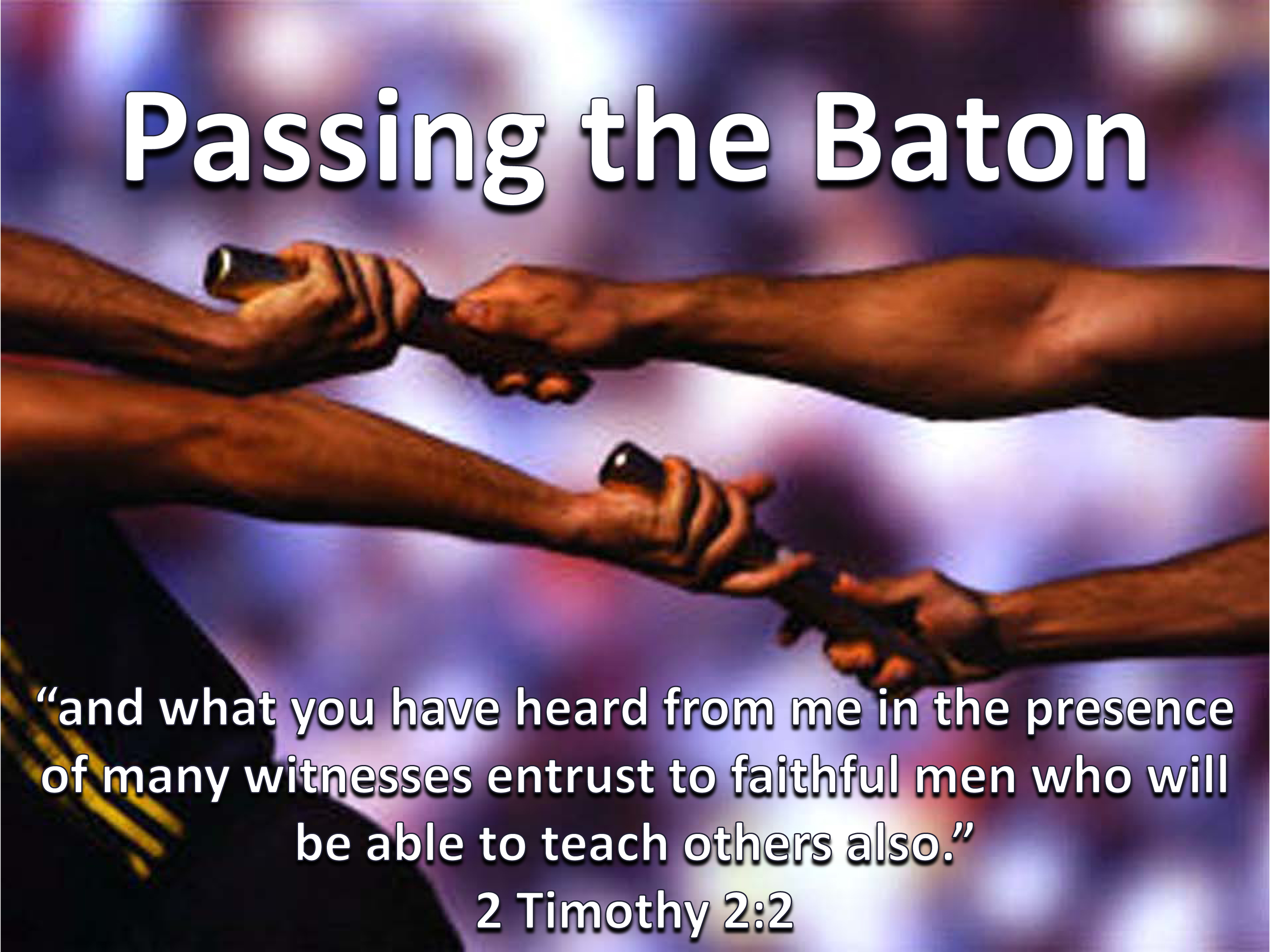
“You then, my son, be strong in the grace that is in Christ Jesus. And the things you have heard me say in the presence of many witnesses entrust to reliable people who will also be qualified to teach others.” –Paul to Timothy, 2 Timothy 2:1-2

There are many people God will send to pour what they have learned from God into us.  Pause to remember them and give God thanks for them!  Ask God to lead you to someone who needs what God has taught you.  He loves to answer prayers like this one! 

One last thought—The word disciple in our language is translated from the original Greek with this meaning: “One who learns.”  The work of God in us, as disciples of Jesus, is to be people who never stop learning, growing, and maturing in our relationship with God—continually developing the love of God in us.

  • God created us in his own image. Genesis 1:27
  • Jesus, God’s Son, was sent to reconcile us back to God who created us. 2 Corinthians 5:18-19.
  • God’s Holy Spirit lives in all who believe God and are reconciled to God through Jesus.  His Spirit leads us as a Helper/Counselor and guides us to all Truth.  John 16:13-15

Believe and be saved.  Do the work God calls each one of us to do, leaving nothing undone that He directed. Begin with the top two commands; Love God.  Love each other.  Then, go and tell the story of God/Jesus/Holy Spirit to those walking in darkness who are in need the Light of Salvation.  God will tell us exactly what to say and when to say it.  Jesus’ work is now our work until He comes back again to claim his own.  Jesus, Himself reveals this to John who writes it all down to encourage us in the work:

“And he (Jesus) said to me, “These words are trustworthy and true. And the Lord, the God of the spirits of the prophets, has sent his angel to show his servants what must soon take place.” “And behold, I am coming soon. Blessed is the one who keeps the words of the prophecy of this book.” Revelation 22:6-7

Ah, yes, come, Lord Jesus.  I’m Yours.  I’m listening.

Lord,

I stand in awe of you this morning and I am humbled by your teaching for today.  I think of all the people you sent to nurture me in my past years and I am grateful. I ask that you bless those who are still encouraging and teaching me your ways.  I pray for your guidance as I mentor those who you now have sent for me to tell of your great works in all who believe while point the Way to Jesus who reconciles us to you.  I offer my life to you again today, seeking your will in all the details of my life. I trust you with all my life for you are Life to me.

In Jesus Name, Amen

Posted in Uncategorized | Tagged , , , , | Leave a comment

THE LIST OF CONQUERS

Do you keep a list of those things God helped you overcome and conquer? 

Maybe we should! Maybe we need to refer to that list often and give God praise for all He has done and is doing in our lives!  We need to remember the list of all the times our Overcomer helped us overcome evil and conquer it once and for all!  We need to remember why God helps us—because of His love for us.  We need to remember those conquering moments especially in those times the Enemy tells us how unworthy, useless, unloved, inadequate, and unwanted we are as judged by others and ourselves.  When we are weak, remember God gives wisdom and fortifies His strength in us.

WARNING:  When we attend self-pity parties where no one but us and the Enemy are in attendance, we lose all memories of victories in Jesus. We forget we are standing daily in His Holy Presence, our Victor, the King of kings, and Lord of all!  We lose the attitude of gratitude and joy once felt when we fall to degrading ourselves on things not yet accomplished and assume somehow, we are not quite “enough” in the eyes of the world.  It is not the world we need to please—it is Christ alone!  His Holy Spirit grieves when we are lost in self.

DANGER:  When we fall into people pleasing our thoughts lead us to slippery slopes of despair.  We “feel” we must DO more, our deceitful hearts tell us, when what we really need is to BE more in touch with our Savior, the one we trust with our lives because He is Life.  God gives us more than enough to overcome with Him. He is the one who sent His Son, Jesus, The Overcomer who conquered the world of darkness with the Light of His glory and grace!  We are more than conquerors because of Jesus!

Joshua led Israel’s army to many victories over the Canaanites. Though the Israelites were outnumbered, God is never outnumbered. He encouraged, supported, and brought victory to them. After seven years of campaigning, the Israelites destroyed the alliance of Canaanite tribes.  Thirty-three kings are named in Joshua 12, beginning with Sihon and Og whose lands were east of Jordan and had been conquered under the leadership of Moses (vv. 1–8; Num. 21:21–35). The sixteen kings defeated in the southern campaign are listed in Deuteronomy 12:9–16 and the fifteen northern kings in verses 17–24.  Here is Joshua’s List.

Joshua 12

The List of Defeated Kings

12 These are the kings of the land whom the Israelites had defeated and whose territory they took over east of the Jordan, from the Arnon Gorge to Mount Hermon, including all the eastern side of the Arabah:

Sihon king of the Amorites, who reigned in Heshbon.

He ruled from Aroer on the rim of the Arnon Gorge—from the middle of the gorge—to the Jabbok River, which is the border of the Ammonites. This included half of Gilead. He also ruled over the eastern Arabah from the Sea of Galilee[a] to the Sea of the Arabah (that is, the Dead Sea), to Beth Jeshimoth, and then southward below the slopes of Pisgah.

And the territory of Og king of Bashan, one of the last of the Rephaites, who reigned in Ashtaroth and Edrei.

He ruled over Mount Hermon, Salekah, all of Bashan to the border of the people of Geshur and Maakah, and half of Gilead to the border of Sihon king of Heshbon.

Moses, the servant of the Lord, and the Israelites conquered them. And Moses the servant of the Lord gave their land to the Reubenites, the Gadites and the half-tribe of Manasseh to be their possession.

Here is a list of the kings of the land that Joshua and the Israelites conquered on the west side of the Jordan, from Baal Gad in the Valley of Lebanon to Mount Halak, which rises toward Seir. Joshua gave their lands as an inheritance to the tribes of Israel according to their tribal divisions. The lands included the hill country, the western foothills, the Arabah, the mountain slopes, the wilderness and the Negev. These were the lands of the Hittites, Amorites, Canaanites, Perizzites, Hivites and Jebusites. These were the kings:

the king of Jerichoone
the king of Ai (near Bethel)one
10 the king of Jerusalemone
the king of Hebronone
11 the king of Jarmuthone
the king of Lachishone
12 the king of Eglonone
the king of Gezerone
13 the king of Debirone
the king of Gederone
14 the king of Hormahone
the king of Aradone
15 the king of Libnahone
the king of Adullamone
16 the king of Makkedahone
the king of Bethelone
17 the king of Tappuahone
the king of Hepherone
18 the king of Aphekone
the king of Lasharonone
19 the king of Madonone
the king of Hazorone
20 the king of Shimron Meronone
the king of Akshaphone
21 the king of Taanachone
the king of Megiddoone
22 the king of Kedeshone
the king of Jokneam in Carmelone
23 the king of Dor (in Naphoth Dor)one
the king of Goyim in Gilgalone
24 the king of Tirzahone
thirty-one kings in all.

WHAT DO WE LEARN—HOW DO WE RESPOND?

Joshua conquered because He obeyed God, leaving nothing undone in His instructions from God.  Joshua could not do it alone.  Only by God’s gifts of strength, wisdom and guidance, with an army of God’s people with Him was Joshua able to conquer the kings of evil in the Promised Land.

Jesus, Son of God, promised Messiah, was sent to earth with a similar but more extensive assignment.  He was born and lived as the Son of Man and moved into the neighborhood of humanity to demonstrate the Love of God in ways humans had never known.  Jesus then conquered the enemy of death once and for all which led to the forgiveness AND removal of all repented sins of those who believed Him. 

Jesus was not sent to form armies but instead sent to seek and to save the lost, heal and forgive. For God so loved the world that he gave his one and only Son, that whoever believes in him shall not perish but have eternal life. For God did not send his Son into the world to condemn the world, but to save the world through him.” John 3:16-17

“What, then, shall we say in response to these things? If God is for us, who can be against us?He who did not spare his own Son, but gave him up for us all—how will he not also, along with him, graciously give us all things? Who will bring any charge against those whom God has chosen? It is God who justifies. Who then is the one who condemns? No one. Christ Jesus who died—more than that, who was raised to life—is at the right hand of God and is also interceding for us. Who shall separate us from the love of Christ? Shall trouble or hardship or persecution or famine or nakedness or danger or sword?As it is written:

“For your sake we face death all day long;
    we are considered as sheep to be slaughtered.”

No, in all these things we are more than conquerors through him who loved us. For I am convinced that neither death nor life, neither angels nor demons, neither the present nor the future, nor any powers, neither height nor depth, nor anything else in all creation, will be able to separate us from the love of God that is in Christ Jesus our Lord.” Romans 8:31-39

Jesus, KING of kings and LORD of lords!  Through Him, we win the victory over sin and death.

Lord,

Thank you, thank you, thank you! Help me to live the life of the redeemed and set free!  May all I think, say, and do be pleasing to you.

In Jesus Name, Amen

Posted in Uncategorized | Tagged , , , , | Leave a comment

FOLLOWING GOD’S SPECIFIC DIRECTIONS LEADS TO VICTORY OVER EVIL

Joshua led Israel’s army to many victories over the Canaanites. Though the Israelites were outnumbered, God is never outnumbered. He encouraged, supported, and brought victory to them. After seven years of campaigning, the Israelites destroyed the alliance of Canaanite tribes.  If you are reading this for the first time, you might wonder if Joshua was possessed by evil for only evil people kill other humans; but you probably do not know the “backstory.” 

Joshua, trained by Moses, was told by God to lead the people into battles to take possession of His promised land to them.  The evil that existed and had been entrenched for generations produced barbaric people groups who performed random acts of horrendous violence to their own and others which were (and are) detestable to God. They essentially abused and murdered the weakest among them.  God’s desire was for evil to be eliminated before God’s people move in and take up residence there—all for their good and His glory.  God will prevail over evil every time.  He still does.

Joshua 11

Northern Kings Defeated

When Jabin king of Hazor heard of this, he sent word to Jobab king of Madon, to the kings of Shimron and Akshaph, and to the northern kings who were in the mountains, in the Arabah south of Kinnereth, in the western foothills and in Naphoth Dor on the west; to the Canaanites in the east and west; to the Amorites, Hittites, Perizzites and Jebusites in the hill country; and to the Hivites below Hermon in the region of Mizpah. They came out with all their troops and a large number of horses and chariots—a huge army, as numerous as the sand on the seashore. All these kings joined forces and made camp together at the Waters of Merom to fight against Israel.

The Lord said to Joshua, “Do not be afraid of them, because by this time tomorrow I will hand all of them, slain, over to Israel. You are to hamstring their horses and burn their chariots.”

So Joshua and his whole army came against them suddenly at the Waters of Merom and attacked them, and the Lord gave them into the hand of Israel. They defeated them and pursued them all the way to Greater Sidon, to Misrephoth Maim, and to the Valley of Mizpah on the east, until no survivors were left. Joshua did to them as the Lord had directed: He hamstrung their horses and burned their chariots.

10 At that time Joshua turned back and captured Hazor and put its king to the sword. (Hazor had been the head of all these kingdoms.) 11 Everyone in it they put to the sword. They totally destroyed them, not sparing anyone that breathed, and he burned Hazor itself.

12 Joshua took all these royal cities and their kings and put them to the sword. He totally destroyed them, as Moses the servant of the Lord had commanded13 Yet Israel did not burn any of the cities built on their mounds—except Hazor, which Joshua burned. 14 The Israelites carried off for themselves all the plunder and livestock of these cities, but all the people they put to the sword until they completely destroyed them, not sparing anyone that breathed. 15 As the Lord commanded his servant Moses, so Moses commanded Joshua, and Joshua did it; he left nothing undone of all that the Lord commanded Moses.

16 So Joshua took this entire land: the hill country, all the Negev, the whole region of Goshen, the western foothills, the Arabah and the mountains of Israel with their foothills, 17 from Mount Halak, which rises toward Seir, to Baal Gad in the Valley of Lebanon below Mount Hermon. He captured all their kings and put them to death. 18 Joshua waged war against all these kings for a long time. 19 Except for the Hivites living in Gibeon, not one city made a treaty of peace with the Israelites, who took them all in battle. 20 For it was the Lord himself who hardened their hearts to wage war against Israel, so that he might destroy them totally, exterminating them without mercy, as the Lord had commanded Moses.

21 At that time Joshua went and destroyed the Anakites from the hill country: from Hebron, Debir and Anab, from all the hill country of Judah, and from all the hill country of Israel. Joshua totally destroyed them and their towns. 22 No Anakites were left in Israelite territory; only in Gaza, Gath and Ashdod did any survive.

23 So Joshua took the entire land, just as the Lord had directed Moses, and he gave it as an inheritance to Israel according to their tribal divisions. Then the land had rest from war.

WHAT DO WE LEARN—HOW DO WE RESPOND?

True, undeniable victory is ours because Jesus came into a world of darkness as the Light of the World, exposing all evil that existed.  He then conquered the Enemy of darkness with resurrection power over death. Max Lucado writes;

“The world sees “victory” in a different light than the Bible does. The Bible sees victory as the finished work of Jesus Christ at Calvary and his resurrection. It has a future look and understanding.

Sometimes life doesn’t seem fair, does it? Have you ever wondered why good people have to hurt? Why the innocent suffer? Often it seems that those who have been most battered by life seem to understand Jesus best, and his assurance finds its way into the darkest corners of life, because regardless of our circumstances, God meets our needs. By surrendering to him, the ultimate victory is ours.” Lucado, Encouraging Word Bible

The victory is ours because of Jesus!  The war as been won. Victory is ours when we believe Jesus died to save us and then rose from death to prove He was “God in flesh” and is Word who moved into the neighborhood of humanity (see John 1).  This truth alone gives us our hope and assurance of a future, eternal life with Him!  Walking with Jesus, talking with Jesus, becoming more like Jesus in every way by the power of God’s Holy Spirit living within us is answering Jesus’ call of “Follow Me.” 

Trusting God’s plan of directions with His personally designed purpose for each one of us is doing what Joshua (and Jesus) did; “As the Lord commanded his servant Moses, so Moses commanded Joshua, and Joshua did it; he left nothing undone of all that the Lord commanded Moses.”

If we really believe Jesus came to save us from our sins; we repent of our sins to Him because we believe.  When we believe; we have won the victory in the battle over our souls. 

Two choices.  Satan is THE enemy of death.  Jesus is our Savior and Lord of our lives who gives Life because He is Life.  These two choices to follow are given to us daily.  There will still be skirmishes with evil who does not give up in his efforts to pull us away from our belief with distractions and deceptions while attempting to deconstruct and dismantle our hope, love, faith, and trust in our Lord. 

“Hold firm to your faith”—God’s warns believers throughout His Word.  “Be strong and courageous, for I am with you” God tells Joshua with every battle with evil he faces.  Jesus tells us the same. In John 16:33, he said, “In this world you will have trouble. But take heart! I have overcome the world.” Trouble is a part of life. The question is not if you will have difficulties but WHO you decide to listen to and be led through troubles in victory.

We are blessed and assured that someday we will enter a world where there will be no more pain, no more tears, and no more sorrow.  God’s promises are true.  We can count on God to do what He says.  Can He count on us?  If we have no faith in the future, then we have no power in the present. If we have no faith in the life beyond this life, then our present life is going to be powerless. But if we believe in the future and are assured of victory, then there should be a dance in your step and a smile on your face.  Our behaviors will reflect what we really believe.

Pause to carefully and prayerfully meditate on this question: Do you believe?  God is asking us right now to declare, confess and profess our faith in Him with each breath we take.  Do you really believe what God says is really real?

Here’s a follow up question:  Do I really believe that God has my best interests at heart? If I do, then like Joshua; I don’t want to leave anything left nothing undone in my love, faith, and obedience to God.  I want to be assured of victory, both in the future and in the present.

We can ask God to help us with our doubts.  We all have them.  He will not turn us away.  God knows our hearts.  Be honest. God likes honesty with humbled hearts who seek Him and ask for help.  Be still, let go and know God.  God/Jesus/Holy Spirit gives us all we need for each moment of every day.  When Jesus said, “And I will be with you always, even unto the end of the age,” (Matthew 28) He meant every word.  Victory is ours when we believe Him and do what He says.

Follow Jesus.  Leave nothing undone in all that God commands again through His Son to us: Love God. Love each other. There is no one on this earth that God does not love.

Lord,

Thank you for saving us by forgiving us of all our sins.  We cannot do that for ourselves. You willingly and obediently chose to do that for us.  There is no one like you who gives life and light in the darkness. Thank you, thank you, thank you! 
I’m yours.  And I’m listening.

In Jesus Name, Amen

Posted in Uncategorized | Tagged , , , , | Leave a comment

REMEMBER THAT TIME WHEN…

Just yesterday I spent time with a young mom who told of the miracles of God that had happened in her family.  Then I shared the recent miracle of God in my family.  How God must smile when we remember those times, sharing those life altering events that happen and are solved in unexplainable ways, and then immediately give HIM all the glory for helping us—even before we knew we needed help! 

She shared the time her dad was cutting grass using his riding lawnmower like he always did.  Suddenly the mower stopped working for no apparent reason.  He got off the mower and pushed it back to the house to work on it when he saw the hemlock growing wildly where the mower had stopped working. Had he mowed right on through the growth, he would have died from the poisoning plant be ripped apart.  Her parents called professionals to come and remove it immediately.  The next day, the mower started effortlessly.  God protected her dad before he knew he needed protecting.  There are so many ways God protects us that we sometimes fail to take notice.  It’s time we thank God for daily for being involved in all the details of our lives. 

“The Lord directs the steps of the godly. He delights in every detail of their lives.” Psalm 37:23

“The Lord your God is with you, the Mighty Warrior who saves.
He will take great delight in you; in his love he will no longer rebuke you, but will rejoice over you with singing.”
Zephania 3:17

When we draw near to God; God comes closer to us so we can hear Him more clearly. Believing, inquiring, listening, trusting and obeying God gives us life and more life with power, energy, renewed minds, clearer vision no matter what obstacle is thrown in the path.  Asking God before acting for God pleases Him.  To inquire of God before doing anything of significance, especially those things that will affect all those around us; is required to understand God’s directives more clearly. Obedience to God demonstrates our love for God. 

There is no one like our God!  God does for us what He knows we cannot do for ourselves. Always and forever—God is God. 

God hears our prayers.  In the battle between God and evil; Joshua learns that He can also call out to God in the heat of battle and God will answer.  Joshua shouts to the heavens and asks for the sun to stand still—and God did exactly that!  Only God, the Creator of all, could do that!  Imagine, a generation later of an Israelite family sitting around the table in conversation.  Imagine one family member getting everyone’s attention as says; “But, remember that day the SUN STOOD STILL—FOR A WHOLE DAY!  Then they retell the story of what God did that day for Joshua and his army in a buzz of praise to God with details of the event coming from all seated at the table.  “Ah, that day was special, the day God made the sun stand still at high noon for a whole day!  Yes, there’s no one like our God!”

Joshua 10

The Sun Stands Still

Now Adoni-Zedek king of Jerusalem heard that Joshua had taken Ai and totally destroyed it, doing to Ai and its king as he had done to Jericho and its king, and that the people of Gibeon had made a treaty of peace with Israel and had become their allies. He and his people were very much alarmed at this, because Gibeon was an important city, like one of the royal cities; it was larger than Ai, and all its men were good fighters. So Adoni-Zedek king of Jerusalem appealed to Hoham king of Hebron, Piram king of Jarmuth, Japhia king of Lachish and Debir king of Eglon. “Come up and help me attack Gibeon,” he said, “because it has made peace with Joshua and the Israelites.”

Then the five kings of the Amorites—the kings of Jerusalem, Hebron, Jarmuth, Lachish and Eglon—joined forces. They moved up with all their troops and took up positions against Gibeon and attacked it.

The Gibeonites then sent word to Joshua in the camp at Gilgal: “Do not abandon your servants. Come up to us quickly and save us! Help us, because all the Amorite kings from the hill country have joined forces against us.”

So Joshua marched up from Gilgal with his entire army, including all the best fighting men. The Lord said to Joshua, “Do not be afraid of them; I have given them into your hand. Not one of them will be able to withstand you.”

After an all-night march from Gilgal, Joshua took them by surprise. 10 The Lord threw them into confusion before Israel, so Joshua and the Israelites defeated them completely at Gibeon. Israel pursued them along the road going up to Beth Horon and cut them down all the way to Azekah and Makkedah. 11 As they fled before Israel on the road down from Beth Horon to Azekah, the Lord hurled large hailstones down on them, and more of them died from the hail than were killed by the swords of the Israelites.

12 On the day the Lord gave the Amorites over to Israel, Joshua said to the Lord in the presence of Israel:

“Sun, stand still over Gibeon,
    and you, moon, over the Valley of Aijalon.”

13 
So the sun stood still,
    and the moon stopped,

    till the nation avenged itself on its enemies,

as it is written in the Book of Jashar.

The sun stopped in the middle of the sky and delayed going down about a full day. 14 There has never been a day like it before or since, a day when the Lord listened to a human being. Surely the Lord was fighting for Israel!

15 Then Joshua returned with all Israel to the camp at Gilgal.

Five Amorite Kings Killed

16 Now the five kings had fled and hidden in the cave at Makkedah. 17 When Joshua was told that the five kings had been found hiding in the cave at Makkedah, 18 he said, “Roll large rocks up to the mouth of the cave, and post some men there to guard it. 19 But don’t stop; pursue your enemies! Attack them from the rear and don’t let them reach their cities, for the Lord your God has given them into your hand.”

20 So Joshua and the Israelites defeated them completely, but a few survivors managed to reach their fortified cities. 21 The whole army then returned safely to Joshua in the camp at Makkedah, and no one uttered a word against the Israelites.

22 Joshua said, “Open the mouth of the cave and bring those five kings out to me.” 23 So they brought the five kings out of the cave—the kings of Jerusalem, Hebron, Jarmuth, Lachish and Eglon. 24 When they had brought these kings to Joshua, he summoned all the men of Israel and said to the army commanders who had come with him, “Come here and put your feet on the necks of these kings.” So they came forward and placed their feet on their necks.

25 Joshua said to them, “Do not be afraid; do not be discouraged. Be strong and courageous. This is what the Lord will do to all the enemies you are going to fight.” 26 Then Joshua put the kings to death and exposed their bodies on five poles, and they were left hanging on the poles until evening.

27 At sunset Joshua gave the order and they took them down from the poles and threw them into the cave where they had been hiding. At the mouth of the cave they placed large rocks, which are there to this day.

Southern Cities Conquered

28 That day Joshua took Makkedah. He put the city and its king to the sword and totally destroyed everyone in it. He left no survivors. And he did to the king of Makkedah as he had done to the king of Jericho.

29 Then Joshua and all Israel with him moved on from Makkedah to Libnah and attacked it. 30 The Lord also gave that city and its king into Israel’s hand. The city and everyone in it Joshua put to the sword. He left no survivors there. And he did to its king as he had done to the king of Jericho.

31 Then Joshua and all Israel with him moved on from Libnah to Lachish; he took up positions against it and attacked it. 32 The Lord gave Lachish into Israel’s hands, and Joshua took it on the second day. The city and everyone in it he put to the sword, just as he had done to Libnah. 33 Meanwhile, Horam king of Gezer had come up to help Lachish, but Joshua defeated him and his army—until no survivors were left.

34 Then Joshua and all Israel with him moved on from Lachish to Eglon; they took up positions against it and attacked it. 35 They captured it that same day and put it to the sword and totally destroyed everyone in it, just as they had done to Lachish.

36 Then Joshua and all Israel with him went up from Eglon to Hebron and attacked it. 37 They took the city and put it to the sword, together with its king, its villages and everyone in it. They left no survivors. Just as at Eglon, they totally destroyed it and everyone in it.

38 Then Joshua and all Israel with him turned around and attacked Debir. 39 They took the city, its king and its villages, and put them to the sword. Everyone in it they totally destroyed. They left no survivors. They did to Debir and its king as they had done to Libnah and its king and to Hebron.

40 So Joshua subdued the whole region, including the hill country, the Negev, the western foothills and the mountain slopes, together with all their kings. He left no survivors. He totally destroyed all who breathed, just as the Lord, the God of Israel, had commanded. 41 Joshua subdued them from Kadesh Barnea to Gaza and from the whole region of Goshen to Gibeon. 42 All these kings and their lands Joshua conquered in one campaign, because the Lord, the God of Israel, fought for Israel.

43 Then Joshua returned with all Israel to the camp at Gilgal.

WHAT DO WE LEARN—HOW DO WE RESPOND?

God did not promise the Israelites the land without giving them the strength to conquer it. Where God guides; He provides.  God helped Joshua lead the people into possession of their land.  God does not give us commands or lead us to decisions and and then leave us to fight the obstacles in our own strength. That’s not how God works.  If God leads us to it; He will lead us through it! Remember the Red Sea and the Jordan River crossings?  Yes, we learn that God strengthens us and guides us in every detail of our lives.  He “delights” in the details of our lives and loves us deeply, relentlessly, unconditionally, and completely! 

“Strength will rise when we wait upon the Lord, when we wait upon the Lord…” is the chorus based on Holy Scriptures coming into my mind right now as I am reminded that we humans are an impatient creation.  We want God to act as soon as we trip on a small stone of irritation in front of us. However, if trust in God trumps our feelings and emotions, we will quickly give up our control to God.  We learn that as we grow and mature in our faith relationship with God we realize what we don’t know—the future!  Why would we want to control what we cannot see?  Trust God and His timing.  He does know! 

When we struggle with God’s timing and demand control; we slip into needless, wasted worries that lead to all kinds of ailments that are unnecessary. These times of worries that lead to despair can stunt our growing, intimate, loving, trusting relationship with God.  Be patient. “Be still (let go of control) and know that I am God” (Psalm 46:10) God is using today’s difficulties to strengthen us for tomorrow. He is equipping you and I in the process as He see fit for each one of us. The God who makes things grow will help us bear the Holy Spiritual fruits of His character when we “wait upon the Lord” by trusting and obeying. (A list of the bountiful fruits are found in Galatians 5:22-23)

God did not bring us this far to leave us.  God promises He will be with us always—even until the end of the age—when Jesus comes back again.  God is faithful even when we are not.  God’s promises are true and reliable because God does not lie.  How refreshing in a world of darkness who has fallen for the Liar, the Enemy of God. 


“Just trust me,” says the God who loves us most and gives His best to save us.

Lord,

Thank you for your reminders of your power, your glory, and your love.  I will meditate on what you say all day long and into the night. I’m listening because I am yours. Thank you, thank you, thank you!

In Jesus Name, Amen

Posted in Uncategorized | Tagged , , , , | Leave a comment

GOD HELPS US SEEK TRUTH—WHEN WE ASK

There are some people who have the gift of discernment given to them by God. The world calls it intuition or a knowing that seems like sorcery.  But in those who seek God first and ask for wisdom; God gives what they need to discern lies from truth in people and in situations which make them feel uneasy.  My dad, a man of strong faith, had discernment from God. When people unknown to our congregation would try to flatter leaders and then lead through manipulation of others in our church or family; we would ask Dad what he thought. Dad didn’t want to judge, he wanted to first think the best of people.  But when an uneasiness would form; he would “pray about it’ for a while.  God would lead him with clarification to settle his soul or warn him impending danger for when “something was not quite right” and was probably a lie.  Without or without dad’s thoughts, prayers and input; God had a way for Truth to rise above the lies for all to see. God still does that for us!

Why is God the best and first place to go? God does not lie. He is Truth. It is not in his character to lie.  Jesus, who is God in flesh, is Truth.  Jesus, who came to seek and to save the lost without God–all because of the lies of the Deceiver, the enemy of God.  Jesus said of Himself for all to hear; “I am the way and the truth and the life. No one comes to the Father except through me.”  (John 14:6)

God is truth. Jesus is truth. God’s Holy Spirt is truth who lives in us to guide us to truth.

Want the truth and nothing but the truth?  GO TO GOD FIRST!

Joshua 9, The Message

Gibeon

1-2 All the kings west of the Jordan in the hills and foothills and along the Mediterranean seacoast north toward Lebanon—the Hittites, Amorites, Canaanites, Perizzites, Hivites, Girgashites, and Jebusites—got the news. They came together in a coalition to fight against Joshua and Israel under a single command.

3-6 The people of Gibeon heard what Joshua had done to Jericho and Ai and cooked up a ruse. They posed as travelers: their donkeys loaded with patched sacks and mended wineskins, threadbare sandals on their feet, tattered clothes on their bodies, nothing but dry crusts and crumbs for food. They came to Joshua at Gilgal and spoke to the men of Israel, “We’ve come from a far-off country; make a covenant with us.”

The men of Israel said to these Hivites, “How do we know you aren’t local people? How could we then make a covenant with you?”

They said to Joshua, “We’ll be your servants.”

Joshua said, “Who are you now? Where did you come from?”

9-11 They said, “From a far-off country, very far away. Your servants came because we’d heard such great things about God, your God—all those things he did in Egypt! And the two Amorite kings across the Jordan, King Sihon of Heshbon and King Og of Bashan, who ruled in Ashtaroth! Our leaders and everybody else in our country told us, ‘Pack up some food for the road and go meet them. Tell them, We’re your servants; make a covenant with us.’

12-13 “This bread was warm from the oven when we packed it and left to come and see you. Now look at it—crusts and crumbs. And our cracked and mended wineskins, good as new when we filled them. And our clothes and sandals, in tatters from the long, hard traveling.”

14 The men of Israel looked them over and accepted the evidence. But they didn’t ask God about it.

15 So Joshua made peace with them and formalized it with a covenant to guarantee their lives. The leaders of the congregation swore to it.

16-18 And then, three days after making this covenant, they learned that they were next-door neighbors who had been living there all along! The People of Israel broke camp and set out; three days later they reached their towns—Gibeon, Kephirah, Beeroth, and Kiriath Jearim. But the People of Israel didn’t attack them; the leaders of the congregation had given their word before the God of Israel. But the congregation was up in arms over their leaders.

19-21 The leaders were united in their response to the congregation: “We promised them in the presence of the God of Israel. We can’t lay a hand on them now. But we can do this: We will let them live so we don’t get blamed for breaking our promise.” Then the leaders continued, “We’ll let them live, but they will be woodcutters and water carriers for the entire congregation.”

And that’s what happened; the leaders’ promise was kept.

22-23 But Joshua called the Gibeonites together and said, “Why did you lie to us, telling us, ‘We live far, far away from you,’ when you’re our next-door neighbors? For that you are cursed. From now on it’s menial labor for you—woodcutters and water carriers for the house of my God.”

24-25 They answered Joshua, “We got the message loud and clear that God, your God, commanded through his servant Moses: to give you the whole country and destroy everyone living in it. We were terrified because of you; that’s why we did this. That’s it. We’re at your mercy. Whatever you decide is right for us, do it.”

26-27 And that’s what they did. Joshua delivered them from the power of the People of Israel so they didn’t kill them. But he made them woodcutters and water carriers for the congregation and for the Altar of God at the place God chooses. They still are.

WHAT DO WE LEARN—HOW DO WE RESPOND?

God’s people are not perfect. They fell for a ruse from a neighboring group of Gibeonites.  Flattered by this group’s spokesperson; they fell for their deceit.  Why?  Verse 14 says it all; “The men of Israel looked them over and accepted the evidence. But they didn’t ask God about it.”

Falling for lies has consequences.  Telling lies has consequences.  What are we willing to live with?  Truth or lies?   Our choice. God wants to live Truth and gives us the ability to choose truth with the power of His Holy Spirit living in us.  How often to do first “pray about it” asking for the discernment of God’s Holy Spirit?  How often do we tap into the gift of God’s resurrection power that lies within us who guides us to all that is God/Truth?  This is “tapping into power” discipline is worth all our efforts to obtain as we sift through the information the world distributes daily.

TRUTH:

“God does not lie” (Titus 1:2). He is “the God of truth” (Isaiah 65:16 ESV). “God is not human, that he should lie, not a human being, that he should change his mind.”  God was, is and always will be Truth.

Jesus said, “I am the way, and the truth, and the life. No one comes to the Father except through me. If you had known me, You would have known my Father also. From now on you know him and have seen him” (John 14:6–7).

Jesus relates the work of God’s Holy Spirit: “I still have many things to tell you, but you can’t handle them now. But when the Friend comes, the Spirit of the Truth, he will take you by the hand and guide you into all the truth there is. He won’t draw attention to himself, but will make sense out of what is about to happen and, indeed, out of all that I have done and said. He will honor me; he will take from me and deliver it to you. Everything the Father has is also mine. That is why I’ve said, ‘He takes from me and delivers to you.’” John 16:13-15, MSG

When we believed the gospel, and trusted Jesus to save us, that’s when we were sealed with the promised Holy Spirit. If you are a Believer in Jesus, then the Bible calls you God’s temple because “God’s Spirit dwells in you” (1 Corinthians 3:16).

Believers in Jesus are led by God’s Holy Spirt of truth.  Paul, a person devoted to Jesus and His church, explains how His Spirit of Truth works in all who believe;

“This message was kept secret for centuries and generations past, but now it has been revealed to God’s people. For God wanted them to know that the riches and glory of Christ are for you Gentiles, too. And this is the secret: Christ lives in you. This gives you assurance of sharing his glory.

So we tell others about Christ, warning everyone and teaching everyone with all the wisdom God has given us. We want to present them to God, perfect in their relationship to Christ. That’s why I work and struggle so hard, depending on Christ’s mighty power that works within me.” Colossians 1:26-29, NLT

(*Gentile—anyone not a Jew from birth. “Perfect” used here means maturing in faith.)

Who do we depend on for truth?  Pause to “pray about it and talk it over” with God’s Holy Spirit who will guide us.  I am recalling a gospel song of my childhood— “Just a Little Talk with Jesus Makes it Right” For me, it takes more than a “little talk” but a passionate plea for truth these days! 

“I sought the Lord, and He heard, and He answered.” This a phrase from a popular song today in reference to Psalm 34:4; “I sought the Lord, and he answered me; he delivered me from all my fears.  God’s love drives out all fear. 

And do you know what else God’s loves? God loves to give us wisdom, the skills for living truth, when we ask Him.  “If any of you lacks wisdom, you should ask God, who gives generously to all without finding fault, and it will be given to you. But when you ask, you must believe and not doubt, because the one who doubts is like a wave of the sea, blown and tossed by the wind. That person should not expect to receive anything from the Lord. Such a person is double-minded and unstable in all they do.” James 1:5-8

Lord,

“Let the morning bring me word of your unfailing love, for I have put my trust in you.
Show me the way I should go, for to you I entrust my life.
Rescue me from my enemies, Lord, for I hide myself in you.
Teach me to do your will, for you are my God; may your good Spirit lead me on level ground.” Psalm 143:8-10

In Jesus Name, for our good and your glory, Amen

Posted in Uncategorized | Tagged , , , , | Leave a comment