Mark – God is On Our Side!
There are all kinds of surveys in the world that ask questions based on specific information surveyors are looking to find. . Some surveys ask questions in a way only to verify what the marketing surveyor is wanting to validate in the product they are selling. Some surveys want to find out about you and what you would be willing to buy based on your answers. Some surveys merely want your personal information. (So be careful with those “fun” activities on Facebook, friends!)
Some surveys are just silly and make for worldly entertainment…like the Family Feud game show. But ALL surveys are looking for human answers to their very human questions. George Barna, a believer who is a statistician, surveyed the American church in an effort to understand the level of belief among born again attenders. The results would blow you away! (Read “Think Like Jesus” for some of the results.)
But we are a bit surprised when the Son of God, Jesus Christ takes a survey among his disciples as they are walking along the countryside…“Who do people say I am?”
Peter’s Declaration about Jesus
 27 Jesus and his disciples left Galilee and went up to the villages near Caesarea Philippi. As they were walking along, he asked them, “Who do people say I am?”
28 “Well,” they replied, “some say John the Baptist, some say Elijah, and others say you are one of the other prophets.”
29 Then he asked them, “But who do you say I am?”
Peter replied, “You are the Messiah.”
30 But Jesus warned them not to tell anyone about him.
31 Then Jesus began to tell them that the Son of Man must suffer many terrible things and be rejected by the elders, the leading priests, and the teachers of religious law. He would be killed, but three days later he would rise from the dead. 32 As he talked about this openly with his disciples, Peter took him aside and began to reprimand him for saying such things.
33 Jesus turned around and looked at his disciples, then reprimanded Peter. “Get away from me, Satan!” he said. “You are seeing things merely from a human point of view, not from God’s.”
34 Then, calling the crowd to join his disciples, he said, “If any of you wants to be my follower, you must give up your own way, take up your cross, and follow me. 35 If you try to hang on to your life, you will lose it. But if you give up your life for my sake and for the sake of the Good News, you will save it. 36 And what do you benefit if you gain the whole world but lose your own soul? 37 Is anything worth more than your soul? 38 If anyone is ashamed of me and my message in these adulterous and sinful days, the Son of Man will be ashamed of that person when he returns in the glory of his Father with the holy angels.”
 After the survey, Jesus then gets very personal with His devoted followers…“Who do YOU say I am?” PAUSE. Camp on this question and imagine Jesus standing in front of you asking you this same question.
Now, let’s get some background on this passage to help us understand more about why the question was asked so that more information could be given to them with real understanding.
A secret has been defined as “something you tell one person at a time.” From time to time, Jesus shared special “secrets” with His disciples, and three of them are given here. Believers today need to understand and apply these spiritual secrets if their own lives are to be all that God wants them to be.
Jesus had been preparing His disciples for this private meeting at which He intended to reveal to them what would happen to Him at Jerusalem. He had given hints along the way, but now He would explain matters to them more fully. For the site, He selected Caesarea Philippi, a town about twenty-five miles north of Bethsaida, sitting at the foot of beautiful Mount Hermon. The town was named after Augustus Caesar and Herod Philip, and it contained a marble temple dedicated to Augustus. It was a place dedicated to the glory of Rome, and that glory is now gone, but the glory of Jesus Christ remains and will go on eternally.
If you were to go around asking your friends, “What do people say about me?” they would take it as an evidence of pride. What difference does it really make what people think or say about us? We are not that important! But what people believe and say about Jesus Christ is important, for He is the Son of God and the only Savior of sinners.
 It is remarkable the number of different opinions the people held about Jesus, though the same situation probably exists today. That some thought He was John the Baptist is especially perplexing, since John and Jesus had been seen publicly together. They were quite different in personality and ministry(Matt. 11:16–19), so it seems strange that the people would confuse them.
Some said that Jesus was one of the prophets, perhaps Jeremiah (Matt. 16:14). Jeremiah was “the weeping prophet,” and Jesus was a Man of Sorrows, so there is a definite parallel. Jeremiah called the people to true repentance from the heart, and so did Jesus.
In His words and His works, Jesus gave every evidence to the people that He was the Son of God, the Messiah, and yet they did not get the message. Instead of diligently seeking for the truth, the people listened to popular opinion and followed it, just as many people do today. They had opinions instead of convictions, and this is what led them astray.
Peter’s confession was bold and uncompromising, just as ours should be: “Thou art the Christ, the Son of the living God” (Matt. 16:16). The word Christ means “the Anointed One, the promised Messiah.”
Why did Jesus warn them to keep quiet about Him? For one thing, the disciples themselves still had much to learn about Him and what it truly meant to follow Him. The religious leaders of the nation had already made up their minds about Him, and to proclaim Him as Messiah now would only upset God’s plans. The common people wanted to see His miracles, but they had little desire to submit to His message. To announce Him as Messiah might well result in a political uprising that would only do harm.
Now that they had confessed their faith in Christ (but see John 6:66–71), the disciples were ready for the “secret” Jesus wanted to share with them: He was going with them to Jerusalem, where He would die on a cross. From this point on, Mark will focus on their journey to Jerusalem, and the emphasis will be on Jesus’ approaching death and resurrection (Mark 9:30–32; 10:32–34).
This announcement stunned the disciples. If He is indeed the Christ of God, as they had confessed, then why would He be rejected by the religious leaders? Why would these leaders crucify Him? Did not the Old Testament Scriptures promise that Messiah would defeat all their enemies and establish a glorious kingdom for Israel? There was something wrong somewhere and the disciples were confused.
 True to character, it was Peter who expressed their concern. One minute Peter was led by God to confess his faith in Jesus Christ (Matt. 16:17), and the next minute he was thinking like an unbelieving man and expressing the thoughts of Satan! This is a warning to us that when we argue with God’s Word, we open the door for Satan’s lies. Peter began rebuking his Master, and Mark used the same word that describes our Lord’s rebuking of the demons (Mark 1:25; 3:12).
Peter’s protest was born out of his ignorance of God’s will and his deep love for his Lord. One minute Peter was a “rock,” and the next minute he was a stumbling block! Dr. G. Campbell Morgan said, “The man who loves Jesus, but who shuns God’s method, is a stumbling block to Him.” Peter did not yet understand the relationship between suffering and glory. He would eventually learn this lesson and would even emphasize it in his first epistle (note 1 Peter 1:6–8; 4:13—5:10).
Note, however, that when Jesus rebuked Peter, He also “looked on his disciples,” because they agreed with Peter’s assessment of the situation! Steeped in Jewish traditional interpretation, they were unable to understand how their Messiah could ever suffer and die. To be sure, some of the prophets had written about Messiah’s sufferings, but much more had been written about Messiah’s glory. Some of the rabbis even taught that there would be two Messiahs, one who would suffer and one who would reign (see 1 Peter 1:10–12). No wonder the disciples were confused.
But the problem was more than theological; it was very practical. Jesus had called these men to follow Him, and they knew that whatever happened to Him would happen to them. If there was a cross in His future, there would be one in their future as well. That would be reason enough to disagree with Him! In spite of their devotion to Him, the disciples were still ignorant of the true relationship between the cross and the
crown. They were following Satan’s philosophy (glory without suffering) instead of God’s philosophy (suffering transformed into glory).
Which philosophy we accept will determine how we live and how we serve.
Jesus still asks us today, “Who do YOU say I AM? PAUSE, PRAY, ANSWER.
Mark 8:34 indicates that, though Jesus and His disciples had met in private, the crowds were not far away. Jesus summoned the people and taught them what He taught His own disciples: there is a price to pay for true discipleship. He knew that the crowds were following Him only because of the miracles, and that most of the people were unwilling to pay the price to become true disciples.
Jesus laid down three conditions for true discipleship:
(1) we must surrender ourselves completely to Him;
(2) we must identify with Him in suffering and death;
(3) we must follow Him obediently, wherever He leads. If we live for ourselves, we will lose ourselves, but if we lose ourselves for His sake and the gospel’s, we will find ourselves.
Denying self is not the same as self-denial. We practice self-denial when, for a good purpose, we occasionally give up things or activities. But we deny self when we surrender ourselves to Christ and determine to obey His will. This once-for-all dedication is followed by a daily “dying to self” as we take up the cross and follow Him. From the human point of view, we are losing ourselves, but from the divine perspective, we are finding ourselves. When we live for Christ, we become more like Him, and this brings out our own unique individuality.
The motivation for true discipleship: “for my sake and the gospel’s” (Mark 8:35). To lose yourself is not an act of desperation; it is an act of devotion. But we do not stop there: personal devotion should lead to practical duty, the sharing of the gospel with a lost world. “For my sake” could lead to selfish religious isolationism, so it must be balanced with “and the gospel’s.” Because we live for Him, we live for others.
Discipleship is a matter of profit and loss, a question of whether we will waste our lives or invest our lives.
Whew, as you can read, there is a lot to learn from Mark’s penning of the bottom line Truth of devoted followership of Jesus. We need to ask ourselves daily, “Who do YOU say I am” as a personal assessment of our belief, behaviors, motivation, intention and declaration of Who is sincerely in control of our lives. (Pray Romans 12! It helps me!)
Dear Heavenly Father, Lord and Savior,
Here I am. Speak to my heart all day long and into the night. Cleanse me. Fill me. Use me. You are God and i am not.

 Can you imagine the scene? Crowds of people, children included, trying to get close to Jesus. The children have heard their parents, aunts and uncles talk about Jesus and now they long to see who this Man in person! Children must see, ear, touch and feel as they relish every moment of learning and discovering. Parents are merely following the custom of bringing their kids to be blessed by the Master Teacher, a Rabbi. To be touched by the Hands that heal would be such a blessing! So, they all try to get as close as they can.
 I imagine children, who sense and know authentic love, skirting artfully through the crowd to get to Jesus. Because Jesus loves beyond all our thinking, he welcomes these kids clamoring to get to him. This unnerves the disciples who suddenly become “security” body guards to Jesus and forget the mission for a bit. Children “in that time” were to be seen and not heard.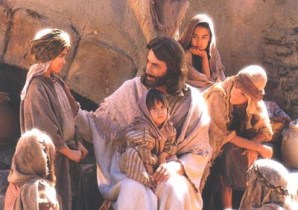
 First marriage, then children; the sequence is logical. Unlike many “moderns” today, the Jews of that day looked on children as a blessing and not a burden, a rich treasure from God and not a liability (Ps. 127— 128). To be without children brought a couple both sorrow and disgrace. It was customary for parents to bring their children to the rabbis for a blessing, and so it was reasonable that they would bring the little ones to Jesus. Some were infants in arms (Luke 18:15), while others were young children able to walk, and He welcomed them all.
 Why would the disciples rebuke the people and try to keep the children away from Jesus? (See Matt. 15:23 and Mark 6:36 for other instances of the disciples’ seeming hardness of heart.) They probably thought they were doing Him a favor by helping Him protect His time and conserve His strength. In other words, they did not consider the children to be important! Their attitude was strange, because Jesus had already taught them to receive the children in His name and to be careful not to cause any of them to stumble (Mark 9:36.). Once again, they forgot what He had taught them.
  The phrase “much displeased” is too tame. Our Lord actually became indignant as He openly rebuked His disciples for standing in the way. Then He announced that the children were better kingdom examples than were the adults. We tell the children to behave like adults, but Jesus tells the adults to model themselves after the children!
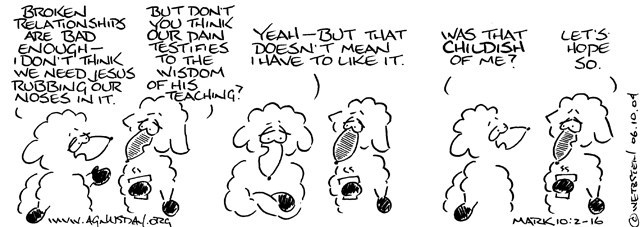
  We enter God’s kingdom by faith, like little children: helpless, unable to save ourselves, totally dependent on the mercy and grace of God. We enjoy God’s kingdom by faith, believing that the Father loves us and will care for our daily needs. What does a child do when he or she has a hurt or a problem? Take it to Father and Mother! What an example for us to follow in our relationship with our heavenly Father! Yes, God wants us to be childlike, but not childish!
  Dear Heavenly Father,
 How many times have you played a game for the first time with only one person who knew the rules of the game. When things aren’t going well in the game, all eyes turn to that person who introduced you to the game in the first place. We whine and tell this person, “Change the rules, this is too hard to play it this way.” The purpose of the game is then lost.
  Jesus, who came to fulfill The Law, explains the intentions of what God originally provided as His best for us. Those who love Him base their marriage on His Love that is forever, never-changing, unconditional and relentless, not the world’s cheap imitation of love that is fickle and easily cast aside.
  4 “Well, he permitted it,” they replied. “He said a man can give his wife a written notice of divorce and send her away.”
 Jesus explained that Moses gave the divorce law because of the sinfulness of the human heart. The law protected the wife by restraining the husband from impulsively divorcing her and abusing her like an unwanted piece of furniture, instead of treating her like a human being. Without a bill of divorcement, a woman could easily become a social outcast and be treated like a harlot. No man would want to marry her, and she would be left defenseless and destitute.
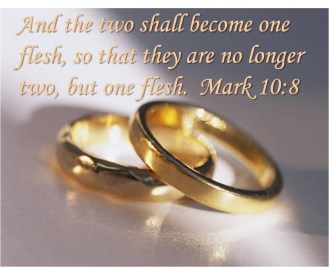
  While the spiritual element is vitally important in marriage, the emphasis here is that marriage is a physical union: the two become one flesh, not one spirit. Since marriage is a physical union, only a physical cause can break it—either death (Rom. 7:1–3) or fornication (Matt. 5:32; 19:9). Mark did not include the “exception clause” found in Matthew, but neither did he say that death breaks the marriage union.
 Where there are two or more pastors, the first question asked among them will invariably be, “How many did you have on Sunday?” The pastor with the greatest number will have the biggest smile while the others begin to make excuses for why their number is less.
  Serving in a growing church, I am learning that people are drawn to the first impression they have of the people inside whose heart’s desire is to tell you about Jesus and how He restored their lives. Some people give church a try because these same people are the same at work as they are at church! New concept for the unbelieving world!
  39 “Don’t stop him!” Jesus said. “No one who performs a miracle in my name will soon be able to speak evil of me. 40 Anyone who is not against us is for us. 41 If anyone gives you even a cup of water because you belong to the Messiah, I tell you the truth, that person will surely be rewarded.
 What do we learn?

 Some people come to an event, place of worship, grocery store, place of work, anywhere and talk about others behind their backs in order to show their listeners how much greater they are than the persons they are talking about. It makes us feel more powerful, “in the know”, for about a nano second.
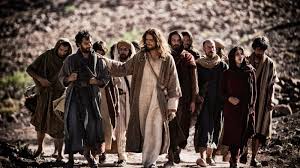 Jesus takes his disciples for a walk in the country, avoiding the crowds, so he can teach them. Unfortunately, these young followers are so full of themselves, that they are missing the main point of the first discussion while arguing over who will be sitting next to Jesus in His Kingdom.
  Oh be careful little eyes what you see?
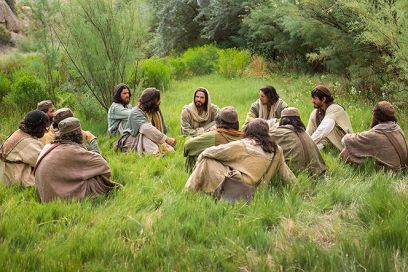 30 Leaving that region, they traveled through Galilee. Jesus didn’t want anyone to know he was there, 31 for he wanted to spend more time with his disciples and teach them. He said to them, “The Son of Man is going to be betrayed into the hands of his enemies. He will be killed, but three days later he will rise from the dead.” 32 They didn’t understand what he was saying, however, and they were afraid to ask him what he meant.
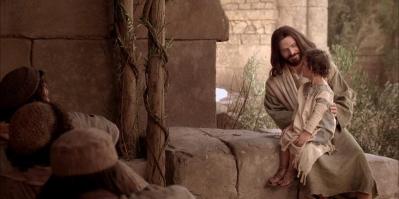 33 After they arrived at Capernaum and settled in a house, Jesus asked his disciples, “What were you discussing out on the road?” 34 But they didn’t answer, because they had been arguing about which of them was the greatest. 35 He sat down, called the twelve disciples over to him, and said, “Whoever wants to be first must take last place and be the servant of everyone else.”
 True humility means knowing yourself, accepting yourself, being yourself—your best self—and giving of yourself for others. The world’s philosophy is that you are “great” if others are working for you, but Christ’s message is that greatness comes from our serving others.
  Dear Father, Savior and Lord,
 When pushed to the emotional edge of adversity that breeds fear and doubt, our best and most honest prayer is, “Jesus, help my unbelief.” We come to Jesus in troubles, hanging on to a small thread, because we have faith to some degree, but when pushed to the wall, we cry out for help in desperation. This desperation comes after trying everything and everyone else. Maybe we think He isn’t listening.
 14 When they returned to the other disciples, they saw a large crowd surrounding them, and some teachers of religious law were arguing with them. 15 When the crowd saw Jesus, they were overwhelmed with awe, and they ran to greet him.
 The Christian life is “a land of hills and valleys” (Deut. 11:11). In one day, a disciple can move from the glory of heaven to the attacks of hell. When our Lord and His three friends returned to the other nine disciples, they found them involved in a dual problem: they were unable to deliver a boy from demonic control, and the scribes were debating with them and perhaps even taunting them because of their failure. As always, it was Jesus who stepped in to solve the problem.
  Dear Lord,
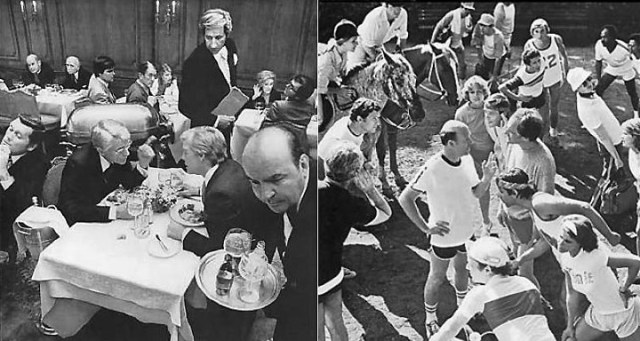 Years ago there was a commercial that ran consistently about a trusted brokerage firm. It became so popular that comics used it in skits. Everyone knew the tag line. EF Hutton was an American stock brokerage firm founded in 1904 by Edward Francis Hutton and his brother, Franklyn Laws Hutton. Later, it was led by well known Wall Street trader Gerald M. Loeb. Under their leadership, EF Hutton became one of the most respected financial firms in the United States and for several decades was the second largest brokerage firm in the country.
 The Transfiguration
 Moses represented the law and Elijah the prophets, both of which find their fulfillment in Jesus Christ (Luke 24:25–27; Heb. 1:1–2). Moses had died and his body was buried, but Elijah had been raptured to heaven (2 Kings 2:11). When Jesus returns, He will raise the bodies of the saints who died and will rapture the living saints (1 Thess. 4:13–18). Jesus will one day establish His glorious kingdom and fulfill the many promises made through the prophets. Christ’s sufferings and death would not prevent God from establishing His kingdom; rather, by solving the sin problem in God’s world, the cross would help to make the kingdom possible.
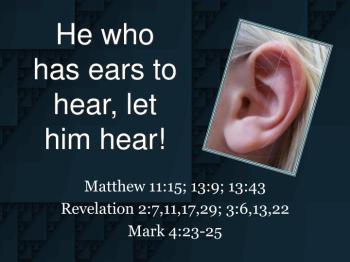
  The Father interrupted Peter’s speech and focused their attention, not on the vision, but on the Word of God: “Hear him!” The memory of visions will fade, but the unchanging Word abides forever. The glorious vision was not an end in itself; it was God’s way of confirming the Word (see 2 Peter 1:12–21).


 Daily, we were glued to our television sets to see the progress of this incredible journey. We literally stopped life to watch Neil Armstrong leave the protective conditions of his space craft. It was extremely blurry but we were excited to make out the form of a man descending the ladder. “Oh, wow, can you see him?” “Is that him?” “Wow, can you believe it?” “He’s really walking on the moon!” “Ooh, what does the moon really look like?” So much to see and take in. Our vision was blurry but we were excited to see what we could!
 22 When they arrived at Bethsaida, some people brought a blind man to Jesus, and they begged him to touch the man and heal him. 23 Jesus took the blind man by the hand and led him out of the village. Then, spitting on the man’s eyes, he laid his hands on him and asked, “Can you see anything now?”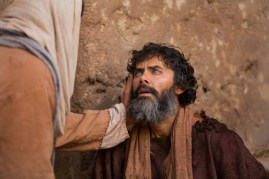
 The unique thing about this miracle of healing is that it occurred gradually and not instantly. The Gospels record the healing of at least seven blind men, and they show that our Lord used a variety of approaches. Perhaps it was the atmosphere of unbelief in Bethsaida that hindered Him (see Mark 6:5–6), or it may have been the spiritual condition of the man himself. For some reason not given, the man was not ready for instant sight, so Jesus restored him gradually. The fact that the man recognized men and trees suggests that he had not been born blind but had been blinded by accident or disease.
 Nothing deflates your spirit more than when we give multiple explanations in different ways to our kids, showing and telling them why they should do what we have asked them to do, and their response is “Huh?” After a deep sigh, we naturally raise our voice as we tell them again…for emphasis. Their response? “What are you mad?” They still don’t get it.
 11 When the Pharisees heard that Jesus had arrived, they came and started to argue with him. Testing him, they demanded that he show them a miraculous sign from heaven to prove his authority.
 14 But the disciples had forgotten to bring any food. They had only one loaf of bread with them in the boat. 15 As they were crossing the lake, Jesus warned them, “Watch out! Beware of the yeast of the Pharisees and of Herod.”
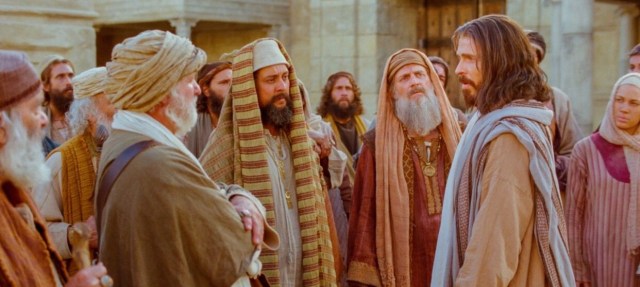 Jesus and the disciples crossed to the western side of the Sea of Galilee, where they were met by the Pharisees who were still angry at Him because of His earlier indictment of their hypocrisy (Mark 7:1–23). This time they tempted Him to prove His divine authority by giving them a sign from heaven. They did not want an earthly miracle, such as the healing of a sick person. They wanted Him to do something spectacular, like bring fire from heaven or bread from heaven (John 6:30–31). This would prove He was indeed sent from God.
  It must have grieved Jesus that His hand-picked helpers were so spiritually obtuse. The fact that He had multiplied bread on two occasions and fed over ten thousand people had apparently made little impression on them! Why worry and argue over one loaf of bread when you have Jesus in the boat with you? Their minds were dull, their hearts were hard (see Mark 6:52), their eyes were blind, and their ears were deaf (see Mark 4:11–12).
  We can never be too careful about detecting and avoiding false doctrine. Only a small deviation from the Word may get into an individual or a church, but before long it will grow and infect everything. Our Lord did not often say “Beware!” but when He did, it was important!
 Growing up like this I was amazed as a young parent when one relative of Randy’s hosted a meal for our family of five with a different train of thought altogether. She would fix small, cereal size bowls of one vegetable, one piece of meat for all of us, and maybe one dessert for all to share. Mm, I thought as we ate, this is different. Maybe she doesn’t like leftovers. She had plenty to share and was not poor. When the meal was consumed and all the plates and bowls were emptied, she would reply, “Ah, just right. I fixed just enough for all.”
  About this time another large crowd had gathered, and the people ran out of food again. Jesus called his disciples and told them, 2 “I feel sorry for these people. They have been here with me for three days, and they have nothing left to eat. 3 If I send them home hungry, they will faint along the way. For some of them have come a long distance.”
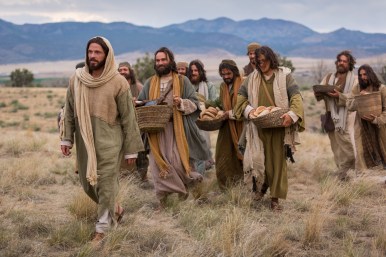 6 So Jesus told all the people to sit down on the ground. Then he took the seven loaves, thanked God for them, and broke them into pieces. He gave them to his disciples, who distributed the bread to the crowd. 7 A few small fish were found, too, so Jesus also blessed these and told the disciples to distribute them.
 “When I think of all this, I fall to my knees and pray to the Father, the Creator of everything in heaven and on earth. I pray that from his glorious, unlimited resources he will empower you with inner strength through his Spirit. Then Christ will make his home in your hearts as you trust in him. Your roots will grow down into God’s love and keep you strong.
  Now all glory to God, who is able, through his mighty power at work within us, to accomplish infinitely more than we might ask or think. Glory to him in the church and in Christ Jesus through all generations forever and ever! Amen.”
