
Mark – God is on our side!

As a pastor, my husband has performed many marriages. Because I am either playing the piano or standing by to help, we both get a front row seat to see all the emotions that rise to a climax on the groom’s face when the bride walks in, dressed in a lot of white, with a nervous smile on her face. The dad who escorts her is usually tearful but hanging in there as he brings her to the groom. In the symbolism of the dad taking the hand of his daughter and putting it into the hand of the groom, he is publicly showing that these “two will leave father and mother and now become one”.
After this formal ceremony which includes many symbols of our faith in our Heavenly Father, if it is performed in a church setting planned by believers, a party follows. Relatives and dear friends come to celebrate the bride and the groom coming together at last. Can you imagine a wedding fast? It WOULD be cheaper…but I don’t know of anyone who has planned a fast after a wedding ceremony.
In our passage today, Jesus explains to the critics that HE is the groom who has come. (Believers are the “bride of Christ.) While Jesus, “the Groom”, is here on earth, should they fast? NO, “They can’t fast while the groom is with them.”
Mark 2, NLT
A Discussion about Fasting

18 Once when John’s disciples and the Pharisees were fasting, some people came to Jesus and asked, “Why don’t your disciples fast like John’s disciples and the Pharisees do?”
19 Jesus replied, “Do wedding guests fast while celebrating with the groom? Of course not. They can’t fast while the groom is with them. 20 But someday the groom will be taken away from them, and then they will fast.
21 “Besides, who would patch old clothing with new cloth? For the new patch would shrink and rip away from the old cloth, leaving an even bigger tear than before.
22 “And no one puts new wine into old wineskins. For the wine would burst the wineskins, and the wine and the skins would both be lost. New wine calls for new wineskins.”
GOING DEEPER STILL…
Jesus had already made it clear that He came to convert the sinners, not to compliment the self-righteous. Now He told them that he had come to bring gladness, not sadness. Thanks to the legalism imposed by the scribes and Pharisees, the Jewish religion had become a burdensome thing. The poor people were weighed down by rules and regulations that were impossible to obey (Matt. 23:4). “Life is not supposed to be a funeral!” Jesus told them. “God wants life to be a wedding feast! I am the Bridegroom and these people are My wedding guests. Are not wedding guests supposed to have a good time?”
The Jews knew that marriage was one of the pictures used in the Old Testament to help explain Israel’s relationship to the Lord. They had been “married to Jehovah” and they belonged only to Him (Isa. 54:5; Jer. 31:32). When the nation turned to foreign gods, as they often did, they committed “spiritual adultery.” They were unfaithful to their Husband, and they had to be disciplined. The major theme of Hosea is God’s love for His adulterous wife and His desire to restore the nation to His favor once again.
John the Baptist had already announced that Jesus was the Bridegroom (John 3:29), and our Lord had performed His first miracle at a joyous marriage feast (John 2:1–11). Now He was inviting people to come to the wedding! After all, becoming a Christian is not unlike entering into the marriage relationship (see Rom. 7:4—“that ye should be married to another”). Two people are not married just because they know each other, or even because they have strong feelings about each other. In order to be married, they must commit themselves to each other and make this commitment known. In most societies, the man and woman publicly affirm this commitment when each says, “I do!”
Salvation from sin involves much more than a person knowing about Christ, or even having “good feelings” toward Christ. Salvation comes when the sinner commits himself or herself to Jesus Christ and says, “I do!” Then the believer immediately enters into the joys of this spiritual marriage relationship: bearing His name, sharing His wealth and power, enjoying His love and protection, and one day living in His glorious home in heaven. When you are “married to Christ,” life becomes a wedding feast, in spite of trials and difficulties.
Mark 2:20 is a hint of our Lord’s anticipated death, resurrection, and return to heaven. It is unlikely that His disciples, at that early stage in their training, even understood what He meant. However, Jesus was not suggesting that His absence from earth would mean that His followers would have to replace the feast with a funeral! He was only pointing out that occasional fasting would be proper at a future time, but that joyful celebration should be the normal experience of believers.

AND ABOUT THOSE WINESKINS….(vv. 21–22). Jesus taught two important lessons about His ministry: (1) He came to save sinners, not to call the religious; and (2) He came to bring gladness and not sadness. The third lesson is this: He came to introduce the new, not to patch up the old.
The religious leaders were impressed with our Lord’s teaching, and perhaps they would have been happy to make some of His ideas a part of their own religious tradition. They were hoping for some kind of compromise that would retain the best of pharisaic Judaism and the best of what Christ had to offer. But Jesus exposed the folly of that approach. It would be like tearing patches from a new unshrunk garment and sewing them on an old garment You would ruin the new garment, and when the old garment was washed, the patches would shrink, rip away, and ruin that garment too (note Luke 5:36–39). Or, it would be like putting newunfermented wine in old brittle wineskins. As soon as the wine began to ferment and the gases formed, the old skins would burst—and you would lose both the wine and the skins.
Jesus came to usher in the new, not to unite with the old. The Mosaic economy was decaying, getting old, and ready to vanish away (Heb. 8:13). Jesus would establish a new covenant in His blood (Luke 22:19–20). The law would be written on human hearts, not on stones (2 Cor. 3:1–3; Heb. 10:15–18), and the indwelling Holy Spirit would enable God’s people to fulfill the righteousness of the law (Rom. 8:1–4).
By using this illustration, Jesus refuted once and for all the popular idea of a compromising “world religion.” Well-meaning but spiritually blind leaders have suggested that we take “the best” from each religion, blend it with what is “best” in the Christian faith, and thus manufacture a synthetic faith that would be acceptable to everybody. But the Christian faith is exclusive in character; it will not accept any other faith as its equal or its superior. “There is none other name under heaven, given among men, whereby we must be saved” (Acts 4:12).
Salvation is not a partial patching up of one’s life; it is a whole new robe of righteousness (Isa. 61:10; 2 Cor. 5:21). The Christian life is not a mixing of the old and the new; rather, it is a fulfillment of the old in the new.
Jesus fulfilled the prophecies, types, and demands of the law of Moses. The law was ended at Calvary when the perfect sacrifice was once offered for the sins of the world (Heb. 8—10). When you trust Jesus Christ, you become part of a new creation (2 Cor. 5:17), and there are always new experiences of grace and glory. How tragic when people hold on to dead religious tradition when they could lay hold of living spiritual truth. Why cherish the shadows when the reality has come (Heb. 10:1)? In Jesus Christ we have the fulfillment of all that God promised (2 Cor. 1:20).

Dear Heavenly Father, Lord and Savior,
Thank you for fulfilling the Old Law and ushering in the New and only Way to You. Thank you, Jesus, for explaining the purpose and mission of your work to claim us as your bride. We know you are coming back to claim us as your own. I cannot wait to see the look in your eyes on that momentous occasion! We shall behold you in all of your glory!
In Jesus Name, Amen. I believe.
WE SHALL BEHOLD HIM…sing with me….
The sky shall unfold
Preparing His entrance
The stars shall applaud Him
With thunders of praise
The sweet light in His eyes, shall enhance those awaiting
And we shall behold Him, then face to face
O we shall behold Him, we shall behold Him
Face to face in all of His glory
O we shall behold Him, yes we shall behold Him
Face to face, our Savior and Lord
The angel will sound, the shout of His coming
And the sleeping shall rise, from there slumbering place
And those remaining, shall be changed in a moment
And we shall behold him, then face to face
We shall behold Him, o yes we shall behold Him
Face to face in all of His glory
We shall behold Him, face to face
Our Savior and Lord
We shall behold Him, our Savior and Lord
Savior and Lord!

 Dear Heavenly Father,
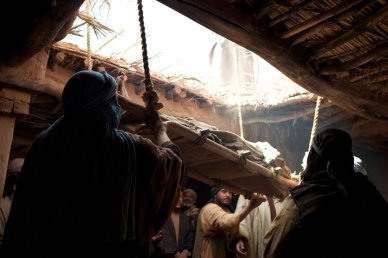 When Jesus returned to Capernaum several days later, the news spread quickly that he was back home. 2 Soon the house where he was staying was so packed with visitors that there was no more room, even outside the door. While he was preaching God’s word to them, 3 four men arrived carrying a paralyzed man on a mat. 4 They couldn’t bring him to Jesus because of the crowd, so they dug a hole through the roof above his head. Then they lowered the man on his mat, right down in front of Jesus. 5 Seeing their faith, Jesus said to the paralyzed man, “My child, your sins are forgiven.”
 This miracle of healing gave our Lord the opportunity to teach an important lesson about forgiveness. Consider this scene through the eyes of the Lord Jesus. When He LOOKED UP, He saw the four men on the roof with their sick friend. Houses had flat roofs that were usually accessible by means of an outside stairway. It would not be difficult to remove the tiles, laths, and grass that comprised the roof and make an opening large enough to fit their friend through on his mat.
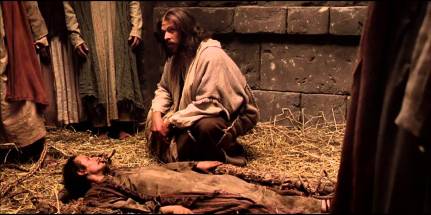 When our Lord LOOKED DOWN, He saw the palsied man lying on his mat, and immediately Jesus went to the heart of the man’s problem—sin. Not all sickness is caused by sin (see John 9:1–3), but evidently this man’s condition was the result of his disobedience to God. Even before He healed the man’s body, Jesus spoke peace to the man’s heart and announced that his sins were forgiven! Forgiveness is the greatest miracle that Jesus ever performs. It meets the greatest need; it costs the greatest price; and it brings the greatest blessing and the most lasting results.
 Then Jesus LOOKED AROUND and saw the critics who had come to spy on Him (see Luke 5:17). These religious leaders certainly had every right to investigate the ministry of this new teacher, since the religious life of the nation was under their supervision (Deut. 13). But they should have come with open minds and hearts, seeking truth, instead of with critical minds, seeking heresy. Some of the negative attitude that had been present in Judea (John 4:1–4) had now invaded Galilee, and this was the beginning of the official opposition that ultimately led to our Lord’s arrest and death. He was now so popular that the Jewish leaders dared not ignore Him. In fact, they must have arrived early for the meeting, because they were right at the scene of action! Or perhaps Jesus graciously gave them front row seats.
 This was indeed a lesson in the power of forgiveness. Restoration of the body is second only to a restored relationship with God, through Jesus Christ, His Son.

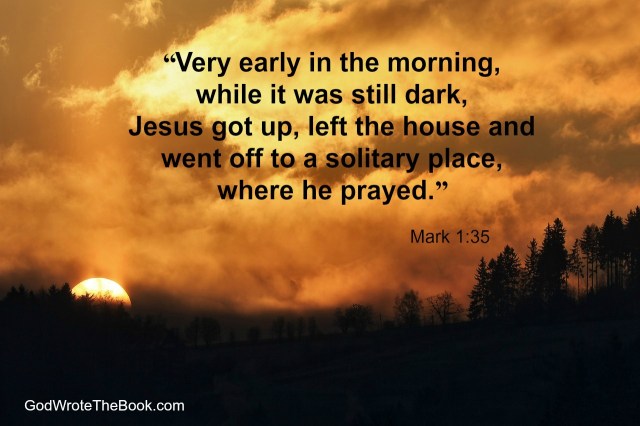 Why, then, do we think we can do anything of significance without first checking in with the God of Creation to know what HE wants and what HE thinks is significant for us to be and do?
 Jesus gave us His example of communication that is perfect for living this life guided by His Holy Spirit. Pray first. Listen. Do what God tells us. Nothing more. Nothing less.
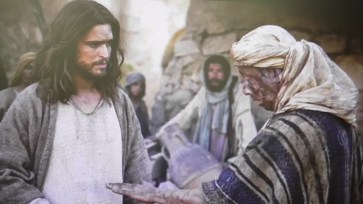 Jesus Heals a Man with Leprosy
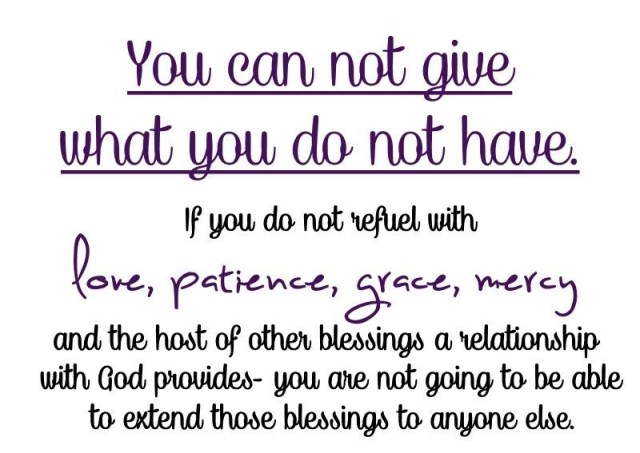 Dear Heavenly Father,
 When we are too sick to go about our regular routine of life, we are saddened and depressed by what we are missing. Those emotional feelings just make us more ill if we let it. The normal we took for granted is now what we long to return to so that we can go about life the way we know and is comfortable.
 29 After Jesus left the synagogue with James and John, they went to Simon and Andrew’s home. 30 Now Simon’s mother-in-law was sick in bed with a high fever. They told Jesus about her right away. 31 So he went to her bedside, took her by the hand, and helped her sit up. Then the fever left her, and she prepared a meal for them.
 Peter and Andrew not only brought their friends James and John home with them from the service, but they also brought the Lord home. That is a good example for us to follow: don’t leave Jesus at the church—take Him home with you and let Him share your blessings and your burdens. What a privilege it was for Peter and his family to have the very Son of God as guest in their humble home. Before long, the Guest became the Host, just as one day the Passenger in Peter’s boat would become the Captain (Luke 5:1–11).
 Where is our heart when we come to Jesus? Do we ask for what He wants for our lives or only for what He can give us?

 21 Jesus and his companions went to the town of Capernaum. When the Sabbath day came, he went into the synagogue and began to teach. 22 The people were amazed at his teaching, for he taught with real authority—quite unlike the teachers of religious law.

 We wonder how many synagogue services that man had attended without revealing that he was demonized. It took the presence of the Son of God to expose the demon, and Jesus not only exposed him, but He also commanded him to keep quiet about His identity and to depart from the man. The Savior did not want, nor did He need, the assistance of Satan and his army to tell people who He is (see Acts 16:16–24).
 “Hold thy peace!” literally means “Be muzzled!” Jesus would use the same words when stilling the storm (Mark 4:39). The demon tried one last convulsive attack, but then had to submit to the authority of God’s Servant and come out of the man. The people in the synagogue were amazed and afraid. They realized that something new had appeared on the scene—a new doctrine and a new power. Our Lord’s words and works must always go together (John 3:2). The people kept on talking about both, and the fame of Jesus began to spread.

 Dear Heavenly Father,
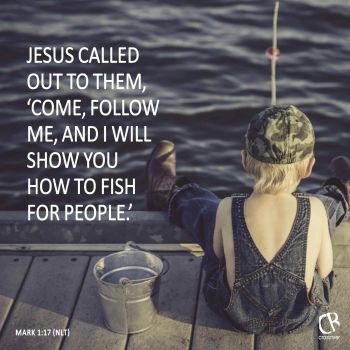
 The First Disciples
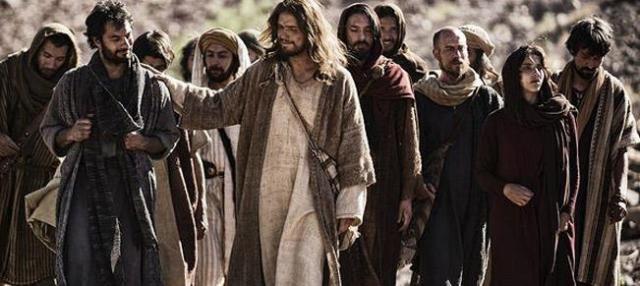 Because Jesus preached with authority, He was able to call men from their regular occupations and make them His disciples. Who else could interrupt four fishermen at their work and challenge them to leave their nets and follow Him? Several months before, Jesus had already met Peter, Andrew, James, and John, and they had come to trust Him (see John 1:35–49). This was not their initial call to faith and salvation; it was an initial call to discipleship.The fact that Zebedee had hired servants suggests that his fishing business was successful and that he was a man of means.
 Yes, Jesus, who knows all hearts, chose well. Aren’t we glad, thankful and deeply grateful?
 Then you open the car door, while still on the stage, and sit in the driver’s seat. You are handed the car keys and told to drive your car off the stage! The very minute you put your hand on the door, God speaks to your heart, “I did this for you so you can pay off all your medical bills.” Later, the car was sold to a friend in another state who was watching the show on cable and saw that I had won. He bought the car. Paid in cash. Randy and I not only paid off our medical bills, we were able to give to our church and another mission to build a home in Haiti.

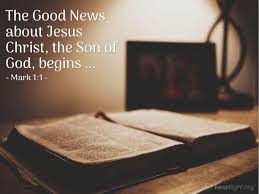 Mark 1, NLT
 SEE what I mean? In the first sentence, “THIS is the Good News about Jesus Christ…” then Mark continues to tell what the Son of God, sent from God did and is going to do for us.
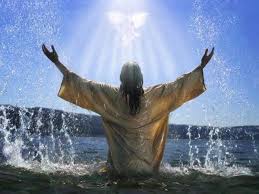
 As we come to infamous send off by Jesus to His disciples, we must evaluate ourselves as groups of people who call ourselves “church”. Are we Great Commission people? Individually and corporately? Are we telling broken and bruised people that Jesus can heal and save them from the emotional and spiritual bondage they are suffering? Are we helping them find Jesus and then follow in His ways by teaching and leading them to His Word? Are we literally baptizing the lost but now found repentant souls in the Name of the Father, Son and Holy Spirit as a profession of their eternal faith? Or has the baptistery gone dry?

 We need to tell them the Truth of the Person of Jesus Christ. We are all sinners, saved only by HIS grace and mercy because of His love for us. All the rest that goes on as a church Body is a result of His love. We are friendlier because of knowing His love of us and humbled by His ongoing work in us. Our pastor, being led by God, speaks profoundly with helpful ways to live like Jesus which by the help of the Holy Spirit, transforms us. Our corporate worship comes alive because of knowing Jesus, being grateful for all He has done and is doing while letting Him take over when we are together worshiping Him! Our teachers, youth workers and all volunteers are filled with His Holy Spirit that draws others into what Jesus can do through those they teach and lead! THAT is how it seems to work best. This is the great commission to all of us who say we believe and want what God wants.
 The Great Commission
 Dear Heavenly Father, Lord and Savior,
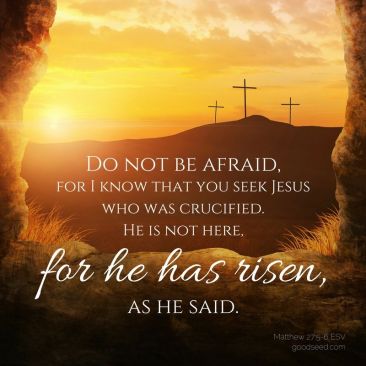
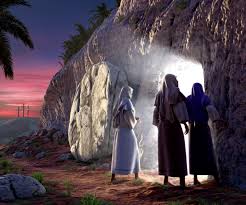 Can you imagine going to the tomb the next morning after a night of mourning the loss of your best Friend and Master Teacher? Then imagine seeing an angel, happily sitting on THE STONE rolled away from the grave to reveal the Good News to you. “Looking for Jesus, yeah, he’s not here anymore”. “HE IS ALIVE…JUST AS HE SAID”. Just as HE said. Jesus is Truth.
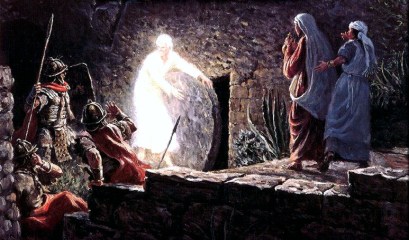 2 Suddenly there was a great earthquake! For an angel of the Lord came down from heaven, rolled aside the stone, and sat on it. 3 His face shone like lightning, and his clothing was as white as snow. 4 The guards shook with fear when they saw him, and they fell into a dead faint.
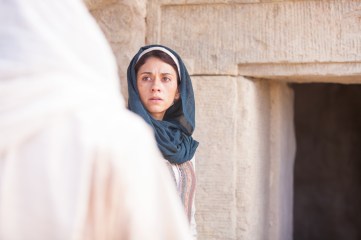 8 The women ran quickly from the tomb. They were very frightened but also filled with great joy, and they rushed to give the disciples the angel’s message. 9 And as they went, Jesus met them and greeted them. And they ran to him, grasped his feet, and worshiped him. 10 Then Jesus said to them, “Don’t be afraid! Go tell my brothers to leave for Galilee, and they will see me there.”
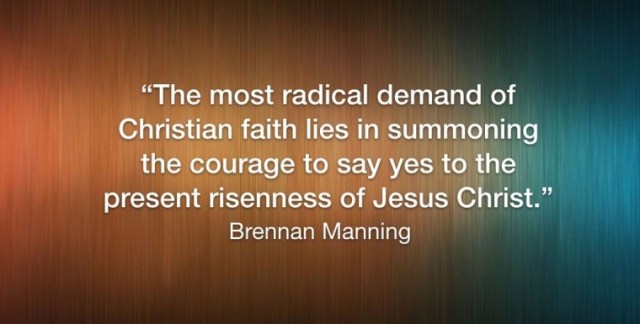 It assures our future inheritance:

