AS ONE FALLS ANOTHER RISES

There seems to be “born-leaders” who rise up in any group of people gathers to work, play, or just be in conversation.  If you observe people long enough, like I enjoy doing, we see from young to old a leader will always come forward to guide the group.  In fact, where two or three are gathered, a leader is among them and will begin to lead and influence the group within minutes.  Who we follow makes a difference in our lives and in the lives of those we live and work alongside.  Who we lead also is detrimental to the quality of lives of those led.  The greater question to consider is:  Who leads the leader?

Who is the real leader of the house of Saul?

Who is the real leader of the house of David? 

Our passage today helps us to see the greater purpose and plan of God who is the One and Only Sovereign Leader of all His People. What HE says happens.  David seeks the heart of God, inquires of God and listens to his direction, and then trusts and obeys what God says.  David will rise as Abner gives in to David as the anointed King of Israel. 

Watch closely, as Abner, once the devoted and loyal commander of the house of Saul, who took it upon himself to anoint the least son of Saul to be king, but later realizes that David is indeed the anointed one of God to be the next King of Israel. Abner’s inner integrity takes over his being. God has a way of changing hearts.

Abner comes to David to make peace with a bonus. Abner, a man of influence, promises to command all who followed him and the house of Saul to now follow and be loyal to the house of David! We admire Abner for this act of noble character. However, read what happens next!    

2 Samuel 3

The war between the house of Saul and the house of David lasted a long time. David grew stronger and stronger, while the house of Saul grew weaker and weaker.

Sons were born to David in Hebron:

His firstborn was Amnon the son of Ahinoam of Jezreel;

his second, Kileab the son of Abigail the widow of Nabal of Carmel;

the third, Absalom the son of Maakah daughter of Talmai king of Geshur;

the fourth, Adonijah the son of Haggith;

the fifth, Shephatiah the son of Abital;

and the sixth, Ithream the son of David’s wife Eglah.

These were born to David in Hebron.

Abner Goes Over to David

During the war between the house of Saul and the house of David, Abner had been strengthening his own position in the house of SaulNow Saul had had a concubine named Rizpah daughter of Aiah. And Ish-Bosheth said to Abner, “Why did you sleep with my father’s concubine?”

Abner was very angry because of what Ish-Bosheth said. So he answered, “Am I a dog’s head—on Judah’s side? This very day I am loyal to the house of your father Saul and to his family and friends. I haven’t handed you over to David. Yet now you accuse me of an offense involving this woman! May God deal with Abner, be it ever so severely, if I do not do for David what the Lord promised him on oath 10 and transfer the kingdom from the house of Saul and establish David’s throne over Israel and Judah from Dan to Beersheba.” 11 Ish-Bosheth did not dare to say another word to Abner, because he was afraid of him.

12 Then Abner sent messengers on his behalf to say to David, “Whose land is it? Make an agreement with me, and I will help you bring all Israel over to you.”

13 “Good,” said David. “I will make an agreement with you. But I demand one thing of you: Do not come into my presence unless you bring Michal daughter of Saul when you come to see me.” 14 Then David sent messengers to Ish-Bosheth son of Saul, demanding, “Give me my wife Michal, whom I betrothed to myself for the price of a hundred Philistine foreskins.”

15 So Ish-Bosheth gave orders and had her taken away from her husband Paltiel son of Laish. 16 Her husband, however, went with her, weeping behind her all the way to Bahurim. Then Abner said to him, “Go back home!” So he went back.

17 Abner conferred with the elders of Israel and said, “For some time you have wanted to make David your king. 18 Now do it! For the Lord promised David, ‘By my servant David I will rescue my people Israel from the hand of the Philistines and from the hand of all their enemies.’”

19 Abner also spoke to the Benjamites in person. Then he went to Hebron to tell David everything that Israel and the whole tribe of Benjamin wanted to do. 20 When Abner, who had twenty men with him, came to David at Hebron, David prepared a feast for him and his men. 21 Then Abner said to David, “Let me go at once and assemble all Israel for my lord the king, so that they may make a covenant with you, and that you may rule over all that your heart desires.” So David sent Abner away, and he went in peace.

Joab Murders Abner

22 Just then David’s men and Joab returned from a raid and brought with them a great deal of plunder. But Abner was no longer with David in Hebron, because David had sent him away, and he had gone in peace. 23 When Joab and all the soldiers with him arrived, he was told that Abner son of Ner had come to the king and that the king had sent him away and that he had gone in peace.

24 So Joab went to the king and said, “What have you done? Look, Abner came to you. Why did you let him go? Now he is gone! 25 You know Abner son of Ner; he came to deceive you and observe your movements and find out everything you are doing.”

26 Joab then left David and sent messengers after Abner, and they brought him back from the cistern at Sirah. But David did not know it. 27 Now when Abner returned to Hebron, Joab took him aside into an inner chamber, as if to speak with him privately. And there, to avenge the blood of his brother Asahel, Joab stabbed him in the stomach, and he died.

28 Later, when David heard about this, he said, “I and my kingdom are forever innocent before the Lord concerning the blood of Abner son of Ner29 May his blood fall on the head of Joab and on his whole family! May Joab’s family never be without someone who has a running sore or leprosy or who leans on a crutch or who falls by the sword or who lacks food.”

30 (Joab and his brother Abishai murdered Abner because he had killed their brother Asahel in the battle at Gibeon.)

31 Then David said to Joab and all the people with him, “Tear your clothes and put on sackcloth and walk in mourning in front of Abner.” King David himself walked behind the bier. 32 They buried Abner in Hebron, and the king wept aloud at Abner’s tomb. All the people wept also.

33 The king sang this lament for Abner:

“Should Abner have died as the lawless die?
34     Your hands were not bound,
    your feet were not fettered.
You fell as one falls before the wicked.”

And all the people wept over him again.

35 Then they all came and urged David to eat something while it was still day; but David took an oath, saying, “May God deal with me, be it ever so severely, if I taste bread or anything else before the sun sets!”

36 All the people took note and were pleased; indeed, everything the king did pleased them. 37 So on that day all the people there and all Israel knew that the king had no part in the murder of Abner son of Ner.

38 Then the king said to his men, “Do you not realize that a commander and a great man has fallen in Israel this day? 39 And today, though I am the anointed king, I am weak, and these sons of Zeruiah are too strong for me. May the Lord repay the evildoer according to his evil deeds!”

WHAT DO WE LEARN—HOW DO WE RESPOND?

We must recall for understanding that David used to live in fortress of King Saul. As a young man David played his lyre and sang his songs to soothe Saul when he was depressed and moody.  David and Saul’s son Jonathan became best friends for life.    David saw most who came and went from the house of Saul and was very observant of who they were inside and out.  So, David knew Abner as Saul’s trusted and noble commander of Saul’s army.  He knew how powerful he was and how gifted he was as a commander of the forces.  David also met and fell in love with Saul’s daughter Michal who he later married and adored but was no longer able to be with because of Saul’s hunt to kill him.

War and Peace. Full circle.  Abner gives in to David’s leadership because he realizes that David is led by God. Michal is reunited with David.  All is well until one of David’s men, Joab, is out to seek revenge for the death of his brother, a victim of war and of Abner.

Who led Abner to make peace?  Who led David to forgive and agree to peace?

Who led Joab to destroy the peace to seek revenge?

Real change is an inside job. We might alter things a day or two with money and systems, but the heart of the matter is and always will be the matter of the heart.

Max Lucado writes;

Our problem is sin. Not finances. Not budgets. Not overcrowded prisons or drug dealers. Our problem is sin. We are in rebellion against our Creator. We are separated from our Father. We are cut off from the source of life. A new president or policy won’t fix that. It can only be solved by God.

That’s why the Bible uses drastic terms like conversion, repentance, with lost and found.  Society may renovate, but only God recreates.”

Abner sought to be led by “the man after God’s own heart”—David.  When what or who you once believed proves to be false; God intervenes to guide us back to Him. God knows our hearts.  Have you noticed that in your life?  I certainly have in my life.

At this point of the story of God; we’d like to think that Abner once knew God and began to question Saul’s rejection of God. But he remained loyal Saul who trusted Abner with his life. Abner tried to hang on, even appointing Saul’s son as king; but it became increasingly evident that David was anointed by God to be King of Israel. 

Only God know the hearts of men and women.  Jesus makes all things new with redemption for our hearts.

Our response? Consider carefully and prayerfully who is leading our life right now?  God or the Prince of Darkness?  Whether we are currently leaders or followers (and we do both at certain times, according to certain situations); who is our greatest influencer of Truth? 

May God’s Holy Spirit convict us of the course corrections in our thinking, saying, and doing that need to be made. When asked, God will give us the power of His Spirit to overcome evil and make those changes much needed in our lives. To God be the glory!

Lord,

Thank you for alerting us to our own weaknesses of the heart while filling us with your Truth.  Cleanse our hearts of all that does not belong.  Renew our minds to more closely match your what you think is best for us.  Refresh our souls with your new, tender mercies. Restore the joy of your salvation that is consistently at work within us.

In Jesus Name, Amen

Posted in Uncategorized | Tagged , , , , | Leave a comment

TWO MEN—TWO AGENDAS

“In his accession to the throne of Israel, David illustrates the career of Jesus Christ, the Son of David. Like David the shepherd, Jesus came first as a humble servant and was anointed king privately. Like David the exile, Jesus is King today but doesn’t yet reign on the throne of David. Like Saul in David’s day, Satan is still free to obstruct God’s work and oppose God’s people. One day, Jesus will return in glory, Satan will be imprisoned, and Jesus will reign in His glorious kingdom (Revelation 19:11—20:6). God’s people today faithfully pray, “Your Kingdom come soon” (Matthew 6:10) and eagerly await the return of their King.” Warren Wiersbe, Wiersbe Study Bible Commentary

Every time there is a changing of the guard in leadership; we humans are challenged to adjust to “new rules and standards.” A former pastor leaves and a new pastor comes to our church.  What do we do?  We welcome with him/her with a delicious potluck but we also stand in judgement until the new pastor proves worthy of our attention and loyalty.  As a former teacher, I observed all the staff watching every move made and word said from a new principal. Becoming a new member of a church staff a few years ago, I felt all eyes on me—judging me to see if I was up to the task of their expectations.

Some of us live for change. Most of us do not like change, especially if comfort is our goal and our current position is one we prefer to keep.

Abner, best friend and “right-hand man of King Saul, grieves for him.  As former second in command, he precedes as Saul would—on his own, without inquiring of God. Abner decides who the next king will be!  Let’s see how this works out for him. 

David, on the other hand, after mourning Saul and Jonathan, inquired of the Lord of his next steps to take.

Two men with two separate agendas.

2 Samuel 2

David Anointed King Over Judah

In the course of time, David inquired of the Lord. “Shall I go up to one of the towns of Judah?” he asked.

The Lord said, “Go up.”

David asked, “Where shall I go?”

“To Hebron,” the Lord answered.

So David went up there with his two wives, Ahinoam of Jezreel and Abigail, the widow of Nabal of Carmel. David also took the men who were with him, each with his family, and they settled in Hebron and its townsThen the men of Judah came to Hebron, and there they anointed David king over the tribe of Judah.

When David was told that it was the men from Jabesh Gilead who had buried Saul, he sent messengers to them to say to them, “The Lord bless you for showing this kindness to Saul your master by burying him. May the Lord now show you kindness and faithfulness, and I too will show you the same favor because you have done this. Now then, be strong and brave, for Saul your master is dead, and the people of Judah have anointed me king over them.”

War Between the Houses of David and Saul

Meanwhile, Abner son of Ner, the commander of Saul’s army, had taken Ish-Bosheth son of Saul and brought him over to Mahanaim. He made him king over Gilead, Ashuri and Jezreel, and also over Ephraim, Benjamin and all Israel.

10 Ish-Bosheth son of Saul was forty years old when he became king over Israel, and he reigned two years. The tribe of Judah, however, remained loyal to David. 11 The length of time David was king in Hebron over Judah was seven years and six months.

12 Abner son of Ner, together with the men of Ish-Bosheth son of Saul, left Mahanaim and went to Gibeon. 13 Joab son of Zeruiah and David’s men went out and met them at the pool of Gibeon. One group sat down on one side of the pool and one group on the other side.

14 Then Abner said to Joab, “Let’s have some of the young men get up and fight hand to hand in front of us.”

“All right, let them do it,” Joab said.

15 So they stood up and were counted off—twelve men for Benjamin and Ish-Bosheth son of Saul, and twelve for David. 16 Then each man grabbed his opponent by the head and thrust his dagger into his opponent’s side, and they fell down together. So that place in Gibeon was called Helkath Hazzurim.

17 The battle that day was very fierce, and Abner and the Israelites were defeated by David’s men.

18 The three sons of Zeruiah were there: Joab, Abishai and Asahel. Now Asahel was as fleet-footed as a wild gazelle. 19 He chased Abner, turning neither to the right nor to the left as he pursued him. 20 Abner looked behind him and asked, “Is that you, Asahel?”

“It is,” he answered.

21 Then Abner said to him, “Turn aside to the right or to the left; take on one of the young men and strip him of his weapons.” But Asahel would not stop chasing him.

22 Again Abner warned Asahel, “Stop chasing me! Why should I strike you down? How could I look your brother Joab in the face?”

23 But Asahel refused to give up the pursuit; so Abner thrust the butt of his spear into Asahel’s stomach, and the spear came out through his back. He fell there and died on the spot. And every man stopped when he came to the place where Asahel had fallen and died.

24 But Joab and Abishai pursued Abner, and as the sun was setting, they came to the hill of Ammah, near Giah on the way to the wasteland of Gibeon. 25 Then the men of Benjamin rallied behind Abner. They formed themselves into a group and took their stand on top of a hill.

26 Abner called out to Joab, “Must the sword devour forever? Don’t you realize that this will end in bitterness? How long before you order your men to stop pursuing their fellow Israelites?”

27 Joab answered, “As surely as God lives, if you had not spoken, the men would have continued pursuing them until morning.”

28 So Joab blew the trumpet, and all the troops came to a halt; they no longer pursued Israel, nor did they fight anymore.

29 All that night Abner and his men marched through the Arabah. They crossed the Jordan, continued through the morning hours and came to Mahanaim.

30 Then Joab stopped pursuing Abner and assembled the whole army. Besides Asahel, nineteen of David’s men were found missing. 31 But David’s men had killed three hundred and sixty Benjamites who were with Abner. 32 They took Asahel and buried him in his father’s tomb at Bethlehem. Then Joab and his men marched all night and arrived at Hebron by daybreak.

WHAT DO WE LEARN—HOW DO WE RESPOND?

The people of Jabesh Gilead didn’t choose to submit to David but instead followed Abner and Saul’s weak son Ishbosheth. They allowed their affection for Saul to blind them to God’s plan for the nation. They had a good motive, but they made a bad choice.

How often in the history of the church have God’s people allowed human affection and appreciation to overrule the will of God! Jesus Christ is King, and He deserves our submission, loyalty, and obedience. To put human leaders ahead of God’s anointed King is to create division and weakness in the ranks of the Lord’s followers and invite multiplied problems for the Lord’s people.

Remember when God commanded Samuel all those years ago to go to Jesse’s house for the king to follow Saul resided there? God led him there to anoint a new king for Israel.  After passing over all the other older sons of Jesse, God’s Spirit fell upon Samuel with these words from God: “The Lord does not look at the things people look at. People look at the outward appearance, but the Lord looks at the heart.” (1 Samuel 16) Samuel, faithful servant, priest, and prophet of God was told to anoint the youngest of Jesse’s sons—David, a shepherd boy, who sought the heart of God daily.

Two men.  Two separate agendas.  Who would you follow? Saul’s Abner or God’s David?  I have seen so many choose an Abner by popular opinion so that the comfort of “this is the way we’ve always done it” would not be changed as opposed to someone God has chosen to stir our hearts to transform to His will.  Choosing an Abner never goes as well when it is not God’s will.   

However, choosing a David whose heart seeks the heart of God and His direction fills other hearts for God with joyful expectations for what God will do in our midst!  I’m currently attending and serving in a church led by godly men and women seeking the heart of God. God is responding to their faith with great power, not normally seen or heard of in the church community! God is moving in mighty ways that is not common but miraculous! Hundreds are coming to Jesus, repenting of their sins, seeking His will, and being baptized—and we are allowed to see God’s glory at work!  To God be the glory!

But some attenders are complaining of a crowded parking lot or waiting in line to check in their kids to a ministry that reaches over 400 kids weekly while souls who walked in darkness are now walking in the Light of God’s love. It’s all about perspective and reveling in growing pains to be solved!

Two agendas are presented to us daily, my dear friends.  Which agenda will we choose? 

Will we choose the comfort of sameness, self-acquired power, and current position, demanding that our self-perceived needs are met as we hold what we have tightly with both fists?

OR do we completely surrender to God’s will be done in His time, in His way, for His glory, so others will know and follow Jesus, His Son, who died for all, once and for all, so no one perishes in the darkness?  Is God’s will and desire the NO ONE perish but have eternal life!  (2 Peter 3:9)

Choose this day whom you will serve.  It’s a matter of life or death. Choose wisely.  Read Romans 12 for specific ways to be and do the will of God. God’s Holy Spirit lives in us to help us be all that God created us to be with His love in our hearts.

Lord,

Thank you for this lesson that stirs our hearts to repentance of self.  I choose You. I love you because you first loved me and died and rose again to give me redemption with hope of eternal life with you! There is no one like you—why choose anything or anyone else but you?  I do not know.  I’m yours. I’m listening for your answer as I inquire of your agenda for me today.

In Jesus Name, Amen

Posted in Uncategorized | Tagged , , , , | Leave a comment

MOURNING THE MIGHTY WHO HAVE FALLEN

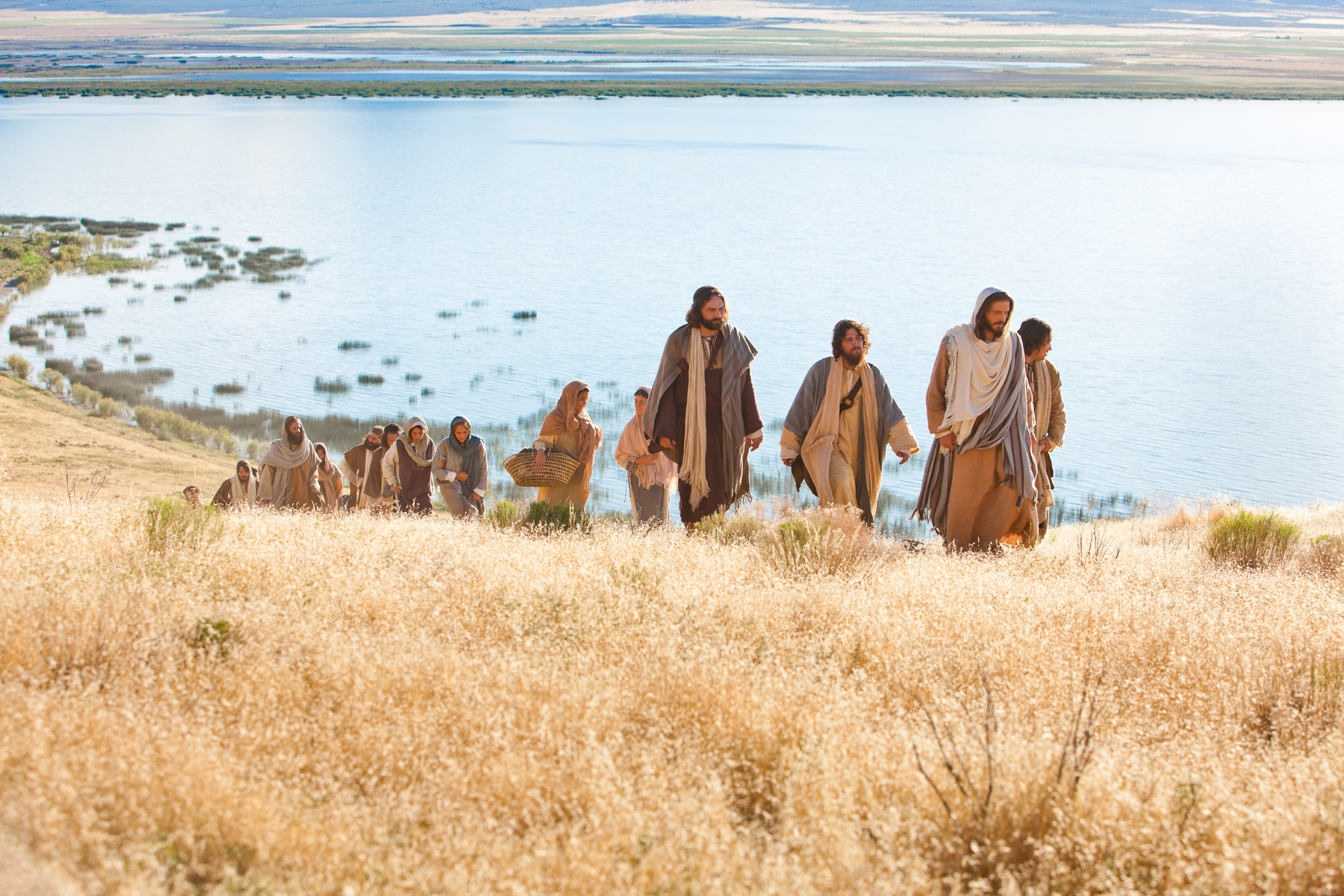
When we hear of the death of a loved one; we immediately begin to mourn their passing.  Jesus taught those who congregated on the mountain that day that we are “blessed when we mourn.”  When death comes; we realize our immortality as humans.  It is a time when believers, saved by the grace, draw near to God who is the Creator of Life, the One who decides the perfect time of passing for each one of us.  “Blessed are those who mourn, for they will be comforted,” Jesus teaches on the mountain, Matthew 5:8. 

I once read of a legend of a certain culture group who believed that those who are in mourning are considered closest to God at that time of weeping over their loved one.  The people line up to give their prayer requests to those who mourn because they feel God is very close to them because in their mourning.  Individuals in the community feel the mourners are very near the heart of God and are being specifically heard. 

The Good News:  God hears every prayer we pray. He answers with His best for us.

“Because he bends down to listen, I will pray as long as I have breath!
Death wrapped its ropes around me; the terrors of the grave overtook me.
    I saw only trouble and sorrow.
Then I called on the name of the Lord: ‘Please, Lord, save me!’ How kind the Lord is! How good he is!  So merciful, this God of ours!” Psalm 116:1-5

Our prayers are not forgotten.

“And when he had taken it, the four living creatures and the twenty-four elders fell down before the Lamb. Each one had a harp and they were holding golden bowls full of incense, which are the prayers of God’s people.” Revelation 5:8

The concept of stored prayers assures believers that their prayers are not in vain, even if they don’t see immediate results. God treasures and remembers every prayer. 

The lament of Ecclesiastes 3 reminds us “there is a time for everything, and a season for every activity under the heavens:

a time to be born and a time to die, a time to plant and a time to uproot,
a time to kill and a time to heal, a time to tear down and a time to build,
a time to weep and a time to laugh, a time to mourn and a time to dance,
a time to scatter stones and a time to gather them,

a time to embrace and a time to refrain from embracing,
a time to search and a time to give up, a time to keep and a time to throw away,
a time to tear and a time to mend, a time to be silent and a time to speak,
a time to love and a time to hate, a time for war and a time for peace.

What do workers gain from their toil? I have seen the burden God has laid on the human race. He has made everything beautiful in its time. He has also set eternity in the human heart; yet no one can fathom what God has done from beginning to end. I know that there is nothing better for people than to be happy and to do good while they live. That each of them may eat and drink, and find satisfaction in all their toil—this is the gift of GodI know that everything God does will endure forever; nothing can be added to it and nothing taken from it. God does it so that people will fear him.” Ecclesiastes 3:1-14

David’s first response to hearing of the death of King Saul and his beloved friend, Jonathan is to mourn.  David, the Singer, sings a lament for the fallen as his instinctive response and commands others to sing it with him.

2 Samuel 1

David Hears of Saul’s Death

After the death of Saul, David returned from striking down the Amalekites and stayed in Ziklag two days. On the third day a man arrived from Saul’s camp with his clothes torn and dust on his head. When he came to David, he fell to the ground to pay him honor.

“Where have you come from?” David asked him.

He answered, “I have escaped from the Israelite camp.”

“What happened?” David asked. “Tell me.”

“The men fled from the battle,” he replied. “Many of them fell and died. And Saul and his son Jonathan are dead.”

Then David said to the young man who brought him the report, “How do you know that Saul and his son Jonathan are dead?”

“I happened to be on Mount Gilboa,” the young man said, “and there was Saul, leaning on his spear, with the chariots and their drivers in hot pursuit. When he turned around and saw me, he called out to me, and I said, ‘What can I do?’

“He asked me, ‘Who are you?’

“‘An Amalekite,’ I answered.

“Then he said to me, ‘Stand here by me and kill me! I’m in the throes of death, but I’m still alive.’

10 “So I stood beside him and killed him, because I knew that after he had fallen he could not survive. And I took the crown that was on his head and the band on his arm and have brought them here to my lord.”

11 Then David and all the men with him took hold of their clothes and tore them. 12 They mourned and wept and fasted till evening for Saul and his son Jonathan, and for the army of the Lord and for the nation of Israel, because they had fallen by the sword.

13 David said to the young man who brought him the report, “Where are you from?”

“I am the son of a foreigner, an Amalekite,” he answered.

14 David asked him, “Why weren’t you afraid to lift your hand to destroy the Lord’s anointed?”

15 Then David called one of his men and said, “Go, strike him down!” So he struck him down, and he died. 16 For David had said to him, “Your blood be on your own head. Your own mouth testified against you when you said, ‘I killed the Lord’s anointed.’”

David’s Lament for Saul and Jonathan

17 David took up this lament concerning Saul and his son Jonathan18 and he ordered that the people of Judah be taught this lament of the bow (it is written in the Book of Jashar):

19 “A gazelle lies slain on your heights, Israel.
    How the mighty have fallen!

20 “Tell it not in Gath,
    proclaim it not in the streets of Ashkelon,
lest the daughters of the Philistines be glad,
    lest the daughters of the uncircumcised rejoice.

21 “Mountains of Gilboa,
    may you have neither dew nor rain,
    may no showers fall on your terraced fields.
For there the shield of the mighty was despised,
    the shield of Saul—no longer rubbed with oil.

22 “From the blood of the slain,
    from the flesh of the mighty,
the bow of Jonathan did not turn back,
    the sword of Saul did not return unsatisfied.
23 Saul and Jonathan—
    in life they were loved and admired,
    and in death they were not parted.
They were swifter than eagles,
    they were stronger than lions.

24 “Daughters of Israel,
    weep for Saul,
who clothed you in scarlet and finery,
    who adorned your garments with ornaments of gold.

25 “How the mighty have fallen in battle!
    Jonathan lies slain on your heights.
26 I grieve for you, Jonathan my brother;
    you were very dear to me.
Your love for me was wonderful,
    more wonderful than that of women.

27 “How the mighty have fallen!
    The weapons of war have perished!”

WHAT DO WE LEARN—HOW DO WE RESPOND?

What “song” do we sing in our mourning of a loved one who has passed?  It depends on who we trust with all your heart, mind, and soul and from whom we seek comfort and peace. 

“In God’s plan every life is long enough, and every death is timely. And though you and I might wish for a longer life, God knows better.

And—this is important—though you and I may wish a longer life for our loved ones, they don’t. Ironically, the first to accept God’s decision of death is the one who dies.

While we are shaking heads in disbelief, they are lifting hands in worship. While we are mourning at a grave, they are marveling at heaven. While we are questioning God, they are praising God.

“But, Max, what of those who die with no faith? My husband never prayed. My grandpa never worshiped. My mother never opened a Bible, much less her heart. What about the ones who never believed?”

How do we know they didn’t?

Who among us is privy to a person’s final thoughts? Who among us knows what transpires in those final moments? Are you sure no prayer was offered? Eternity can bend the proudest knees. Could a person stare into the yawning canyon of death without whispering a plea for mercy? And could our God, who is partial to the humble, resist it?

He couldn’t on Calvary. The confession of the thief on the cross was both a first and final one. But Christ heard it. Christ received it. Maybe you never heard your loved one confess Christ, but who’s to say Christ didn’t?

We don’t know the final thoughts of a dying soul, but we know this. We know our God is a good God. “The Lord is not slow in keeping his promise, as some understand slowness. Instead he is patient with you, not wanting anyone to perish, but everyone to come to repentance” (2 Peter 3:9). He wants your loved one in heaven more than you do. And he usually gets what he wants.

You know what else God wants? He wants you to face your sorrow. Denial and dismissal are not a part of God’s grief therapy.

David faced his. When he learned of the death of Saul and Jonathan, David and the entire army tore their clothing, wept aloud, and fasted until sunset. His lament was intense and public. David not only sang this dirge, he “ordered that the people of Judah be taught this lament…” –Max Lucado, Encouraging Word Bible Commentary

From the words of David—

“Yea, though I walk through the valley of the shadow of death, I will fear no evil; For You are with me; Your rod and Your staff, they comfort me.” Psalm 23

“Blessed are those who mourn for they will be comforted.”—Jesus, Matthew 5:8

Lord,

Just to know how much you love and care for us when we mourn the passing of loved ones from this life to your arms brings peace to our souls. Your love and compassion pour over us as a true blessing of your intimacy with us. Thank you for your love, mercy, and grace when we mourn. May our mourning turn to joy as we remember and praise you for the lives of those we enjoyed for a while here will also be seen in heaven someday soon.

In Jesus Name, Amen

Posted in Uncategorized | Tagged , , , , | Leave a comment

“I DID IT MY WAY”—SO, HOW’S THAT WORKING OUT FOR YOU?

And now the end is near
And so I face the final curtain
My friend I’ll say it clear
I’ll state my case of which I’m certain

I’ve lived a life that’s full
I traveled each and every highway
And more, much more than this
I did it my way

Yes there were times I’m sure you knew
When I bit off more than I could chew
But through it all when there was doubt
I ate it up and spit it out, I faced it all
And I stood tall and did it my way…

For what is a man, what has he got?
If not himself, then he has naught
To say the things he truly feels
And not the words of one who kneels
The record shows
I took the blows
And did it my way…Yes, it was my way

“I did it my way” is a famous line from the song “My Way,” popularized by Frank Sinatra. It expresses a sentiment of self-reliance and living life on one’s own terms, facing challenges and making choices without compromise and kneels to no one.  Our world still today sings this song as if it is the song of a hero.  Mm.

This song could be the anthem of King Saul’s life.  He not only was disobedient to God who made him king; Saul assumed himself to be God!  Saul was rebellious; rejecting the God of his youth and Lord of his life. His heart was far from God as he reigned as King of Israel.  His arrogance and obnoxious behavior toward God and His People caused extreme despair and eventual death for his family.  King Saul was proud, so proud that he fell on his own sword—committing suicide before the enemy could murder him.  He did it his way, for sure! 

1 Samuel 31

Saul Takes His Life

31 Now the Philistines fought against Israel; the Israelites fled before them, and many fell dead on Mount Gilboa. The Philistines were in hot pursuit of Saul and his sons, and they killed his sons Jonathan, Abinadab and Malki-Shua. The fighting grew fierce around Saul, and when the archers overtook him, they wounded him critically.

Saul said to his armor-bearer, “Draw your sword and run me through, or these uncircumcised fellows will come and run me through and abuse me.”

But his armor-bearer was terrified and would not do it; so Saul took his own sword and fell on it. When the armor-bearer saw that Saul was dead, he too fell on his sword and died with him. So Saul and his three sons and his armor-bearer and all his men died together that same day.

When the Israelites along the valley and those across the Jordan saw that the Israelite army had fled and that Saul and his sons had died, they abandoned their towns and fled. And the Philistines came and occupied them.

The next day, when the Philistines came to strip the dead, they found Saul and his three sons fallen on Mount Gilboa. They cut off his head and stripped off his armor, and they sent messengers throughout the land of the Philistines to proclaim the news in the temple of their idols and among their people. 10 They put his armor in the temple of the Ashtoreths and fastened his body to the wall of Beth Shan.

11 When the people of Jabesh Gilead heard what the Philistines had done to Saul, 12 all their valiant men marched through the night to Beth Shan. They took down the bodies of Saul and his sons from the wall of Beth Shan and went to Jabesh, where they burned them. 13 Then they took their bones and buried them under a tamarisk tree at Jabesh, and they fasted seven days.

WHAT DO WE LEARN—HOW DO WE RESPOND?

Saul’s soldiers were no match for the Philistine army with its large divisions and its many chariots. The Philistines preferred to fight on level ground because they depended on their chariots, while Israel tried to lure them into the hill country around Mount Gilboa. Without Samuel’s prayers and David’s anointed leadership, the army of Israel was destined for defeat because King Saul was still operating with only his own strength and small mind.  Even if Samuel was still alive to rely God’s direction to Saul; Saul no longer listened to God.

One of the first rules of ancient warfare was, “Fight with no one small or great, but only with the king” (see 1 Kings 22:31). The Philistines were notorious for abusing and humiliating victims, especially officers and kings. Fear is the reason Saul fell on his own sword—to avoid what he knew would happen to him in front of his men.

Cultures collide.  For an Israelite not to receive proper burial was both humiliating and sacrilegious, and for the body to be mutilated and then exposed was even more scandalous. The Philistines were letting their people and their idols know that they had won a great victory over their chief enemy, the people of Israel. They wrongly concluded that Dagon had triumphed over Jehovah!

Some of Israel’s courageous men gathered to cross the Jordan River and go through enemy territory to retrieve what was left of Saul and his closest officers who had been burned. Saul hadn’t been a spiritual leader, but he was a courageous leader and the first king of Israel. Even if they didn’t respect the man, they were compelled to show respect for the office, just as David had done for God’s first chosen and anointed, Saul. Saul and his men’s bones were given an honorable burial.

What is our response to those we do not agree with culturally, politically, or spiritually? Who we believe, love, trust, and obey as truth and righteousness will certainly be reflected in our response.

In times of trouble, David turned to God for wisdom and help, while Saul consistently turned away from God, even at his death.  David was given more than one opportunity to slay King Saul but he did not.  He waited for God’s direction then trusted and obeyed.  David, no matter how many times Saul attacked him, was not going to disrespect the anointed one of God.

Be a David, known for being one after the heart of God.  David even wrote songs about this intimate relationship with God that fills the middle section of our Bibles!  David was no perfect; but he knew God would remove his repented sins “as far as the east is from the west”. 

In the coming days we will walk with David through 2 Samuel to learn even more as God’s Holy Spirit teaches us a few principles of godly leadership but also the sin of being distracted from God’s will and plan with accompanying consequences.  Yes, we will see ourselves in the story of God through David. How will we respond?

Lord,

Thank you for the writings of 1 Samuel that took us through crucial, sometimes cruel human responses in a hostile land.  A shepherd boy had an intimate, growing relationship with you, leaned on you and asked in faith your help, wisdom, insight and understanding.  King Saul knew of you but didn’t know you.  Indeed, doing life our way, full of pride does lead to a tremendous fall. I cannot and will not do life without you. You are everything to me!  Forgive my own pride and DYI attitude at times and fill me with your wisdom. Thank you for love, mercy, and grace.  You are one I trust with my life for you are Life!

In Jesus Name, Amen

Posted in Uncategorized | Tagged , , , , | Leave a comment

IN THE VALLEY OF BITTERNESS—GET A GRIP!

When the enemy deals a blow so hard that it affects us and all we love around us; what is our first response?  Is our first thought to fight back, seek revenge, take back what was taken from us?  Some of that will happen in David’s time when dealing with evil culture groups who are vicious and unrelenting; but not without asking God first for His take on the situation with what to do next. What we learn today is one very important life principle of discipline that David practiced often.  We see it clearly as we follow the adventures of David.  The principle is a two-part disciplined response by God’s leader to devasting circumstances.  First, David stopped to access the damage done, wept over the lives of those he loved, but in his distress“David found strength in the Lord his God.”  Secondly, while his soldiers mourned in the valley of bitterness, “David inquired of the Lord

This same two-part disciplined principle is demonstrated perfectly by Jesus, Son of God, who came down from heaven to walk and talk with humanity.  This principle was most evident as Jesus preached and taught all who would listen.  This principle came loaded with power from on high as He provided help and healing for those without hope. John and the other gospels as well wrote what Jesus said about this important principle of life that we all must pursue!

The statement “I do nothing except what the Father tells me” is just one of the many similar quotes of Jesus as recorded throughout the Gospels of Matthew, Mark, Luke, and John. Specifically, you will find this principle clearly stated in John 5:19. It signifies Jesus’s complete dependence on and obedience to God the Father, emphasizing that Jesus responds to God first and acts only in accordance with God’s will and direction. This life principle highlights Jesus’s role as the Son of God, who operates in perfect unity with the Father, God—not independently. 

Perhaps now David’s well read, quoted often, and lovingly sung will have greater meaning for us now;

The Lord is my shepherd, I lack nothing.
He makes me lie down in green pastures, he leads me beside quiet waters, he refreshes my soul.
He guides me along the right paths for his name’s sake.
Even though I walk through the darkest valley, I will fear no evil, for you are with me; your rod and your staff, they comfort me.

You prepare a table before me in the presence of my enemies.
You anoint my head with oil; my cup overflows.
Surely your goodness and love will follow me all the days of my life,
and I will dwell in the house of the Lord forever.” Psalm 23

1 Samuel 30

David Destroys the Amalekites

David and his men reached Ziklag on the third day. Now the Amalekites had raided the Negev and Ziklag. They had attacked Ziklag and burned it, and had taken captive the women and everyone else in it, both young and old. They killed none of them, but carried them off as they went on their way.

When David and his men reached Ziklag, they found it destroyed by fire and their wives and sons and daughters taken captive. So David and his men wept aloud until they had no strength left to weep. David’s two wives had been captured—Ahinoam of Jezreel and Abigail, the widow of Nabal of Carmel. David was greatly distressed because the men were talking of stoning him; each one was bitter in spirit because of his sons and daughters. But David found strength in the Lord his God.

Then David said to Abiathar the priest, the son of Ahimelek, “Bring me the ephod.” Abiathar brought it to him, and David inquired of the Lord, “Shall I pursue this raiding party? Will I overtake them?”

“Pursue them,” he answered. “You will certainly overtake them and succeed in the rescue.”

David and the six hundred men with him came to the Besor Valley, where some stayed behind. 10 Two hundred of them were too exhausted to cross the valley, but David and the other four hundred continued the pursuit.

11 They found an Egyptian in a field and brought him to David. They gave him water to drink and food to eat— 12 part of a cake of pressed figs and two cakes of raisins. He ate and was revived, for he had not eaten any food or drunk any water for three days and three nights.

13 David asked him, “Who do you belong to? Where do you come from?”

He said, “I am an Egyptian, the slave of an Amalekite. My master abandoned me when I became ill three days ago. 14 We raided the Negev of the Kerethites, some territory belonging to Judah and the Negev of Caleb. And we burned Ziklag.”

15 David asked him, “Can you lead me down to this raiding party?”

He answered, “Swear to me before God that you will not kill me or hand me over to my master, and I will take you down to them.”

16 He led David down, and there they were, scattered over the countryside, eating, drinking and reveling because of the great amount of plunder they had taken from the land of the Philistines and from Judah. 17 David fought them from dusk until the evening of the next day, and none of them got away, except four hundred young men who rode off on camels and fled. 18 David recovered everything the Amalekites had taken, including his two wives. 19 Nothing was missing: young or old, boy or girl, plunder or anything else they had taken. David brought everything back20 He took all the flocks and herds, and his men drove them ahead of the other livestock, saying, “This is David’s plunder.”

21 Then David came to the two hundred men who had been too exhausted to follow him and who were left behind at the Besor Valley. They came out to meet David and the men with him. As David and his men approached, he asked them how they were. 22 But all the evil men and troublemakers among David’s followers said, “Because they did not go out with us, we will not share with them the plunder we recovered. However, each man may take his wife and children and go.”

23 David replied, “No, my brothers, you must not do that with what the Lord has given us. He has protected us and delivered into our hands the raiding party that came against us. 24 Who will listen to what you say? The share of the man who stayed with the supplies is to be the same as that of him who went down to the battle. All will share alike.” 25 David made this a statute and ordinance for Israel from that day to this.

26 When David reached Ziklag, he sent some of the plunder to the elders of Judah, who were his friends, saying, “Here is a gift for you from the plunder of the Lord’s enemies.”

27 David sent it to those who were in Bethel, Ramoth Negev and Jattir; 28 to those in Aroer, Siphmoth, Eshtemoa 29 and Rakal; to those in the towns of the Jerahmeelites and the Kenites; 30 to those in Hormah, Bor Ashan, Athak 31 and Hebron; and to those in all the other places where he and his men had roamed.

WHAT DO WE LEARN—HOW DO WE RESPOND?

Without consulting God first; we assume the position of a fool. Consumed with bitterness we respond to our “feelings” in foolhardy ways. 

So, prayerfully consider the examples of David and later Jesus!  Who are we to think we are better than Jesus, Son of God, perfect and without sin, who asked the Father before doing anything of significance as one who does not need to consult God? This is GOD, our all-knowing, all powerful, and forever faithful God, who works diligently on the behalf of those who love Him and whose hearts are committed to Him.  Seriously.  We need to get a grip!

“So, friends, we can now—without hesitation—walk right up to God, into “the Holy Place.” Jesus has cleared the way by the blood of his sacrifice, acting as our priest before God. The “curtain” into God’s presence is his body.

So let’s do it—full of belief, confident that we’re presentable inside and out. Let’s keep a firm grip on the promises that keep us going. He always keeps his word. Let’s see how inventive we can be in encouraging love and helping out, not avoiding worshiping together as some do but spurring each other on, especially as we see the big Day approaching.

If we give up and turn our backs on all we’ve learned, all we’ve been given, all the truth we now know, we repudiate Christ’s sacrifice and are left on our own to face the Judgment—and a mighty fierce judgment it will be! If the penalty for breaking the law of Moses is physical death, what do you think will happen if you turn on God’s Son, spit on the sacrifice that made you whole, and insult this most gracious Spirit? This is no light matter. God has warned us that he’ll hold us to account and make us pay. He was quite explicit: ‘Vengeance is mine, and I won’t overlook a thing’ and ‘God will judge his people.’ Nobody’s getting by with anything, believe me.”—Hebrews 10:19-31, MSG

God’s Word. Truth.

Lord,

Thank you for the life principle to always see you first, inquire from you our next steps of life. Then fill us with your power and strength do what you tell us to do!  I know you will.  May our thoughts and feelings be replaced by your wisdom and knowledge.  May we all seek you first in every detail of life for you are Life!  YOU are God. We are not.  Cleanse my heart, renew my mind, refresh my soul, and restore the joy of your salvation working from the inside out of me.

In Jesus Name, Amen

Posted in Uncategorized | Tagged , , , , | Leave a comment

GOD’S INTERVENTION

As believers of Jesus who reconciled us back to God in relationship with God; our senses are heightened with awareness of God’s interventions in our lives.  We think we are going one way but then something or someone happens; and we are sent a completely different way.  We think we have all the pieces in place to purchase a new home, then a roadblock in the process changes the plan.  We plan to start a family but we are delayed for some reason.  We have a career in mind that we prepared for in college; but a new calling sends us into a work that fulfills our greatest desires of serving. When we give all our hearts, minds, and souls to the One who created us in His own image, be prepared and willing to live a flexible life of bending to the will of our Father God.  He always knows what is best and will intervene when we are headed in the wrong direction to obtain it. This way of living requires complete surrender to God.

Living on God’s terms is a matter of life or death.  Do we live a dead life chained to self-will?  Or do we choose to live life to the full with God’s guidance and expected intervention? The Apostle Paul explains this holy harmony with God—living on His terms;

“So don’t you see that we don’t owe this old do-it-yourself life one red cent. There’s nothing in it for us, nothing at all. The best thing to do is give it a decent burial and get on with your new life. God’s Spirit beckons. There are things to do and places to go!

This resurrection life you received from God is not a timid, grave-tending life. It’s adventurously expectant, greeting God with a childlike “What’s next, Papa?” God’s Spirit touches our spirits and confirms who we really are. We know who he is, and we know who we are: Father and children. And we know we are going to get what’s coming to us—an unbelievable inheritance! We go through exactly what Christ goes through. If we go through the hard times with him, then we’re certainly going to go through the good times with him!” Romans 8:12-17, MSG

We love the phrase “What’s next, Papa?” as a confident, childlike expectation of God’s blessings and provision.  This reflects a relationship with God where we as believers, are filled with God’s Holy Spirit with anticipation of the good things of God while we embrace the future with Him with joyful trust.  We become flexible, teachable, moldable and more mobile by the will of God.  This is the person I want to be, don’t you?

We all know and experience times when we really don’t understand what is going on.  We ask why and wonder what we have done wrong that led to this current change of plans. I’m learning that it’s okay to ask why but we must continue to trust and obey God regardless of knowing the why.  In fact, we must lose the need to know why.  Our faith, knowing that God knows, is all the answer we need. 

David and his men were suddenly sent back “home” by the Philistine commanders as the battle with Israel led by King Saul was about to begin.  David asks why.  David had proved his loyalty to Achish, but not to the rest of the Philistines so David and his men are not to be a part of this next battle.  David obeys and it’s a good thing he did!  As we close out 1 Samuel in chapters 29-31; we will understand God’s intervention in David’s life.  God is preparing, protecting, and providing for the next King of Israel.

1 Samuel 29

Achish Sends David Back to Ziklag

The Philistines gathered all their forces at Aphek, and Israel camped by the spring in Jezreel. As the Philistine rulers marched with their units of hundreds and thousands, David and his men were marching at the rear with Achish. The commanders of the Philistines asked, “What about these Hebrews?”

Achish replied, “Is this not David, who was an officer of Saul king of Israel? He has already been with me for over a year, and from the day he left Saul until now, I have found no fault in him.”

But the Philistine commanders were angry with Achish and said, “Send the man back, that he may return to the place you assigned him. He must not go with us into battle, or he will turn against us during the fighting. How better could he regain his master’s favor than by taking the heads of our own men? Isn’t this the David they sang about in their dances:

“‘Saul has slain his thousands,
    and David his tens of thousands’?”

So Achish called David and said to him, “As surely as the Lord lives, you have been reliable, and I would be pleased to have you serve with me in the army. From the day you came to me until today, I have found no fault in you, but the rulers don’t approve of you. Now turn back and go in peace; do nothing to displease the Philistine rulers.”

“But what have I done?” asked David. “What have you found against your servant from the day I came to you until now? Why can’t I go and fight against the enemies of my lord the king?”

Achish answered, “I know that you have been as pleasing in my eyes as an angel of God; nevertheless, the Philistine commanders have said, ‘He must not go up with us into battle.’ 10 Now get up early, along with your master’s servants who have come with you, and leave in the morning as soon as it is light.”

11 So David and his men got up early in the morning to go back to the land of the Philistines, and the Philistines went up to Jezreel.

WHAT DO LEARN—HOW DO WE RESPOND?

When God intervenes and curtails plans and strategies we have in place are suddenly changed or even eliminated—how do we respond?  Let us pause to remember, and prayerfully meditate on our past responses with repentance.  Then may we consider a “makeover” of our future responses that more reflects our intimate relationship with God.  I am doing that right now!

SPOILER ALERT:  The Philistines feared David would turn traitor against them, and they refused his assistance. God helps us avoid situations that would divide our loyalties and break our hearts. This is the battle in which Saul and his sons were killed (31:1–6), and it was the providential hand of the Lord that kept David and his men from having to participate.  The Lord was gracious to deliver David and his men from participating in this battle. 

Stay tuned, for God’s intervention led David to another battle at home in Ziklag where his hometown for more than a year was burned to the ground.  He and his men fought the enemy who captured their wives and children and brought them back home.  He divided the spoils fairly which was a demonstration of his integrity.

Yes, God is prepping and grooming a new King who’s “after the heart of God”.

Lord,

We question when our plans need a change or a rearrangement of purpose and you intervene with a better plan.  We know you know what is best.  Forgive us when “why” first comes across our lips in desperation. Help us to live freely, as redeemed people who fully trust you with anticipation for what you know lies ahead.  Good or bad, yet will I trust you.  You are Life!  Help me to live in harmony of your Good Will.

In Jesus Name, Amen

Posted in Uncategorized | Tagged , , , , | Leave a comment

DO I KNOW YOU?

I ran over to a person I thought I knew at first glance.  Her back was turned speaking to another attendee she knew in the crowded convention hall.  As soon as I got close to her; I spoke her name in greeting.  She turned around and responded, “Do I know you?”  When I looked fully into her face, I realized she wasn’t the person I thought I knew well!   Yes, those times are embarrassing.  I even blush and laugh at myself when I wildly wave at someone on the road in another vehicle who turns out to be a total stranger, too!  Sometimes, however, I make new friends by mistaking others for people I know!

“Do I know you? Depart from me, I never knew you.”  Can we imagine Jesus saying this to one of us?  Hard stuff.  Lets go deeper.  Jesus does know us.  The verse “Depart from me, for I never knew you” is found in Matthew 7:23. It is part of a larger passage (Matthew 7:21-23) where Jesus speaks about false prophets and those who call him “Lord, Lord” but do not do the will of his Father. In this context, the phrase signifies Jesus’s rejection of individuals who claim to be his followers but whose actions demonstrate a lack of genuine faith and relationship with him, according to most religious interpretations. 

I think of what Jesus said as we learn the predicament Saul is in.  God removed His Spirit from King Saul when Saul arrogantly refused to obey God.  The outcome of this broken relationship with God has resulted in leaving Saul with living with the consequences of his own rebellious actions. Saul is now left to his own devices in every part of his life.  Earlier, Saul thought he didn’t need God.  In fact, he declared himself a god!  So, is it any wonder Saul no longer hears from the God?

Without a relationship with our Holy, Almighty, All-Knowing God, evil rushes in to overwhelm our thoughts with extreme fear, sickening anxieties, with constant worry—paralyzing us from doing anything! Who we say we believe will always be found true or false in our responses and behaviors.  In fact, what we truly believe about God will be reflected in what we say and do when troubles come and overwhelm us.

Know this: God knows our hearts and will always respond to humble hearts fully committed to Him, ready to do His will, His Way.  King Saul’s heart is not committed to God—only to self and self-survival. Saul only looks to God to clean up the mess he has made and put him back on the throne of success.  The King is faced with the hard truth: God hears but is no longer listening to him because repentance is far from Saul’s mind.

1 Samuel 28

In those days the Philistines gathered their forces to fight against Israel. Achish said to David, “You must understand that you and your men will accompany me in the army.”

David said, “Then you will see for yourself what your servant can do.”

Achish replied, “Very well, I will make you my bodyguard for life.”

Saul and the Medium at Endor

Now Samuel was dead, and all Israel had mourned for him and buried him in his own town of Ramah. Saul had expelled the mediums and spiritists from the land.

The Philistines assembled and came and set up camp at Shunem, while Saul gathered all Israel and set up camp at Gilboa. When Saul saw the Philistine army, he was afraid; terror filled his heartHe inquired of the Lord, but the Lord did not answer him by dreams or Urim or prophets. Saul then said to his attendants, “Find me a woman who is a medium, so I may go and inquire of her.”

“There is one in Endor,” they said.

So Saul disguised himself, putting on other clothes, and at night he and two men went to the woman. “Consult a spirit for me,” he said, “and bring up for me the one I name.”

But the woman said to him, “Surely you know what Saul has done. He has cut off the mediums and spiritists from the land. Why have you set a trap for my life to bring about my death?”

10 Saul swore to her by the Lord, “As surely as the Lord lives, you will not be punished for this.”

11 Then the woman asked, “Whom shall I bring up for you?”

“Bring up Samuel,” he said.

12 When the woman saw Samuel, she cried out at the top of her voice and said to Saul, “Why have you deceived me? You are Saul!”

13 The king said to her, “Don’t be afraid. What do you see?”

The woman said, “I see a ghostly figure coming up out of the earth.”

14 “What does he look like?” he asked.

“An old man wearing a robe is coming up,” she said.

Then Saul knew it was Samuel, and he bowed down and prostrated himself with his face to the ground.

15 Samuel said to Saul, “Why have you disturbed me by bringing me up?”

“I am in great distress,” Saul said. “The Philistines are fighting against me, and God has departed from me. He no longer answers me, either by prophets or by dreams. So I have called on you to tell me what to do.”

16 Samuel said, “Why do you consult me, now that the Lord has departed from you and become your enemy? 17 The Lord has done what he predicted through me. The Lord has torn the kingdom out of your hands and given it to one of your neighbors—to David18 Because you did not obey the Lord or carry out his fierce wrath against the Amalekites, the Lord has done this to you today. 19 The Lord will deliver both Israel and you into the hands of the Philistines, and tomorrow you and your sons will be with me. The Lord will also give the army of Israel into the hands of the Philistines.”

20 Immediately Saul fell full length on the ground, filled with fear because of Samuel’s words. His strength was gone, for he had eaten nothing all that day and all that night.

21 When the woman came to Saul and saw that he was greatly shaken, she said, “Look, your servant has obeyed you. I took my life in my hands and did what you told me to do. 22 Now please listen to your servant and let me give you some food so you may eat and have the strength to go on your way.”

23 He refused and said, “I will not eat.”

But his men joined the woman in urging him, and he listened to them. He got up from the ground and sat on the couch.

24 The woman had a fattened calf at the house, which she butchered at once. She took some flour, kneaded it and baked bread without yeast. 25 Then she set it before Saul and his men, and they ate. That same night they got up and left.

WHAT DO WE LEARN—HOW DO WE RESPOND?

We learn from the life of King Saul and others who disobeyed God for self-pursuits to avoid hypocrisy at all costs!  Be with God before we do anything.  If we do not seek God first and get His direction; we will march to the beat of our drummer and fall to the religion of mere busyness!  The passage in Matthew 7:21-23 addresses the issue of false disciples and the importance of genuine faith, not just outward displays of religious activity. 

Let’s be clear; “I never knew you” doesn’t mean Jesus was unaware of our existence, but rather that He doesn’t recognize us as true followers or acknowledge us as his disciples, when we follow our own will. “Depart from me” is a declaration of separation, where Jesus rejects those who claim to know him but whose lives do not reflect his teachings. Yes, avoid hypocrisy, the sin of the religious leaders whom Jesus called out to repent first for they were confusing to His People.

No matter what means Saul tried, he received no answer from God. Not to hear from God is like death.  In fact, David wrote a song about it—

“To you, Lord, I call; you are my Rock, do not turn a deaf ear to me.
For if you remain silent, I will be like those who go down to the pit.
Hear my cry for mercy as I call to you for help,
as I lift up my hands toward your Most Holy Place.” Psalm 28:1-2

We can’t help but feel sorry for Saul; yet at the same time, we must admit that he brought his plight on himself. Despite all the blessings God gave to Saul and all the opportunities to grow spiritually, Saul refused.  So, Saul was unprepared to lead, unprepared to fight, and unprepared to die. 

But, then again, who are we to judge?  Are we ready?

Lord,

Forgive us our sins as we forgive those who sin against us. Lead us not into temptations of self that leads to overwhelming consequences but deliver us from evil.  Come, Holy Spirit, for you are welcome.  Remove all that is not holy and acceptable to You.  Cleanse our hearts, renew our minds, refresh our souls, and restore the unspeakable joy of your salvation at work within us to mold and shape us to be all you created us to be—Yours in relationship that is full of love, mercy, and grace!

In Jesus Name, Amen

Posted in Uncategorized | Tagged , , , , | Leave a comment

THE OUTLAW

My husband loves westerns so I watch with him because I love him!  The theme is usually the same—defense of the land where the good family resides. The two main characters can be described as follows:  the one wearing the white hat, has a gentle nature, always helping others, is good. The surly looking and cruel arrogant character dressed in black is obnoxious and bad.  The bad one wants to have all that the good one has and will do anything to get it.  For more clarification—the one who has the better horse is generally the good one.  The bad one is the outlaw who takes and never gives.  So, there you have it.

But wait, why are they calling David an outlawBecause David is on the run from King Saul who wants to keep everything he currently has—including the throne.  David has been chosen and anointed by God to be the next King of Israel.  But until that happens, he is on the run from man who refusing to give up or give in to God.  David in on the “outs” with Saul, therefore he is an outlaw to King Saul—even thought David is his son-in-law.  Confused?  Read on, there’s so much more!  So, who says the Bible is not exciting?!  God’s story is most exciting saga of the human condition you will ever read with powerful solutions for all who call on His Holy Name!

1 Samuel 27

David Among the Philistines

But David thought to himself, “One of these days I will be destroyed by the hand of Saul. The best thing I can do is to escape to the land of the Philistines. Then Saul will give up searching for me anywhere in Israel, and I will slip out of his hand.”

So David and the six hundred men with him left and went over to Achish son of Maok king of GathDavid and his men settled in Gath with Achish. Each man had his family with him, and David had his two wives: Ahinoam of Jezreel and Abigail of Carmel, the widow of Nabal. When Saul was told that David had fled to Gath, he no longer searched for him.

Then David said to Achish, “If I have found favor in your eyes, let a place be assigned to me in one of the country towns, that I may live there. Why should your servant live in the royal city with you?”

So on that day Achish gave him Ziklag, and it has belonged to the kings of Judah ever since. David lived in Philistine territory a year and four months.

Now David and his men went up and raided the Geshurites, the Girzites and the Amalekites. (From ancient times these peoples had lived in the land extending to Shur and Egypt.) Whenever David attacked an area, he did not leave a man or woman alive, but took sheep and cattle, donkeys and camels, and clothes. Then he returned to Achish.

10 When Achish asked, “Where did you go raiding today?” David would say, “Against the Negev of Judah” or “Against the Negev of Jerahmeel” or “Against the Negev of the Kenites.” 11 He did not leave a man or woman alive to be brought to Gath, for he thought, “They might inform on us and say, ‘This is what David did.’” And such was his practice as long as he lived in Philistine territory. 12 Achish trusted David and said to himself, “He has become so obnoxious to his people, the Israelites, that he will be my servant for life.”

WHAT DO WE LEARN—HOW DO WE RESPOND?

“Keep your friends close; your enemies closer.”  David runs to where King Saul will not likely follow him—to enemy territory—where the Philistines reside and have possession of since the beginning.  Gath is the place Goliath grew up taller than any other man.  But David was able to have an alliance with Achish long enough to “hide out”, laying well below Saul’s radar.  Why do this in this way?

David knew that his life was in jeopardy as long as Saul was alive. David’s relationship with Saul who wanted him dead drove him so far from his homeland and heritage that David resorted to an alliance with the Philistine king who allowed him to survive as an outlaw.  Achish allows it for his own selfish reasons.

Troubles and conflicts sometimes entice us to make accommodations we normally would find unacceptable.  We all are tempted to compromise and make concessions to the enemy when nothing else seems to work.  But is our trust and faith in God slipping in these times of perplexity?  I am reminded of Paul’s statement of faith and resolve, written to the church while in prison for preaching Jesus;

“We are hard pressed on every side, but not crushed; perplexed, but not in despair; persecuted, but not abandoned; struck down, but not destroyed.” 2 Corinthians 4:8-9 

Paul continues to declare what God is doing in us as we live by faith;

We always carry around in our body the death of Jesus, so that the life of Jesus may also be revealed in our body. For we who are alive are always being given over to death for Jesus’ sake, so that his life may also be revealed in our mortal body. So then, death is at work in us, but life is at work in you.

It is written: “I believed; therefore I have spoken.” Since we have that same spirit of faith, we also believe and therefore speak, because we know that the one who raised the Lord Jesus from the dead will also raise us with Jesus and present us with you to himself. All this is for your benefit, so that the grace that is reaching more and more people may cause thanksgiving to overflow to the glory of God.

Therefore we do not lose heart. Though outwardly we are wasting away, yet inwardly we are being renewed day by day. For our light and momentary troubles are achieving for us an eternal glory that far outweighs them all. So we fix our eyes not on what is seen, but on what is unseen, since what is seen is temporary, but what is unseen is eternal. –Paul, 2 Corinthians 4:10-18

The statement “confused and perplexed, but not broken” is a powerful expression of resilience, often preached by Paul and others about overcoming adversity. Paul warns us often, in facing challenges and uncertainties, to hold on to our hope with a strong grip on God’s will for this is the way in Jesus Name to persevere in all circumstances. Paul and the other apostles, disciples, teachers and preachers had the power to overcome because they lived with the Overcomer deep inside them!

The problems and obstacles we encounter in life are meant to cultivate faith, wisdom, patience, and confidence. We can profit from facing such obstacles as we allow God to shape our character through them. (Read James 1)

God is shaping David’s character—even as an outlaw to Saul.  God is shaping and molding David’s character, grooming David as the next King of Israel.    

How is God shaping my life through my current circumstances?  That is a question God loves to answer.  May God’s glory be seen in us as we allow God to do what He does best—mold and shape us until we become all He created us to be.

“Trust in the LORD with all your heart, and lean not on your own understanding” Proverbs 3:5

Lord,

Thank you, Holy Spirit for leading us to all that is true and right. Thank you for leading us through the storms of life that perplex us. Thank you for reminding me that troubles we see are temporary and teach us how to live now as we prepare for life with you which is eternal. Thank you, thank you, thank you!

In Jesus Name, Amen

Posted in Uncategorized | Tagged , , , , | Leave a comment

TAG, YOU’RE IT!

Do you know what the letters T-A-G stand for in this game children play any time, any place where more than two or three are gathered? No one really knows.  In 2018, the internet meme “How old were you when you found out ____” began circulating, which stated that the origin of the word tag was an acronym meaning ‘touch and go’.  But investigation by snopes.com found this to be false.  (And we all know who we can trust, right? Yes, I’m smiling.)  Tag (also called chasetigittiggytipstickon-on and tip) is a playground game involving one or more players chasing other players in an attempt to “tag” and mark them out of play, typically by touching with a hand.

David continues to play TAG with King Saul just to let him know he can come close enough to touch him but will never take Saul’s life because of his loyalty to the anointed of God.  David is obedient most of all to God who leads him.  Oh, how it must rattle Saul’s mental and emotional being just knowing that David is able to come close enough to him without the notice of his “right-hand man”, Abner, or 3000 of Saul’s select service men! David will not to the one who will “mark King Saul out of play.”  He will leave that to Almighty God.

1 Samuel 26

David Again Spares Saul’s Life

The Ziphites went to Saul at Gibeah and said, “Is not David hiding on the hill of Hakilah, which faces Jeshimon?”

So Saul went down to the Desert of Ziph, with his three thousand select Israelite troops, to search there for David. Saul made his camp beside the road on the hill of Hakilah facing Jeshimon, but David stayed in the wilderness. When he saw that Saul had followed him there, he sent out scouts and learned that Saul had definitely arrived.

Then David set out and went to the place where Saul had camped. He saw where Saul and Abner son of Ner, the commander of the army, had lain down. Saul was lying inside the camp, with the army encamped around him.

David then asked Ahimelek the Hittite and Abishai son of Zeruiah, Joab’s brother, “Who will go down into the camp with me to Saul?”

“I’ll go with you,” said Abishai.

So David and Abishai went to the army by night, and there was Saul, lying asleep inside the camp with his spear stuck in the ground near his head. Abner and the soldiers were lying around him.

Abishai said to David, “Today God has delivered your enemy into your hands. Now let me pin him to the ground with one thrust of the spear; I won’t strike him twice.”

But David said to Abishai, “Don’t destroy him! Who can lay a hand on the Lord’s anointed and be guiltless? 10 As surely as the Lord lives,” he said, “the Lord himself will strike him, or his time will come and he will die, or he will go into battle and perish. 11 But the Lord forbid that I should lay a hand on the Lord’s anointed. Now get the spear and water jug that are near his head, and let’s go.”

12 So David took the spear and water jug near Saul’s head, and they left. No one saw or knew about it, nor did anyone wake up. They were all sleeping, because the Lord had put them into a deep sleep.

13 Then David crossed over to the other side and stood on top of the hill some distance away; there was a wide space between them. 14 He called out to the army and to Abner son of Ner, “Aren’t you going to answer me, Abner?”

Abner replied, “Who are you who calls to the king?”

15 David said, “You’re a man, aren’t you? And who is like you in Israel? Why didn’t you guard your lord the king? Someone came to destroy your lord the king. 16 What you have done is not good. As surely as the Lord lives, you and your men must die, because you did not guard your master, the Lord’s anointed. Look around you. Where are the king’s spear and water jug that were near his head?”

17 Saul recognized David’s voice and said, “Is that your voice, David my son?”

David replied, “Yes it is, my lord the king.” 18 And he added, “Why is my lord pursuing his servant? What have I done, and what wrong am I guilty of? 19 Now let my lord the king listen to his servant’s words. If the Lord has incited you against me, then may he accept an offering. If, however, people have done it, may they be cursed before the Lord! They have driven me today from my share in the Lord’s inheritance and have said, ‘Go, serve other gods.’ 20 Now do not let my blood fall to the ground far from the presence of the Lord. The king of Israel has come out to look for a flea—as one hunts a partridge in the mountains.”

21 Then Saul said, “I have sinned. Come back, David my son. Because you considered my life precious today, I will not try to harm you again. Surely I have acted like a fool and have been terribly wrong.”

22 “Here is the king’s spear,” David answered. “Let one of your young men come over and get it. 23 The Lord rewards everyone for their righteousness and faithfulness. The Lord delivered you into my hands today, but I would not lay a hand on the Lord’s anointed. 24 As surely as I valued your life today, so may the Lord value my life and deliver me from all trouble.”

25 Then Saul said to David, “May you be blessed, David my son; you will do great things and surely triumph.”

So David went on his way, and Saul returned home.

WHAT DO WE LEARN—HOW DO WE RESPOND?

As we read these exciting stories of who God is and how He works, which is our main concern; we must also look at how His people, whose hearts are fully committed to God, respond.  Their response to God opens our eyes to see how we can find ourselves in God’s continuing story and respond to Him now!  God’s Word is not to be worship—only God is to praised. Jesus was called the Word made flesh and dwelt among us by John the gospel writer; but we worship Jesus as King and Lord of our lives! Jesus demonstrated obedience to God to teach us obedience to God. I know it can be confusing but it is made more clear when we realize that God/Jesus/Holy Spirit is Three-in-One, a Trinity, One Person with three works.

Like God and His Love; His Word will never perish and will always be with us if we read it and hold His truth close to our hearts.  We are less likely to sin when we know what God says with His given instructions of how to avoid sin that distracts, disappoints, with attempts by the enemy of God to deconstruct our faith.  But God helps us.  God gives the third part of Himself, His Holy Spirit, to live in us to enlighten His Words of Life for us as we read it.  As we read God’s Word; we are reading HIM, gaining greater knowledge of Him!

One God’s psalmists explains the importance of the Word infused into our lives;

“I have hidden your word in my heart that I might not sin against you.” Psalm 119:11 This key verse leaps from the page of the longest Psalm in the Bible.  It says it all in a few words. (I suggest reading Psalm 119 in one sitting!)  Read God’s Word, meditate on it, and allow His Word to saturate and fill our beings so that we can see God’s glory at work in and around us.  Praises to God will be our instinctive response of this revelation of God at work! 

We read God’s Word; we begin to see what does not belong in our lives that trip us or TAG us out of God’s best for us! It’s clear that the psalmist had deep love and reverence for God’s Word and we will develop that love, too. Psalm 119 elevates the Word of God over all other documents and statutes. No other book transforms, teaches, and guides like the Bible does. God’s Word lights our path, enlightens our mind with truth, and deepens both our love for God and our understanding of how He works in His ways.

The key to spiritual growth is not increased church attendance or involvement in spiritual activities. People don’t grow in Christ because they are busy at church. Attend a Bible teaching church that disciples more and judges less.  Real people touched by God/Jesus/Holy Spirit being the church instead of doing church is the mission God has given to us. (Ephesians 4)

All of us grow in Christ as we read, memorize, trust, and obey God’s Word. This is the discipline of a true disciple of Jesus.

Yes, God’s Word was written by humans, but God told them what to write!  God know we need Facetime with Him. God’s Word provides all we need to know God more.

Count on God!  Like God’s Love; His Word never fails or contradicts itself.  God’s Word leads us to truth. Jesus, the part of God, called by John as “The Word made flesh” came to earth, moved into the neighborhood of humanity, and not only fulfilled all that God’s Word predicted but also retaught God’s Word with simple stories that revealed who God was, is and always will be with who we are in response and relationship to and with God. Jesus explained, clarified, and gave witnessed demonstrations so that the world may know God more.  

Worship God as Creator, Jesus as King Redeemer, and His Holy Spirit as our chief guide!  His Word is the means to know Truth—who is God Himself.

David has a heart for God, described as “a man after the heart of God.”  We see it as he relates to King Saul.  He is loyal to Saul as the anointed of God even though he disagrees with Saul’s ways.  God is the one David trusts and obeys. 

We need a heart like David’s who seeks God; for if our heart is seeking God, our feet will less likely stray from God for we will be too busy in worship to God! Such a heart will see Him in all of life, learn more about Him, fellowship with Him, and glorify Him in all that is said and done. Again, the Holy Spirit enables us to do this as we surrender all to Him with focused attention. His Word is a treasure to be treasured deep in our hearts. It is not our promises to the Lord but His promises to us that will give us victory over sin.

Lord,

Thank you for bringing us into your story of David and Saul with direction and guidance for our lives right now.  I love your story of truth that is relevant for me today.  Cleanse my heart. Remove what does not belong.  Renew my mind, refresh my soul. Restore the joy of your salvation at work within me. Thank you, thank you, thank you!

In Jesus Name, Amen

Posted in Uncategorized | Tagged , , , , | Leave a comment

BEAUTY AND THE BEAST

DID YOU KNOW…

Long before Disney’s production, the original “Beauty and the Beast” was a fairy tale written by the French novelist Gabrielle-Suzanne Barbot de Villeneuve and published in 1740.  Villeneuve’s lengthy version was abridged, rewritten, and published by French novelist Jeanne-Marie Leprince de Beaumont in 1756 to produce the most commonly retold version. Throughout the centuries variants of the tale are known across Europe.  In France, for example, Zémire and Azor is an operatic version of the story, written by Jean-François Marmontel and composed by André Grétry in 1771, which had enormous success into the 19th century. According to researchers at universities in Durham and Lisbon, the story originated about 4,000 years ago.

THE ORIGINAL STORY:  A widowed merchant lives in a mansion in a city with his twelve children: six sons and six daughters. All his daughters are very beautiful, but the youngest, Beauty, is the loveliest. Beauty is also kind and pure of heart; her elder sisters, in contrast, are cruel, selfish, and jealous of Beauty. The merchant and his children become poor when their house burns down, and his ships are lost. The family of thirteen is forced to move to a small cottage in the countryside and work for a living.

Two years later, the merchant hears that one of his trade ships has returned. Before leaving to retrieve it, and possibly their fortune, he asks his children if they wish for him to bring any gifts back for them. His oldest daughters ask for clothing, jewels, and the finest dresses possible as they think that his wealth has returned. Beauty asks for nothing but her father to return home safely, but when he insists on buying her a present, she is satisfied with the promise of a rose.

When he arrives to the port to see his ship the merchant is dismayed to learn that his colleagues have already sold the cargo, thus leaving him penniless and unable to buy his daughters’ presents. During his trip back home the merchant becomes lost in a vicious snowstorm. Seeking shelter, he comes upon a castle surrounded by lifelike statues. Seeing that no one is home, the merchant sneaks in and finds tables inside laden with food and drink, which seem to have been left for him by the castle’s invisible owner. The merchant accepts this gift and spends the night there.

he next morning, he is about to leave when he sees a rose garden and recalls that Beauty had desired a rose. The merchant quickly plucks the loveliest rose he can find. He is then confronted by a hideous “Beast” who tries to kill him for stealing his most precious possession even after accepting his hospitality. The merchant begs to be let go, revealing that he had only picked the rose as a gift for his youngest daughter. The Beast agrees to let him go, but only if he brings one of his daughters back to live with the Beast instead. He makes it clear that she must agree while under no illusions about her predicament.

The merchant is upset, but accepts this condition for the sake of his own life. The Beast sends him on his way with wealth, jewels, and fine clothes for his sons and daughters, and stresses that he must not lie to his daughters.

Upon arriving home, the merchant hands Beauty the rose she requested and informs her that it had a terrible price, before relaying what had happened during his absence. Her brothers say that they will go to the castle and fight the Beast, while his older daughters refuse to leave and place blame on Beauty, urging her to right her own wrong. The merchant forbids his children from ever going near the Beast. But Beauty willingly decides to go to the Beast’s castle, moving her father who remembers a Romani fortune-teller’s prophecy about his youngest daughter making his household lucky.

Once they arrive at the castle, the Beast receives Beauty with great ceremony. The merchant is sent home with a reward. The Beast gives Beauty lavish clothing, food and entertainment along with animal servants. He visits her each evening to ask her how she is doing. Although they converse at length, he seems unable to express himself well, leading her to assume he is not intelligent. Every night he asks Beauty to let him sleep with her: and she refuses. After each proposal Beauty dreams of a handsome stranger who is imprisoned in the castle, along with an apparition of a fairy who tells her not to be deceived by appearances.

For several months Beauty lives a life of luxury at the Beast’s castle. Her feelings for the man in her dreams and her gratitude toward the Beast come into conflict. When the Beast asks her what is wrong, she pleads homesickness and he sadly allows her to leave, warning her that if she does not return within two months he will die of a broken heart.  The Beast gives her an enchanted ring allowing her to return home instantly.

Her sisters are jealous of her good wealth and her brothers demand that she stay home and not go back.  But Beauty thinks of the Beast’s broken heart and returns to him.  Once she is back in the castle, Beauty’s fears are confirmed as she finds the Beast near death in a cave on the grounds. Seeing this, Beauty is distraught, realizing that she loves him. She fetches water from a nearby spring, which she uses to resuscitate him.

The next night when the Beast proposes, Beauty agrees to marry him. The sky is lit up by a magical fireworks show. That night he goes to bed with her, falling into an enchanted sleep as soon as he lies down. When Beauty wakes up next to him the next morning she finds that the Beast has transformed into the unknown man from her dreams.  AND there is a back story to complete that explains the chain of events that led to the marriage of Beauty and the Beast!  You can read “the rest of the story” at Wikipedia Encyclopedia!

It only takes one with a pure heart to resolve conflict who wants the best for all concerned. In our story of God in the life of David, Abigal is that person, the intelligent, quick-thinking Beauty who is married to Nabal, a grumpy, cruel, Beast of a man.

1 Samuel 25

David, Nabal and Abigail

Now Samuel died, and all Israel assembled and mourned for him; and they buried him at his home in Ramah. Then David moved down into the Desert of Paran.

A certain man in Maon, who had property there at Carmel, was very wealthy. He had a thousand goats and three thousand sheep, which he was shearing in Carmel. His name was Nabal and his wife’s name was Abigail. She was an intelligent and beautiful woman, but her husband was surly and mean in his dealings—he was a Calebite.

While David was in the wilderness, he heard that Nabal was shearing sheep. So he sent ten young men and said to them, “Go up to Nabal at Carmel and greet him in my name. Say to him: ‘Long life to you! Good health to you and your household! And good health to all that is yours!

“‘Now I hear that it is sheep-shearing time. When your shepherds were with us, we did not mistreat them, and the whole time they were at Carmel nothing of theirs was missing. Ask your own servants and they will tell you. Therefore be favorable toward my men, since we come at a festive time. Please give your servants and your son David whatever you can find for them.’”

When David’s men arrived, they gave Nabal this message in David’s name. Then they waited.

10 Nabal answered David’s servants, “Who is this David? Who is this son of Jesse? Many servants are breaking away from their masters these days. 11 Why should I take my bread and water, and the meat I have slaughtered for my shearers, and give it to men coming from who knows where?”

12 David’s men turned around and went back. When they arrived, they reported every word. 13 David said to his men, “Each of you strap on your sword!” So they did, and David strapped his on as well. About four hundred men went up with David, while two hundred stayed with the supplies.

14 One of the servants told Abigail, Nabal’s wife, “David sent messengers from the wilderness to give our master his greetings, but he hurled insults at them. 15 Yet these men were very good to us. They did not mistreat us, and the whole time we were out in the fields near them nothing was missing. 16 Night and day they were a wall around us the whole time we were herding our sheep near them. 17 Now think it over and see what you can do, because disaster is hanging over our master and his whole household. He is such a wicked man that no one can talk to him.”

18 Abigail acted quickly. She took two hundred loaves of bread, two skins of wine, five dressed sheep, five seahs of roasted grain, a hundred cakes of raisins and two hundred cakes of pressed figs, and loaded them on donkeys. 19 Then she told her servants, “Go on ahead; I’ll follow you.” But she did not tell her husband Nabal.

20 As she came riding her donkey into a mountain ravine, there were David and his men descending toward her, and she met them. 21 David had just said, “It’s been useless—all my watching over this fellow’s property in the wilderness so that nothing of his was missing. He has paid me back evil for good. 22 May God deal with David, be it ever so severely, if by morning I leave alive one male of all who belong to him!”

23 When Abigail saw David, she quickly got off her donkey and bowed down before David with her face to the ground24 She fell at his feet and said: “Pardon your servant, my lord, and let me speak to you; hear what your servant has to say. 25 Please pay no attention, my lord, to that wicked man Nabal. He is just like his name—his name means Fool, and folly goes with him. And as for me, your servant, I did not see the men my lord sent26 And now, my lord, as surely as the Lord your God lives and as you live, since the Lord has kept you from bloodshed and from avenging yourself with your own hands, may your enemies and all who are intent on harming my lord be like Nabal. 27 And let this gift, which your servant has brought to my lord, be given to the men who follow you.

28 “Please forgive your servant’s presumption. The Lord your God will certainly make a lasting dynasty for my lord, because you fight the Lord’s battles, and no wrongdoing will be found in you as long as you live. 29 Even though someone is pursuing you to take your life, the life of my lord will be bound securely in the bundle of the living by the Lord your God, but the lives of your enemies he will hurl away as from the pocket of a sling. 30 When the Lord has fulfilled for my lord every good thing he promised concerning him and has appointed him ruler over Israel, 31 my lord will not have on his conscience the staggering burden of needless bloodshed or of having avenged himself. And when the Lord your God has brought my lord success, remember your servant.”

32 David said to Abigail, “Praise be to the Lord, the God of Israel, who has sent you today to meet me. 33 May you be blessed for your good judgment and for keeping me from bloodshed this day and from avenging myself with my own hands. 34 Otherwise, as surely as the Lord, the God of Israel, lives, who has kept me from harming you, if you had not come quickly to meet me, not one male belonging to Nabal would have been left alive by daybreak.”

35 Then David accepted from her hand what she had brought him and said, “Go home in peace. I have heard your words and granted your request.”

36 When Abigail went to Nabal, he was in the house holding a banquet like that of a king. He was in high spirits and very drunk. So she told him nothing at all until daybreak. 37 Then in the morning, when Nabal was sober, his wife told him all these things, and his heart failed him and he became like a stone. 38 About ten days later, the Lord struck Nabal and he died.

39 When David heard that Nabal was dead, he said, “Praise be to the Lord, who has upheld my cause against Nabal for treating me with contempt. He has kept his servant from doing wrong and has brought Nabal’s wrongdoing down on his own head.”

Then David sent word to Abigail, asking her to become his wife. 40 His servants went to Carmel and said to Abigail, “David has sent us to you to take you to become his wife.”

41 She bowed down with her face to the ground and said, “I am your servant and am ready to serve you and wash the feet of my lord’s servants.” 42 Abigail quickly got on a donkey and, attended by her five female servants, went with David’s messengers and became his wife43 David had also married Ahinoam of Jezreel, and they both were his wives. 44 But Saul had given his daughter Michal, David’s wife, to Paltiel son of Laish, who was from Gallim.

WHAT DO WE LEARN—HOW DO WE RESPOND?

There are so many lessons to learn in God’s story of David, Abigail and Nabal that teach us with reminders of better ways to respond to each other.  Consider these opportunities of response:

  • We may work with “beasts” at work who are surly and mean who deliver consistent negative put downs.  Do we deliver meaner comebacks with an effort to put them in their place?
  • We might have that one extended family member that we avoid like the plague because of their plague of comments served on a plate of steamy sarcasm. Do seethe with anger and hold grudges against them?
  • There might be that person at church who judges harshly and gossips unmercifully. Do we join in as a team sport?

Truth is, everyone has a backstory.  This is not an excuse for cruel behavior but merely a fact of life that requires consideration when responding to the beasts in our lives. We can tame a lot of beasts by offering what they seek most—unconditional love with a listening ear.  But how?  I’m glad you asked…

Jesus gives us perfect examples of response:

Jesus taught his followers to respond to others with love, forgiveness, and compassion, even towards enemies and those who mistreat them. This includes turning the other cheek, blessing those who curse them, and praying for those who persecute them. Jesus emphasized serving others, showing mercy, and seeking reconciliation. 

Jesus also warned us about judging others because we will be judged in the same manner.  Don’t dish out what might be served up to you later in larger portions!  Only Jesus is our High Priest, Advocate, and Judge.  Jesus is God in the flesh who knows our hearts, our backstories, and our personalities with how we think and will respond. God forgives, forgets, and wants His very best for each one of His created.  God is merciful, kind, compassionate, and full of love and grace.  To be more like Jesus, we must learn to think and respond like Jesus demonstrated for us.

The gospels overflow with Jesus’ response to the lost, broken, unloved, poor, plagued outcasts of society, abused and hurt from the inside out.  Jesus dealt with the “beasts” who were oppressive to others as He walked on earth with His followers.  He reminded religious bullies compassionately of what God desired most—for their hearts to return to Him.  He fulfilled all God’s saying through His prophets of how His people should respond to those who oppose them with examples of putting those words into action.

Peter, the Rock upon whom Jesus built His church, learned and applied Jesus’ lessons well.  He writes;

To this you were called, because Christ suffered for you, leaving you an example, that you should follow in his steps.
“He committed no sin,
and no deceit was found in his mouth.”
When they hurled their insults at him, he did not retaliate; when he suffered, he made no threats. Instead, he entrusted himself to him who judges justly. (1 Peter 2:21–23 NIV)

Pause, reflect prayerfully, allow the Holy Spirit to speak to our hearts…

What is my first thought of response when I’m insulted? Especially when insulted for being a follower of Jesus? Our natural tendency is to insult back, right? And all too often, we give in to that desire, responding to an insult with an insult. But Peter, who learned from Jesus, tells us that there is a better way to respond.

Jesus suffered on our behalf. And He did; Jesus demonstrated the love of God in His response. When Jesus was insulted, He did not respond with insult or threaten those who beat Him and hung Him on a cross. There was no fault to be found in anything He said or did in response to insults and suffering.  Instead, He entrusted himself to God, the one who judges justly. Jesus chose to allow the Father to respond for him.  “May Your Will be done” were words of resolution to God before going to the cross.  He trusted God completely.

Therefore, when someone insults us because of our faith in Jesus; we have a choice. We can insult them back and “beat them over the head” with the Scriptures we know. But when we take that approach; we are failing to follow Jesus’ example. Yes, He quoted scriptures when tempted by Satan our real Enemy in the spiritual rhelms.  But when we demonstrate to the one insulting us that we are no different than they are with anger and resentment, we are justifying their rejection of the God we serve.  In fact, Jesus showed us how not to retaliate.  We can respond to insult with blessing (1 Peter 3:9). That will confuse the one insulting us while demonstrating to them that we are different because of Jesus living in us.  We then show them that just maybe there is something to the God we claim to love and serve. 

Jesus, who is Peace, taught us to be Peace.  Matthew 5:44 says to “love your enemies,” and Matthew 5:9 says peacemakers will be blessed. Luke 6:28 even says, “Bless those who curse you, pray for those who mistreat you.”  Abigail demonstrated this truth. 

Here are the extended words of Jesus with how to respond perfectly to each other;

“You have heard that it was said, ‘Eye for eye, and tooth for tooth.’ But I tell you, do not resist an evil person. If anyone slaps you on the right cheek, turn to them the other cheek also. And if anyone wants to sue you and take your shirt, hand over your coat as well. If anyone forces you to go one mile, go with them two miles. Give to the one who asks you, and do not turn away from the one who wants to borrow from you.

“You have heard that it was said, ‘Love your neighbor[i] and hate your enemy.’ But I tell you, love your enemies and pray for those who persecute you, that you may be children of your Father in heaven. He causes his sun to rise on the evil and the good, and sends rain on the righteous and the unrighteous. If you love those who love you, what reward will you get? Are not even the tax collectors doing that? And if you greet only your own people, what are you doing more than others? Do not even pagans do that? Be perfect, therefore, as your heavenly Father is perfect.”—Jesus, Matthew 5:38-48.

Oh Lord,

Forgive us our sins as we forgive those who sin against us.  Lead us not into temptations of revenge, grudge holding, or resentment but DELIVER us from all evil and evil’s schemes to divide us. Help us by your power working in us.

In Jesus Name, Amen

Posted in Uncategorized | Tagged , , , , | Leave a comment