GOD DELIVERS ON ALL HIS PROMISES

Hear, O Israel: The Lord our God, the Lord is one! You shall love the Lord your God with all your heart, with all your soul, and with all your strength.  “And these words which I command you today shall be in your heart. You shall teach them diligently to your children, and shall talk of them when you sit in your house, when you walk by the way, when you lie down, and when you rise up.” Deuteronomy 6:4-7

“I don’t think there is a God therefore I don’t believe God exists.”  Many say this, out loud, living as if all of life is in our control—until they soon realize they have no control over the troubles that plague all of us in our imperfect world born to sin. Believers shutter when God is mocked like this; but our almighty, powerful, all-knowing God can handle it.  Jesus demonstrated God’s power in him as he was beaten to a pulp before being nailed to cross boards outside the city.  Jesus had the authority to call down tens of thousands of angels to stop it—but He did not.  He loved us too much to stop the Will of God to redeem us from our sins.

God delivered on His promises to us to save us and set us free from the bondage of being “owned” by evil who leads us to death forever. “God so loved the world; He gave His Son” (John 3:16-17) which demonstrates giving His best at our worst.  God sent a part of Himself, His Son, Jesus to earth to be fully man and fully God in flesh.  Jesus moved into the neighborhood of humanity and taught those who had all but forgotten who God was, is and is to come with not only words but with his very life.  God demonstrated His extreme love for us in this: “while we were yet sinners, Christ died for us.” (Romans 5:8) Even when we are unfaithful; God is faithful. 

Who is God?  The three “omni” attributes of God characterize him as all-powerful, all-knowing, and everywhere present. Each of these involves the other two, and each provides a perspective on the all-embracing lordship of the One true God. 

Omnipotence means that God is in total control of himself and his creation. Omniscience means that he is the ultimate criterion of truth and falsity, so that his ideas are always true. Omnipresence means that since God’s power and knowledge extend to all parts of his creation, he himself is present everywhere. Together they define God’s lordship, and they yield a rich understanding of creation, providence, and salvation.  “There is no one like our God,” is sung through the Psalms as praise and honor to our One and Only God.

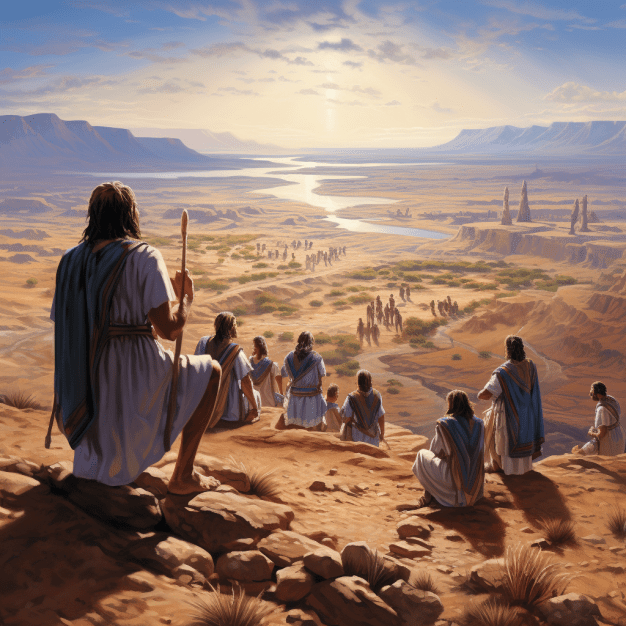
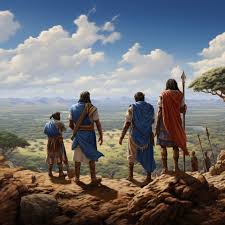
The Israelites knew this about God. God demonstrated all these attributes of His character right before their eyes!  God brought them out of Egypt’s slavery and bondage to live freely once more.  God performed spectacular miracles in their release so they (and others) would know who’s really in control and in charge!  God fulfilled His promised to Abraham made centuries before by leading them through the wilderness to an enormous land area to accommodate the thousands of people born to the twelve sons of Jacob—The Twelve Tribes.  He gave them specific directions that were easily understood so they could possess this land with His help.  But they must trust, believe and worship Him along “so all would go well with them” under His protection. But they chose to turn away after Joshua and those in his generation died.

Judges 2

The Angel of the Lord at Bokim
The angel of the Lord went up from Gilgal to Bokim and said, “I brought you up out of Egypt and led you into the land I swore to give to your ancestors. I said, ‘I will never break my covenant with you, and you shall not make a covenant with the people of this land, but you shall break down their altars.’ Yet you have disobeyed me. Why have you done this? And I have also said, ‘I will not drive them out before you; they will become traps for you, and their gods will become snares to you.’”

When the angel of the Lord had spoken these things to all the Israelites, the people wept aloud, and they called that place Bokim. There they offered sacrifices to the Lord.

Disobedience and Defeat

After Joshua had dismissed the Israelites, they went to take possession of the land, each to their own inheritance. The people served the Lord throughout the lifetime of Joshua and of the elders who outlived him and who had seen all the great things the Lord had done for Israel.
Joshua son of Nun, the servant of the Lord, died at the age of a hundred and tenAnd they buried him in the land of his inheritance, at Timnath Heres in the hill country of Ephraim, north of Mount Gaash.

10 After that whole generation had been gathered to their ancestors, another generation grew up who knew neither the Lord nor what he had done for Israel. 11 Then the Israelites did evil in the eyes of the Lord and served the Baals. 12 They forsook the Lord, the God of their ancestors, who had brought them out of Egypt. They followed and worshiped various gods of the peoples around them. They aroused the Lord’s anger 13 because they forsook him and served Baal and the Ashtoreths. 14 In his anger against Israel the Lord gave them into the hands of raiders who plundered them. He sold them into the hands of their enemies all around, whom they were no longer able to resist15 Whenever Israel went out to fight, the hand of the Lord was against them to defeat them, just as he had sworn to them. They were in great distress.
16 Then the Lord raised up judges, who saved them out of the hands of these raiders. 17 Yet they would not listen to their judges but prostituted themselves to other gods and worshiped them. They quickly turned from the ways of their ancestors, who had been obedient to the Lord’s commands. 18 Whenever the Lord raised up a judge for them, he was with the judge and saved them out of the hands of their enemies as long as the judge lived; for the Lord relented because of their groaning under those who oppressed and afflicted them. 19 But when the judge died, the people returned to ways even more corrupt than those of their ancestors, following other gods and serving and worshiping them. They refused to give up their evil practices and stubborn ways.

20 Therefore the Lord was very angry with Israel and said, “Because this nation has violated the covenant I ordained for their ancestors and has not listened to me, 21 I will no longer drive out before them any of the nations Joshua left when he died22 I will use them to test Israel and see whether they will keep the way of the Lord and walk in it as their ancestors did.” 23 The Lord had allowed those nations to remain; he did not drive them out at once by giving them into the hands of Joshua.

WHAT DO WE LEARN—HOW DO WE RESPOND?

It is God’s desire that no one perish in the battles with evil; but it is up to us to choose who we will love and serve with all our hearts. “Choose this day whom you will serve, as for me and my house will serve the Lord.” These last words of Joshua were not just a proclamation of his personal allegiance to God, but a loving statement of his forever belief to compel others to continue to “love God with all their hearts, all their souls and with all their strength” as God taught them through Moses. When we choose God; we live under the protection of God’s wings of love, mercy, and grace.  When we do not, God steps back, allowing us to live with the consequences of our choice to turn from all that is God—until we turn back to Him. God knows, loves, and sends help until we turn back to Him. 

Jesus tells a beautiful story of a son who chose to leave all that his father had to offer to do life on his own.  It didn’t go well for the son who lost it all and gained nothing.  Jesus told this to illustrate who God is.  (See Luke 15:11-32) God loves and forgives. In fact, there is nothing God will not forgive.  Like the father of the prodigal son; God stands ready to throw out His hands to welcome us back home to His love which drives His profound mercy and unending grace. 

Today, God is angry at our choice to “follow our hearts,” that are deceitful and undependable, instead of His heart because He has so much more that He wants to give.  When we look away from God and all that is Good to follow whatever is shiny and distracting in front of our eyes; we wander around into all that is not God and fall for all that evil has to offer which leads to dead living and final death forever.   

God stands ready while actively seeking those whose hearts are committed to Him.  God loves to give His best for our best.  When troubles come in our imperfect world; we have a perfect, holy God who desires and delights to help us in all the details of our lives.  All we must do is ask.  Asking for His help shows our trust, faith and commitment to the One and Only who knows exactly the kind of help we need when we need Him most!  

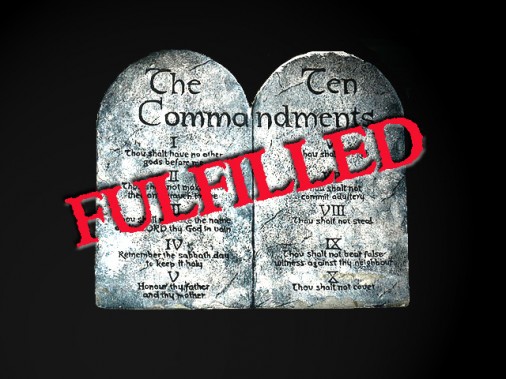
“You shall love the Lord your God with all your heart, with all your soul, and with all your mind.’This is the first and great commandment. And the second is like it: ‘You shall love your neighbor as yourself.’ On these two commandments hang all the Law and the Prophets.”—Jesus, Matthew 22:37-40  Jesus fulfilled all the promises and commandments of God.  Jesus loved and gave His life for ours so we could be set free.

Prayerfully consider the following commentary of Judges 2 from Max Lucado;

“A new generation of Israelites neglected their relationship with God. They did not see God’s hand at work like their parents had. When they turned away from God, God disciplined them. Failing to teach our children to love and obey God will bring disaster on them.

Frightening thing, this pride. It would rather kill the truth than consider it.

Doesn’t it sneak up on us? We begin spiritual journeys as small people. The act of conversion is a humbling one. We confess sins, beg for mercy, bend our knees. We let someone lower us into the waters of baptism. We begin as self-effacing souls. Timid children who extend muddy hands to our sinless God. We relate to the thief on the cross, identify with David’s forgiven adultery, and find hope in Peter’s forgiven betrayal. We challenge Paul’s claim to the chief-of-sinners title, wondering if anyone could need or treasure grace as much as we do.
We come to God humbly. No swagger, no boasts, no “all by myself” declarations. We flex no muscles and claim no achievements. We cup sullied hearts in hands and offer them to God as we would a crushed, scentless flower: “Can you bring life to this?”

And he does. He does. We don’t. He works the miracle of salvation. He immerses us in mercy. He stitches together our shredded souls. He deposits his Spirit and implants heavenly gifts. Our big God blesses our small faith.

We understand the roles. He is the Milky Way galaxy. We are the sand flea. He is U2, and we are the neighborhood garage band, and that’s okay. We need a big God because we’ve made a big mess of our lives.

Your children can benefit from your successes as well as from your mistakes. Pray daily with your children and discipline them. Speak to them from your heart about the Lord.”—Lucado, Encouraging Word Bible

Lord,

Help us to avoid being the last generation who knows, believes wholeheartedly, and follows you.  We are a messy lot; but you intervene with your message of truth.  I will never forget what you did, are doing, and will do in me.

In Jesus Name, Amen

Posted in Uncategorized | Tagged , , , , | Leave a comment

GOD’S WORK OF SALVATION THROUGH UNLIKELY CANDIDATES

I am perplexed and amused at the same time as I stand back in the wings of political arguments over which candidate will “save the world” and which one will “cause ultimate destruction.”  It seems those with few facts to back their argument speak passionately louder, thinking that volume will produce solidarity.  And sometimes we fall for that unless we search for truth.  I have lived long enough to research and prayerfully vote in countless elections to know that as a nation we might plan, manipulate, and politic for power but God decides the outcome.  God, in his sovereignty will work through the most unlikely candidate to accomplish His will.  Remember how he used Pilot, Herod, and the religious leaders to accomplish His ultimate plan to save us through Jesus Christ, His Son? No matter who a nation chooses as its leader; Jesus is King of kings and Lord of lords.  God gave His Son that honor. (Philippians 1)

Yes, we may plan; but God decides.  And we are grateful He does!  “May Your Kingdom come; May Your Will be done”.

There will be a bit of a “shock and awe” factor as we read the pages of Judges. Eugene Peterson’s introduction prepares us with what lies ahead for us in our study:

“Sex and violence, rape and massacre, brutality and deceit do not seem to be congenial materials for use in developing a story of salvation. Given the Bible’s subject matter—God and salvation, living well and loving deeply—we quite naturally expect to find in its pages leaders for u s who are good, noble, honorable men and women showing us the way.  So it is always something of a shock to enter the pages of the Book of Judges and find ourselves immersed in nearly unrelieved mayhem.”

“It might not gravel our sensibilities so much if these flawed and reprobate leaders were held up as negative moral examples, with lurid, hellfire descriptions of the punishing consequences of living such bad lives.  But the story is not told quite that way.  There is a kind of matter-of-fact in difference in the tone of the narration, almost as if God is saying, ‘Well, if this is all you’re going to give me to work with, I’ll use these men and women, just as they are, and get on with working out the story of salvation.’ These people are even given a measure of dignity as they find their place in the story; they are most certainly not employed for the sake of vilification.”

“God, it turns out, does not require good people in order to do good work.  He can and does work with us in whatever moral and spiritual condition he finds us.  God, we are learning, does some of his best work using the most unlikely people.”  “If God found a way to significantly include these leaders (“judges”) in what we know is on its way to becoming a glorious conclusion, he can certainly use us along with our sometimes impossible friends, and neighbors!”

“Twice in Judges (17:6 and 21:25) there is the telling refrain: ‘At that time there was no king in Israel. People did whatever they felt like doing.’  But we readers know that there was a king in Israel: GOD was king.  And so, while the lack of an earthly king accounts for the moral and political anarchy, the presence of the sovereign God, however obscurely realized, means that the reality of the kingdom is never in doubt.” –Peterson, Introduction to Judges, The Message Bible

Whew, are we ready to jump in?  May God’s Holy Spirit teach us what will be most helpful to our growing relationship with God through Jesus, His Son.

Judges 1

Israel Fights the Remaining Canaanites

After the death of Joshua, the Israelites asked the Lord, “Who of us is to go up first to fight against the Canaanites?”

The Lord answered, “Judah shall go up; I have given the land into their hands.”

The men of Judah then said to the Simeonites their fellow Israelites, “Come up with us into the territory allotted to us, to fight against the Canaanites. We in turn will go with you into yours.” So the Simeonites went with them.

When Judah attacked, the Lord gave the Canaanites and Perizzites into their hands, and they struck down ten thousand men at Bezek. It was there that they found Adoni-Bezek and fought against him, putting to rout the Canaanites and Perizzites. Adoni-Bezek fled, but they chased him and caught him, and cut off his thumbs and big toes.

Then Adoni-Bezek said, “Seventy kings with their thumbs and big toes cut off have picked up scraps under my table. Now God has paid me back for what I did to them.” They brought him to Jerusalem, and he died there.

The men of Judah attacked Jerusalem also and took it. They put the city to the sword and set it on fire.

After that, Judah went down to fight against the Canaanites living in the hill country, the Negev and the western foothills. 10 They advanced against the Canaanites living in Hebron (formerly called Kiriath Arba) and defeated Sheshai, Ahiman and Talmai. 11 From there they advanced against the people living in Debir (formerly called Kiriath Sepher).

12 And Caleb said, “I will give my daughter Aksah in marriage to the man who attacks and captures Kiriath Sepher.” 13 Othniel son of Kenaz, Caleb’s younger brother, took it; so Caleb gave his daughter Aksah to him in marriage.

14 One day when she came to Othniel, she urged him to ask her father for a field. When she got off her donkey, Caleb asked her, “What can I do for you?”

15 She replied, “Do me a special favor. Since you have given me land in the Negev, give me also springs of water.” So Caleb gave her the upper and lower springs.

16 The descendants of Moses’ father-in-law, the Kenite, went up from the City of Palms with the people of Judah to live among the inhabitants of the Desert of Judah in the Negev near Arad.

17 Then the men of Judah went with the Simeonites their fellow Israelites and attacked the Canaanites living in Zephath, and they totally destroyed the city. Therefore it was called Hormah. 18 Judah also took Gaza, Ashkelon and Ekron—each city with its territory.

19 The Lord was with the men of Judah. They took possession of the hill country, but they were unable to drive the people from the plains, because they had chariots fitted with iron. 20 As Moses had promised, Hebron was given to Caleb, who drove from it the three sons of Anak. 21 The Benjamites, however, did not drive out the Jebusites, who were living in Jerusalem; to this day the Jebusites live there with the Benjamites.

22 Now the tribes of Joseph attacked Bethel, and the Lord was with them23 When they sent men to spy out Bethel (formerly called Luz), 24 the spies saw a man coming out of the city and they said to him, “Show us how to get into the city and we will see that you are treated well.” 25 So he showed them, and they put the city to the sword but spared the man and his whole family. 26 He then went to the land of the Hittites, where he built a city and called it Luz, which is its name to this day.

27 But Manasseh did not drive out the people of Beth Shan or Taanach or Dor or Ibleam or Megiddo and their surrounding settlements, for the Canaanites were determined to live in that land. 28 When Israel became strong, they pressed the Canaanites into forced labor but never drove them out completely. 29 Nor did Ephraim drive out the Canaanites living in Gezer, but the Canaanites continued to live there among them. 30 Neither did Zebulun drive out the Canaanites living in Kitron or Nahalol, so these Canaanites lived among them, but Zebulun did subject them to forced labor. 31 Nor did Asher drive out those living in Akko or Sidon or Ahlab or Akzib or Helbah or Aphek or Rehob. 32 The Asherites lived among the Canaanite inhabitants of the land because they did not drive them out. 33 Neither did Naphtali drive out those living in Beth Shemesh or Beth Anath; but the Naphtalites too lived among the Canaanite inhabitants of the land, and those living in Beth Shemesh and Beth Anath became forced laborers for them. 34 The Amorites confined the Danites to the hill country, not allowing them to come down into the plain. 35 And the Amorites were determined also to hold out in Mount Heres, Aijalon and Shaalbim, but when the power of the tribes of Joseph increased, they too were pressed into forced labor. 36 The boundary of the Amorites was from Scorpion Pass to Sela and beyond.

WHAT DO WE LEARN—HOW DO WE RESPOND?

We will recall in the writings of Moses; God commanded Israel to destroy every enemy in the promised land. Yet, Israel decided to leave some “harmless” enemies alone. Not only was Israel disobedient, but the “harmless” residents of the land of Israel rose up to become dangerous enemies over time.  The gods of the Canaanites seemed harmless and kind of fun; their lack of values and morals, though not of God, will be tolerated but certainly not engaged in—until they succumbed to them.

Judges chronicles the dark ages of Israel, the death of Israel. The death of the heartOver three centuries, they suffer memory lapse concerning the commandments of God and God, as the focus of their worship.  Israel will begin to accept a new moral code that is not of God as “everyone did as they saw fit” (Judges 21:25).  This is what happens when God is ignored and passions of self-satisfaction are worshiped.

Could this be a warning for our times?  I’ll let you ponder over that.  But what we know is this: our choices have consequences.  God foresees potential danger in our lives. He gives commands that, if followed, can protect us from dangerous consequences. If we neglect certain commands, we may reap painful consequences later.

Nothing escapes the notice of God.  But above all, God knows all and is always at work to accomplish His salvation work in and through all who will believe and follow Him. God does not rely on the leaders of our known world; God, the Creator of heaven and earth, has already decided the outcome that will be best for all who believe in Him—the hope of eternal life where Jesus is King and His love is forever!  

A new generation rose up after all who worked alongside Joshua’s generation had died.  “They did not know the LORD nor the work which He had done for Israel” (Judges 2). Instead of exhibiting spiritual fervor, Israel sank into apathy; instead of obeying the Lord, the people moved into apostasy; and instead of the nation enjoying law and order, the land was filled with anarchy. Indeed, for Israel it was the worst of times.

But for God, all would be lost—but all is not lost but found in Jesus!  Stay tuned to see God at work in the least likely for our good and His glory!  It will be a bumpy ride but lessons will be learned as God works His power into fulfilling His story of salvation for all!

Lord,

We, as your followers, can become apathic to all you do for us and in us if we are not careful.  The gods of goods and our passion to desire them can overtake and replace your blessings of growing in your character and in our relationship with you that far exceeds what this world has to offer.  I repent of apathy and complacence.  Keep me aware of Your Holy Presence who guides me to all that is truth.  Make your desires be mine.  Thank you, thank you, thank you.

In Jesus Name, Amen
Posted in Uncategorized | Tagged , , , , | Leave a comment

YOU HAVE SEEN SALVATION—REMEMBER!

The times of conquering are over! The Promised Land is settled.  Everyone has a place to live.  God has granted and time of peace and rest to the Israelites.  God’s leader, Joshua has been a great leader who stood firm in obedience to God.  Joshua sought the Lord’s guidance, declaring opening that it is God is the One he and his household love and serve.  Joshua chose to love God back with all his heart, mind, and soul.  Now, as Joshua ages, he bids farewell to the people he has served with words of encouragement as well as warnings to never turn their focus from the One and Only God.  Most great leaders devoted to God, who give their lives to God, love God wholeheartedly, and obey all that God says, speak last words such as these:

“You have seen all that God has done.”  Godly leaders give all glory to God.

“God always does what He promises.”  Godly leaders know their part of God’s mission—even when it is hard and beyond their own abilities to accomplishment.  They know that where God guides; He provides all that is needed.

“It was the Lord your God who fought for you.”  Godly leaders know from where their strength and wisdom comes from and give all glory to God!

“Choose this day whom you will serve.  As for me and my house, we choose God.”  (Joshua 24) Godly leaders reflect who they believe in their behaviors.  Demonstrating God’s mission is powerful for those making their choice.

“Love the Lord, your God, with all your heart, all your mind, and all your heart.” God’s command from the beginning.  Godly leaders know that God wants us to love him back as much as He loves us.  “We love Him because He first loved us.” (1 John 4:19)

“Remember, don’t look back, hold fast to the Lord, your God.”  It is God who loves most and wants His best for us.  Remember that and don’t look back!

Joshua 23

Joshua’s Farewell to the Leaders

After a long time had passed and the Lord had given Israel rest from all their enemies around them, Joshua, by then a very old man, summoned all Israel—their elders, leaders, judges, and officials—and said to them: “I am very old. You yourselves have seen everything the Lord your God has done to all these nations for your sake; it was the Lord your God who fought for youRemember how I have allotted as an inheritance for your tribes all the land of the nations that remain—the nations I conquered—between the Jordan and the Mediterranean Sea in the west. The Lord your God himself will push them out for your sake. He will drive them out before you, and you will take possession of their land, as the Lord your God promised you.

Be very strong; be careful to obey all that is written in the Book of the Law of Moses, without turning aside to the right or to the left. Do not associate with these nations that remain among you; do not invoke the names of their gods or swear by them. You must not serve them or bow down to themBut you are to hold fast to the Lord your God, as you have until now.

“The Lord has driven out before you great and powerful nations; to this day no one has been able to withstand you. 10 One of you routs a thousand, because the Lord your God fights for you, just as he promised. 11 So be very careful to love the Lord your God.

12 But if you turn away and ally yourselves with the survivors of these nations that remain among you and if you intermarry with them and associate with them, 13 then you may be sure that the Lord your God will no longer drive out these nations before you. Instead, they will become snares and traps for you, whips on your backs and thorns in your eyes, until you perish from this good land, which the Lord your God has given you.

14 “Now I am about to go the way of all the earth. You know with all your heart and soul that not one of all the good promises the Lord your God gave you has failed. Every promise has been fulfilled; not one has failed15 But just as all the good things the Lord your God has promised you have come to you, so he will bring on you all the evil things he has threatened, until the Lord your God has destroyed you from this good land he has given you. 16 If you violate the covenant of the Lord your God, which he commanded you, and go and serve other gods and bow down to them, the Lord’s anger will burn against you, and you will quickly perish from the good land he has given you.”

WHAT DO WE LEARN—HOW DO WE RESPOND?

Know God.  Know the Enemy.

God knows we our weaknesses as well as our strengths.  He knows exactly what we need when we need it because God knows all the schemes of Satan, His Enemy.  God knew how much Satan wanted to be Him. God knew his character traits were pride, greed, envy, comparisons in power and importance, using whatever and whomever to get what he wanted for himself.  Satan’s hate for God escalated when God threw Satan out of heaven.  Satan would forever be known as the “fallen angel”; the one kicked out of heaven to earth. Satan dedicated himself to be the prince of this world on earth with the mission to distract, deceive, deconstruct, dismantle and ultimate destroy all allegiance and faith of God’s created humans. If you think banning this angel from heaven was harsh to our modern, highly sensitive, easily offended lifestyles, then you aren’t understanding the full picture.  Satan is everything God is not.  Satan was and is a the “chief among liars.”  (See John 8:44; 2 Corinthians 4:4) Interestingly, Satan and his demons fear God! Like roaches, they hide in the dark when the Light comes to expose them.   

Now knowing this, let’s fully understand the reason God ask Moses then Joshua to conquer and subdue all who were residing in the Promised Land before taking possession and settling there. It seems to us; Canaan was Satan’s playground of evil practices.  Humans were obsessed with all things evil as a result.  God and evil cannot occupy the same space.  One had to go. God chose Evil to depart from the land.

As we read the book of Joshua, it is hard to embrace killing everyone in the conquered cities with destruction. “No survivors was the recurrent refrain.  We look back from our time in history and think, how horrible. But if we were able to put ourselves back in the thirteenth century B.C., we might see it differently, for that Canaanite culture was a snake pit of child sacrifice and sacred prostitution, practices ruthlessly devoted to using the most innocent and vulnerable members of the community (babies and virgins) to manipulate God or gods for gain.”—Eugene Peterson, The Message Bible Commentary

“People who want God as an escape from reality, from the often hard conditions of this life, don’t find this much to their liking.  But to the man or woman wanting more reality, not less—this continuation of the salvation story—Joshua’s fierce and devout determination to win land for his people and his extraordinary attention to get all the tribes and their families name by name assigned to their own place, is good news indeed.  Joshua lays a firm foundation for a life that is grounded.”—Peterson, Msg Bible

PAUSE:  Who or what foundation are we building our lives upon?  God or the gods of our world?  God’s Word or the lies of the enemy?

Before Joshua died, he reminded the people of all that God had done for them and all the ways God had blessed them. Then he pleaded with them not to serve other gods, or they would be destroyed.  Joshua reminded the people of their inheritance and God’s protection. His well-known words still challenge us today: “Choose for yourselves this day whom you will serve . . . But as for me and my household, we will serve the LORD” (Joshua 24:15).

The great accomplishment of the Hebrew people came down to this: “Then Joshua dismissed the people, each to their own inheritance” (Jos 24:28). 

We who believe and follow Jesus as Savior and Lord also have a great inheritance! 

“For those who are led by the Spirit of God are the children of God. The Spirit you received does not make you slaves, so that you live in fear again; rather, the Spirit you received brought about your adoption to sonship. And by him we cry, “Abba, Father.” The Spirit himself testifies with our spirit that we are God’s children. Now if we are children, then we are heirs—heirs of God and co-heirs with Christ, if indeed we share in his sufferings in order that we may also share in his glory.” Romans 8:14-17, NIV

“Abba,” a special word of precious endearment to our Father for life who is God.  Wow.

Through Joshua, God’s people received their inheritance of the land He promised.

Through Jesus, we have received salvation from our sins with the inheritance of eternal life!

It time for us to pause, reflect, and remember all that God has done for us and given so graciously to us.  I challenge you to make a list and revisit it often with grateful praise and thanksgiving.  I’m sure the list will grow each time you remember to read it!  Now, let us thank God for the inheritance he has granted us through Christ who set us free!

Lord,

Thank you for all you have done, are doing and will do as you mold and shape me to be all you created me to be. Thank you for saving my soul and making me whole. Thank you for daily cleansing my heart of all that is not you, renewing my mind with the power to transform my behaviors while refreshing and filling my soul with your fresh tender mercies. Thank you for daily restoring the joy (and peace) of your salvation work within me.  Thank you for caring and loving us they way you do. I’m standing on your firm foundation—the promises of love, mercy, grace and the hope of eternal life! Thank you, thank you, thank you!

In Jesus Name, Amen

Posted in Uncategorized | Tagged , , , , | Leave a comment

GOING HOME TO THE OTHER SIDE

I do declare that family squabbles begin with mere assumptions and presumptions!  We assume what a one member of the family is thinking and then presume what they will do according to our judgement.  But often, that is not what they were thinking at all. Sides are formed immediately and a lasting feud is born.  Sarcastic remarks between the opposing sides begin a war of disagreements over the most trivial things.  Lies, based on assumptions to bring people “down to size” become the humiliating weapons of war.  The children see what is happening with hate demonstrated before them and either cower in a corner until it’s over, or choose a side and angrily act out among their peers as the war escalates.  

Assumption:  a thing that is accepted as true or as certain to happen, without proof.

Presumption: an idea that is taken to be true, and often used as the basis for other ideas, although it is not known for certain.

No one is listening for understanding.  No one is backing down.  The war can go on for generations without really knowing the cause.  Who’s to blame?  We are.  We walk right into the war with an extreme weakness of humanity—selfishness.  The enemy of God, our real enemy uses this weakness for his purpose to destroy us until Someone mediates the situation who has no partiality. This Person has all authority to lead us to a discussion of resolution, forgiveness, while casting out all assumptions, presumptions, bad feelings with perceived notions and emotions.  That Person is Jesus, our High Priest and Mediator.

Joshua 22

Eastern Tribes Return Home

Then Joshua summoned the Reubenites, the Gadites and the half-tribe of Manasseh and said to them, “You have done all that Moses the servant of the Lord commanded, and you have obeyed me in everything I commandedFor a long time now—to this very day—you have not deserted your fellow Israelites but have carried out the mission the Lord your God gave you. Now that the Lord your God has given them rest as he promised, return to your homes in the land that Moses the servant of the Lord gave you on the other side of the JordanBut be very careful to keep the commandment and the law that Moses the servant of the Lord gave you: to love the Lord your God, to walk in obedience to him, to keep his commands, to hold fast to him and to serve him with all your heart and with all your soul.”

Then Joshua blessed them and sent them away, and they went to their homes. (To the half-tribe of Manasseh Moses had given land in Bashan, and to the other half of the tribe Joshua gave land on the west side of the Jordan along with their fellow Israelites.) When Joshua sent them home, he blessed them, saying, “Return to your homes with your great wealth—with large herds of livestock, with silver, gold, bronze and iron, and a great quantity of clothing—and divide the plunder from your enemies with your fellow Israelites.”

So the Reubenites, the Gadites and the half-tribe of Manasseh left the Israelites at Shiloh in Canaan to return to Gilead, their own land, which they had acquired in accordance with the command of the Lord through Moses.

10 When they came to Geliloth near the Jordan in the land of Canaan, the Reubenites, the Gadites and the half-tribe of Manasseh built an imposing altar there by the Jordan. 11 And when the Israelites heard that they had built the altar on the border of Canaan at Geliloth near the Jordan on the Israelite side, 12 the whole assembly of Israel gathered at Shiloh to go to war against them.

13 So the Israelites sent Phinehas son of Eleazar, the priest, to the land of Gilead—to Reuben, Gad and the half-tribe of Manasseh. 14 With him they sent ten of the chief men, one from each of the tribes of Israel, each the head of a family division among the Israelite clans.

15 When they went to Gilead—to Reuben, Gad and the half-tribe of Manasseh—they said to them: 16 “The whole assembly of the Lord says: ‘How could you break faith with the God of Israel like this? How could you turn away from the Lord and build yourselves an altar in rebellion against him now? 17 Was not the sin of Peor enough for us? Up to this very day we have not cleansed ourselves from that sin, even though a plague fell on the community of the Lord! 18 And are you now turning away from the Lord?

“‘If you rebel against the Lord today, tomorrow he will be angry with the whole community of Israel. 19 If the land you possess is defiled, come over to the Lord’s land, where the Lord’s tabernacle stands, and share the land with us. But do not rebel against the Lord or against us by building an altar for yourselves, other than the altar of the Lord our God. 20 When Achan son of Zerah was unfaithful in regard to the devoted things, did not wrath come on the whole community of Israel? He was not the only one who died for his sin.’”

21 Then Reuben, Gad and the half-tribe of Manasseh replied to the heads of the clans of Israel: 22 “The Mighty One, God, the Lord! The Mighty One, God, the Lord! He knows! And let Israel know! If this has been in rebellion or disobedience to the Lord, do not spare us this day. 23 If we have built our own altar to turn away from the Lord and to offer burnt offerings and grain offerings, or to sacrifice fellowship offerings on it, may the Lord himself call us to account.

24 “No! We did it for fear that some day your descendants might say to ours, ‘What do you have to do with the Lord, the God of Israel? 25 The Lord has made the Jordan a boundary between us and you—you Reubenites and Gadites! You have no share in the Lord.’ So your descendants might cause ours to stop fearing the Lord.

26 “That is why we said, ‘Let us get ready and build an altar—but not for burnt offerings or sacrifices.’ 27 On the contrary, it is to be a witness between us and you and the generations that follow, that we will worship the Lord at his sanctuary with our burnt offerings, sacrifices and fellowship offerings. Then in the future your descendants will not be able to say to ours, ‘You have no share in the Lord.’

28 “And we said, ‘If they ever say this to us, or to our descendants, we will answer: Look at the replica of the Lord’s altar, which our ancestors built, not for burnt offerings and sacrifices, but as a witness between us and you.’

29 “Far be it from us to rebel against the Lord and turn away from him today by building an altar for burnt offerings, grain offerings and sacrifices, other than the altar of the Lord our God that stands before his tabernacle.”

30 When Phinehas the priest and the leaders of the community—the heads of the clans of the Israelites—heard what Reuben, Gad and Manasseh had to say, they were pleased. 31 And Phinehas son of Eleazar, the priest, said to Reuben, Gad and Manasseh, “Today we know that the Lord is with us, because you have not been unfaithful to the Lord in this matter. Now you have rescued the Israelites from the Lord’s hand.”

32 Then Phinehas son of Eleazar, the priest, and the leaders returned to Canaan from their meeting with the Reubenites and Gadites in Gilead and reported to the Israelites. 33 They were glad to hear the report and praised God. And they talked no more about going to war against them to devastate the country where the Reubenites and the Gadites lived.

34 And the Reubenites and the Gadites gave the altar this name: A Witness Between Us—that the Lord is God.

WHAT DO WE LEARN—HOW DO WE RESPOND?

The Situation:  Returning to the eastern side, the three tribes built an altar patterned after the Lord’s altar. They were accused of idolatry and rebellion, no questions asked. But Phinehas, their priest, declared that the altar was a token of solidarity with the rest of Israel and a reminder to the rest of the tribes that they all worshiped one God.

The Issue:  The “other side” assumed the worst and was ready to go to war.

The Solution:  Phinehas the priest was sent to mediate the situation. After listening the crisis of war was averted.  “Oh, I get it now.”

Tools of Response:

When conflict occurs, we must not perform the long jump of hasty conclusions, but listen to both sides of the story to make a wise decision. When we pause, become still, let go of our assumptions and listen to our Advocate, Judge, High Priest, and Lord of our lives; we ready ourselves to listen to each other with focused attention on the truth of the matter.   

Get Help!  We need help and God loves give it!  Just ask! His Holy Spirit lives in all believers, ready to help with power! God gave us this part of Himself to guide us to all that is true and right.  His Holy Spirit comes with power beyond our human wisdom and will trump our human weakness of assuming and presuming. “But when he, the Spirit of truth, comes, he will guide you into all the truth. He will not speak on his own; he will speak only what he hears, and he will tell you what is yet to come.”—Jesus, describing the work of God’s Holy Spirit, John 16:13

Wait on God’s wisdom. Waiting on God means working through conflicts, forgiving offenses, resolving disputes.  “those who hope in the Lord will renew their strength. They will soar on wings like eagles; they will run and not grow weary, they will walk and not be faint.” Isaiah 40:31 These sins, (let’s call them what they really are), of assuming and presuming are such a waste of worrisome energy and takes away our smiles! Want a facelift?  Try a faith lift which begins with really believing and trusting God in all areas of life!  He is Life now and forever!  Knowing God is knowing real love.

Love God. Love Each Other.  The two greatest commandments—everything else stems from these, says Jesus.  Matthew 22:36-40

Forgive each other.  “Be kind and compassionate to one another, forgiving each other, just as in Christ God forgave you.” Ephesians 4:32

Develop the Holy Pause. “Summing it all up, friends, I’d say you’ll do best by filling your minds and meditating on things true, noble, reputable, authentic, compelling, gracious—the best, not the worst; the beautiful, not the ugly; things to praise, not things to curse. Put into practice what you learned from me, what you heard and saw and realized. Do that, and God, who makes everything work together, will work you into his most excellent harmonies. Philippians 4:8-9, MSG

Lord,

Forgive us our sins as we forgive those who sin against us.  Lead us not into the temptations of assuming what others are thinking; but deliver us from evil and evil’s schemes to distract us from you. Thank you, thank you, thank you for your help to overcome this weakness.

In Jesus Name, Amen

Posted in Uncategorized | Tagged , , , , | Leave a comment

GOD’S PROMISES FULFILLED IN EVERY DETAIL

Fulfillment Centers

As soon as we click “purchase” online, it is immediately sent to be processed through a “fulfillment center.” The fulfillment center receives the order, searches their inventory for the product, obtains the product, packages the product to survive the postal system or their own system and then our product leaves the fulfillment center for transit to our home or place of business. 

And what do we do?  As soon as we place the order, we begin tracking our order!  We anxiously wait for our promised product to arrive as soon as possible!  We check the front porch often in case it arrived while we doing our tasks for the day—beginning with the second day after ordering!  Upon arrival, we expect our product to be exactly as advertised and exactly as we pictured it in our minds. If it is not; we are not happy. We are not a patient people, are we?  Admit it, we are as spoiled as an infants waiting on a bottle to put into our mouths in nanoseconds!  We know it’s coming but we whine and cry until it happens!

God gives us exactly what He promises, yet we still question His timing, His Son, His redemption for all our sins, and the guidance of His Holy Spirit.  This is a dangerous way to live as our Enemy preys on our venerable lack of faith.  God’s promises are true and trustworthy for God does not lie.  To combat our faith-lapses, we must do what the Psalmist did: “Be still”, let go of what we think we want, and wait.  And in the wait, get “to know God” who knows exactly what we need when we need it! (Psalm 46)

From Abraham to Moses to now Joshua; God’s promise of land for occupation was fulfilled. From Abraham’s call to “go” to Joshua’s call possess the promised land; the nation of Israel is established.  The stage is set for God’s Ultimate Promise to arrive.

Joshua 21

Towns for the Levites

Now the family heads of the Levites approached Eleazar the priest, Joshua son of Nun, and the heads of the other tribal families of Israel at Shiloh in Canaan and said to them, “The Lord commanded through Moses that you give us towns to live in, with pasturelands for our livestock.” So, as the Lord had commanded, the Israelites gave the Levites the following towns and pasturelands out of their own inheritance:

The first lot came out for the Kohathites, according to their clans. The Levites who were descendants of Aaron the priest were allotted thirteen towns from the tribes of Judah, Simeon and Benjamin. 5The rest of Kohath’s descendants were allotted ten towns from the clans of the tribes of Ephraim, Dan and half of Manasseh.

The descendants of Gershon were allotted thirteen towns from the clans of the tribes of Issachar, Asher, Naphtali and the half-tribe of Manasseh in Bashan.

The descendants of Merari, according to their clans, received twelve towns from the tribes of Reuben, Gad and Zebulun.

So the Israelites allotted to the Levites these towns and their pasturelands, as the Lord had commanded through Moses.

From the tribes of Judah and Simeon they allotted the following towns by name 10 (these towns were assigned to the descendants of Aaron who were from the Kohathite clans of the Levites, because the first lot fell to them):

11 They gave them Kiriath Arba (that is, Hebron), with its surrounding pastureland, in the hill country of Judah. (Arba was the forefather of Anak.) 12 But the fields and villages around the city they had given to Caleb son of Jephunneh as his possession.

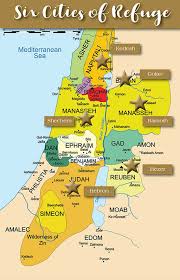
13 So to the descendants of Aaron the priest they gave Hebron (a city of refuge for one accused of murder), Libnah, 14 Jattir, Eshtemoa, 15 Holon, Debir, 16 Ain, Juttah and Beth Shemesh, together with their pasturelands—nine towns from these two tribes.

17 And from the tribe of Benjamin they gave them Gibeon, Geba, 18 Anathoth and Almon, together with their pasturelands—four towns.

19 The total number of towns for the priests, the descendants of Aaron, came to thirteen, together with their pasturelands.

20 The rest of the Kohathite clans of the Levites were allotted towns from the tribe of Ephraim:

21 In the hill country of Ephraim they were given Shechem (a city of refuge for one accused of murder) and Gezer, 22 Kibzaim and Beth Horon, together with their pasturelands—four towns.

23 Also from the tribe of Dan they received Eltekeh, Gibbethon, 24 Aijalon and Gath Rimmon, together with their pasturelands—four towns.

25 From half the tribe of Manasseh they received Taanach and Gath Rimmon, together with their pasturelands—two towns.

26 All these ten towns and their pasturelands were given to the rest of the Kohathite clans.

27 The Levite clans of the Gershonites were given:

from the half-tribe of Manasseh,

Golan in Bashan (a city of refuge for one accused of murder) and Be Eshterah, together with their pasturelands—two towns;

28 from the tribe of Issachar,

Kishion, Daberath, 29 Jarmuth and En Gannim, together with their pasturelands—four towns;

30 from the tribe of Asher,

Mishal, Abdon, 31 Helkath and Rehob, together with their pasturelands—four towns;

32 from the tribe of Naphtali,

Kedesh in Galilee (a city of refuge for one accused of murder), Hammoth Dor and Kartan, together with their pasturelands—three towns.

33 The total number of towns of the Gershonite clans came to thirteen, together with their pasturelands.

34 The Merarite clans (the rest of the Levites) were given:

from the tribe of Zebulun,

Jokneam, Kartah, 35 Dimnah and Nahalal, together with their pasturelands—four towns;

36 from the tribe of Reuben,

Bezer, Jahaz, 37 Kedemoth and Mephaath, together with their pasturelands—four towns;

38 from the tribe of Gad,

Ramoth in Gilead (a city of refuge for one accused of murder), Mahanaim, 39 Heshbon and Jazer, together with their pasturelands—four towns in all.

40 The total number of towns allotted to the Merarite clans, who were the rest of the Levites, came to twelve.

41 The towns of the Levites in the territory held by the Israelites were forty-eight in all, together with their pasturelands42 Each of these towns had pasturelands surrounding it; this was true for all these towns.

43 So the Lord gave Israel all the land he had sworn to give their ancestors, and they took possession of it and settled there. 44 The Lord gave them rest on every side, just as he had sworn to their ancestors. Not one of their enemies withstood them; the Lord gave all their enemies into their hands. 45 Not one of all the Lord’s good promises to Israel failed; every one was fulfilled.

WHAT DO WE LEARN—HOW DO WE RESPOND?

Waiting to experience the fulfillment of a promise from God often requires patience, persistence, and attention on God.  God provides for all the details of His promise.  We learn how important the details are as God’s Promise to the nation of Isarael which began with Abraham’s call to do what God says; “Go from your country, your people and your father’s household to the land I will show you.” (Genesis 12:1) This began the fulfillment process of God’s gift of redemption for humanity! 

God’s Word, from Genesis to Revelation, teaches us these principles that govern the fulfillment of God’s promises. We must always remember that His promises …

  • Are stated clearly. They are never hazy, shady, or uncertain.
  • Come with guidance (Gen. 12:1, 6). God wants to be personally involved in every area of our life, because He knows we live in difficult circumstances. And God involves us personally in His promises!
  • Require times of meditation to seek His direction (Genesis 7-8). As believers, we are constantly being shaped by the Lord. Recording what we learn can help us remember the lessons we’ve picked up along the way.  Newsflash:  We are not perfect, for all have sinned and fall short of the glory of God,” but we are perfectly forgiven by Jesus—and that’s a promise fulfilled!  Our messy mistakes are turned into great messages declaring the glory of God at work within us.

Jesus is God’s Promised Messiah proclaimed through God’s prophets who would fulfill all the promises of God!  Jesus stood in our place for our sins.  He took our sins on His shoulders and took the punishment we all deserve.  Jesus gave Himself, the one who knew no sin, and paid our debt of sin in full!  “For God so loved the world that he gave his one and only Son, that whoever believes in him shall not perish but have eternal life. For God did not send his Son into the world to condemn the world, but to save the world through him.” John 3:16-17 Our part in this fulfilled promise is to believe in Jesus and our God who sent Him with the promise of eternal life!  Our response to His promise is to “Go and teach” others of the fulfillment of all God’s promises in Jesus! (Matthew 28:20)

There will be times when we feel we must question God’s direction in the details, like many of His leaders did; but His Word teaches us that we live by promise and obedience, not by feelings or reason. Because some things will just not seem reasonable. God’s thoughts are higher than our human thoughts.  (Issaih 55:8)  To “follow our hearts” is dangerous living because “our hearts are deceitful and desperately wicked!” (Jeremiah 17:9-10) Learn to follow the heart of God!  He never fails!

God may require something that might appear to be in opposition to what He’s promised (Gen. 22:1-2). Abraham was told to sacrifice Isaac, the son through whom God’s promise was to be fulfilled. When we experience God’s faithfulness over time, we will trust Him even with things that seem extreme.  God’s promise may lead us to surrender something very dear to us (Gen. 22:3-5). Holding on to something God asks us to surrender won’t build our trust. It just delays the blessings of God—all that God wants to do in and through us!

Our faith filled obedience is key to God’s promise to complete His work in us!

Love God. Love Others.

Lord,

I am learning to pray with an expectant heart knowing that you want what is your best for us.  Cleanse my heart, renew my mind, refresh and fill my soul of all that is you while removing all that is not of you. Restore the joy of your salvation at work within me to be more and more, in every way, like you.

In Jesus Name, Amen

Posted in Uncategorized | Tagged , , , , | 2 Comments

WHO DO YOU RUN TO?

Is it possible to fully comprehend how God thinks?  The Psalmist attempted more than once to get into the head of God’s mind and describe Him; but there are just not enough words—

“The Lord is high above all nations, and his glory above the heavens!
Who is like the Lord our God, who is seated on high,
who looks far down on the heavens and the earth?
He raises the poor from the dust and lifts the needy from the ash heap,
to make them sit with princes, with the princes of his people.
He gives the barren woman a home, making her the joyous mother of children.”   
 Psalm 113:4-9

“Where can I go from your Spirit? Where can I flee from your presence?
If I go up to the heavens, you are there; if I make my bed in the depths, you are there.
If I rise on the wings of the dawn, if I settle on the far side of the sea,
even there your hand will guide me, your right hand will hold me fast.

If I say, “Surely the darkness will hide me and the light become night around me,”
 even the darkness will not be dark to you; the night will shine like the day,
    for darkness is as light to you.

For you created my inmost being; you knit me together in my mother’s womb.
I praise you because I am fearfully and wonderfully made; your works are wonderful,
    I know that full well.”
Psalm 139:7-14

God is in the details. He created the world and everything in, above, and below it with meticulous, intricately designed detail! God knows all and is in all for He created all.  This is why God knows exactly what we need when we need it before we know!

God now reminds Joshua of His instructions to Moses to build safe places for people to run to in times of trouble as part of settling into the Promise Land.

God thinks of EVERYTHING!  Can I get an amen?!

Joshua 20

Cities of Refuge

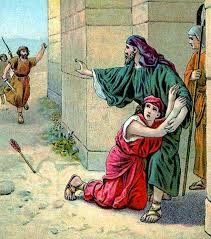
Then the Lord said to Joshua: “Tell the Israelites to designate the cities of refuge, as I instructed you through Moses, so that anyone who kills a person accidentally and unintentionally may flee there and find protection from the avenger of blood. When they flee to one of these cities, they are to stand in the entrance of the city gate and state their case before the elders of that city. Then the elders are to admit the fugitive into their city and provide a place to live among them. 

If the avenger of blood comes in pursuit, the elders must not surrender the fugitive, because the fugitive killed their neighbor unintentionally and without malice aforethought. They are to stay in that city until they have stood trial before the assembly and until the death of the high priest who is serving at that time. Then they may go back to their own home in the town from which they fled.”

So they set apart Kedesh in Galilee in the hill country of Naphtali, Shechem in the hill country of Ephraim, and Kiriath Arba (that is, Hebron) in the hill country of Judah. East of the Jordan (on the other side from Jericho) they designated Bezer in the wilderness on the plateau in the tribe of Reuben, Ramoth in Gilead in the tribe of Gad, and Golan in Bashan in the tribe of Manasseh. Any of the Israelites or any foreigner residing among them who killed someone accidentally could flee to these designated cities and not be killed by the avenger of blood prior to standing trial before the assembly.

WHAT DO WE LEARN—HOW DO WE RESPOND?

“Innocent until proven guilty” is the basis of the American court system today. Where did we get this idea? From God’s Law given to Moses to write down for his people to follow.

God set up cities of refuge, places to run to in times of trouble, with protection for the innocent until their case was heard by consecrated Levites whose added responsibilities from God was to be judges as service to Him and His people. Because of the Levites’ position, they were not eligible to inherit land, but Joshua assigned them towns and pasturelands to provide for their needs within these cities of refuge. 

Because God is a just God who loves mercy, as aptly stated by Micah, the prophet later, God commands Joshua, as he did Moses, to set up a system for justice.

“He has shown you, O mortal, what is good. And what does the Lord require of you?
To act justly and to love mercy and to walk humbly with your God.”
Micah 6:8

God loves justice and mercy with relentless love for this people. So God, in His mercy, provides a safe place when unforeseen accidents occur!  There is no one like our God!

Pause to prayerfully consider—

  • Who do I run to first in times of trouble? 
  • When wrongly accused and harassed by those who want to do harm to me; who do I first ask to help me? 
  • Who do I run to when I need help and counsel when I feel no one is listening? 
  • Who is my number one “go to” person?
  • Who is my safe place, my refuge, and my hope?

A chorus of my childhood is now playing in my mind;

In times like these, you need a Savior
In times like these, you need an anchor
Be very sure, be very sure
Your anchor holds and grips the solid rock

This rock is Jesus, yes, he’s the one
This rock is Jesus, the only one
Be very sure, be very sure
Your anchor holds and grips the solid rock

(Songwriters: Ruth Caye Jones, In Times Like These lyrics © New Spring Publishing Inc., New Spring Publishing, Inc., Sung by George Beverly Shea)

Believe what God said He would do He did and still does! “For God so loved the world that he gave his one and only Son, that whoever believes in him shall not perish but have eternal life. For God did not send his Son into the world to condemn the world, but to save the world through him.” John 3:6-17

“While we were yet sinners; Christ died for us.” Romans 5:8 Repent and be rescued from the bondage of sin.

God is our refuge, a safe place to run to in times like these.  Jesus is our hope with the promise of eternal life!  Nothing in our lives escapes the notice of God. God is working on our behalf before we know we need Him.  This is one of many reasons why God is so amazing!  It seems fitting to close with a powerful, favorite psalm of mine—

Read these beautiful words as our prayer for today’s daily manna from God:

“God is our refuge and strength, an ever-present help in trouble.
Therefore we will not fear, though the earth give way and the mountains fall into the heart of the sea,though its waters roar and foam and the mountains quake with their surging.

There is a river whose streams make glad the city of God, the holy place where the Most High dwells. God is within her, she will not fall; God will help her at break of day.
Nations are in uproar, kingdoms fall; he lifts his voice, the earth melts.

The Lord Almighty is with us; the God of Jacob is our fortress.

Come and see what the Lord has done, the desolations he has brought on the earth.
He makes wars cease to the ends of the earth.
He breaks the bow and shatters the spear; he burns the shields with fire.

He says, “Be still, and know that I am God;
    I will be exalted among the nations,
    I will be exalted in the earth.”

The Lord Almighty is with us; the God of Jacob is our fortress.” (Psalm 46, NIV)

In Jesus Name, for our good and His glory, Amen

Posted in Uncategorized | Tagged , , , , | Leave a comment

DIVIDE AND CONQUER!

Divide and conquer!  This philosophy is used still in our daily lives as parents, teachers, leaders of companies, and even at your local fast-food place!  We divide responsibilities among those present to complete tasks, projects, and service more efficiently.  Moses learned from his mentor and father-in-law that trying to do the work alone “is not good.”  Jethro advised him to look at who is here with you and then assign pieces of the work God has given to you to others able and reliable to lead in smaller groups.  (See Exodus 18:17-24)

Most successfully efficient churches today are those who know this principle of dividing, I like to call the “spreading the blessings” of God’s work!  No one can or should boast that they did it by themselves—only by the grace of God and His people!  All God’s work is a group effort! Even Jesus had his disciples who were trained to train others!  We wouldn’t be here today if it were not for His teaching!  Later, Paul’s letters to churches expands this truth: “…speaking the truth in love, we will grow to become in every respect the mature body of him who is the head, that is, Christ. From him the whole body, joined and held together by every supporting ligament, grows and builds itself up in love, as each part does its work.” Ephesians 4:15-16—just one example of many!

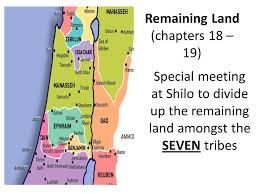
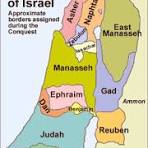
So, it makes perfect sense when God parcels out the Promised Land to each of the Twelve Tribes and clans.  By dividing the land, the Israelites took possession, settled, prospered and grew throughout the land promised to them generations earlier.  (Covering two chapters so it is long.  We cannot leave anyone out for all people count to God!)

Joshua 18

Division of the Rest of the Land

The whole assembly of the Israelites gathered at Shiloh and set up the tent of meeting there. The country was brought under their control, but there were still seven Israelite tribes who had not yet received their inheritance.

So Joshua said to the Israelites: “How long will you wait before you begin to take possession of the land that the Lord, the God of your ancestors, has given you? Appoint three men from each tribe. I will send them out to make a survey of the land and to write a description of it, according to the inheritance of each. Then they will return to me. You are to divide the land into seven parts. Judah is to remain in its territory on the south and the tribes of Joseph in their territory on the north. After you have written descriptions of the seven parts of the land, bring them here to me and I will cast lots for you in the presence of the Lord our God. The Levites, however, do not get a portion among you, because the priestly service of the Lord is their inheritance. And Gad, Reuben and the half-tribe of Manasseh have already received their inheritance on the east side of the Jordan. Moses the servant of the Lord gave it to them.”

As the men started on their way to map out the land, Joshua instructed them, “Go and make a survey of the land and write a description of it. Then return to me, and I will cast lots for you here at Shiloh in the presence of the Lord.” So the men left and went through the land. They wrote its description on a scroll, town by town, in seven parts, and returned to Joshua in the camp at Shiloh. 10 Joshua then cast lots for them in Shiloh in the presence of the Lord, and there he distributed the land to the Israelites according to their tribal divisions.

Allotment for Benjamin

11 The first lot came up for the tribe of Benjamin according to its clans. Their allotted territory lay between the tribes of Judah and Joseph:

12 On the north side their boundary began at the Jordan, passed the northern slope of Jericho and headed west into the hill country, coming out at the wilderness of Beth Aven. 13 From there it crossed to the south slope of Luz (that is, Bethel) and went down to Ataroth Addar on the hill south of Lower Beth Horon.

14 From the hill facing Beth Horon on the south the boundary turned south along the western side and came out at Kiriath Baal (that is, Kiriath Jearim), a town of the people of Judah. This was the western side.

15 The southern side began at the outskirts of Kiriath Jearim on the west, and the boundary came out at the spring of the waters of Nephtoah. 16 The boundary went down to the foot of the hill facing the Valley of Ben Hinnom, north of the Valley of Rephaim. It continued down the Hinnom Valley along the southern slope of the Jebusite city and so to En Rogel. 17 It then curved north, went to En Shemesh, continued to Geliloth, which faces the Pass of Adummim, and ran down to the Stone of Bohan son of Reuben. 18 It continued to the northern slope of Beth Arabah and on down into the Arabah. 19 It then went to the northern slope of Beth Hoglah and came out at the northern bay of the Dead Sea, at the mouth of the Jordan in the south. This was the southern boundary.

20 The Jordan formed the boundary on the eastern side.

These were the boundaries that marked out the inheritance of the clans of Benjamin on all sides.

21 The tribe of Benjamin, according to its clans, had the following towns:

Jericho, Beth Hoglah, Emek Keziz, 22 Beth Arabah, Zemaraim, Bethel, 23 Avvim, Parah, Ophrah, 24 Kephar Ammoni, Ophni and Geba—twelve towns and their villages.

25 Gibeon, Ramah, Beeroth, 26 Mizpah, Kephirah, Mozah, 27 Rekem, Irpeel, Taralah, 28 Zelah, Haeleph, the Jebusite city (that is, Jerusalem), Gibeah and Kiriath—fourteen towns and their villages.

This was the inheritance of Benjamin for its clans.

Allotment for Simeon

Joshua 19 The second lot came out for the tribe of Simeon according to its clans. Their inheritance lay within the territory of Judah. It included:

Beersheba (or Sheba),[a] Moladah, Hazar Shual, Balah, Ezem, Eltolad, Bethul, Hormah, Ziklag, Beth Markaboth, Hazar Susah, Beth Lebaoth and Sharuhen—thirteen towns and their villages;

Ain, Rimmon, Ether and Ashan—four towns and their villages— and all the villages around these towns as far as Baalath Beer (Ramah in the Negev).

This was the inheritance of the tribe of the Simeonites, according to its clans. The inheritance of the Simeonites was taken from the share of Judah, because Judah’s portion was more than they needed. So the Simeonites received their inheritance within the territory of Judah.

Allotment for Zebulun

10 The third lot came up for Zebulun according to its clans:

The boundary of their inheritance went as far as Sarid. 11 Going west it ran to Maralah, touched Dabbesheth, and extended to the ravine near Jokneam. 12 It turned east from Sarid toward the sunrise to the territory of Kisloth Tabor and went on to Daberath and up to Japhia. 13 Then it continued eastward to Gath Hepher and Eth Kazin; it came out at Rimmon and turned toward Neah. 14 There the boundary went around on the north to Hannathon and ended at the Valley of Iphtah El. 15 Included were Kattath, Nahalal, Shimron, Idalah and Bethlehem. There were twelve towns and their villages.

16 These towns and their villages were the inheritance of Zebulun, according to its clans.

Allotment for Issachar

17 The fourth lot came out for Issachar according to its clans. 18 Their territory included:

Jezreel, Kesulloth, Shunem, 19 Hapharaim, Shion, Anaharath, 20 Rabbith, Kishion, Ebez, 21 Remeth, En Gannim, En Haddah and Beth Pazzez. 22 The boundary touched Tabor, Shahazumah and Beth Shemesh, and ended at the Jordan. There were sixteen towns and their villages.

23 These towns and their villages were the inheritance of the tribe of Issachar, according to its clans.

Allotment for Asher

24 The fifth lot came out for the tribe of Asher according to its clans. 25 Their territory included:

Helkath, Hali, Beten, Akshaph, 26 Allammelek, Amad and Mishal. On the west the boundary touched Carmel and Shihor Libnath. 27 It then turned east toward Beth Dagon, touched Zebulun and the Valley of Iphtah El, and went north to Beth Emek and Neiel, passing Kabul on the left. 28 It went to Abdon,[b] Rehob, Hammon and Kanah, as far as Greater Sidon. 29 The boundary then turned back toward Ramah and went to the fortified city of Tyre, turned toward Hosah and came out at the Mediterranean Sea in the region of Akzib, 30 Ummah, Aphek and Rehob. There were twenty-two towns and their villages.

31 These towns and their villages were the inheritance of the tribe of Asher, according to its clans.

Allotment for Naphtali

32 The sixth lot came out for Naphtali according to its clans:

33 Their boundary went from Heleph and the large tree in Zaanannim, passing Adami Nekeb and Jabneel to Lakkum and ending at the Jordan. 34 The boundary ran west through Aznoth Tabor and came out at Hukkok. It touched Zebulun on the south, Asher on the west and the Jordan[c] on the east. 35 The fortified towns were Ziddim, Zer, Hammath, Rakkath, Kinnereth, 36 Adamah, Ramah, Hazor, 37 Kedesh, Edrei, En Hazor, 38 Iron, Migdal El, Horem, Beth Anath and Beth Shemesh. There were nineteen towns and their villages.

39 These towns and their villages were the inheritance of the tribe of Naphtali, according to its clans.

Allotment for Dan

40 The seventh lot came out for the tribe of Dan according to its clans. 41 The territory of their inheritance included:

Zorah, Eshtaol, Ir Shemesh, 42 Shaalabbin, Aijalon, Ithlah, 43 Elon, Timnah, Ekron, 44 Eltekeh, Gibbethon, Baalath, 45 Jehud, Bene Berak, Gath Rimmon, 46 Me Jarkon and Rakkon, with the area facing Joppa.

47 (When the territory of the Danites was lost to them, they went up and attacked Leshem, took it, put it to the sword and occupied it. They settled in Leshem and named it Dan after their ancestor.)

48 These towns and their villages were the inheritance of the tribe of Dan, according to its clans.

Allotment for Joshua

49 When they had finished dividing the land into its allotted portions, the Israelites gave Joshua son of Nun an inheritance among them, 50 as the Lord had commanded. They gave him the town he asked for—Timnath Serah in the hill country of Ephraim. And he built up the town and settled there.

51 These are the territories that Eleazar the priest, Joshua son of Nun and the heads of the tribal clans of Israel assigned by lot at Shiloh in the presence of the Lord at the entrance to the tent of meeting. And so they finished dividing the land.

WHAT DO WE LEARN—HOW DO WE RESPOND?

Seven more tribes stand ready to receive their inheritance, which was administered by Joshua. He also took possession of the town Timnath.  Remember the Levites do not have the inheritance of land because they serve God people as priests who care for the Tent of Meeting with all the tasks and responsibilities concerning the sacrifices to God on behalf of His people.  They are allotted land around the Tent of Meeting for their animals that provide food for their families.

Note that the children of Israel could not exercise full dominion over the land as its new tenants until each tribe had been assigned its portions. When this occurred, then the nation as a whole began to rule and have authority on the earth as God’s representatives.

Our response and calling from God/Jesus/Holy Spirit. We are representatives of Jesus when we believe and are saved by His grace!  We have full authority from Him to go and teach others, baptizing them in His Name! (Matthew 28:20)

We are called to be reconciled to God and be ambassadors of Christ to all we meet!  “All this is from God, who reconciled us to himself through Christ and gave us the ministry of reconciliation: that God was reconciling the world to himself in Christ, not counting people’s sins against them. And he has committed to us the message of reconciliation. We are therefore Christ’s ambassadors, as though God were making his appeal through us. We implore you on Christ’s behalf: Be reconciled to God. God made him who had no sin to be sin for us, so that in him we might become the righteousness of God.” 2 Corinthians 5:18-21 In Jesus Name, for our good and His glory, Amen!

Posted in Uncategorized | Tagged , , , , | Leave a comment

GO—TAKE POSSESSION OF GOD’S PROMISE

More often that not, with tight fisted hands, we hold on for dear life what does not give life at all.  We hold on to things for the temporary pleasure they give until the newness fades and the excitement of owning it disappears.  We hold on to ideas that are dreamed only from a human perspective and later prove unreliable and untrue.  We hold on to what we think we want and should have until we see that what we cling to is hurting us and costs what we can no longer pay.  We hold on to pride which drives our need to please of what others which exhaust us completely of all that is in us. We cling to the false assumption that we can force or cajole a fickle humanity to love us by what we do for them.  We hold on to wanting more; more land, money, and notoriety with the goal to gain more influence and importance in this world. 

All we hold on to in this world is not God’s ultimate best for us in His world of love, mercy, and grace.  What God offers is peace and calm with power and strength to overcome in the middle of stormy conditions and circumstances beyond our control. 

The Promised Land was given to the Israelites after setting them free from the bondage of slavery to the Egyptians.  God gave His people a new beginning with borders.  God gave commands with purpose for their protection.  Love the Lord your God with all your heart, mind, and soul.  Love others like you love yourself.  Let go of all manmade idols and worship God, your God alone.  But they still could not let go of everything. When they did not let go; it did not go well for them.  God knew. God still loved His created.

Joshua 16-17

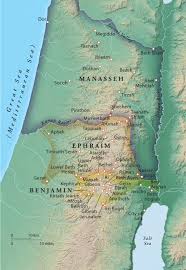
Allotment for Ephraim and Manasseh

The allotment for Joseph began at the Jordan, east of the springs of Jericho, and went up from there through the desert into the hill country of BethelIt went on from Bethel (that is, Luz), crossed over to the territory of the Arkites in Ataroth, descended westward to the territory of the Japhletites as far as the region of Lower Beth Horon and on to Gezer, ending at the Mediterranean Sea.

So Manasseh and Ephraim, the descendants of Joseph, received their inheritance.

This was the territory of Ephraim, according to its clans:

The boundary of their inheritance went from Ataroth Addar in the east to Upper Beth Horon and continued to the Mediterranean Sea. From Mikmethath on the north it curved eastward to Taanath Shiloh, passing by it to Janoah on the east. Then it went down from Janoah to Ataroth and Naarah, touched Jericho and came out at the Jordan. From Tappuah the border went west to the Kanah Ravine and ended at the Mediterranean Sea. This was the inheritance of the tribe of the Ephraimites, according to its clans. It also included all the towns and their villages that were set aside for the Ephraimites within the inheritance of the Manassites.

10 They did not dislodge the Canaanites living in Gezer; to this day the Canaanites live among the people of Ephraim but are required to do forced labor.

17 This was the allotment for the tribe of Manasseh as Joseph’s firstborn, that is, for Makir, Manasseh’s firstborn. Makir was the ancestor of the Gileadites, who had received Gilead and Bashan because the Makirites were great soldiers. So this allotment was for the rest of the people of Manasseh—the clans of Abiezer, Helek, Asriel, Shechem, Hepher and Shemida. These are the other male descendants of Manasseh son of Joseph by their clans.

Now Zelophehad son of Hepher, the son of Gilead, the son of Makir, the son of Manasseh, had no sons but only daughters, whose names were Mahlah, Noah, Hoglah, Milkah and Tirzah. They went to Eleazar the priest, Joshua son of Nun, and the leaders and said, “The Lord commanded Moses to give us an inheritance among our relatives.” So Joshua gave them an inheritance along with the brothers of their father, according to the Lord’s command. Manasseh’s share consisted of ten tracts of land besides Gilead and Bashan east of the Jordan, because the daughters of the tribe of Manasseh received an inheritance among the sons. The land of Gilead belonged to the rest of the descendants of Manasseh.

The territory of Manasseh extended from Asher to Mikmethath east of Shechem. The boundary ran southward from there to include the people living at En Tappuah. (Manasseh had the land of Tappuah, but Tappuah itself, on the boundary of Manasseh, belonged to the Ephraimites.) Then the boundary continued south to the Kanah Ravine. There were towns belonging to Ephraim lying among the towns of Manasseh, but the boundary of Manasseh was the northern side of the ravine and ended at the Mediterranean Sea. 10 On the south the land belonged to Ephraim, on the north to Manasseh. The territory of Manasseh reached the Mediterranean Sea and bordered Asher on the north and Issachar on the east.

11 Within Issachar and Asher, Manasseh also had Beth Shan, Ibleam and the people of Dor, Endor, Taanach and Megiddo, together with their surrounding settlements (the third in the list is Naphoth[a]).

12 Yet the Manassites were not able to occupy these towns, for the Canaanites were determined to live in that region. 13 However, when the Israelites grew stronger, they subjected the Canaanites to forced labor but did not drive them out completely.

14 The people of Joseph said to Joshua, “Why have you given us only one allotment and one portion for an inheritance? We are a numerous people, and the Lord has blessed us abundantly.”

15 “If you are so numerous,” Joshua answered, “and if the hill country of Ephraim is too small for you, go up into the forest and clear land for yourselves there in the land of the Perizzites and Rephaites.”

16 The people of Joseph replied, “The hill country is not enough for us, and all the Canaanites who live in the plain have chariots fitted with iron, both those in Beth Shan and its settlements and those in the Valley of Jezreel.”

17 But Joshua said to the tribes of Joseph—to Ephraim and Manasseh—“You are numerous and very powerful. You will have not only one allotment 18 but the forested hill country as well. Clear it, and its farthest limits will be yours; though the Canaanites have chariots fitted with iron and though they are strong, you can drive them out.”

WHAT DO WE LEARN—HOW DO WE RESPOND?

We learn that all this history of Joshua of how the promised lands were allotted and taken hold of are setting the stage for God’s greatest Promise!  Later, God informs His prophets to tell of The Promise of all times that is to come! 

The Promise was His Son, Jesus, the Messiah, “the one who would save all people from all nations from all their sins.”  God spoke through his raised-up prophets, telling His people to get ready for a suffering, compassionate Savior who would be the once and for all sacrifice for all the sins of the world.  Only a remnant believed what God said, however. Fortunately, our unfaithfulness did and does not stop a faithful Father who loves us! It is a good thing that God is God and does what He says regardless of what mankind currently thinks or does! 

Jesus came to an oppressed people with great need.  Jesus was, is, and is to come the promise of eternal life but we must let go of our grip on the life we have created.  We cannot hold death in one hand and life in the other.  We must take hold with all that is in us and get a firm grip on the Promise who set us free from our sins and gave us full access to the very throne of our Creator, God. Jesus fully explained the lose to gain life when He came and walked with humanity, specifically his disciples in training;

  • “Those who try to gain their own life will lose it; but those who lose their life for my sake will gain it.” Matthew 10:39
  • “For if you want to save your own life, you will lose it; but if you lose your life for my sake, you will find it.” Matthew 16:25
  • “For if you want to save your own life, you will lose it; but if you lose your life for me and for the gospel, you will save it.” Mark 8:35
  • For if you want to save your own life, you will lose it, but if you lose your life for my sake, you will save it.” Luke 9:24
  • Those who love their own life will lose it; those who hate their own life in this world will keep it for life eternal.” John 12:25

When God/Jesus/Holy Spirit repeats a commanding truth; it is important for us to listen, trust, and obey!  Jesus did not seek to have earthly power like the Pharisees and Sadducees. He sought to build a kingdom that would last into eternity. He told his followers that by giving their lives to him, they would find true life.

“Let us hold tightly without wavering to the hope we affirm, for God can be trusted to keep his promise.” Hebrews 10:23

Need Courage?

Could you use some courage today?  I could!  Are we backing down more than we’re standing up? If so, let Jesus, The Promise, lead us up the mountain again. Let Him remind us why we should “fear not”, worry less, and trust more. Earthly fears are no fears at all. All the mystery is revealed. We can be assured our final destination is guaranteed. Jesus answered the big question of eternity, so that the little questions of life fall into perspective. This is LIFE to the full for a believer and follower of Jesus! So, get a grip!

Lord,

Cleanse my heart of all that is not of you.  Renew my mind.  Transform my thinking and behaviors.  Refresh my soul with your tender, new mercies for today.  Restore the joy of your salvation at work within me.  For only when I let go of my control am I able to get a firm grip on you.  Then your peace comes and abides in all circumstances.  I trust you, dear Jesus!

In Jesus Name, Amen

Posted in Uncategorized | Tagged , , , , | Leave a comment

SETTLING IN

All things are new when people move to another home in a another part of town, another state or even a new country.  Everything is new and different from all you knew before. We have moved a few times.  Looking back upon our moving memories; we naturally developed an order to the process of moving.  First of all, we learned to label the boxes according to the rooms the contents belonged. When unpacking the truck, the boxes went to their assigned rooms.  But we did not begin unpacking them!  That’s too overwhelming!  All boxes are removed from the trucks and vans before any unpacking begins!  The next thing to accomplish was typically food to nourish our tired bodies acquired from a local fast food place. After eating, the goal was to set up beds in each room for rest that night.  Unlabeled boxes of last minute things went to the garage.  If boxes filled the room; then the excess also went to the garage for unpacking later. 

After a few days of unpacking and placing our stuff in new places; we then began to settle into our new place of residence.  Then it was time to explore the area in which we have moved.  Of course, we researched it, read about it, and saw pictures of the area but to see it in person and imagine ourselves as a part of it all was part of the process of “settling in.”

Now, imagine hundreds of people, their livestock and their stuff of the clans of the tribe of Judah moving into their assigned land promised by God. Caleb has been given the task to give directions to them that explains their new “digs” in detail.  South, east, north and west boundaries are given with specific landmarks as guides.  God does not leave anything left unsaid as He helps Judah’s family settle in.

Joshua 15

Allotment for Judah

The allotment for the tribe of Judah, according to its clans, extended down to the territory of Edom, to the Desert of Zin in the extreme south.

Their southern boundary started from the bay at the southern end of the Dead Sea, crossed south of Scorpion Pass, continued on to Zin and went over to the south of Kadesh Barnea. Then it ran past Hezron up to Addar and curved around to Karka. It then passed along to Azmon and joined the Wadi of Egypt, ending at the Mediterranean Sea. This is their southern boundary.

The eastern boundary is the Dead Sea as far as the mouth of the Jordan.

The northern boundary started from the bay of the sea at the mouth of the Jordan, went up to Beth Hoglah and continued north of Beth Arabah to the Stone of Bohan son of Reuben. The boundary then went up to Debir from the Valley of Achor and turned north to Gilgal, which faces the Pass of Adummim south of the gorge. It continued along to the waters of En Shemesh and came out at En Rogel. Then it ran up the Valley of Ben Hinnom along the southern slope of the Jebusite city (that is, Jerusalem). From there it climbed to the top of the hill west of the Hinnom Valley at the northern end of the Valley of Rephaim. From the hilltop the boundary headed toward the spring of the waters of Nephtoah, came out at the towns of Mount Ephron and went down toward Baalah (that is, Kiriath Jearim). 10 Then it curved westward from Baalah to Mount Seir, ran along the northern slope of Mount Jearim (that is, Kesalon), continued down to Beth Shemesh and crossed to Timnah. 11 It went to the northern slope of Ekron, turned toward Shikkeron, passed along to Mount Baalah and reached Jabneel. The boundary ended at the sea.

12 The western boundary is the coastline of the Mediterranean Sea.

These are the boundaries around the people of Judah by their clans.

13 In accordance with the Lord’s command to him, Joshua gave to Caleb son of Jephunneh a portion in Judah—Kiriath Arba, that is, Hebron. (Arba was the forefather of Anak.) 14 From Hebron Caleb drove out the three Anakites—Sheshai, Ahiman and Talmai, the sons of Anak. 15 From there he marched against the people living in Debir (formerly called Kiriath Sepher). 16 And Caleb said, “I will give my daughter Aksah in marriage to the man who attacks and captures Kiriath Sepher.” 17 Othniel son of Kenaz, Caleb’s brother, took it; so Caleb gave his daughter Aksah to him in marriage.

18 One day when she came to Othniel, she urged him to ask her father for a field. When she got off her donkey, Caleb asked her, “What can I do for you?”

19 She replied, “Do me a special favor. Since you have given me land in the Negev, give me also springs of water.” So Caleb gave her the upper and lower springs.

20 This is the inheritance of the tribe of Judah, according to its clans:

21 The southernmost towns of the tribe of Judah in the Negev toward the boundary of Edom were:

Kabzeel, Eder, Jagur, 22 Kinah, Dimonah, Adadah, 23 Kedesh, Hazor, Ithnan, 24 Ziph, Telem, Bealoth, 25 Hazor Hadattah, Kerioth Hezron (that is, Hazor), 26 Amam, Shema, Moladah, 27 Hazar Gaddah, Heshmon, Beth Pelet, 28 Hazar Shual, Beersheba, Biziothiah, 29 Baalah, Iyim, Ezem, 30 Eltolad, Kesil, Hormah, 31 Ziklag, Madmannah, Sansannah, 32 Lebaoth, Shilhim, Ain and Rimmon—a total of twenty-nine towns and their villages.

33 In the western foothills:

Eshtaol, Zorah, Ashnah, 34 Zanoah, En Gannim, Tappuah, Enam, 35 Jarmuth, Adullam, Sokoh, Azekah, 36 Shaaraim, Adithaim and Gederah (or Gederothaim)[c]—fourteen towns and their villages.

37 Zenan, Hadashah, Migdal Gad, 38 Dilean, Mizpah, Joktheel, 39 Lachish, Bozkath, Eglon, 40 Kabbon, Lahmas, Kitlish, 41 Gederoth, Beth Dagon, Naamah and Makkedah—sixteen towns and their villages.

42 Libnah, Ether, Ashan, 43 Iphtah, Ashnah, Nezib, 44 Keilah, Akzib and Mareshah—nine towns and their villages.

45 Ekron, with its surrounding settlements and villages; 46 west of Ekron, all that were in the vicinity of Ashdod, together with their villages; 47 Ashdod, its surrounding settlements and villages; and Gaza, its settlements and villages, as far as the Wadi of Egypt and the coastline of the Mediterranean Sea.

48 In the hill country:

Shamir, Jattir, Sokoh, 49 Dannah, Kiriath Sannah (that is, Debir), 50 Anab, Eshtemoh, Anim, 51 Goshen, Holon and Giloh—eleven towns and their villages.

52 Arab, Dumah, Eshan, 53 Janim, Beth Tappuah, Aphekah, 54 Humtah, Kiriath Arba (that is, Hebron) and Zior—nine towns and their villages.

55 Maon, Carmel, Ziph, Juttah, 56 Jezreel, Jokdeam, Zanoah, 57 Kain, Gibeah and Timnah—ten towns and their villages.

58 Halhul, Beth Zur, Gedor, 59 Maarath, Beth Anoth and Eltekon—six towns and their villages.[d]

60 Kiriath Baal (that is, Kiriath Jearim) and Rabbah—two towns and their villages.

61 In the wilderness:

Beth Arabah, Middin, Sekakah, 62 Nibshan, the City of Salt and En Gedi—six towns and their villages.

63 Judah could not dislodge the Jebusites, who were living in Jerusalem; to this day the Jebusites live there with the people of Judah.

WHAT DO WE LEARN—HOW DO WE RESPOND?

“When God leads you to it; He’ll lead you through it all.” What this often quoted phrase means is that there is purpose in all God’s directions to us.  We begin to realize that purpose as we step forward to listen, trust, and obey what He says—in all the details—leaving “nothing left undone.” (Joshua 11)

The inheritance of the rest of the tribe of Judah is described in great detail.  Jerusalem is part of the package but it is inhabited by the Jebusites, a group that will not leave nor be driven out.  We will learn later, that they would hold it temporarily (Judges 1:8), and then King David would capture it permanently and make it the capital city (2 Samuel 5:6–10).  Jesus will come from the hereditary line of David and be born in Bethlehem, now called Ephrathah, (verse 59) near Jerusalem.  Sometimes “settling in” requires more time (maybe decades and centuries more) with great effort!  Does God give up? Oh, no!  God will prevail with His mission to save the world through Jesus, His Son.  Judah is where it will all come together and be fulfilled.

Pause to reflect.  I am—prayerfully.

Are you in a time of settling in to a new situation or circumstance, good or challenging? Who do you look to for help in the process? Who gives you “order” with the ways to accomplish the tasks involved with settling in? Was or is the move God-led?  How will God use this move for my good and His glory?

Later, does settling in become too settled?  In other words is our quest to get settled into a new normal trump our dependance on God with expectant readiness asking, “What’s next, Papa?”  Settling comes with a warning label:  What do we “settle” for in our daily lives as we become comfortable versus what God wants to do in and through us still—things He planned long ago for us—things to give us hope and future—things not to harm us but to help us be totally dependent on Him for our good and His glory! 

Don’t become too settled; this world is not our final home!

“For I know the plans I have for you,” declares the Lord, “plans to prosper you and not to harm you, plans to give you hope and a future.” Jeremiah 29:11 This powerful verse, quoted by the world, is taken out of context often and most do not realize the depth of God’s love being expressed between the lines.  Max Lucado helps us to go deeper and writes of the majesty of God’s “plans” for us;

“God is doing in our generation what he did in ancient Egypt: redeeming a remnant of people. In his final book God reiterates his vision: “A great multitude that no one could count, from every nation, tribe, people, and language, standing before the throne and before the Lamb. They were wearing white robes and were holding palm branches in their hands. And they cried out in a loud voice: ‘Salvation belongs to our God, who sits on the throne, and to the Lamb’” (Revelation 7:9–10).

This dream drives the heart of God. His purpose from all eternity is to prepare a family to indwell the kingdom of God. “ ‘I know the plans I have for you,’ declares the LORD, ‘plans to prosper you and not to harm you, plans to give you hope and a future’ ” (Jeremiah 29:11, emphasis added). Oh, the beauty of the thrice-repeated word plans. God is plotting for our good. In all the setbacks and slipups, he is ordaining the best for our future. Every event of our days is designed to draw us toward our God and our destiny.

To the degree that we believe and accept his vision for our lives, we will get through life. When people junk us into the pit, we will stand up. God can use this for good. When family members sell us out, we will climb to our feet. God will recycle this pain. Falsely accused? Wrongly imprisoned? Utterly abandoned? We may stumble, but we do not fall. Why? God “works out everything in conformity with the purpose of his will” (Ephesians 1:11). Everything means everything. No exceptions. Everything in your life is leading to a climactic moment in which Jesus will “reconcile to himself all things, whether things on earth or things in heaven, by making peace through his blood, shed on the cross” (Colossians 1:20).

At the right time, in God’s timing, you will be taken home to Canaan, our promised home of eternal life. But till then, stay close to your Brother.” Lucado, Encouraging Word Bible

Love God. Love Each Other.  All of God’s commands hang on these two. —Jesus

Lord,

Thank you, thank you, thank you for leading our thoughts to a deeper understanding of your love, purpose, and plan for us.  I will meditate on your words all day long.

In Jesus Name, Amen
Posted in Uncategorized | Tagged , , , , | Leave a comment

WHOLEHEARTEDLY

“I love you with my whole heart!” This is said often by two people who have decided to marry and build a life together.  Wholehearted love means that our hearts are committed to each other and no one else.  The words are not said “half-heartedly” in jest but from a focused love meant only for the object of our affection.

Years ago, I read a story of “The Splendid Prince” by Kierkegaard, a Danish theologian.  It is the story of a prince who falls in love with a beautiful peasant girl who lives in the poor part of one of his city. The prince wants to marry her, but he wants the girl to marry him for love and not just because he’s a rich prince. How can he do that?

As a prince, he could order her to marry him. But even a prince wants his bride to marry him because she wants to because of her love for him. As a wealthy young man, he could impress her with his wealth and power; But he couldn’t be sure whether she married him for love or for money.  So the prince came up with another idea. He decided to give up his position for a while. He moved into the girl’s village and lived among the people, wearing the same kind of clothing they wore. In time, the girl grew to love the prince for who he was and because he had first loved her.

PLOT TWIST…

The prince determined that He couldn’t bear to live without her, he asked her to be His bride. The angels in heaven listened expectantly as she accepted his proposal. The prince promised his bride that He would come back for her soon, and the peasant turned princess pledged to faithfully await his return.  Then the prince came to the peasant girl and told her he had to go away for a while but would soon return.  He told her repeatedly how much he loved her and that his love was forever. 

But the adventurous peasant girl’s wholehearted love began into half-hearted behaviors.  First, she never told anyone of her love for him or their engagement!  She never acted as if he was her espoused bride!  She would flirt and date others and go to wild parties. By the way she lived you wouldn’t even know she’s the bride of a perfect prince. More frequently than not, you couldn’t tell the difference between the bride and any of the other peasant girls in the village. You would expect the bride to be always thinking about the coming wedding, but she rarely ever mentioned it. You would think that her every waking moment would be lived out in anticipation and preparation for the coming of her prince.

This story gets even more weird.  The peasant girl is nothing more than average. At her best she is plain, but at her worst she can be just plain ugly in the way she treats others. There are times when she is cranky and moody, and she rarely ever achieves all she could. To look at her from anyone else’s eyes you would never believe she was worth much. But if you could see her through the eyes of the prince, who loved her wholeheartedly and relentlessly, you would believe that she is “to die for.”  Her prince on the other hand was the greatest “catch” of all whose love and care was forever! 

Can you imagine a peasant girl fortunate enough to be the object of a perfect prince’s eternal love? You would expect her to be captivated by His love and filled with a sense of wonder that she was fortunate enough to be loved by Him. You would think that she would be careful to remain pure in anticipation of the return of her royal groom. Instead, to look at her you might wonder if she even remembers she is engaged at all. How could a peasant forget about her prince? Is it possible for a bride to forget her groom? 

“I would never act like that,” we think with a huff.  But we, the Bride of Christ, have been espoused to Jesus Christ who is coming back for us, to live a forever life with Him.  We wonder why the peasant girl’s behavior didn’t change when she said yes to her prince; but church we sometimes do the same when we say yes to church activities and religion but have not accepted Jesus’ invitation to be our Savior and ignore God’s longing to be in a growing, intimate relationship with Him as Lord of our lives!  Jesus changes everyone who desires a relationship with Him.  We need a change of heart that is real and fully committed to our Savior and Lord.  When Saul had his encounter on the road to Damascus in Acts 9 it changed his life, his name and his behavior. Until the Bride of Christ has an encounter with Jesus, the living, risen Savior, her behavior won’t change.

Kierkegaard used this illustration to teach us of the ministry of Jesus. When the curtain gets pulled back on the mount of transfiguration, we see the Lord as he really is, in all his splendor. But he does not force us to love him. Nor does he try to overwhelm us with his power. He simply invites us to respond to the invitation of his Father: “This is my Son, whom I love. Listen to him!” 

Pause to thank God for a way to reconcile to Him through his Son, Jesus—our patient and long-suffering Savior who want to be our Lord for our good and His glory! 

We also thank God for those like Joshua and Caleb, the two spies assigned with ten other spies to go survey the land.  These two men displayed their wholehearted love for God by telling of the goodness of the land—just as God promised. The other men told only of the dangers and that it would be impossible to possess.  Joshua and Caleb’s obedience to God demonstrated their wholehearted love for God.  God rewarded them with wisdom, courage, strength beyond their own abilities, and now—land of their own. 

All who believe, wholeheartedly love, and listen to God/Jesus/Holy Spirit with all our hearts, minds, and souls and believe that Jesus, our Prince of peace came to save us from our sins, are promised to be joint heirs with Jesus with the bonus of eternal life with Him in heaven!  Who do you love wholeheartedly?  Our belief and love will be reflected in our behaviors.

Joshua 14

Division of the Land West of the Jordan

Now these are the areas the Israelites received as an inheritance in the land of Canaan, which Eleazar the priest, Joshua son of Nun and the heads of the tribal clans of Israel allotted to them. Their inheritances were assigned by lot to the nine and a half tribes, as the Lord had commanded through Moses. Moses had granted the two and a half tribes their inheritance east of the Jordan but had not granted the Levites an inheritance among the rest, for Joseph’s descendants had become two tribes—Manasseh and Ephraim. The Levites received no share of the land but only towns to live in, with pasturelands for their flocks and herds. So the Israelites divided the land, just as the Lord had commanded Moses.

Allotment for Caleb

Now the people of Judah approached Joshua at Gilgal, and Caleb son of Jephunneh the Kenizzite said to him, “You know what the Lord said to Moses the man of God at Kadesh Barnea about you and me. I was forty years old when Moses the servant of the Lord sent me from Kadesh Barnea to explore the land. And I brought him back a report according to my convictions, but my fellow Israelites who went up with me made the hearts of the people melt in fear. I, however, followed the Lord my God wholeheartedly. So on that day Moses swore to me, ‘The land on which your feet have walked will be your inheritance and that of your children forever, because you have followed the Lord my God wholeheartedly.’

10 “Now then, just as the Lord promised, he has kept me alive for forty-five years since the time he said this to Moses, while Israel moved about in the wilderness. So here I am today, eighty-five years old! 11 I am still as strong today as the day Moses sent me out; I’m just as vigorous to go out to battle now as I was then. 12 Now give me this hill country that the Lord promised me that day. You yourself heard then that the Anakites were there and their cities were large and fortified, but, the Lord helping me, I will drive them out just as he said.”

13 Then Joshua blessed Caleb son of Jephunneh and gave him Hebron as his inheritance. 14 So Hebron has belonged to Caleb son of Jephunneh the Kenizzite ever since, because he followed the Lord, the God of Israel, wholeheartedly15 (Hebron used to be called Kiriath Arba after Arba, who was the greatest man among the Anakites.)

Then the land had rest from war.

WHAT DO WE LEARN—HOW DO WE RESPOND?

The Israelites successfully overtook much of Canaan, but more land remained to possess. Caleb was one of the twelve original spies to explore the promised land and return with a positive report. He was determined to obtain the land God had promised him, even though he was no longer a young man.  Like Caleb, when we devote ourselves wholeheartedly to the Lord’s cause, God is faithful to give us what He promised—Him!  Where God guides; He provides wholehearted help:

  • “…being confident of this, that he who began a good work in you will carry it on to completion until the day of Christ Jesus.” Philippians 1:6
  • “Whatever you do, work at it with all your heart, as working for the Lord, not for human masters,since you know that you will receive an inheritance from the Lord as a reward. It is the Lord Christ you are serving.” Colossians 3:23-24
  • “For the eyes of the Lord range throughout the earth to strengthen those whose hearts are fully committed to him.” 2 Chronicles 16:9
  • Don’t burn out; keep yourselves fueled and aflame. Be alert servants of the Master, cheerfully expectant. Don’t quit in hard times; pray all the harder. Help needy Christians; be inventive in hospitality.” Romans 12:11-12, MSG

These are just a few of excepts from Paul, the missionary who loved God wholeheartedly and sacrificially.  His mission was to know and be like Christ (Philippians 3:10) in all that he thought, said, and did.

Wholehearted love for God results in His blessing of life transformation by the power of His Holy Spirit living in us—All for our good and His glory!  Say yes to Jesus and enjoy an intimate loving relationship with God forever!

Lord,

Thank you for saving my soul and making me whole. Thank you for showing the way to real life guided by your real Love for us. Thank you for loving us the way you do while transforming us to love others like you love us.  I love you, Lord with all my heart, all my mind, and all my soul.  Fill me of all you know I need for today.  Remove all that does not belong.  Transform me.  Make me a blessing to someone today so they will know your love, too.

In Jesus Name, Amen
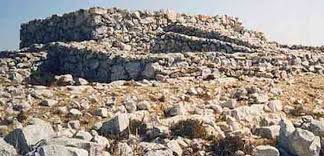
Posted in Uncategorized | Tagged , , , , | Leave a comment