
DREAMING JAILMATES

When you think no one listens, someone comes along and listens intently to you.  Real listeners wait until you are finished, pause to consider what you have said, then respond.  Because they listen in this way; we put our trust in them as we expose our deepest thoughts and desires.  Listeners are valued people in a world of massive distractions and noise pollutions that affect our ability to hear and understand. 

When you are a “captive audience,” you tend to listen more intently to what others have to say. 

Genesis 40

The Cupbearer and the Baker

Some time later, the cupbearer and the baker of the king of Egypt offended their master, the king of Egypt. Pharaoh was angry with his two officials, the chief cupbearer and the chief baker, and put them in custody in the house of the captain of the guard, in the same prison where Joseph was confinedThe captain of the guard assigned them to Joseph, and he attended them.

After they had been in custody for some time, each of the two men—the cupbearer and the baker of the king of Egypt, who were being held in prison—had a dream the same night, and each dream had a meaning of its own.

When Joseph came to them the next morning, he saw that they were dejected. So he asked Pharaoh’s officials who were in custody with him in his master’s house, “Why do you look so sad today?”

“We both had dreams,” they answered, “but there is no one to interpret them.”

Then Joseph said to them, “Do not interpretations belong to God? Tell me your dreams.”

So the chief cupbearer told Joseph his dream. He said to him, “In my dream I saw a vine in front of me, 10 and on the vine were three branches. As soon as it budded, it blossomed, and its clusters ripened into grapes. 11 Pharaoh’s cup was in my hand, and I took the grapes, squeezed them into Pharaoh’s cup and put the cup in his hand.”

12 “This is what it means,” Joseph said to him. “The three branches are three days. 13 Within three days Pharaoh will lift up your head and restore you to your position, and you will put Pharaoh’s cup in his hand, just as you used to do when you were his cupbearer. 14 But when all goes well with you, remember me and show me kindness; mention me to Pharaoh and get me out of this prison. 15 I was forcibly carried off from the land of the Hebrews, and even here I have done nothing to deserve being put in a dungeon.”

16 When the chief baker saw that Joseph had given a favorable interpretation, he said to Joseph, “I too had a dream: On my head were three baskets of bread. 17 In the top basket were all kinds of baked goods for Pharaoh, but the birds were eating them out of the basket on my head.”

18 “This is what it means,” Joseph said. “The three baskets are three days. 19 Within three days Pharaoh will lift off your head and impale your body on a pole. And the birds will eat away your flesh.”
20 Now the third day was Pharaoh’s birthday, and he gave a feast for all his officials. He lifted up the heads of the chief cupbearer and the chief baker in the presence of his officials: 21 He restored the chief cupbearer to his position, so that he once again put the cup into Pharaoh’s hand— 22 but he impaled the chief baker, just as Joseph had said to them in his interpretation.

23 The chief cupbearer, however, did not remember Joseph; he forgot him.

WHAT DO WE LEARN—HOW DO WE RESPOND?

Even though Joseph’s brothers sold him into slavery, God used the situation to bless Joseph. First, an Egyptian officer entrusted his household to Joseph. When Joseph rejected the sexual advances of the officer’s wife, she falsely accused Joseph of rape and had him jailed. Again, even in prison, God developed Joseph’s character.

To fully experience God’s power, leaders must often endure hardship. Then they emerge to make their contribution—God’s way, in His perfect timing. 

The apostle Paul, the great missionary church planter and advisor, relates his suffering as the trials of weakness he needed to realize the strength and power of God!  “I know I sound like a madman, but I have served him far more! I have worked harder, been put in prison more often, been whipped times without number, and faced death again and again. Five different times the Jewish leaders gave me thirty-nine lashes. Three times I was beaten with rods. Once I was stoned. Three times I was shipwrecked. Once I spent a whole night and a day adrift at sea. I have traveled on many long journeys. I have faced danger from rivers and from robbers. I have faced danger from my own people, the Jews, as well as from the Gentiles. I have faced danger in the cities, in the deserts, and on the seas. And I have faced danger from men who claim to be believers but are not.I have worked hard and long, enduring many sleepless nights. I have been hungry and thirsty and have often gone without food. I have shivered in the cold, without enough clothing to keep me warm.  Then, besides all this, I have the daily burden of my concern for all the churches. Who is weak without my feeling that weakness? Who is led astray, and I do not burn with anger?If I must boast, I would rather boast about the things that show how weak I am. God, the Father of our Lord Jesus, who is worthy of eternal praise, knows I am not lying.” 2 Corinthians 23-31, NIV
When Paul prayed to have his “thorn” of pain that caused another weakness, God answered with more power and strength to overcome!  “Then he said to me, “My grace is sufficient for you, for my power is made perfect in weakness.” Therefore, I will boast all the more gladly about my weaknesses, so that Christ’s power may rest on me. That is why, for Christ’s sake, I delight in weaknesses, in insults, in hardships, in persecutions, in difficulties. For when I am weak, then I am strong.” 2 Corinthians 12:9-11

God knows what He is doing!Trust Him.

Believer in God or not, God speaks in and through all people, created by Him, made in His own image.  This story of God working in and through the Egyptian king Pharoah, his cupbearer, his baker, along with Joseph who is the leader of all the jail mates; is proof that God is still in control of the situation, works through all kinds of people.  At the right time, His time, He will bring resolution for Joseph who is learning to be an obedient prophet and a leader guided by God’s wisdom, power, and strength. 

The cupbearer may have forgotten Joseph; but God did not. 

There is no one on earth that God does not love—”while we were yet sinners”—unbelievers, God demonstrated His love to the world by sending Jesus to pay for our sins.  He always has and always will love us.  The greatest demonstration of His love provided the Way out the mess we have made of our lives who live without Him.  The Way, the one and only Way, is Jesus, His Son.  God has not forgotten us.

God often develops leaders through humility and suffering. If you have a position of leadership, realize that suffering and success both come with the job. Both build character and ability. Take heart and be encouraged by the examples of Joseph and Jesus, two leaders who rose above suffering to lead, love, and forgive with hearts of mercy and grace.

It is God who will fill your souls with the joy of knowing He loves and His working on our behalf in Jesus Name for His glory. This joy is the joy Paul talks about that exists in our inner souls who believe God.  It is a joy that keeps our heads above the high waters of suffering, slander from others because we follow Jesus, with attacks on our character. 

Our response?

The quicker we can accept our problems today as opportunities for growth; the waves of God’s unending, eternal joy of His salvation at work within us will wash over us. His Peace is the gift He pours over us in the process of this growth.  His strength carries us in our weakness! “I will never leave or forsake you” is a promise that is firmly kept.

I know. He has done that for me.  Praise God from whom all blessings flow. 

Need help?  Look up!

I lift up my eyes to the hills.
    From where does my help come?
My help comes from the Lord,
    who made heaven and earth.

He will not let your foot be moved;
    he who keeps you will not slumber.
Behold, he who keeps Israel
    will neither slumber nor sleep.

The Lord is your keeper;
    the Lord is your shade on your right hand.
The sun shall not strike you by day,
    nor the moon by night.

The Lord will keep you from all evil;
    he will keep your life.
The Lord will keep
    your going out and your coming in
    from this time forth and forevermore. Psalm 121

Lord,

Thank you for your rescue, help in times of troubles, provisions when we need it most, protection from our enemies—all because you love us. Thank you for your blessings of salvation that restores our joy—even in suffering. You are my strength in my weakness.

In Jesus Name, For Your Glory, Amen

Posted in Uncategorized | Tagged , , , , | Leave a comment

GREAT BLESSINGS—GREAT RESPONSIBILITES

“His master replied, ‘Well done, good and faithful servant! You have been faithful with a few things; I will put you in charge of many things. Come and share your master’s happiness!’”—Jesus’ story of trustworthy servants with integrity, Matthew 25:23

“The Lord was with Joseph” will be said many times in the story of God in the life of Joseph. It is the Lord who shows Joseph how to live a life of integrity that leads to being someone others can trust.  Joseph, favored son of Jacob, his father of great wealth because the Lord was with him, is now a slave. 

Joseph, purchased and paid for in full by his master, does what he is told as a servant and is very successful in all he does.  He is trustworthy, can be counted on, so he is immediately put in charge over all the other servants as well as the management of his master’s household.  We must remember that Joseph is still a young man but has wisdom beyond his years it seems.  Joseph is different and stands out among the other servants. The difference is “the Lord is with Joseph” guiding him in all he thinks, says, and does.  Joseph obeyed and God blessed him with His character as he matured into the man God was molding and shaping.  With great blessings come great responsibilities.

The Enemy hates it when God’s people are blessed with this growing maturity of character and succeed in their work; so he tempts Joseph.  When that doesn’t work, he works through his master’s wife to lie about Joseph.  But still, through it all—the Lord was with Joseph—and others quickly recognize this truth.

Genesis 39

Joseph and Potiphar’s Wife

Now Joseph had been taken down to Egypt. Potiphar, an Egyptian who was one of Pharaoh’s officials, the captain of the guard, bought him from the Ishmaelites who had taken him there.

The Lord was with Joseph so that he prospered, and he lived in the house of his Egyptian master. When his master saw that the Lord was with him and that the Lord gave him success in everything he did, Joseph found favor in his eyes and became his attendant. Potiphar put him in charge of his household, and he entrusted to his care everything he owned. From the time he put him in charge of his household and of all that he owned, the Lord blessed the household of the Egyptian because of Joseph. The blessing of the Lord was on everything Potiphar had, both in the house and in the field. So Potiphar left everything he had in Joseph’s care; with Joseph in charge, he did not concern himself with anything except the food he ate.

Now Joseph was well-built and handsomeand after a while his master’s wife took notice of Joseph and said, “Come to bed with me!”

But he refused. “With me in charge,” he told her, “my master does not concern himself with anything in the house; everything he owns he has entrusted to my care. No one is greater in this house than I am. My master has withheld nothing from me except you, because you are his wife. How then could I do such a wicked thing and sin against God?” 10 And though she spoke to Joseph day after day, he refused to go to bed with her or even be with her.

11 One day he went into the house to attend to his duties, and none of the household servants was inside. 12 She caught him by his cloak and said, “Come to bed with me!” But he left his cloak in her hand and ran out of the house.

13 When she saw that he had left his cloak in her hand and had run out of the house, 14 she called her household servants. “Look,” she said to them, “this Hebrew has been brought to us to make sport of us! He came in here to sleep with me, but I screamed. 15 When he heard me scream for help, he left his cloak beside me and ran out of the house.”

16 She kept his cloak beside her until his master came home. 17 Then she told him this story: “That Hebrew slave you brought us came to me to make sport of me. 18 But as soon as I screamed for help, he left his cloak beside me and ran out of the house.”

19 When his master heard the story his wife told him, saying, “This is how your slave treated me,” he burned with anger. 20 Joseph’s master took him and put him in prison, the place where the king’s prisoners were confined.

But while Joseph was there in the prison, 21 the Lord was with him; he showed him kindness and granted him favor in the eyes of the prison warden. 22 So the warden put Joseph in charge of all those held in the prison, and he was made responsible for all that was done there. 23 The warden paid no attention to anything under Joseph’s care, because the Lord was with Joseph and gave him success in whatever he did.

WHAT DO WE LEARN—HOW DO WE RESPOND?

The Lord was with Joseph.  Joseph, bound and put in a traveling cage to be sold in Egypt, has been bought by a high official.  Life is good. Joseph is soon recognized as loyal servant of integrity, wisdom, and reliability.  He’s recognized by others as one the Lord is with and blesses!  Until, his master’s wife rebukes him for not going to bed with her. To save face; she lies and Joseph is thrown in jail. 

But the head Jailer sees that “the Lord is with him” and puts Joseph in charge!  Is this what is meant by a “born leader;” not necessarily.  What this means is God is in charge and will accomplish His will in Joseph.  Bear that in mind as we read the rest of the story, for there is much more to come!

PAUSE TO PONDER AND PRAY AS A RESPONSE

  • Do others recognize Jesus in me when I speak, react, or serve others? 
  • Do others know the Lord is with me? 
  • Do I pray daily, asking for wisdom from God who gives all I need when I seek Him?
  • Even when life is unfair, do others see Jesus in me when life is unjust to me?
  • When I am slandered and betrayed by those who hate me and want harm to come to me when I don’t provide all they want from me, will others know the Lord is with me, still?
  • Do I give God all the glory, honor, and praise when His blessings flow through me to help others?
  • As I transform in the newness of life Jesus provided and I misstep or make a bad decision, is God still with me?  (YES!)

“And surely I am with you always, to the very end of the age.” –Jesus, Matthew 28:20

We were bought and our sins paid in full by our Master, Jesus Christ, Emmauel—God with us!  We are no longer slaves to the world’s bidding; we are called Friends, joint heirs with Christ, and have been redeemed and set free!  To all who believe is life forever!  We are promised eternal life later while we grow in an intimate loving relationship with God on earth now made possible by Jesus’ sacrifice on the cross for our sins!  A relationship with “God with us” gives meaning to now living the abundant life because HE is Life!

Need more “God with us” Truth statements?  Here are a few…

God doesn’t leave his people in the lurch in the Old Testament. He knew they had a problem with sin that no amount of good deeds could ever rectify. So he makes this promise. That he will find a way to be with us.  “Behold, the days are coming when I will make a new covenant with the house of Israel and the house of Judah . . . For this is the covenant that I will make with the house of Israel after those days, declares the Lord: I will put my law within them, and I will write it on their hearts. And I will be their God, and they shall be my people” (Jeremiah 31:31, 33). 

In Matthew’s birth narrative of Jesus, he writes, “All this took place to fulfill what the Lord had spoken by the Prophet: ‘Behold, the virgin shall conceive and bear a son, and they shall call his name Immanuel (which means, God with us)’” (Matt. 1:22-23). This Scripture fulfills some old prophecies we witness in the Old Testament. God promised to be with us in a whole new way, and he fulfills this during the New Testament.

“Or do you not know that your body is a temple of the Holy Spirit within you, whom you have from God? You are not your own, for you were bought with a price. So glorify God in your body” (1 Corinthians 6:19-20). 

“Where shall I go from your Spirit? Or where shall I flee from your presence?” (Psalm 139:7). 

FULL ACCESS:  For through him we both have access in one Spirit to the Father … This was according to the eternal purpose that he has realized in Christ Jesus our Lord, in whom we have boldness and access with confidence through our faith in him” (Ephesians 2:18, 3:11-12). 

“The Lord is near to all who call on him, to all who call on him in truth” (Psalm 145:18). 

Keep your life free from love of money, and be content with what you have, for he has said, ‘I will never leave you nor forsake you’” (Hebrews 13:5).  The blessing of God’s presence reminds us that he will care for our needs. When we worry that he’ll leave us, we can often shift our focus to temporary fixes that can give us the semblance of a put-together life, such as money. But this passage reminds us to rest in the contentment that God does not plan to abandon us ever.

“And I will ask the Father, and he will give you another Helper, to be with you forever, even the Spirit of truth, whom the world cannot receive, because it neither sees him nor knows him. You know him, for he dwells with you and will be in you” (John: 14:16-17).God exists with us in a whole new way after his death and resurrection.

“Behold, I stand at the door and knock. If anyone hears my voice and opens the door, I will come in to him and eat with him, and he with me” (Revelation 3:20). Perhaps, like me, you had some teachers in your life who gave you the false idea that you had to get your life together before you could approach God. No. God approaches us. He knocks at the door. Yes, the passage indicates that we must open it, but God doesn’t wait for us to have squeaky clean lives. He wants us as we are so he can usher in his life-changing grace.

God is with us. These four little words can change lives. Many of us have had friends or family members abandon us or forsake us, but we have a Solid Foundation who will never do so. Take comfort in knowing God is with us.

Lord,

Thank you for saving my soul and making me whole. Thank you for being with us always. Thank you for leading us to what is best for us as we mature in your love for us. Thank you for guiding our thought-life as we learn from you. Thank you for your wisdom in all the challenges of life here as we prepare for life forever with you. Thank you for accepting as we are but leading us to new life with you.  May others know that you are with me and will want you with them, too.

In Jesus Name, Amen

Posted in Uncategorized | Tagged , , , , | Leave a comment

TAKING MATTERS INTO OUR OWN HANDS


Unless we fully lean on God’s wisdom, insight, and understanding on all matters of life here; we will be prone to take matters into our own hands, using our own feeble minds to “fix” what is broken and needs to be restored.  That rarely goes well for us.

As soon as you read this next episode of God’s story in Judah, one the twelve sons of Jacob, you’re first thought might be, why is this story in the Bible?  What is the purpose of telling us about a young widow in need of care and restitution for being treated unfairly according to the tradition of the current culture?  Tamar is not just any young widow, she decides to right the wrong done to her but taking the matter into her own hands.  This “soap opera” type story will have a surprising ending.  Read on…

Genesis 38

Judah and Tamar

At that time, Judah left his brothers and went down to stay with a man of Adullam named Hirah. There Judah met the daughter of a Canaanite man named Shua. He married her and made love to her; she became pregnant and gave birth to a son, who was named Er. She conceived again and gave birth to a son and named him Onan. She gave birth to still another son and named him Shelah. It was at Kezib that she gave birth to him.

Judah got a wife for Er, his firstborn, and her name was TamarBut Er, Judah’s firstborn, was wicked in the Lord’s sight; so the Lord put him to death.

Then Judah said to Onan, “Sleep with your brother’s wife and fulfill your duty to her as a brother-in-law to raise up offspring for your brother.” But Onan knew that the child would not be his; so whenever he slept with his brother’s wife, he spilled his semen on the ground to keep from providing offspring for his brother. 10 What he did was wicked in the Lord’s sight; so the Lord put him to death also.

11 Judah then said to his daughter-in-law Tamar, “Live as a widow in your father’s household until my son Shelah grows up.” For he thought, “He may die too, just like his brothers.” So Tamar went to live in her father’s household.

12 After a long time Judah’s wife, the daughter of Shua, died. When Judah had recovered from his grief, he went up to Timnah, to the men who were shearing his sheep, and his friend Hirah the Adullamite went with him.

13 When Tamar was told, “Your father-in-law is on his way to Timnah to shear his sheep,” 14 she took off her widow’s clothes, covered herself with a veil to disguise herself, and then sat down at the entrance to Enaim, which is on the road to Timnah. For she saw that, though Shelah had now grown up, she had not been given to him as his wife.

15 When Judah saw her, he thought she was a prostitute, for she had covered her face. 16 Not realizing that she was his daughter-in-law, he went over to her by the roadside and said, “Come now, let me sleep with you.”

“And what will you give me to sleep with you?” she asked.

17 “I’ll send you a young goat from my flock,” he said.

“Will you give me something as a pledge until you send it?” she asked.

18 He said, “What pledge should I give you?”

“Your seal and its cord, and the staff in your hand,” she answered. So he gave them to her and slept with her, and she became pregnant by him. 19 After she left, she took off her veil and put on her widow’s clothes again.

20 Meanwhile Judah sent the young goat by his friend the Adullamite in order to get his pledge back from the woman, but he did not find her. 21 He asked the men who lived there, “Where is the shrine prostitute who was beside the road at Enaim?”

“There hasn’t been any shrine prostitute here,” they said.

22 So he went back to Judah and said, “I didn’t find her. Besides, the men who lived there said, ‘There hasn’t been any shrine prostitute here.’”

23 Then Judah said, “Let her keep what she has, or we will become a laughingstock. After all, I did send her this young goat, but you didn’t find her.”

24 About three months later Judah was told, “Your daughter-in-law Tamar is guilty of prostitution, and as a result she is now pregnant.”

Judah said, “Bring her out and have her burned to death!”

25 As she was being brought out, she sent a message to her father-in-law. “I am pregnant by the man who owns these,” she said. And she added, “See if you recognize whose seal and cord and staff these are.”

26 Judah recognized them and said, “She is more righteous than I, since I wouldn’t give her to my son Shelah.” And he did not sleep with her again.

27 When the time came for her to give birth, there were twin boys in her womb. 28 As she was giving birth, one of them put out his hand; so the midwife took a scarlet thread and tied it on his wrist and said, “This one came out first.” 29 But when he drew back his hand, his brother came out, and she said, “So this is how you have broken out!” And he was named Perez30 Then his brother, who had the scarlet thread on his wrist, came out. And he was named Zerah.

WHAT DO WE LEARN—HOW DO WE RESPOND?

In summary, Tamar wanted to produce an heir for her deceased husband, but Onan refused to fulfill his moral obligation. When her father-in-law Judah didn’t keep his word, Tamar took matters into her own hands. She deceptively became pregnant by Judah. 

It’s human nature to repay evil for evil, but God promises to remedy the injustices we’ve experienced.

“The point of the story? God handles all Judahs. He can discipline your abusive boss, soften your angry parent. He can bring your ex to his knees or her senses. Forgiveness doesn’t diminish justice; it just entrusts it to God. He guarantees the right retribution. We give too much or too little. But the God of justice has the precise prescription.” –Max Lucado, The Encouraging Word Bible

This is another story of God working through Judah, and in Tamar, imperfect humans who God loves.  Unlike us, God never gives up on a person. Never. Long after we have moved on, God is still there, probing the conscience, stirring conviction, always orchestrating redemption. Why do we think it is necessary to “fix” our enemies when that’s God’s job?  But we still do.

This is another story of forgiveness when you look at it from God’s perspective.  Do you feel like you’ve been mistreated or wronged? Has someone given you their word but not followed through? Do we feel that you don’t have time for God to intervene and must “fix” it by taking the matter in your own hands guided by a deceitful heart and crushed spirit? 

The process:

  • Instead, take time right now to write a letter to those who have hurt you. 
  • Let go of the unhealthy emotions and feelings building up within your heart caused from hurt. 
  • Then forgive them. 
  • The last step is to love those who have hurt you with the love of God in you while asking God to bless them. (Our love is not strong enough to do this, it must come from the indwelling love of God who lives in us.)  Forgiveness, even before they ask for it, or even if they don’t ask at all is the process of letting God do what He does best in the lives of those He has created, knows, and loves. 
  • God works miracles of love, mercy, and grace in our lives, too, when we let go.  What God does is provide a cleansing of hearts, renewal of minds with new, higher, nobler thinking, while doing His work of forgiveness within us.

Paul describes what happens when God’s love leads us with how God’s love behaves: 

“Love is patient, love is kind. It does not envy, it does not boast, it is not proud. It does not dishonor others, it is not self-seeking, it is not easily angered, it keeps no record of wrongs. Love does not delight in evil but rejoices with the truth. It always protects, always trusts, always hopes, always perseveres. Love never fails.” 1 Corinthians 13:4-8 

So, in the name of Jesus, boldly tell our real Enemy, of God and our souls, who tells us to take matters into our own hands, to get on down the road! Then begin the process of forgiveness. Keep no list of wrongs. Jesus tells us to pray for our antagonists rather than plot against them. Hate the wrong without hating wrongdoers. Ask for God’s wisdom and power to turn our attention away from what they did to you to what Jesus did for us. Outrageous as it may seem, Jesus died for them too. If he thinks they are worth forgiving, they are.  Yes, read that again and let Truth sink in and permeate our thinking.

More interesting thoughts to ponder…

  • Judah got himself into trouble when he separated himself from his brothers and started to make friends with the Canaanites in the land. 
  • Jacob had used a garment to deceive his father Isaac (Genesis 27:15), and Judah and his brothers used a garment to deceive Jacob (Genesis 37:32). Now Tamar used a garment to deceive Judah!
  • The story of the patriarchs in Genesis reminds us of the grace of God and His sovereignty in human life. The men and women who played a part in this important drama weren’t perfect, and some of them were deliberately disobedient, and yet the Lord used them to accomplish His purposes.

Looking ahead…

One of the major purposes of Genesis is to record the origin and development of the family of Jacob, the founder of the twelve tribes of Israel. We will read later that the Israelites went down to Egypt a large family, and four centuries later they came out of Egypt a large nation. Since the tribe of Judah is the royal tribe from which the Messiah would come (49:10), anything related to Judah is vital to the story in Genesis.

Without this story in Genesis 38, you’d wonder at finding Tamar and Perez in our Lord’s genealogy (Matthew 1:3). Perez was an ancestor of King David (Ruth 4:18–22) and therefore an ancestor of Jesus Christ (Matthew1:1).

This is the rest of the story of God in Judah and Tamar.

Lord,

Thank you for preparing my heart to hear what you are saying in Your Word that goes beyond first impressions.  Thank you for teaching us forgiveness on your terms. Thank you for being our God who hears, understands, and knows. Why trust in our own puny view of things? Why try to take matters into our own hands, when you have a solution in the works before we even know we have a problem to solve?  I trust you with my life for you are Life. 
In Jesus Name, for Your glory, Amen

Posted in Uncategorized | Tagged , , , , | Leave a comment

THE YOUNG PROPHET OF DREAMS

Joseph is a young man, still a teenager in our culture of thinking, who is caught between the love of his father and the hate of his brothers.  He was born to Jacob’s beloved Rachel, who would later die in childbirth of their youngest son, Benjamin.  Joseph and Benjamin are the last boys to be born in the Jacob’s household.  Jacob’s favor toward Joseph comes naturally to him but it causes division to the rest of the older brothers born to him from the other wives. 

God speaks to Joseph in dreams.  But the man, though fascinated by the dreams, does not fully understand them.  He also does not understand that God is speaking through him to prophesy what lies ahead for Joseph and his family.  The young prophet shares his dreams with the brothers who hate him.  Because of their father’s favor to Joseph and the jealousy that consumes them, they mock Joseph.

It doesn’t help the relationship between Joseph and his brothers when Jacob uses Joseph as a tattletale to check on the brothers as they work the fields and stock.  This is the beginning of the story of God through Joseph.  God will teach and mold His character of unfailing love, compassionate mercy, with the power to forgive within young Joseph as he is sold into slavery to live in Egypt.

Genesis 37

Joseph’s Dreams

Jacob lived in the land where his father had stayed, the land of Canaan.

This is the account of Jacob’s family line.

Joseph, a young man of seventeen, was tending the flocks with his brothers, the sons of Bilhah and the sons of Zilpah, his father’s wives, and he brought their father a bad report about them.

Now Israel loved Joseph more than any of his other sons, because he had been born to him in his old age; and he made an ornate robe for him. When his brothers saw that their father loved him more than any of them, they hated him and could not speak a kind word to him.

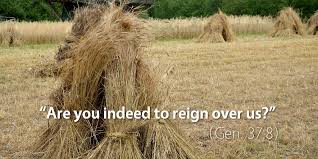
Joseph had a dream, and when he told it to his brothers, they hated him all the more. He said to them, “Listen to this dream I had: We were binding sheaves of grain out in the field when suddenly my sheaf rose and stood upright, while your sheaves gathered around mine and bowed down to it.”

His brothers said to him, “Do you intend to reign over us? Will you actually rule us?” And they hated him all the more because of his dream and what he had said.

Then he had another dream, and he told it to his brothers. “Listen,” he said, “I had another dream, and this time the sun and moon and eleven stars were bowing down to me.”

10 When he told his father as well as his brothers, his father rebuked him and said, “What is this dream you had? Will your mother and I and your brothers actually come and bow down to the ground before you?” 11 His brothers were jealous of him, but his father kept the matter in mind.

Joseph Sold by His Brothers

12 Now his brothers had gone to graze their father’s flocks near Shechem, 13 and Israel said to Joseph, “As you know, your brothers are grazing the flocks near Shechem. Come, I am going to send you to them.”

“Very well,” he replied.

14 So he said to him, “Go and see if all is well with your brothers and with the flocks, and bring word back to me.” Then he sent him off from the Valley of Hebron.

When Joseph arrived at Shechem, 15 a man found him wandering around in the fields and asked him, “What are you looking for?”

16 He replied, “I’m looking for my brothers. Can you tell me where they are grazing their flocks?”

17 “They have moved on from here,” the man answered. “I heard them say, ‘Let’s go to Dothan.’”

So Joseph went after his brothers and found them near Dothan. 18 But they saw him in the distance, and before he reached them, they plotted to kill him.

19 “Here comes that dreamer!” they said to each other. 20 “Come now, let’s kill him and throw him into one of these cisterns and say that a ferocious animal devoured him. Then we’ll see what comes of his dreams.”

21 When Reuben heard this, he tried to rescue him from their hands. “Let’s not take his life,” he said. 22 “Don’t shed any blood. Throw him into this cistern here in the wilderness, but don’t lay a hand on him.” Reuben said this to rescue him from them and take him back to his father.

23 So when Joseph came to his brothers, they stripped him of his robe—the ornate robe he was wearing— 24 and they took him and threw him into the cistern. The cistern was empty; there was no water in it.

25 As they sat down to eat their meal, they looked up and saw a caravan of Ishmaelites coming from Gilead. Their camels were loaded with spices, balm and myrrh, and they were on their way to take them down to Egypt.

26 Judah said to his brothers, “What will we gain if we kill our brother and cover up his blood? 27 Come, let’s sell him to the Ishmaelites and not lay our hands on him; after all, he is our brother, our own flesh and blood.” His brothers agreed.

28 So when the Midianite merchants came by, his brothers pulled Joseph up out of the cistern and sold him for twenty shekels of silver to the Ishmaelites, who took him to Egypt.

29 When Reuben returned to the cistern and saw that Joseph was not there, he tore his clothes. 30 He went back to his brothers and said, “The boy isn’t there! Where can I turn now?”

31 Then they got Joseph’s robe, slaughtered a goat and dipped the robe in the blood32 They took the ornate robe back to their father and said, “We found this. Examine it to see whether it is your son’s robe.”

33 He recognized it and said, “It is my son’s robe! Some ferocious animal has devoured him. Joseph has surely been torn to pieces.”

34 Then Jacob tore his clothes, put on sackcloth and mourned for his son many days. 35 All his sons and daughters came to comfort him, but he refused to be comforted. “No,” he said, “I will continue to mourn until I join my son in the grave.” So his father wept for him.

36 Meanwhile, the Midianites sold Joseph in Egypt to Potiphar, one of Pharaoh’s officials, the captain of the guard.

WHAT DO WE LEARN—HOW DO WE RESPOND?

What does not make sense to us now, will make perfect sense later.  When we trust God, really trust Him and the way He works; we begin to stopping asking why.  Why did this happen now?  Why am I involved?  Why does my mom ask me to do that?  Why am I picked on by others?  Why am I caught in the middle of dysfunctional relationships at work?  And the all-time most asked, “Why me, and why is this happening to me?” 

We wonder what Joseph was thinking as he sat in the dark well.  What did he think when his brothers threw a rope to him?  Was he hoping for rescue from his brothers?  What did he think when he was brought back into the light of day only long enough to be sold for 20 pieces of silver to a passing group of salesmen on their way to a larger market place in Egypt? Joseph lost his dignity, freedom, and the beautiful coat on his back.  He was humiliated by his brothers.  With confidence and assurance from being favored stripped from him; all pride, arrogance and confidence is depleted. What’s next? Stay tuned!

We might not want to admit it, but we are by nature self-centered and self-serving. Browsing the news on social media reveals how jealousy can lead to death. We see these motives at work in the world all around us.  The story of 10 jealous brothers is not new.

The sin of jealousy breeds the side effects of envy, comparison, and greed.  Who are the unsuspecting victims?  Anyone who has more than we have. More karats, more horsepower, more office space, more church members, and the list goes on inside and outside the church. Jealousy aims the gun barrel on the one who has more. “You desire but do not have, so you kill. You covet but you cannot get what you want, so you quarrel and fight. You do not have because you do not ask God”, writes James(4:2).

Oh, but that can’t be me!  Mm, maybe not with physical violence but what about with words?  “Sticks and stones, may break my bones; But words will never harm me.”  We all know that this childish taunt is false.  Words do hurt and gossip has the power to destroy even the most loving, family relationships.  I personally have seen gossip go pro status and contaminate an entire church—more than once!

Words of hate, mocking, sarcasm, with put-downs stick like glue from childhood through adulthood.  We might cover the hurt with a smile to avoid more hurt; but it still hurts if we let the wound fester, try to get even, or hurt someone else to feel better.

James doesn’t sugar coat the truth.  He tells us our tongue is the most uncontrollable part of our body!  “Likewise, the tongue is a small part of the body, but it makes great boasts. Consider what a great forest is set on fire by a small spark. The tongue also is a fire, a world of evil among the parts of the body. It corrupts the whole body, sets the whole course of one’s life on fire, and is itself set on fire by hell.” James 3:5-6 Yikes, we get it James…or do we?

“A tranquil heart gives life to the flesh, but envy makes the bones rot.” Proverbs 14:30

But, we need help, right? We need a Counselor to guide us to Truth and guard us in our walk from the discontentment that comes from comparing ourselves with others. We even compare and grade our sins between others!  Jesus promised a Counselor would come and God followed through by providing His Holy Spirit.  God’s Spirit, our Counselor, leads us to ALL Truth: “But when he, the Spirit of truth, comes, he will guide you into all the truth. He will not speak on his own; he will speak only what he hears, and he will tell you what is yet to come.”  –Straight from God’s heart to our whole being!

The Truth is—

Believe in Jesus as our Savior and Lord.  Jesus is all we need to be saved from death and live forever with God. 

God cleanses our hearts, renews our minds, refreshes our souls, and restores the joy of Jesus’ salvation work within us that sets us free to mature in His love. 

Comparison is the chief culprit of envy and jealousy.  We need deterrents for envy, jealousy, and all related attitudes of hate to steer us from the darkness. We need a new way of thinking which accompanies our new life in Christ!

It is possible to change the way we think and behave by asking God’s Holy Spirit, who speaks Truth, to counsel, convict, console, comfort, and compel us to think more like Jesus.  God’s Spirit teaches us how to develop the mind of Christ within us.  According to Paul, believers desire, seek, and resemble the humbled attitude of Christ, (Philippians 2) while developing the mind of Christ, to be guided by His thoughts and purposes (1 Corinthians 2:16)

“Rather than bemoan what you don’t have, rejoice in the abundant cup you do. “My cup overflows with blessings” (Psalms 23:5 NLT). The last thing we need to worry about is not having enough. Our cup overflows with blessings.

The Lord is my Shepherd; I lack nothing.  Psalm 23:1

Lord,

Thank you for teaching us by your Holy Spirt through your Word. As we learn all you provided for Joseph while protecting, and teaching him; we are reminded all you did for us through Jesus and how you teach us the truth daily.  Jesus, thank you for taking my sins upon your shoulders along with all sins of the world.  Thank you for taking my place for the punishment that I deserved.  I’m humbled by the truth of You. Thank you, thank you, thank you.  To you be the glory!

In Jesus Name, Amen
Posted in Uncategorized | Tagged , , , , | Leave a comment

THE OTHER OLDER BROTHER—

The twin boys struggled to be first from the womb of Rebekah.  Esau was heading for the birth finish line when Jacob grabbed his heel.  But the grab didn’t pull Esau back from being born first.  We’ve spent the last few days reading the story of God in the lives of the twins who fought for attention from their parents, Isaac and Rebekah.

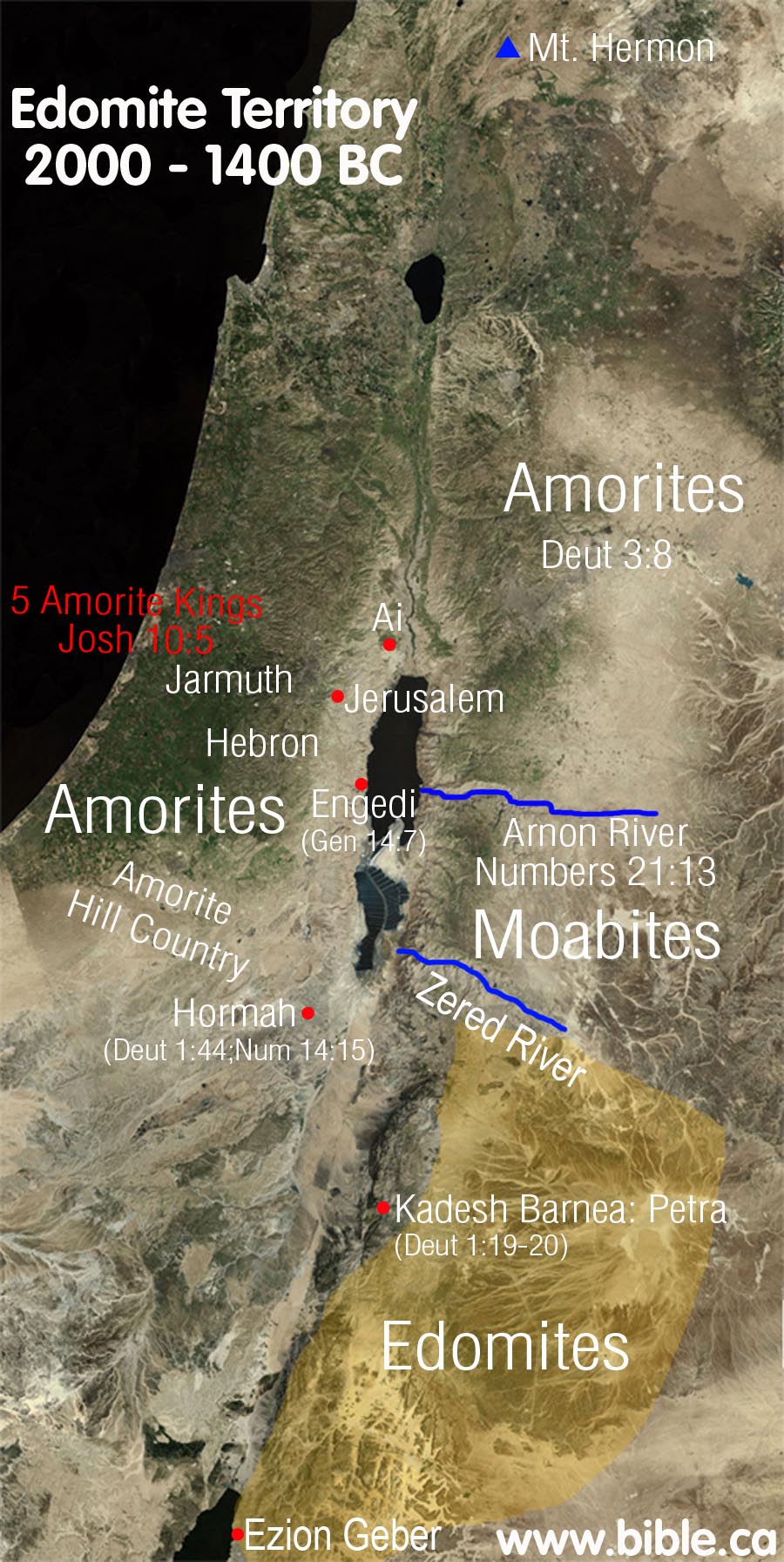
Following the death of Isaac; Moses recorded a long chapter summarizing the fate of Isaac’s older son, Esau. The account contains many names, but it’s the end of the story as far as Esau is concerned! The Edomites are named in the Old Testament only because they’re a part of the story of Israel. “Esau” and “Edom,” the avowed enemies of the Jews, are mentioned over 200 times in the Bible, but “Jacob” and “Israel” are found over 2,000 times! Esau’s son Eliphaz was the father of Amalek, and the Amalekites were also Israel’s enemies.  We will read later about these enemies in Exodus, Numbers, Deuteronomy, and 1 Samuel. 

The next chapter (Genesis 37) takes up the story, not of Esau, but of Jacob! “This is the history of Jacob” (v. 2) is the tenth occasion for a “generation” statement in Genesis, as Moses introduces the story of Jacob’s favorite son, Joseph. With all their weaknesses and faults, the sons of Jacob will carry on the work of God on earth and fulfill the covenant promises God made to Abraham.  But first, a word about Esau, the older brother by minutes.

Genesis 36

Esau’s Descendants

This is the account of the family line of Esau (that is, Edom).

Esau took his wives from the women of Canaan: Adah daughter of Elon the Hittite, and Oholibamah daughter of Anah and granddaughter of Zibeon the Hivite— also Basemath daughter of Ishmael and sister of Nebaioth.

Adah bore Eliphaz to Esau, Basemath bore Reuel, and Oholibamah bore Jeush, Jalam and Korah. These were the sons of Esau, who were born to him in Canaan.

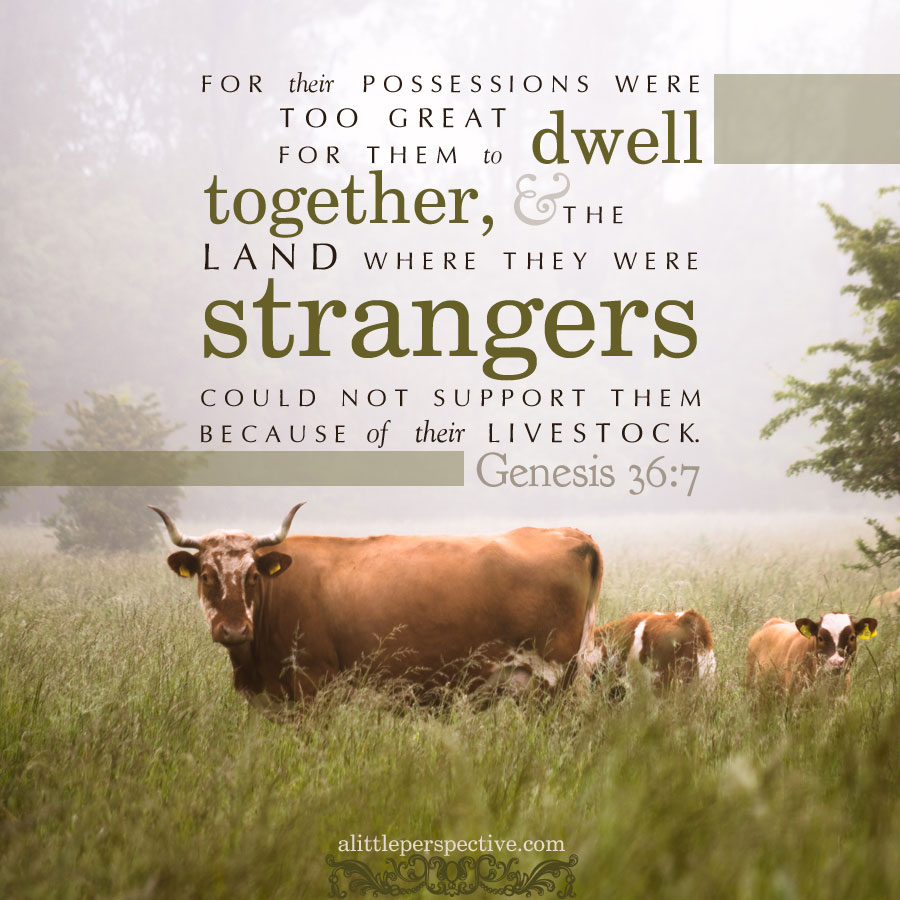
Esau took his wives and sons and daughters and all the members of his household, as well as his livestock and all his other animals and all the goods he had acquired in Canaan, and moved to a land some distance from his brother JacobTheir possessions were too great for them to remain together; the land where they were staying could not support them both because of their livestock. So Esau (that is, Edom) settled in the hill country of Seir.

This is the account of the family line of Esau the father of the Edomites in the hill country of Seir.

10 These are the names of Esau’s sons: Eliphaz, the son of Esau’s wife Adah, and Reuel, the son of Esau’s wife Basemath.

11 The sons of Eliphaz: Teman, Omar, Zepho, Gatam and Kenaz.

12 Esau’s son Eliphaz also had a concubine named Timna, who bore him Amalek. These were grandsons of Esau’s wife Adah.

13 The sons of Reuel: Nahath, Zerah, Shammah and Mizzah. These were grandsons of Esau’s wife Basemath.

14 The sons of Esau’s wife Oholibamah daughter of Anah and granddaughter of Zibeon, whom she bore to Esau: Jeush, Jalam and Korah.

15 These were the chiefs among Esau’s descendants:

The sons of Eliphaz the firstborn of Esau: Chiefs Teman, Omar, Zepho, Kenaz, 16 Korah, Gatam and Amalek. These were the chiefs descended from Eliphaz in Edom; they were grandsons of Adah.

17 The sons of Esau’s son Reuel: Chiefs Nahath, Zerah, Shammah and Mizzah. These were the chiefs descended from Reuel in Edom; they were grandsons of Esau’s wife Basemath.

18 The sons of Esau’s wife Oholibamah: Chiefs Jeush, Jalam and Korah. These were the chiefs descended from Esau’s wife Oholibamah daughter of Anah. 19 These were the sons of Esau (that is, Edom), and these were their chiefs.

20 These were the sons of Seir the Horite, who were living in the region: Lotan, Shobal, Zibeon, Anah, 21 Dishon, Ezer and Dishan. These sons of Seir in Edom were Horite chiefs.

22 The sons of Lotan: Hori and Homam.[b] Timna was Lotan’s sister.

23 The sons of Shobal: Alvan, Manahath, Ebal, Shepho and Onam.

24 The sons of Zibeon: Aiah and Anah. This is the Anah who discovered the hot springs in the desert while he was grazing the donkeys of his father Zibeon.

25 The children of Anah: Dishon and Oholibamah daughter of Anah.

26 The sons of Dishon: Hemdan, Eshban, Ithran and Keran.

27 The sons of Ezer: Bilhan, Zaavan and Akan.

28 The sons of Dishan: Uz and Aran.

29 These were the Horite chiefs: Lotan, Shobal, Zibeon, Anah, 30 Dishon, Ezer and Dishan. These were the Horite chiefs, according to their divisions, in the land of Seir.

The Rulers of Edom

31 These were the kings who reigned in Edom before any Israelite king reigned:

32 Bela son of Beor became king of Edom. His city was named Dinhabah. 33 When Bela died, Jobab son of Zerah from Bozrah succeeded him as king. 34 When Jobab died, Husham from the land of the Temanites succeeded him as king. 35 When Husham died, Hadad son of Bedad, who defeated Midian in the country of Moab, succeeded him as king. His city was named Avith. 36 When Hadad died, Samlah from Masrekah succeeded him as king. 37 When Samlah died, Shaul from Rehoboth on the river succeeded him as king. 38 When Shaul died, Baal-Hanan son of Akbor succeeded him as king. 39 When Baal-Hanan son of Akbor died, Hadad succeeded him as king. His city was named Pau, and his wife’s name was Mehetabel daughter of Matred, the daughter of Me-Zahab.

40 These were the chiefs descended from Esau, by name, according to their clans and regions: Timna, Alvah, Jetheth, 41 Oholibamah, Elah, Pinon, 42 Kenaz, Teman, Mibzar, 43 Magdiel and Iram. These were the chiefs of Edom, according to their settlements in the land they occupied.

This is the family line of Esau, the father of the Edomites.

WHAT DO WE LEARN—HOW DO WE RESPOND?

The brothers had made peace when Jacob came home.  They restored a quality relationship between them as they came together to bury their father, Isaac; but the generations of Esau proved to be future enemies of the descendants of Jacob, Israel, God’s people.  Did the subsequent generations still hold a grudge over the deception incident over birth right and blessing even though Esau and Jacob settled the matter between them?  Is it be a “Hatfield and McCoy” situation that will carry on the sins of the fathers? 

Do we hate another people group simply because our mother or father hated them?

Isn’t it amazing how the kids and their kids are prone to hang on to what was done to their family with hopes of setting it right some day? All the details from beginning to end somehow get lost and the reasons for hating become sketchy but strong feelings fed by hate continues to seeks revenge. 

Getting what humans think they deserve becomes their goal in life.  Peace alludes haters.  War escalates with each succeeding generation as hate gives birth to actions of atrocious violence. And sometimes, some of us just enjoy a good fight.  Sad, but true.  We want to come out on top of every situation or relationship—all because of control, thinking we have all the answers.  But oh, what a slippery slope that is!

Jesus taught us the opposite way to think—

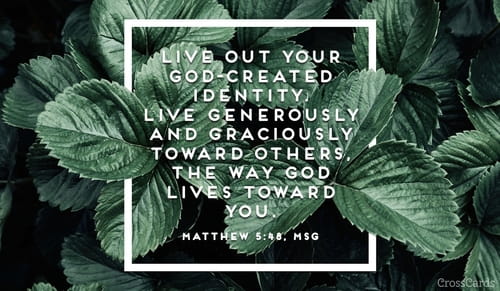
“You have heard that it was said, ‘Love your neighbor and hate your enemy.’ 44 But I tell you, love your enemies and pray for those who persecute you, 45 that you may be children of your Father in heaven. He causes his sun to rise on the evil and the good, and sends rain on the righteous and the unrighteous. 46 If you love those who love you, what reward will you get? Are not even the tax collectors doing that? 47 And if you greet only your own people, what are you doing more than others? Do not even pagans do that? 48 Be perfect, therefore, as your heavenly Father is perfect.”—Jesus, Matthew 5:43-48 

The word “perfect” in this verse does not imply sinlessly perfect, for that would be impossible in this life (though it would be a good goal to strive for). It suggests completeness, maturity, as the sons of God. The Father loves His enemies and seeks to make them His children, and we should assist Him!

So, we’ll just leave that right there.  Pause and pray.

Lord,

Thank you for your thoughts this morning even through the listing of Esau’s descendants!  It is no wonder that hate is still the tool of the Enemy that distracts, deceives, and ultimately destroys our relationships with you and others.  But you so loved and sent a Way to be redeemed and restored to real Love for you and each other. Thank you, Jesus for saving our souls and restoring our relationship with you then others.  Cleanse us of all that does not belong in our hearts, minds, and souls.

In Jesus Name, Amen
Posted in Uncategorized | Tagged , , , , | Leave a comment

LET US GET UP AND GO TO THE BETHEL!

I sought the Lord and He heard and He answered
That’s why I trust Him, that’s why I trust Him

(Songwriters: Brandon Lake / Christopher Joel Brown / Mitch Wong / Steven Furtick; Trust In God lyrics © Essential Music Publishing, Integrity Music)

It is God who first calls out to us!  It is God who leads the Way back to him for all the days of our lives.  It is God who tells us like he told Jacob, to “get up and go” to the place where we can hear Him with greater focused attention—at an altar of worship, thanksgiving, sacrifice, and submission. “Come to the place where you can remember what I have done for you,” says God, to all who believe Him so we can live more grateful lives. Come and be blessed by God because that is what God enjoys most—blessing us with his growing character traits within us.  Come and get further directions from God with obedient hearts.  Seek to know God with the assurance from God that He is with us wherever we go.

THIS is what God is telling Jacob to do—and Jacob humbly obeys and leads his whole household to go with him.  Bury the idols, cleanse your bodies, and change your clothes—we getting ready to meet God—the One who answered me when I needed Him most.

I sought the Lord and He heard and He answered
That’s why I trust Him, that’s why I trust Him…

Genesis 35

Jacob Returns to Bethel

Then God said to Jacob, “Go up to Bethel and settle there, and build an altar there to God, who appeared to you when you were fleeing from your brother Esau.”

So Jacob said to his household and to all who were with him, “Get rid of the foreign gods you have with you, and purify yourselves and change your clothesThen come, let us go up to Bethel, where I will build an altar to God, who answered me in the day of my distress and who has been with me wherever I have gone.” So they gave Jacob all the foreign gods they had and the rings in their ears, and Jacob buried them under the oak at Shechem. Then they set out, and the terror of God fell on the towns all around them so that no one pursued them.

Jacob and all the people with him came to Luz (that is, Bethel) in the land of Canaan. There he built an altar, and he called the place El Bethel, because it was there that God revealed himself to him when he was fleeing from his brother.

Now Deborah, Rebekah’s nurse, died and was buried under the oak outside Bethel. So it was named Allon Bakuth.

After Jacob returned from Paddan Aram, God appeared to him again and blessed him. 10 God said to him, “Your name is Jacob, but you will no longer be called Jacob; your name will be Israel.” So he named him Israel.

11 And God said to him, “I am God Almighty; be fruitful and increase in number. A nation and a community of nations will come from you, and kings will be among your descendants. 12 The land I gave to Abraham and Isaac I also give to you, and I will give this land to your descendants after you.” 13 Then God went up from him at the place where he had talked with him.

14 Jacob set up a stone pillar at the place where God had talked with him, and he poured out a drink offering on it; he also poured oil on it. 15 Jacob called the place where God had talked with him Bethel.

The Deaths of Rachel and Isaac

16 Then they moved on from Bethel. While they were still some distance from Ephrath, Rachel began to give birth and had great difficulty. 17 And as she was having great difficulty in childbirth, the midwife said to her, “Don’t despair, for you have another son.” 18 As she breathed her last—for she was dying—she named her son Ben-Oni. But his father named him Benjamin.

19 So Rachel died and was buried on the way to Ephrath (that is, Bethlehem). 20 Over her tomb Jacob set up a pillar, and to this day that pillar marks Rachel’s tomb.

21 Israel moved on again and pitched his tent beyond Migdal Eder. 22 While Israel was living in that region, Reuben went in and slept with his father’s concubine Bilhah, and Israel heard of it.

Jacob had twelve sons:

23 The sons of Leah:

Reuben the firstborn of Jacob,

Simeon, Levi, Judah, Issachar, and Zebulun.

24 The sons of Rachel:

Joseph and Benjamin.

25 The sons of Rachel’s servant Bilhah:

Dan and Naphtali.

26 The sons of Leah’s servant Zilpah:

Gad and Asher.

These were the sons of Jacob, who were born to him in Paddan Aram.

27 Jacob came home to his father Isaac in Mamre, near Kiriath Arba (that is, Hebron), where Abraham and Isaac had stayed. 28 Isaac lived a hundred and eighty years. 29 Then he breathed his last and died and was gathered to his people, old and full of years. And his sons Esau and Jacob buried him.

WHAT DO WE LEARN—HOW DO WE RESPOND?

God calls Jacob back to the place where He wrestled for Jacob’s fully committed heart, mind, and soul after fleeing from his brother’s wrath from deception.  God wants to meet Jacob there again to remind him of all the ways God has led him and was with him through all his troubles and trials as a result of the deception.  Jacob responds with humbled obedience for He knows God saved him from what Esau could have done to him.  Jacob, “the deceiver” now has a new name in glory—Israel.

God reminds Jacob.  In the middle of life’s continuing problems and challenges, God reminded Jacob of his new name, Israel. Through this reminder, God shows he is faithful to his promises. God’s promises set believers apart.

God’s promise is fulfilled in Jacob with the blessings of 12 sons who will represent the twelve tribes of Israel. 

Jacob responds by hearing and obeying by getting rid of all that could hinder his worship to God.  Jacob buries all household idols and tells the family to prepare themselves for holy worship of God.  Remember Rachel who hid her father’s idols then lied about it?  Rachel had stolen her father’s household idols (Genesis 31:19, 34, 35), and Jacob knew that other false gods were hidden in the camp. Worshiping the gods of the pagan nations was always a temptation to the Israelites.

Jacob cleans up on the outside so God can do His work on the inside.  In God’s Word; washing the body and changing clothes symbolize making a new beginning. Like dirt, sin is defiling and must be washed away (Psalm 51:2, 7; Isaiah 1:16; 2 Corinthians 7:1; 1 John 1:9). Our old garments typify the old life with its failures (Isaiah 64:6), but God in His mercy gives us “new garments” so we can make a fresh beginning (Genesis 3:21; Isaiah 61:10; Zechariah 3:1–5; Luke 15:22; Revelation 3:18). Before God gave the law at Mount Sinai, He ordered the people to wash and change clothes, for they were about to enter a solemn covenant with Him (Exodus 19:9–15).

Perhaps we have places that are especially meaningful to us because of spiritual experiences we have had there, but a “holy site” must never take the place of the Holy God. To visit a special location and try to recapture old blessings is to live in the past. Let’s ask God for new blessings and a new revelation of Himself!

Jacob’s restoration was now complete. He was back in the place of God’s choosing; he had offered himself and his sacrifices to the Lord; the Lord had spoken to him; and the covenant promises had been reaffirmed. He had come from the house of Laban to the house of God, and though he still had much to learn about his walk with the Lord, Jacob was starting to be “Israel” and live like a prince instead of a pauper.  He was forgiven by Esau and restored to the family.  The proof?  When Isaac, their father died, Esau and Jacob came home to honor him…“And his sons Esau and Jacob buried him.”

The last sentence of this passage speaks volumes of a restored relationship between brothers as well as with God.

Wow, the story of God in His people has so many twists and turns!  The lessons we learn just never ends, right?  Lean into what God is saying to you…

Lord,

Thank you for your word that teaches us Truth.  Thank you for reminding us of all you have done for our good and for your glory.  Thank you for telling us how you work in and through real, imperfect people to show us our that our own imperfections can be forgiven and our lives restored all because of your relentless compassionate love for us. Cleanse our hearts, renew our minds, refresh our souls, and restore the joy of your salvation at work within us.  You called and I’m coming to listen…

In Jesus Name, Amen
Will You meet me here again
‘Cause all I want is all You are
Will You meet me here again…

Posted in Uncategorized | Tagged , , , , | Leave a comment

REVENGEFUL DECEIT

To get even, take back what was taken from us, while repaying the hurt doled out to us is our natural first response without thinking.  Just watch toddlers in the church nursery to prove this theory!  However, God reminds us that it is He who sees all hearts, all circumstances, and knows who needs His discipline in His way in His time.  God is the judge over all and in all.  His compassions they fail not for His people.  Great is His faithfulness!   

Genesis 34

Dinah and the Shechemites

Now Dinah, the daughter Leah had borne to Jacob, went out to visit the women of the land. When Shechem son of Hamor the Hivite, the ruler of that area, saw her, he took her and raped her. His heart was drawn to Dinah daughter of Jacob; he loved the young woman and spoke tenderly to her. And Shechem said to his father Hamor, “Get me this girl as my wife.”
When Jacob heard that his daughter Dinah had been defiled, his sons were in the fields with his livestock; so he did nothing about it until they came home.

Then Shechem’s father Hamor went out to talk with Jacob. Meanwhile, Jacob’s sons had come in from the fields as soon as they heard what had happened. They were shocked and furious, because Shechem had done an outrageous thing in Israel by sleeping with Jacob’s daughter—a thing that should not be done.

But Hamor said to them, “My son Shechem has his heart set on your daughter. Please give her to him as his wife. Intermarry with us; give us your daughters and take our daughters for yourselves. 10 You can settle among us; the land is open to you. Live in it, trade in it, and acquire property in it.”

11 Then Shechem said to Dinah’s father and brothers, “Let me find favor in your eyes, and I will give you whatever you ask. 12 Make the price for the bride and the gift I am to bring as great as you like, and I’ll pay whatever you ask me. Only give me the young woman as my wife.”

13 Because their sister Dinah had been defiled, Jacob’s sons replied deceitfully as they spoke to Shechem and his father Hamor. 14 They said to them, “We can’t do such a thing; we can’t give our sister to a man who is not circumcised. That would be a disgrace to us. 15 We will enter into an agreement with you on one condition only: that you become like us by circumcising all your males. 16 Then we will give you our daughters and take your daughters for ourselves. We’ll settle among you and become one people with you. 17 But if you will not agree to be circumcised, we’ll take our sister and go.”

18 Their proposal seemed good to Hamor and his son Shechem. 19 The young man, who was the most honored of all his father’s family, lost no time in doing what they said, because he was delighted with Jacob’s daughter. 20 So Hamor and his son Shechem went to the gate of their city to speak to the men of their city. 21 “These men are friendly toward us,” they said. “Let them live in our land and trade in it; the land has plenty of room for them. We can marry their daughters and they can marry ours. 22 But the men will agree to live with us as one people only on the condition that our males be circumcised, as they themselves are. 23 Won’t their livestock, their property and all their other animals become ours? So let us agree to their terms, and they will settle among us.”

24 All the men who went out of the city gate agreed with Hamor and his son Shechem, and every male in the city was circumcised.

25 Three days later, while all of them were still in pain, two of Jacob’s sons, Simeon and Levi, Dinah’s brothers, took their swords and attacked the unsuspecting city, killing every male. 26 They put Hamor and his son Shechem to the sword and took Dinah from Shechem’s house and left27 The sons of Jacob came upon the dead bodies and looted the city where their sister had been defiled. 28 They seized their flocks and herds and donkeys and everything else of theirs in the city and out in the fields. 29 They carried off all their wealth and all their women and children, taking as plunder everything in the houses.

30 Then Jacob said to Simeon and Levi, “You have brought trouble on me by making me obnoxious to the Canaanites and Perizzites, the people living in this land. We are few in number, and if they join forces against me and attack me, I and my household will be destroyed.”

31 But they replied, “Should he have treated our sister like a prostitute?”

WHAT DO WE LEARN—HOW DO WE RESPOND?

The defilement of Dinah was a sin of abusive, selfish behavior delivered by a spoiled son of a leader who demanded to have all he wanted even if that meant hurting someone else to satisfy his own desires.    

Dinah’s older, protective brothers, Levi and Simeon immediately sought revenge from the offending perpetrator.  It is certainly the first thought of most humans—to seek revenge.  Even though women were thought of as less than men with little to no rights, the defilement of Dinah was considered an “outrageous thing in Israel by sleeping with Jacob’s daughter—a thing that should not be done. But, as foreigners passing through, Jacob sought to deescalate the situation while broken hearted over what had been done to his daughter.  Before Jacob could do that, Simeon and Levi took matters into their own hands with a deceptive scheme to “get even,” escalating the matter which resulted in murdering the innocent along with the perpetrator.

Taking matters into our own hands is a sin unto itself.  Revenging and avenging means we don’t trust God and think we can do better than God.  When we “play God” we make always make matters worse.  We fall back on our sinful natural as our first instinctive response to our anger when offended. “Don’t sin in your anger” is written in God’s Word to warn us where anger can lead us. (Ephesians 4:26)

Righteous anger led to unrighteous responses.  Levi and Simeon’s out-of-control rage led them immediately to deceit for the purpose of murder of the offender along with all the people in the offender’s world.   “You have brought more trouble…”, says Jacob to Levi and Simeon who took the matter too far leaving a mess to clean up by God through his chosen leader, Jacob, their father.  

God will speak to Israel often about who is in charge over them and who will take care of their enemies;

“Have I not kept this in reserve
    and sealed it in my vaults?
It is mine to avenge; I will repay.
    In due time their foot will slip;
their day of disaster is near
    and their doom rushes upon them.”  Deuteronomy 32:34-35

Believers in Jesus must not play God and try to avenge themselves. Returning evil for evil, or good for good, is the way most people live. But Christians must live on a higher level and return good for evil. Of course, this requires extreme love of God in us; because our first inclination is to fight back. It also requires faith, believing that God can work and accomplish His will in our lives and in the lives of those who hurt us. We must let God sort it all out—all the wrongs, injustice, persecutions, and defilements, for only He can bring holy resolution.  Only God, not us, can see and know all the details of the matter.

Certainly, the rape and abuse of anyone should be brought to justice—in a court of law–but not by our own hands or we become just as guilty. 

In the day-to-day ways of life, Jesus tells us how to deal with our enemies of the faith: “You’re familiar with the old written law, ‘Love your friend,’ and its unwritten companion, ‘Hate your enemy.’ I’m challenging that. I’m telling you to love your enemies. Let them bring out the best in you, not the worst. When someone gives you a hard time, respond with the supple moves of prayer, for then you are working out of your true selves, your God-created selves. This is what God does. He gives his best—the sun to warm and the rain to nourish—to everyone, regardless: the good and bad, the nice and nasty. If all you do is love the lovable, do you expect a bonus? Anybody can do that. If you simply say hello to those who greet you, do you expect a medal? Any run-of-the-mill sinner does that.” –Jesus, Matthew 5:44, MSG

Paul follows up Jesus’ teachings with how to respond to daily offense:  “Do not repay anyone evil for evil. Be careful to do what is right in the eyes of everyone. If it is possible, as far as it depends on you, live at peace with everyone. Do not take revenge, my dear friends, but leave room for God’s wrath, for it is written: “It is mine to avenge; I will repay,” says the Lord. On the contrary:

“If your enemy is hungry, feed him;
    if he is thirsty, give him something to drink.
In doing this, you will heap burning coals on his head.”

Do not be overcome by evil, but overcome evil with good.  Romans 12:17-21, (referring to Deuteronomy 32:35)

The only way to live this is effectively and successfully is by the power of God’s Holy Spirit living in us.  We cannot do life without His leading and His power to transform us. The first words in Romans 12 tells us how to yield to God in our on-going transformation:  “Therefore, I urge you, brothers and sisters, in view of God’s mercy, to offer your bodies as a living sacrifice, holy and pleasing to God—this is your true and proper worship. Do not conform to the pattern of this world, but be transformed by the renewing of your mind. Then you will be able to test and approve what God’s will is—his good, pleasing and perfect will.”  Romans 12:1-2 (Read all of chapter 12 for specific behaviors that please God and helps us mature in His love.)

There’s more to this story…stay tuned!

Lord,

Lesson learned.  You are God.  We are not.  Cleanse our hearts, renew our minds, refresh our souls with your new tender mercies given daily, and restore the joy of your salvation at work within us as we look to you to help us be overcomers of evil in this world.  Help us to seek your justice, love your mercy, as we walk humbly with you in the lead.

In Jesus Name, Amen

Posted in Uncategorized | Tagged , , , , | Leave a comment

RESTORING WHAT WAS LOST

There is no human on earth that has not experienced a broken relationship with another human.  Maybe it was a close friend who was like a brother or sister, but one of you moved away and you didn’t keep in touch.  Maybe you moved because a family member expected way more than you could give back to them.  Maybe it was because you wanted to do life on your own without help from anyone else; so, you left all other relationships behind that you felt hindered your freedom.  Or maybe, you deceived them and had to leave town before you were caught and had to pay for the damages down.  For whatever reason, relationships are worth restoring.  But it all begins with our relationship with God.

God has done a great work in Esau. But Jacob doesn’t know that—yet. Jacob dreaded to see the brother he had deceived twenty years earlier.  But Jacob was led by God to go home and face all that he had left behind.  Jacob knew God was with him; but he plotted a “plan B” just in case meeting with Esau didn’t go well. Was a backup plan necessary, though?

Isn’t that just like us?  We worry ourselves sick over what the worst that might happen; discounting the fact that God has gone before us to prepare the Way to restoration.

Genesis 33

Jacob Meets Esau

Jacob looked up and there was Esau, coming with his four hundred men; so he divided the children among Leah, Rachel and the two female servants. He put the female servants and their children in front, Leah and her children next, and Rachel and Joseph in the rear. He himself went on ahead and bowed down to the ground seven times as he approached his brother.

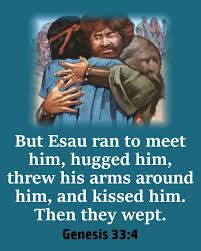
But Esau ran to meet Jacob and embraced him; he threw his arms around his neck and kissed him. And they wept. Then Esau looked up and saw the women and children. “Who are these with you?” he asked.

Jacob answered, “They are the children God has graciously given your servant.”

Then the female servants and their children approached and bowed down. Next, Leah and her children came and bowed down. Last of all came Joseph and Rachel, and they too bowed down.

Esau asked, “What’s the meaning of all these flocks and herds I met?”

“To find favor in your eyes, my lord,” he said.

But Esau said, “I already have plenty, my brother. Keep what you have for yourself.”

10 “No, please!” said Jacob. “If I have found favor in your eyes, accept this gift from me. For to see your face is like seeing the face of God, now that you have received me favorably. 11 Please accept the present that was brought to you, for God has been gracious to me and I have all I need.” And because Jacob insisted, Esau accepted it.

12 Then Esau said, “Let us be on our way; I’ll accompany you.”

13 But Jacob said to him, “My lord knows that the children are tender and that I must care for the ewes and cows that are nursing their young. If they are driven hard just one day, all the animals will die. 14 So let my lord go on ahead of his servant, while I move along slowly at the pace of the flocks and herds before me and the pace of the children, until I come to my lord in Seir.”

15 Esau said, “Then let me leave some of my men with you.”

“But why do that?” Jacob asked. “Just let me find favor in the eyes of my lord.”

16 So that day Esau started on his way back to Seir. 17 Jacob, however, went to Sukkoth, where he built a place for himself and made shelters for his livestock. That is why the place is called Sukkoth.

18 After Jacob came from Paddan Aram, he arrived safely at the city of Shechem in Canaan and camped within sight of the city. 19 For a hundred pieces of silver, he bought from the sons of Hamor, the father of Shechem, the plot of ground where he pitched his tent. 20 There he set up an altar and called it *El Elohe Israel. 

(*El Elohe Israel can mean El is the God of Israel or mighty is the God of Israel.)

WHAT DO WE LEARN—HOW DO WE RESPOND?

Restoration with others begins with possessing, growing, and nurturing the most relationship of all—our relationship with God.  This requires “walking humbly with God,” (Micah 6:8). A relationship with God means truly listening to what He has to say with a willing obedient heart with a desire to do what He says because of our committed love for Him.  Our relationship with God is believing that HE knows what is best for us.  It means leaning not on our own human abilities to problem solve or relate to others; but to wholly lean on His wisdom, insight and understanding. (Proverbs 3:5-6)

This holy relationship with God means giving up what we think we want; to gain everything God knows we need—and more! 

God loves with a love that is beyond human thinking.  God loved us before we knew to love Him back.  His love never fails and is relentless and unchanging.  His love “covers over a multitude of sins.”  His love cost us nothing but our willingness to love Him back.  But His love for us cost Him his One and Only Son who loved us and gave his life to redeem us from all our sins while removing them “as far as the east is from the west”!

Without Jesus redeeming us, a restored relationship with our loving God would not be possible.  “Above all, love each other deeply, because love covers over a multitude of sins,” writes Peter who is a disciple of Jesus who was forgiven often and completely by Jesus.  God’s work in Peter transformed him to love like Jesus loved him.  God’s work in all who believe in Him, over countless generations, has transformed our relationship with Him and with others.  As we grow in His love we begin to scratch the surface of what love means. 

John defines the love of God as “knowing God” who is Love.  1 John 4:7-8  (Read all the writings of John to get the full picture of the love of God!)

Paul clarifies what God’s Love does and doesn’t do: 

“Love is patient, love is kind. It does not envy, it does not boast, it is not proud. It does not dishonor others, it is not self-seeking, it is not easily angered, it keeps no record of wrongs. Love does not delight in evil but rejoices with the truth. It always protects, always trusts, always hopes, always perseveres.”

Love never fails. But where there are prophecies, they will cease; where there are tongues, they will be stilled; where there is knowledge, it will pass away. For we know in part and we prophesy in part, but when completeness comes, what is in part disappears. When I was a child, I talked like a child, I thought like a child, I reasoned like a child. When I became a man, I put the ways of childhood behind me. For now we see only a reflection as in a mirror; then we shall see face to face. Now I know in part; then I shall know fully, even as I am fully known.

And now these three remain: faith, hope, and love. But the greatest of these is love.”     1 Corinthians 13:4-13

In restoring relationships, will we seek God first and follow His leading?

Will His love lead us to reconcile?

Will we run to those who broke our heart with open arms or plot their demise?

Esau showed us what real forgiveness looks like when he welcomed Jacob back into his life. God did that!

Lord,

Thank you for this story of forgiveness and restored relationship that represents what you have done for us.  Thank you for forgiveness of all our sins. Thank you for making us whole and holy is your presence. Thank you for being with us always. Thank you for guiding us to higher thinking with restored relationships with others. Restoration begins with You in our hearts.  Help us to love and forgive like you did for us.

In Jesus Name, Amen

From the cross, Jesus said, “Father, forgive them, for they do not know what they do.”  Luke 23:34

Posted in Uncategorized | Tagged , , , , | Leave a comment

WRESTLING RIGHTEOUS RELATIONSHIPS

To come back home means facing Esau, the twin brother Jacob deceived and ran away from twenty years ago to escape the wrath of anger and retaliation from Esau.  Fear seeps in and overcomes Jacob.  Jacob’s emotions of dread in seeing Esau for the first time overwhelms him. So, God sends a team of angels to help him form a plan of reconciliation. Jacob’s anticipated fear may have guided this plan of pacifying Esau with gifts of wealth with a backup plan for escape. But most of all, Jacob is hoping for a welcome but expecting a war between them. 

God wants a right relationship between two brothers and with God, Himself.  God will wrestle Jacob to the ground to prove His will and purpose in and for Jacob whom He has called.

Genesis 32

Jacob Prepares to Meet Esau

32 Jacob also went on his way, and the angels of God met himWhen Jacob saw them, he said, “This is the camp of God!” So he named that place Mahanaim.

Jacob sent messengers ahead of him to his brother Esau in the land of Seir, the country of Edom. He instructed them: “This is what you are to say to my lord Esau: ‘Your servant Jacob says, I have been staying with Laban and have remained there till now. I have cattle and donkeys, sheep and goats, male and female servants. Now I am sending this message to my lord, that I may find favor in your eyes.’”

When the messengers returned to Jacob, they said, “We went to your brother Esau, and now he is coming to meet you, and four hundred men are with him.”

In great fear and distress Jacob divided the people who were with him into two groups, and the flocks and herds and camels as well. He thought, “If Esau comes and attacks one group, the group that is left may escape.”

Then Jacob prayed, “O God of my father Abraham, God of my father Isaac, Lord, you who said to me, ‘Go back to your country and your relatives, and I will make you prosper,’ 10 I am unworthy of all the kindness and faithfulness you have shown your servant. I had only my staff when I crossed this Jordan, but now I have become two camps. 11 Save me, I pray, from the hand of my brother Esau, for I am afraid he will come and attack me, and also the mothers with their children. 12 But you have said, ‘I will surely make you prosper and will make your descendants like the sand of the sea, which cannot be counted.’”

13 He spent the night there, and from what he had with him he selected a gift for his brother Esau:14 two hundred female goats and twenty male goats, two hundred ewes and twenty rams, 15 thirty female camels with their young, forty cows and ten bulls, and twenty female donkeys and ten male donkeys. 16 He put them in the care of his servants, each herd by itself, and said to his servants, “Go ahead of me, and keep some space between the herds.”

17 He instructed the one in the lead: “When my brother Esau meets you and asks, ‘Who do you belong to, and where are you going, and who owns all these animals in front of you?’ 18 then you are to say, ‘They belong to your servant Jacob. They are a gift sent to my lord Esau, and he is coming behind us.’”

19 He also instructed the second, the third and all the others who followed the herds: “You are to say the same thing to Esau when you meet him. 20 And be sure to say, ‘Your servant Jacob is coming behind us.’” For he thought, “I will pacify him with these gifts I am sending on ahead; later, when I see him, perhaps he will receive me.” 21 So Jacob’s gifts went on ahead of him, but he himself spent the night in the camp.

Jacob Wrestles With God

22 That night Jacob got up and took his two wives, his two female servants and his eleven sons and crossed the ford of the Jabbok. 23 After he had sent them across the stream, he sent over all his possessions. 24 So Jacob was left alone, and a man wrestled with him till daybreak. 25 When the man saw that he could not overpower him, he touched the socket of Jacob’s hip so that his hip was wrenched as he wrestled with the man. 26 Then the man said, “Let me go, for it is daybreak.”

But Jacob replied, “I will not let you go unless you bless me.”

27 The man asked him, “What is your name?”

“Jacob,” he answered.

28 Then the man said, “Your name will no longer be Jacob, but Israel, because you have struggled with God and with humans and have overcome.”

29 Jacob said, “Please tell me your name.”

But he replied, “Why do you ask my name?” Then he blessed him there.

30 So Jacob called the place Peniel, saying, “It is because I saw God face to face, and yet my life was spared.”

31 The sun rose above him as he passed Peniel, and he was limping because of his hip. 32 Therefore to this day the Israelites do not eat the tendon attached to the socket of the hip, because the socket of Jacob’s hip was touched near the tendon.

WHAT DO WE LEARN—HOW DO WE RESPOND?

Confrontations are difficult at best between people who have wronged each other and seek the justice of revenge and restitution. But God will intervene with His plan that supersedes our wisdom when we seek Him first.  Wrestle with what God has to say, but ultimately, obey God.  A right attitude, with a humbled heart, and opened mind, led by God’s Holy Spirit should be the first step toward approaching reconciliation.  God will prepare the heart of the one being confronted when we prepare our hearts to do His will to reconcile.

Gifts to pacify was part of the culture then to promote peace and avoid war between to opposing factions.  Today, our offenses are not easily pacified with gifts, especially if trust has been shaken.  Gifts might raise our eyebrows as we wonder if this is just another way gain control over us and take all we have.  No one likes the bait and switch method of relationships.  Be honest and sincere in what ever God tells us to do.

“Anticipating a difficult reunion with Esau, Jacob took the wise approach and sent messengers ahead to inform his brother that he was coming. But instead of committing the whole matter to the Lord, who had protected him from Laban, Jacob adopted a condescending attitude that wasn’t befitting to the man God had chosen to carry on the Abrahamic covenant. Sending the messengers was a good idea, but calling Esau “my lord” and himself “your servant,” and trying to impress Esau with his wealth was only evidence that Jacob wasn’t trusting God to care for him.” –Warren Wiersbe, Study Bible

A believer who is walking by faith need not fear the enemy or whatever bad news may come. Where can we look for help in such times? In the face of the most terrifying calamity he could imagine, the Psalmist was confident that God was ultimately in control of the world. He writes; “God is our refuge and strength, a very present help in trouble. Therefore, we will not fear though the earth gives way, though the mountains be moved into the heart of the sea, though its waters roar and foam, though the mountains tremble at its swelling” (Psalm 46:1–3, ESV).

Jacob was “greatly afraid and distressed” (verse 7) and therefore reverted to his old policy of scheming.  God sent a “man” to wrestle Jacob’s emotions and dread to bring these feelings of fear under His control while leading Jacob which is the best blessing of all we could ever imagine or dream!  This blessing is the sweet, holy reconciliation between God and humanity made is his image, between brothers, sisters, fathers, sons, mothers, daughters, who belong to God.  Jacob’s limp will remind him of God’s relentless love and faithfulness to him. 

God meets us at whatever level He finds us in order to lift us to where He wants us to be. Jacob had spent most of his adult life wrestling with people—Esau, Isaac, Laban, and even his wives—so God came to him as a wrestler. But he doesn’t leave Jacob where He met Him; God renamed Jacob, Israel, with more challenging work to be done.

At Bethel, God had promised to bless Jacob, and from a material point of view, the promise was fulfilled, for Jacob was now a very wealthy man. But there’s much more to the blessing of God than flocks, herds, and servants; there’s also the matter of godly character and spiritual influence.

Jacob had a new name; he had a new walk (he was limping); and he had a new relationship with God that would help him face and solve any problem if only he would exercise faith.

Avoid scheming and manipulation to get others “on your side”; instead may we be led by the love of God in us.  May God lead our responseto Him and to others with honest and complete forgiveness. “Love keeps no record of wrong.” (1 Corinthians 13) Love like God loves us who forgives and forgets our sins

To God be the glory for providing the perfect One who reconciles us to Him! Be reconciled to God by believing in Jesus, who One and Only way to the heart of God in relationship with God.  Only Jesus. 

Lord,

Thank you for teaching us what it takes to build our faith in you.  Help us to avoid human scheming and plotting our plan; but to seek you instead for wisdom, insight, and understanding in all our relationships and circumstances.  May our focus be keenly fixed on You—the greatest relationship of all!

In Jesus Name, Amen

Posted in Uncategorized | Tagged , , , , | Leave a comment

GOING HOME

Goodbyes are most often packed with all forms of emotions.  Long-lasting relationships can be solidified or broken over goodbyes.  God teaches Jacob, and us, that we must not wait until death or a tragic occurrence takes away the ability to reconcile a broken family relationship.  Forgive and be at peace.  God provides a way for Jacob and Laban to make peace after twenty years of deceit between them.  

God tells Jacob to go back home.  Jacob readily obeys!  Jacob cannot leave soon enough!  But watch as God prepares Jacob and Laban for reconciliation.  Laban does not want to let him go because Jacob brought prosperity to his household while he was in service to him.  Laban can’t bear to see his daughters and grandkids go with Jacob but that seems secondary to the wealth Jacob had accumulated for Laban over the years of servitude.   

What else can we learn from God?  There are hidden gems of God’s sovereignty and presence if we look closely for God in this story of “going home.”

Genesis 31

Jacob Flees From Laban

31 Jacob heard that Laban’s sons were saying, “Jacob has taken everything our father owned and has gained all this wealth from what belonged to our father.” And Jacob noticed that Laban’s attitude toward him was not what it had been.

Then the Lord said to Jacob, “Go back to the land of your fathers and to your relatives, and I will be with you.”

So Jacob sent word to Rachel and Leah to come out to the fields where his flocks were. He said to them, “I see that your father’s attitude toward me is not what it was before, but the God of my father has been with me. You know that I’ve worked for your father with all my strength, yet your father has cheated me by changing my wages ten times. However, God has not allowed him to harm me. If he said, ‘The speckled ones will be your wages,’ then all the flocks gave birth to speckled young; and if he said, ‘The streaked ones will be your wages,’ then all the flocks bore streaked young. So God has taken away your father’s livestock and has given them to me.

10 “In breeding season I once had a dream in which I looked up and saw that the male goats mating with the flock were streaked, speckled or spotted. 11 The angel of God said to me in the dream, ‘Jacob.’ I answered, ‘Here I am.’ 12 And he said, ‘Look up and see that all the male goats mating with the flock are streaked, speckled or spotted, for I have seen all that Laban has been doing to you. 13 I am the God of Bethel, where you anointed a pillar and where you made a vow to me. Now leave this land at once and go back to your native land.’”

14 Then Rachel and Leah replied, “Do we still have any share in the inheritance of our father’s estate? 15 Does he not regard us as foreigners? Not only has he sold us, but he has used up what was paid for us. 16 Surely all the wealth that God took away from our father belongs to us and our children. So do whatever God has told you.”

17 Then Jacob put his children and his wives on camels, 18 and he drove all his livestock ahead of him, along with all the goods he had accumulated in Paddan Aram, to go to his father Isaac in the land of Canaan.

19 When Laban had gone to shear his sheep, Rachel stole her father’s household gods. 20 Moreover, Jacob deceived Laban the Aramean by not telling him he was running away. 21 So he fled with all he had, crossed the Euphrates River, and headed for the hill country of Gilead.

Laban Pursues Jacob

22 On the third day Laban was told that Jacob had fled. 23 Taking his relatives with him, he pursued Jacob for seven days and caught up with him in the hill country of Gilead. 24 Then God came to Laban the Aramean in a dream at night and said to him, “Be careful not to say anything to Jacob, either good or bad.”

25 Jacob had pitched his tent in the hill country of Gilead when Laban overtook him, and Laban and his relatives camped there too. 26 Then Laban said to Jacob, “What have you done? You’ve deceived me, and you’ve carried off my daughters like captives in war. 27 Why did you run off secretly and deceive me? Why didn’t you tell me, so I could send you away with joy and singing to the music of timbrels and harps? 28 You didn’t even let me kiss my grandchildren and my daughters goodbye. You have done a foolish thing. 29 I have the power to harm you; but last night the God of your father said to me, ‘Be careful not to say anything to Jacob, either good or bad.’ 30 Now you have gone off because you longed to return to your father’s household. But why did you steal my gods?”

31 Jacob answered Laban, “I was afraid, because I thought you would take your daughters away from me by force. 32 But if you find anyone who has your gods, that person shall not live. In the presence of our relatives, see for yourself whether there is anything of yours here with me; and if so, take it.” Now Jacob did not know that Rachel had stolen the gods.

33 So Laban went into Jacob’s tent and into Leah’s tent and into the tent of the two female servants, but he found nothing. After he came out of Leah’s tent, he entered Rachel’s tent. 34 Now Rachel had taken the household gods and put them inside her camel’s saddle and was sitting on them. Laban searched through everything in the tent but found nothing.

35 Rachel said to her father, “Don’t be angry, my lord, that I cannot stand up in your presence; I’m having my period.” So he searched but could not find the household gods.

36 Jacob was angry and took Laban to task. “What is my crime?” he asked Laban. “How have I wronged you that you hunt me down? 37 Now that you have searched through all my goods, what have you found that belongs to your household? Put it here in front of your relatives and mine, and let them judge between the two of us.

38 “I have been with you for twenty years now. Your sheep and goats have not miscarried, nor have I eaten rams from your flocks. 39 I did not bring you animals torn by wild beasts; I bore the loss myself. And you demanded payment from me for whatever was stolen by day or night. 40 This was my situation: The heat consumed me in the daytime and the cold at night, and sleep fled from my eyes. 41 It was like this for the twenty years I was in your household. I worked for you fourteen years for your two daughters and six years for your flocks, and you changed my wages ten times. 42 If the God of my father, the God of Abraham and the Fear of Isaac, had not been with me, you would surely have sent me away empty-handed. But God has seen my hardship and the toil of my hands, and last night he rebuked you.”

43 Laban answered Jacob, “The women are my daughters, the children are my children, and the flocks are my flocks. All you see is mine. Yet what can I do today about these daughters of mine, or about the children they have borne? 44 Come now, let’s make a covenant, you and I, and let it serve as a witness between us.”

45 So Jacob took a stone and set it up as a pillar. 46 He said to his relatives, “Gather some stones.” So they took stones and piled them in a heap, and they ate there by the heap. 47 Laban called it Jegar Sahadutha, and Jacob called it Galeed.

48 Laban said, “This heap is a witness between you and me today.” That is why it was called Galeed. 49 It was also called Mizpah, because he said, “May the Lord keep watch between you and me when we are away from each other. 50 If you mistreat my daughters or if you take any wives besides my daughters, even though no one is with us, remember that God is a witness between you and me.”

51 Laban also said to Jacob, “Here is this heap, and here is this pillar I have set up between you and me. 52 This heap is a witness, and this pillar is a witness, that I will not go past this heap to your side to harm you and that you will not go past this heap and pillar to my side to harm me. 53 May the God of Abraham and the God of Nahor, the God of their father, judge between us.”

So Jacob took an oath in the name of the Fear of his father Isaac. 54 He offered a sacrifice there in the hill country and invited his relatives to a meal. After they had eaten, they spent the night there.

55 Early the next morning Laban kissed his grandchildren and his daughters and blessed them. Then he left and returned home.

WHAT DO WE LEARN—HOW DO WE RESPOND?

Jacob walked with God so he heard God when He spoke with an obedient heart.  If Jacob was not walking with God this story would have taken a different road.  But God in His Sovereignty led Jacob through all his trials and tests and provide success in all Jacob did as a servant to Laban.  Jacob listened to God.  God was indeed “with” Jacob in relationship.

Jacob’s faith in God, along with the love of the family, gave him the strength, patience, and wisdom to endure serving Laban for twenty years until God told him to go home.  All those who knew Jacob knew God was with him—even Laban.  That’s why Laban did not want to let it go!  What a testimony to God in the life of Jacob who was once a “deceiver” himself, but was transforming because of God was now directing his life.

Goodbyes are harder when reconciliation with forgiveness needs to be accomplished. God commanded Jacob to return to his homeland after years of being mistreated by his father-in-law Laban. After running, hiding, chasing, and one more deceptive move by Rachel, peace is made between Jacob and Laban.  God did that!  God spoke to both men in preparation for peace to be accomplished.  God does that for us, today, too!

SIDE NOTEOn the road home to his father, Issac; Jacob now nervously prepares for his meeting with his brother, Esau, whom he’d wronged years ago. God will work on Esau’s heart so that reconciliation and peace can be made with his twin brother, Jacob. Yes, there’s even more to God’s story of reconciliation through forgiveness.

We must respond to God who brings peace to situations and family relationships that seem beyond our reach.  When He says go, we must respond quickly with, “Yes, Lord, I will go.  When God says wait, we wait, even if it takes twenty years!

But when God arranges a meeting for the purpose of reconciliation; we must be a willing participant with an open heart and mind ready to say and do what God directs. Only then will His peace, that goes beyond human comprehension and understanding, can be accomplished.  Forgiveness from both parties is key to reconciliation and real peace.

Our response begins with being still before God, letting go of the score card of offenses, while listening for God’s command to reconcile at just the right time, with the right words, given in the right spirit of love and forgiveness. 

So, how about it? Would you like some peace? We all do!  Then we must quit giving our neighbors or those who serve us at places of business such a hassle with grumbling attitudes. Are we seeking God’s generosity? Then let others enjoy ours.

Would we like assurance that God forgives us? I think we know by now what we need to do. 

What keeps us from reconciling with family and friends on earth? Base our ability to forgive on God’s reconciling us to himself through Jesus Christ. An inability to forgive will hinder our relationship with God and others. Take the steps that will provide us with inner peace—forgive and love like our Father loves and forgives us.

Lord,

Help us to readily forgive while seeking the forgiveness of loved ones.  May your peace guide our thoughts, words, and actions.  Forgive us our sins as we forgive those who sin against us.  May your will be done.

In Jesus Name, Amen

Posted in Uncategorized | Tagged , , , , | Leave a comment