WHO WILL HAVE THE LAST WORD?

Who will have the last word? In an ongoing feud, there will be that final moment when opposing sides want to have the last word before turning on their heels to leave the scene. We humans seem to demand having the “last word” in any argument as one last line of defense and push for power.  But what happens when God has the last word?  God is the One who has all power, wisdom, and strength to accomplish His good, pleasing, and perfect will.  What God says will happen—happens!

When God speaks, all should listen!  After nine other debilitating plagues, Pharoah still refuses to listen.  God knew he would not give in, so now God will force him to lose what he holds dear—his first-born son.

In this passage, nine of the ten plagues in Egypt had already occurred. Pharaoh, despite the pleadings of Moses at their last in-person meeting, refused to give in. God will prepare His people, the Israelites, for this last plague of death with what they must do to protect their first born from death.  Because of hardened hearts with refusal to repent to God; the rescue and redemption of Israel will require the sacrifice of Egypt’s first-born sons. 

Exodus 11

The Plague on the Firstborn

11 Now the Lord had said to Moses, “I will bring one more plague on Pharaoh and on Egypt. After that, he will let you go from here, and when he does, he will drive you out completely. 2 Tell the people that men and women alike are to ask their neighbors for articles of silver and gold.” 3 (The Lord made the Egyptians favorably disposed toward the people, and Moses himself was highly regarded in Egypt by Pharaoh’s officials and by the people.)

4 So Moses said, “This is what the Lord says: ‘About midnight I will go throughout Egypt. 5 Every firstborn son in Egypt will die, from the firstborn son of Pharaoh, who sits on the throne, to the firstborn son of the female slave, who is at her hand mill, and all the firstborn of the cattle as well. 6 There will be loud wailing throughout Egypt—worse than there has ever been or ever will be again. 7 But among the Israelites not a dog will bark at any person or animal.’ Then you will know that the Lord makes a distinction between Egypt and Israel. 8 All these officials of yours will come to me, bowing down before me and saying, ‘Go, you and all the people who follow you!’ After that I will leave.” Then Moses, hot with anger, left Pharaoh.

9 The Lord had said to Moses, “Pharaoh will refuse to listen to you—so that my wonders may be multiplied in Egypt.” 10 Moses and Aaron performed all these wonders before Pharaoh, but the Lord hardened Pharaoh’s heart, and he would not let the Israelites go out of his country.

WHAT DO WE LEARN—HOW DO WE RESPOND?
Chapter 12 will outline the exact instruction from God to His people which we will talk over tomorrow.  But realize what is happening in the court of the Pharoah.  Moses will no longer plead with Pharoah to let the people of the Hebrew nation go.  Moses has done and said what he was told by God to do.  Now, God will show His power to a hardhearted leader who thinks he is in control.  God will bring Pharaoh to his knees through the death of his own first-born son. Imagine the mourning cries and wailing of Egyptian families over the deaths of all their first-born sons! Every family must be in state of shock.  Pharoah’s grief and shock, however, will give the God’s people, who have been prepared for the journey by God, to leave town for good—with no looking back. 

Hold this thought as we continue:  God did not protect the Israelites because they were better than the Egyptians, but because they were his people. God gives grace to his followers—whether through the blood of a lamb or the blood of the Lamb, Jesus—not based on merit but on his loving-kindness.

God is a God of miracles. God will not force His will but He will provide opportunities for people to change their minds and attitudes by His powerful works seen by all men and women.  Warren Wiersbe comments;

“Moses told the Israelites that the time had come for them to collect their unpaid wages for all the work they and their ancestors had done as slaves in Egypt. The Hebrew word for “ask or request” is sometimes incorrectly translated “borrow” in this verse. The Israelites didn’t intend to return what the Egyptians gave them, for that wealth was payment for an outstanding debt that Egypt owed to Israel.

God had promised Abraham that his descendants would leave Egypt with great wealth (Genesis 15:14), and he repeated that promise to Moses (Exodus 3:21, 22). God had given His servant Moses great respect among the Egyptians, and now He would give the Israelites great favor with the Egyptians, who would freely give their wealth to them (12:36, 37).” Wiersbe Study Bible
As we read the Book of Genesis, we learn that God often rejected the firstborn son and chose the next son to carry on the family line and receive God’s special blessing. God chose Abel, and then Seth, but not Cain; He chose Shem, not Japheth; Isaac, not Ishmael; and Jacob, not Esau.  These choices not only magnify God’s sovereign grace, but they are a symbolic way of saying that it is not our first birth that makes us right with God.  It is in our second birth of repenting to God of our sins that clears the debt and makes us right with God.  It is laying down our will for God’s good, perfect, and pleasing will.  It is not conforming to the world around us but transforming into a new person who follows what God says because of our newly forming, lovingly intimate relationship with God.  We love Him because He first loved us. (See Romans 12:1-2; 1 John 4:19)

God’s mercy should have brought Pharaoh to see his need for repentance to God; instead, he repeatedly hardened his heart and refused. Pharaoh’s officials humbled themselves before Moses; why couldn’t Pharaoh follow their example? Here’s why, “Pride goes before destruction, and haughty spirit before a fall” (Proverb 16:18). Pharoah’s pride cost him the life of his son.

Lord,

Cleanse our hearts of all that does not belong there and is not of you.  Remove the pride of demanding that we be in control of all things.  Renew our minds, transform our behaviors.  Refresh our souls with your tender mercies, fresh for us each morning. Restore the joy of your salvation at work within us by the power and leading of your Holy Spirit.  Lead us. Lead me all day long and into the night. I’m listening for I am yours.

In Jesus Name, Amen

Posted in Uncategorized | Tagged , , , , | Leave a comment

TELL YOUR CHILDREN AND GRANDCHILDREN!

My grandparents told stories.  My mom and dad shared, “when I was your age” stories of their past.  Now, I am a story teller.  I come by this trait naturally!  As I trained to be a teacher, I learned quickly that story telling was a virtue passed down to me that can be used to engage students as they learn new skills.  If the story included things they had never heard of in their young lives, they listened even more intently.  If the story had plot twists that led to an awesome, incredible ending, they even applauded! 

God is the greatest story ever told.  Jesus, His Son, was known as a Master Teacher and Storyteller who spoke in stories and parables so that mankind could know God.  Moses wrote the beginning story of God!  It is interesting to note that most biblical scholars agree the bulk of the Pentateuch, the first five books of the Bible, from Genesis to Deuteronomy, was told and written by Moses, inspired by God’s direction. God had purpose for all to be written down. We see that purpose in the opening words of this chapter.  God’s purpose for me literally leapt off the page for me this morning!

When God gave Moses the instructions for his next meeting with Pharaoh, He added another reason for the great display of His wonders in the plagues: that the Israelites might be able to tell the generations to come about the awesome power of their great God.

PAUSE TO PRAY AND REFLECT

How do we retell God’s story?  Do we treat as merely another Sunday School lesson with a craft or do we lead with God’s power, telling of His magnificent power and love, showing that God did all this because of His great love for us?  Yes, there is a difference!  Don’t center the focus on the horrible plagues while coloring pictures of frogs. Focus solely on God—Miracle worker, Way Maker, Promise Keeper!  There is purpose in all that God does!  Seek God first before telling His story!

The magnificent rescue of God was embedded in detailed script for generations to come as they took the telling of the story very seriously and was obedient to God’s direction and purpose in the telling.  This purpose was also written into the Passover feast (Exodus 12:26, 27; 13:8, 14, 15), not to be as merely ritual but in honor of God who saves us. Whether in the family or the local church, it’s good and wise for each new generation to learn and appreciate the way God has worked on behalf of previous generations. Recalling and giving thanks for God’s wonderful deeds is one of the basic themes of the Book of Deuteronomy, including what the Lord did to Pharaoh (Deuteronomy 4:34; 7:18, 19; 26:5–8; 29:1–3).

Moses continues to reveal the majesty of God through individual miracles and plagues. The first four plagues turned the Nile to blood and infested the country with frogs, gnats, and flies. Though the entire country of Egypt suffered these plagues, the king refused to free the Israelites.  God does not give up.

Exodus 10

The Plague of Locusts

Then the Lord said to Moses, “Go to Pharaoh, for I have hardened his heart and the hearts of his officials so that I may perform these signs of mine among them 2 that you may tell your children and grandchildren how I dealt harshly with the Egyptians and how I performed my signs among them, and that you may know that I am the Lord.”

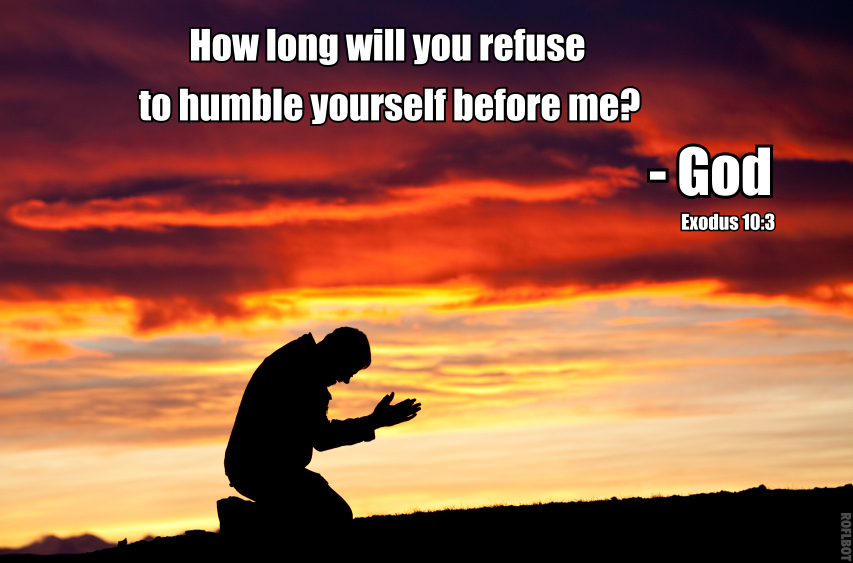
3 So Moses and Aaron went to Pharaoh and said to him, “This is what the Lord, the God of the Hebrews, says: ‘How long will you refuse to humble yourself before me? Let my people go, so that they may worship me. 4 If you refuse to let them go, I will bring locusts into your country tomorrow. 5 They will cover the face of the ground so that it cannot be seen. They will devour what little you have left after the hail, including every tree that is growing in your fields. 6 They will fill your houses and those of all your officials and all the Egyptians—something neither your parents nor your ancestors have ever seen from the day they settled in this land till now.’” Then Moses turned and left Pharaoh.

7 Pharaoh’s officials said to him, “How long will this man be a snare to us? Let the people go, so that they may worship the Lord their God. Do you not yet realize that Egypt is ruined?”

8 Then Moses and Aaron were brought back to Pharaoh. “Go, worship the Lord your God,” he said. “But tell me who will be going.”

9 Moses answered, “We will go with our young and our old, with our sons and our daughters, and with our flocks and herds, because we are to celebrate a festival to the Lord.”

10 Pharaoh said, “The Lord be with you—if I let you go, along with your women and children! Clearly you are bent on evil. 11 No! Have only the men go and worship the Lord, since that’s what you have been asking for.” Then Moses and Aaron were driven out of Pharaoh’s presence.

12 And the Lord said to Moses, “Stretch out your hand over Egypt so that locusts swarm over the land and devour everything growing in the fields, everything left by the hail.”

13 So Moses stretched out his staff over Egypt, and the Lord made an east wind blow across the land all that day and all that night. By morning the wind had brought the locusts; 14 they invaded all Egypt and settled down in every area of the country in great numbers. Never before had there been such a plague of locusts, nor will there ever be again. 15 They covered all the ground until it was black. They devoured all that was left after the hail—everything growing in the fields and the fruit on the trees. Nothing green remained on tree or plant in all the land of Egypt.

16 Pharaoh quickly summoned Moses and Aaron and said, “I have sinned against the Lord your God and against you. 17 Now forgive my sin once more and pray to the Lord your God to take this deadly plague away from me.”

18 Moses then left Pharaoh and prayed to the Lord. 19 And the Lord changed the wind to a very strong west wind, which caught up the locusts and carried them into the Red Sea. Not a locust was left anywhere in Egypt. 20 But the Lord hardened Pharaoh’s heart, and he would not let the Israelites go.

The Plague of Darkness

21 Then the Lord said to Moses, “Stretch out your hand toward the sky so that darkness spreads over Egypt—darkness that can be felt.” 22 So Moses stretched out his hand toward the sky, and total darkness covered all Egypt for three days. 23 No one could see anyone else or move about for three days. Yet all the Israelites had light in the places where they lived.

24 Then Pharaoh summoned Moses and said, “Go, worship the Lord. Even your women and children may go with you; only leave your flocks and herds behind.”

25 But Moses said, “You must allow us to have sacrifices and burnt offerings to present to the Lord our God. 26 Our livestock too must go with us; not a hoof is to be left behind. We have to use some of them in worshiping the Lord our God, and until we get there we will not know what we are to use to worship the Lord.”

27 But the Lord hardened Pharaoh’s heart, and he was not willing to let them go. 28 Pharaoh said to Moses, “Get out of my sight! Make sure you do not appear before me again! The day you see my face you will die.”

29 “Just as you say,” Moses replied. “I will never appear before you again.”

WHAT DO WE LEARN—HOW DO WE RESPOND?

In his angry response, Pharaoh blasphemed the name of God and assumed God’s people would never come back if all of them and their livestock left.  He was partially right to assume that.  Was God working on his heart?  Probably.  But Pharoah is beginning to figure out that the powerless, molded gods of Egypt are no match for the power of the God of the Hebrews (who is the only God!).

Who is God?  Who is God to us?  (You and me)

Do we really believe that what God says is really real? 

Do we trust God with our entire life, even in all the day to day details?

Do we take time to seek God first, to be still while letting go of all that is in the world for all the treasure that lies within knowing God?

What might be surrounding us and our families that hinders our view of God?  

Are there things we think about and do that break the heart of God? 

Our behaviors will reflect what we truly believe daily.  Our worries will reflect who we worship most.

Pharaoh was a beaten man, but he wouldn’t admit it. Instead, he used his authority to try to intimidate Moses. He warned Moses that if he came back into the palace to see Pharaoh, he would be killed. There were to be no more official audiences with Pharaoh.  But there is one last final plague to come to the Egyptians that will affect Pharaoh personally. 

Pharaoh had threatened to kill Moses, but God was going to slay every firstborn son in the land of Egypt and then later drown Pharaoh’s best troops. Despite what Pharaoh said about not seeing Moses, on Passover night, Pharaoh would once again call for Moses and plead for his help.  Stay tuned…there is more power of God to come!

“The hardening of Pharaoh’s heart is a warning to all of us. If the sinful human heart doesn’t respond by faith to God’s Word, it cannot be transformed by the grace of God). Instead, it will become harder and harder the longer it resists God’s truth. No matter how often God may allow affliction, it will only provoke more disobedience. In the last days, when God sends His terrible judgments on the world, people will curse God and continue in their sins, but they will not repent, (See Revelation). There will be a whole world full of men and women like Pharaoh who will behold God’s judgments and still not repent. As the Holy Spirit says: ‘Today, if you will hear His voice, do not harden your hearts’ ” (Hebrews 3:7, 8).” –Warren Wiesbe, Bible Scholar and Commentator

Lord,

We have heard you and we respond with repentant hearts asking for your forgiveness followed by your guidance.  Be in all the details of our lives today as we give ourselves to you as an offering of worship and praise for all you have done, are doing, and will do.  To you be the glory, honor, and praise forever!  What a mighty God we have and serve whose compassion and love never fails!  Lead us, Lord.

In Jesus Name, Amen

Posted in Uncategorized | Tagged , , , , | Leave a comment

GOD PROVIDES NUMEROUS OPPORTUNITES TO DECLARE HE IS LORD

The parable of the drowning man, also known as Two Boats and a Helicopter, is a short story, often told as a joke, most often about a devoutly Christian man, who refuses several rescue attempts in the face of approaching floodwaters, each time telling the would-be rescuers that his God will save him. After turning down the last, he drowns in the flood. After his death, the man meets God and asks why he did not intervene. God responds that he sent all the would-be rescuers to the man’s aid, two boats and a helicopter according to the story, on the expectation he would accept the help, highlighting the proverb that God acts through humans and other earthly entities. Nothing is too hard for God. God acts on our behalf in many ways.

As we ponder the plagues designed, pronounced, and delivered by God to bring Pharoah, a powerful ruler, to full knowledge of the power of God; we pause to wonder.  I wonder how many opportunities did God put before me before I committedly believed and fully realized who God is and trusted that what He says will happen—happens?  God knows the hearts of all He has created.  God knows what every person needs to see to know Him more clearly.  We may have to tread a few frogs, swat away numerous gnats, endure physical suffering and experience possible financial loss until we realize the full power of God.  “It’s not God’s desire that anyone should perish but brought to repentance” echoes Peter, a disciple of the Son of God, Jesus. (2 Peter 3:9) So, God provides opportunities for us to turn to Him as our Lord as well as our Savior.

God desire is for each one of us to love Him back and worship Him. Only God is God.  He wants us to know who He is; the One and Only God who created all and is in all. Nothing escapes God’s notice.  God is everywhere and knows all that is happening to us as well as what is growing within us. God knows our hearts.

God knows the heart of Pharaoh.  God provides many opportunities to lead Pharoah’s hard, stubborn, obstinate heart to repentance.  God shows His hand many times “so they will know” who God is with knowledge of God’s wonder-working power to do what He says He will do.  Will Pharoah repent, and give in to God’s demands?  Will we repent and let go of the control we think we have—but don’t?

Exodus 9

The Plague on Livestock

Then the Lord said to Moses, “Go to Pharaoh and say to him, ‘This is what the Lord, the God of the Hebrews, says: “Let my people go, so that they may worship me.” 2 If you refuse to let them go and continue to hold them back, 3 the hand of the Lord will bring a terrible plague on your livestock in the field—on your horses, donkeys and camels and on your cattle, sheep and goats. 4 But the Lord will make a distinction between the livestock of Israel and that of Egypt, so that no animal belonging to the Israelites will die.’”

5 The Lord set a time and said, “Tomorrow the Lord will do this in the land.” 6 And the next day the Lord did it: All the livestock of the Egyptians died, but not one animal belonging to the Israelites died. 7 Pharaoh investigated and found that not even one of the animals of the Israelites had died. Yet his heart was unyielding and he would not let the people go.

The Plague of Boils

8 Then the Lord said to Moses and Aaron, “Take handfuls of soot from a furnace and have Moses toss it into the air in the presence of Pharaoh. 9 It will become fine dust over the whole land of Egypt, and festering boils will break out on people and animals throughout the land.”

10 So they took soot from a furnace and stood before Pharaoh. Moses tossed it into the air, and festering boils broke out on people and animals. 11 The magicians could not stand before Moses because of the boils that were on them and on all the Egyptians. 12 But the Lord hardened Pharaoh’s heart and he would not listen to Moses and Aaron, just as the Lord had said to Moses.

The Plague of Hail

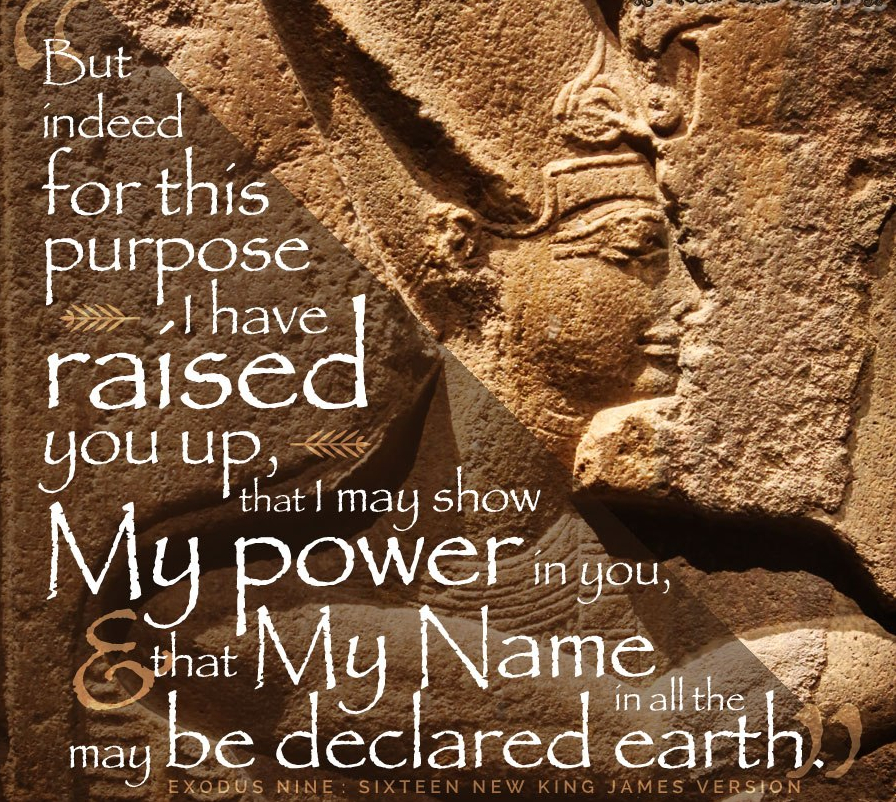
13 Then the Lord said to Moses, “Get up early in the morning, confront Pharaoh and say to him, ‘This is what the Lord, the God of the Hebrews, says: Let my people go, so that they may worship me, 14 or this time I will send the full force of my plagues against you and against your officials and your people, so you may know that there is no one like me in all the earth. 15 For by now I could have stretched out my hand and struck you and your people with a plague that would have wiped you off the earth. 16 But I have raised you up for this very purpose, that I might show you my power and that my name might be proclaimed in all the earth. 17 You still set yourself against my people and will not let them go. 18 Therefore, at this time tomorrow I will send the worst hailstorm that has ever fallen on Egypt, from the day it was founded till now. 19 Give an order now to bring your livestock and everything you have in the field to a place of shelter, because the hail will fall on every person and animal that has not been brought in and is still out in the field, and they will die.’”

20 Those officials of Pharaoh who feared the word of the Lord hurried to bring their slaves and their livestock inside. 21 But those who ignored the word of the Lord left their slaves and livestock in the field.

22 Then the Lord said to Moses, “Stretch out your hand toward the sky so that hail will fall all over Egypt—on people and animals and on everything growing in the fields of Egypt.” 23 When Moses stretched out his staff toward the sky, the Lord sent thunder and hail, and lightning flashed down to the ground. So the Lord rained hail on the land of Egypt; 24 hail fell and lightning flashed back and forth. It was the worst storm in all the land of Egypt since it had become a nation. 25 Throughout Egypt hail struck everything in the fields—both people and animals; it beat down everything growing in the fields and stripped every tree. 26 The only place it did not hail was the land of Goshen, where the Israelites were.

27 Then Pharaoh summoned Moses and Aaron. “This time I have sinned,” he said to them. “The Lord is in the right, and I and my people are in the wrong. 28 Pray to the Lord, for we have had enough thunder and hail. I will let you go; you don’t have to stay any longer.”

29 Moses replied, “When I have gone out of the city, I will spread out my hands in prayer to the Lord. The thunder will stop and there will be no more hail, so you may know that the earth is the Lord’s. 30 But I know that you and your officials still do not fear the Lord God.”

31 (The flax and barley were destroyed, since the barley had headed and the flax was in bloom. 32 The wheat and spelt, however, were not destroyed, because they ripen later.)

33 Then Moses left Pharaoh and went out of the city. He spread out his hands toward the Lord; the thunder and hail stopped, and the rain no longer poured down on the land. 34 When Pharaoh saw that the rain and hail and thunder had stopped, he sinned again: He and his officials hardened their hearts. 35 So Pharaoh’s heart was hard and he would not let the Israelites go, just as the Lord had said through Moses.

WHAT DO WE LEARN—HOW DO WE RESPOND?

Hardened hearts of leaders make life miserable not only for themselves but for everyone who surrounds them!  The fear of losing, holding on tightfisted to all we currently have, causes us to lose everything we hold dear in the end—unless we turn to God who owns it all. 

Pride makes us stubborn. Not only is pride unattractive, but it also can be ruinous (like it was to Pharaoh). Pride builds in a hard heart and produces arrogance toward all within close proximity.  And “pride leads to a great fall”, says the wisdom of Proverbs. 

 “First pride, then the crash—the bigger the ego, the harder the fall.” Proverb 16:18 MSG).

Pride promotes the slippery slop of thinking we are in complete control of our lives.  Our pastor brought home this point last Sunday: “we all think we are in control of our lives—until we aren’t!”  Only God knows and is in complete control of His created and His creation.  Only God moves on our behalf in power when we ask for His help, receive it and trust Him. 

God is the One and Only in control who provides opportunities for us to come to know the truth of who He really is so we will trust Him. God knows what we need before we know we need it. God knows how to minister to us as we go through the process of losing all we think we have securely held in life to gain all the Life eternal that is waiting for the repentant soul on the other side—God’s side.  Be a loser (to all in this temporary world) who gains all that is eternal! 

  • “Whoever finds their life will lose it, and whoever loses their life for my sake will find it.”—Jesus, Matthew 10:39
  • “For whoever wants to save their life will lose it, but whoever loses their life for me will find it.” –Jesus Matthew 16:25
  • “For whoever wants to save their life will lose it, but whoever loses their life for me and for the gospel will save it.”—Jesus, Mark 8:35
  • “For whoever wants to save their life will lose it, but whoever loses their life for me will save it.” –Jesus, Luke 9:24
  • “Anyone who loves their life will lose it, while anyone who hates their life in this world will keep it for eternal life.”—Jesus, John 12:25

What is repeated in God’s Word is of most importance to us!  God knows us, well.

The story of God displayed through Moses is not over, yet.  There is much more to learn with repentant ways for us to respond to our living and active God! 

Oh Lord,

Hallowed be your Name.  May Your Kingdom come and reign in our hearts, minds, and souls.  May Your will be done in every detail of our lives.  Help us to see and hear you more clearly as we lay down and let go of all we think we “own and control” on any given day—on this day, right now—as we yield to your will and plan. Give us this day all you know we will need to please you as we follow you.  Lead us not into temptations to pick it back up from the altar on which we laid it all down.  Deliver us from evil and evil’s attempts to distract and deceive us.  For you have all power.  May your power lead us.  To you be all the glory, honor, and praise!  Forever!

In Jesus Name, Amen

Posted in Uncategorized | Tagged , , , , | Leave a comment

THE DISTINCTION

There ain’t no flies on us
There might be flies on some of you guys
But there ain’t no flies on us, huh!

Some people use repellent while others burn coils
You can plant some citronella or try essential oils
But if the flies are bugging and you just can’t get no rest
The best advice that I can give is pack up, and move West!

This old camp song comes to my mind as we read about the plagues God sends to bring Pharoah to his knees.  We know God wins in the end, right? But for a minute, imagine sitting around the campfire, singing camp songs, while swatting all the bugs buzzing around you while hearing tree frogs in the background. We knew that this was going to be part of the backdrop of camp. We didn’t particularly like the bug bites, sunburn, or the lack of sleep at camp, but we loved being together, away from home, on the adventure to make do with less luxury items like water supply and dependable shelter in bad weather.  I grew up going to church camp that was less than stellar in amenities.

However, imagine not being able to walk from your bed, to the bathroom without stepping on a carpet of frogs!  Imagine having flies surround your eyes, nose, ears, making it impossible to eat unless you like flies as an appetizer with your food!  Imagine gnats coming in like a black cloud to cover every living thing!  Pharoah and his court are used to the luxury of having all that his hard heart desires.  He is accustomed to servants who stand ready to deliver his heart’s desires whenever he demands it.  But now who’s in charge?

God will provide opportunities, with ways and means, for Pharoah’s demanding heart to change.  This series of challenges is not only meant to free the Hebrews from slavery but it is mainly meant for the whole world to know that “there is no one like the Lord our God”!

God sends His created creatures, such as frogs, gnats, and flies as the first series of unfortunate events to show His power in all and over all.   And the most powerful miracle of all is keeping the flies off God’s own people in the process!  Yes! God is amazing—can I get an amen!

Yeah, there might be flies on some of you guys; but there ain’t no flies on us!  Boom!

Exodus 8

 1Then the Lord said to Moses, “Go to Pharaoh and say to him, ‘This is what the Lord says: Let my people go, so that they may worship me. 2 If you refuse to let them go, I will send a plague of frogs on your whole country. 3 The Nile will teem with frogs. They will come up into your palace and your bedroom and onto your bed, into the houses of your officials and on your people, and into your ovens and kneading troughs. 4 The frogs will come up on you and your people and all your officials.’”

5 Then the Lord said to Moses, “Tell Aaron, ‘Stretch out your hand with your staff over the streams and canals and ponds, and make frogs come up on the land of Egypt.’”

6 So Aaron stretched out his hand over the waters of Egypt, and the frogs came up and covered the land. 7 But the magicians did the same things by their secret arts; they also made frogs come up on the land of Egypt.

8 Pharaoh summoned Moses and Aaron and said, “Pray to the Lord to take the frogs away from me and my people, and I will let your people go to offer sacrifices to the Lord.”

9 Moses said to Pharaoh, “I leave to you the honor of setting the time for me to pray for you and your officials and your people that you and your houses may be rid of the frogs, except for those that remain in the Nile.”

10 “Tomorrow,” Pharaoh said.

Moses replied, “It will be as you say, so that you may know there is no one like the Lord our God. 11 The frogs will leave you and your houses, your officials and your people; they will remain only in the Nile.”

12 After Moses and Aaron left Pharaoh, Moses cried out to the Lord about the frogs he had brought on Pharaoh. 13 And the Lord did what Moses asked. The frogs died in the houses, in the courtyards and in the fields. 14 They were piled into heaps, and the land reeked of them. 15 But when Pharaoh saw that there was relief, he hardened his heart and would not listen to Moses and Aaron, just as the Lord had said.

The Plague of Gnats

16 Then the Lord said to Moses, “Tell Aaron, ‘Stretch out your staff and strike the dust of the ground,’ and throughout the land of Egypt the dust will become gnats.” 17 They did this, and when Aaron stretched out his hand with the staff and struck the dust of the ground, gnats came on people and animals. All the dust throughout the land of Egypt became gnats. 18 But when the magicians tried to produce gnats by their secret arts, they could not.

Since the gnats were on people and animals everywhere, 19 the magicians said to Pharaoh, “This is the finger of God.” But Pharaoh’s heart was hard and he would not listen, just as the Lord had said.

The Plague of Flies

20 Then the Lord said to Moses, “Get up early in the morning and confront Pharaoh as he goes to the river and say to him, ‘This is what the Lord says: Let my people go, so that they may worship me. 21 If you do not let my people go, I will send swarms of flies on you and your officials, on your people and into your houses. The houses of the Egyptians will be full of flies; even the ground will be covered with them.

22 “‘But on that day I will deal differently with the land of Goshen, where my people live; no swarms of flies will be there, so that you will know that I, the Lord, am in this land. 23 I will make a distinction between my people and your people. This sign will occur tomorrow.’”

24 And the Lord did this. Dense swarms of flies poured into Pharaoh’s palace and into the houses of his officials; throughout Egypt the land was ruined by the flies.

25 Then Pharaoh summoned Moses and Aaron and said, “Go, sacrifice to your God here in the land.”

26 But Moses said, “That would not be right. The sacrifices we offer the Lord our God would be detestable to the Egyptians. And if we offer sacrifices that are detestable in their eyes, will they not stone us? 27 We must take a three-day journey into the wilderness to offer sacrifices to the Lord our God, as he commands us.”

28 Pharaoh said, “I will let you go to offer sacrifices to the Lord your God in the wilderness, but you must not go very far. Now pray for me.”

29 Moses answered, “As soon as I leave you, I will pray to the Lord, and tomorrow the flies will leave Pharaoh and his officials and his people. Only let Pharaoh be sure that he does not act deceitfully again by not letting the people go to offer sacrifices to the Lord.”

30 Then Moses left Pharaoh and prayed to the Lord, 31 and the Lord did what Moses asked. The flies left Pharaoh and his officials and his people; not a fly remained. 32 But this time also Pharaoh hardened his heart and would not let the people go.

WHAT DO WE LEARN—HOW DO WE RESPOND?

There is no one like our God.  You can refuse to see His glory at work, deny His existence, rebel against all He teaches, but He is still God.  God will be God no matter if we believe Him or not.  Truth is truth whether we believe Him or not.  It isn’t “our truth” or “your truth”, it is God who is Truth!  Hardened hearts today struggle to explain God on their terms without using God’s name in the discussion of denying his existence.  Weird, right?  Chew on this prayerfully. 

After the plague of flies, Pharaoh suggested two compromises. Moses refused to compromise and make a deal with Pharaoh.  Moses is learning to do exactly what God says and nothing less! 

Where does our compromising meters land when dealing with the world of unbelievers who suggest there are many ways to God—ways that do not include the sacrifice of Jesus, His Son?  Have you ever found yourself adjusting your beliefs to go along with the world’s values, “making deals” with God? The Lord wants our obedience above everything else. And he is with us, right in the middle of it all.  There is no one like our God.  Let the world know what God says!

“Don’t go too far away,” the enemy whispers, “or people will call you a fanatic.” James 1:27 and 4:4 demolish that proposal. True service to God means giving Him authority over all our possessions and all the people in our family for whom we are responsible. Not to do so is to disobey Mark 10:13–16; Ephesians 6:4; and Deuteronomy 6:6–13. Once we start to negotiate the will of God and see how close we can get to the world, we have already disobeyed Him in our hearts.

Later, God will ask the Hebrews to provide an act of sacrifice as a further sign of distinction between them and their Egyptian neighbors that is a matter of life or death.  Stay tuned!

Lord, God,

You are amazing!  You teach us today’s skills for living by walking us through the exodus of your people from the slavery they endured along with the Egyptians gods they had to learn to avoid.  With you, there is no compromise.  You are God.  There is no other God but you.  I will trust what you say because you are God who never fails.

In Jesus Name, Amen

And we’re singing—Firm Foundation (He’s Gonna Make A Way); Songwriters: Cody Carnes / Chandler Moore / Austin Luke Kaleolanakila Davis

Christ is my firm foundation
The rock on which I stand
When everything around me is shaken
I’ve never been more glad
That I put my faith it Jesus
‘Cause He’s never let me down
He’s faithful through generations
So why would He fail now?
He won’t

I’ve still got joy in chaos
I’ve got peace that makes no sense
And I won’t be going under
I’m not held by my own strength
‘Cause I built my life on Jesus
He’s never let me down
He’s faithful in every season
So why would He fail now?
He won’t

He won’t fail, He won’t fail

Rain came, wind blew
My house was built on You
I’m safe with You, I’m gonna make it through…

‘Cause, He’s gonna make a way, He’s gonna make a way…

Posted in Uncategorized | Tagged , , , , | Leave a comment

LEARNING TO BECOME GOD’S DRIVER

Have you ever wondered why God doesn’t just wave a hand over the people of the earth and pronounced them righteous with minds that will automatically do the right thing in every circumstance? 

I will never forget that summer day in 1968 when my dad announced; “Get up! I’m going to teach you how to drive.” I was so excited!  My dad was going to teach me how to drive his “work car”, his beloved, red Ford Falcon. How hard can it be? I thought. I’ve been in the back seat all my life and observed how dad did it. I’m ready, let’s do this!  Then came all the instructions.   Wait, what, now?  We can’t just jump in and go?

The first consideration was the challenge of my height.  Being 5’ 1” meant adjusting the seat, the back up mirror up top, and the side mirrors—all without the ease of power but with me yanking and pulling until I could see. (Remember it’s 1968!) My driving preparation required many adjustments before turning on the ignition!  I barely could see over the gigantic steering wheel! And why did it feel so big in my hands?

When we were set, then I could put the key in the slot and turned it.  Now, we have power! Ah, but wait, the engine died.  More instructions.  Dad taught me next how to use the “choke” to get and keep his car engine going. The choke had to be pulled and placed at just the right degree at just the right time to work successfully and not “flood” the engine.  Friends, we are still not out of the driveway!

After the choke lesson, we learned the gear shift placement which was less than stellar.  Dad taught me that with his car, the placement was actually between neutral and drive.  Got it.  But to get out the driveway, we needed R for reverse, of course.  Now, we’re talking.  I put the car in reverse, and as it began to move, Dad gave more careful instructions.  Did you look behind you?  You don’t want to run over a child or bike left in the drive. Thinking of how many times I might have left my bike in the drive, I stopped.  “But dad, I will have to get out of the car to see that,” I said.  “Yes, you will,” he said with a smile.  Because I wanted to drive like dad, I did exactly what he said.

We finally got out of the drive.  I learned to crane my neck to see all possible obstructions while learning how the steering wheel felt and worked to keep us on course.  We are on the real road going about ten miles per hour, when he warns me  that stop signs are not “pause signs.”  “You actually have to use the brake to stop the car completely.” I did—abruptly—and dad braced himself on the dashboard so he wouldn’t hit his head on the windshield! 

Dad didn’t give up on me.  We made the turn off our street to another.  To make this long story a bit shorter, we made it to a far away parking place at our local grocery store located a few blocks from our house.  He directed me to parked in a place with no one else around probably so I wouldn’t hurt anyone or their vehicle.  I was on board for that!  I was ready to shut off the engine and just sit there for a bit.  I was a sweaty mess and a bit overwhelmed by the “lesson” on that summer day in 1968.  I sat in wonder of how much I didn’t know about driving.  Watching is one thing but doing it is quite another. 

But, most of all, I will never forget the care and instruction, along with the trust my dad gave me as I learned to drive his car. 

The process of learning is as important as accomplishing the task. Our Abba Father knows this and knows us well with a desire to teach us. He leaves nothing unsaid that needs to be said for our good.  He smiles when we are attentive and do exactly what He says.  Moses and Aaron do exactly what God says and then watch in amazement at what God does through them!  Moses will learn great lessons of leadership as God leads him to sit in the driver’s seat as he leads God’s people, by God’s power, from slavery to freedom.

Stay tuned…there’s more instruction to come, more miracles of wonder, and more of God to know.  We haven’t even started the engine yet!

Exodus 7

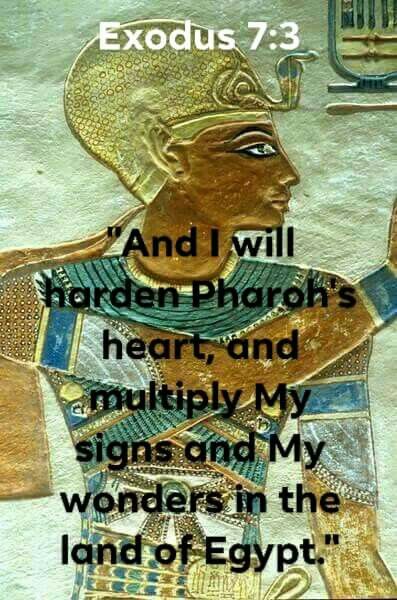
Then the Lord said to Moses, “See, I have made you like God to Pharaoh, and your brother Aaron will be your prophet. 2 You are to say everything I command you, and your brother Aaron is to tell Pharaoh to let the Israelites go out of his country. 3 But I will harden Pharaoh’s heart, and though I multiply my signs and wonders in Egypt, 4 he will not listen to you. Then I will lay my hand on Egypt and with mighty acts of judgment I will bring out my divisions, my people the Israelites. 5 And the Egyptians will know that I am the Lord when I stretch out my hand against Egypt and bring the Israelites out of it.”

6 Moses and Aaron did just as the Lord commanded them. 7 Moses was eighty years old and Aaron eighty-three when they spoke to Pharaoh.

Aaron’s Staff Becomes a Snake

8 The Lord said to Moses and Aaron, 9 “When Pharaoh says to you, ‘Perform a miracle,’ then say to Aaron, ‘Take your staff and throw it down before Pharaoh,’ and it will become a snake.”

10 So Moses and Aaron went to Pharaoh and did just as the Lord commanded. Aaron threw his staff down in front of Pharaoh and his officials, and it became a snake. 11 Pharaoh then summoned wise men and sorcerers, and the Egyptian magicians also did the same things by their secret arts: 12 Each one threw down his staff and it became a snake. But Aaron’s staff swallowed up their staffs. 13 Yet Pharaoh’s heart became hard and he would not listen to them, just as the Lord had said.

The Plague of Blood

14 Then the Lord said to Moses, “Pharaoh’s heart is unyielding; he refuses to let the people go. 15 Go to Pharaoh in the morning as he goes out to the river. Confront him on the bank of the Nile, and take in your hand the staff that was changed into a snake. 16 Then say to him, ‘The Lord, the God of the Hebrews, has sent me to say to you: Let my people go, so that they may worship me in the wilderness. But until now you have not listened. 17 This is what the Lord says: By this you will know that I am the Lord: With the staff that is in my hand I will strike the water of the Nile, and it will be changed into blood. 18 The fish in the Nile will die, and the river will stink; the Egyptians will not be able to drink its water.’”

19 The Lord said to Moses, “Tell Aaron, ‘Take your staff and stretch out your hand over the waters of Egypt—over the streams and canals, over the ponds and all the reservoirs—and they will turn to blood.’ Blood will be everywhere in Egypt, even in vessels of wood and stone.”

20 Moses and Aaron did just as the Lord had commanded. He raised his staff in the presence of Pharaoh and his officials and struck the water of the Nile, and all the water was changed into blood. 21 The fish in the Nile died, and the river smelled so bad that the Egyptians could not drink its water. Blood was everywhere in Egypt.

22 But the Egyptian magicians did the same things by their secret arts, and Pharaoh’s heart became hard; he would not listen to Moses and Aaron, just as the Lord had said. 23 Instead, he turned and went into his palace, and did not take even this to heart. 24 And all the Egyptians dug along the Nile to get drinking water, because they could not drink the water of the river.

WHAT DO WE LEARN—HOW DO WE RESPOND?

Lesson 1: Trust God. Although Moses thought he could not persuade Pharaoh, he saw that with God, nothing is impossible.  Moses was learning to trust God with each lesson God taught him.

Lesson 2:  Only God is God. As we continue our study of this remarkable series of miracles, we must focus on the reasons why the Lord took this approach in dealing with Pharaoh and sent these sign judgments to the land of Egypt. The ultimate purpose, of course, was to bring Pharaoh and the Egyptians to their knees so they would be willing for the Israelites to leave the land. But at the same time, the Lord was revealing Himself to both the Israelites and the Egyptians and proving that He alone is God.

Lesson 3:  There are no other gods but God. The miracles and plagues were also God’s way of judging the gods of Egypt and proving them false and futile. “Against all the gods of Egypt I will execute judgment: I am the LORD.”

Lesson 4: Hard heartedness is no match for God!  God was hardening Pharaoh’s heart. Does this mean that God was unfair and that Pharaoh shouldn’t be held responsible for what he did? No, for the same sun that melts the ice also hardens the clay. It all depends on the nature of the material. To the very end of the contest; Pharaoh was a proud, unrepentant sinner who refused to hear God’s Word, do God’s will, or even keep his own promises to the Israelite people. The Lord gave him more than enough evidence to convince him that the gods of Egypt were false and the God of the Hebrews was the true and living God.

We may think we are in the driver’s set on any given day.  Mm, but we aren’t really.  We are not that powerful!  What is most important to realize on the drive is Who is giving us instructions and directions to get us where we want and need to be?  Who is leading?  Who is following?  When we realize it was, is, and always will be God, the Father through Jesus, His Son; we will reach our destination.  And the process leads us to a deeper realization of the greatness of God before we arrive!

Lord,

Thank you for the lessons and instructions that proclaim who you are with how much you love and care for us! Thank you for the process of learning that brings a new appreciation for all you have done, are doing, and will do in our lives as we grow in our holy, loving, intimate relationship with you!  May your will be done by your instruction to us!

In Jesus Name, by your power, for our good, and your glory!

Amen!

Posted in Uncategorized | Tagged , , , , | Leave a comment

PREPARE TO LEAVE

Before we left the state we were born and raised, God prepared our hearts, minds, and souls for the leaving of all that we knew as “normal” living.  We were called to go a thousand miles away to another state (and another culture) to do God’s work.  I look back on this momentous event and stand in awe of our God who prepared the way for our leaving months ahead of the actual departure without fully realizing what God was doing in us before doing another work through us.  There was the conclusion of my master degree in educational leadership, wrapping up my last school year as a public school teacher, the rearranging of our finances to make the move, preparing our home to be put on the market, cleaning out the school supplies I would no longer need, preparing the parents for our leaving as well as our almost adult children still living with us and telling our church what the Lord was about to do in us. 

There were many other things on the list as well but you get the picture.  God calls, He prepares, He equips by changing our minds and rearranging our lives for the next work, and then He prepares our hearts for the leaving so we won’t turn back.  Leaving what you once knew and were comfortable with, even though it was hard, is not as easy as it sounds.  God also prepares us spiritually, emotionally, and mentally for the trip.  He also prepares the hearts of those we are leaving behind—who do not want us to leave.

Exodus 6

Then the Lord said to Moses, “Now you will see what I will do to Pharaoh: Because of my mighty hand he will let them go; because of my mighty hand he will drive them out of his country.”

2 God also said to Moses, “I am the Lord. 3 I appeared to Abraham, to Isaac and to Jacob as God Almighty, but by my name the Lord I did not make myself fully known to them. 4 I also established my covenant with them to give them the land of Canaan, where they resided as foreigners. 5 Moreover, I have heard the groaning of the Israelites, whom the Egyptians are enslaving, and I have remembered my covenant.

6 “Therefore, say to the Israelites: ‘I am the Lord, and I will bring you out from under the yoke of the Egyptians. I will free you from being slaves to them, and I will redeem you with an outstretched arm and with mighty acts of judgment. 7 I will take you as my own people, and I will be your God. Then you will know that I am the Lord your God, who brought you out from under the yoke of the Egyptians. 8 And I will bring you to the land I swore with uplifted hand to give to Abraham, to Isaac and to Jacob. I will give it to you as a possession. I am the Lord.’”

9 Moses reported this to the Israelites, but they did not listen to him because of their discouragement and harsh labor.

10 Then the Lord said to Moses, 11 “Go, tell Pharaoh king of Egypt to let the Israelites go out of his country.”

12 But Moses said to the Lord, “If the Israelites will not listen to me, why would Pharaoh listen to me, since I speak with faltering lips?”

Family Record of Moses and Aaron

13 Now the Lord spoke to Moses and Aaron about the Israelites and Pharaoh king of Egypt, and he commanded them to bring the Israelites out of Egypt.

14 These were the heads of their families:

The sons of Reuben the firstborn son of Israel were Hanok and Pallu, Hezron and Karmi. These were the clans of Reuben.

15 The sons of Simeon were Jemuel, Jamin, Ohad, Jakin, Zohar and Shaul the son of a Canaanite woman. These were the clans of Simeon.

16 These were the names of the sons of Levi according to their records: Gershon, Kohath and Merari. Levi lived 137 years.

17 The sons of Gershon, by clans, were Libni and Shimei.

18 The sons of Kohath were Amram, Izhar, Hebron and Uzziel. Kohath lived 133 years.

19 The sons of Merari were Mahli and Mushi.

These were the clans of Levi according to their records.

20 Amram married his father’s sister Jochebed, who bore him Aaron and Moses. Amram lived 137 years.

21 The sons of Izhar were Korah, Nepheg and Zikri.

22 The sons of Uzziel were Mishael, Elzaphan and Sithri.

23 Aaron married Elisheba, daughter of Amminadab and sister of Nahshon, and she bore him Nadab and Abihu, Eleazar and Ithamar.

24 The sons of Korah were Assir, Elkanah and Abiasaph. These were the Korahite clans.

25 Eleazar son of Aaron married one of the daughters of Putiel, and she bore him Phinehas.

These were the heads of the Levite families, clan by clan.

26 It was this Aaron and Moses to whom the Lord said, “Bring the Israelites out of Egypt by their divisions.” 27 They were the ones who spoke to Pharaoh king of Egypt about bringing the Israelites out of Egypt—this same Moses and Aaron.

Aaron to Speak for Moses

28 Now when the Lord spoke to Moses in Egypt, 29 he said to him, “I am the Lord. Tell Pharaoh king of Egypt everything I tell you.”

30 But Moses said to the Lord, “Since I speak with faltering lips, why would Pharaoh listen to me?”

WHAT DO WE LEARN—HOW DO WE RESPOND?

God frees His people for their good and His glory.  He will use a faltering Moses and his brother Aaron as a team to make it happen.  God is already at work in His people, preparing their hearts, organizing them into family divisions, while building their faith in the promise that this will indeed happen! God is at work in building the confidence and faith in His leader, Moses.  Moses has a lot to learn as he leaves the shepherd life for the life of a leader, the ambassador of God, to tell the Pharoah, that God has spoken—”Let My people go.” 

But we are not there yet.  Pharoah sees no advantage to losing the slaves that do all the work in building his kingdom.  Meanwhile Moses is looking inward, reminding  (nagging) God about his disabilities instead of looking upward at God’s power to accomplish His Plan of Rescue.  (But, we don’t do that, do we?  Mm, yes, we do.)

When Moses complained, God reminded him, not once but four times; “I am the LORD.”  And seven times, God said, “I will.” When we know that God is in control and we claim His promises, then we can experience peace and courage in the battles of life. God promised to bring Israel out of Egypt, free them from bondage, and take them into their Promised Land. At the heart of the seven “I will” promises is “I will take you as My people” (v. 7), which is the basis for all that God did for the Israelites.

God provided His blessed assurance to a very unsure Moses.  God assured Moses that He felt the burdens of His people and was working on their behalf (6:5; see 2:24). Everything was working according to His plan, and nothing God had planned would fail.

Whenever we feel the Lord has abandoned us and doesn’t really care, we need to remember His assuring words, “casting all your care upon Him, for He cares for you” (1 Peter 5:7).  We have a compassionate God who fails not!

God always has a reason.  This genealogy isn’t here by accident, for it’s the Lord’s way of reminding us, the readers, that God had prepared Moses and Aaron for their ministry in Egypt. Their arrival in Jacob’s family was part of His providential working.

God’s calling means God’s enabling, and what He begins He always completes (Ephesians 2:10; Philippians 1:6). 

Lord,

Thank you for your reminders to reassure our hearts, minds, and souls. Thank you for cleansing our hearts, renewing our minds, refreshing our souls, and continually restoring the joy and peace of your salvation at work within us.

In Jesus Name, Amen

Posted in Uncategorized | Tagged , , , , | Leave a comment

IT MIGHT GET WORSE BEFORE IT GETS BETTER

Our thinking about who God is and what He does can be a bit too simplistic at times.  We think when we turn to God, all will be rosy, even though in the back of our minds are the words Jesus said, “In this world, you will have trouble.”  Admit it.  We are surprised, shocked even, when after giving ourselves to God; troubles come or what He said to do gets too hard to do!  When God calls us to a specific task, He will give us all we need to complete it—but in His way, in His timing, by His power leading us.  This requires tuning our listening skills to the extreme mode.

God is Truth.  God prepares Moses with the Truth of what will happen when he approaches hard-hearted Pharoah with God’s plan to release His people from bondage to worship Him. God sends Moses with the help of his brother and the support of the team of Elders of the Hebrew people.  God warns Moses about Pharoah’s heart with “Moses, Pharoah will say no, but there is more to come that I will do to make this happen.”  Step by step, God will lead Moses as Moses leads His people back to Him.

Sometimes I wonder if we quit when it gets hard before God makes it better. And sometimes I wonder if we assume what God wants without asking Him?

Exodus 5

Bricks Without Straw

5 Afterward Moses and Aaron went to Pharaoh and said, “This is what the Lord, the God of Israel, says: ‘Let my people go, so that they may hold a festival to me in the wilderness.’”

2 Pharaoh said, “Who is the Lord, that I should obey him and let Israel go? I do not know the Lord and I will not let Israel go.”

3 Then they said, “The God of the Hebrews has met with us. Now let us take a three-day journey into the wilderness to offer sacrifices to the Lord our God, or he may strike us with plagues or with the sword.”

4 But the king of Egypt said, “Moses and Aaron, why are you taking the people away from their labor? Get back to your work!” 5 Then Pharaoh said, “Look, the people of the land are now numerous, and you are stopping them from working.”

6 That same day Pharaoh gave this order to the slave drivers and overseers in charge of the people: 7 “You are no longer to supply the people with straw for making bricks; let them go and gather their own straw. 8 But require them to make the same number of bricks as before; don’t reduce the quota. They are lazy; that is why they are crying out, ‘Let us go and sacrifice to our God.’ 9 Make the work harder for the people so that they keep working and pay no attention to lies.”

10 Then the slave drivers and the overseers went out and said to the people, “This is what Pharaoh says: ‘I will not give you any more straw. 11 Go and get your own straw wherever you can find it, but your work will not be reduced at all.’” 12 So the people scattered all over Egypt to gather stubble to use for straw. 13 The slave drivers kept pressing them, saying, “Complete the work required of you for each day, just as when you had straw.” 14 And Pharaoh’s slave drivers beat the Israelite overseers they had appointed, demanding, “Why haven’t you met your quota of bricks yesterday or today, as before?”

15 Then the Israelite overseers went and appealed to Pharaoh: “Why have you treated your servants this way? 16 Your servants are given no straw, yet we are told, ‘Make bricks!’ Your servants are being beaten, but the fault is with your own people.”

17 Pharaoh said, “Lazy, that’s what you are—lazy! That is why you keep saying, ‘Let us go and sacrifice to the Lord.’ 18 Now get to work. You will not be given any straw, yet you must produce your full quota of bricks.”

19 The Israelite overseers realized they were in trouble when they were told, “You are not to reduce the number of bricks required of you for each day.” 20 When they left Pharaoh, they found Moses and Aaron waiting to meet them, 21 and they said, “May the Lord look on you and judge you! You have made us obnoxious to Pharaoh and his officials and have put a sword in their hand to kill us.”

God Promises Deliverance

22 Moses returned to the Lord and said, “Why, Lord, why have you brought trouble on this people? Is this why you sent me? 23 Ever since I went to Pharaoh to speak in your name, he has brought trouble on this people, and you have not rescued your people at all.”

WHAT DO WE LEARN—HOW DO WE RESPOND?

God calls, equips, and sends each one of us into the fire of deceit that rages by the Enemy against God and His created daily.  We must ask ourselves; do we really believe God?  Do we really believe all God says as really real? What we believe, truly believe from the center of our being will be displayed in our daily responses to God and others.  Sometimes when the going get tough the tough get obnoxious.

Instead of going to Pharaoh to complain, the foremen should have gone to Moses and Aaron and suggested that they summon the elders and have a prayer meeting to remind themselves of the promises God had given Israel and claimed them by faith. What a difference that would have made for them and for their leaders! Alas, during the next forty years, complaining about God’s will and criticizing God’s leaders would be characteristic of the people of Israel; but are God’s people much different today?

God has given us a work to do with purpose.  First is requires believing and surrendering to Jesus in grateful humility; knowing what He did to save us becomes our hope and our blessed assurance as we listen and move on God’s command to help others escape and be rescued by Jesus.

God uses the Rescued to guide others who need rescued from the slavery of sin to being set free by Jesus.  It is by believing in the rescue of Jesus that we can come boldly to God!  The bonus is eternal life beginning with an intimate loving, growing relationship with God upon believing in Jesus.  Because the Enemy of God hates seeing believers on their knees, praying in Jesus Name—so life will get worse before it gets better.  Trust the process that actually serves to build and solidify our faith!

Paul explains our call from God:

“Since we believe that Christ died for all, we also believe that we have all died to our old life. 15 He died for everyone so that those who receive his new life will no longer live for themselves. Instead, they will live for Christ, who died and was raised for them.

16 So we have stopped evaluating others from a human point of view. At one time we thought of Christ merely from a human point of view. How differently we know him now! 17 This means that anyone who belongs to Christ has become a new person. The old life is gone; a new life has begun!

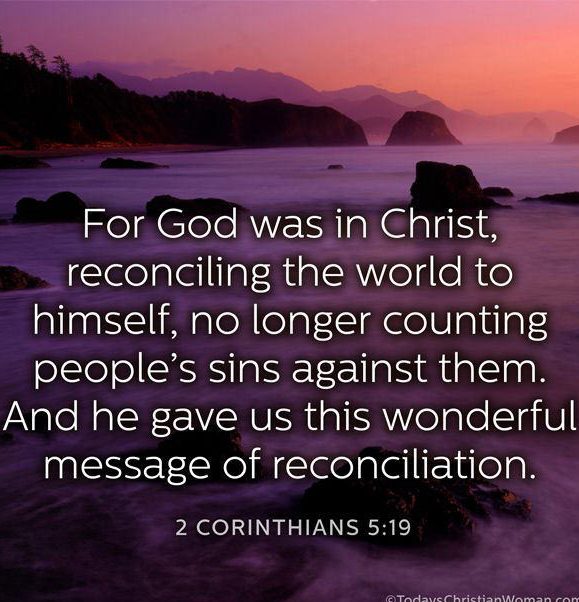
18 And all of this is a gift from God, who brought us back to himself through Christ. And God has given us this task of reconciling people to him. 19 For God was in Christ, reconciling the world to himself, no longer counting people’s sins against them. And he gave us this wonderful message of reconciliation. 20 So we are Christ’s ambassadors; God is making his appeal through us. We speak for Christ when we plead, “Come back to God!” 21 For God made Christ, who never sinned, to be the offering for our sin, so that we could be made right with God through Christ.” 2 Corinthians 5:

Learn from Moses who is learning!  Faced with fierce, unexpected anger, Moses did what all spiritual leaders must do when the going is tough: He took his burden to the Lord and honestly talked to Him about the situation. It’s easy to see that Moses was disappointed and distressed. He blamed God for the way Pharaoh was mistreating the Israelites, and he accused Him of doing nothing. “Why did You send me?” he asked. In other words, “Are You going to keep Your promises to me or not?”

God’s chosen servants must expect opposition and misunderstanding, because that’s part of what it means to be a leader; and leaders must know how to get alone with God, pour out their hearts, and seek His strength and wisdom. Spiritual leaders must be bold before people but broken before God and must cling to God’s promises and do His will even when everything seems to be against them.

Lord,

We repent of quitting to soon when the going gets tough and scary.  But it is in these times that we can grow closer to you as we seek your will and plan for each moment in time on our journey.  Thank you for being with us always. Thank you for wisdom to know when to go and when to stay; when to speak and when to be silent and wait on you.  We know that all things work together for good for those who believe in you.

In Jesus Name, Amen
Posted in Uncategorized | Tagged , , , , | Leave a comment

SURRENDER

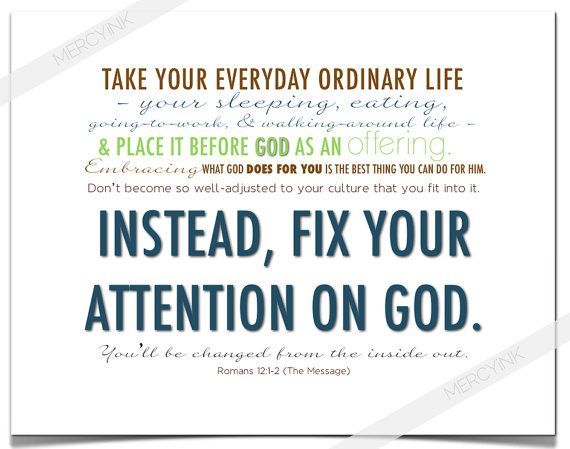
“So here’s what I want you to do, God helping you: Take your everyday, ordinary life—your sleeping, eating, going-to-work, and walking-around life—and place it before God as an offering. Embracing what God does for you is the best thing you can do for him. Don’t become so well-adjusted to your culture that you fit into it without even thinking. Instead, fix your attention on God. You’ll be changed from the inside out. Readily recognize what he wants from you, and quickly respond to it. Unlike the culture around you, always dragging you down to its level of immaturity, God brings the best out of you, develops well-formed maturity in you.” Romans 12:1-2, MSG

Moses, the one who took another man’s life and ran from the scene of the crime, is living comfortably and peacefully, pursuing the quiet life as a shepherd.  Moses fit into the shepherd culture easily and didn’t seem to miss the palace life.  But God, who uses every circumstance and situation to accomplish his will, is stirring Moses’ heart by igniting a fire within him.  The bush is not the only thing burning as God speaks.

I surrender all
I surrender all
All to Thee my blessed Savior
I surrender all…
I can hear this sweet hymn of surrender echoing in the background as we read this very precious, powerful, and personal encounter between God and Moses.  Observe how Moses surrenders to God in part and then the whole.  And now, episode two, season one.

Exodus 4

Signs for Moses

Moses answered, “What if they do not believe me or listen to me and say, ‘The Lord did not appear to you’?”

2 Then the Lord said to him, “What is that in your hand?”

“A staff,” he replied.

3 The Lord said, “Throw it on the ground.”

Moses threw it on the ground and it became a snake, and he ran from it. 4 Then the Lord said to him, “Reach out your hand and take it by the tail.” So Moses reached out and took hold of the snake and it turned back into a staff in his hand. 5 “This,” said the Lord, “is so that they may believe that the Lord, the God of their fathers—the God of Abraham, the God of Isaac and the God of Jacob—has appeared to you.”

6 Then the Lord said, “Put your hand inside your cloak.” So Moses put his hand into his cloak, and when he took it out, the skin was leprous—it had become as white as snow.

7 “Now put it back into your cloak,” he said. So Moses put his hand back into his cloak, and when he took it out, it was restored, like the rest of his flesh.

8 Then the Lord said, “If they do not believe you or pay attention to the first sign, they may believe the second. 9 But if they do not believe these two signs or listen to you, take some water from the Nile and pour it on the dry ground. The water you take from the river will become blood on the ground.”

10 Moses said to the Lord, “Pardon your servant, Lord. I have never been eloquent, neither in the past nor since you have spoken to your servant. I am slow of speech and tongue.”

11 The Lord said to him, “Who gave human beings their mouths? Who makes them deaf or mute? Who gives them sight or makes them blind? Is it not I, the Lord? 12 Now go; I will help you speak and will teach you what to say.”

13 But Moses said, “Pardon your servant, Lord. Please send someone else.”

14 Then the Lord’s anger burned against Moses and he said, “What about your brother, Aaron the Levite? I know he can speak well. He is already on his way to meet you, and he will be glad to see you. 15 You shall speak to him and put words in his mouth; I will help both of you speak and will teach you what to do. 16 He will speak to the people for you, and it will be as if he were your mouth and as if you were God to him. 17 But take this staff in your hand so you can perform the signs with it.”

Moses Returns to Egypt

18 Then Moses went back to Jethro his father-in-law and said to him, “Let me return to my own people in Egypt to see if any of them are still alive.”

Jethro said, “Go, and I wish you well.”

19 Now the Lord had said to Moses in Midian, “Go back to Egypt, for all those who wanted to kill you are dead.” 20 So Moses took his wife and sons, put them on a donkey and started back to Egypt. And he took the staff of God in his hand.

21 The Lord said to Moses, “When you return to Egypt, see that you perform before Pharaoh all the wonders I have given you the power to do. But I will harden his heart so that he will not let the people go. 22 Then say to Pharaoh, ‘This is what the Lord says: Israel is my firstborn son, 23 and I told you, “Let my son go, so he may worship me.” But you refused to let him go; so I will kill your firstborn son.’”

24 At a lodging place on the way, the Lord met Moses and was about to kill him. 25 But Zipporah took a flint knife, cut off her son’s foreskin and touched Moses’ feet with it.[c] “Surely you are a bridegroom of blood to me,” she said. 26 So the Lord let him alone. (At that time she said “bridegroom of blood,” referring to circumcision.)

27 The Lord said to Aaron, “Go into the wilderness to meet Moses.” So he met Moses at the mountain of God and kissed him. 28 Then Moses told Aaron everything the Lord had sent him to say, and also about all the signs he had commanded him to perform.

29 Moses and Aaron brought together all the elders of the Israelites, 30 and Aaron told them everything the Lord had said to Moses. He also performed the signs before the people, 31 and they believed. And when they heard that the Lord was concerned about them and had seen their misery, they bowed down and worshiped.

WHAT DO WE LEARN—HOW DO WE RESPOND?

Was Moses “all in”?  We can learn much from Moses’ first responses to God.

Moses completely missed the message of God’s name and miraculous power. “I Am” is all that we need in every circumstance of life, and it’s foolish for us to argue, “I am not.” If God can turn a staff into a snake and a snake into a staff, if He can cause and cure leprosy, and if He can turn water into blood, then surely God can enable Moses to speak His Word with power. Moses was looking at himself instead of looking to God.

The God who made us is able to use the gifts and abilities He has given us to accomplish the tasks He assigns to us.

Was Moses manifesting an attitude of pride or true humility? Forty years earlier, he felt perfectly adequate to face the enemy and act on behalf of his people; but now he’s backing off and professing himself to be a worthless failure.

But humility isn’t thinking poorly of ourselves; it’s simply not thinking of ourselves at all but making God everything. The humble servant thinks only of God’s will and God’s glory, not his or her own inadequacy, success, or failure. Moses was clothing his pride and unbelief in a hollow confession of weakness.

“Lord, please, send anybody else!” was Moses’ final plea. Moses calls Him “Lord” and yet was refusing to obey His orders. (See also Luke 6:46; Acts 10:14). Most of us understand that attitude because we’ve made the same mistake. We regularly resist, ignore, or deflect God’s commands—just as Moses did.

We need to remember that if God isn’t Lord of all, He isn’t Lord at all.

God knows us better than we know ourselves, so we must trust Him and obey what He tells us to do. When we tell God our weaknesses, we aren’t sharing anything He doesn’t already know.  Moses was not the only one, many throughout God’s Word struggled because of inability to grasp all that God wants to do in us.

The will of God will never lead you where the power of God can’t enable you, so walk by faith in His promises.

Be careful what we ask of God!  God appointed Aaron to be the spokesperson for Moses, but Aaron wasn’t always a help to his brother. It was Aaron who cooperated with the people in making the gold calf (Exodus 32).  Aaron and his sister Miriam were critical of Moses and his wife and brought trouble to the camp. Moses got a concession from God and had to live with the consequences.

One of the most painful judgments God can send is to let His people have their own way.

Worry slanders the promises of God.  Moses had expressed human worry and fear of the unknown based on his assumptions of what he thought would happen. Oh, dear friends, worry is probably our worst enemy to all the God wants to do in and through us, right?! Most of us respond first with; God, “what if…”.  Moses assumed that the Israelite elders would not believe his message or accept his leadership, but they did, and so did the rest of the nation when they saw the demonstration of God’s power in the signs. Not only did they believer, their response was praise to God in worship!  Rescue is on the way!

When we fully realize the depth of love and concern God has for us; is our first response to God worship in grateful thanksgiving?

Worship is the logical response of God’s people to God’s grace and goodness.

Back to the first question—Was Moses all in?  Eventually. 

God became frustrated with Moses but never gave up on him.  Oh, how we must frustrate God when we ask for less than God’s best for us.  But God never gives up on us.  It is not in His nature.  So we must never give up on God.

Looking ahead, we will read and observe events that proved that Moses was very capable of speaking God’s words with mighty power, both to his own people and to the king of Egypt. God in a surrender Moses did that.  As the history of Israel unfolds, you find Moses delivering some eloquent messages in the power of the Lord. The Book of Deuteronomy records his magnificent farewell speech at the end of his life on earth. 

Are we all in?  Jesus is our Rescuer who saved us from all that is not God in us.  To Him be the glory, honor, and praise!  Do we trust Him?

Lord,

Thank you for all the gold nuggets of truth that stirs our consciences this morning.  I will meditate on your great works portrayed through all those who believed and followed you all the days of their lives.  Cleanse and purify our hearts, renew our thinking as we fix our attention on you.  Refresh our souls by your mercy.  Restore the joy of you in us and us in you as we lay ourselves before you as an offering to you.  I surrender all.

In Jesus Name, Amen

Posted in Uncategorized | Tagged , , , , | Leave a comment

ON ANY GIVEN DAY—GOD!

To say there is no God is foolish.  Only fools are so entrenched in the world around us that truth escapes our view and blocks our understanding of all that is God.  Only fools are led by the nose to places not of our choice but we follow to feel better about ourselves.  Only fools seek belonging by acceptance from anyone who will give us a nod of approval.  Only fools feed daily on diets of self-satisfaction, thinking we deserve all we can get, along with other lies evil dishes out to us. 

Only fools sustain our existence on the lies we tell ourselves that we can make it on our own in life—without interference from God—the one who we have declared does not exist!  Only fools slander and persecute others to feel better about ourselves with hopes of those around us will think more highly of us.  Only fools succumb to the enticement to think we are in charge and in control of ourselves and everything around us.  Only fools think we can handle whatever life throws at us.  Only fools think we are better than God.  Only fools think we can hide from God.  “All have sinned and fall short of the glory of God.” (Romans 3:23)

Then God appears in a way that gets our attention.  When we least expect it, God intervenes and steps into our everyday life. Then God does the impossible right in front of us.  We can’t help but notice.  Our present view of the world fades into the background, out of focus, so that we only see the holy Presence of God.  Everything about our foolish existence is challenged as God speaks wisdom into the impossible miraculous act of His power.  We listen to His Voice because the noises and voices of the world has been blocked out.  This is God. 

Moses has been living and working as a shepherd for his father-in-law, Jethro for a few years.  Moses was “on the run” to escape punishment from committing murder of an Egyptian who was beating on the Hebrew people of his birth who were slaves. At that time, he may have thought he was coming to their aid, defending them and maybe even himself of the bully.  But nevertheless, Moses took another man’s life and ran from the anger of Pharoah’s household. Moses ran from the God of his forefathers.  Moses was living a new “normal” as a shepherd living near the mountain of God, Horeb. 

Then God.

Exodus 3

Moses and the Burning Bush

3 Now Moses was tending the flock of Jethro his father-in-law, the priest of Midian, and he led the flock to the far side of the wilderness and came to Horeb, the mountain of God. 2 There the angel of the Lord appeared to him in flames of fire from within a bush. Moses saw that though the bush was on fire it did not burn up. 3 So Moses thought, “I will go over and see this strange sight—why the bush does not burn up.”

4 When the Lord saw that he had gone over to look, God called to him from within the bush, “Moses! Moses!”

And Moses said, “Here I am.”

5 “Do not come any closer,” God said. “Take off your sandals, for the place where you are standing is holy ground.” 6 Then he said, “I am the God of your father, the God of Abraham, the God of Isaac and the God of Jacob.” At this, Moses hid his face, because he was afraid to look at God.

7 The Lord said, “I have indeed seen the misery of my people in Egypt. I have heardthem crying out because of their slave drivers, and I am concerned about their suffering. 8 So I have come down to rescue them from the hand of the Egyptians and to bring them up out of that land into a good and spacious land, a land flowing with milk and honey—the home of the Canaanites, Hittites, Amorites, Perizzites, Hivites and Jebusites. 9 And now the cry of the Israelites has reached me, and I have seen the way the Egyptians are oppressing them. 10 So now, go. I am sending you to Pharaoh to bring my people the Israelites out of Egypt.”

11 But Moses said to God, “Who am I that I should go to Pharaoh and bring the Israelites out of Egypt?”

12 And God said, “I will be with you. And this will be the sign to you that it is I who have sent you: When you have brought the people out of Egypt, you will worship God on this mountain.”

13 Moses said to God, “Suppose I go to the Israelites and say to them, ‘The God of your fathers has sent me to you,’ and they ask me, ‘What is his name?’ Then what shall I tell them?”

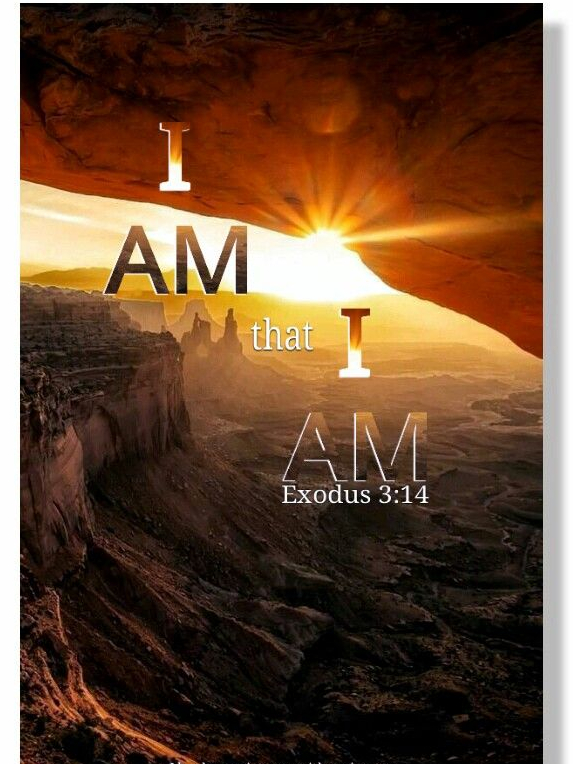
14 God said to Moses, “I am who I am. This is what you are to say to the Israelites: ‘I am has sent me to you.’”

15 God also said to Moses, “Say to the Israelites, ‘The Lord, the God of your fathers—the God of Abraham, the God of Isaac and the God of Jacob—has sent me to you.’

“This is my name forever,
    the name you shall call me
    from generation to generation.

16 “Go, assemble the elders of Israel and say to them, ‘The Lord, the God of your fathers—the God of Abraham, Isaac and Jacob—appeared to me and said: I have watched over you and have seen what has been done to you in Egypt. 17 And I have promised to bring you up out of your misery in Egypt into the land of the Canaanites, Hittites, Amorites, Perizzites, Hivites and Jebusites—a land flowing with milk and honey.’

18 “The elders of Israel will listen to you. Then you and the elders are to go to the king of Egypt and say to him, ‘The Lord, the God of the Hebrews, has met with us. Let us take a three-day journey into the wilderness to offer sacrifices to the Lord our God.’ 19 But I know that the king of Egypt will not let you go unless a mighty hand compels him. 20 So I will stretch out my hand and strike the Egyptians with all the wonders that I will perform among them. After that, he will let you go.

21 “And I will make the Egyptians favorably disposed toward this people, so that when you leave you will not go empty-handed. 22 Every woman is to ask her neighbor and any woman living in her house for articles of silver and gold and for clothing, which you will put on your sons and daughters. And so you will plunder the Egyptians.”

WHAT DO WE LEARN—HOW DO WE RESPOND?

We cannot miss what God is saying to us today!  God speaks through whatever form it takes to get our attention and draw us to who He is. I don’t know about you, but God’s statements to Moses about who He and how He works clarifies and strengthens my resolved faith in God because of who He sent to rescue us—Jesus Christ, our Rescuer and Lord!

  • I AM is the Name of God who was, is and always will be!
  • I am the God of your father, the God of Abraham, the God of Isaac, and the God of Jacob. 
  • I have indeed seen.
  • I have heard.
  • I am concerned.
  • I have come to rescue.
  • I will be with you.  I will go before you. 
  • I know the situation so I am sending you.
  • I AM who I am.

God follows up who He is with what He will do.

  • I have watched over you.
  • I promise to bring you out of misery to a land that will provide all you need.
  • I have a plan to set you free by my outstretched arms.
  • You will not go empty-handed.  I will provide.

God’s plans for us contain a lot of surprises. God leads and provides the means to reach his goals for our good and His glory!  Depend on Him.  Live expectant, hope-filled lives!  God does not disappoint.  It is not in His nature.

The key question in life is not “How strong am I?” but rather “How strong is God?” When we focus on God’s power and strength, not ours, we see the world more closely from God’s perspective.  Pause to thank God for who He is and what has done, is doing and will do in our lives.  Let all of who God is occupy our minds today. For it is by His strength, power, and wisdom that Life becomes rich in love, joy, and peace because of His Love, Mercy and Grace generously given to us. 

Moses’ first lesson by God about God: “Take off your sandals, for the place where you are standing is holy ground.”  Where God is, is holy.

God’s Presence is with us always. That was, is and always will be what He promised.  Can we camp on that thought for a minute?  God is truly with us, living deep within our souls, all because of the removal of our repented sins.  It is by Jesus’ sacrifice taking our punishment and paying in full what we deserved but did not pay that we are made holy.  So, where we are standing (or sitting) at this very moment is holy. 

It is God who makes all He has created holy; even the ground we walk on when we abide in Him, remain in Him, staying so close that to Him that we hear his faintest whisper and obey Him.

With these fifteen words God defines our roles. God is holy. We are made holy by Him.

Pause to pray and reflect:  What is my response to the holiness of God?

Lord,

You have provided many “burning bush” moments in my life that has redirected my thinking and behaviors over the years.  Thank you for these holy moments on my journey to be more and more like you, dear Jesus, and less like my sin nature.  Thank you for cleansing my heart and purifying my soul in those moments. There are not enough words to express my gratitude for your strength, power, and wisdom that is more than enough for living this life in preparation for the next on the holiest ground of all—with you always and forevermore.

In Jesus Name,  Amen

Posted in Uncategorized | Tagged , , , , | Leave a comment

NATURE VERSUS NURTURE?

Nature is what people think of as pre-wiring and is influenced by genetic inheritance and other biological factors. Nurture is generally understood as the influence of external factors in the environment in which we live that exposes individuals to new experiences daily that form their thinking and ultimately their responses to life. In other words, experience is a good teacher no matter who you are “wired.”  From a scientific perspective, “nature” refers to the biological/genetic predispositions that impact one’s human traits — physical, emotional, and intellectual. “Nurture,” in contrast, describes the influence of learning and other “environmental” factors on these traits.

But God’s perspective comes from a much higher thinking—higher than humans!

God’s Word, our teacher about God, tells us how God created all of us.  God knows us from the inside out and outside in.  God knew us before we were born. God shaped us in the womb.  God sees and knows what is in our hearts.  God created us with purpose.  God created us to worship Him and love Him back. God’s love for us in unchanging and his mercies are new each day.  God provides for His created who believe and trust Him.  God will use unbelievers in his work to protect us as His will is fulfilled.  The Psalms are filled with this truth about God! 

God, who created all, is in and over all, is involved.  He uses all our experiences in life to teach us as he leads us to his perfect and pleasing will and purpose for our existence on earth—all for His glory and our good!  The nature versus nurture thinking is merely the means to greater wisdom and thinking. God uses all to guide us to all He is and wants us to be!  

God will use everything in the life of Moses to lead Him to a much greater purpose with a plan to rescue the Hebrews from tortuous slavery.  As we read, observe the life of Moses from God’s perspective.  God is in all the details!  Watch as he steers Moses to where He needs to be with what God wants Him to do. With God, everything changes in the life of Moses, born a Hebrew but raised an Egyptian.  With God, both nature and nurture instilled in Moses will be used as influencers; but it is the power of God who will work through Moses to lead the Hebrew nation out of bondage to worship Him freely.

Moses might have been born of a Hebrew couple, but he was schooled as an Egyptian. Watch and learn how the story of God in Moses displays the awesome power of our sovereign God Almighty!  God has a plan. God will see to it that the plan is fulfilled. 

Exodus 2

The Birth of Moses

Now a man of the tribe of Levi married a Levite woman, 2 and she became pregnant and gave birth to a son. When she saw that he was a fine child, she hid him for three months. 3 But when she could hide him no longer, she got a papyrus basket for him and coated it with tar and pitch. Then she placed the child in it and put it among the reeds along the bank of the Nile. 4 His sister stood at a distance to see what would happen to him.

5 Then Pharaoh’s daughter went down to the Nile to bathe, and her attendants were walking along the riverbank. She saw the basket among the reeds and sent her female slave to get it. 6 She opened it and saw the baby. He was crying, and she felt sorry for him. “This is one of the Hebrew babies,” she said.

7 Then his sister asked Pharaoh’s daughter, “Shall I go and get one of the Hebrew women to nurse the baby for you?”

8“Yes, go,” she answered. So the girl went and got the baby’s mother. 9 Pharaoh’s daughter said to her, “Take this baby and nurse him for me, and I will pay you.” So the woman took the baby and nursed him. 10 When the child grew older, she took him to Pharaoh’s daughter and he became her son. She named him Moses, saying, “I drew him out of the water.”

Moses Flees to Midian

11 One day, after Moses had grown up, he went out to where his own people were and watched them at their hard labor. He saw an Egyptian beating a Hebrew, one of his own people. 12 Looking this way and that and seeing no one, he killed the Egyptian and hid him in the sand. 13 The next day he went out and saw two Hebrews fighting. He asked the one in the wrong, “Why are you hitting your fellow Hebrew?”

14 The man said, “Who made you ruler and judge over us? Are you thinking of killing me as you killed the Egyptian?” Then Moses was afraid and thought, “What I did must have become known.”

15 When Pharaoh heard of this, he tried to kill Moses, but Moses fled from Pharaoh and went to live in Midian, where he sat down by a well. 16 Now a priest of Midian had seven daughters, and they came to draw water and fill the troughs to water their father’s flock. 17 Some shepherds came along and drove them away, but Moses got up and came to their rescue and watered their flock.

18 When the girls returned to Reuel their father, he asked them, “Why have you returned so early today?”

19 They answered, “An Egyptian rescued us from the shepherds. He even drew water for us and watered the flock.”

20 “And where is he?” Reuel asked his daughters. “Why did you leave him? Invite him to have something to eat.”

21 Moses agreed to stay with the man, who gave his daughter Zipporah to Moses in marriage. 22 Zipporah gave birth to a son, and Moses named him Gershom, saying, “I have become a foreigner in a foreign land.”

23 During that long period, the king of Egypt died. The Israelites groaned in their slavery and cried out, and their cry for help because of their slavery went up to God. 24 God heard their groaning and he remembered his covenant with Abraham, with Isaac and with Jacob. 25 So God looked on the Israelites and was concerned about them.

WHAT DO WE LEARN—HOW DO WE RESPOND?

Moses is not perfect.  He has lived the privileged life in the palace as the adopted son of Pharoah’s daughter.  While out strolling the grounds, he sees up close the horrid acts of torture on his people of birth held in bondage and his heart goes out to them.  Moses kills the Egyptian bully and hides him in the sand.  Oh, young Moses, did you really thing that would work?  The Hebrews know that his act of murder, though well intentioned, will serve to make matters worse for them. 

Do we jump into arguments, “following our hearts,” thinking we have the power to “fix” the situation?  Yes, we all do it.  What do we learn from God about ourselves?

God does not give up on Moses.  Moses may be “on the run” from the Hebrews and the Egyptians who are angry with him but God knows what Moses needs before Moses knows!  God guides Moses to another, non-Egyptian environment to work on his inner being among those who love God and follow in His ways.  What do we learn?  God does not give up on us!  When we think all is lost, that is the time God does His best work in us!

ICYMI—God’s involvement began from the birth of Moses to his marriage (so far):

  • God used a baby’s tears to control the heart of a powerful princess, and He used Miriam’s words to arrange for the baby’s mother to raise the boy and get paid for it! When the Lord wants to accomplish a mighty work, He often starts by sending a baby. 😉
  • Moses spent his first forty years (Acts 7:23) serving in the Egyptian bureaucracy. (Some students think he was being groomed to be the next pharaoh.) Egypt seems the least likely place for God to start training a leader, but God’s ways are not our ways.
  • Moses’ failure to help free the Israelites must have devastated him. That’s why God took him to Midian and made him a shepherd for forty years. He had to learn that deliverance would come from God’s hand, not his own hand.
  • The man who was “mighty in words and deeds” is now in the lonely pastures taking care of stubborn sheep, but that was just the kind of preparation he needed for leading a nation of stubborn people. Israel was God’s special flock (Ps. 100:3) and Moses his chosen shepherd. 
  • Moses’ forty years of waiting and working prepared him for a lifetime of faithful ministry. God doesn’t lay hands suddenly on His servants but takes time to equip them for their work.
  • God is not done with Moses yet—there’s much more to come!

How do we respond?  Be still, let go, and let God do his work in us today as our humbled response to His good, pleasing, and perfect will.

“1-2 So here’s what I want you to do, God helping you: Take your everyday, ordinary life—your sleeping, eating, going-to-work, and walking-around life—and place it before God as an offering. Embracing what God does for you is the best thing you can do for him. Don’t become so well-adjusted to your culture that you fit into it without even thinking. Instead, fix your attention on God. You’ll be changed from the inside out. Readily recognize what he wants from you, and quickly respond to it. Unlike the culture around you, always dragging you down to its level of immaturity, God brings the best out of you, develops well-formed maturity in you.” Romans 12:1-2, MSG

When the right time comes, God immediately goes to work.  God is not finished with us yet, either!

Lord, God,

You are our amazing God who hears, leads, protects, provides, heals, teaches, and equips us for life here until we get there with you!  After reading how you lead a princess to the tears of a baby who needed to be protected, I know there is nothing you do not notice in our lives.  There is nothing you will not do in protection of us as we seek you and your purpose for our lives!  There is nothing you do not notice because you are our God who sees!  Wow.  Mere words cannot express the gratitude I have right now!  To you be the glory, honor, and praise.  I give you my life for you are Life to me!

In Jesus Name, Our Rescue and our Lord, Amen

Posted in Uncategorized | Tagged , , , , | Leave a comment