
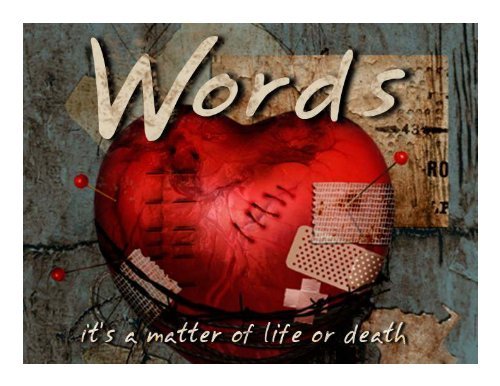
“Oh, this old thing? I think it makes me look old and fat.” How many times do we respond with words like this when a friend compliments how nicely we put ourselves together? Is this response an attempt on our part to be in control of the conversation or did we even think about what we say? What this answer actually does is devalue what our friend is trying to do—encourage us! Think about it. A simple smile with a kind “thank you” would have encouraged the encourager!
The problem with words flowing freely over our unbridled tongues is the lack of thinking before the words tumble out. Silence really can be golden at times, but in awkward situations we feel we must invade the silence with foolish words! The trouble is, we can’t take the words back for the gate is open. The words and damage are done. Damage control involves apologizing with pray that forgiveness is given by the one we devalued with our words. Words hurt, maim, and sometimes kill a relationship when no thoughts are had before delivery.
“Oh be careful little tongue what you say…” we sang as children in Sunday School; but this little song carries a great warning to all for all have sinned and fall short of the glory of God with our words. Can I get an amen!? The only response to make for real and sincere reconciliation is to first repent to Jesus; then prayerfully seek forgiveness from the one hurt with our unbridled tongues now tamed in Jesus Name.
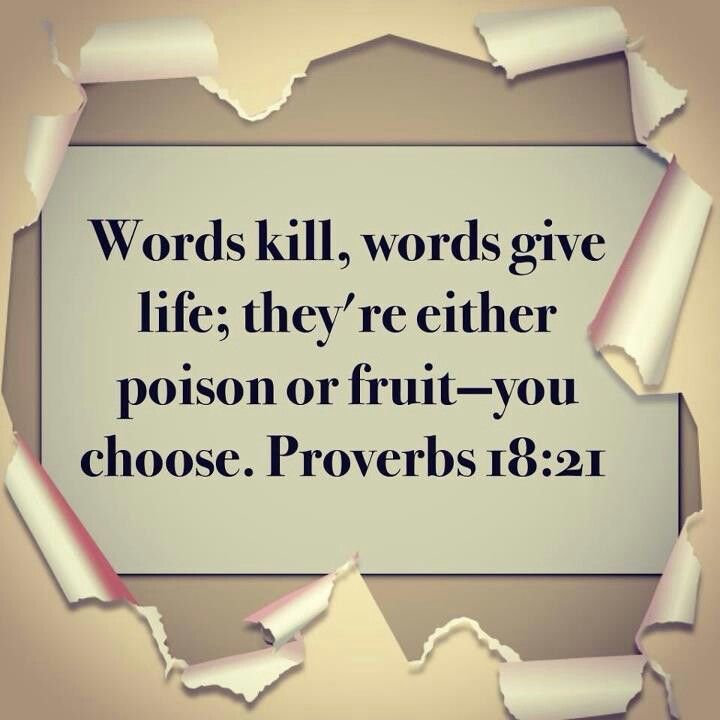
Truth: “Words kill, words give life; they’re either poison or fruit—you choose.”

Spoken words are not neutral; they carry real, tangible weight and shape relationships, mindsets, futures, and emotional well-being. Worse yet, words kill as we speak or listen to gossip, slander, harshness, and negativity that tears people down, spark conflict, for this brings emotional or relational “death”. “Eating its fruit”: People eventually live with the consequences—positive or negative—of the habits and words they cultivate and “dish out” daily.
Proverbs 18, The Message
Words Kill, Words Give Life
Loners who care only for themselves
spit on the common good.
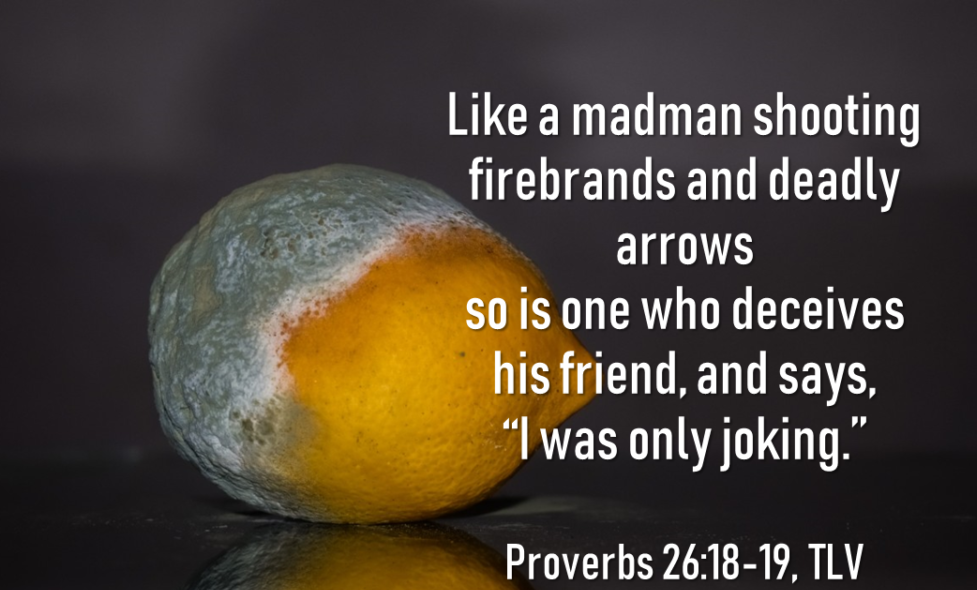
2 Fools care nothing for thoughtful discourse;
all they do is run off at the mouth.
3 When wickedness arrives, shame’s not far behind;
contempt for life is contemptible.
4 Many words rush along like rivers in flood,
but deep wisdom flows up from artesian springs.
5 It’s not right to go easy on the guilty,
or come down hard on the innocent.
6 The words of a fool start fights;
do him a favor and gag him.
7 Fools are undone by their big mouths;
their souls are crushed by their words.
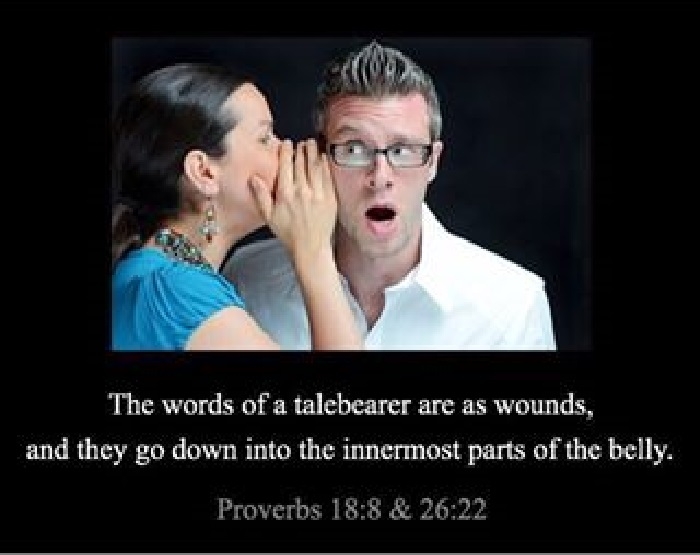
8 Listening to gossip is like eating cheap candy;
do you really want junk like that in your belly?
9 Slack habits and sloppy work
are as bad as vandalism.
10 God’s name is a place of protection—
good people can run there and be safe.
11 The rich think their wealth protects them;
they imagine themselves safe behind it.
12 Pride first, then the crash,
but humility is precursor to honor.
13 Answering before listening
is both stupid and rude.
14 A healthy spirit conquers adversity,
but what can you do when the spirit is crushed?
15 Wise men and women are always learning,
always listening for fresh insights.
16 A gift gets attention;
it buys the attention of eminent people.
17 The first speech in a court case is always convincing—
until the cross-examination starts!
18 You may have to draw straws
when faced with a tough decision.
19 Do a favor and win a friend forever;
nothing can untie that bond.
20 Words satisfy the mind as much as fruit does the stomach;
good talk is as gratifying as a good harvest.
21 Words kill, words give life;
they’re either poison or fruit—you choose.
22 Find a good spouse, you find a good life—
and even more: the favor of God!
23 The poor speak in soft supplications;
the rich bark out answers.
24 Friends come and friends go,
but a true friend sticks by you like family.
WHAT DO WE LEARN—HOW DO WE RESPOND?
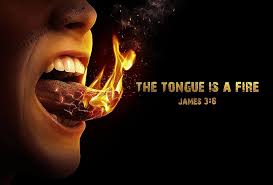
We learn that our tongues can burn down relationships.
“So also the tongue is a small thing, but what enormous damage it can do. A great forest can be set on fire by one tiny spark. And the tongue is a flame of fire. It is full of wickedness, and poisons every part of the body. And the tongue is set on fire by hell itself and can turn our whole lives into a blazing flame of destruction and disaster.” James 3:5-6
James compares the tongue to a tiny spark that can set an entire forest ablaze. A few careless, bitter, or dishonest words can destroy relationships, reputations, and trust just as a small fire burns down a massive wood. He also compares the tongue to a small bit in a horse’s mouth or a tiny rudder on a massive ship. Though small in size, it directs the whole course of a person’s life and interactions.

If we want people to trust us; then our words should reflect trustworthy thinking. What we think about spills over our tongues eventually. Paul gives practical advice about our thought habits;
“Rejoice in the Lord always. I will say it again: Rejoice! Let your gentleness be evident to all. The Lord is near. Do not be anxious about anything, but in every situation, by prayer and petition, with thanksgiving, present your requests to God. And the peace of God, which transcends all understanding, will guard your hearts and your minds in Christ Jesus.
Finally, brothers and sisters, whatever is true, whatever is noble, whatever is right, whatever is pure, whatever is lovely, whatever is admirable—if anything is excellent or praiseworthy—think about such things.” Philippians 4:4-8
Thank you, Paul!

Many years ago, a mentor gave me a filter to sift my words through before speaking. Sift words before speaking by seeking first God’s Holy Spirit to guide and provide the right words to deliver with the Spirit of God’s love bathed in the delivery.
Caution: Be silent if this is not evident before speaking because we might have a “clogged filter of self”.
Another helpful tool is the acrostic—THINK with self-evaluation before words:
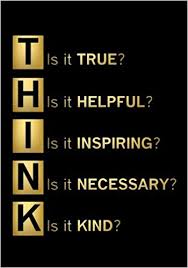
T—Is what I’m about to say the TRUTH and is the person present in the conversation?
H—Is what I’m about to say going to be HELPFUL or hurtful?
I—Will what I’m about to say going to INSPIRE or discourage?
N—Is what I’m about to say even NECESSARY to maintain a healthy relationship?
K—Above all else, is what I’m about to say going to be KIND? “A friend loves at all times”, we learned that truth in yesterday’s proverb of the day!
Our relationship with God through Jesus affects all our other relationships.

How we respond to others should be considered as important as our response to God. Here’s why; What we say or do to others is the same as saying or doing it to God. How do I know? Jesus said it! In Jesus’ parable of the Sheep and the Goats, He explains the final judgment, teaching that whenever someone helps a person in need—feeding the hungry, giving a drink to the thirsty, welcoming a stranger, clothing the naked, or visiting the sick and imprisoned—they are doing it directly to Jesus! (Matthew 25:35) At the end of Jesus’ story, he repeats the main idea with; “Truly I tell you, whatever you did for one of the least of these brothers and sisters of mine, you did for me.”—Jesus, Matthew 25:40
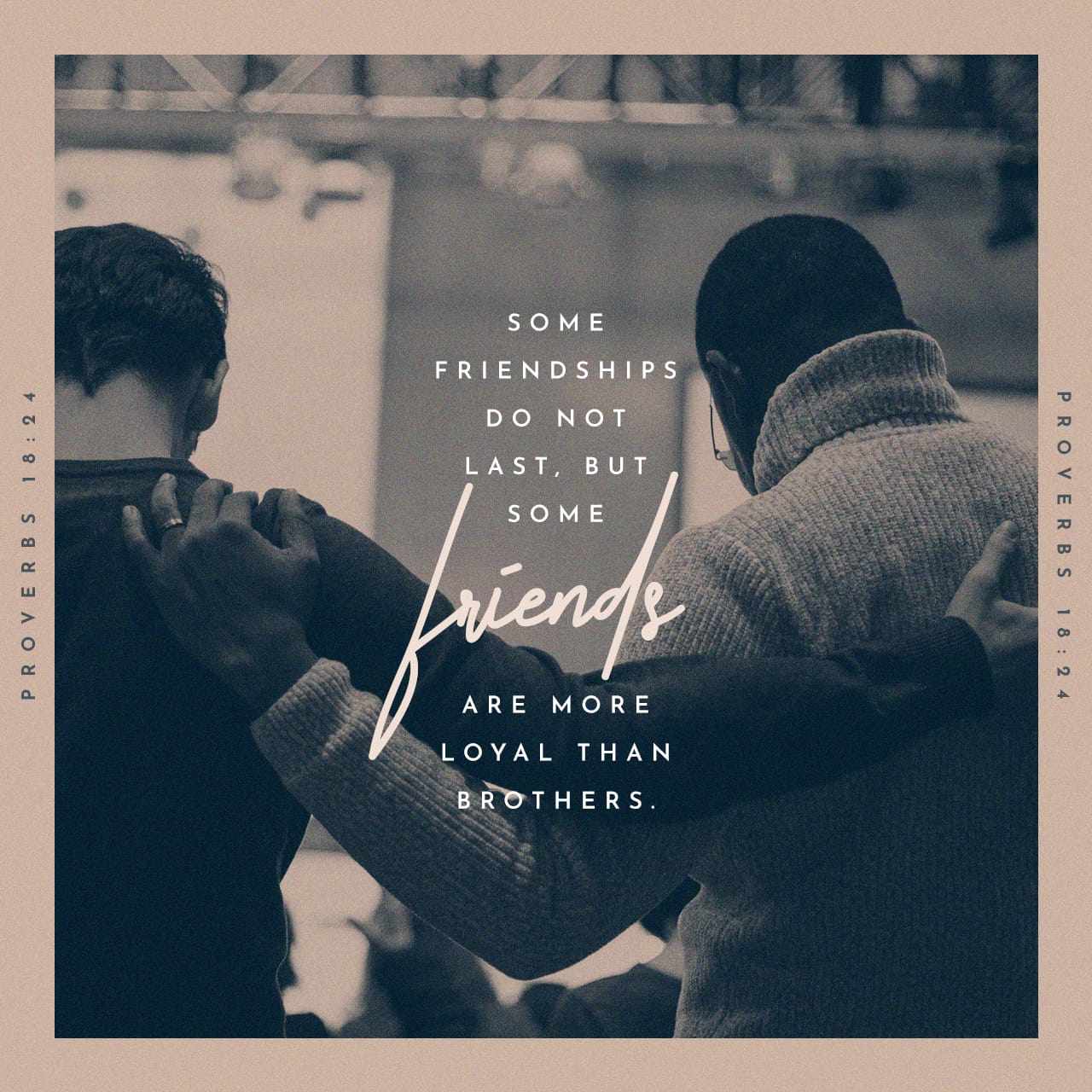
The last verse of our proverb today; “Friends come and friends go, but a true friend sticks by you like family” reminds us that true friendship is a valuable asset. Guard friendships with a heart that is surrendered to God’s leading. To be a Friend of God is the highest calling which encourages all our relationships with each other.
Lord,
Thank you for the wisdom of proverbs and the leading of our Holy Spirit as you convict, comfort, and correct our thoughts that lead to our words with each other. Thank you for cleansing our hearts from the inside out. Thank you for renewing our minds and resetting our souls with your default setting of pure Love because of your mercies for us. Thank you for continually restoring the joy of your salvation at work within all who believe and call on your Name. Make me a blessing of your to someone today.
In Jesus Name, Amen


