 Confusion and doubt hits all of us at times. We might be doing what we think God wants but confused by the response of others so that puts us briefly in doubt mode. We wonder if we are doing what God wants. We wonder if we are doing things correctly or in the best way. We are confused by attitudes around us. We are confused when we get stuck in the prison of our doubt. So, we ask God.
John had been in prison some months (Luke 3:19–20), but he knew what Jesus was doing because his own disciples kept him informed. It must have been difficult for this man, accustomed to a wilderness life, to be confined in a prison. The physical and emotional strain were no doubt great, and the long days of waiting did not make it easier. The Jewish leaders did nothing to intercede for John, and it seemed that even Jesus was doing nothing for him. If He came to set the prisoners free (Luke 4:18), then John the Baptist was a candidate!
Luke 7, New Living Translation
Jesus and John the Baptist
18 The disciples of John the Baptist told John about everything Jesus was doing. So John called for two of his disciples, 19 and he sent them to the Lord to ask him, “Are you the Messiah we’ve been expecting, or should we keep looking for someone else?”
20 John’s two disciples found Jesus and said to him, “John the Baptist sent us to ask, ‘Are you the Messiah we’ve been expecting, or should we keep looking for someone else?’”
 21 At that very time, Jesus cured many people of their diseases, illnesses, and evil spirits, and he restored sight to many who were blind. 22 Then he told John’s disciples, “Go back to John and tell him what you have seen and heard—the blind see, the lame walk, those with leprosy are cured, the deaf hear, the dead are raised to life, and the Good News is being preached to the poor.” 23 And he added, “God blesses those who do not fall away because of me.”
24 After John’s disciples left, Jesus began talking about him to the crowds. “What kind of man did you go into the wilderness to see? Was he a weak reed, swayed by every breath of wind? 25 Or were you expecting to see a man dressed in expensive clothes? No, people who wear beautiful clothes and live in luxury are found in palaces. 26 Were you looking for a prophet? Yes, and he is more than a prophet. 27 John is the man to whom the Scriptures refer when they say,
‘Look, I am sending my messenger ahead of you,
and he will prepare your way before you.’
28 I tell you, of all who have ever lived, none is greater than John. Yet even the least person in the Kingdom of God is greater than he is!”
29 When they heard this, all the people—even the tax collectors—agreed that God’s way was right, for they had been baptized by John. 30 But the Pharisees and experts in religious law rejected God’s plan for them, for they had refused John’s baptism.
31 “To what can I compare the people of this generation?” Jesus asked. “How can I describe them? 32 They are like children playing a game in the public square. They complain to their friends,
‘We played wedding songs,
so we played funeral songs,
33 For John the Baptist didn’t spend his time eating bread or drinking wine, and you say, ‘He’s possessed by a demon.’ 34 The Son of Man, on the other hand, feasts and drinks, and you say, ‘He’s a glutton and a drunkard, and a friend of tax collectors and other sinners!’ 35 But wisdom is shown to be right by the lives of those who follow it.”
 It is not unusual for great spiritual leaders to have their days of doubt and uncertainty. Moses was ready to quit on one occasion (Num. 11:10–15), and so were Elijah (1 Kings 19) and Jeremiah (Jer. 20:7–9, 14–18), and even Paul knew the meaning of despair (2 Cor. 1:8–9).
There is a difference between doubt and unbelief. Doubt is a matter of the mind: we cannot understand what God is doing or why He is doing it. Unbelief is a matter of the will: we refuse to believe God’s Word and obey what He tells us to do. “Doubt is not always a sign that a man is wrong,” said Oswald Chambers; “it may be a sign that he is thinking.” In John’s case, his inquiry was not born of willful unbelief, but of doubt nourished by physical and emotional strain. So John sends people to confirm his belief in Jesus.
 Jesus did not give the two men a lecture on theology or prophecy. Instead, He invited them to watch as He healed many people of many different afflictions. Certainly these were His credentials as the promised Messiah. He had not established a political kingdom, but the kingdom of God was there in power.
There are many people today who criticize the church for not “changing the world” and solving the economic, political, and social problems of society. What they forget is that God changes His world by changing individual people. History shows that the church has often led the way in humanitarian service and reform, but the church’s main job is to bring lost sinners to the Savior. Everything else is a by-product
of that. Proclaiming the gospel must always be the church’s first priority.
What we think of ourselves, or what others think of us, is not as important as what God thinks. Jesus waited until the messengers had departed, and then He publicly commended John for his ministry. At the same time, He exposed the sinful hearts of those who rejected John’s ministry.
What do we think God would say about us?
John the Baptist was not a compromiser, a reed blowing in the wind (note Eph. 4:14); nor was he a popular celebrity, enjoying the friendship of great people and the pleasures of wealth. John did not waver or weaken, no matter what people did to him. John was not only a prophet, but he was a prophet whose ministry was prophesied (see Isa. 40:3 and Mal. 3:1)! The last of the Old Testament prophets, John had the great privilege as God’s messenger of introducing the Messiah to Israel.
John’s ministry was a turning point in both the nation’s history and in God’s plan of redemption (Luke 16:16).
Luke 7:29–30 are the words of Jesus, not an explanation from Luke (see Matt. 21:32). They answer the question some of the people were asking: “If John is such a great prophet, why is he in prison?” The answer is, because of the willful unbelief of the religious leaders. The common people accepted John’s message and were baptized by him as proof of their repentance. They “justified God,” which means they agreed with what God said about them (Ps. 51:4). But the religious leaders justified themselves (Luke 16:15), not God, and rejected John and his message.
NOTHING SATISFIES AN UNBELIEVING WORLD
Jesus compared that generation to people who were childish, not childlike, and nothing pleased them. He was probably referring to the scribes and Pharisees in particular. John was an individual who declared a stern message of judgment, and they said, “He has a demon!” Jesus mingled with the people and preached a gracious message of salvation, and they said, “He’s a glutton, a winebibber, and a friend of publicans and sinners!” They wanted neither the funeral nor the wedding, because nothing pleased them.
Are we childlike in our faith?
Are we childish in our behaviors, wanting our way, never being satisfied?
JUSTIFIED – AGREEMENT WITH GOD
People who want to avoid the truth about themselves can always find something in the preacher to criticize. This is one way they “justify themselves.” But God’s wisdom is not frustrated by the arguments of the “wise and prudent.” It is demonstrated in the changed lives of those who believe. This is how true wisdom is “justified.”
John believed. His belief and mission to tell the Truth landed him in prison. Doubt was temporary and alleviated by a little talk with Jesus via his friends.
Have you had a little talk with Jesus lately?
 Dear Heavenly Father, Lord and Savior
Sometimes we doubt if we are doing what YOU asked is right and good. We need affirmations and clarification at times. Sometimes we doubt when we think you are not working in the middles of challenges. But you come and relieve us. We wonder if we heard you correctly when you sent us out to certain tasks. Our belief has not changed in the You. You are God and we are not. It’s just that sometimes this doubt becomes our own prison. We get stuck and cannot move forward. So we pray for restored joy of our salvation. We pray like David, cleanse me, take away from my thinking all that offends you. Renew a right Spirit within me. Renew our thinking and behaving.
I once was lost in sin but Jesus took me in
And then a little light from heaven fill my soul
He bathed my heart in love and He wrote my name above
And just a little talk with Jesus makes me whole
Now let us have a little talk with Jesus
Let us tell Him all about our troubles
He will hear our faintest cry, He will answer by and by
And when you feel a little prayer wheel turnin’
And you will know a little fire is burnin’
Find a little talk with Jesus makes it right
I may have doubts and fears, my eye be filled with tears
But Jesus is a friend who watches day and night
I go to him in prayer, He knows my every care
And just a little talk with my Jesus makes it right
Now let us have a little talk with Jesus
Let us tell Him all about our troubles
He will hear our faintest cry, He will answer by and by
And when you feel a little prayer wheel turnin’
And you will know a little fire is burnin’
You will find a little talk with Jesus makes it right…

 16 “No one lights a lamp and then covers it with a bowl or hides it under a bed. A lamp is placed on a stand, where its light can be seen by all who enter the house. 17 For all that is secret will eventually be brought into the open, and everything that is concealed will be brought to light and made known to all.
 We cannot receive The Light of the world, Jesus Christ, into our once dark hearts, enlightening our minds and flooding our souls and then try to cover Him up with continuing in our selfish ways. Once the Messiah has entered in, He’s in. It would foolish and impossible to hide The Light of Salvation.
 I am reminded what Jesus said later to his followers, “If anyone is ashamed of me and my message, the Son of Man will be ashamed of that person when he returns in his glory and in the glory of the Father and the holy angels.” (Luke 9:26)

 Dear Heavenly Father, Lord and Savior,
 4 One day Jesus told a story in the form of a parable to a large crowd that had gathered from many towns to hear him: 5 “A farmer went out to plant his seed. As he scattered it across his field, some seed fell on a footpath, where it was stepped on, and the birds ate it. 6 Other seed fell among rocks. It began to grow, but the plant soon wilted and died for lack of moisture. 7 Other seed fell among thorns that grew up with it and choked out the tender plants. 8 Still other seed fell on fertile soil. This seed grew and produced a crop that was a hundred times as much as had been planted!” When he had said this, he called out, “Anyone with ears to hear should listen and understand.”
 Women are not only mentioned but they are an important part of the ministry and mission of Jesus Christ our Lord and their Lord. Upon believing in Him, they follow Him and contribute to His ministry financially. The women supported Jesus and the other disciples because they believed in Jesus and his work to seek and to save lost people. Later, at the foot of the cross, it would be these women who stayed with Christ. It would be these women who brought spices to the tomb to dignify the body of Christ. It would be these women who would be the first to meet the RISEN Christ and told to go tell the others!
  Soon afterward Jesus began a tour of the nearby towns and villages, preaching and announcing the Good News about the Kingdom of God. He took his twelve disciples with him, 2 along with some women who had been cured of evil spirits and diseases.
  Men and Women were created with specific gifts and talents and tasks they can do well because of their uniqueness. When we work together, with respect for each other’s differences and abilities as we follow Jesus, the ministry of Jesus is exponentially multiplied for Christ, in Christ, with Christ living in each one of us…brothers and sisters, united in Christ.
 Dear Heavenly Father,
 thankful for walking still. I am a fast walker, (which is annoying to some). I still walk about two miles a day. Feet are important to get us where we want to go. I’m grateful for my feet. Some have to use other forms to get around.
 39 When the Pharisee who had invited him saw this, he said to himself, “If this man were a prophet, he would know what kind of woman is touching him. She’s a sinner!”
 47 “I tell you, her sins—and they are many—have been forgiven, so she has shown me much love. But a person who is forgiven little shows only little love.” 48 Then Jesus said to the woman, “Your sins are forgiven.”
 NO ONE is beyond forgiveness from Jesus. No one.
 A woman who knew her sin was determined to come to the One and only who could forgive her. She risks coming into the home of a Pharisee. It is such a gutsy thing to do that she is not stopped, only ridiculed as she weeps uncontrollably. She does not care. She throws all caution to the wind. She comes from behind Jesus in humility. She quickly breaks open her life savings and pours out the contents from the once sealed alabaster jar on the beautiful feet who has brought good news!

 When I am down, and, oh, my soul, so weary

 Nain was about twenty-five miles from Capernaum, a good day’s journey away, yet Jesus went there even though He was not requested to come. Since the Jews buried their dead the same day, it is likely that Jesus and His disciples arrived at the city gate late in the afternoon of the day the boy died.
  the same sense that we are, having been brought into existence by conception and birth. Since Jesus is eternal God, He has always existed. The title Son of God declares Christ’s divine nature and His relationship to the Father, to whom the Son has willingly subjected Himself from all eternity. All the Persons of the Godhead are equal and each has a specific place to fill and task to fulfill.
  “Some glad morning when this life is o’er, I’ll fly away”…
 Jesus was sent from God to seek and to save the lost who do not know God or have turned away from God in their thinking and behaving. John tells us what God fully intended to solidify this mission, “For this is how God loved the world: He gave his one and only Son, so that everyone who believes in him will not perish but have eternal life.” (John 3:16, NLT)
  6 So Jesus went with them. But just before they arrived at the house, the officer sent some friends to say, “Lord, don’t trouble yourself by coming to my home, for I am not worthy of such an honor. 7 I am not even worthy to come and meet you. Just say the word from where you are, and my servant will be healed. 8 I know this because I am under the authority of my superior officers, and I have authority over my soldiers. I only need to say, ‘Go,’ and they go, or ‘Come,’ and they come. And if I say to my slaves, ‘Do this,’ they do it.”
 They told him, “Lord, come and see.” 35 Then Jesus wept. 36 The people who were standing nearby said, “See how much he loved him!” 37 But some said, “This man healed a blind man. Couldn’t he have kept Lazarus from dying?”

 You may or may not have heard the expression “Give me a solid” from the 60’s, but what it refers to something real or tangible–solid (as opposed to lip service). It could even be such a thing as a solid handshake which held great meaning. Also around the time of the origin of this phrase, currency was still on the gold standard (as in solid gold and guaranteed 1:1), again, this request or favor is something tangible and that you could count on.
 From “The Jacket”, first broadcast 2/6/91:
 Building on a Solid Foundation
 What is flowing from my heart, cascading into my behavior?
 My hope is built on nothing less
 We are judgy as we drive to work, church, outings or family gatherings. We know how to drive and all others do not, especially the ones who get in our way or cut us off. We tell them how to drive as if they are hearing us in our closed up car. Our mood on the way to work, school or anywhere is growing more sour by the minute…because of our judgyness.
  Jesus teaches us, “do not judge others”. He teaches that when we judge, we will be judged. I have learned that when we don’t judge, we experience a relief in our souls. Why? Because it is not our job to stand in judgement of others. We really do not want this job. An earthly judge must live with their decisions based on what is presented in evidence. The only, ultimate judge who can see and know all hearts and circumstances is Jesus Christ, our Lord. And how does HE judge? He forgives. We need to retrain our brains.
 37 “Do not judge others, and you will not be judged. Do not condemn others, or it will all come back against you. Forgive others, and you will be forgiven. 38 Give, and you will receive. Your gift will return to you in full—pressed down, shaken together to make room for more, running over, and poured into your lap. The amount you give will determine the amount you get back.”
 What do we teach by our words and body language? To be judgy or forgiving?
 Jesus, Son of God, went away to pray. He didn’t want to be away from people He loved. He wanted to be WITH God, to hear from God, His Father. “He prayed to God all night.” What did Jesus ask God? Was it wisdom in choosing the Twelve to be apostles, those who could be His hands of healing so the ministry could be multiplied? Probably, because at daybreak that was the first task of the day.
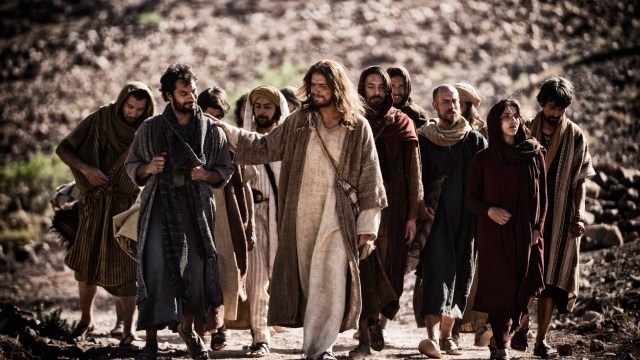 12 One day soon afterward Jesus went up on a mountain to pray, and he prayed to God all night. 13 At daybreak he called together all of his disciples and chose twelve of them to be apostles. Here are their names:
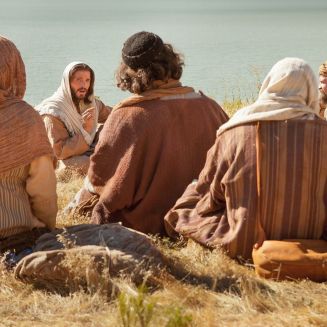 When the chosen Twelve came down the mountain with Jesus in the lead, they were met with other believers and disciples followers along with crowds of people begging to be healed. “Everyone tried to touch him…” That phrase hits my heart this morning. The world today wanders around seeking to be healed from all kinds of anxieties, brokenness, loneliness, mental issues and physical pain. But they are looking in all the wrong places. They have forgotten, or they never knew, that Jesus is alive, ready to heal broken spirits, is compassionate to save, and willing to love us relentlessly and completely. Who will tell them?

