
Mark – God is On Our Side!
Pain is inevitable in living life here on earth. There are many forms of pain. There is the emotional pain that comes when others mock you, bully you or neglect you. This kind of pain leaves scars on our minds body just like physical pain or abuse can leave on the body. There is the pain of watching someone you love in pain. There is pain from mental abuse that takes years to overcome with a great amount of help from God and the medical community.
 As we get older, we experience little nagging pains that send signals to joints and muscles about the limits of these bodies that eventually wear out. We begin to pace ourselves so the pain is not so great. Some of us medicate to “manage” pain. I personally seek to get rid of it, not “manage it” with drugs. Some of us try to avoid pain at all cost, or think we can, by slowing to a stop. But we soon discover that a body in motion stays in motion and a body at rest…well, you know the science, it assumes all it can do is rest.
 As I read our familiar passage today, that tells us, only briefly, of the pain our Lord went through for our sin, I can’t imagine it. I cannot wrap my head around it. This is a pain so great the gospel writers could not bring themselves to describe all that the Roman’s did to their victims. Historical documents and medical information gives us a glimpse into what our Lord and others suffered by being literally nailed to a cross.
 All the pain that we might experience here on earth cannot compare to the excruciating pain Jesus willing, according to God’s Plan to save us, endured. WILLINGLY is the key word. God willed it. Jesus willingly accepted the mission. Why? Because God’s love for us trumped all the pain His Son would endure. A perfect, without sin, sacrifice for our sin had to be made, once and for all.
Philip Yancy helps us understand…“To some, the image of a pale body glimmering on a dark night whispers of defeat. What good is a God who does not control his Son’s suffering? But another sound can be heard: the shout of a God crying out to human beings, “I LOVE YOU.” Love was compressed for all history in that lonely figure on the cross, who said that he could call down angels at any moment on a rescue mission, but chose not to – because of us. At Calvary, God accepted his own unbreakable terms of justice.”
“Any discussion of how pain and suffering fit into God’s scheme ultimately leads back to the cross.”
 HOLY PAUSE…
How deeply can we feel the pain that Jesus went through for us as we read what Mark is telling us? We can’t possibly have empathy for this cruel way to die for most of us have not experienced it for ourselves. Most of us do not know the pain that was so great that a new word had to be invented to describe it…excruciating, which means “on a cross” in Latin.
What we do know about this horrendous way to be tortured is that Jesus didn’t have to do this. He didn’t have to go through this. He could have called down thousands upon thousands of angels to stop the insanity. But He did not.
Those who know Him know why. He loves us that much.
Mark 15, NLT
The Soldiers Mock Jesus
16 The soldiers took Jesus into the courtyard of the governor’s headquarters (called the Praetorium) and called out the entire regiment. 17 They dressed him in a purple robe, and they wove thorn branches into a crown and put it on his head. 18 Then they saluted him and taunted, “Hail! King of the Jews!” 19 And they struck him on the head with a reed stick, spit on him, and dropped to their knees in mock worship. 20 When they were finally tired of mocking him, they took off the purple robe and put his own clothes on him again. Then they led him away to be crucified.
The Crucifixion
21 A passerby named Simon, who was from Cyrene, was coming in from the countryside just then, and the soldiers forced him to carry Jesus’ cross. (Simon was the father of Alexander and Rufus.) 22 And they brought Jesus to a place called Golgotha (which means “Place of the Skull”). 23 They offered him wine drugged with myrrh, but he refused it.
 24 Then the soldiers nailed him to the cross. They divided his clothes and threw dice to decide who would get each piece. 25 It was nine o’clock in the morning when they crucified him. 26 A sign announced the charge against him. It read, “The King of the Jews.” 27 Two revolutionaries were crucified with him, one on his right and one on his left.
29 The people passing by shouted abuse, shaking their heads in mockery. “Ha! Look at you now!” they yelled at him. “You said you were going to destroy the Temple and rebuild it in three days. 30 Well then, save yourself and come down from the cross!”
 31 The leading priests and teachers of religious law also mocked Jesus. “He saved others,” they scoffed, “but he can’t save himself! 32 Let this Messiah, this King of Israel, come down from the cross so we can see it and believe him!” Even the men who were crucified with Jesus ridiculed him.
HOLY PAUSE
“Well then, save yourself and come down from the cross!”, mocked the religious leaders who thought they had won. But they were extremely misled, cruel in thought and didn’t care to know that Jesus was their long awaited Messiah. They didn’t understand. Jesus was not about saving Himself…He stayed on that cross to save us.
 Believe and be saved. Right now.
 Pray; Jesus, I believe that you laid down your life for me. You died and rose again to life because of your love for me. I repent of my sin. Forgive me. I want a new life in You.
In Jesus Name, Amen
Dear Jesus,
What hurt you most, the pain of the cross or the rejection of Your Father who had to turn His face from you until our debt of sin on your body was paid in full? The depth of my gratitude is greater still for knowing the pain you endured for me, my family, our friends, people I don’t know, people I will know. You died for all you created. You took all the mocking, the abuse, the nails, the pain, the jeering by religious leaders. You saved us. Thank you, just thank you. I have no other words except, I love you with all that is in me.
In Jesus Name, Amen. I believe.
 In our passage today, Mark writes about God’s religious who are out of touch, out of relationship with Him, out of control, and out of focus on God. The leaders are all about self preservation. The leaders have lost contact with God for so long that they only recognize self. Self leads to envy of the One who has been sent to save them. They are now “out’ to punish God’s One and Only Son, Jesus Christ, promised Messiah.
 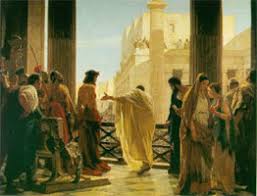 Very early in the morning the leading priests, the elders, and the teachers of religious law—the entire high council met to discuss their next step. They bound Jesus, led him away, and took him to Pilate, the Roman governor.
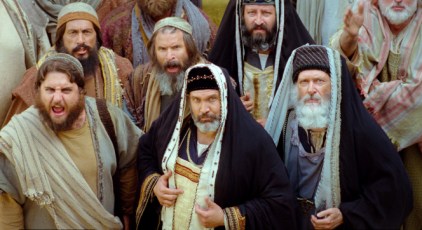 9 “Would you like me to release to you this ‘King of the Jews’?” Pilate asked. 10 (For he realized by now that the leading priests had arrested Jesus out of envy.) 11 But at this point the leading priests stirred up the crowd to demand the release of Barabbas instead of Jesus. 12 Pilate asked them, “Then what should I do with this man you call the king of the Jews?”
 The Jewish council had to convince Pilate that Jesus was guilty of a capital crime and therefore worthy of death (John 18:31–32). In spite of their political corruption, many Roman officials had an appreciation for justice and tried to deal fairly with prisoners. Furthermore, Pilate had no great love for the Jews and was not about to do them any favors. He knew that the Jewish leaders were not interested in seeing justice done; what they really wanted was vengeance (Mark 15:10).
  The governor then tried a third ruse: he had Jesus scourged, hoping that the sight of the suffering prisoner would somehow arouse their pity (Mark 15:15; John 19:1ff.). But the plan did not work. The governor gave in and delivered Jesus to be crucified.
  HOLY PAUSE
 We learned a long time ago to hold to this truth when dealing with people who want to destroy you and the work God has given you to do: “The less said, the less spread.” We would stick to what God’s word says and just go silent about our family life, the transitions in ministry God invited us to do, and details of our growing and learning. We had to stop “thinking out loud” as we grappled with a problem, for that would soon be a wonderful morsel that gossipers would chew on and share with others as finished truth. Weird, I know. But it happens.
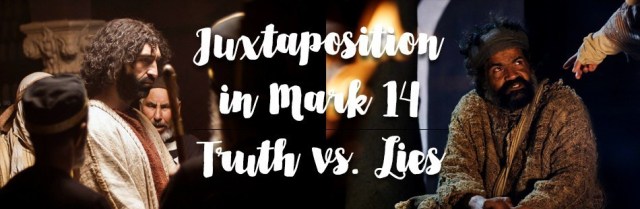 53 They took Jesus to the high priest’s home where the leading priests, the elders, and the teachers of religious law had gathered. 54 Meanwhile, Peter followed him at a distance and went right into the high priest’s courtyard. There he sat with the guards, warming himself by the fire.
 Peter Denies Jesus
 Throughout this time of false accusation, our Lord said nothing (Isa. 53:7; 1 Peter 2:23). But when the high priest put Him under oath, Jesus had to reply, and He testified clearly that he was indeed the Son of God. The title “Son of man” is messianic (Dan. 7:13), and the members of the council knew exactly what Jesus was saying: He was claiming to be God come in human flesh! This claim, of course, was blasphemy to the Jews, and they declared Him guilty and worthy of death. Since it was irregular for the Sanhedrin to vote on capital cases at night, the council met again early the next morning and gave the official sentence (Mark 15:1).
  Before we judge Peter too severely, we need to examine our own lives. How many times have we denied the Lord and lost opportunities to share the gospel with others? Do we, like Peter, talk when we should listen, argue when we should obey, sleep when we should pray, and fight when we should submit?
  Dear Heavenly Father,
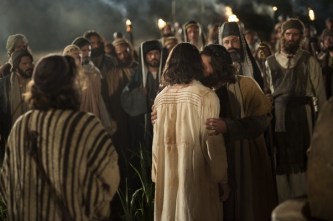 43 And immediately, even as Jesus said this, Judas, one of the twelve disciples, arrived with a crowd of men armed with swords and clubs. They had been sent by the leading priests, the teachers of religious law, and the elders. 44 The traitor, Judas, had given them a prearranged signal: “You will know which one to arrest when I greet him with a kiss. Then you can take him away under guard.” 45 As soon as they arrived, Judas walked up to Jesus. “Rabbi!” he exclaimed, and gave him the kiss.
 48 Jesus asked them, “Am I some dangerous revolutionary, that you come with swords and clubs to arrest me? 49 Why didn’t you arrest me in the Temple? I was there among you teaching every day. But these things are happening to fulfill what the Scriptures say about me.”
 The fact that Judas brought such a large group of armed men is evidence that neither he nor the religious leaders really understood Jesus. They thought that Jesus would try to escape, or that His followers would put up a fight, or that perhaps He might do a miracle. Our Lord’s words in Mark 14:49 were proof that He was in control, for they could have arrested Him many times earlier, except that His hour had not yet come.
  If the Upper Room was in the home of John Mark, then perhaps Judas led the soldiers there first. John Mark may have hastily put on an outer garment and followed the mob to the Garden. The soldiers may have even tried to arrest him, so he fled. The disciples were scattered and the Servant was now alone, “and yet I am not alone, because the Father is with me” (John 16:32).
 We have all been there. Our normal life as we knew it collapses around us. We no longer have control over the smallest of tasks. We can’t think straight. We can’t think at all. We feel betrayed. All our dreams are dashed and broken over the jagged rocks that have appeared on our path. We trip and fall. We tumble to our knees in an agonizing lament to the Only One who truly has control, God our Father. Our prayers don’t have complete sentences at first. We hear our shaky voices lose strength between the sobs that take our breath away. We can’t breathe right. We can’t think right. We are out of control. We, as humans, yell why, why, why is this happening to me?
 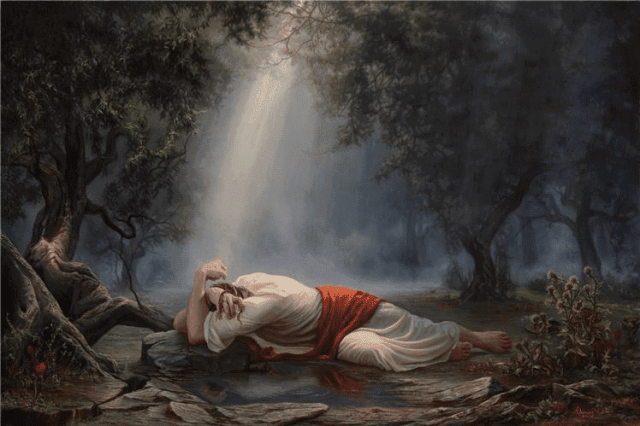 32 They went to the olive grove called Gethsemane, and Jesus said, “Sit here while I go and pray.” 33 He took Peter, James, and John with him, and he became deeply troubled and distressed. 34 He told them, “My soul is crushed with grief to the point of death. Stay here and keep watch with me.”
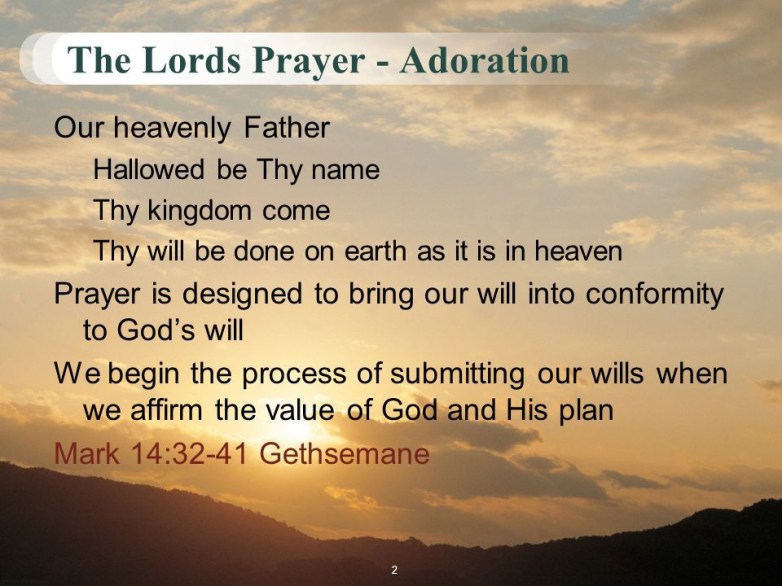 Our Lord’s struggle in the Garden can be understood only in the light of what would happen to Him on the cross: He would be made sin for us (2 Cor. 5:21) and bear the curse of the law (Gal. 3:13). It was not the physical suffering that almost overwhelmed Him with “anguish and sorrow,” but the contemplation of being forsaken by His Father (Mark 15:34). This was “the cup” that He would drink (John 18:11). According to Hebrews 5:7–9, He asked to be saved, not “from death”but out of death—that is, raised from the dead— and the Father granted His request.
  Dear Lord and Savior,

 What causes people to betray their closest friends, family who love them deeply, or coworkers working alongside them each day? What changes their minds about living a life of love to the point that they would sell you out to the highest bidder or to the closest ears longing to hear gossip of any kind about you and the work you are doing with others? These are age old questions of human behavior. This is the behavior of those who turn away from Christ and His life of love.
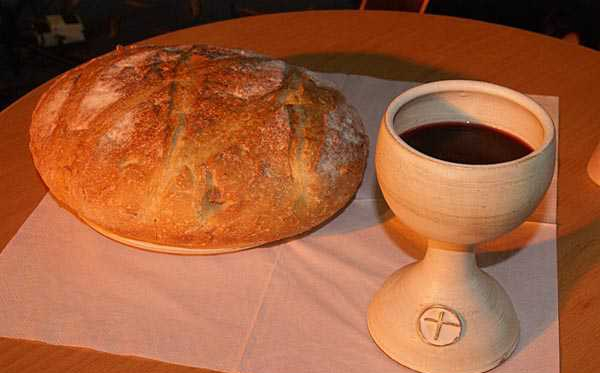 The Last Supper
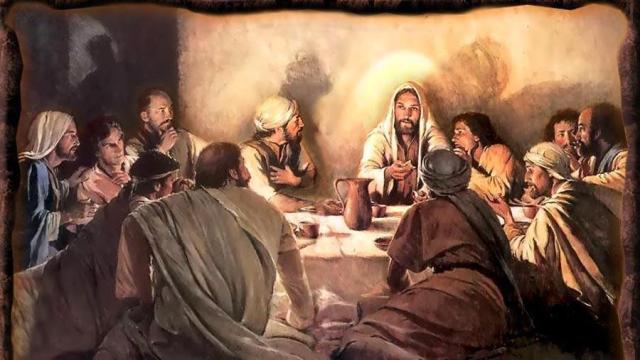 Jesus knew who would be betray him. Jesus knew the heart of Judas. Jesus knew of his mismanagement of the funds. Jesus knew that, of the Twelve, Judas was living counter to what Jesus was teaching. But Jesus still loved and served Judas that night. Jesus washed his feet before the meal, showing the full extent of His love”, (John 13:1). THEN Jesus sent him away from the group to do what was in Judas’ heart. Judas lived and died based on what was in his heart. But, listen friends, Jesus still loved him. Judas chose death over life. We can choose a better life.
 This is still a phenomenon today. Most of benevolent giving comes from those who have much less in life than those who have much to give and give little…not even a tenth of what is God’s in the first place. People who give much have hearts who are aligned with God’s heart. They give from a place of love and gratitude for all He has done, is doing and will do in loving, protecting, providing and guiding them in daily living. They KNOW God. They love God with all that is in them.
  38 Jesus also taught: “Beware of these teachers of religious law! For they like to parade around in flowing robes and receive respectful greetings as they walk in the marketplaces. 39 And how they love the seats of honor in the synagogues and the head table at banquets. 40 Yet they shamelessly cheat widows out of their property and then pretend to be pious by making long prayers in public. Because of this, they will be more severely punished.”
 The Widow’s Offering
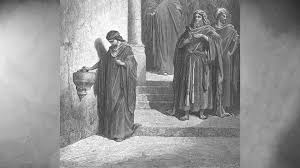 There were thirteen trumpet-shaped chests around the walls of the court of the women, and here the people dropped in their offerings. The rich made a big production out of their giving (see Matt. 6:1–4), but Jesus rejected them and their gifts. It is not the portion but the proportion that is important: the rich gave out of their abundance, but the poor widow gave all that she had. For the rich, their gifts were a small contribution, but for the widow, her gift was true consecration of her whole life.
 Romans 12 (Paul’s letter to the church) reminds us to give all as Jesus taught his disciples and followers.
  Our behavior comes from what is in our hearts. Our behavior reflects then what believe. Are giving our all to please God or for the notice of those around us? Does our behavior reflect what we say we believe?
  Lord, I offer my life to You
 We can’t change it, forfeit it, or let God’s love for us go. We might disregard it, lay it aside and forget it for a while, but we can’t abolish it. God’s love is reckless, relentless and unchanging. We can’t morph His love into what we think it should be. God’s love just is. God is the great and only I AM. And He is Love.
 28 One of the teachers of religious law was standing there listening to the debate. He realized that Jesus had answered well, so he asked, “Of all the commandments, which is the most important?”
 32 The teacher of religious law replied, “Well said, Teacher. You have spoken the truth by saying that there is only one God and no other. 33 And I know it is important to love him with all my heart and all my understanding and all my strength, and to love my neighbor as myself. This is more important than to offer all of the burnt offerings and sacrifices required in the law.”
 The Lord quoted Deuteronomy 6:4–5, the great confession of faith that even today pious Jews recite each morning and evening. It is called the “Shema” from the first word of the confession which means “hear.” Then He quoted Leviticus 19:18, which emphasizes love for one’s neighbor. Jesus made love the most important thing in life, because “love is the fulfilling of the law” (Rom. 13:8–10).


