MEET ME AT BETHEL—”MY HOUSE”

Sometimes we have a need to go back to the place where we met God the very first time.  We remember with joy when God spoke to our hearts and drew us to him.  We remember each time God speaks plainly to us when He calls us to do a specific work.  God does not hide what he wants to do in us and through us.  It just takes us a little time to really hear His voice speaking to us over the noise of all other voices in the world clamoring for our attention.

When those who believe in God, His Son and His Holy Spirit working in us hear, “Meet me, hear me, I want to talk with you”, we come running.  His Spirit prompts us to “clean up our act” and put on a fresh new attitude, repent of our sins to Jesus, His Son who paid our debts and paved the way to God!  Yes, when we really believe God, know He is real and in control of our lives, we hear His voice calling to us, “Come home and meet me at my house.”  And we run to Him.

The first paragraph of God asking Jacob to meet Him at Bethel reminds me of my childhood days getting ready to go to church.  And I am laughing out loud at the memories.  I totally “get it”.  Mom and Dad went to “God’s House” every time the doors were open for church, church meetings, socials, and funerals (they were the musicians).  Church was my other home. But to go to my other home that belonged to God and dedicated as such, you cleaned up, comb your hair, put on your church clothes and shoes AND you could not bring toys or any other objects with you that might distract you from what God had to say through the preacher or your Sunday School teacher. 

Respect and love for God’s House trumped everything.  This was our lifestyle.  (Still is, truth be known). I didn’t question it.  I did whine a bit as a child, who loved the outdoors, about cleaning up for Sunday night services, but the look from mom or dad settled the issue immediately.  Yes, just one look was all it took from my elders to remember the joy of meeting God wherever and whenever He wanted to speak to us.  I actually loved church!  I was a weird child who became a weirdly different adult because of my upbringing resulting in love for God.  And I am grateful…So very grateful.

Jacob and his family and their entourage of all that he possesses arrive close to Bethel—God’s House.  They are told the same thing I was told as a child!  So, maybe I’m not so weird after all, growing up with respect and love for the places where God meets with us and talks to us.  (And it’s not always a church building.)
Genesis 35, The Message

God spoke to Jacob: “Go back to Bethel. Stay there and build an altar to the God who revealed himself to you when you were running for your life from your brother Esau.”

2-3 Jacob told his family and all those who lived with him, “Throw out all the alien gods which you have, take a good bath and put on clean clothes, we’re going to Bethel. I’m going to build an altar there to the God who answered me when I was in trouble and has stuck with me everywhere I’ve gone since.”

4-5 They turned over to Jacob all the alien gods they’d been holding on to, along with their lucky-charm earrings. Jacob buried them under the oak tree in Shechem. Then they set out. A paralyzing fear descended on all the surrounding villages so that they were unable to pursue the sons of Jacob.

6-7 Jacob and his company arrived at Luz, that is, Bethel, in the land of Canaan. He built an altar there and named it El-Bethel (God-of-Bethel) because that’s where God revealed himself to him when he was running from his brother.

And that’s when Rebekah’s nurse, Deborah, died. She was buried just below Bethel under the oak tree. It was named Allon-Bacuth (Weeping-Oak).

9-10 God revealed himself once again to Jacob, after he had come back from Paddan Aram and blessed him: “Your name is Jacob (Heel); but that’s your name no longer. From now on your name is Israel (God-Wrestler).”

11-12 God continued,

I am The Strong God.
    Have children! Flourish!
A nation—a whole company of nations!—
    will come from you.
Kings will come from your loins;
    the land I gave Abraham and Isaac
I now give to you,
    and pass it on to your descendants.

13 And then God was gone, ascended from the place where he had spoken with him.

14-15 Jacob set up a stone pillar on the spot where God had spoken with him. He poured a drink offering on it and anointed it with oil. Jacob dedicated the place where God had spoken with him, Bethel (God’s-House).

* * *

16-17 They left Bethel. They were still quite a ways from Ephrath when Rachel went into labor—hard, hard labor. When her labor pains were at their worst, the midwife said to her, “Don’t be afraid—you have another boy.”

18 With her last breath, for she was now dying, she named him Ben-oni (Son-of-My-Pain), but his father named him Ben-jamin (Son-of-Good-Fortune).

19-20 Rachel died and was buried on the road to Ephrath, that is, Bethlehem. Jacob set up a pillar to mark her grave. It is still there today, “Rachel’s Grave Stone.”

* * *

21-22 Israel kept on his way and set up camp at Migdal Eder. While Israel was living in that region, Reuben went and slept with his father’s concubine, Bilhah. And Israel heard of what he did.

* * *

22-26 There were twelve sons of Jacob.

The sons by Leah:

Reuben, Jacob’s firstborn

Simeon

Levi

Judah

Issachar

Zebulun.

The sons by Rachel:

Joseph

Benjamin.

The sons by Bilhah, Rachel’s maid:

Dan

Naphtali.

The sons by Zilpah, Leah’s maid:

Gad

Asher.

These were Jacob’s sons, born to him in Paddan Aram.

* * *

27-29 Finally, Jacob made it back home to his father Isaac at Mamre in Kiriath Arba, present-day Hebron, where Abraham and Isaac had lived. Isaac was now 180 years old. Isaac breathed his last and died—an old man full of years. He was buried with his family by his sons Esau and Jacob.

WHAT DO WE LEARN—HOW DO WE RESPOND?

There are many life-altering situations that happen in this passage.  Consider these moments:

Did God send Jacob home at just the right time to be with Isaac, old and failing in health, in time to speak with him before he died?  What a tender, loving God we have!

Rachel, his beloved wife, dies in childbirth close to his home of childhood.  She is buried in Bethlehem—the birthplace of our Savior!  Did you catch that?

Because of the reunion with his brother Esau earlier on the road home, they come together in unity to bury their father Isaac.

The twelve sons of Jacob will the known in future days as the Twelve Tribes of Israel.  That’s why they are listed here.  Jacob, renamed Israel by God, is the father of the nation of Israel.

We learn that God knows what He is doing.  God is always at work for us and in us.  God knows what lies ahead and prepares the way.  God knows what we will endure on our journey here and gets us ready to go through it providing all we need to learn from it when we allow Him to do what He does best. 

Our response?  When God calls, run to meet Him!  COME HOME!

“You who are weary, come home”.  I can hear my Grandpa leading us in this song of my youth…

Softly and tenderly Jesus is calling
Calling for you and for me
See on the portals He’s waiting and watching
Watching for you and for me

Come home, come home
Ye who are weary come home
Earnestly, tenderly Jesus is calling
Calling, “O sinner come home”

ALL have sinned and fall short of the glory of God. 

But take heart, Jesus is the way back home to where God resides.

O for the wonderful love He has promised
Promised for you and for me
Though we have sinned He has mercy and pardon
Pardon for you and for me

Come home, come home
Ye who are weary come home
Earnestly, tenderly Jesus is calling
Calling, “O sinner come home”

Songwriter: Will L. Thompson

Lord,

Thank you for saving my soul, making me whole and continuing to meet me each morning.  Thank you for bring me home to where you are.

In Jesus Name, For Your Glory, Amen

Posted in Uncategorized | Leave a comment

REVENGE!

Rape is a violation of heart, mind and soul.  Rape is never forgotten by the victim or the family.  How do we deal with this violation?  The following is how NOT how to respond.

Genesis 34, The Message

1-4 One day Dinah, the daughter Leah had given Jacob, went to visit some of the women in that country. Shechem, the son of Hamor the Hivite who was chieftain there, saw her and raped her. Then he felt a strong attraction to Dinah, Jacob’s daughter, fell in love with her, and wooed her. Shechem went to his father Hamor, “Get me this girl for my wife.”

5-7 Jacob heard that Shechem had raped his daughter Dinah, but his sons were out in the fields with the livestock so he didn’t say anything until they got home. Hamor, Shechem’s father, went to Jacob to work out marriage arrangements. Meanwhile Jacob’s sons on their way back from the fields heard what had happened. They were outraged, explosive with anger. Shechem’s rape of Jacob’s daughter was intolerable in Israel and not to be put up with.

8-10 Hamor spoke with Jacob and his sons, “My son Shechem is head over heels in love with your daughter—give her to him as his wife. Intermarry with us. Give your daughters to us and we’ll give our daughters to you. Live together with us as one family. Settle down among us and make yourselves at home. Prosper among us.”

11-12 Shechem then spoke for himself, addressing Dinah’s father and brothers: “Please, say yes. I’ll pay anything. Set the bridal price as high as you will—the sky’s the limit! Only give me this girl for my wife.”

13-17 Jacob’s sons answered Shechem and his father with cunning. Their sister, after all, had been raped. They said, “This is impossible. We could never give our sister to a man who was uncircumcised. Why, we’d be disgraced. The only condition on which we can talk business is if all your men become circumcised like us. Then we will freely exchange daughters in marriage and make ourselves at home among you and become one big, happy family. But if this is not an acceptable condition, we will take our sister and leave.”

18 That seemed fair enough to Hamor and his son Shechem.

19 The young man was so smitten with Jacob’s daughter that he proceeded to do what had been asked. He was also the most admired son in his father’s family.

20-23 So Hamor and his son Shechem went to the public square and spoke to the town council: “These men like us; they are our friends. Let them settle down here and make themselves at home; there’s plenty of room in the country for them. And, just think, we can even exchange our daughters in marriage. But these men will only accept our invitation to live with us and become one big family on one condition, that all our males become circumcised just as they themselves are. This is a very good deal for us—these people are very wealthy with great herds of livestock and we’re going to get our hands on it. So let’s do what they ask and have them settle down with us.”

24 Everyone who was anyone in the city agreed with Hamor and his son, Shechem; every male was circumcised.

25-29 Three days after the circumcision, while all the men were still very sore, two of Jacob’s sons, Simeon and Levi, Dinah’s brothers, each with his sword in hand, walked into the city as if they owned the place and murdered every man there. They also killed Hamor and his son Shechem, rescued Dinah from Shechem’s house, and left. When the rest of Jacob’s sons came on the scene of slaughter, they looted the entire city in retaliation for Dinah’s rape. Flocks, herds, donkeys, belongings—everything, whether in the city or the fields—they took. And then they took all the wives and children captive and ransacked their homes for anything valuable.

30 Jacob said to Simeon and Levi, “You’ve made my name repulsive to the people here, these Canaanites and Perizzites. If they decided to gang up on us and attack, as few as we are we wouldn’t stand a chance; they’d wipe me and my people right off the map.”

31 They said, “Nobody is going to treat our sister like a whore and get by with it.”

WHAT DO WE LEARN—HOW DO WE RESPOND?

The name of the Lord isn’t mentioned once in this next chapter, and the wisdom of the Lord is surely absent as well. When we disobey the Lord, we put ourselves and our loved ones in danger.

BACKGROUND—The Rapist Never Saw It Coming

The silence of Jacob when he heard the tragic news showed neither indifference nor cowardice on his part. Since his sons were in the field with the sheep and cattle and he could do nothing without their help, he was wise to wait. But he didn’t give his sons any direction in planning their response, which escalated far beyond the original offense.

The Canaanites saw the proposal of Jacob’s family as an opportunity to absorb Israel and gradually possess their wealth and their people, but Jacob’s sons used it as a means to weaken the men and get them ready for slaughter. Never suspecting the danger, the men of the city submitted to the surgery.

Simeon and Levi certainly went too far by slaughtering the Canaanites and looting their city in order to avenge their sister, and Jacob never forgot it (Genesis 49:5–7). “Simeon and Levi are two of a kind, ready to fight at the drop of a hat.” What Simeon and Levi did in revenge is never forgotten by Jacob.  By their deception and ruthless destruction, they ruined Jacob’s testimony before the people of the land.

The bloody act of Simeon and Levi made him odious to his neighbors, and he soon moved on to Bethel. Jacob is journeying back to the place his life began.  He is going back home to see his father, Isaac.

It has been said that “revenge is sweet”.  That is a lie.  The truth is “Revenge is mine, says the Lord.”  Paul plainly shares God’s thinking as he writes, “Don’t hit back; discover beauty in everyone. If you’ve got it in you, get along with everybody. Don’t insist on getting even; that’s not for you to do. ‘I’ll do the judging,’ says God. ‘I’ll take care of it.’”  Romans 12:17-19, The Message

Paul goes deeper and explains, “Our Scriptures tell us that if you see your enemy hungry, go buy that person lunch, or if he’s thirsty, get him a drink. Your generosity will surprise him with goodness. Don’t let evil get the best of you; get the best of evil by doing good.”

Rape is abusive behavior that is remembered forever.  Agreed.  But revenge, in like manner, compounds the horrendous sin and allows evil to have its day in our heads and hearts.  Forgiveness, the opposite of revenge, is freedom from the control the abuser has on us.  Forgiveness makes us holy and right with God.

Let God do what he does best.  God is for us who believe, repent and live for Him.  He knows what we are going through.  He comes to us over and over again, just like he did for Jacob, with a way up, through and out of our circumstances with His wisdom for the situation.  Forgive. Trust God.  Hard? Yes!  But our lives depend on it.  Let go.  Let God. 

“Go ahead and be angry. You do well to be angry—but don’t use your anger as fuel for revenge. And don’t stay angry. Don’t go to bed angry. Don’t give the Devil that kind of foothold in your life.”  Ephesians 4:26-27, The Message

Stay on the road where God leads.  It’s the only way back home to our Father.

Lord,

Thank you for this message from the mess made in the life of Jacob by his sons.  Revenge is not sweet.  Revenge is not ours.  YOU are God.  We are not.  Help us to remember you first in our angry moments, knowing you will take care of the enemy who works through those who allow evil to run their lives.  May we forgive in our angry realizing that “greater is YOU in us than he (evil) that is in this world.”  Help us to forgive others like you forgive us—completely.

In Jesus Name, Amen

Posted in Uncategorized | 1 Comment

WORRY

Friends, let’s get right to it.  Can we agree that we worry extensively about stuff that never happens?  Our worry about impending situations with family, friends, work and our enemies that “might” happen rarely does happen.  Worry catapults extreme fear in our being as we imagine what could occur in made up scenarios.  Our worry then causes us to come up with self-made schemes as if we are in control of what the other person is going to do! 

We live to avoid getting hurt in a hurting world in need of a Savior.  So, our worry can keep us from confronting those things in life that we think might cause injury.  But Friends, our worry is nothing but seeds of sin that grow rapidly, spreading viney tenacles of fear, bitterness, jealousy, envy and unrest that take over our thinking and behaving.  Our worry is a weed that chokes out the peace of Christ given to us.  Worry produces nothing of value in our lives.  Worry is a time waster.

My mom was a very practically minded, project oriented, detail organizer, and problem solver.  She planned for the worst that could happen so she would be prepared.  I asked her why she thought this way.  I asked because I saw her worry more than she was at peace.  She said, “If I expect the worst and prepare my mind for it, then if it doesn’t happen I can be pleasantly surprised.”  “If it does, then I am prepared.”  Yeah, I didn’t buy completely into this thinking but I did see the value in planning and organizing so that the best possible outcomes for fulfilling what God told me to be and do.  God says in His Word to plan but not to worry!  But we do! We worry ourselves to death over everything, it seems. That didn’t seem right to me as a younger adult.

My dad just worried.  Period.  He knew he was a worrier.  His favorite comeback was, “I’m so good at worrying, I can worry for you and others as a profession.”  Yeah, dad, I don’t want to go this route either. 

Faith seems to have a lot to do with the measure of our worry. Who’s really in control? You or God?  Who do your trust in all circumstance?  You or God?  Who has more power and knows what is ultimately the best for us?  You or God?

Look back over your life and evaluate like I’m doing right now.  Did what you feared and worried about most really happen the way you imagined it in your mind?  Survey says…99 percent of what we worry about these days never happens.  So, how much time is wasted in worry?  Guilty.  How about you?

Jacob, full of fear and worry, schemes to reconcile with his brother who he has bilked out of his birthright and blessing years earlier.  The first paragraph brings us to tears.  What Jacob worried about didn’t happen.  Esau RAN TO JACOB and embraced him. That action says it all.

It makes me wonder what we think God thinks of us which causes us to worry before coming back to Him.  Well, that depends on Who we trust.  Worry gets us nowhere but to a tiny jailcell of mindful imprisonment.  Faith opens the doors to the wide-open spaces of all that God wants to do in us and through us!  When we realize this truth, God comes running after us!  Jesus, God’s Son, said,

“Therefore I tell you, do not worry about your life, what you will eat or drink; or about your body, what you will wear. Is not life more than food, and the body more than clothes? Look at the birds of the air; they do not sow or reap or store away in barns, and yet your heavenly Father feeds them. Are you not much more valuable than they? Can any one of you by worrying add a single hour to your life?” Matthew 6:25-27

What Jacob feared most did not happen.  Let’s learn from the story of God in Jacob…

Genesis 33, The Message

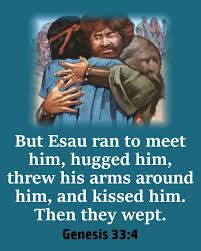
1-4 Jacob looked up and saw Esau coming with his four hundred men. He divided the children between Leah and Rachel and the two maidservants. He put the maidservants out in front, Leah and her children next, and Rachel and Joseph last. He led the way and, as he approached his brother, bowed seven times, honoring his brother. But Esau ran up and embraced him, held him tight and kissed him. And they both wept.

Then Esau looked around and saw the women and children: “And who are these with you?”

Jacob said, “The children that God saw fit to bless me with.”

6-7 Then the maidservants came up with their children and bowed; then Leah and her children, also bowing; and finally, Joseph and Rachel came up and bowed to Esau.

Esau then asked, “And what was the meaning of all those herds that I met?”

“I was hoping that they would pave the way for my master to welcome me.”

Esau said, “Oh, brother. I have plenty of everything—keep what is yours for yourself.”

10-11 Jacob said, “Please. If you can find it in your heart to welcome me, accept these gifts. When I saw your face, it was as the face of God smiling on me. Accept the gifts I have brought for you. God has been good to me and I have more than enough.” Jacob urged the gifts on him and Esau accepted.

12 Then Esau said, “Let’s start out on our way; I’ll take the lead.”

13-14 But Jacob said, “My master can see that the children are frail. And the flocks and herds are nursing, making for slow going. If I push them too hard, even for a day, I’d lose them all. So, master, you go on ahead of your servant, while I take it easy at the pace of my flocks and children. I’ll catch up with you in Seir.”

15 Esau said, “Let me at least lend you some of my men.”

“There’s no need,” said Jacob. “Your generous welcome is all I need or want.”

16 So Esau set out that day and made his way back to Seir.

17 And Jacob left for Succoth. He built a shelter for himself and sheds for his livestock. That’s how the place came to be called Succoth (Sheds).

18-20 And that’s how it happened that Jacob arrived all in one piece in Shechem in the land of Canaan—all the way from Paddan Aram. He camped near the city. He bought the land where he pitched his tent from the sons of Hamor, the father of Shechem. He paid a hundred silver coins for it. Then he built an altar there and named it El-Elohe-Israel (Mighty Is the God of Israel).

WHAT DO WE LEARN—HOW DO WE RESPOND?

What Jacob feared most did not happen.  God told Jacob to go back home.  God also told him, “I will be with you, protect you and keep you safe.”  Why worry and scheme?

Jesus teaches us our response when it comes to worry versus faith.  “So do not worry, saying, ‘What shall we eat?’ or ‘What shall we drink?’ or ‘What shall we wear?’ For the pagans run after all these things, and your heavenly Father knows that you need them. But seek first his kingdom and his righteousness, and all these things will be given to you as well. Therefore do not worry about tomorrow, for tomorrow will worry about itself. Each day has enough trouble of its own.”  Matthew 6:31-34

Seek God first.  Trust God.  No, really, Trust God.  Even when bad stuff happens you didn’t see coming, God already knows and has a plan to help you through it.  Seek God who knows what we need before we need it and provides it even before we ask.  God, who is FIRST in our lives, the first one we talk with and listen to, is always at work on our behalf because of His great love for us.  Trust Him.  Have faith in a faithful, unchanging in His promises, God. 

“I will be with you.” –God

Jesus reiterates, “And surely I am with you always, to the very end of the age.”  Matthew 28:20

Lord,

Truly great is your faithfulness to us.  I repent of worry that wastes time.  All my hope, trust and faith is in you for you are Life forever.  Thank you for knowing all my needs and providing so well.  Great is your faithfulness, indeed!

In Jesus Name, Amen
Posted in Uncategorized | 2 Comments

WRESTLING WITH RECONCILIATION

Jacob left his home under less than best circumstances.  He had tricked his blind father, taking the coveted birthright and blessings that rightfully belonged to his brother Esau.  Esau was so angry at the time, he wanted to kill Jacob!  Jacob escaped with the clothes on his back.  

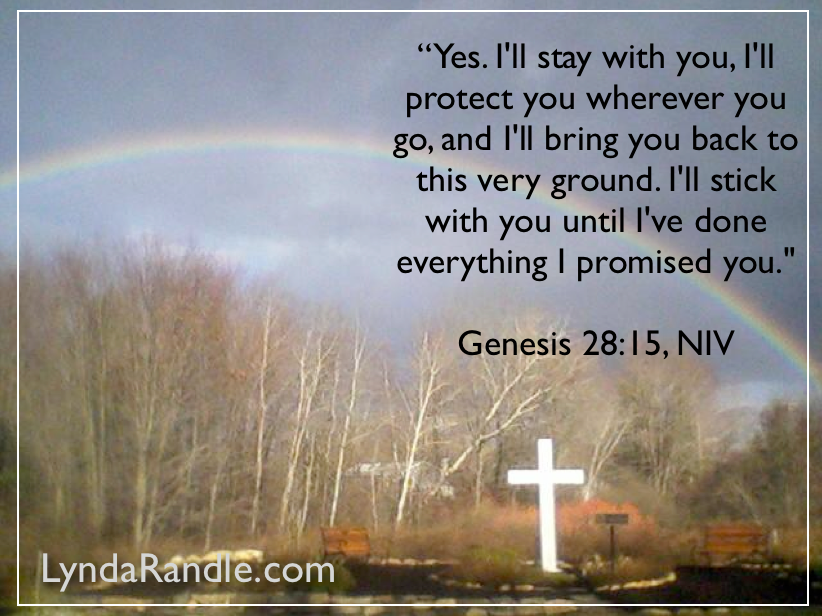
However, our God of compassion blessed Jacob with a relationship with him. God met him on the road of his escape and dealt with him on his way to Rebekah’s family to seek wife.  God deals with Jacob again.  God promised Jacob what he promised Abraham and Isaac; “I’ll stay with you, I’ll protect you wherever you go, and I’ll bring you back to this very ground. I’ll stick with you until I’ve done everything I promised you.” (Genesis 28) Jacob, who is not perfect, may not have deserved God’s gift of protection and blessings…but we don’t deserve what God did and does for us either, amen?

When we remember what we have done in our past, even though forgiven by God for it, we also fear coming back to the “scene of the crime” where we must deal with people we hurt or with those who hurt us.  God wants reconciliation, the restoration of loving relationships, and he will guide us to do this hard thing.  Why?  Because God did this “hard thing” for us! 

Paul explains reconciliation as “our ministry”, God’s work in and through us!

“So from now on we regard no one from a worldly point of view. Though we once regarded Christ in this way, we do so no longer. Therefore, if anyone is in Christ, the new creation has come: The old has gone, the new is here! All this is from God, who reconciled us to himself through Christ and gave us the ministry of reconciliation: that God was reconciling the world to himself in Christ, not counting people’s sins against them. And he has committed to us the message of reconciliation. We are therefore Christ’s ambassadors, as though God were making his appeal through us. We implore you on Christ’s behalf: Be reconciled to God. God made him who had no sin to be sin for us, so that in him we might become the righteousness of God.” (2 Corinthians 5: 16-21, NIV)

God made a Way, as only He can, to reconcile us to Him through His Son, Jesus the Christ who restored our relationship to our Father God by standing in our place for deserved punishment that should have been ours.  Reconciled to God, we enter into a “ministry of reconciliation” with others.  Jesus will later go deeper with this focus and teach this principle with practical ways to restore our relationships also with each other while on earth.  (See Matthew 5)

God is teaching Jacob the ministry of reconciliation, the restoring of a relationship gone bad with his brother Esau in our next passage.  Here is a random thought, would our all-knowing God, who knows what is to come, turn to His Son, Jesus with a wink in this lesson to Jacob?  And who is wrestling with Jacob?  If it is God, could it be Jesus wrestling with Jacob?  Just wondering…

Genesis 32, The Message

1-2 And Jacob went his way. Angels of God met him. When Jacob saw them he said, “Oh! God’s Camp!” And he named the place Mahanaim (Campground).

3-5 Then Jacob sent messengers on ahead to his brother Esau in the land of Seir in Edom. He instructed them: “Tell my master Esau this, ‘A message from your servant Jacob: I’ve been staying with Laban and couldn’t get away until now. I’ve acquired cattle and donkeys and sheep; also men and women servants. I’m telling you all this, my master, hoping for your approval.’”

The messengers came back to Jacob and said, “We talked to your brother Esau and he’s on his way to meet you. But he has four hundred men with him.”

7-8 Jacob was scared. Very scared. Panicked, he divided his people, sheep, cattle, and camels into two camps. He thought, “If Esau comes on the first camp and attacks it, the other camp has a chance to get away.”

9-12 And then Jacob prayed, “God of my father Abraham, God of my father Isaac, God who told me, ‘Go back to your parents’ homeland and I’ll treat you well.’ I don’t deserve all the love and loyalty you’ve shown me. When I left here and crossed the Jordan I only had the clothes on my back, and now look at me—two camps! Save me, please, from the violence of my brother, my angry brother! I’m afraid he’ll come and attack us all, me, the mothers and the children. You yourself said, ‘I will treat you well; I’ll make your descendants like the sands of the sea, far too many to count.’”

13-16 He slept the night there. Then he prepared a present for his brother Esau from his possessions: two hundred female goats, twenty male goats, two hundred ewes and twenty rams, thirty camels with their nursing young, forty cows and ten bulls, twenty female donkeys and ten male donkeys. He put a servant in charge of each herd and said, “Go ahead of me and keep a healthy space between each herd.”

17-18 Then he instructed the first one out: “When my brother Esau comes close and asks, ‘Who is your master? Where are you going? Who owns these?’—answer him like this, ‘Your servant Jacob. They are a gift to my master Esau. He’s on his way.’”

19-20 He gave the same instructions to the second servant and to the third—to each in turn as they set out with their herds: “Say ‘Your servant Jacob is on his way behind us.’” He thought, “I will soften him up with the succession of gifts. Then when he sees me face-to-face, maybe he’ll be glad to welcome me.”

21 So his gifts went before him while he settled down for the night in the camp.

22-23 But during the night he got up and took his two wives, his two maidservants, and his eleven children and crossed the ford of the Jabbok. He got them safely across the brook along with all his possessions.

24-25 But Jacob stayed behind by himself, and a man wrestled with him until daybreak. When the man saw that he couldn’t get the best of Jacob as they wrestled, he deliberately threw Jacob’s hip out of joint.

26 The man said, “Let me go; it’s daybreak.”

Jacob said, “I’m not letting you go ’til you bless me.”

27 The man said, “What’s your name?”

He answered, “Jacob.”

28 The man said, “But no longer. Your name is no longer Jacob. From now on it’s Israel (God-Wrestler); you’ve wrestled with God and you’ve come through.”

29 Jacob asked, “And what’s your name?”

The man said, “Why do you want to know my name?” And then, right then and there, he blessed him.

30 Jacob named the place Peniel (God’s Face) because, he said, “I saw God face-to-face and lived to tell the story!”

31-32 The sun came up as he left Peniel, limping because of his hip. (This is why Israelites to this day don’t eat the hip muscle; because Jacob’s hip was thrown out of joint.)

WHAT DO WE LEARN—HOW DO WE RESPOND?

  • Be reconciled to God first. 
  • Be reconcilers who share the Good News that God wants to be reconciled to all His created humans!
  • Pray, asking God for opportunity.  God answers this prayer and provides what we need.  “May Your Will be done…”
  • Be humble, Live humbly knowing we do not deserve the love, mercy and grace God has richly given to us. 

Lord,

As a person reconciled to you, place in me the ability and courage to help others be reconciles to you, too. 

In Jesus Name, Amen

One last thought…Faith is living without scheming. 

Anticipating a difficult reunion with Esau, Jacob took the wise approach and sent messengers ahead to inform his brother that he was coming. But instead of committing the whole matter to the Lord, who had protected him from Laban, Jacob adopted a condescending attitude that wasn’t befitting to the man God had chosen to carry on the Abrahamic covenant. Sending the messengers was a good idea, but calling Esau “my lord” and himself “your servant,” and trying to impress Esau with his wealth was only evidence that Jacob wasn’t trusting God to care for him.

A believer who is walking by faith need not fear the enemy or whatever bad news may come. “He will not be afraid of evil tidings; his heart is steadfast, trusting in the LORD” (Ps. 112:7). But Jacob was “greatly afraid” (Gen. 32:7) and therefore reverted to his old policy of scheming.

“The old has gone the new has come!”  Let us pray that we not go back to our old ways of thinking when we are challenged to do what God has asked us to be and do.

It was the dawning of a new day for Israel/Jacob (Gen. 32:31): He had a new name; he had a new walk (he was limping); and he had a new relationship with God that would help him face and solve any problem if only he would exercise faith. 

Can I get an amen?

Posted in Uncategorized | Leave a comment

IT’S GO TIME!

When God says stay, stay.  When God says is time to go, go.  God’s timing is always best because He is for us, not against us.  He sees our past work and labor.  He sees what we are going through currently.  He also knows what lies ahead and prepares our hearts, minds and souls for the journey.  He has done exactly that in my life and in the life of our family over the years of following Him.  It’s hard to move but harder to disobey God.  The only place I wanted to avoid at all cost was the place of disobedience. 

Genesis 31, The Message

1-2 Jacob learned that Laban’s sons were talking behind his back: “Jacob has used our father’s wealth to make himself rich at our father’s expense.” At the same time, Jacob noticed that Laban had changed toward him. He wasn’t treating him the same.

That’s when God said to Jacob, “Go back home where you were born. I’ll go with you.”

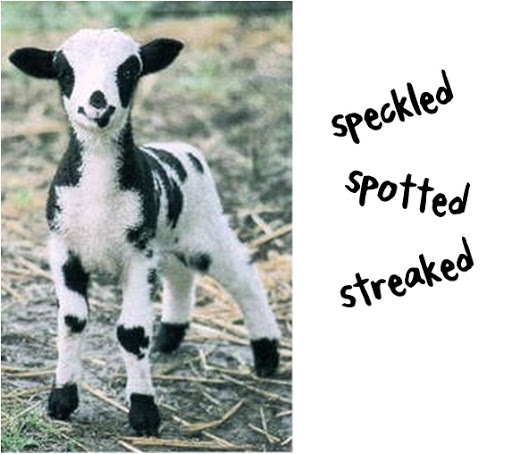
4-9 So Jacob sent word for Rachel and Leah to meet him out in the field where his flocks were. He said, “I notice that your father has changed toward me; he doesn’t treat me the same as before. But the God of my father hasn’t changed; he’s still with me. You know how hard I’ve worked for your father. Still, your father has cheated me over and over, changing my wages time and again. But God never let him really hurt me. If he said, ‘Your wages will consist of speckled animals’ the whole flock would start having speckled lambs and kids. And if he said, ‘From now on your wages will be streaked animals’ the whole flock would have streaked ones. Over and over God used your father’s livestock to reward me.

10-11 “Once, while the flocks were mating, I had a dream and saw the billy goats, all of them streaked, speckled, and mottled, mounting their mates. In the dream an angel of God called out to me, ‘Jacob!’

“I said, ‘Yes?’

12-13 “He said, ‘Watch closely. Notice that all the goats in the flock that are mating are streaked, speckled, and mottled. I know what Laban’s been doing to you. I’m the God of Bethel where you consecrated a pillar and made a vow to me. Now be on your way, get out of this place, go home to your birthplace.’”

14-16 Rachel and Leah said, “Has he treated us any better? Aren’t we treated worse than outsiders? All he wanted was the money he got from selling us, and he’s spent all that. Any wealth that God has seen fit to return to us from our father is justly ours and our children’s. Go ahead. Do what God told you.”

17-18 Jacob did it. He put his children and his wives on camels and gathered all his livestock and everything he had gotten, everything acquired in Paddan Aram, to go back home to his father Isaac in the land of Canaan.

19-21 Laban was off shearing sheep. Rachel stole her father’s household gods. And Jacob had concealed his plans so well that Laban the Aramean had no idea what was going on—he was totally in the dark. Jacob got away with everything he had and was soon across the Euphrates headed for the hill country of Gilead.

22-24 Three days later, Laban got the news: “Jacob’s run off.” Laban rounded up his relatives and chased after him. Seven days later they caught up with him in the hill country of Gilead. That night God came to Laban the Aramean in a dream and said, “Be careful what you do to Jacob, whether good or bad.”

25 When Laban reached him, Jacob’s tents were pitched in the Gilead mountains; Laban pitched his tents there, too.

26-30 “What do you mean,” said Laban, “by keeping me in the dark and sneaking off, hauling my daughters off like prisoners of war? Why did you run off like a thief in the night? Why didn’t you tell me? Why, I would have sent you off with a great celebration—music, timbrels, flutes! But you wouldn’t permit me so much as a kiss for my daughters and grandchildren. It was a stupid thing for you to do. If I had a mind to, I could destroy you right now, but the God of your father spoke to me last night, ‘Be careful what you do to Jacob, whether good or bad.’ I understand. You left because you were homesick. But why did you steal my household gods?”

31-32 Jacob answered Laban, “I was afraid. I thought you would take your daughters away from me by brute force. But as far as your gods are concerned, if you find that anybody here has them, that person dies. With all of us watching, look around. If you find anything here that belongs to you, take it.” Jacob didn’t know that Rachel had stolen the gods.

33-35 Laban went through Jacob’s tent, Leah’s tent, and the tents of the two maids but didn’t find them. He went from Leah’s tent to Rachel’s. But Rachel had taken the household gods, put them inside a camel cushion, and was sitting on them. When Laban had gone through the tent, searching high and low without finding a thing, Rachel said to her father, “Don’t think I’m being disrespectful, my master, that I can’t stand before you, but I’m having my period.” So even though he turned the place upside down in his search, he didn’t find the household gods.

36-37 Now it was Jacob’s turn to get angry. He lit into Laban: “So what’s my crime, what wrong have I done you that you badger me like this? You’ve ransacked the place. Have you turned up a single thing that’s yours? Let’s see it—display the evidence. Our two families can be the jury and decide between us.

38-42 “In the twenty years I’ve worked for you, ewes and she-goats never miscarried. I never feasted on the rams from your flock. I never brought you a torn carcass killed by wild animals but that I paid for it out of my own pocket—actually, you made me pay whether it was my fault or not. I was out in all kinds of weather, from torrid heat to freezing cold, putting in many a sleepless night. For twenty years I’ve done this: I slaved away fourteen years for your two daughters and another six years for your flock and you changed my wages ten times. If the God of my father, the God of Abraham and the Fear of Isaac, had not stuck with me, you would have sent me off penniless. But God saw the fix I was in and how hard I had worked and last night rendered his verdict.”

43-44 Laban defended himself: “The daughters are my daughters, the children are my children, the flock is my flock—everything you see is mine. But what can I do about my daughters or for the children they’ve had? So let’s settle things between us, make a covenant—God will be the witness between us.”

45 Jacob took a stone and set it upright as a pillar.

46-47 Jacob called his family around, “Get stones!” They gathered stones and heaped them up and then ate there beside the pile of stones. Laban named it in Aramaic, Yegar-sahadutha (Witness Monument); Jacob echoed the naming in Hebrew, Galeed (Witness Monument).

48-50 Laban said, “This monument of stones will be a witness, beginning now, between you and me.” (That’s why it is called Galeed—Witness Monument.) It is also called Mizpah (Watchtower) because Laban said, “God keep watch between you and me when we are out of each other’s sight. If you mistreat my daughters or take other wives when there’s no one around to see you, God will see you and stand witness between us.”

51-53 Laban continued to Jacob, “This monument of stones and this stone pillar that I have set up is a witness, a witness that I won’t cross this line to hurt you and you won’t cross this line to hurt me. The God of Abraham and the God of Nahor (the God of their ancestor) will keep things straight between us.”

53-55 Jacob promised, swearing by the Fear, the God of his father Isaac. Then Jacob offered a sacrifice on the mountain and worshiped, calling in all his family members to the meal. They ate and slept that night on the mountain. Laban got up early the next morning, kissed his grandchildren and his daughters, blessed them, and then set off for home.

WHAT DO WE LEARN—HOW DO WE RESOND?

Jacob left home, on the run from his brother, Esau whom he had deceived out of his birthright and blessing.  He is sent by Isaac and Rebekah to seek a wife from her brother’s family.  On the road, God met him in a dream.  God told him He would fulfill His promise made to Abraham and Isaac through him to build a nation of people—God’s chosen people.  Jacob heard and vowed to obey.  God is making changes in his heart and thinking which will guide is behavior.  God is doing a “new thing” in and through Jacob.  Just watch…

As we have read over the past few days, Jacob indeed found his “match” in a young shepherd girl, Rachel, as soon as he arrived in this new land.  He “bargained” for her, willing to work seven years for her hand in marriage.  He was deceived by Laban, head of household, who baited and enslaved him to Laban for much more than seven years.  Jacob did not retaliate but obeyed.  God blessed Jacob for his obedience and control of his emotions through all these trials of deception and cheating that Laban put him through.

Yes, Jacob obeyed God, worked hard to live right before God and God blessed his life beyond his wildest dreams.  Others noticed how blessed Jacob was—Laban noticed.  Laban’s only interest in God was to be blessed by Him through Jacob who he had made a servant. Laban hung on to Jacob with an iron fist using his daughters as bait. 

But never did this mistreatment escape the notice of God.  God uses this experience to build strength and resolve in Jacob.  God brings Jacob’s family together at last to form an allegiance to Jacob who follows God’s orders. 

God knows what we are going through and is already working on our behalf before we even ask. But ask, so God’s plan is revealed and His timing is known.

Are you asking, “Oh Rachel, why did you take your father’s gods from the shelf to take with you?” Her faith in Jacob’s God is still being built.  This act could have ended in bloodshed, but God watched over the situation.  God comes to our aid and helps us even when we make stupid mistakes. God is not finished with Rachel who still has a purpose to fulfill in God’s way of thinking.

I can think of many ways that God corrected and protected my own stupid missteps in judgement and mistakes on the journey to doing His will.  How about you?  Let us stop to thank God for His help!

God tells Jacob it’s time to go, to go back home “to where you were born”.  Imagine Jacob hearing this word from God, believing it and making a plan for his departure back to his beloved family!  Jacob has to work out a lot of details, convince Rachel and Leah, and then makes the move. When God is in it, it happens.  Rachel and Leah were immediately on board with Jacob’s plan.

God also provides a time, however, for Jacob to confront Laban at last, to settle the dispute of years in the making between them, with vows made to each other not to hurt each other.  God provides this time to accomplish what needs to be done—make peace. 

Vows are made.  Peace is had.  Goodbyes are given.  Hugs all around.  No blood shed.  When God is in it, God is for us.  God is in the details of our lives.  Jacob gathers his family then to worship the God who saves, protects, guides and provides.  Awesome. What a man of God Jacob is becoming!  To God be the glory!

Lord,

Thank you for this lesson of leaving one place for another as directed by you.  You are for us, in all the details of our lives, as we obey.  What a blessing you are to us.  Help us to know you more. Grow our relationship to be so intimate that we hear you with readiness to immediately obey, no matter what.  I believe.  I’m listening.  I’m your servant.  Always.

In Jesus Name, Amen
Posted in Uncategorized | Leave a comment

WHAT’S IN A NAME?

How do we come up with the names for our children?  Seriously, what are our thoughts as we think about a name for a child who have not arrived?  Some of us think of beloved, influential people and honor them by naming our child with their name.  Some of us try names out with our last name by speaking it out loud to hear how it rolls off the tongue.  Some of us might look up names in books that give us meaning of names and we are guided by the definitions. Naming our children is not as easy has it sounds.

I remember lying in bed one night, thinking of the “perfect” name for the life that was forming in my body.  She was our third child and would be our last.  My dad had suggested “LO—last one”, but I did not see the humor in that as much as he did.  While Randy slept, I thought of the name Amanda.  I also wanted to pass on my middle name of Lynn.  There it is!  I went to sleep thinking I had the perfect name! 

The next morning, I told Randy what I thought.  His immediate response was, “Okay, say the name out loud a few times.”  “I know you like music, but really, Amanda Lynn?”  “Doesn’t that sound like the musical instrument, a mandolin?”  We laughed at my choice (smiling now to remember) when I said it out loud—pregnancy mind—what can I say? 

We finally settled on Carrie Lynn which fit her perfectly.  And guess what?  Of all three of our children, she is the one who loves music the most, can remember all the lyrics to all kinds of song, and can sing a song for everything that happens to her daily!  Her life is a musical just waiting to burst into song! 

What’s in a name?  Everything.    

Take note of the names given to each son born to Jacob…it will mean something later…

Genesis 30, The Message

When Rachel realized that she wasn’t having any children for Jacob, she became jealous of her sister. She told Jacob, “Give me sons or I’ll die!”

Jacob got angry with Rachel and said, “Am I God? Am I the one who refused you babies?”

3-5 Rachel said, “Here’s my maid Bilhah. Sleep with her. Let her substitute for me so I can have a child through her and build a family.” So she gave him her maid Bilhah for a wife and Jacob slept with her. Bilhah became pregnant and gave Jacob a son.

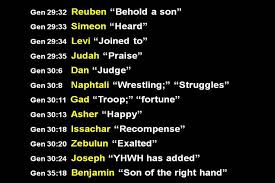
6-8 Rachel said, “God took my side and vindicated me. He listened to me and gave me a son.” She named him Dan (Vindication). Rachel’s maid Bilhah became pregnant again and gave Jacob a second son. Rachel said, “I’ve been in an all-out fight with my sister—and I’ve won.” So she named him Naphtali (Fight).

9-13 When Leah saw that she wasn’t having any more children, she gave her maid Zilpah to Jacob for a wife. Zilpah had a son for Jacob. Leah said, “How fortunate!” and she named him Gad (Lucky). When Leah’s maid Zilpah had a second son for Jacob, Leah said, “A happy day! The women will congratulate me in my happiness.” So she named him Asher (Happy).

14 One day during the wheat harvest Reuben found some mandrakes in the field and brought them home to his mother Leah. Rachel asked Leah, “Could I please have some of your son’s mandrakes?”

15 Leah said, “Wasn’t it enough that you got my husband away from me? And now you also want my son’s mandrakes?”

Rachel said, “All right. I’ll let him sleep with you tonight in exchange for your son’s mandrakes.”

16-21 When Jacob came home that evening from the fields, Leah was there to meet him: “Sleep with me tonight; I’ve bartered my son’s mandrakes for a night with you.” So he slept with her that night. God listened to Leah; she became pregnant and gave Jacob a fifth son. She said, “God rewarded me for giving my maid to my husband.” She named him Issachar (Bartered). Leah became pregnant yet again and gave Jacob a sixth son, saying, “God has given me a great gift. This time my husband will honor me with gifts—I’ve given him six sons!” She named him Zebulun (Honor). Last of all she had a daughter and named her Dinah.

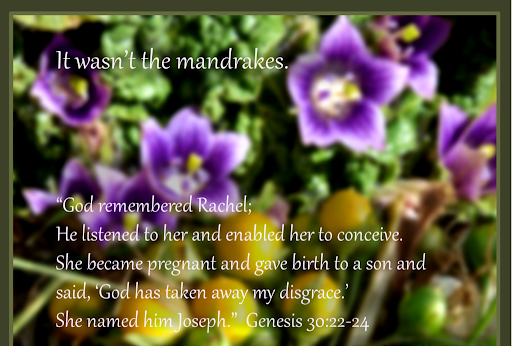
22-24 And then God remembered Rachel. God listened to her and opened her womb. She became pregnant and had a son. She said, “God has taken away my humiliation.” She named him Joseph (Add), praying, “May God add yet another son to me.”

* * *

25-26 After Rachel had had Joseph, Jacob spoke to Laban, “Let me go back home. Give me my wives and children for whom I’ve served you. You know how hard I’ve worked for you.”

27-28 Laban said, “If you please, I have learned through divine inquiry that God has blessed me because of you.” He went on, “So name your wages. I’ll pay you.”

29-30 Jacob replied, “You know well what my work has meant to you and how your livestock has flourished under my care. The little you had when I arrived has increased greatly; everything I did resulted in blessings for you. Isn’t it about time that I do something for my own family?”

31-33 “So, what should I pay you?”

Jacob said, “You don’t have to pay me a thing. But how about this? I will go back to pasture and care for your flocks. Go through your entire flock today and take out every speckled or spotted sheep, every dark-colored lamb, every spotted or speckled goat. They will be my wages. That way you can check on my honesty when you assess my wages. If you find any goat that’s not speckled or spotted or a sheep that’s not black, you will know that I stole it.”

34 “Fair enough,” said Laban. “It’s a deal.”

35-36 But that very day Laban removed all the mottled and spotted billy goats and all the speckled and spotted nanny goats, every animal that had even a touch of white on it plus all the black sheep and placed them under the care of his sons. Then he put a three-day journey between himself and Jacob. Meanwhile Jacob went on tending what was left of Laban’s flock.

37-42 But Jacob got fresh branches from poplar, almond, and plane trees and peeled the bark, leaving white stripes on them. He stuck the peeled branches in front of the watering troughs where the flocks came to drink. When the flocks were in heat, they came to drink and mated in front of the streaked branches. Then they gave birth to young that were streaked or spotted or speckled. Jacob placed the ewes before the dark-colored animals of Laban. That way he got distinctive flocks for himself which he didn’t mix with Laban’s flocks. And when the sturdier animals were mating, Jacob placed branches at the troughs in view of the animals so that they mated in front of the branches. But he wouldn’t set up the branches before the feebler animals. That way the feeble animals went to Laban and the sturdy ones to Jacob.

43 The man got richer and richer, acquiring huge flocks, lots and lots of servants, not to mention camels and donkeys.

WHAT DO WE LEARN—HOW DO WE RESPOND?

First of all, that Jacob could become angry with his favorite wife shouldn’t surprise us. Even the most loving couples have their occasional disagreements, and, after all, she was blaming him for something over which he had no control. But what Rachel needed wasn’t a lecture on theology or gynecology. She needed the kind understanding of her husband and the encouragement that only his love could provide. 

Lean in to listen to your spouse. Anger and frustration indicate needs not met. God will lead us.

The giving of a servant to the husband for purpose of the birth a child was culturally accepted and the norm in those days.  Carrying on the lineage of the father was of most importance—especially to the wife.  Remember Sarah, Abraham’s wife, who didn’t wait on God to give her a child (Isaac, Jacob’s father)?  She gave into the culture and desperately gave her servant, Hagar, to Abraham so a son could be born.  She and the servant, paid the emotional price in doing so, however.  Noticeable is that God took care of the children of these unions as part of the whole family.

We can count on God to make all things good to those who believe.  “And we know that God causes everything to work together for the good of those who love God and are called according to his purpose for them.”  Romans 8:28, NLT.

Lean into this verse as we read and learn about who God was, is and is to come.

The same problem that Sarah had is happening to Rachel and Jacob.  Barren for years, “wanting to die”, she gives her servant to Jacob to produce sons.  Being barren in this culture was extremely humiliating.  Leah, his other wife forced on him by Laban, does the same!  These ladies are very competitive, it seems.  God intervenes.  God cares for all the sons and a daughter born to these women.  Because of his promises to Abraham, he continues to bless Jacob. 

No matter what, we cannot change the will of God.  Do we really want to try?

At long last, Rachel conceived and gave birth to a son whom she named Joseph. The mandrakes had nothing to do with this pregnancy; it was God who blessed her in answer to her prayers. The Hebrew word qsaf means “take away,” and yosef means “to add.” God had taken away her “disgrace” of being childless and had added to her blessings. Her declaration “The LORD shall add to me another son” (v. 24) was eventually answered in the birth of Benjamin (“son of my right hand”), but the delivery led to her death (35:16–20). Many years later, it was Joseph whom God would use to save the entire family during the time of terrible famine.

What’s in a name?  Everything.  Names will reflect the story of the individuals God will use to show his glory, power and work in them!

The offspring will play an important part in God’s story of forgiveness and redemption later…Stay tuned. Remember, Jesus will be born from these ancestorial lines. Later we will read that Jacob’s sons, all of them, form a family that is messy and a bit dysfunctional.  Emotions ran high.  Jealousy rears its ugliness.  But God will intervene and teach all of us lessons of great importance as we see how great God is and what he does in and for his people.

Jacob, former deceiver who has changed the “stripes” of his past behaviors, is completely honest with Laban.  But Laban is still a liar and a cheat.  It doesn’t want to miss out as a sidebar to God’s blessings of Jacob so he does everything he can to keep him under his roof.  Ah, but Jacob, who was raised to manipulate well, comes up with a plan to leave.  His wives join forces to help him.  God leads Jacob back home to Canaan, along with his entire entourage of his family and possessions. 

God promises to be with Jacob.

God promises to be with us, too. God’s promises are true and unchanging.  Why?  Because of God’s relentless, unchanging love for us!

Lord,

Thank you for this wealth of information that proves over and over again that YOU are in control, you are with us and for us as we realize that you are the Provider and Protector of all who believe and follow in your ways. My part is to lay down my life before you, take on your yoke of teaching, and rest in you, knowing you will take care of the rest.  I trust you, dear Jesus, for all of life—you are Life to me.  I will meditate on these thoughts all day long…

In Jesus Name, Amen

Posted in Uncategorized | Leave a comment

BAIT AND SWITCH

The old bait and switch game might have had its beginnings here in this story of Jacob.  What is “bait and switch”?  The advertising industry has used it for centuries along with “and that’s not all” to get you to buy something that was not want you originally wanted to purchase.  Webster defines this practice:

Definition of bait and switch

1: a sales tactic in which a customer is attracted by the advertisement of a low-priced item but is then encouraged to buy a higher-priced one

2: the ploy of offering a person something desirable to gain favor (such as political support) then thwarting expectations with something less desirable

Yep, this has happened to me more than once!  How about you? 

Laban was a master at the game of bait and switch.  He didn’t seem to care about the damage it would do to his own daughters, especially to Leah. He saw an opportunity to fool his nephew and he took it.  Jacob fell for it, hook, line and sinker.  We must learn and remember that women of the culture of those days were treated merely as stock options.  Love was considered secondary, if considered at all, in the buying and selling of daughters in marriage for the purpose of continuing the generational line. 

Jacob came to find a wife from his mother’s family.  It was “love at first sight” between Rachel and Jacob.  Jacob, who deceived his brother, is now deceived by his Uncle Laban for Rachel’s hand in marriage.  This is a test of faith that is being built by God daily in Jacob. 

How will Jacob respond when Uncle Laban does the old bait and switch to his hardworking nephew?

Genesis 29, The Message

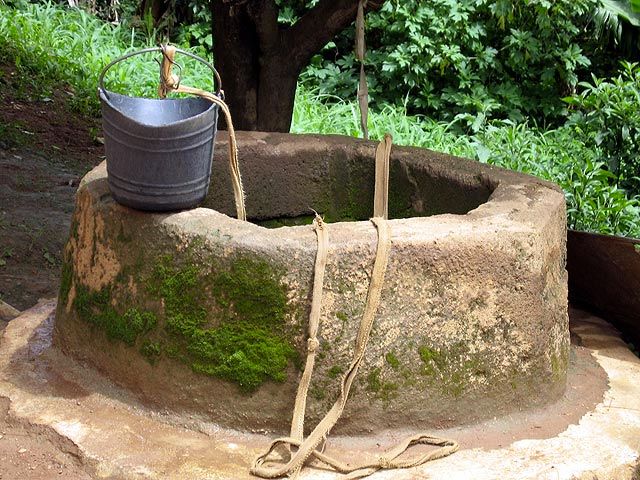
1-3 Jacob set out again on his way to the people of the east. He noticed a well out in an open field with three flocks of sheep bedded down around it. This was the common well from which the flocks were watered. The stone over the mouth of the well was huge. When all the flocks were gathered, the shepherds would roll the stone from the well and water the sheep; then they would return the stone, covering the well.

Jacob said, “Hello friends. Where are you from?”

They said, “We’re from Haran.”

Jacob asked, “Do you know Laban son of Nahor?”

“We do.”

“Are things well with him?” Jacob continued.

“Very well,” they said. “And here is his daughter Rachel coming with the flock.”

Jacob said, “There’s a lot of daylight still left; it isn’t time to round up the sheep yet, is it? So why not water the flocks and go back to grazing?”

“We can’t,” they said. “Not until all the shepherds get here. It takes all of us to roll the stone from the well. Not until then can we water the flocks.”

9-13 While Jacob was in conversation with them, Rachel came up with her father’s sheep. She was the shepherd. The moment Jacob spotted Rachel, daughter of Laban his mother’s brother, saw her arriving with his uncle Laban’s sheep, he went and single-handedly rolled the stone from the mouth of the well and watered the sheep of his uncle Laban. Then he kissed Rachel and broke into tears. He told Rachel that he was related to her father, that he was Rebekah’s son. She ran and told her father. When Laban heard the news—Jacob, his sister’s son!—he ran out to meet him, embraced and kissed him and brought him home. Jacob told Laban the story of everything that had happened.

14-15 Laban said, “You’re family! My flesh and blood!”

When Jacob had been with him for a month, Laban said, “Just because you’re my nephew, you shouldn’t work for me for nothing. Tell me what you want to be paid. What’s a fair wage?”

16-18 Now Laban had two daughters; Leah was the older and Rachel the younger. Leah had nice eyes, but Rachel was stunningly beautiful. And it was Rachel that Jacob loved.

So Jacob answered, “I will work for you seven years for your younger daughter Rachel.”

19 “It is far better,” said Laban, “that I give her to you than marry her to some outsider. Yes. Stay here with me.”

20 So Jacob worked seven years for Rachel. But it only seemed like a few days, he loved her so much.

21-24 Then Jacob said to Laban, “Give me my wife; I’ve completed what we agreed I’d do. I’m ready to consummate my marriage.” Laban invited everyone around and threw a big feast. At evening, though, he got his daughter Leah and brought her to the marriage bed, and Jacob slept with her. (Laban gave his maid Zilpah to his daughter Leah as her maid.)

25 Morning came: There was Leah in the marriage bed!

Jacob confronted Laban, “What have you done to me? Didn’t I work all this time for the hand of Rachel? Why did you cheat me?”

26-27 “We don’t do it that way in our country,” said Laban. “We don’t marry off the younger daughter before the older. Enjoy your week of honeymoon, and then we’ll give you the other one also. But it will cost you another seven years of work.”

28-30 Jacob agreed. When he’d completed the honeymoon week, Laban gave him his daughter Rachel to be his wife. (Laban gave his maid Bilhah to his daughter Rachel as her maid.) Jacob then slept with her. And he loved Rachel more than Leah. He worked for Laban another seven years.

31-32 When God realized that Leah was unloved, he opened her womb. But Rachel was barren. Leah became pregnant and had a son. She named him Reuben (Look-It’s-a-Boy!). “This is a sign,” she said, “that God has seen my misery; and a sign that now my husband will love me.”

33-35 She became pregnant again and had another son. “God heard,” she said, “that I was unloved and so he gave me this son also.” She named this one Simeon (God-Heard). She became pregnant yet again—another son. She said, “Now maybe my husband will connect with me—I’ve given him three sons!” That’s why she named him Levi (Connect). She became pregnant a final time and had a fourth son. She said, “This time I’ll praise God.” So she named him Judah (Praise-God). Then she stopped having children.

WHAT DO WE LEARN—HOW DO WE RESPOND?

God dealt with Jacob in the wilderness with promises to be with him always as works through Jacob to fulfill His original promise to Abraham.  Jacob has turned to God with all that is in him.  God is doing things in Jacob that we haven’t seen before this “meeting”.  Jacob, the deceiver has changed his ways.  He is no longer the arrogant man he used to be.  Is that what attracts Rachel to Jacob?

When God meets us in the wilderness of our lives of searching for significance; a relationship forms and then begins to grow and mature in us.  He changes our way of thinking. Our behaviors begin to change as well.

What changes do we see happening in our own lives because of our relationship with God? 

When we give our lives to God, through Jesus, everything within us changes.  God grows our character to be more like His character.  Jesus told us this would happen.  Jesus, while on earth, shows who God is because He is God.  Then Jesus gave his life for ours.

Jacob offers himself to Laban as a hardworking servant and then employee for fourteen years of his life so he can have Rachel, his beloved.  Yes, Jacob has changed.  His response to Laban’s bait and switch is miraculous.  The former Jacob would have just taken what he wanted and run away.  But he stayed.

This story has collateral damage.  Leah, the girl with “nice eyes”, is used in the bait and switch scheme of Laban, her father, to not only get Jacob to remain in service and debt to him, but to marry off the oldest daughter.  How does it make Leah feel?  The scripture portrays her pain clearly.  It also shows the compassion of our God who sees her pain and blesses her with sons through Jacob that will eventually form the “Twelve Tribes” of the nation of Israel.  Rachel is barren during this time.  But, sons are given to Leah.  The names of her sons reveal her emotions and feelings as well as her relationship with God.

When we have been “put aside”, betrayed or ignored all together, God sees us.  God comes to us as and settles our souls.  God provides the balm that soothes the woundedness of our being.  Jesus, despised by the world knows all levels of pain.  He experienced all the excruciating pain the Roman world had to offer to humans—a cross. 

But Jesus also had a pain we don’t think about as much as we should.  It grieved him in prayer the night before the cross experience to know that God would have to turn his back on him while Jesus carried all the sins of the world on his shoulders to that cross.  Only when “it was finished”, the mission complete, all the debt of sin paid in full, could God turn back around to His Son, the “One in whom He was well pleased” with power to raise Him to life everlasting, defeating death and pain altogether.

I have to ask…Have you ever felt like the girl with “nice eyes”—unloved, ignored, set aside, used?  It is in those times we feel closer to God, if we allow Him in.  Jesus came for the broken.  Jesus came for you and me.  The most important relationship we will ever have is with God.

Remember that God, with His Son Jesus, know pain.  God sees and hears our cries of pain.  He sees you.  He sees me.  He knows our hearts.  His Holy Spirit comes to us with all we need to work through the pain and get us to the other side.  Pain is momentary; God’s love and compassion is forever and never fails us. 

Pain teaches us, strengthens our faith resolve, and shows us the love of God to us and in us.  Like Paul realized, to really know Christ is to know pain.

“God’s way of making us right with himself depends on faith. I want to know Christ and experience the mighty power that raised him from the dead. I want to suffer with him, sharing in his death,so that one way or another I will experience the resurrection from the dead! (Philippians 3:9-11, NLT)

Pain is part of life here.  Pain is not forever.  There will be no pain there for believers who endure with faith in God.  He promised and God does not lie.  “He will wipe every tear from their eyes, and there will be no more death or sorrow or crying or pain. All these things are gone forever.”  (Revelation 21:4, NLT)

There are no “bait and switch” games with God, our Father!  What He says, He will do!

Lord,

There is so much that you are teaching me today through this passage!  There is not enough space to get it all down and I must stew the personal thoughts you have given to me.  I pray for every reader of this passage today to be blessed, to know how very much they are deeply loved by you.  You are not finished with us yet.  I’m still your work in progress.  Continue to change me and transform me to be all you created me to be.  I know the pain is used for strengthening me.  Thank you for painful times that taught me and brought me closer to you.

In Jesus Name, Amen

Posted in Uncategorized | Leave a comment

GOD’S PRESENCE, GOD’S INVITATION, OUR RESPONSE

Surely the presence of the Lord is in this place,
I can feel His mighty power and His grace.
I can hear the brush of angel’s wings
I see glory on each face;
Surely the presence of the Lord is in this place.

In the midst of His children, the Lord said He would be.
It doesn’t take very many, it can be just two or three.
And I feel the same sweet Spirit that I’ve felt oft times before.
Oh, surely I can say I have been with the Lord.

There’s a holy hush around us as God’s glory fills this place.
I’ve touched the hem of his garment and I can almost see His face.
And my heart is overflowing with the fullness of His joy.
I know without a doubt that I have been with the Lord.

Copyright1977 Lanny Wolfe Music 

When God shows up in our lives, we cannot ignore His Presence.  If we do, there is great regret with a constant hunger for what is missing in our lives.  God may come in a dream, a hard challenging circumstance or a peace filled situation.  His words of invitation to join Him in His work are spoken first to our hearts, then those words reach down to the very soul of our being. 

His presence and His words change our thinking and perspective which changes our behavior.  Yes, when God stands before us, right in the middle of all our flaws and arrogance, everything changes.  We will know, without a doubt, we have been with the Lord and must now do what He says.  We know we will never be the same again.

Genesis 28, The Message

1-2 So Isaac called in Jacob and blessed him. Then he ordered him, “Don’t take a Canaanite wife. Leave at once. Go to Paddan Aram to the family of your mother’s father, Bethuel. Get a wife for yourself from the daughters of your uncle Laban.

3-“And may The Strong God bless you and give you many, many children, a congregation of peoples; and pass on the blessing of Abraham to you and your descendants so that you will get this land in which you live, this land God gave Abraham.”

So Isaac sent Jacob off. He went to Paddan Aram, to Laban son of Bethuel the Aramean, the brother of Rebekah who was the mother of Jacob and Esau.

6-9 Esau learned that Isaac had blessed Jacob and sent him to Paddan Aram to get a wife there, and while blessing him commanded, “Don’t marry a Canaanite woman,” and that Jacob had obeyed his parents and gone to Paddan Aram. When Esau realized how deeply his father Isaac disliked the Canaanite women, he went to Ishmael and married Mahalath the sister of Nebaioth and daughter of Ishmael, Abraham’s son. This was in addition to the wives he already had.

* * *

10-12 Jacob left Beersheba and went to Haran. He came to a certain place and camped for the night since the sun had set. He took one of the stones there, set it under his head and lay down to sleep. And he dreamed: A stairway was set on the ground and it reached all the way to the sky; angels of God were going up and going down on it.

13-15 Then God was right before him, saying, “I am God, the God of Abraham your father and the God of Isaac. I’m giving the ground on which you are sleeping to you and to your descendants. Your descendants will be as the dust of the Earth; they’ll stretch from west to east and from north to south. All the families of the Earth will bless themselves in you and your descendants. Yes. I’ll stay with you, I’ll protect you wherever you go, and I’ll bring you back to this very ground. I’ll stick with you until I’ve done everything I promised you.”

16-17 Jacob woke up from his sleep. He said, “God is in this place—truly. And I didn’t even know it!” He was terrified. He whispered in awe, “Incredible. Wonderful. Holy. This is God’s House. This is the Gate of Heaven.”

18-19 Jacob was up first thing in the morning. He took the stone he had used for his pillow and stood it up as a memorial pillar and poured oil over it. He christened the place Bethel (God’s House). The name of the town had been Luz until then.

20-22 Jacob vowed a vow: “If God stands by me and protects me on this journey on which I’m setting out, keeps me in food and clothing, and brings me back in one piece to my father’s house, this God will be my God. This stone that I have set up as a memorial pillar will mark this as a place where God lives. And everything you give me, I’ll return a tenth to you.”

WHAT DO WE LEARN—HOW DO WE RESPOND?

Jacob was obviously in awe of God standing in front of him during his dream.  This arrogant, flawed young man who manipulated the birthright and blessing from his twin brother Esau, now humbles himself before God.  God invites him to join his ancestors in fulfilling God’s promise to the “sons” of Abraham.

When God shows up in our lives, we are humbled.  Everything of this life seems less important, not worth considering, compared to knowing God and knowing what He wants from us.  Our response to God’s invitation is found in Micah 6:8, “He has shown you, O mortal, what is good. And what does the Lord require of you? To act justly and to love mercy and to walk humbly with your God.”  All are called, chosen, to join God in his work to save humanity from death.  Walk humbly with God. 

Jacob’s first response was humbled acknowledgement of God.  He said, “God is in this place—truly. And I didn’t even know it!” He was terrified. He whispered in awe, “Incredible. Wonderful. Holy. This is God’s House. This is the Gate of Heaven.”

Our response is somewhat similar.  Wow! God, I knew that was you all along! Thank you, Father; thank you, dear Jesus; thank you, Holy Spirit.  Jesus left His Holy Spirit as our guide and helper in walking humbly with God.  When God shows up everything changes for us, too!

Jacob’s second response was immediate action, acknowledging God and His word.  Jacob was up first thing in the morning. He took the stone he had used for his pillow and stood it up as a memorial pillar and poured oil over it. He christened the place Bethel (God’s House).” Jacob no longer listens to self or his mother, but listens to God.

Jacob vows to validate God’s promise to him.  “If God stands by me and protects me on this journey on which I’m setting out, keeps me in food and clothing, and brings me back in one piece to my father’s house, this God will be my God.” 

Jacob takes another action, showing his changed heart, mind and soul. “And everything you give me, I’ll return a tenth to you.”  Jacob knows all belongs to God, his action is to give back to God what is already God’s, honoring Him with his changed thinking and behaviors. 

Our response to God is clear:

  • Acknowledge God and His Presence
  • Understand His invitation with an immediate response to join Him in His work
  • Allow God’s Word to change us and prepare us to fulfill His purpose in us.
  • Walk humbly with God—To God be the glory!

Lord,

Your Word is true and your love is unchanging.  We are chosen by you as your created to bring you glory, worship you with all our hearts, minds and souls as preparation to join you in your work to save humanity from death.  You so loved the world, all of us. Thank you!  Jesus, you took all our sin debt and paid in full. We humbly praise and thank you! Wow, what a loving God you are!  Continue to teach, convict, correct and comfort us, Holy Spirit.  Thank you for being with us, protecting us and providing for all our needs and “sticking with us”—as you did with Jacob.  Flawed but forgiven.

In Jesus Name, AmenSurely the pres

Posted in Uncategorized | 2 Comments

HOT STEW OF DECEPTION TURNS COLD

“The way to a man’s heart is through his stomach”.

When we observe life, while living life ourselves, we might discover that some of us have to work harder than others to account for the sin of deceit in this world.  Deception and lies bring ruin and calamity in all who know the deceiver.  Lying to get ahead is not really getting ahead.  Lying will always whiplash back to the liar with a harsh sting.  Deception is a dish served hot but comes back to deceivers cold and distasteful. 

In this part of the story, Rebekah deceives Isaac. Jacob deceives his brother Esau. Friends, we’ve heard the story before.  But we must go deeper into what results from deception.  Jealousy, bitterness, envy, hate rises up causing thoughts of murder.  As we read, we realize and remember the truth of scripture; unbridled sin gives birth to more sin, even death.  Jesus’ brother, James writes, “These desires give birth to sinful actions. And when sin is allowed to grow, it gives birth to death.”

Genesis 27, The Message

When Isaac had become an old man and was nearly blind, he called his eldest son, Esau, and said, “My son.”

“Yes, Father?”

2-4 “I’m an old man,” he said; “I might die any day now. Do me a favor: Get your quiver of arrows and your bow and go out in the country and hunt me some game. Then fix me a hearty meal, the kind that you know I like, and bring it to me to eat so that I can give you my personal blessing before I die.”

5-7 Rebekah was eavesdropping as Isaac spoke to his son Esau. As soon as Esau had gone off to the country to hunt game for his father, Rebekah spoke to her son Jacob. “I just overheard your father talking with your brother, Esau. He said, ‘Bring me some game and fix me a hearty meal so that I can eat and bless you with God’s blessing before I die.’

8-10 “Now, my son, listen to me. Do what I tell you. Go to the flock and get me two young goats. Pick the best; I’ll prepare them into a hearty meal, the kind that your father loves. Then you’ll take it to your father, he’ll eat and bless you before he dies.”

11-12 But Mother,” Jacob said, “my brother Esau is a hairy man and I have smooth skin. What happens if my father touches me? He’ll think I’m playing games with him. I’ll bring down a curse on myself instead of a blessing.”

13 “If it comes to that,” said his mother, “I’ll take the curse on myself. Now, just do what I say. Go and get the goats.”

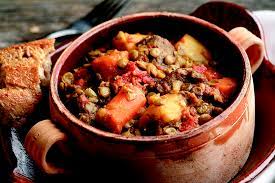
14 So he went and got them and brought them to his mother and she cooked a hearty meal, the kind his father loved so much.

15-17 Rebekah took the dress-up clothes of her older son Esau and put them on her younger son Jacob. She took the goatskins and covered his hands and the smooth nape of his neck. Then she placed the hearty meal she had fixed and fresh bread she’d baked into the hands of her son Jacob.

18 He went to his father and said, “My father!”

“Yes?” he said. “Which son are you?”

19 Jacob answered his father, “I’m your firstborn son Esau. I did what you told me. Come now; sit up and eat of my game so you can give me your personal blessing.”

20 Isaac said, “So soon? How did you get it so quickly?”

“Because your God cleared the way for me.”

21 Isaac said, “Come close, son; let me touch you—are you really my son Esau?”

22-23 So Jacob moved close to his father Isaac. Isaac felt him and said, “The voice is Jacob’s voice but the hands are the hands of Esau.” He didn’t recognize him because his hands were hairy, like his brother Esau’s.

23-24 But as he was about to bless him he pressed him, “You’re sure? You are my son Esau?”

“Yes. I am.”

25 Isaac said, “Bring the food so I can eat of my son’s game and give you my personal blessing.” Jacob brought it to him and he ate. He also brought him wine and he drank.

26 Then Isaac said, “Come close, son, and kiss me.”

27-29 He came close and kissed him and Isaac smelled the smell of his clothes. Finally, he blessed him,

Ahhh. The smell of my son
    is like the smell of the open country
    blessed by God.
May God give you
    of Heaven’s dew
    and Earth’s bounty of grain and wine.
May peoples serve you
    and nations honor you.
You will master your brothers,
    and your mother’s sons will honor you.
Those who curse you will be cursed,
    those who bless you will be blessed.

30-31 And then right after Isaac had blessed Jacob and Jacob had left, Esau showed up from the hunt. He also had prepared a hearty meal. He came to his father and said, “Let my father get up and eat of his son’s game, that he may give me his personal blessing.”

32 His father Isaac said, “And who are you?”

“I am your son, your firstborn, Esau.”

33 Isaac started to tremble, shaking violently. He said, “Then who hunted game and brought it to me? I finished the meal just now, before you walked in. And I blessed him—he’s blessed for good!”

34 Esau, hearing his father’s words, sobbed violently and most bitterly, and cried to his father, “My father! Can’t you also bless me?”

35 “Your brother,” he said, “came here falsely and took your blessing.”

36 Esau said, “Not for nothing was he named Jacob, the Heel. Twice now he’s tricked me: first he took my birthright and now he’s taken my blessing.”

He begged, “Haven’t you kept back any blessing for me?”

37 Isaac answered Esau, “I’ve made him your master, and all his brothers his servants, and lavished grain and wine on him. I’ve given it all away. What’s left for you, my son?”

38 “But don’t you have just one blessing for me, Father? Oh, bless me my father! Bless me!” Esau sobbed inconsolably.

39-40 Isaac said to him,

You’ll live far from Earth’s bounty,
    remote from Heaven’s dew.
You’ll live by your sword, hand-to-mouth,
    and you’ll serve your brother.
But when you can’t take it any more
    you’ll break loose and run free.

41 Esau seethed in anger against Jacob because of the blessing his father had given him; he brooded, “The time for mourning my father’s death is close. And then I’ll kill my brother Jacob.”

42-45 When these words of her older son Esau were reported to Rebekah, she called her younger son Jacob and said, “Your brother Esau is plotting vengeance against you. He’s going to kill you. Son, listen to me. Get out of here. Run for your life to Haran, to my brother Laban. Live with him for a while until your brother cools down, until his anger subsides and he forgets what you did to him. I’ll then send for you and bring you back. Why should I lose both of you the same day?”

46 Rebekah spoke to Isaac, “I’m sick to death of these Hittite women. If Jacob also marries a native Hittite woman, why live?”

WHAT DO WE LEARN—HOW DO WE RESPOND?

If we live life long enough, we also discover that God looks on the foolishness of our behaviors with a call to repent, to stop and turn from what is bad for us to what is good in us. God provides the Way.  It is Jesus.  Jesus said, “I am the Way, the Truth and the Life”.  “No one comes to the Father except through Me.”  (John 14:6).

God will also lay responsibilities on us so that we can grow in righteousness (our made right with God action of repentance).  These responsibilities match what God has created in us.  We are not perfect but we are made holy, brought back to righteousness, through God’s Spirit in our repentance, our turning from the world’s way of thinking to God’s way of thinking.  Therefore, we turn from bad living to Holy Spirit living.  Paul explains:

“When you follow the desires of your sinful nature, the results are very clear: sexual immorality, impurity, lustful pleasures,idolatry, sorcery, hostility, quarreling, jealousy, outbursts of anger, selfish ambition, dissension, division, envy, drunkenness, wild parties, and other sins like these. Let me tell you again, as I have before, that anyone living that sort of life will not inherit the Kingdom of God.

But the Holy Spirit produces this kind of fruit in our lives: love, joy, peace, patience, kindness, goodness, faithfulness,gentleness, and self-control.” Galatians 5:19-23

Those who have realized God’s deep love, believe in God, accepting and believing that Jesus has died for all our sin, hear God speak once more. We are given a choice to turn our hearts, minds and souls over to God’s will and purposes. When we do God turns our bad choices of the past, changes our minds, and prepares us to His greater good, the real ordained purpose of our lives.  Not only that, God takes the ruin and ashes of our destructive behaviors and makes life beautiful again.  Trust Him.  Yes, the path will be hard, but worth every effort to fulfill God’s purpose in us. 

What deception burns down in and around us, God rebuilds into a beautiful life of Truth when we turn to Him.  This is a time to burn those bridges of lies and deception and cross over the bridge God built through Jesus Christ, His Son.     

God is not finished with Jacob or Esau!  God meets Jacob in the desert while he is on the run from Esau who wants to kill him!  Yes, the plot thickens in the coming days ahead.  Stay tuned!  We will learn so much more! 

Here is a preview:  The deceiver is deceived!  How will Jacob handle it?

Lord,

When will we learn that deception just leads to more lies and harder work to cover them up?  What fools we are to fall for lies from the Father of lies, our real enemy, the one who hates you and wants us to hate you.  But I cannot.  I choose you.  I love you because you first loved me.  When I fell down, you picked me up.  When I was confused, you gave me understanding.  When I sinned, you forgave me completely.  When I came to crossroads of decisions, we gave me wisdom when I asked for it.  Why follow anyone else but You who loves us best and forever?  I love you.  I need you.  I trust in you.  You are Life.

In Jesus Name, Amen

Posted in Uncategorized | Leave a comment

PROMISES, OATHS AND COVENANTS

We inherit traits from our biological parents.  All of us acquire learned behaviors from watching them handle life. No matter how hard we try not to, we will mimic what we “caught” by observing and what we have been taught.  That’s why being a parent is such a tremendous responsibility.  We are teaching our children intentionally and unintentionally.  How many of you remembering saying, “I will never say that to my kids!”?  Then later you hear the exact words spilling out our mouth as a parent without even thinking about it!  Yep, we act a lot like our parents—displaying the good and not so good.

However, had it not been for the heritage of faith in God from my parents and grandparents, I’ve wondered at times where would I be with God in my relationship with Him?  I grew up knowing that God was supreme in our lives.  We prayed about everything.  When I stayed overnight with my grandparents, I knew that I would be joining them in reading a passage of scripture and kneeling to pray before we were tucked into our beds for the night. 

I knew and accepted the habits of our faith in God.  There would be prayer before ALL meals, not just on special occasions.  I never had the decision to go to church or not, I didn’t even know that was even a possibility.  I also never questioned it, I loved seeing all my friends and family at church.  We went to church every time the doors were open.  When we were not at church, we talked about church.  My parents and grandparents were leaders with hearts for others to find and follow Jesus. 

If we were physically sick, we sat in the back, unless you were throwing up.  Our temperatures were taken and evaluated merely by the feeling of touch by the back of mom or grandma’s hand to our foreheads.  Too warm?  Sit in the back away from everyone else. Mom played the piano.  Grandpa led the singing.  Dad was a deacon who collected offering and taught Sunday School.  Grandparents on both sides taught me in Sunday School at different times.  I grew up thinking everyone lived like I did—until junior high.  Junior high, high school then on to college tried to teach that my life was my own and there’s more to life than church.  However, I clung to the faith of my elders.

A crossroads experience of faith happened when I was a young adult, newly married, with my first child on the way.  Questions came to me such as why do we go to church every time the doors are open?  Why do I go to church?  Do I worship church more than God?  Why am I responsible for the faith of others?  Who is God to me?  Do I really believe in the God of my parents and grandparents?  Do I have a true, growing relationship with God that is intimate, not just based on the relationship my parents and grandparents see to have? 

These questions rattled me and sent me to prayer for a few months.  I could have thrown away all I knew about God and lived like my friends around me who even mocked me at times.  But I didn’t.  I couldn’t.  There was too much invested in me to leave what I knew to be indeed true.  That’s when my relationship with God truly began on a road to growth and intimacy in ways I cannot and will not leave behind.  Like the Psalmist, I would pray,

“Create in me a clean heart, O God. Renew a loyal spirit within me.  Do not banish me from your presence, and don’t take your Holy Spiritfrom me. Restore to me the joy of your salvation, and make me willing to obey you.”  Psalm 51:10-12, NLT

God did indeed fulfill his promise to take away my sins through Jesus, His Son, replacing my wonderings with knowing Him more.  His Holy Spirit guided me through my “crisis of faith” , honest questioning, to a restored joyful relationship my Heavenly Father that was all my own.  There would be other times of renewing and refreshing.  Throughout my life and now, God is there to see me through, not letting go of my hand that reached out to him in my young adult years.  He just won’t let go of me and I’m glad and grateful, so very grateful.

We may behave like our parents in habit and traditions but our relationship with God is uniquely ours through Jesus, His Son.  God’s extreme love sent His Son to earth to not only pay our debts of sin but to teach us how to live and love like Him. The more we read, think, pray and live for Him, the more we become like our Father in heaven. 

Genesis 26, The Message

There was a famine in the land, as bad as the famine during the time of Abraham. And Isaac went down to Abimelech, king of the Philistines, in Gerar.

2-5 God appeared to him and said, “Don’t go down to Egypt; stay where I tell you. Stay here in this land and I’ll be with you and bless you. I’m giving you and your children all these lands, fulfilling the oath that I swore to your father Abraham. I’ll make your descendants as many as the stars in the sky and give them all these lands. All the nations of the Earth will get a blessing for themselves through your descendants. And why? Because Abraham obeyed my summons and kept my charge—my commands, my guidelines, my teachings.”

So Isaac stayed put in Gerar.

The men of the place questioned him about his wife. He said, “She’s my sister.” He was afraid to say “She’s my wife.” He was thinking, “These men might kill me to get Rebekah, she’s so beautiful.”

8-9 One day, after they had been there quite a long time, Abimelech, king of the Philistines, looked out his window and saw Isaac fondling his wife Rebekah. Abimelech sent for Isaac and said, “So, she’s your wife. Why did you tell us ‘She’s my sister’?”

Isaac said, “Because I thought I might get killed by someone who wanted her.”

10 Abimelech said, “But think of what you might have done to us! Given a little more time, one of the men might have slept with your wife; you would have been responsible for bringing guilt down on us.”

11 Then Abimelech gave orders to his people: “Anyone who so much as lays a hand on this man or his wife dies.”

12-15 Isaac planted crops in that land and took in a huge harvest. God blessed him. The man got richer and richer by the day until he was very wealthy. He accumulated flocks and herds and many, many servants, so much so that the Philistines began to envy him. They got back at him by throwing dirt and debris into all the wells that his father’s servants had dug back in the days of his father Abraham, clogging up all the wells.

16 Finally, Abimelech told Isaac: “Leave. You’ve become far too big for us.”

17-18 So Isaac left. He camped in the valley of Gerar and settled down there. Isaac dug again the wells which were dug in the days of his father Abraham but had been clogged up by the Philistines after Abraham’s death. And he renamed them, using the original names his father had given them.

19-24 One day, as Isaac’s servants were digging in the valley, they came on a well of spring water. The shepherds of Gerar quarreled with Isaac’s shepherds, claiming, “This water is ours.” So Isaac named the well Esek (Quarrel) because they quarreled over it. They dug another well and there was a difference over that one also, so he named it Sitnah (Accusation). He went on from there and dug yet another well. But there was no fighting over this one so he named it Rehoboth (Wide-Open Spaces), saying, “Now God has given us plenty of space to spread out in the land.” From there he went up to Beersheba. That very night God appeared to him and said,

I am the God of Abraham your father;
    don’t fear a thing because I’m with you.
I’ll bless you and make your children flourish
    because of Abraham my servant.

25 Isaac built an altar there and prayed, calling on God by name. He pitched his tent and his servants started digging another well.

26-27 Then Abimelech came to him from Gerar with Ahuzzath his advisor and Phicol the head of his troops. Isaac asked them, “Why did you come to me? You hate me; you threw me out of your country.”

28-29 They said, “We’ve realized that God is on your side. We’d like to make a deal between us—a covenant that we maintain friendly relations. We haven’t bothered you in the past; we treated you kindly and let you leave us in peace. So—God’s blessing be with you!”

30-31 Isaac laid out a feast and they ate and drank together. Early in the morning they exchanged oaths. Then Isaac said good-bye and they parted as friends.

32-33 Later that same day, Isaac’s servants came to him with news about the well they had been digging, “We’ve struck water!” Isaac named the well Sheba (Oath), and that’s the name of the city, Beersheba (Oath-Well), to this day.

* * *

34-35 When Esau was forty years old he married Judith, daughter of Beeri the Hittite, and Basemath, daughter of Elon the Hittite. They turned out to be thorns in the sides of Isaac and Rebekah.

WHAT DO WE LEARN—HOW DO WE RESPOND?

How we respond to life is in direct correlation to our relationship with God.  Isaac’s relationship to God is very much like his father Abraham.  But Isaac also succumbs to the tactics and behaviors of Abraham when challenged in a foreign land.  “She’s my sister” is one of those behaviors of Abraham (twice) that is played out again in Isaac.  But God took the good and bad and led Isaac to where He needed to be with what He needed to do. 

Do we rely on God or fall to our own problem-solving ways when a crisis arises?

God restores the promise and covenant he made with Abraham to his son, Isaac.  I’m sure Isaac knew but a reminder is necessary to keep the covenant close to Isaac’s heart. 

When questions arise, do we stand on the promises of God? 

Isaac behavior over the wells is reminiscent of the behavior of Abraham and Lot.  Avoiding quarrels with a resolution for peace is seen in Isaac.  The good of Abraham is also seen in Isaac.  God blesses Isaac to a degree that is noticeable to those who occupy the land around him.  What God says he will do, He does—over and over again. 

Do we really believe what God says to be really real?  Our answer is a gamechanger.

Lord, Father in Heaven,

You are unchanging in your promises!  I believe.  I not only believe; I rely on your unchanging love, mercy and grace.  I trust in you for all the details of my life.  My hope is in You because you are the Hope of eternal life.  I trust in you, dear Jesus, and I trust in your teachings from God, the Father to us.  You taught us to pray with how to live so all would be well between us.  Jesus, You paid the debt of our sins and took our punishment, clearing the way to you, God, our Father.  You died and rose again to bring glory to God to show the power of God who lives in us!  This sacrificial act brought us to You, dear God in relationship.  I love our intimate relationship.  It guides and enriches all other relationships I have on earth. So, thank you, thank you, thank you.

In Jesus Name, Amen

Posted in Uncategorized | Leave a comment