 Are we ready to meet God today?
Are we ready to hear Him speak to us?
God told Moses to tell the people to ceremoniously and physically clean up themselves so they could be at their best, ready to hear what God has to say to them. God wanted their full attention. He tells Moses to ask the people for complete commitment to Him. Their response?
“Everything God says, we will do.”
On the third day, God came down to His people.
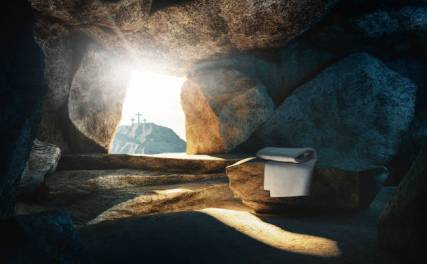 Sound familiar? On the third day, Jesus Christ rose from the grave, alive, scarred by the battle of the payment for our sins, but alive…FULLY ALIVE. Jesus presented Himself to those who loved Him to show believers the power and glory of God before ascending back to God, the Father. Mission complete.
Are we ready to talk about all that Jesus did as we celebrate the THIRD DAY Christ arose from death to life?
Because of our relationship with God through Jesus, are we ready to point others to Jesus, ready to tell them how they, too, can be saved from all sins that tie them down and hold them from being all God created them to be?
Are we ready within ourselves? Have we repented to Jesus, made holy by Jesus so our relationship with God is intimate and forever?
Are we ready to meet God and listen to what He has to say? on His terms?
Are we ready to commit like the Israelites and say, “Everything God says we will do”?
Be ready. Say, I’m sorry for my sins to Jesus. He is ready for you with complete forgiveness. No regrets!
Be ready to meet God on His terms. He wants only His best for us.
On the third day…just be with Him who loves you beyond your wildest imagination. Set apart this day in communion with Him who loves you most.
On every level God was seeking to bring the people to the place where they would commit themselves to him without hesitation.
Chapters 19 and 20 must be presented together to understand God’s full message.
1-2 Three months after leaving Egypt the Israelites entered the Wilderness of Sinai. They followed the route from Rephidim, arrived at the Wilderness of Sinai, and set up camp. Israel camped there facing the mountain.
3-6 As Moses went up to meet God, God called down to him from the mountain: “Speak to the House of Jacob, tell the People of Israel: ‘You have seen what I did to Egypt and how I carried you on eagles’ wings and brought you to me. If you will listen obediently to what I say and keep my covenant, out of all peoples you’ll be my special treasure. The whole Earth is mine to choose from, but you’re special: a kingdom of priests, a holy nation.’
“This is what I want you to tell the People of Israel.”
7 Moses came back and called the elders of Israel together and set before them all these words which God had commanded him.
8 The people were unanimous in their response: “Everything God says, we will do.” Moses took the people’s answer back to God.
 9 God said to Moses, “Get ready. I’m about to come to you in a thick cloud so that the people can listen in and trust you completely when I speak with you.” Again Moses reported the people’s answer to God.
10-13 God said to Moses, “Go to the people. For the next two days get these people ready to meet the Holy God. Have them scrub their clothes so that on the third day they’ll be fully prepared, because on the third day God will come down on Mount Sinai and make his presence known to all the people. Post boundaries for the people all around, telling them, ‘Warning! Don’t climb the mountain. Don’t even touch its edge. Whoever touches the mountain dies—a certain death. And no one is to touch that person, he’s to be stoned. That’s right—stoned. Or shot with arrows, shot to death. Animal or man, whichever—put to death.’
“A long blast from the horn will signal that it’s safe to climb the mountain.”
14-15 Moses went down the mountain to the people and prepared them for the holy meeting. They gave their clothes a good scrubbing. Then he addressed the people: “Be ready in three days. Don’t sleep with a woman.”
16 On the third day at daybreak, there were loud claps of thunder, flashes of lightning, a thick cloud covering the mountain, and an ear-piercing trumpet blast. Everyone in the camp shuddered in fear.
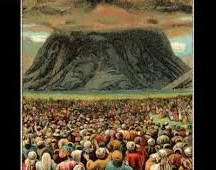 17 Moses led the people out of the camp to meet God. They stood at attention at the base of the mountain.
18-20 Mount Sinai was all smoke because God had come down on it as fire. Smoke poured from it like smoke from a furnace. The whole mountain shuddered in huge spasms. The trumpet blasts grew louder and louder. Moses spoke and God answered in thunder. God descended to the peak of Mount Sinai. God called Moses up to the peak and Moses climbed up.
21-22 God said to Moses, “Go down. Warn the people not to break through the barricades to get a look at God lest many of them die. And the priests also, warn them to prepare themselves for the holy meeting, lest God break out against them.”
23 Moses said to God, “But the people can’t climb Mount Sinai. You’ve already warned us well telling us: ‘Post boundaries around the mountain. Respect the holy mountain.’”
24 God told him, “Go down and then bring Aaron back up with you. But make sure that the priests and the people don’t break through and come up to God, lest he break out against them.”
25 So Moses went down to the people. He said to them:
 1-2 God spoke all these words:
who brought you out of the land of Egypt,
out of a life of slavery.
3 No other gods, only me.
4-6 No carved gods of any size, shape, or form of anything whatever, whether of things that fly or walk or swim. Don’t bow down to them and don’t serve them because I am God, your God, and I’m a most jealous God, punishing the children for any sins their parents pass on to them to the third, and yes, even to the fourth generation of those who hate me. But I’m unswervingly loyal to the thousands who love me and keep my commandments.
7 No using the name of God, your God, in curses or silly banter; God won’t put up with the irreverent use of his name.
8-11 Observe the Sabbath day, to keep it holy. Work six days and do everything you need to do. But the seventh day is a Sabbath to God, your God. Don’t do any work—not you, nor your son, nor your daughter, nor your servant, nor your maid, nor your animals, not even the foreign guest visiting in your town. For in six days God made Heaven, Earth, and sea, and everything in them; he rested on the seventh day. Therefore God blessed the Sabbath day; he set it apart as a holy day.
12 Honor your father and mother so that you’ll live a long time in the land that God, your God, is giving you.
16 No lies about your neighbor.
17 No lusting after your neighbor’s house—or wife or servant or maid or ox or donkey. Don’t set your heart on anything that is your neighbor’s.
18-19 All the people, experiencing the thunder and lightning, the trumpet blast and the smoking mountain, were afraid—they pulled back and stood at a distance. They said to Moses, “You speak to us and we’ll listen, but don’t have God speak to us or we’ll die.”
20 Moses spoke to the people: “Don’t be afraid. God has come to test you and instill a deep and reverent awe within you so that you won’t sin.”
21 The people kept their distance while Moses approached the thick cloud where God was.
22-26 God said to Moses, “Give this Message to the People of Israel: ‘You’ve experienced firsthand how I spoke with you from Heaven. Don’t make gods of silver and gods of gold and then set them alongside me. Make me an earthen Altar. Sacrifice your Whole-Burnt-Offerings, your Peace-Offerings, your sheep, and your cattle on it. Every place where I cause my name to be honored in your worship, I’ll be there myself and bless you. If you use stones to make my Altar, don’t use dressed stones. If you use a chisel on the stones you’ll profane the Altar. Don’t use steps to climb to my Altar because that will expose your nakedness.’”
 God commands our full attention. He is jealous, not like human jealousy, but far beyond our thinking. He loves us so much that when sin threatens our relationship with Him, He burns with passion for us. This is the love of God.
God reminds the people of their experience of the consequences of disobedience (“what I did to Egypt”) and obedience (“how I carried you”), and offers them a special relationship to himself in which they will function as his specially chosen priests.
Those who make a verbal commitment need to confirm that commitment with some form of action (vv.10-15). Three kinds of activity are enjoined here: washing (v.10), establishing of limits (vv.12-13), and sexual abstinence (v.15). All are associated with ritual purification. These actions conveyed the sense that an extraordinarily solemn moment was upon them. They also expressed a preliminary kind of obedience. Having obeyed in these matters, they would be more likely to obey in others later.
Preparations for the covenant were capped with a series of visual and auditory effects (vv.16-19). These combined to produce a sense of awe and wonder in the people. Whatever else they might think about the covenant that God was about to offer them, they were not likely to dismiss it as something trivial and ordinary. Later Moses would remind the people that no one else had ever heard the audible voice of God (Dt 4:33, 36). This covenant was unique.
God’s final preparation was to underline to Moses his deadly nature for any humans who are not especially prepared to meet him. Not even the ordinary priests could survive. Casual familiarity with the Most High is a dangerous thing (see 2 Samuel 6:6-7). God knows our hearts!
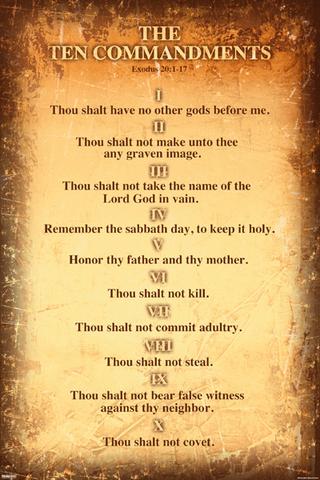 The presentation of the covenant has four parts:
(1) the prologue (20:1-2);
God, who had become their God by virtue of what he had done for them in Egypt, offers it. Covenant-keeping is not a means of entering a relationship with God. Rather, it is the way an already existing relationship, one created solely by God’s gracious intervention in their history, and is lived out.
(2) a summary of the requirements for the people (20:3-17);
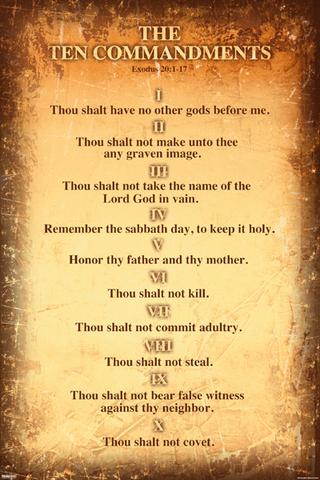
This summarizes in ten absolute commands what God expects of his people. God’s people have lived in a land where there are many gods. He is teaching them there is only One God. “You are My people and I will be your God” we will hear often in the Old Testament writings. Where only one God exists, his will is absolute.
The importance of these commands can hardly be overstated. If indeed their Author is the Author of all existence, as the Bible maintains, then this cursory expression of his expectations for his covenant people is also an expression of the norms of human life. They express what we cannot do and still cherish life.
 (3) expanded requirements for the people (20:22-23:19);
The final commandment (20:17) brings the whole series around full circle. It is the human lust for acquisitions, especially acquisition at the expense of another, that is at the heart of idolatrous religion (Isa 57:17; Col 3:5). God is reduced to gods—a device for getting what we want. Our parents, our spouse, and our neighbor become merely aids or hindrances to that lust to possess. To all of this the Creator pronounces a thunderous “No!”
 (4) God’s commitment (23:20-33).
Parts 2 and 3 encompass what we know as “the law.” Here we see the law in its correct context. Obedience to it is a response to God’s grace shown through his past deliverance and his future promises.
The stipulations section of the covenant closes with God’s commitment to his people. In response to their continued covenant obedience, he would wipe out their enemies, and give them long, abundant lives, establishing them within spacious borders.
 The only obstacles to this promise of blessing would be rebellion against God and the worship of the gods of their defeated enemies.
One of the reasons for worshiping the pagan gods was their supposed ability to provide these blessings. But God is the only one who can truly provide them.
Who do we worship? (Seriously) Do we REALLY believe that what we believe is really real?
Do we have any gods that stand in the way of worshiping the One and Only God?
As we celebrate THE THIRD DAY, the resurrection of Jesus, in our homes, may we pause to remember who God is, why He sent His Son to save us, and ponder the depth of His love.
“Jesus told this simple story, but they had no idea what he was talking about. So he tried again. “I’ll be explicit, then. I am the Gate for the sheep. All those others are up to no good—sheep stealers, every one of them. But the sheep didn’t listen to them. I am the Gate. Anyone who goes through me will be cared for—will freely go in and out, and find pasture. A thief is only there to steal and kill and destroy. I came so they can have real and eternal life, more and better life than they ever dreamed of.” —John 10:10, The Message
I believe. I really believe that what you say is The Way to Truth that leads to Life eternal. You are God, the One and Only and we are not.

 Exodus 27, The Message
 linen, embroidered by a craftsman, and hung on its four posts and bases. All the posts around the Courtyard are to be banded with silver, with hooks of silver and bases of bronze. The Courtyard is to be 150 feet long and seventy-five feet wide. The hangings of fine twisted linen set on their bronze bases are to be seven and a half feet high. All the tools used for setting up The Holy Dwelling, including all the pegs in it and the Courtyard, are to be made of bronze.
 What was done by the priests in the sanctuary what done for the Lord and before the Lord. It mattered not what the people were ignorant of what the priest was doing, because God saw it all, and their task was to please Him.
 Dear Heavenly Father,
 7-11 “Next make tapestries of goat hair for a tent that will cover The Dwelling. Make eleven panels of these tapestries. The length of each panel will be forty-five feet long and six feet wide. Join five of the panels together, and then the other six. Fold the sixth panel double at the front of the tent. Now make fifty loops along the edge of the end panel and fifty loops along the edge of the joining panel. Make fifty clasps of bronze and connect the clasps with the loops, bringing the tent together.
 15-25 “Frame The Dwelling with planks of acacia wood, each section of frame fifteen feet long and two and one-quarter feet wide, with two pegs for securing them. Make all the frames identical: twenty frames for the south side with forty silver sockets to receive the two pegs from each of the twenty frames; the same construction on the north side of The Dwelling; for the rear of The Dwelling, which faces west, make six frames with two additional frames for the rear corners. Both of the two corner frames need to be double in thickness from top to bottom and fit into a single ring—eight frames altogether with sixteen sockets of silver, two under each frame.
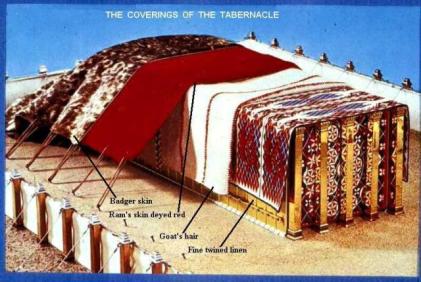 26-30 “Now make crossbars of acacia wood, five for the frames on one side of The Dwelling, five for the other side, and five for the back side facing west. The center crossbar runs from end to end halfway up the frames. Cover the frames with a veneer of gold and make gold rings to hold the crossbars. And cover the crossbars with a veneer of gold. Then put The Dwelling together, following the design you were shown on the mountain.
 God’s plans for his residence among his people take into account a number of factors relating to our human condition. We need some tangible means of recognizing and celebrating God’s presence; we seem to need beauty and majesty; we need a sense of dignity and worth that genuine involvement in a great undertaking can bring; we need to feel that each one’s gifts and abilities have significance. God’s place needs to be set apart from everything else.
 Paul expresses that concept well to gathered believers in Ephesus, “Now these are the gifts Christ gave to the church: the apostles, the prophets, the evangelists, and the pastors and teachers. Their responsibility is to equip God’s people to do his work and build up the church, the body of Christ. This will continue until we all come to such unity in our faith and knowledge of God’s Son that we will be mature in the Lord, measuring up to the full and complete standard of Christ.” Ephesians 4:11-13
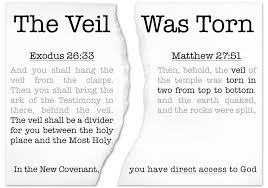 THE CURTAIN TO THE HOLY OF HOLIES
 “Therefore, since we have a great high priest who has ascended into heaven, Jesus the Son of God, let us hold firmly to the faith we profess. For we do not have a high priest who is unable to empathize with our weaknesses, but we have one who has been tempted in every way, just as we are—yet he did not sin. Let us then approach God’s throne of grace with confidence, so that we may receive mercy and find grace to help us in our time of need”. Hebrews 4:14-16
 God’s Holy spirit now DWELLS in us! We don’t have to wait for a special time and place to commune with God and BE with God! We are His Sanctuary. We are the body of Christ who can come boldly to God and talk to Him with whatever is on our minds. He already knows, so why not talk it out with Him?
 Dear Heavenly Father, Savior and Lord,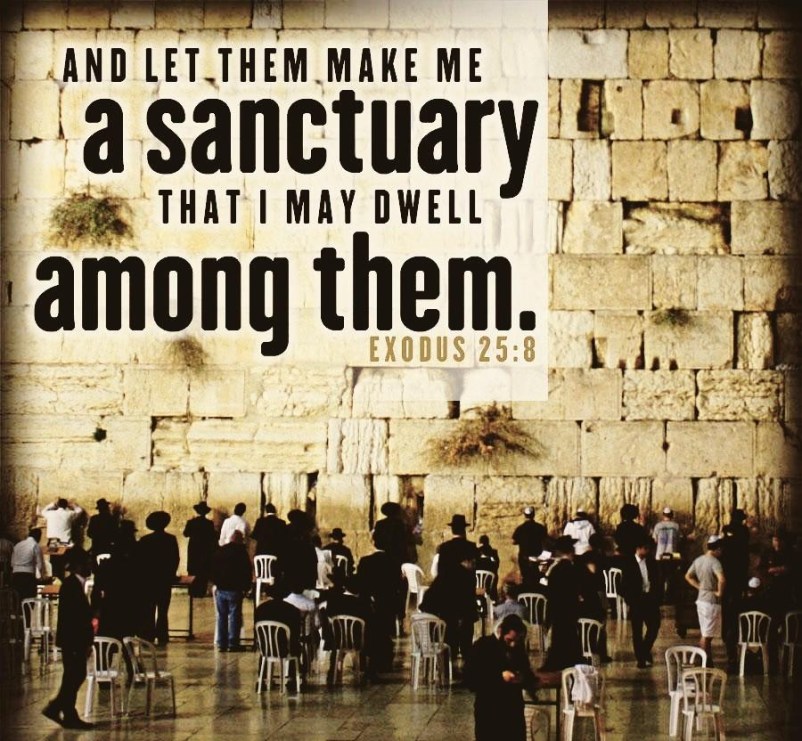
 I wonder if we listen to all that He wants (instructions for living) from us?
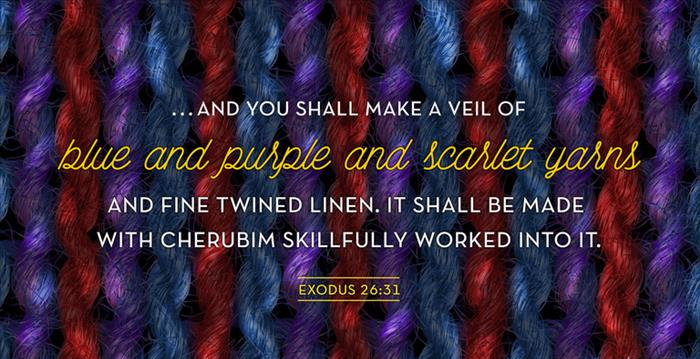
 1-9 God spoke to Moses: “Tell the Israelites that they are to set aside offerings for me. Receive the offerings from everyone who is willing to give. These are the offerings I want you to receive from them: gold, silver, bronze; blue, purple, and scarlet material; fine linen; goats’ hair; tanned rams’ skins; dolphin skins; acacia wood; lamp oil; spices for anointing oils and for fragrant incense; onyx stones and other stones for setting in the Ephod and the Breastpiece. Let them construct a Sanctuary for me so that I can live among them. You are to construct it following the plans I’ve given you, the design for The Dwelling and the design for all its furnishings.
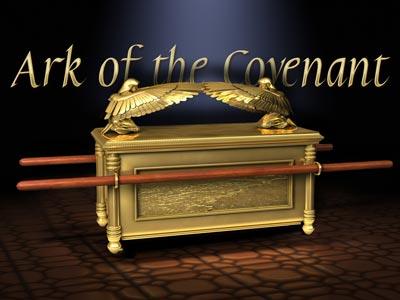 10-15 “First let them make a Chest using acacia wood: make it three and three-quarters feet long and two and one-quarter feet wide and deep. Cover it with a veneer of pure gold inside and out and make a molding of gold all around it. Cast four gold rings and attach them to its four feet, two rings on one side and two rings on the other. Make poles from acacia wood and cover them with a veneer of gold and insert them into the rings on the sides of the Chest for carrying the Chest. The poles are to stay in the rings; they must not be removed.
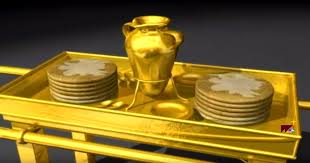 The Table
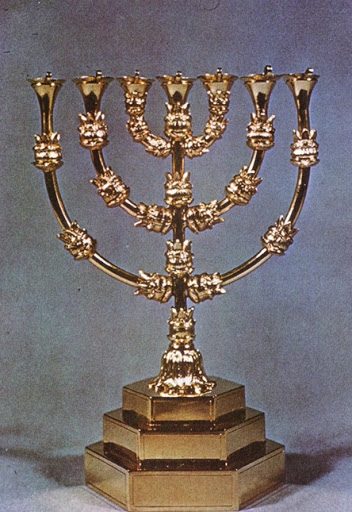 31-36 “Make a Lampstand of pure hammered gold. Make its stem and branches, cups, calyxes, and petals all of one piece. Give it six branches, three from one side and three from the other; put three cups shaped like almond blossoms, each with calyx and petals, on one branch, three on the next, and so on—the same for all six branches. On the main stem of the Lampstand, make four cups shaped like almonds, with calyx and petals, a calyx extending from under each pair of the six branches, the entire Lampstand fashioned from one piece of hammered pure gold.
 God is teaching His people to be set apart for Him. “I am your God and you will be My people” is the mantra on the journey from their past life in worship of many gods in the land of Egypt to a new way of life with Him as the One and Only God.
 In wonderful ways the tabernacle and its equipment served these purposes while also providing a valuable teaching aid for the whole theology of salvation.
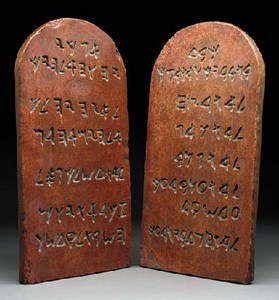
  In it was the “Testimony”, the two tablets of the law that testified to the commitment made to the covenant by both parties. On its top was the atonement cover. The Hebrew word kipporet may mean simply “cover” or “lid,” but the verb “to cover” is also used with a theological meaning: to atone for (cover up) sin.

 Did the grass sing?
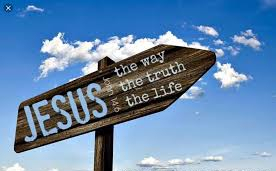 Jesus is God’s Way Out of the bondage of sin and it’s hold on us. Jesus, son of God, replaced the old system of animal sacrifice that placed all sin on a lamb or young goat to be offered on a blood stained altar by priests. Jesus became the Lamb of God sacrificed for our sin once and for all time.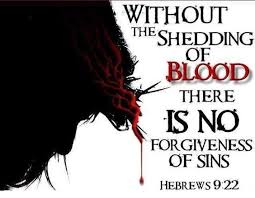
 8 Moses took the rest of the blood and threw it out over the people, saying, “This is the blood of the covenant which God has made with you out of all these words I have spoken.”
 15-17 Then Moses climbed the mountain. The Cloud covered the mountain. The Glory of God settled over Mount Sinai. The Cloud covered it for six days. On the seventh day he called out of the Cloud to Moses. In the view of the Israelites below, the Glory of God looked like a raging fire at the top of the mountain.

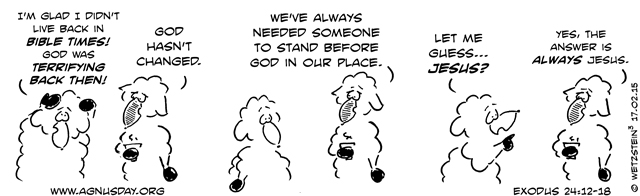
 God knows us. He knows how we tick from the inside out and outside in. He created us. He knows what was behind us, what is front of us and what we will face tomorrow. He was, is and always will be with us. Because He knows all and delights in the details of our lives, He provides where He guides. He lets us in on what will make us stubble and fall with words of warning. Like any loving Father, who wants the best for His children, He is there with wisdom for the journey, guidance along the path with provisions when we need it most.
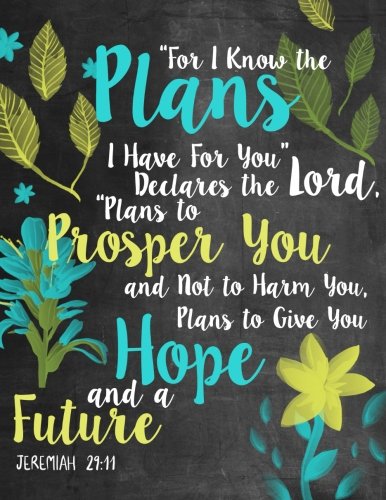 “You will seek me and find me when you seek me with all your heart.” Jeremiah 29:13
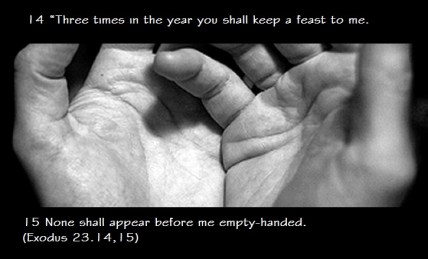 1-3 “Don’t pass on malicious gossip.
 8 “Don’t take bribes. Bribes blind perfectly good eyes and twist the speech of good people.
 12 “Work for six days and rest the seventh so your ox and donkey may rest and your servant and migrant workers may have time to get their needed rest.

 GOING DEEPER…
 Furthermore, it provides relief for the workers, both human and animal. At the heart of all the Hebrew worship was the recognition of God alone. Practically speaking, other gods did not exist for the Hebrews.
  The Feast of Harvest was held seven weeks after the end of the Feast of Unleavened Bread. This was about the first of June at the end of the wheat harvest. This was a feast of thanksgiving to God and a dedication of the tithe to him. The Feast of Ingathering came at the end of the grape harvest, the final harvest of the year, about September 25. It is also called the Feast of Tabernacles or Booths.
  This passage closes with God’s commitment to His people. In response to their continued covenant obedience, he would wipe out their enemies and give them long, abundant lives, establishing them within spacious borders.
 Dear Heavenly Father,
 God is trying to do the same for His people. Consider what many generations of His people have experienced in Egypt. They watched and probably participated in all kinds of idol worship that include despicable behavior in doing so. There were sacrifices of children, the building of idols along with the worship of many gods, eating foods not good for their bodies, not to mention nudity and sexual deviations of all kinds to satisfy their self sin nature. As slaves to the Egyptians, they were included.
 3-4 “A thief must make full restitution for what is stolen. The thief who is unable to pay is to be sold for his thieving. If caught red-handed with the stolen goods, and the ox or donkey or lamb is still alive, the thief pays double.
 7-8 “If someone gives a neighbor money or things for safekeeping and they are stolen from the neighbor’s house, the thief, if caught, must pay back double. If the thief is not caught, the owner must be brought before God to determine whether the owner was the one who took the neighbor’s goods.
 14-15 “If someone borrows an animal from a neighbor and it gets injured or dies while the owner is not present, he must pay for it. But if the owner was with it, he doesn’t have to pay. If the animal was hired, the payment covers the loss.
 21 “Don’t abuse or take advantage of strangers; you, remember, were once strangers in Egypt.
 “Don’t curse God; and don’t damn your leaders.
 Do you see the connection? God works for our good and for His glory so we will never forget Who He is and what He can do in and through us. Love God. Love Others. These are what all the others laws are based upon. –Jesus
 7 He made known his ways to Moses,
 13 As a father has compassion on his children,

 “These are the laws that you are to place before them:
 12-14 “If someone hits another and death results, the penalty is death. But if there was no intent to kill—if it was an accident, an ‘act of God’—I’ll set aside a place to which the killer can flee for refuge. But if the murder was premeditated, cunningly plotted, then drag the killer away, even if it’s from my Altar, to be put to death.
 20-21 “If a slave owner hits a slave, male or female, with a stick and the slave dies on the spot, the slave must be avenged. But if the slave survives a day or two, he’s not to be avenged—the slave is the owner’s property.
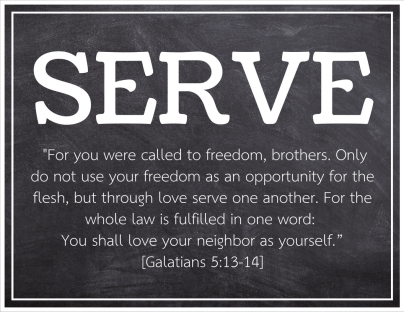
 The privilege of freedom brings with it the responsibility to use that freedom wisely for the glory of God and the good of others. However, the Ten Commandments were much more than laws for governing the life of the nation of Israel. they are a part of the covenant God made with Israel when He took them to Himself to be His special people.
  Why did God choose to give the Israelites the Ten Commandments?
 PERSONAL REFLECTION
 LAST THOUGHT

 Then there’s the Sinatra classic…(my mind is a musical soundtrack)
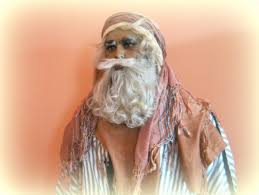 Jethro not only brings Moses’ protected wife and sons back to him in the wilderness journey but delivers advice that will help a worn out, almost burned out, weary leader of God’s people. I believe God sent Jethro with God’s wisdom that ALL leaders in God’s church should listen to and apply to their lives. (Yes, I used the Name of God three times in one sentence for emphasis!)
 Pastors, Associate Pastors, Worship Pastors, Children and Youth Pastors, Executive Pastors, Social Media, Connections, and even those who pass out cookies and coffee, etc, read carefully and slowly.
 7-8 Moses went out to welcome his father-in-law. He bowed to him and kissed him. Each asked the other how things had been with him. Then they went into the tent. Moses told his father-in-law the story of all that God had done to Pharaoh and Egypt in helping Israel, all the trouble they had experienced on the journey, and how God had delivered them.
 17-23 Moses’ father-in-law said, “This is no way to go about it. You’ll burn out, and the people right along with you. This is way too much for you—you can’t do this alone. Now listen to me. Let me tell you how to do this so that God will be in this with you. Be there for the people before God, but let the matters of concern be presented to God. Your job is to teach them the rules and instructions, to show them how to live, what to do. And then you need to keep a sharp eye out for competent men—men who fear God, men of integrity, men who are incorruptible—and appoint them as leaders over groups organized by the thousand, by the hundred, by fifty, and by ten. They’ll be responsible for the everyday work of judging among the people. They’ll bring the hard cases to you, but in the routine cases they’ll be the judges. They will share your load and that will make it easier for you. If you handle the work this way, you’ll have the strength to carry out whatever God commands you, and the people in their settings will flourish also.”
 God sends mentors to us, those we trust and relate to with respect. This is the relationship Moses has with Jethro.
  Moses trusts Jethro and listens to his mentor. “Let me tell you how to do this so that God will be in this with you,” Jethro begins his talk.
 7. They’ll be responsible for the everyday work of judging among the people.

 It’s hard to be a Godly leader in the middle of the battle, in the middle of change and transition caused by a virus, or in the middle of getting from one place to another on life’s journey. When our normal routine is interrupted we get grumpy and accusing. We turn inward, placing blame on everyone around us. When the blame game wears out, we humans have a tendency to then look up and shake our fist at Almighty God and ask, like the Israelites, “Is God here with us, or not?”
 1-2 Directed by God, the whole company of Israel moved on by stages from the Wilderness of Sin. They set camp at Rephidim. And there wasn’t a drop of water for the people to drink. The people took Moses to task: “Give us water to drink.” But Moses said, “Why pester me? Why are you testing God?”
 6-7 Moses did what he said, with the elders of Israel right there watching. He named the place Massah (Testing-Place) and Meribah (Quarreling) because of the quarreling of the Israelites and because of their testing of God when they said, “Is God here with us, or not?”
 10-13 Joshua did what Moses ordered in order to fight Amalek. And Moses, Aaron, and Hur went to the top of the hill. It turned out that whenever Moses raised his hands, Israel was winning, but whenever he lowered his hands, Amalek was winning. But Moses’ hands got tired. So they got a stone and set it under him. He sat on it and Aaron and Hur held up his hands, one on each side. So his hands remained steady until the sun went down. Joshua defeated Amalek and its army in battle.
 Again the people do not trust God to provide water when it is not immediately available. (How quickly they forgot the manna He is providing daily!) To test God in this way, “Is God here with us, or not?”, is to act out of unbelief, demanding that he prove himself true. This is not the first time or the last that God’s people put Him to the test!
  When we accept and truly believe that He knows what He is doing and will indeed provide a way out of our present circumstance, providing for us all along the journey, we will grow in our faith and claim victory on the other side of our troubles.

 How about us? Are we in this virus wilderness of isolation asking the same question, “Is God with us, or not?”
 And YES! God IS with us! God is and always will be, the Source of our victory.
