
Exodus – God’s Way Out
 When we were first told about this new virus strand that could be dangerous, the media told us to step up our personal hygiene and wash our hands more often. The elderly and people already with health issues could be affected more than others, so be more careful around them. But we still went to work, went out to eat, socialized as if it could not happen to us. We’ve had the flu before, we will get over it even if we get it.
WHO ARE WE IN ALL OF THIS?
We humans began to poke fun at the situation. Some of us laughed because it actually made us nervous and some of us because they thought it wouldn’t happen to them.
Then the news of the virus got more serious. We were ordered by government leaders to change our normal way of life, stay home for a couple of weeks with only our family. We were told to avoid contact with the elderly and those with low autoimmune systems so the spread of this virus could be more manageable.
WHO ARE WE IN ALL OF THIS?
 We flocked to the grocery stores as if we would never see a loaf of bread again in our life times! We bought way more than we needed. We messed up the whole system of supply and demand, making the service industry work ten times harder to keep supplies on the shelves. We hoarded goods so no one else could get the items their family needed.
 When the order came that we would need to work from home if at all possible, we did. It was challenging and new at first, but now we have been inside with those we love longer than expected.
WHO ARE WE IN ALL OF THIS?
 We are complaining loudly. We do not like being told what to do. We blame the President of the United States (as if he invented the virus!). We blame our state and local leaders. We blame God. We wonder why would God allow this as if God sent the virus upon us as a punishment. Some think the end of the world is coming. Fear and anxiety has set in. Many are becoming emotionally unstable. We are forgetting to pray, asking God to help us.
As weeks of staying home become months of isolation with our family, our complaints are getting louder. Will this be our new way of life? Schedules are almost non existent bringing unwanted disorder to our regular routine. It is the “snow day” that never ends. We are stuck in the movie Groundhog Day set on a repeating loop.
Parents are now their kids’ teachers. Schools are closed. Our favorite restaurants are closed. Only take-out food is available but we wonder if that is safe. We now have to cook food from our overstocked pantries all by ourselves! What?! We live in pajamas most of the time UNLESS we are the dedicated people in the medical field who are giving all they’ve got to helping those affected by this virus while risking their own lives.
WHO ARE WE IN ALL OF THIS?
 As believers we pray for the end of this “walking through the wilderness” journey before anymore deaths occur. We pray it will not be 40 years! We pray more seriously for our lost loved ones with passion, like Jesus prayed for us. We pray for those who are sick with greater concern for their families as well. As believers, we do not hoard but share what we have on hand with others.
 We are called to care in more ways than ever before. We are stepping up. There is no longer a routine in anything we do. And we accept that. We are creating new ways to continually spread the Hope of Jesus Christ, the Prince of Peace, using the innovative technology available to us. We are continually learning and growing as we ask God, “What are you teaching us in all of this?” “What are you molding and shaping in me?”
 Yes, as believers our faith is actually growing. Our love for God and each other is spreading! We know, without doubt, “that to live is Christ and to die is gain” (Philippians 1:21) so we are ready for whatever life throws at us. Jesus is King and Lord of our lives. Jesus is peace in troubled, scary circumstances. He is still the answer to our questions. He is the Waymaker through these troubled waters.
 God, our Father, is in control and will use this present trouble for the good of those who love and believe and cling to Him. God will use this to strengthen our faith and resolve. God will use this so that His glory will be seen daily. Watch for Him!
In our passage today, we read that God’s people got hangry (hunger plus anger) for their past routine, regular foods and past lifestyle as slaves! Moses asked, “who are we in all of this”?
We are taught more than one important lesson that we cannot miss in this passage. When we complain, we are complaining against God, our Father. God provides daily.
Exodus 16, The Message
1-3 On the fifteenth day of the second month after they had left Egypt, the whole company of Israel moved on from Elim to the Wilderness of Sin which is between Elim and Sinai. The whole company of Israel complained against Moses and Aaron there in the wilderness. The Israelites said, “Why didn’t God let us die in comfort in Egypt where we had lamb stew and all the bread we could eat? You’ve brought us out into this wilderness to starve us to death, the whole company of Israel!”
 4-5 God said to Moses, “I’m going to rain bread down from the skies for you. The people will go out and gather each day’s ration. I’m going to test them to see if they’ll live according to my Teaching or not. On the sixth day, when they prepare what they have gathered, it will turn out to be twice as much as their daily ration.”
6-7 Moses and Aaron told the People of Israel, “This evening you will know that it is God who brought you out of Egypt; and in the morning you will see the Glory of God. Yes, he’s listened to your complaints against him. You haven’t been complaining against us, you know, but against God.”
8 Moses said, “Since it will be God who gives you meat for your meal in the evening and your fill of bread in the morning, it’s God who will have listened to your complaints against him. Who are we in all this? You haven’t been complaining to us—you’ve been complaining to God!”
9 Moses instructed Aaron: “Tell the whole company of Israel: ‘Come near to God. He’s heard your complaints.’”
10 When Aaron gave out the instructions to the whole company of Israel, they turned to face the wilderness. And there it was: the Glory of God visible in the Cloud.
11-12 God spoke to Moses, “I’ve listened to the complaints of the Israelites. Now tell them: ‘At dusk you will eat meat and at dawn you’ll eat your fill of bread; and you’ll realize that I am God, your God.’”
13-15 That evening quail flew in and covered the camp and in the morning there was a layer of dew all over the camp. When the layer of dew had lifted, there on the wilderness ground was a fine flaky something, fine as frost on the ground. The Israelites took one look and said to one another, man-hu (What is it?). They had no idea what it was.
15-16 So Moses told them, “It’s the bread God has given you to eat. And these are God’s instructions: ‘Gather enough for each person, about two quarts per person; gather enough for everyone in your tent.’”
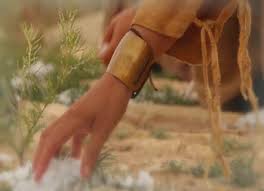 17-18 The People of Israel went to work and started gathering, some more, some less, but when they measured out what they had gathered, those who gathered more had no extra and those who gathered less weren’t short—each person had gathered as much as was needed.
19 Moses said to them, “Don’t leave any of it until morning.”
20 But they didn’t listen to Moses. A few of the men kept back some of it until morning. It got wormy and smelled bad. And Moses lost his temper with them.
21-22 They gathered it every morning, each person according to need. Then the sun heated up and it melted. On the sixth day they gathered twice as much bread, about four quarts per person.
Then the leaders of the company came to Moses and reported.
23-24 Moses said, “This is what God was talking about: Tomorrow is a day of rest, a holy Sabbath to God. Whatever you plan to bake, bake today; and whatever you plan to boil, boil today. Then set aside the leftovers until morning.” They set aside what was left until morning, as Moses had commanded. It didn’t smell bad and there were no worms in it.
25-26 Moses said, “Now eat it; this is the day, a Sabbath for God. You won’t find any of it on the ground today. Gather it every day for six days, but the seventh day is Sabbath; there won’t be any of it on the ground.”
27 On the seventh day, some of the people went out to gather anyway but they didn’t find anything.
 28-29 God said to Moses, “How long are you going to disobey my commands and not follow my instructions? Don’t you see that God has given you the Sabbath? So on the sixth day he gives you bread for two days. So, each of you, stay home. Don’t leave home on the seventh day.”
30 So the people quit working on the seventh day.
31 The Israelites named it manna (What is it?). It looked like coriander seed, whitish. And it tasted like a cracker with honey.
32 Moses said, “This is God’s command: ‘Keep a two-quart jar of it, an omer, for future generations so they can see the bread that I fed you in the wilderness after I brought you out of Egypt.’”
33 Moses told Aaron, “Take a jar and fill it with two quarts of manna. Place it before God, keeping it safe for future generations.”
34 Aaron did what God commanded Moses. He set it aside before The Testimony to preserve it.
35 The Israelites ate the manna for forty years until they arrived at the land where they would settle down. They ate manna until they reached the border into Canaan.
36 According to ancient measurements, an omer is one-tenth of an ephah.
WHY DAILY MANNA? Why “Daily Manna with Your Mug”?
 Personally I need to come to God when I first wake up with each new day. I cannot lean only on what I learned yesterday for today. Today is new. God only knows what I will face today. God knows what I will need for today. God wants us to talk, commune with Him daily. Commune is part of the word communicate which means I pray, He talks, I listen and respond. I have learned this lesson well. But there is still more to learn…each day.
Years earlier in my life, I fell on my knees before God and asked for the passion of Paul when he declared, “I want to know Christ…” (Philippians 4:10). I wanted to be better in my behavior. I wanted to grow in my faith and in my walk. I wanted to develop the characteristics of Christ, God’s Son. I wanted to be a better wife, mother, daughter, grandmother. I wanted to be a better follower of Christ. I desired to be more like Christ and less like my natural sin self. I learned this takes daily doses of God’s food, the manna of His blessings.
 I am drawn to God each morning because of my passionate request to know Him more. I need my fill of Him with each new day. I cannot and do not write this blog, Daily Manna with Your Mug, ahead of time and store in a “cloud” to be used later. I need to get my marching orders daily. I need to hear from Him daily, I cannot write yesterday what He has for me today.
It is too easy to go about our regular routines, leaning on our own self sufficiency and forget God. We start to veer from the path and wind up in a wilderness of doubt, anxiety, fear and dismay. Then we complain. All our complaining goes to God. We begin to do ungodly things.
We must gather up the manna (whatever that will be) that He has for us daily. For today is another day to praise Him, thank Him and learn from Him. He is God and we are not.
Thank you, Lord, for the lessons long ago and for the lessons of today, this very day. I need you every day. I need you every hour.
In Jesus Name, Amen
 We are still right in the middle of a world crisis. You might be in the middle of a crisis in your home because of the affects of the virus. We all wonder WHEN will we get passed this stay at home to be safe order and way of life. We wonder when will the virus stop spreading. Will God provide a way out?
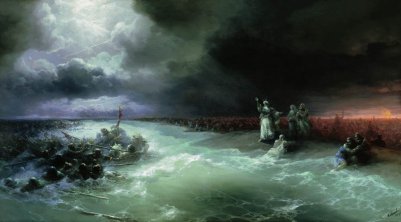
 I’m sure the Israelites questioned the decision to walk right through the sea, until they felt the dry ground under their feet to hold them up. Many question whether it is necessary to stay home in quarantine to be delivered from this virus!
 1-8 Then Moses and the Israelites sang this song to God, giving voice together,
 Pharaoh’s chariots and army
 You let loose your hot anger
 Who compares with you in power,
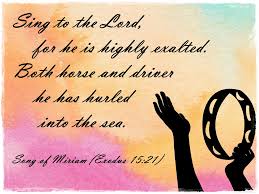
 An experience of the delivering power of God is frequently cause for song. The high emotions of joy and gratitude find particular expression in poetry and melody. The great burden of the first three verses is personal. God, who has been abstract and impersonal, has acted personally for them. The Maker of the universe is indeed their personal God.
  The second stanza of the song (15:4-10) emphasizes the contrast between the might of the Egyptians and the might of God. God is the dominant reality. As he promised, they now know him to be Lord. The boast of earth’s mighty is nothing in contrast with the mere breath of God!
 Whew, so much to learn and think about as we go through the waters of our own troubles in this world.
 “Don’t be afraid. Stand firm and watch God do his work of salvation for you today”.
  The church, the Body of Christ, is doing all they can to help people find and follow Jesus while daily praying for those who are fearful. We pray for those who are full of anxiety while they wait the results of medical tests. Fear sets in as financial debt is mounting. These and other challenges concern most people who have been laid off in the service industry. Fear of not making it through the crisis is now settling in like dark cloud. This is lasting longer than anticipated. People are crying out, “When will it be over”? followed by, “How will I survive”?
 “Believe and be saved”, I hear God’s Spirit shouting. Salvation with the promise of life is yours for eternity! Just come to Me and I will give you all you need to live without fear and anxiety. I will be with you. I will help you through the troubled waters. I will give you a peace that the world cannot give. These are all words of Jesus, our Savior and Lord to those who believe. What is more important than thinking about whether we will contract the virus, is asking ourselves do we really believe what we say we believe about God? Is our relationship with God through Jesus real and alive and well?
  They were totally afraid. They cried out in terror to God. They told Moses, “Weren’t the cemeteries large enough in Egypt so that you had to take us out here in the wilderness to die? What have you done to us, taking us out of Egypt? Back in Egypt didn’t we tell you this would happen? Didn’t we tell you, ‘Leave us alone here in Egypt—we’re better off as slaves in Egypt than as corpses in the wilderness.’”
 21 Then Moses stretched out his hand over the sea and God, with a terrific east wind all night long, made the sea go back. He made the sea dry ground. The seawaters split.
 Watch God intervene on our behalves. Watch expectantly for God’s glory to be displayed all over the world that He created. God was, is and always will be in control. God will be with us through it all no matter what will happen next and last. When we see God display His power, tell the world! We have the tools of technology to do this!
 Because of forced isolation, many are reevaluating their lives, asking for prayer and how to read the Bible more than asking for a sandwich. I am amazed, but not surprised, how God is using this to call all people, lost and disconnected, to come back to Him and BE with him…to be connected to Him intimately and to others who know Him.
 3 Moses said to the people, “Always remember this day. This is the day when you came out of Egypt from a house of slavery. God brought you out of here with a powerful hand. Don’t eat any raised bread.
 8 “Tell your child on that day: ‘This is because of what God did for me when I came out of Egypt.’
 13-16 “Redeem every firstborn child among your sons. When the time comes and your son asks you, ‘What does this mean?’ you tell him, ‘God brought us out of Egypt, out of a house of slavery, with a powerful hand. When Pharaoh stubbornly refused to let us go, God killed every firstborn in Egypt, the firstborn of both humans and animals. That’s why I make a sacrifice for every first male birth from the womb to God and redeem every firstborn son.’ The observance functions like a sign on your hands or a symbol on the middle of your forehead: God brought us out of Egypt with a powerful hand.”
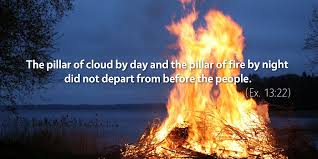 19 Moses took the bones of Joseph with him, for Joseph had made the Israelites solemnly swear to do it, saying, “God will surely hold you accountable, so make sure you bring my bones from here with you.”
 It is good to stop and remember, write it down, as we live to tell what God provided, what God did and how we saw God at work before, during and after this world virus event.
 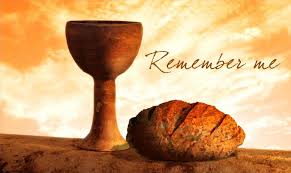 Always remember, it is because of Jesus, Lamb of God, who paid for our sin, that enables us to be free to walk right up to God and talk with Him. Don’t forget to be still long enough to listen to Him answer you. THIS is an amazing freedom which knows no bounds.
 What is the first thing you say to your kids when you are ready to leave? “Get your shoes on! It’s time to go!” I would be rich if I had a dollar for every time I said this to kids and grandkids! They are never prepared to go until you tell them.
 1-10 God said to Moses and Aaron while still in Egypt, “This month is to be the first month of the year for you. Address the whole community of Israel; tell them that on the tenth of this month each man is to take a lamb for his family, one lamb to a house. If the family is too small for a lamb, then share it with a close neighbor, depending on the number of persons involved. Be mindful of how much each person will eat. Your lamb must be a healthy male, one year old; you can select it from either the sheep or the goats. Keep it penned until the fourteenth day of this month and then slaughter it—the entire community of Israel will do this—at dusk. Then take some of the blood and smear it on the two doorposts and the lintel of the houses in which you will eat it. You are to eat the meat, roasted in the fire, that night, along with bread, made without yeast, and bitter herbs. Don’t eat any of it raw or boiled in water; make sure it’s roasted—the whole animal, head, legs, and innards. Don’t leave any of it until morning; if there are leftovers, burn them in the fire.
 14-16 “This will be a memorial day for you; you will celebrate it as a festival to God down through the generations, a fixed festival celebration to be observed always. You will eat unraised bread (matzoth) for seven days: On the first day get rid of all yeast from your houses—anyone who eats anything with yeast from the first day to the seventh day will be cut off from Israel. The first and the seventh days are set aside as holy; do no work on those days. Only what you have to do for meals; each person can do that.
 21-23 Moses assembled all the elders of Israel. He said, “Select a lamb for your families and slaughter the Passover lamb. Take a bunch of hyssop and dip it in the bowl of blood and smear it on the lintel and on the two doorposts. No one is to leave the house until morning. God will pass through to strike Egypt down. When he sees the blood on the lintel and the two doorposts, God will pass over the doorway; he won’t let the destroyer enter your house to strike you down with ruin.
 31-32 Pharaoh called in Moses and Aaron that very night and said, “Get out of here and be done with you—you and your Israelites! Go worship God on your own terms. And yes, take your sheep and cattle as you’ve insisted, but go. And bless me.”
 40-42 The Israelites had lived in Egypt 430 years. At the end of the 430 years, to the very day, God’s entire army left Egypt. God kept watch all night, watching over the Israelites as he brought them out of Egypt. Because God kept watch, all Israel for all generations will honor God by keeping watch this night—a watchnight.
 BE RECONCILED TO GOD
 As believers our response will make a difference in the lives of those God brings into our lives. Watch God work, testify of His power and rejoice in what He is doing. While we are sitting at home, praying, God is STILL at work! AMEN! Use technology or whatever means God’s gives you to get the word out…Jesus is alive. He has risen indeed!
  Our plague of corona virus has caused most of us to reconsider life purpose and importance and what it means to give all of ourselves to God. Life comes from God and returns to God for all who believe. We believe that His Son, Jesus Christ, came to earth to die for our sins and rose again to prove, without doubt, the power of God. God also proves is relentless love for us. God first in all thinking and behaving should be our life song and our lifestyle.
 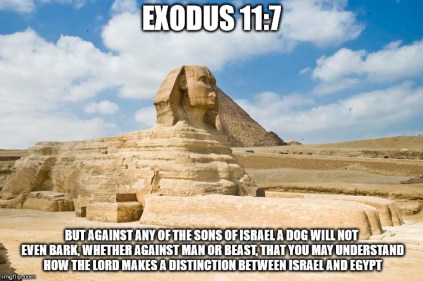 Notice how God makes a clear distinction between His people and the Egyptians, once again, in our passage for today. This time, death is the plague that will strike the hearts of every Egyptian from slave to Pharaoh. No one will be passed over EXCEPT those who obey EXACTLY what God will tell His people to do.
  We are faced with two choices daily. Who will we follow heart, mind and soul? Who will we trust with everything? Who will supply our needs and helps through troubles in this world? Who gives peace in trying times and wisdom for living life well? WHO will show us the WAY OUT?
  4-7 Then Moses confronted Pharaoh: “God’s Message: ‘At midnight I will go through Egypt and every firstborn child in Egypt will die, from the firstborn of Pharaoh, who sits on his throne, to the firstborn of the slave girl working at her hand mill. Also the firstborn of animals. Widespread wailing will erupt all over the country, lament such as has never been and never will be again. But against the Israelites—man, woman, or animal—there won’t be so much as a dog’s bark, so that you’ll know that God makes a clear distinction between Egypt and Israel.’
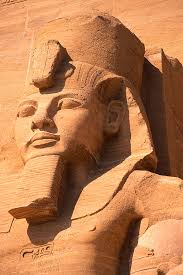 The tenth plague attacks the very heart of Egyptian faith, which was in life itself. The Egyptians were obsessed with keeping the good life of Egypt intact right into the next world.
  GETTING PERSONAL…
 Yes, when we truly look at You, it makes us stop thinking about what we want and run to what You want, which is Your best for us. May our reaction to world troubles lead others to you. Help us, Lord to stay focused on you first and less on what is going on around us. Our lives depend on it.
 Today, as we read our next passage, I think of the Egyptians. Their very selfish leader, who is a god to them, does not have their best interest at heart. He is chief god to them among their others gods. Their leader is hanging on to this form of self-made and people driven power as long as possible with everything in him.
  When Corona virus “passes over” us and dissipates, what will we tell our children? What will our children and grandchildren tell their children? THIS, too, is the story of God in us in our generation.
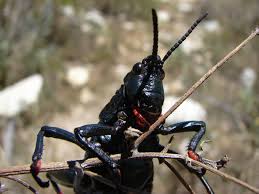 12 God said to Moses: “Stretch your hand over Egypt and signal the locusts to cover the land of Egypt, devouring every blade of grass in the country, everything that the hail didn’t get.”
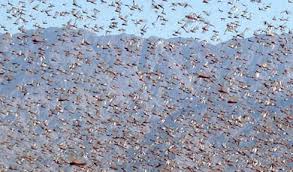 14-15 The locusts covered the country of Egypt, settling over every square inch of Egypt; the place was thick with locusts. There never was an invasion of locusts like it in the past, and never will be again. The ground was completely covered, black with locusts. They ate everything, every blade of grass, every piece of fruit, anything that the hail didn’t get. Nothing left but bare trees and bare fields—not a sign of green in the whole land of Egypt.
 Strike Nine: Darkness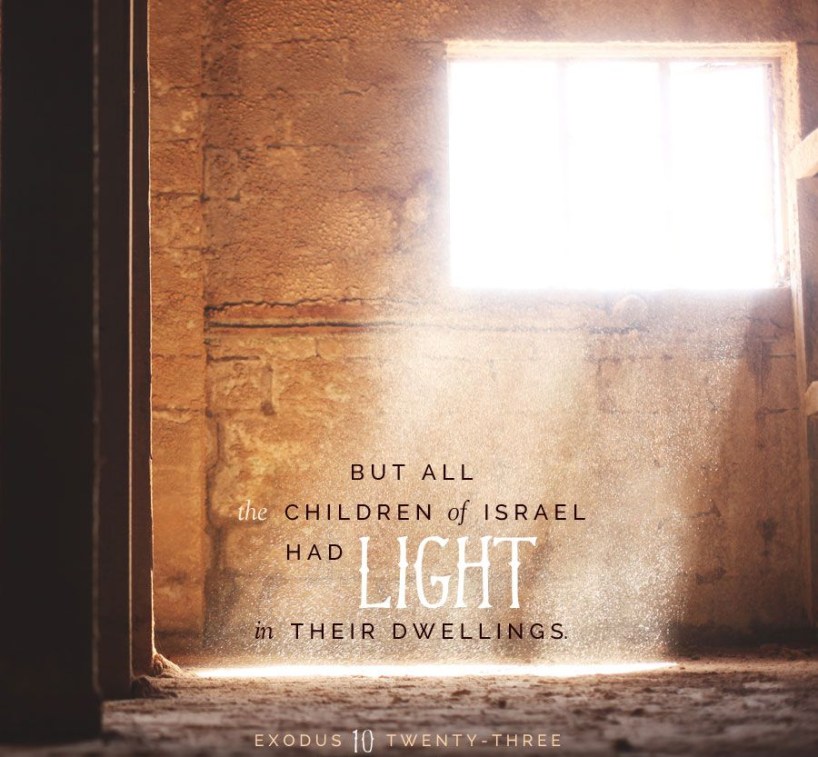
 28 Pharaoh said to Moses: “Get out of my sight! And watch your step. I don’t want to ever see you again. If I lay eyes on you again, you’re dead.”
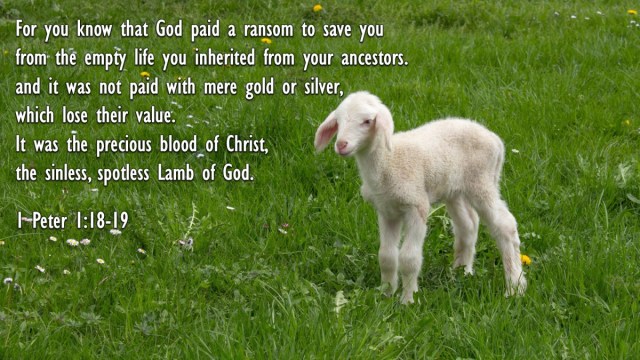 God wants the best for us and that best for us is Jesus. Jesus, God’s Son, settled our sin debt once and for all. He took all our sin and the affects of sin’s self indulgences to a cruel cross and left them there to die. Jesus was buried in a tomb in a cave. God then raised His Son up after three days as a display for many to see and believe in His power and might. God is in control. Jesus conquered sin and death for us. We who believe are saved forever and more than conquerors until we see Him face to face in all His glory! Amen! Yes!
  Dear Heavenly Father,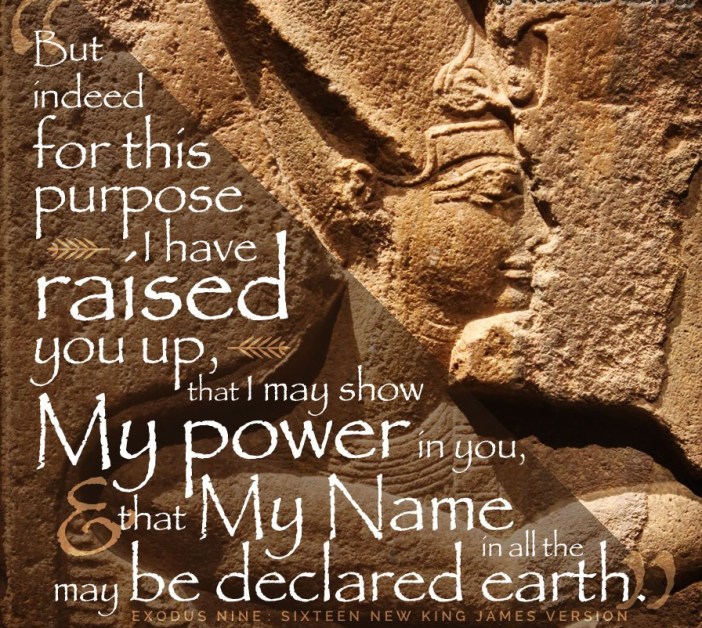
 1-4 God said to Moses, “Go to Pharaoh and tell him, ‘God, the God of the Hebrews, says: Release my people so they can worship me. If you refuse to release them and continue to hold on to them, I’m giving you fair warning: God will come down hard on your livestock out in the fields—horses, donkeys, camels, cattle, sheep—striking them with a severe disease. God will draw a sharp line between the livestock of Israel and the livestock of Egypt. Not one animal that belongs to the Israelites will die.’”
 8-11 God said to Moses and Aaron, “Take fistfuls of soot from a furnace and have Moses throw it into the air right before Pharaoh’s eyes; it will become a film of fine dust all over Egypt and cause sores, an eruption of boils on people and animals throughout Egypt.” So they took soot from a furnace, stood in front of Pharaoh, and threw it up into the air. It caused boils to erupt on people and animals. The magicians weren’t able to compete with Moses this time because of the boils—they were covered with boils just like everyone else in Egypt.
 13-19 God said to Moses, “Get up early in the morning and confront Pharaoh. Tell him, ‘God, the God of the Hebrews, says: Release my people so they can worship me. This time I am going to strike you and your servants and your people with the full force of my power so you’ll get it into your head that there’s no one like me anywhere in all the Earth.
 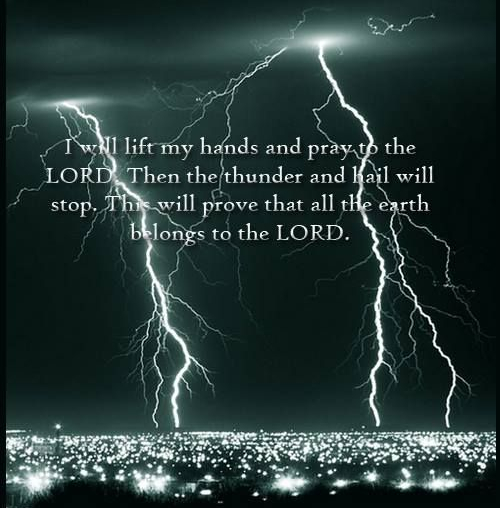 23-26 Moses lifted his staff to the skies and God sent peals of thunder and hail shot through with lightning strikes. God rained hail down on the land of Egypt. The hail came, hail and lightning—a fierce hailstorm. There had been nothing like it in Egypt in its entire history. The hail hit hard all over Egypt. Everything exposed out in the fields, people and animals and crops, was smashed. Even the trees in the fields were shattered. Except for Goshen where the Israelites lived; there was no hail in Goshen.
 In a forceful statement to Pharaoh, God underlines the purpose of the plagues (9:15-16). If destruction was God’s purpose, he could have done that long since. Rather, using the Egyptian gods and Pharaoh himself as foils, God intends to reveal himself to the world.
 Finally, Pharaoh admits that there is some other standard than his own to which he is accountable (9:27). But intellectually knowing does not guarantee surrender of the will (v.35). From the perspective of his own responsibility, Pharaoh hardened his own heart. But from the perspective of God’s purposes this act was entirely within a plan.
 With one toddler and one on the way, we bought our first home. It was a small, affordable, two bedroom home. The home was plain but functional. What sold me was the big backyard with beautiful roses, irises, and other beautiful plants. However, once we moved in, we discovered a huge problem. Our home had an infestation of roaches. If you have ever lived in the southern regions, you know what kind of ruthless insects these are. We were plagued with them! They got into everything!
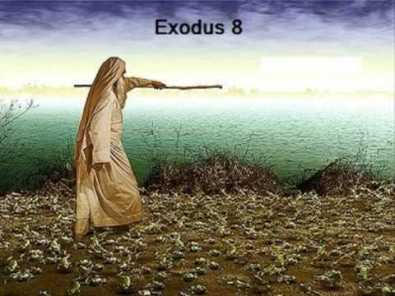 Strike Two: Frogs
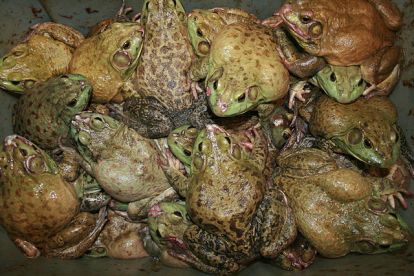 5 God said to Moses, “Tell Aaron, ‘Wave your staff over the rivers and canals and ponds. Bring up frogs on the land of Egypt.’”
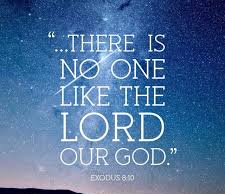 10-11 “Make it tomorrow.”
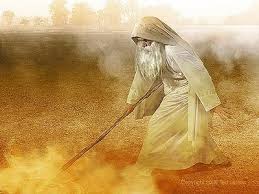 16 God said to Moses, “Tell Aaron, ‘Take your staff and strike the dust. The dust will turn into gnats all over Egypt.’”
 20-23 God said to Moses, “Get up early in the morning and confront Pharaoh as he goes down to the water. Tell him, ‘God’s Message: Release my people so they can worship me. If you don’t release my people, I’ll release swarms of flies on you, your servants, your people, and your homes. The houses of the Egyptians and even the ground under their feet will be thick with flies. But when it happens, I’ll set Goshen where my people live aside as a sanctuary—no flies in Goshen. That will show you that I am God in this land. I’ll make a sharp distinction between your people and mine. This sign will occur tomorrow.’”
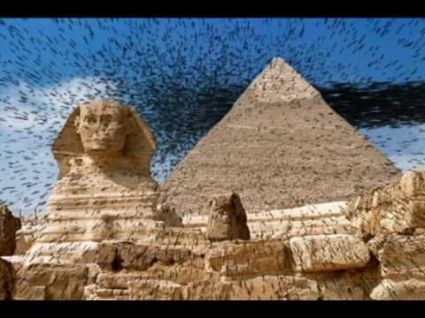 24 And God did just that. Thick swarms of flies in Pharaoh’s palace and the houses of his servants. All over Egypt, the country ruined by flies.
 As we mentioned before the Egyptians had gods for everything around them but did not know THE GOD. The Egyptians gave special reverence to animals that could live in two different environments. They did this because they were eager to be able to live in the environment of the underworld after death. But God shows that these beasts and their representative gods have no special power at all.
  What do we see God doing these days?
  I’ve done my share of whining to God when things don’t go as planned…in my mind and in my way. I have noticed something in me when life falls apart, my first thought is how did I go wrong. My second thought is to look for blame beyond myself. Finally, I consider that this is just life and life can be hard. I am reminded of all my weaknesses. It is in this time that I forget God’s strength and power for a little while. Nothing is too hard for God. Absolutely nothing. I am weak when I forget that even for a moment.
 Moses had his first run at Pharaoh who swatted him away like a pesky mosquito…(there’s worse in store for Pharaoh when it comes to insects!) Yesterday we listened to what Moses was up against as Pharaoh shouted, ““Why on earth, Moses and Aaron, would you suggest the people be given a holiday? Back to work!” Pharaoh went on, “Look, I’ve got all these people bumming around, and now you want to reward them with time off?” I am assuming and imagining that Pharaoh shouted these words at the thought of losing his workforce, even for a few days. I am also assuming that Moses and Aaron didn’t put a fight. They only said God’s words and left.
 Now times are tougher for the Hebrews. They are so beaten down, tired and weak that when Moses tries to reassure them that it wasn’t last forever, that God will bring them out of this present trouble, they don’t believe him. In fact their whining and groaning under the weight of bondage drives them to anger with Moses and ultimately with God.
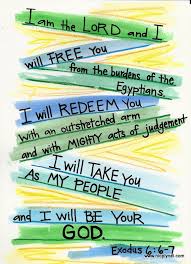 2-6 God continued speaking to Moses, reassuring him, “I am God. I appeared to Abraham, Isaac, and Jacob as The Strong God, but by my name God (I-Am-Present) I was not known to them. I also established my covenant with them to give them the land of Canaan, the country in which they lived as sojourners. But now I’ve heard the groanings of the Israelites whom the Egyptians continue to enslave and I’ve remembered my covenant. Therefore tell the Israelites:
 9 But when Moses delivered this message to the Israelites, they didn’t even hear him—they were that beaten down in spirit by the harsh slave conditions.
 These are the sons of Levi in the order of their birth.
 Why is the family tree of the 12 Tribes of Israel plopped right in the middle of this crises? Because God is reminding Moses and Aaron where they came from and who they are and then tells them where they are going. They needed to be reminded.
 Dear Heavenly Father,
