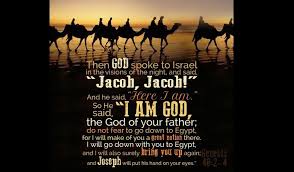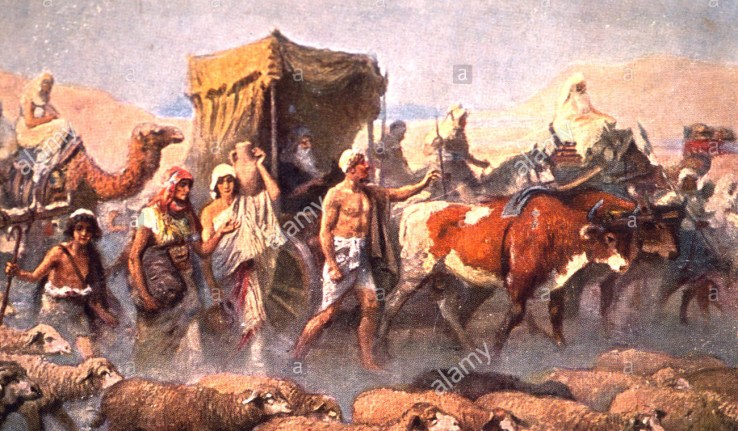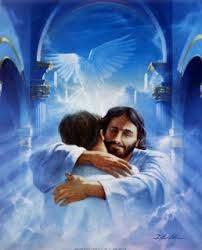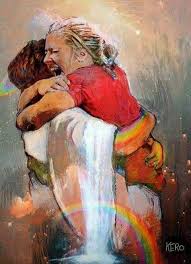
“I’LL GO WITH YOU” –GOD

Genesis – First, God
 
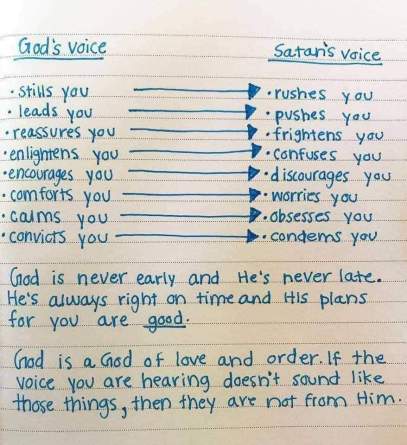
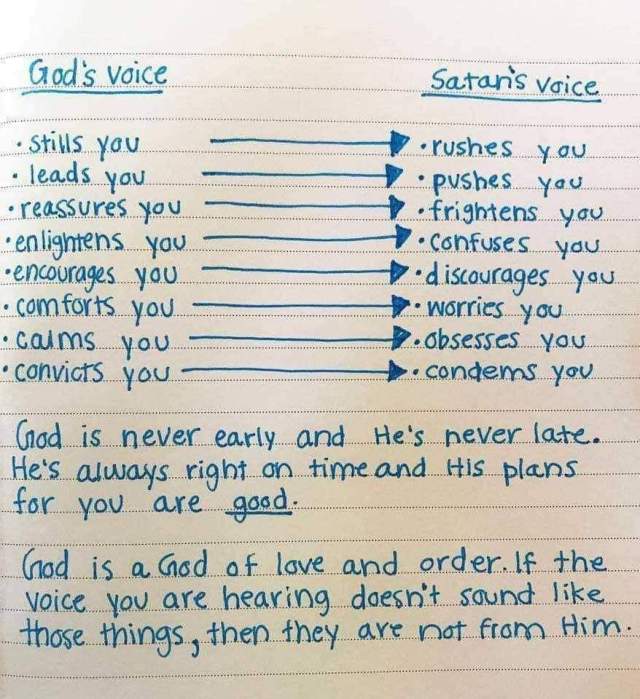
Gods voice vs EvilsPROVEN FACT: As believers, God will always tell us when to go and when to stay. Are we close enough to God to hear Him? Are we faraway enough from evil to avoid his advice? Will we obey God’s timing? Will we move when He says to move or stay where He has said to stay, no matter what the circumstances? Yes or no? Our response to His leading is up to us. Our yes or no will always be life altering and life changing. The measure of our faith in the God Who knows all and is in all will be tested and evaluated.
 
Genesis 31 which wayGod’s part, we discover by his trusted behavior of Truth, is to love us unconditionally every minute of every hour of every day. He draw us to Himself for wisdom. He teaches and nourishes us in the wait between the go and the stay. He provides for all our needs, going and coming and in-between. God protects us in the journey with the ultimate promise, “I’ll go with you”. Evil’s advice leads to self indulgence of purpose which leads to destruction through hasty, rushed decision making.
 
Jacob’s story of saying yes to God when God says to get up and move is personal. Randy and I have learned many lessons about God’s faithfulness and care in each of our major moves and in our tenacious “stays”. We have learned that He is God and we are not. God knows what lies ahead so He knows what is best for us. So, why wouldn’t we trust Him?
 
85292322_23844260286320538_5381752974332657664_n.png
We have also learned, when in doubt, don’t. A move may be on the horizon, but God’s timing is not right.
Therefore, this story is more about God, His attributes, His character, and His timing. It is about God giving us what we need, at the right time, when we need it most, in going, staying or in the transition. It is about our God who never leaves us to fight our battles alone and will always bring resolution if we listen to Him. It is about God who always has and always will be our…
 
Way maker
Miracle worker
Promise keeper
Light in the darkness
My God
That is who you are
 
Genesis 31, The Message
86842104_2987965981259779_1332556660631142400_n1-2 Jacob learned that Laban’s sons were talking behind his back: “Jacob has used our father’s wealth to make himself rich at our father’s expense.” At the same time, Jacob noticed that Laban had changed toward him. He wasn’t treating him the same.
 
3 That’s when God said to Jacob, “Go back home where you were born. I’ll go with you.”
 
4-9 So Jacob sent word for Rachel and Leah to meet him out in the field where his flocks were. He said, “I notice that your father has changed toward me; he doesn’t treat me the same as before. But the God of my father hasn’t changed; he’s still with me. You know how hard I’ve worked for your father. Still, your father has cheated me over and over, changing my wages time and again. But God never let him really hurt me. If he said, ‘Your wages will consist of speckled animals’ the whole flock would start having speckled lambs and kids. And if he said, ‘From now on your wages will be streaked animals’ the whole flock would have streaked ones. Over and over God used your father’s livestock to reward me.
 
Genesis 31 Jacob and sheep10-11 “Once, while the flocks were mating, I had a dream and saw the billy goats, all of them streaked, speckled, and mottled, mounting their mates. In the dream an angel of God called out to me, ‘Jacob!’
 
“I said, ‘Yes?’
 
12-13 “He said, ‘Watch closely. Notice that all the goats in the flock that are mating are streaked, speckled, and mottled. I know what Laban’s been doing to you. I’m the God of Bethel where you consecrated a pillar and made a vow to me. Now be on your way, get out of this place, go home to your birthplace.’”
 
14-16 Rachel and Leah said, “Has he treated us any better? Aren’t we treated worse than outsiders? All he wanted was the money he got from selling us, and he’s spent all that. Any wealth that God has seen fit to return to us from our father is justly ours and our children’s. Go ahead. Do what God told you.”
 
17-18 Jacob did it. He put his children and his wives on camels and gathered all his livestock and everything he had gotten, everything acquired in Paddan Aram, to go back home to his father Isaac in the land of Canaan.
 
19-21 Laban was off shearing sheep. Rachel stole her father’s household gods. And Jacob had concealed his plans so well that Laban the Aramean had no idea what was going on—he was totally in the dark. Jacob got away with everything he had and was soon across the Euphrates headed for the hill country of Gilead.
 
22-24 Three days later, Laban got the news: “Jacob’s run off.” Laban rounded up his relatives and chased after him. Seven days later they caught up with him in the hill country of Gilead. That night God came to Laban the Aramean in a dream and said, “Be careful what you do to Jacob, whether good or bad.”
 
Genesis 31 exit
25 When Laban reached him, Jacob’s tents were pitched in the Gilead mountains; Laban pitched his tents there, too.
 
26-30 “What do you mean,” said Laban, “by keeping me in the dark and sneaking off, hauling my daughters off like prisoners of war? Why did you run off like a thief in the night? Why didn’t you tell me? Why, I would have sent you off with a great celebration—music, timbrels, flutes! But you wouldn’t permit me so much as a kiss for my daughters and grandchildren. It was a stupid thing for you to do. If I had a mind to, I could destroy you right now, but the God of your father spoke to me last night, ‘Be careful what you do to Jacob, whether good or bad.’ I understand. You left because you were homesick. But why did you steal my household gods?”
 
31-32 Jacob answered Laban, “I was afraid. I thought you would take your daughters away from me by brute force. But as far as your gods are concerned, if you find that anybody here has them, that person dies. With all of us watching, look around. If you find anything here that belongs to you, take it.” Jacob didn’t know that Rachel had stolen the gods.
 
33-35 Laban went through Jacob’s tent, Leah’s tent, and the tents of the two maids but didn’t find them. He went from Leah’s tent to Rachel’s. But Rachel had taken the household gods, put them inside a camel cushion, and was sitting on them. When Laban had gone through the tent, searching high and low without finding a thing, Rachel said to her father, “Don’t think I’m being disrespectful, my master, that I can’t stand before you, but I’m having my period.” So even though he turned the place upside down in his search, he didn’t find the household gods.
 
36-37 Now it was Jacob’s turn to get angry. He lit into Laban: “So what’s my crime, what wrong have I done you that you badger me like this? You’ve ransacked the place. Have you turned up a single thing that’s yours? Let’s see it—display the evidence. Our two families can be the jury and decide between us.
 
Genesis 31 God38-42 “In the twenty years I’ve worked for you, ewes and she-goats never miscarried. I never feasted on the rams from your flock. I never brought you a torn carcass killed by wild animals but that I paid for it out of my own pocket—actually, you made me pay whether it was my fault or not. I was out in all kinds of weather, from torrid heat to freezing cold, putting in many a sleepless night. For twenty years I’ve done this: I slaved away fourteen years for your two daughters and another six years for your flock and you changed my wages ten times. If the God of my father, the God of Abraham and the Fear of Isaac, had not stuck with me, you would have sent me off penniless. But God saw the fix I was in and how hard I had worked and last night rendered his verdict.”
 
43-44 Laban defended himself: “The daughters are my daughters, the children are my children, the flock is my flock—everything you see is mine. But what can I do about my daughters or for the children they’ve had? So let’s settle things between us, make a covenant—God will be the witness between us.”
 
45 Jacob took a stone and set it upright as a pillar.
 
46-47 Jacob called his family around, “Get stones!” They gathered stones and heaped them up and then ate there beside the pile of stones. Laban named it in Aramaic, Yegar-sahadutha (Witness Monument); Jacob echoed the naming in Hebrew, Galeed (Witness Monument).
 
Genesis 31 knowing the will of God48-50 Laban said, “This monument of stones will be a witness, beginning now, between you and me.” (That’s why it is called Galeed—Witness Monument.) It is also called Mizpah (Watchtower) because Laban said, “God keep watch between you and me when we are out of each other’s sight. If you mistreat my daughters or take other wives when there’s no one around to see you, God will see you and stand witness between us.”
 
51-53 Laban continued to Jacob, “This monument of stones and this stone pillar that I have set up is a witness, a witness that I won’t cross this line to hurt you and you won’t cross this line to hurt me. The God of Abraham and the God of Nahor (the God of their ancestor) will keep things straight between us.”
 
53-55 Jacob promised, swearing by the Fear, the God of his father Isaac. Then Jacob offered a sacrifice on the mountain and worshiped, calling in all his family members to the meal. They ate and slept that night on the mountain. Laban got up early the next morning, kissed his grandchildren and his daughters, blessed them, and then set off for home.
 
Luke 10 your willYou are here
Touching every heart
I worship you
I worship you
 
You are here
Healing every heart
I worship you
I worship you
 
You are here
Turning lives around
I worship you
I worship you
 
You are here
Mending every heart
I worship you
I worship you
 
Way maker
Miracle worker
Promise keeper
Light in the darkness
That is who you are…
 
Forever and ever, Amen
Posted in Christian Living, Christian Perspective, Creation, demons, Discipleship, Embrace, Encouragement, Faith, First, God, Following Jesus, Forgiveness, Grace, harvest, heaven, Holy Spirit, Hope, insight, investments, Jesus, joy, Leadership, Listen, lost but found, Love, marriage, Mercy, ministry, Praise, Prayer, relationship with God, repent, Revelation of Jesus, Salvation, Searching, Teaching, Thanksgiving, Training, Transformation, trust in God, Truth, Uncategorized, Unconditional love, waiting on God, wisdom | Tagged , , , , , , , , , , , , , , , , , , , , , , , , , , , , , , , , , , , , , , , , , , , , , | Leave a comment

COMPETITIVE PARENTING

Genesis – First, God
I used to coach elementary volleyball for a few seasons as a teacher. It was a stressful, before and after my teaching day, job. Why? Not because of the kids, but because of the competitive parenting on the sidelines. In volleyball, the most elementary girls I could put on the court was nine. Seventy girls showed up to play! Our goal in elementary intramural sports was to teach them the game, how to be a team and learn how to deal with winning and losing. There were no trophies and tournaments in that day and time. All goes well until you have a mom, who used to play and wants to relive her experience through her child, get in your face during and after the game!
Genesis 30 volleyball parent“Why aren’t you playing my girl for more than a few minutes?”, the mom shouts. I tried to explain, “With 70 girls on various teams we are going to rotate them in and out so everyone gets a chance to play.” With our stated goals, it sounds reasonable, doesn’t it? Not to the irrational mom who wants her girl to win at all costs.
I don’t know why I thought of this experience as I read about the child bearing competition between Jacob’s wives and maids, but I did. Serious jealousies and misplaced goals cause problems in relationships. Every. Time. Maybe you will get the connection…
The Song of Solomon reminds us that the Jewish people never minimized the personal joys of marriage, but they also emphasized the responsibility of having children and building a God-fearing family. “Unless the Lord builds the house, they labor in vain who build it.… Behold, children are a heritage from the Lord, the fruit of the womb is a reward” (Ps. 127:1, 3 nkjv).
The Jews looked upon parenthood as a stewardship before God, and this was especially true in the case of Jacob, whose descendants would multiply “as the stars of the heaven, and as the sand which is upon the sea shore” (Gen. 22:17). God would honor him by making him the father of the twelve tribes of Israel, but the fact that four different women were involved in building his family would create for Jacob one problem after another. The man who had grown up in a divided and competitive home (25:28) would himself create a divided and competitive family.
Genesis 30, The Message
Genesis 30 look for GodWhen Rachel realized that she wasn’t having any children for Jacob, she became jealous of her sister. She told Jacob, “Give me sons or I’ll die!”
2 Jacob got angry with Rachel and said, “Am I God? Am I the one who refused you babies?”
3-5 Rachel said, “Here’s my maid Bilhah. Sleep with her. Let her substitute for me so I can have a child through her and build a family.” So she gave him her maid Bilhah for a wife and Jacob slept with her. Bilhah became pregnant and gave Jacob a son.
6-8 Rachel said, “God took my side and vindicated me. He listened to me and gave me a son.” She named him Dan (Vindication). Rachel’s maid Bilhah became pregnant again and gave Jacob a second son. Rachel said, “I’ve been in an all-out fight with my sister—and I’ve won.” So she named him Naphtali (Fight).
9-13 When Leah saw that she wasn’t having any more children, she gave her maid Zilpah to Jacob for a wife. Zilpah had a son for Jacob. Leah said, “How fortunate!” and she named him Gad (Lucky). When Leah’s maid Zilpah had a second son for Jacob, Leah said, “A happy day! The women will congratulate me in my happiness.” So she named him Asher (Happy).
Genesis 30 jealousy14 One day during the wheat harvest Reuben found some mandrakes in the field and brought them home to his mother Leah. Rachel asked Leah, “Could I please have some of your son’s mandrakes?”
15 Leah said, “Wasn’t it enough that you got my husband away from me? And now you also want my son’s mandrakes?”
Rachel said, “All right. I’ll let him sleep with you tonight in exchange for your son’s love-apples.”
16-21 When Jacob came home that evening from the fields, Leah was there to meet him: “Sleep with me tonight; I’ve bartered my son’s mandrakes for a night with you.” So he slept with her that night. God listened to Leah; she became pregnant and gave Jacob a fifth son. She said, “God rewarded me for giving my maid to my husband.” She named him Issachar (Bartered). Leah became pregnant yet again and gave Jacob a sixth son, saying, “God has given me a great gift. This time my husband will honor me with gifts—I’ve given him six sons!” She named him Zebulun (Honor). Last of all she had a daughter and named her Dinah.
Genesis 30 God and Rachel22-24 And then God remembered Rachel. God listened to her and opened her womb. She became pregnant and had a son. She said, “God has taken away my humiliation.” She named him Joseph (Add), praying, “May God add yet another son to me.”
25-26 After Rachel had had Joseph, Jacob spoke to Laban, “Let me go back home. Give me my wives and children for whom I’ve served you. You know how hard I’ve worked for you.”
27-28 Laban said, “If you please, I have learned through divine inquiry that God has blessed me because of you.” He went on, “So name your wages. I’ll pay you.”
Genesis 30 give freely29-30 Jacob replied, “You know well what my work has meant to you and how your livestock has flourished under my care. The little you had when I arrived has increased greatly; everything I did resulted in blessings for you. Isn’t it about time that I do something for my own family?”
31-33 “So, what should I pay you?”
Jacob said, “You don’t have to pay me a thing. But how about this? I will go back to pasture and care for your flocks. Go through your entire flock today and take out every speckled or spotted sheep, every dark-colored lamb, every spotted or speckled goat. They will be my wages. That way you can check on my honesty when you assess my wages. If you find any goat that’s not speckled or spotted or a sheep that’s not black, you will know that I stole it.”
Genesis 30 God is in control34 “Fair enough,” said Laban. “It’s a deal.”
35-36 But that very day Laban removed all the mottled and spotted billy goats and all the speckled and spotted nanny goats, every animal that had even a touch of white on it plus all the black sheep and placed them under the care of his sons. Then he put a three-day journey between himself and Jacob. Meanwhile Jacob went on tending what was left of Laban’s flock.
37-42 But Jacob got fresh branches from poplar, almond, and plane trees and peeled the bark, leaving white stripes on them. He stuck the peeled branches in front of the watering troughs where the flocks came to drink. When the flocks were in heat, they came to drink and mated in front of the streaked branches. Then they gave birth to young that were streaked or spotted or speckled. Jacob placed the ewes before the dark-colored animals of Laban. That way he got distinctive flocks for himself which he didn’t mix with Laban’s flocks. And when the sturdier animals were mating, Jacob placed branches at the troughs in view of the animals so that they mated in front of the branches. But he wouldn’t set up the branches before the feebler animals. That way the feeble animals went to Laban and the sturdy ones to Jacob.
43 The man got richer and richer, acquiring huge flocks, lots and lots of servants, not to mention camels and donkeys.
DIVIDING THE HERDS
Genesis 30 Jacobs flockThe time had come for Jacob to move his large family to his own homeland and be on his own. He now had eleven sons and one daughter, and he had more than fulfilled his part of the bargain. He had earned the right to freedom. It was time to stop working for Laban and start building his own future security.
But crafty Laban wasn’t about to lose his son-in-law, especially when he knew that Jacob’s presence had brought to him the blessing of God. Meanwhile, Laban wasn’t interested in Jacob’s God; he was interested only in the blessings he received because of Jacob’s God. Laban surely knew of the promises God had made to Abraham and his descendants (12:3), and he wanted to get the most out of them.
GOD CONTROLS THE BLESSINGS
Genesis 30 not the mandrakes
Jacob’s peeled sticks belonged in the same category as Rachel’s mandrakes: They were both superstitious practices that had nothing to do with what actually happened. It was God who controlled the genetic structure of the animals and multiplied the spotted and striped sheep and goats, thus increasing Jacob’s wealth very quickly. At Bethel, God promised to bless Jacob, and He kept His promise (28:13-15), and since Laban had agreed to Jacob’s terms, he could do nothing about the results. All of those animals belonged to Jacob.
Genesis 30 God
During the next six years, Jacob became a very wealthy man because of his faith and the blessing of the Lord. Now he was ready to strike out on his own, return to his own land and people, and fulfill whatever purposes God had planned for him. When he had arrived in Padan Aram twenty years before, all he had was his staff (32:10). But he had worked hard, suffered much, and trusted God. Now he had a large family and owned extensive flocks of healthy sheep and goats, as well as camels and donkeys and servants to care for all the animals.
WHAT DO WE LEARN?
Genesis 26 Gods blessings–Ask God what He wants and then do it.
–Wait on God to provide. (Not waiting on God will cause Jacob problems later.)
–Stay focused on the will of God.
–Continue the journey with unwavering faith in God.
–Be wise in establishing your family while dealing with the world’s lack of faith in God.
–When we mess up, all is not lost. Don’t lose faith. God is still in control of all. His –purpose and promises will still be accomplished and reign supremely.
God’s Story has only just begun.
Dear Heavenly Father,
You are God and we are not. We must stay focused on You. We ask for clarity when we move toward your will because life blurs the path from time to time. Be in all the details of our lives. Deliver us from all that is not you. Tell us clearly when to move and when to stay. Help us to always wait on You. I want to know you and be known as one knows you well.
In Jesus Name, Amen
Posted in Blessings, Christian Living, Christian Perspective, Creation, Discipleship, Embrace, Encouragement, Faith, First, God, Following Jesus, Grace, harvest, heaven, Holy Spirit, Hope, insight, Jesus, joy, Leadership, Listen, lost but found, Love, marriage, Mercy, ministry, Praise, Prayer, relationship with God, repent, Revelation of Jesus, Salvation, Searching, Teaching, Thanksgiving, Training, Transformation, trust in God, Truth, Uncategorized, Unconditional love, waiting on God, wisdom | Tagged , , , , , , , , , , , , , , , , , , , , , , , , , , , , , , , , , , , , , , , , , , , , , , , | Leave a comment

THE BACHELOR

Genesis – First, God
 
Genesis 29 bachelor
The Bachelor TV show is a worldview look at what is deemed love in the eyes of the beholding world. It portrays love that is very conditional, love that comes and goes…easily. It depicts the drama of many women vying for one man. It’s seems to be a train wreck we can’t look away from because it is so ridiculous. Actually I do not watch it. The commercials alone make me ill and sad for humanity. We wonder why this show is popular. Human drama seems to hold our attention.
 
JACOB, THE BACHELOR
Genesis 29 true loveDirected by God, Jacob has now arrived in the country of his kin. His eyes immediately fall on a shepherdess, the lovely Rachel. He can’t take his gaze from her. I’m sure she wasn’t “dressed to kill” at this first meeting. She probably had the odor of sheep, too. But it is love at first sight for Jacob.
 
Jacob’s uncle is elated at his good fortune to find kin for his daughters and schemes to get both married off to the unsuspecting bachelor. For Leah, “nice eyes”, it was love at first sight for her even though she knew Jacob was in love with Rachel. And the drama begins.
 
Is Jacob getting “played” because of his own previous schemes and manipulations?
 
God had forgiven Jacob for his previous misbehavior, passing onto to him the Promise of Abraham. We watch as God works in and through Jacob to be the man God wants to use to fulfill HIS plan.
 
The human drama of love and relationships continue…
 
Genesis 29, The Message
Genesis 29 God1-3 Jacob set out again on his way to the people of the east. He noticed a well out in an open field with three flocks of sheep bedded down around it. This was the common well from which the flocks were watered. The stone over the mouth of the well was huge. When all the flocks were gathered, the shepherds would roll the stone from the well and water the sheep; then they would return the stone, covering the well.
 
4 Jacob said, “Hello friends. Where are you from?”
 
They said, “We’re from Haran.”
 
5 Jacob asked, “Do you know Laban son of Nahor?”
 
“We do.”
 
6 “Are things well with him?” Jacob continued.
 
“Very well,” they said. “And here is his daughter Rachel coming with the flock.”
 
7 Jacob said, “There’s a lot of daylight still left; it isn’t time to round up the sheep yet, is it? So why not water the flocks and go back to grazing?”
 
8 “We can’t,” they said. “Not until all the shepherds get here. It takes all of us to roll the stone from the well. Not until then can we water the flocks.”
 
9-13 While Jacob was in conversation with them, Rachel came up with her father’s sheep. She was the shepherd. The moment Jacob spotted Rachel, daughter of Laban his mother’s brother, saw her arriving with his uncle Laban’s sheep, he went and single-handedly rolled the stone from the mouth of the well and watered the sheep of his uncle Laban. Then he kissed Rachel and broke into tears. He told Rachel that he was related to her father, that he was Rebekah’s son. She ran and told her father. When Laban heard the news—Jacob, his sister’s son!—he ran out to meet him, embraced and kissed him and brought him home. Jacob told Laban the story of everything that had happened.
 
14-15 Laban said, “You’re family! My flesh and blood!”
 
When Jacob had been with him for a month, Laban said, “Just because you’re my nephew, you shouldn’t work for me for nothing. Tell me what you want to be paid. What’s a fair wage?”
 
16-18 Now Laban had two daughters; Leah was the older and Rachel the younger. Leah had nice eyes, but Rachel was stunningly beautiful. And it was Rachel that Jacob loved.
 
So Jacob answered, “I will work for you seven years for your younger daughter Rachel.”
 
19 “It is far better,” said Laban, “that I give her to you than marry her to some outsider. Yes. Stay here with me.”
 
20 So Jacob worked seven years for Rachel. But it only seemed like a few days, he loved her so much.
 
Genesis 29 waking up21-24 Then Jacob said to Laban, “Give me my wife; I’ve completed what we agreed I’d do. I’m ready to consummate my marriage.” Laban invited everyone around and threw a big feast. At evening, though, he got his daughter Leah and brought her to the marriage bed, and Jacob slept with her. (Laban gave his maid Zilpah to his daughter Leah as her maid.)
 
25 Morning came: There was Leah in the marriage bed!
 
Jacob confronted Laban, “What have you done to me? Didn’t I work all this time for the hand of Rachel? Why did you cheat me?”
 
26-27 “We don’t do it that way in our country,” said Laban. “We don’t marry off the younger daughter before the older. Enjoy your week of honeymoon, and then we’ll give you the other one also. But it will cost you another seven years of work.”
 
28-30 Jacob agreed. When he’d completed the honeymoon week, Laban gave him his daughter Rachel to be his wife. (Laban gave his maid Bilhah to his daughter Rachel as her maid.) Jacob then slept with her. And he loved Rachel more than Leah. He worked for Laban another seven years.
 
Genesis 29 God and Leah31-32 When God realized that Leah was unloved, he opened her womb. But Rachel was barren. Leah became pregnant and had a son. She named him Reuben (Look-It’s-a-Boy!). “This is a sign,” she said, “that God has seen my misery; and a sign that now my husband will love me.”
 
33-35 She became pregnant again and had another son. “God heard,” she said, “that I was unloved and so he gave me this son also.” She named this one Simeon (God-Heard). She became pregnant yet again—another son. She said, “Now maybe my husband will connect with me—I’ve given him three sons!” That’s why she named him Levi (Connect). She became pregnant a final time and had a fourth son. She said, “This time I’ll praise God.” So she named him Judah (Praise-God). Then she stopped having children.
 
WOW! Are you ready to turn the channel on this deceit and drama? Hold that thought!
 
WHAT DO WE LEARN FROM THIS PASSAGE?
 
Genesis 29 God works
Life isn’t easy, and what life does to us depends a great deal on what life finds in us. Jacob could have easily left his family problems behind, but he had to take along his biggest problem–himself. During the next twenty years (31:41), Jacob would experience many painful trials in Laban’s household, but in the end, he would become God’s man to accomplish God’s will.
 
However, don’t read these chapters as an ancient story about one man’s family. This is a contemporary story about all of us who are making important decisions on the road of life, decisions that determine character and destiny.
 
Jesus made it clear that not everybody is supposed to get married (Matt. 19:1-12). But with Jacob, marriage wasn’t an option; it was an obligation. The success of the covenant promises God gave to Abraham (Gen. 12:1-3; 28:1-4) depended on Jacob’s finding a wife and with her building a family that would eventually become the people of Israel, the nation that would bring the promised Redeemer into the world.
 
The episode at the well reminds us of the experience of Abraham’s servant when he was seeking a wife for Isaac (24:10), a story that Jacob had certainly heard many times.
 
We see the providence of God in this meeting. Unbelievers might call this event “a fortunate coincidence,” but believers would see in it the gracious leading of the hand of God. In the life of the trusting Christian, there are no accidents, only appointments.
 
JACOB’S CHARACTER DEVELOPMENT
Genesis 29 God remembersWe also see in this event the beginning of some positive changes in the character of Jacob. For one thing, look at his boldness as he confronted the shepherds, moved the stone, and introduced himself to Rachel. And look at his honesty as he told his story to Laban, Rachel’s father (29:18).
 
Jacob failed to notice that Laban made no promise that he would give Rachel to Jacob at the end of the seven years. He only agreed to give him Rachel for his wife.
 
Once again we see growth in Jacob’s character as he patiently served Laban for seven difficult years. Shepherding isn’t an easy vocation, and seven years is a long time, but Jacob’s love for Rachel took the burden out of the work and caused the time to pass quickly.
 
It’s been well said that happiness consists of having someone to love, something to do, and something to look forward to; and Jacob had all three.
 
Genesis 28 reap what you sowDECEPTION REVISITED
The man who deceived his father (Jacob) was deceived by his father-in-law, and the man who passed himself off as the firstborn son now receives Laban’s firstborn daughter to be his wife. It’s an inescapable law of life that we eventually reap what we sow (Gal. 6:7-8). God in His grace forgives our sins when we confess them (1 John 1:9), but God in His government allows us to suffer the painful consequences of those sins. This disappointment was just the beginning of the harvest for Jacob.
 
“I feel that Leah was a willing accomplice, happy to get a hardworking husband like Jacob, who would inherit Isaac’s wealth and enjoy the covenant blessings of Abraham. Certainly she knew that Rachel would also be part of the bargain, but was willing to risk whatever problems might ensue. Leah may have “borrowed” some of her sister’s garments and even learned to imitate some of her personal mannerisms. If so, she was treating Jacob just the way he had treated his father when he pretended to be Esau.” Warren Wiersbe
 
JACOB IS GRACIOUS
Jacob protested the way Laban had treated him and Rachel, but he meekly accepted his lot and went back to work for another seven years. Little by little, Jacob was learning to submit to God’s loving hand of discipline and was growing in faith and character.
 
GOD IS STILL IN CONTROL
Laban must have congratulated himself on the success of his scheme, not realizing that the Lord was ruling and overruling in the entire event. “There is no wisdom, no insight, no plan that can succeed against the Lord” (Prov. 21:30 niv). As Jacob’s son Joseph would say many years later, “You meant evil against me, but God meant it for good” (Gen. 50:20 nkjv). Christians today would quote Romans 8:28.
 
HOLY PAUSE
What are you going through right now that seems out of control?
 
What is God doing in you as you struggle with unfairness and seeming injustice?
 
Genesis 29 hope lifts us“…But if we hope for what we do not yet have, we wait for it patiently. In the same way, the Spirit helps us in our weakness. We do not know what we ought to pray for, but the Spirit himself intercedes for us through wordless groans. And he who searches our hearts knows the mind of the Spirit, because the Spirit intercedes for God’s people in accordance with the will of God.”
 
“And we know that in all things God works for the good of those who love him, who have been called according to his purpose. For those God foreknew he also predestined to be conformed to the image of his Son, that he might be the firstborn among many brothers and sisters. And those he predestined, he also called; those he called, he also justified; those he justified, he also glorified.” Romans 8:25-30, NIV
 
Genesis 24 all of God
God is transforming us day by day, developing the characteristics of Christ, His Son in us. Be the clay. Let God be the molder of the clay.
 
In this human drama, watch how God works. See who God is. Rejoice in Him. Be glad He does not give us what we truly deserve but keeps working on us until we are all He intended for us to be.
 
Father God,
Thank you for saving my soul. Thank you for constantly redirecting my path to You.
In Jesus Name, Amen
Posted in Blessings, Christian Living, Christian Perspective, Creation, Discipleship, Embrace, Encouragement, Faith, First, God, Following Jesus, Forgiveness, Grace, harvest, heaven, Holy Spirit, Hope, hospitality, insight, investments, Jesus, joy, Leadership, Listen, lost but found, Love, marriage, Mercy, ministry, Praise, Prayer, Psalms, relationship with God, repent, Revelation of Jesus, Salvation, Searching, Teaching, Thanksgiving, Training, Transformation, trust in God, Truth, Uncategorized, Unconditional love, waiting on God, wisdom | Tagged , , , , , , , , , , , , , , , , , , , , , , , , , , , , , , , , , , , , , , , , , , , , , , , | Leave a comment

“I’LL STICK WITH YOU” — GOD

Genesis – First, God
 
Genesis 28 15The Lord promised to be present with Jacob in whatever circumstances lay before him. In those days, people had the idea that when you left home, you left your god behind you. (That happens today, it seems, more often than not!) But the Lord of all the earth promised to go with Jacob, protect him, and one day bring him back home. No matter what happened, He would accomplish His will in and through Jacob.
 
The promise of God’s presence with His people is repeated often in Scripture (Deut. 31:6-8; Josh. 1:5; 1 Sam. 12:22; 1 Chron. 28:20; Matt. 28:20; Heb. 13:5).
 
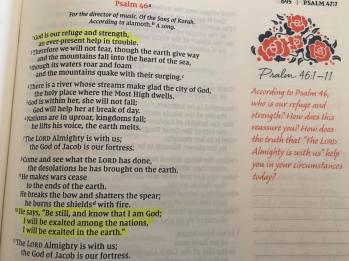
Indeed, “the God of Jacob is our fortress” (Ps. 46:7, 11 niv).
 
God would appear to Jacob at least five more times in the years ahead, but this first meeting was a significant one. He learned that God was interested in him and was at work in his life. From that night on, as long as he trusted the Lord and obeyed His will, he had nothing to fear.
 
Genesis 28, The Message
1-2 So Isaac called in Jacob and blessed him. Then he ordered him, “Don’t take a Caananite wife. Leave at once. Go to Paddan Aram to the family of your mother’s father, Bethuel. Get a wife for yourself from the daughters of your uncle Laban.
 
3-4 “And may The Strong God bless you and give you many, many children, a congregation of peoples; and pass on the blessing of Abraham to you and your descendants so that you will get this land in which you live, this land God gave Abraham.”
 
5 So Isaac sent Jacob off. He went to Paddan Aram, to Laban son of Bethuel the Aramean, the brother of Rebekah who was the mother of Jacob and Esau.
 
6-9 Esau learned that Isaac had blessed Jacob and sent him to Paddan Aram to get a wife there, and while blessing him commanded, “Don’t marry a Canaanite woman,” and that Jacob had obeyed his parents and gone to Paddan Aram. When Esau realized how deeply his father Isaac disliked the Canaanite women, he went to Ishmael and married Mahalath the sister of Nebaioth and daughter of Ishmael, Abraham’s son. This was in addition to the wives he already had.
 
Genesis 28 angels10-12 Jacob left Beersheba and went to Haran. He came to a certain place and camped for the night since the sun had set. He took one of the stones there, set it under his head and lay down to sleep. And he dreamed: A stairway was set on the ground and it reached all the way to the sky; angels of God were going up and going down on it.
 
13-15 Then God was right before him, saying, “I am God, the God of Abraham your father and the God of Isaac. I’m giving the ground on which you are sleeping to you and to your descendants. Your descendants will be as the dust of the Earth; they’ll stretch from west to east and from north to south. All the families of the Earth will bless themselves in you and your descendants. Yes. I’ll stay with you, I’ll protect you wherever you go, and I’ll bring you back to this very ground. I’ll stick with you until I’ve done everything I promised you.”
 
Genesis 28 awesome God16-17 Jacob woke up from his sleep. He said, “God is in this place—truly. And I didn’t even know it!” He was terrified. He whispered in awe, “Incredible. Wonderful. Holy. This is God’s House. This is the Gate of Heaven.”
 
18-19 Jacob was up first thing in the morning. He took the stone he had used for his pillow and stood it up as a memorial pillar and poured oil over it. He christened the place Bethel (God’s House). The name of the town had been Luz until then.
 
20-22 Jacob vowed a vow: “If God stands by me and protects me on this journey on which I’m setting out, keeps me in food and clothing, and brings me back in one piece to my father’s house, this God will be my God. This stone that I have set up as a memorial pillar will mark this as a place where God lives. And everything you give me, I’ll return a tenth to you.”
 
FEAR REPLACED WITH THE PRESENCE OF GOD
 
Genesis 28 not dullOn awakening, Jacob’s first response was one of fear and surprise. God was in that place, and he didn’t know it! But “the fear of the Lord is the beginning of knowledge” (Prov. 1:7), so Jacob’s response was the right one. He discovered that he could find God in unlikely places and that any place is “the house of God” (Bethel) because God is there.
 
Jacob would be away from his father’s house for at least twenty years, but the Lord would be his “dwelling place” no matter where he went (Ps. 90:1).
 
WORSHIP AND DEDICATION
 
Genesis 28 make known the pathHis next act was to worship the God who had appeared to him. He turned the headpiece into a pillar to memorialize the great experience that had been his that night. By pouring oil on the stone, he consecrated it to the Lord. He didn’t use the stone as an altar or make a sacrifice; he simply set it apart as a memorial. In later Hebrew liturgy, the pouring out of liquid was symbolic of pouring one’s life out in devotion to the Lord (Ex. 29:38-41; see also Phil. 2:17 nkjv; 2 Cor. 12:15).
 
Jacob dedicated himself to the Lord that morning and claimed the promises that God had made to him (Gen. 28:13-15). The “if” found in many translations of verse 20 can also be read “since.” Jacob wasn’t making a bargain with God; he was affirming his faith in God. Since God had promised to care for him, be with him, and bring him back home safely, then Jacob would affirm his faith in God and would seek to worship and honor Him alone.
 
Genesis 28 I AMAs we will read…Jacob didn’t have an easy life in the years that followed, for though God forgave his sins and was with him in his journeys, Jacob suffered the consequences of his sins. God in His grace forgives us, but God in His righteous government sees to it that we reap what we sow.
 
And the Lord didn’t fail him, nor will He fail us. “The Lord of hosts is with us; the God of Jacob is our refuge” (Ps. 46:7).
 
HOLY PAUSE
Genesis 28 trust
What venture have you ever undertaken that started off well, only to end miserably?
 
Is all lost? Not if God is in it, He WILL accomplish HIS will and plan. You cannot mess things up so miserably that HIS will cannot be accomplished, so relax.
 
Can you remember episodes in your life where you did what you thought was right but in the wrong way? How did it turn out?
 
How is scheming the antithesis of living by faith?
 
What are some of your goals–in relationships, at work, and so on–that you need to approach by faith rather than by scheming?
 
Dear Heavenly Father,
Like the song says (and you say), FAITH is the victory, the glorious, overcoming victory because it all goes back to You. You are God and we are not. We can only see situations and people with our human eyes. You see our hearts. You see the good and bad. That can be good, when you see our good intentions when no one else seems to see that in us. It can also be bad when you see before we do that there is something we need to get rid of that is blocking our way to fully experiencing You.
 
So, Lord do what you must to fully cleansing us. Restore the joy of our salvation. Help us to always stand on your promises and cling to the Rock of our salvation. Thank for always being with us, no matter what. Thank you for replacing fear with trust.
In Jesus Name, Amen
Posted in Blessings, Christian Living, Christian Perspective, Discipleship, Embrace, Encouragement, Faith, First, God, Following Jesus, Forgiveness, Grace, harvest, heaven, Holy Spirit, Hope, hospitality, insight, investments, Jesus, joy, Leadership, Listen, lost but found, Love, marriage, Mercy, ministry, Praise, Prayer, relationship with God, repent, Revelation of Jesus, Salvation, Searching, Teaching, temptations, Thanksgiving, Training, Transformation, trust in God, Truth, Uncategorized, Unconditional love, waiting on God, wisdom | Tagged , , , , , , , , , , , , , , , , , , , , , , , , , , , , , , , , , , , , , , , , , , , , , | Leave a comment

PRAISE

bless the Lord, let me be singingLet ev’rything that, ev’rything that
Ev’rything that has breath praise the Lord
Let ev’rything that, ev’rything that
Ev’rything that has breath praise the Lord
 
Praise You in the morning, praise You in the evening
Praise You when I’m young and when I’m old
Praise You when I’m laughing, praise You with I’m grieving
Praise You ev’ry season of the soul
 
If we could see how much You’re worth
Your power, Your might, Your endless love
Then surely we would never cease to praise
 
Praise You in the heavens, joining with the angels
Praising You forever and a day
Praise You on the earth now, joining with creation
Calling all the nations to Your praise
 
bless the LordIf we could see how much You’re worth
Your power, Your might, Your endless love
Then surely we would never cease to praise
 
Let ev’rything that, ev’rything that
Ev’rything that has breath praise the Lord
Let ev’rything that, ev’rything that
Ev’rything that has breath praise the Lord…
(By Matt Redman)
 
I woke up early this morning with only praise on my mind so I pass this on to you!
 
Let’s just praise the Lord, praise the Lord…
 
Praise God from whom all blessings flow
Praise Him all creatures here below
Praise Him above the Heavenly hosts
Praise Father, Son and Holy Ghost…
 
psalm-145-3-praise-lgPSALM 145 (NIV)
 
I will exalt you, my God the King;
I will praise your name for ever and ever.
2 Every day I will praise you
and extol your name for ever and ever.
 
3 Great is the Lord and most worthy of praise;
his greatness no one can fathom.
4 One generation commends your works to another;
they tell of your mighty acts.
5 They speak of the glorious splendor of your majesty—
and I will meditate on your wonderful works.[b]
6 They tell of the power of your awesome works—
and I will proclaim your great deeds.
7 They celebrate your abundant goodness
and joyfully sing of your righteousness.
 
8 The Lord is gracious and compassionate,
slow to anger and rich in love.
 
9 The Lord is good to all;
he has compassion on all he has made.
10 All your works praise you, Lord;
your faithful people extol you.
11 They tell of the glory of your kingdom
and speak of your might,
12 so that all people may know of your mighty acts
and the glorious splendor of your kingdom.
13 Your kingdom is an everlasting kingdom,
and your dominion endures through all generations.
 
downloadThe Lord is trustworthy in all he promises
and faithful in all he does.[c]
14 The Lord upholds all who fall
and lifts up all who are bowed down.
15 The eyes of all look to you,
and you give them their food at the proper time.
16 You open your hand
and satisfy the desires of every living thing.
 
85292322_23844260286320538_5381752974332657664_n.png17 The Lord is righteous in all his ways
and faithful in all he does.
18 The Lord is near to all who call on him,
to all who call on him in truth.
19 He fulfills the desires of those who fear him;
he hears their cry and saves them.
20 The Lord watches over all who love him,
but all the wicked he will destroy.
 
21 My mouth will speak in praise of the Lord.
Let every creature praise his holy name
for ever and ever.
 
Dear Heavenly Father,
Thank you for all you have done, are doing and will do.
In Jesus Name, Amen
Posted in Blessings, Christian Living, Christian Perspective, Creation, Discipleship, Embrace, Encouragement, Faith, First, God, Following Jesus, Forgiveness, Grace, harvest, heaven, Holy Spirit, Hope, insight, Jesus, joy, Leadership, Listen, lost but found, Love, Mercy, ministry, Praise, Prayer, Psalms, relationship with God, repent, Revelation of Jesus, Salvation, Searching, Teaching, Thanksgiving, Transformation, trust in God, Truth, Uncategorized, Unconditional love, waiting on God, wisdom | Tagged , , , , , , , , , , , , , , , , , , , , , , , , , , , , , , , , , , , , , , , | Leave a comment

WHEN RELATIONSHIPS GET “HAIRY”

Genesis – First, God
 
Genesis 28 hairyIn any group situation, family, church or work, when you scheme to get your own way, for your own benefit it will probably blow up in your face. God’s will and purpose will still be accomplished, because HE is God, but will we be blessed by how we behave in the process? Or will we face consequences that we never planned to encounter on our journey?
 
Genesis 28 what
Philosopher George Santayana called the human family “one of nature’s masterpieces.” If that’s true, then many of these masterpieces have become nothing but pieces because they forgot the Master. Genesis 27 describes such a family.
 
Genesis 27, The Message
Genesis 27 soup
When Isaac had become an old man and was nearly blind, he called his eldest son, Esau, and said, “My son.”
 
“Yes, Father?”
 
2-4 “I’m an old man,” he said; “I might die any day now. Do me a favor: Get your quiver of arrows and your bow and go out in the country and hunt me some game. Then fix me a hearty meal, the kind that you know I like, and bring it to me to eat so that I can give you my personal blessing before I die.”
 
5-7 Rebekah was eavesdropping as Isaac spoke to his son Esau. As soon as Esau had gone off to the country to hunt game for his father, Rebekah spoke to her son Jacob. “I just overheard your father talking with your brother, Esau. He said, ‘Bring me some game and fix me a hearty meal so that I can eat and bless you with God’s blessing before I die.’
 
Genesis 27 the lie8-10 “Now, my son, listen to me. Do what I tell you. Go to the flock and get me two young goats. Pick the best; I’ll prepare them into a hearty meal, the kind that your father loves. Then you’ll take it to your father, he’ll eat and bless you before he dies.”
 
11-12 “But Mother,” Jacob said, “my brother Esau is a hairy man and I have smooth skin. What happens if my father touches me? He’ll think I’m playing games with him. I’ll bring down a curse on myself instead of a blessing.”
 
13 “If it comes to that,” said his mother, “I’ll take the curse on myself. Now, just do what I say. Go and get the goats.”
 
14 So he went and got them and brought them to his mother and she cooked a hearty meal, the kind his father loved so much.
 
15-17 Rebekah took the dress-up clothes of her older son Esau and put them on her younger son Jacob. She took the goatskins and covered his hands and the smooth nape of his neck. Then she placed the hearty meal she had fixed and fresh bread she’d baked into the hands of her son Jacob.
 
18 He went to his father and said, “My father!”
 
“Yes?” he said. “Which son are you?”
 
19 Jacob answered his father, “I’m your firstborn son Esau. I did what you told me. Come now; sit up and eat of my game so you can give me your personal blessing.”
 
20 Isaac said, “So soon? How did you get it so quickly?”
 
“Because your God cleared the way for me.”
 
21 Isaac said, “Come close, son; let me touch you—are you really my son Esau?”
 
22-23 So Jacob moved close to his father Isaac. Isaac felt him and said, “The voice is Jacob’s voice but the hands are the hands of Esau.” He didn’t recognize him because his hands were hairy, like his brother Esau’s.
 
23-24 But as he was about to bless him he pressed him, “You’re sure? You are my son Esau?”
 
“Yes. I am.”
 
25 Isaac said, “Bring the food so I can eat of my son’s game and give you my personal blessing.” Jacob brought it to him and he ate. He also brought him wine and he drank.
 
26 Then Isaac said, “Come close, son, and kiss me.”
 
27-29 He came close and kissed him and Isaac smelled the smell of his clothes. Finally, he blessed him,
 
Ahhh. The smell of my son
is like the smell of the open country
blessed by God.
May God give you
of Heaven’s dew
and Earth’s bounty of grain and wine.
May peoples serve you
and nations honor you.
You will master your brothers,
and your mother’s sons will honor you.
Those who curse you will be cursed,
those who bless you will be blessed.
 
"Star Wars Episode III - Revenge Of The Sith" Los Angeles Premiere - Arrivals30-31 And then right after Isaac had blessed Jacob and Jacob had left, Esau showed up from the hunt. He also had prepared a hearty meal. He came to his father and said, “Let my father get up and eat of his son’s game, that he may give me his personal blessing.”
 
32 His father Isaac said, “And who are you?”
 
“I am your son, your firstborn, Esau.”
 
33 Isaac started to tremble, shaking violently. He said, “Then who hunted game and brought it to me? I finished the meal just now, before you walked in. And I blessed him—he’s blessed for good!”
 
Genesis 27 bless me34 Esau, hearing his father’s words, sobbed violently and most bitterly, and cried to his father, “My father! Can’t you also bless me?”
 
35 “Your brother,” he said, “came here falsely and took your blessing.”
 
36 Esau said, “Not for nothing was he named Jacob, the Heel. Twice now he’s tricked me: first he took my birthright and now he’s taken my blessing.”
 
He begged, “Haven’t you kept back any blessing for me?”
 
37 Isaac answered Esau, “I’ve made him your master, and all his brothers his servants, and lavished grain and wine on him. I’ve given it all away. What’s left for you, my son?”
 
38 “But don’t you have just one blessing for me, Father? Oh, bless me my father! Bless me!” Esau sobbed inconsolably.
 
39-40 Isaac said to him,
 
You’ll live far from Earth’s bounty,
remote from Heaven’s dew.
You’ll live by your sword, hand-to-mouth,
and you’ll serve your brother.
But when you can’t take it any more
you’ll break loose and run free.
 
Genesis 28 angry41 Esau seethed in anger against Jacob because of the blessing his father had given him; he brooded, “The time for mourning my father’s death is close. And then I’ll kill my brother Jacob.”
 
42-45 When these words of her older son Esau were reported to Rebekah, she called her younger son Jacob and said, “Your brother Esau is plotting vengeance against you. He’s going to kill you. Son, listen to me. Get out of here. Run for your life to Haran, to my brother Laban. Live with him for a while until your brother cools down, until his anger subsides and he forgets what you did to him. I’ll then send for you and bring you back. Why should I lose both of you the same day?”
 
46 Rebekah spoke to Isaac, “I’m sick to death of these Hittite women. If Jacob also marries a native Hittite woman, why live?”
 
THE DYSFUNCTIONAL FAMILY
(Warren Wiersbe, Commentator helps us to understand the family dynamics…)
 
Genesis 27 relationalHad we been alive during patriarchal times, we probably would have predicted great success for Isaac and Rebekah. After all, Isaac was a dedicated man who had put himself on the altar in obedience to the Lord. He trusted God to choose his wife for him, and the wife God sent, Jacob loved. Both Isaac and Rebekah knew how to pray and seek the mind of the Lord for their home. What more could a married couple want?
 
But in spite of these advantages, the family self-destructed rather quickly when Isaac became old. Why? Because the members of the family substituted scheming for believing so they could each have their own way.
 
As we look at the scenes in this tragedy, let’s study each of the family members and see what they contributed to the problem or to the answer.
 
ISAAC – Isaac was sure he was going to die, and yet his greatest desire was to enjoy a good meal at the hand of his favorite son and cook, Esau (25:28). When Isaac’s father, Abraham, prepared for death, his concern was to get a bride for his son and maintain the covenant promise. When King David came to the end of his life, he made arrangements for the building of the temple, and Paul’s burden before his martyrdom was that Timothy be faithful to preach the Word and guard the faith.
Genesis 27 power
Instead of seeking to heal the family feud that he and his wife had caused by their selfish favoritism, Isaac perpetuated the feud and destroyed his own family. He disobeyed God. God told him to give the blessing to Jacob, “the older will serve the younger”, when the twins were born. Did Isaac really think he could fool God and give the blessing to worldly, unbelieving Esau?
 
Isaac was a declining believer, living by the natural instead of the supernatural, and trusting his own senses instead of believing and obeying the Word of God. He was blind and bedfast and claimed to be dying, but he still had a good appetite. With a father like that leading the home, is it any wonder that the family fell apart?
 
REBEKAH – Sir Walter Scott wrote in his poem “Marmion”: “O what a tangled web we weave / When first we practice to deceive.” Remember, faith is living without scheming, and faith means obeying God no matter how we feel, what we think, or what might happen. The obedience of faith was the secret of Abraham’s life (Heb. 11:8), but the absence of obedient faith brought trouble to the home of Isaac and Rebekah.
Genesis 27 deceit
When Isaac sent for Esau to come to his tent, Rebekah noticed it and stayed close by to learn what was happening. Later, when Esau revealed that he planned to kill his brother, Rebekah also heard that, so she must have been adept at eavesdropping and keeping abreast of family affairs.
 
However, it’s tragic when a husband and wife, once so dedicated to the Lord and each other, have excommunicated each other and no longer discuss God’s Word or pray together.
 
Knowing that Jacob was chosen to receive the covenant blessing, Rebekah immediately took matters into her own hands to make sure her favorite son got what the Lord had promised him. Had she and Jacob talked with Isaac while Esau was out hunting, perhaps he would have seen the light and agreed with them. Instead, however, Rebekah chose to control Jacob and deceive her husband.
 
Isaac was depending on his own physical senses, but Rebekah was depending on the wisdom of the world. However, the world’s wisdom always leads to trouble. “For where you have envy and selfish ambition, there you find disorder and every evil practice.” .(James 3:16 NIV).
 
Genesis 27 the curseJACOB – Jacob’s concern wasn’t “Is it right?” but “Is it safe?” He was worried about the eleventh commandment: “Thou shalt not get caught.” Interesting to note…“My son, let the curse fall on me” was her word of encouragement to Jacob, but little did she know what she was saying. For after Jacob left for Haran, she never saw her favorite son again.
 
What he learned from his parents:
Isaac’s philosophy was “If it feels good, it is good,” but Rebekah’s philosophy was “The end justifies the means.” She couldn’t trust God to fulfill His plan; she had to help God out because it was for a good cause. But there’s no place for deception in the life of the believer, for Satan is the deceiver (2 Cor. 11:3), but Jesus Christ is the truth (John 14:6).
 
Genesis 27 identity theftIn cooperating with the scheme, Jacob was only obeying his mother, but he could have refused and suggested that they just face the situation honestly and confront Isaac. But once Jacob donned Esau’s clothes and took the savory meal in his hands, the die was cast and he had to play the part successfully. See how one lie led to another, for deception can be defended only by more deception. Jacob was weaving the tangled web.
 
Jacob becomes a skilled liar:
1. He lied about his name.
2. He claimed he was obeying his father’s wishes.
3. He lied about the food. (Goat instead of venison)
4. He even gave credit to the Lord for helping him find it so quickly. He not only lied about himself, but he also lied about the Lord! To use the Lord to cover up sin is a step toward blasphemy.
5. Jacob assured Isaac that he was indeed Esau.
6. Jacob delivers the greatest dishonor of all, the kiss of hypocrisy.
 
Isaac assured Jacob, (disguised as Esau) not only of God’s blessing, but also of God’s protection, and he quoted the Lord’s original promise to Abraham (12:3). The deed was done. Isaac couldn’t revoke the blessing, and nobody in the family could alter the consequences.
 
Isaac had lied to Abimelech in Gerar (chap. 26), and he had tried to lie to God by disobeying the Word (25:23), but now his own lies had caught up with him. Jacob is on the run from his own family.
 
ESAU – The man who despised his birthright and married two pagan women now wept and cried out for his father to bless him. It wasn’t his fault, he told himself; it was his crafty brother’s fault. When in doubt, always blame somebody else.
 
Hebrews 12:16-17 is God’s commentary on the event. Esau tried to repent, but his own heart was too hard, and he couldn’t change his father’s mind. Esau’s tears were not tears of repentance for being an ungodly man; they were tears of regret because he had lost the covenant blessing. Esau wanted the blessing but he didn’t want to be the kind of man whom God could bless! We may forget our decisions, but our decisions don’t forget us.
 
“Don’t get mad, get even” is a popular philosophy, especially among politicians, but Esau practiced both: He carried a hateful grudge against his brother and planned to kill him. After all, if Esau couldn’t enjoy the blessing, neither would Jacob. The man who was destined to live by his sword would start by using it first at home.
 
EPILOGUE – Now that Jacob had the covenant blessing, it was important that he marry the right woman and not one of the pagans in Canaan.
 
Isaac agreed and called Jacob to tell him their decision. When the summons came, Jacob may have expected his father to scold him for what he’d done, but Isaac didn’t do that. The old man had been caught in his own net and knew that God’s plans were better than his.
 
Male silhouette on sunriseNot only did Isaac speak kindly to his son, but also he gave him an extra blessing as he left to go on his long journey to Haran. This time it was “the blessing of Abraham” that was important, the fulfillment of God’s promise to bless all the earth through Jacob’s descendants (Gal. 3:14).
 
Esau’s response to this news was further evidence that he despised everything spiritual, for he went out and took another wife. Because Jacob was looking for a wife among his uncle Laban’s children, Esau chose a wife from the family of his uncle Ishmael. Perhaps he thought that this would qualify him to receive some kind of blessing from God, but it only added to the irritation in the home.
 
Genesis 27 waitWhew, and we think our families are messed up! Maybe they are in different ways. What we learn from this dysfunctional family is that scheming, deceiving, lying and manipulating are not characteristics that build family relationships. Put God first. Love, trust and obey God no matter what. Let HIM control the situation so HIS will is accomplished in ways that bring out the BEST in us, not the worst. Then love your family as God loves you, unconditionally, honestly, putting their interests above your own, like Jesus taught us.
 
Dear Heavenly Father,
Thank you for life. Thank you for creating us in unique ways for your glory and honor. Thank you for our families. Help us to always be honest and God-led in our relationships. Bless us as brothers and sisters in Christ at your church to also be led by you as we grow in you together. Give us wisdom, insight and understanding in all our relationships. Keep us close to You first, then others.
In Jesus Name, Amen
Posted in Blessings, Christian Living, Christian Perspective, Discipleship, Embrace, Encouragement, Faith, First, God, Following Jesus, Forgiveness, Grace, harvest, heaven, Holy Spirit, Hope, hospitality, insight, investments, Jesus, joy, Leadership, Listen, lost but found, Love, marriage, Mercy, ministry, Praise, Prayer, relationship with God, repent, Revelation of Jesus, Salvation, Searching, Teaching, Thanksgiving, Training, Transformation, trust in God, Truth, Uncategorized, Unconditional love, waiting on God, wisdom | Tagged , , , , , , , , , , , , , , , , , , , , , , , , , , , , , , , , , , , , , , , , , , , , , , , , , , | Leave a comment

GOD BLESSES OBEDIENCE

Genesis – First, God.
 
Genesis 26 waterWe are not perfect, only perfectly forgiven by a gracious God who provides where He guides and blesses those who believe Him and obey His teachings. Our faith is not based on a feeling but on the very foundation of our being laid by our belief in the death and resurrection of our Savior, Jesus Christ. All that we are and all that we think, say or do must be built on this foundation. Do we mess up and stray from the building codes and plans from time to time? Yes! Does God leave us? No! He was, is and always will be with those who believe. He will help us to stop, rebuild and move on in the constant construction of our Faith.
 
“My hope is built on nothing less
than Jesus blood and righteousness
I dare not trust the sweetest frame
But wholly lean on Jesus name
 
On Christ the solid rock I stand
All other ground is sinking sand
All other ground is sinking sand…”
 
Our Bible heroes of Faith were not perfect, either. Fear of the enemy pushed them to lie in order to save their physical lives. Fear replaced faith in these instances for a short while until they realized God was in control the whole time.
 
HOLY PAUSE
What do you fear this day?
 
Genesis 26 wells of our livesIsaac, son of Abraham, faces the fear of powerful people in the land that God gave His people to possess. He repeats the lie his father told, telling the inhabitants of the land, that his wife was his sister. Didn’t he learn from the mistakes of his father? Apparently not.
 
God provides a “course correction” for Isaac in his fear. Faith replaced the fear once more, as with Abraham, and Isaac was blessed beyond his wildest dreams.
 
Later, when faced with opposition by an envious and jealous enemy because of Isaac’s blessed wealth, Isaac responded with greater wisdom. Instead of fighting or lying, he shared the wealth and dug more wells to provide water for the land. He avoided a war over water. God blessed his faith in action.
 
Genesis 26 do not fear“I am the God of Abraham your father;
don’t fear a thing because I’m with you.
I’ll bless you and make your children flourish
because of Abraham my servant.”
 
Isaac responded to God’s declared Presence and assurance with immediate worship. Since digging wells were so successful, he dug another. God blessed once more with gushing waters!
 
His former neighboring enemy king saw and heard what was happening. Abimelech saw Isaac’s witness of God’s power! “We’ve realized that God is on your side. We’d like to make a deal between us—a covenant that we maintain friendly relations.” Isaac’s obedience to God led to peace with the enemy.
 
WHAT DO WE LEARN?
 
Genesis 26 salvation1. Fear cannot occupy the same space as Faith. You have one or the other. You cannot have both at the same time.
2. Fear does not equate with God’s wisdom (skills for living). Fear turns to self will and hinders or negates our obedience. Fear causes us to “shoot from the hip” in decision making, falling back on our sin nature. We move into survival mode leaving God’s thriving mode.
3. When Faith in God leads the way, the way is made clearer and is easier to navigate. Faith is the foundation to devoted obedience.
Genesis 26 Gods blessings4. Obedience to God, because of Faith, opens the floodgates of God’s blessings.
5. Go when God says go. Stay when God says stay.
6. It’s all about God. He is in control. His glory will be seen. Even when we mess up, God’s will is accomplished.
7. It’s not about us or self glorification. It is about God’s Presence in us. It is about declaring God’s power. We pray, God works. We obey, God blesses with building our faith.
 
Genesis 26, The Message
There was a famine in the land, as bad as the famine during the time of Abraham. And Isaac went down to Abimelech, king of the Philistines, in Gerar.
 
2-5 God appeared to him and said, “Don’t go down to Egypt; stay where I tell you. Stay here in this land and I’ll be with you and bless you. I’m giving you and your children all these lands, fulfilling the oath that I swore to your father Abraham. I’ll make your descendants as many as the stars in the sky and give them all these lands. All the nations of the Earth will get a blessing for themselves through your descendants. And why? Because Abraham obeyed my summons and kept my charge—my commands, my guidelines, my teachings.”
 
6 So Isaac stayed put in Gerar.
 
7 The men of the place questioned him about his wife. He said, “She’s my sister.” He was afraid to say “She’s my wife.” He was thinking, “These men might kill me to get Rebekah, she’s so beautiful.”
 
8-9 One day, after they had been there quite a long time, Abimelech, king of the Philistines, looked out his window and saw Isaac fondling his wife Rebekah. Abimelech sent for Isaac and said, “So, she’s your wife. Why did you tell us ‘She’s my sister’?”
 
Isaac said, “Because I thought I might get killed by someone who wanted her.”
 
10 Abimelech said, “But think of what you might have done to us! Given a little more time, one of the men might have slept with your wife; you would have been responsible for bringing guilt down on us.”
Genesis 26 wells
11 Then Abimelech gave orders to his people: “Anyone who so much as lays a hand on this man or his wife dies.”
 
12-15 Isaac planted crops in that land and took in a huge harvest. God blessed him. The man got richer and richer by the day until he was very wealthy. He accumulated flocks and herds and many, many servants, so much so that the Philistines began to envy him. They got back at him by throwing dirt and debris into all the wells that his father’s servants had dug back in the days of his father Abraham, clogging up all the wells.
 
Genesis 26 digging wells16 Finally, Abimelech told Isaac: “Leave. You’ve become far too big for us.”
 
17-18 So Isaac left. He camped in the valley of Gerar and settled down there. Isaac dug again the wells which were dug in the days of his father Abraham but had been clogged up by the Philistines after Abraham’s death. And he renamed them, using the original names his father had given them.
 
1old brick and concrete deep well9-24 One day, as Isaac’s servants were digging in the valley, they came on a well of spring water. The shepherds of Gerar quarreled with Isaac’s shepherds, claiming, “This water is ours.” So Isaac named the well Esek (Quarrel) because they quarreled over it. They dug another well and there was a difference over that one also, so he named it Sitnah (Accusation). He went on from there and dug yet another well. But there was no fighting over this one so he named it Rehoboth (Wide-Open Spaces), saying, “Now God has given us plenty of space to spread out in the land.” From there he went up to Beersheba. That very night God appeared to him and said,
 
I am the God of Abraham your father;
don’t fear a thing because I’m with you.
I’ll bless you and make your children flourish
because of Abraham my servant.
 
25 Isaac built an altar there and prayed, calling on God by name. He pitched his tent and his servants started digging another well.
 
26-27 Then Abimelech came to him from Gerar with Ahuzzath his advisor and Phicol the head of his troops. Isaac asked them, “Why did you come to me? You hate me; you threw me out of your country.”
 
Genesis 26 redig28-29 They said, “We’ve realized that God is on your side. We’d like to make a deal between us—a covenant that we maintain friendly relations. We haven’t bothered you in the past; we treated you kindly and let you leave us in peace. So—God’s blessing be with you!”
 
30-31 Isaac laid out a feast and they ate and drank together. Early in the morning they exchanged oaths. Then Isaac said good-bye and they parted as friends.
 
32-33 Later that same day, Isaac’s servants came to him with news about the well they had been digging, “We’ve struck water!” Isaac named the well Sheba (Oath), and that’s the name of the city, Beersheba (Oath-Well), to this day.
 
34-35 When Esau was forty years old he married Judith, daughter of Beeri the Hittite, and Basemath, daughter of Elon the Hittite. They turned out to be thorns in the sides of Isaac and Rebekah.
 
Genesis 26 overcome fearOh Lord,
We do not want to be shackled by self. The burden of doing things our own way self propels us by fear which leads to doubt and foolishness. Break those chains and set us free. Help us to trust and obey quickly with hearts’ desires to please you. Lead us to the wide open spaces of your love, mercy and grace. I am your servant. I’m listening. I’m ready to obey. Where are we going and what are we going to do today, Abba Father?
In Jesus Name, Amen
 
When darkness veils His lovely face
I rest on His unchanging grace
In every high and stormy gale
My anchor holds within the veil
 
His oath His covenant His blood
Supports me in the ‘whelming flood
When all around my soul gives way
He then is all my hope and stay
 
On Christ the solid rock I stand
All other ground is sinking sand…
Posted in Blessings, Christian Living, Christian Perspective, Creation, Discipleship, Embrace, Encouragement, Faith, First, God, Following Jesus, Forgiveness, Grace, harvest, heaven, Holy Spirit, Hope, hospitality, insight, investments, Jesus, joy, Leadership, Listen, lost but found, Love, marriage, Mercy, ministry, Praise, Prayer, Psalms, relationship with God, repent, Revelation of Jesus, Salvation, Searching, Teaching, temptations, Thanksgiving, Training, Transformation, trust in God, Truth, Uncategorized, Unconditional love, waiting on God, wisdom | Tagged , , , , , , , , , , , , , , , , , , , , , , , , , , , , , , , , , , , , , , , , , , , , , , | Leave a comment

HAPPY, BLESSED DASH

Genesis – First, God
 
Genesis 25 the dash
We will live and then we will die. That is the worldview of the life cycle. On our traditional grave marker will be the date we were born into this world, a dash, and then the date we depart. How will we live between these two important dates? Who are we and how are we living in the “dash”.
 
A poem has been written about living well in the dash between life and death. It was written by a mourning wife who’s husband had just died. Her tender words plead for people to think about being more kind, generous, respectful and loving in the “dash” between life and death. It is meaningful and thought provoking. I think of it as I read Genesis 25 that gives us a quick summary of the “dash” life of Abraham, Friend of God.
 
Observe these key character traits in Abraham’s “dash” living:
 
–Love God firstGenesis 25 legacy keys
–Love Others
–Be kind and generous to family and friends
–Be humble
–Put others (Lot and family) ahead of your own gain
–Be wise in your dealings with neighbors and enemies
–Walk with God
–Listen to God
–Talk with God
–Repentant and Forgiven
 
“He died happy at a ripe old age, full of years, and was buried with his family.” Did he die “happy” because of these traits?
 
Is that how we will leave this earth…happy, blessed and fulfilled?
 
Who am I in the “dash”? What am I doing? Will I leave earth as Abraham did…happy and blessed?
 
Genesis 25, The Message
1-2 Abraham married a second time; his new wife was named Keturah. She gave birth to Zimran, Jokshan, Medan, Midian, Ishbak, and Shuah.
 
3 Jokshan had Sheba and Dedan.
 
Dedan’s descendants were the Asshurim, the Letushim, and the Leummim.
 
4 Midian had Ephah, Epher, Hanoch, Abida, and Eldaah—all from the line of Keturah.
 
5-6 But Abraham gave everything he possessed to Isaac. While he was still living, he gave gifts to the sons he had by his concubines, but then sent them away to the country of the east, putting a good distance between them and his son Isaac.
 
Colorful sunrise at the field with morning fog7-11 Abraham lived 175 years. Then he took his final breath. He died happy at a ripe old age, full of years, and was buried with his family. His sons Isaac and Ishmael buried him in the cave of Machpelah in the field of Ephron son of Zohar the Hittite, next to Mamre. It was the field that Abraham had bought from the Hittites. Abraham was buried next to his wife Sarah. After Abraham’s death, God blessed his son Isaac. Isaac lived at Beer Lahai Roi.
 
The Family Tree of Ishmael
12 This is the family tree of Ishmael son of Abraham, the son that Hagar the Egyptian, Sarah’s maid, bore to Abraham.
 
13-16 These are the names of Ishmael’s sons in the order of their births: Nebaioth, Ishmael’s firstborn, Kedar, Adbeel, Mibsam, Mishma, Dumah, Massa, Hadad, Tema, Jetur, Naphish, and Kedemah—all the sons of Ishmael. Their settlements and encampments were named after them. Twelve princes with their twelve tribes.
 
17-18 Ishmael lived 137 years. When he breathed his last and died he was buried with his family. His children settled down all the way from Havilah near Egypt eastward to Shur in the direction of Assyria. The Ishmaelites didn’t get along with any of their kin.
 
Jacob and Esau
19-20 This is the family tree of Isaac son of Abraham: Abraham had Isaac. Isaac was forty years old when he married Rebekah daughter of Bethuel the Aramean of Paddan Aram. She was the sister of Laban the Aramean.
 
Genesis 25 Isaac prayed21-23 Isaac prayed hard to God for his wife because she was barren. God answered his prayer and Rebekah became pregnant. But the children tumbled and kicked inside her so much that she said, “If this is the way it’s going to be, why go on living?” She went to God to find out what was going on. God told her,
 
Two nations are in your womb,
two peoples butting heads while still in your body.
One people will overpower the other,
and the older will serve the younger.
 
24-26 When her time to give birth came, sure enough, there were twins in her womb. The first came out reddish, as if snugly wrapped in a hairy blanket; they named him Esau (Hairy). His brother followed, his fist clutched tight to Esau’s heel; they named him Jacob (Heel). Isaac was sixty years old when they were born.
 
Genesis 25 brothers27-28 The boys grew up. Esau became an expert hunter, an outdoorsman. Jacob was a quiet man preferring life indoors among the tents. Isaac loved Esau because he loved his game, but Rebekah loved Jacob.
 
29-30 One day Jacob was cooking a stew. Esau came in from the field, starved. Esau said to Jacob, “Give me some of that red stew—I’m starved!” That’s how he came to be called Edom (Red).
 
31 Jacob said, “Make me a trade: my stew for your rights as the firstborn.”
 
32 Esau said, “I’m starving! What good is a birthright if I’m dead?”
 
33-34 Jacob said, “First, swear to me.” And he did it. On oath Esau traded away his rights as the firstborn. Jacob gave him bread and the stew of lentils. He ate and drank, got up and left. That’s how Esau shrugged off his rights as the firstborn.
 
WHAT WE LEARN FROM ABRAHAM’S “DASH”…
 
Genesis 14 life of AbramAbraham’s “obituary” is found in verses 7-8. He died “in a good old age” as the Lord had promised him (Gen. 15:15). He had walked with the Lord for a century (12:4) and had been “the Friend of God” (James 2:23).
 
Old age is “good” if you have the blessing of the Lord on your life (Prov. 16:31). In spite of physical deterioration and weakness, we can enjoy His presence and do His will until the very end (2 Cor. 4:16–5:8).
 
Like Sarah before him, Abraham “died in faith.” For one hundred years, he had been a stranger and a pilgrim on the earth, seeking a heavenly country, and now his desires were fulfilled (Heb. 11:13-16). His life had not been an easy one, but he had walked by faith a day at a time, and the Lord had brought him through. Whenever Abraham failed the Lord, he returned to Him and started over again, and the Lord gave him a new beginning.
 
Genesis 25 Father of faithHe also died “full of years” (Gen. 25:8). This suggests more than a quantity of time; it suggests a quality of life.
 
James Strahan translates it “satisfied with life” (Hebrew Ideals, 197). Abraham, who was flourishing and fruitful to the very end, fulfilled the picture of old age given in Psalm 92:12-15.
 
How few people really experience joy and satisfaction when they reach old age! When they look back, it is with regret; when they look ahead, it is with fear; and when they look around, it is with complaint.
 
An anonymous wit claimed that he would rather be “over the hill” than under it. But death is not a threat to the person who trusts Jesus Christ and lives by His Word. Old age can be a time of rich experience in the Lord and wonderful opportunities to share Him with the next generation (Ps. 48:13-14; 78:5-7). Then, when death comes, you go to meet the Lord with joyful confidence.
 
God promised that Abraham would die “in peace” (Gen. 15:15), and he did. Welsh poet Dylan Thomas wrote that “old age should burn and rave at close of day,” but that is not the Christian approach to old age or death. Abraham was saved by faith (v. 6), so he had “peace with God” (Rom. 5:1). He had walked in the way of righteousness, so he experienced the peace of God (Isa. 32:17). The God who had guided him for a century would not forsake him at the very end (46:4).
 
Like everything else in life, to be successful in old age, you must start working at it very young. That is the counsel Solomon gives in Ecclesiastes 12. The chapter describes some of the inevitable physical problems of old age, but it also emphasizes that a godly life beginning in one’s youth is an investment that pays rich dividends when life draws to a close.
 
One day, you will be “gathered to your people.” If God’s people were your people in life, then you will be with them after death in the home that Jesus is now preparing (John 14:1-6). If the Christian family is not your “people,” then you will be with the crowd that is going to hell, and it is described in Revelation 21:8, 27. You had better make the right choice, because eternity is forever.
 
HOLY PAUSE
Where is my “dash” living leading me?
 
Genesis 25 becauseTHE WILL
Abraham left his material wealth to his family and his spiritual wealth to the whole world, all who would believe on Jesus Christ. Isaac was God’s choice to carry on the covenant line. Keturah’s sons received gifts, but Isaac received the inheritance and the blessings of the covenant.
 
All who have trusted Jesus Christ “as Isaac was, are the children of promise” (Gal. 4:28). This means that we have a share in Abraham’s will! What did he leave us?
 
SAVED BY FAITH
To begin with, Abraham left us a clear witness of salvation through faith. Paul cited his example in Romans 4:1-5, relating it to Abraham’s experience in Genesis 15. Abraham could not have been saved by keeping the law because the law had not yet been given. He could not have been saved by the ritual of circumcision because God declared him to be righteous long before Abraham was circumcised. Like everybody else who has ever been saved, Abraham was saved by faith and by faith alone (Heb. 11; Gal. 3).
 
LIVE BY FAITH
Abraham also leaves us the example of a faithful life. James used Abraham to illustrate the importance of proving our faith by our works (James 2:14-26). Wherever Abraham went, he pitched his tent and built his altar, and he let the people of the land know that he was a worshiper of the true and living God. When he offered Isaac on the altar, Abraham proved his faith in God and his love for God. He was not saved by works, but he proved his faith by his works.
 
From Abraham, we learn how to walk by faith. True, he had his occasional lapses of faith, but the general manner of his life evidenced faith in God’s Word. “By faith Abraham … obeyed” (Heb. 11:8). “The pith, the essence of faith,” said Charles Spurgeon, “lies in this: a casting oneself on the promises.”
 
Gnesis 12 journey of faithTrue faith is our obedient response to the Word of God. God speaks, we hear Him and believe, and we do what He tells us to do. Abraham and Sarah held on to God’s promises and God rewarded their faith.
 
Finally, because of Abraham, we have a Savior. In the first verse of the New Testament (Matt. 1:1), Abraham’s name is joined with the names of David and Jesus Christ! God promised Abraham that through him all the world would be blessed (Gen. 12:1-3), and He has kept that promise.
 
There can be only one Abraham and Sarah in God’s great plan of redemption, but you and I have our tasks to perform in the will of God (Eph. 2:10).
 
OUR DASH
Today, at this very minute, we are writing our obituary and preparing our “last will and testament” as far as our spiritual heritage is concerned. Today we are getting ready for the last stage of life’s journey.
 
Are we making good preparations?
 
Are we living by faith?
 
“He has shown you, O mortal, what is good.
And what does the Lord require of you?
To act justly and to love mercy
and to walk humbly with your God”. (Micah 6:8, NIV)
 
Father God,
Your Friend, Abraham was not perfect, but He was still your forgiven Friend. You guided him meticulously through life. You promised a Savior through his genetic line and you delivered. Oh, how grateful we are that you did! This story of a man called Abraham is really all about you and your love, promises, provisions, power and protection that is offered to all of us. Thank you, Lord for this reminder of who YOU are. continue to transform me. Help me to live my “dash” well.
In Jesus Name, Amen
Posted in Blessings, Christian Living, Christian Perspective, Discipleship, Embrace, Encouragement, Faith, First, God, Following Jesus, Forgiveness, Grace, harvest, Holy Spirit, Hope, insight, investments, Jesus, joy, Leadership, Listen, lost but found, Love, marriage, Mercy, ministry, Praise, Prayer, relationship with God, repent, Revelation of Jesus, Salvation, Searching, Teaching, Thanksgiving, Training, Transformation, trust in God, Truth, Uncategorized, Unconditional love, waiting on God, wisdom | Tagged , , , , , , , , , , , , , , , , , , , , , , , , , , , , , , , , , , , , , , , , , , , , , , | Leave a comment

THEN I’LL KNOW…

Genesis – First, God.
 
Genesis 24 all of God
We do not test God, but we can ask God for clarity in the details of His will in our lives. There have been times in my life when I took a huge leap of faith into a new work. I wanted to make sure that it was God leading me because of the challenge. It wasn’t that I doubted God…ever…it was my doubt. Am I hearing God correctly? Is my fear clouding His will? I will jump but I need to know if I am jumping into what God wants, not just what needs to be done. Does He want me to do it?
 
Like many Bible heroes we read about, it seems okay with God to ask Him for clarity in his will for us as we journey this earth. It is okay, like Abraham’s servant, we will read about in this passage to be specific in asking for what God wants. Like the servant who, heart and soul, passionately wanted to please his master, Abraham, with choosing his son’s wife, we want to be sure in our lives that we are following God’s plan for our lives in every detail.
 
Before and after an interview for one of the most challenging jobs of my life, I wanted God’s will. If they gave the job to me, it meant I would leave teaching elementary children that I loved and be in full time ministry. I was called to teach. So, both were ministry options I would enjoy. For clarity, I asked God to allow me to hear these words from the 8 men on the search committee after the interview, “WE have UNANIMOUSLY decided that you should be the one…”
 
Genesis 24 on trackThe word “unanimous” was the key word for me. It would mean God was in this. It would mean that God led them to tell me that this was indeed God’s will for my life.
 
Guess what? Those were the EXACT words the leader said first when he called to offer me the job. You will never convince me that God does not hear our humble prayers for help and wisdom in discerning his will for our lives. He proves it over and over in my own life!
 
Faithful servants like Abraham’s senior servant passionately wanted clarity of God’s will for his master’s son, Isaac. He asked questions of his Master to make sure all the details were understood. THEN he asked for God’s help to find just the right woman for Isaac. Why? He wanted to please his master. He loved Abraham and he loved his son, Isaac. He also wanted what God wanted. This attitude of heart and humility is needed when we present our requests to God for decision making in our lives.
 
Don’t we want to please our Master and Lord? Of course, we do. So we ask for help in discernment and wisdom. God will give it. Every time. (See James 1:5)
 
Now, enjoy the true story of God helping his beloved people…
 
Genesis 24, The Message
Genesis 24 God leadsAbraham was now an old man. God had blessed Abraham in every way.
 
2-4 Abraham spoke to the senior servant in his household, the one in charge of everything he had, “Put your hand under my thigh and swear by God—God of Heaven, God of Earth—that you will not get a wife for my son from among the young women of the Canaanites here, but will go to the land of my birth and get a wife for my son Isaac.”
 
5 The servant answered, “But what if the woman refuses to leave home and come with me? Do I then take your son back to your home country?”
 
6-8 Abraham said, “Oh no. Never. By no means are you to take my son back there. God, the God of Heaven, took me from the home of my father and from the country of my birth and spoke to me in solemn promise, ‘I’m giving this land to your descendants.’ This God will send his angel ahead of you to get a wife for my son. And if the woman won’t come, you are free from this oath you’ve sworn to me. But under no circumstances are you to take my son back there.”
 
9 So the servant put his hand under the thigh of his master Abraham and gave his solemn oath.
 
10-14 The servant took ten of his master’s camels and, loaded with gifts from his master, traveled to Aram Naharaim and the city of Nahor. Outside the city, he made the camels kneel at a well. It was evening, the time when the women came to draw water. He prayed, “O God, God of my master Abraham, make things go smoothly this day; treat my master Abraham well! As I stand here by the spring while the young women of the town come out to get water, let the girl to whom I say, ‘Lower your jug and give me a drink,’ and who answers, ‘Drink, and let me also water your camels’—let her be the woman you have picked out for your servant Isaac. Then I’ll know that you’re working graciously behind the scenes for my master.”
Genesis 24 well
15-17 It so happened that the words were barely out of his mouth when Rebekah, the daughter of Bethuel whose mother was Milcah the wife of Nahor, Abraham’s brother, came out with a water jug on her shoulder. The girl was stunningly beautiful, a pure virgin. She went down to the spring, filled her jug, and came back up. The servant ran to meet her and said, “Please, can I have a sip of water from your jug?”
 
18-21 She said, “Certainly, drink!” And she held the jug so that he could drink. When he had satisfied his thirst she said, “I’ll get water for your camels, too, until they’ve drunk their fill.” She promptly emptied her jug into the trough and ran back to the well to fill it, and she kept at it until she had watered all the camels.
 
The man watched, silent. Was this God’s answer? Had God made his trip a success or not?
 
22-23 When the camels had finished drinking, the man brought out gifts, a gold nose ring weighing a little over a quarter of an ounce and two arm bracelets weighing about four ounces, and gave them to her. He asked her, “Tell me about your family? Whose daughter are you? Is there room in your father’s house for us to stay the night?”
 
24-25 She said, “I’m the daughter of Bethuel the son of Milcah and Nahor. And there’s plenty of room in our house for you to stay—and lots of straw and feed besides.”
 
Genesis 24 pray26-27 At this the man bowed in worship before God and prayed, “Blessed be God, God of my master Abraham: How generous and true you’ve been to my master; you’ve held nothing back. You led me right to the door of my master’s brother!”
 
28 And the girl was off and running, telling everyone in her mother’s house what had happened.
 
29-31 Rebekah had a brother named Laban. Laban ran outside to the man at the spring. He had seen the nose ring and the bracelets on his sister and had heard her say, “The man said this and this and this to me.” So he went to the man and there he was, still standing with his camels at the spring. Laban welcomed him: “Come on in, blessed of God! Why are you standing out here? I’ve got the house ready for you; and there’s also a place for your camels.”
 
32-33 So the man went into the house. The camels were unloaded and given straw and feed. Water was brought to bathe the feet of the man and the men with him. Then Laban brought out food. But the man said, “I won’t eat until I tell my story.”
 
Laban said, “Go ahead; tell us.”
 
34-41 The servant said, “I’m the servant of Abraham. God has blessed my master—he’s a great man; God has given him sheep and cattle, silver and gold, servants and maidservants, camels and donkeys. And then to top it off, Sarah, my master’s wife, gave him a son in her old age and he has passed everything on to his son. My master made me promise, ‘Don’t get a wife for my son from the daughters of the Canaanites in whose land I live. No, go to my father’s home, back to my family, and get a wife for my son there.’ I said to my master, ‘But what if the woman won’t come with me?’ He said, ‘God before whom I’ve walked faithfully will send his angel with you and he’ll make things work out so that you’ll bring back a wife for my son from my family, from the house of my father. Then you’ll be free from the oath. If you go to my family and they won’t give her to you, you will also be free from the oath.’
 
42-44 “Well, when I came this very day to the spring, I prayed, ‘God, God of my master Abraham, make things turn out well in this task I’ve been given. I’m standing at this well. When a young woman comes here to draw water and I say to her, Please, give me a sip of water from your jug, and she says, Not only will I give you a drink, I’ll also water your camels—let that woman be the wife God has picked out for my master’s son.’
 
Genesis 24 worship God45-48 “I had barely finished offering this prayer, when Rebekah arrived, her jug on her shoulder. She went to the spring and drew water and I said, ‘Please, can I have a drink?’ She didn’t hesitate. She held out her jug and said, ‘Drink; and when you’re finished I’ll also water your camels.’ I drank, and she watered the camels. I asked her, ‘Whose daughter are you?’ She said, ‘The daughter of Bethuel whose parents were Nahor and Milcah.’ I gave her a ring for her nose, bracelets for her arms, and bowed in worship to God. I praised God, the God of my master Abraham who had led me straight to the door of my master’s family to get a wife for his son.
 
49 “Now, tell me what you are going to do. If you plan to respond with a generous yes, tell me. But if not, tell me plainly so I can figure out what to do next.”
 
50-51 Laban and Bethuel answered, “This is totally from God. We have no say in the matter, either yes or no. Rebekah is yours: Take her and go; let her be the wife of your master’s son, as God has made plain.”
 
52-54 When Abraham’s servant heard their decision, he bowed in worship before God. Then he brought out gifts of silver and gold and clothing and gave them to Rebekah. He also gave expensive gifts to her brother and mother. He and his men had supper and spent the night. But first thing in the morning they were up. He said, “Send me back to my master.”
 
55 Her brother and mother said, “Let the girl stay a while, say another ten days, and then go.”
 
56 He said, “Oh, don’t make me wait! God has worked everything out so well—send me off to my master.”
 
57 They said, “We’ll call the girl; we’ll ask her.”
 
They called Rebekah and asked her, “Do you want to go with this man?”
 
Genesis 24 true love58 She said, “I’m ready to go.”
 
59-60 So they sent them off, their sister Rebekah with her nurse, and Abraham’s servant with his men. And they blessed Rebekah saying,
 
You’re our sister—live bountifully!
And your children, triumphantly!
 
61 Rebekah and her young maids mounted the camels and followed the man. The servant took Rebekah and set off for home.
 
62-65 Isaac was living in the Negev. He had just come back from a visit to Beer Lahai Roi. In the evening he went out into the field; while meditating he looked up and saw camels coming. When Rebekah looked up and saw Isaac, she got down from her camel and asked the servant, “Who is that man out in the field coming toward us?”
 
“That is my master.”
 
She took her veil and covered herself.
 
66-67 After the servant told Isaac the whole story of the trip, Isaac took Rebekah into the tent of his mother Sarah. He married Rebekah and she became his wife and he loved her. So Isaac found comfort after his mother’s death.
 
Genesis 24 hearTHINK ABOUT IT…
 
“When Abraham’s servant heard their decision, he bowed in worship before God.” Give credit to God for all He has done, is doing and will do. Our hearing of God’s voice gets better when we worship God for Who He really is, giving HIM all the praise for success!
 
God was also working with Rebekah and her father to work out the details on their end with a desire to please Him. Wow. Isn’t God amazing?
 
“I’m ready to go”, says Rebekah. Are we?
 
Oh Father in Heaven,
How great you are! How amazing are your works among us! How wonderful to call you Father and know that you are always present and at work among those who believe. Thank you for the many ways you work out all the details of our lives!  I believe. I am eternally grateful. I am yours.
In Jesus Name, Amen
Posted in Blessings, Christian Living, Christian Perspective, demons, Discipleship, Embrace, Encouragement, Faith, First, God, Following Jesus, Forgiveness, Grace, harvest, heaven, Holy Spirit, Hope, hospitality, investments, Jesus, joy, Leadership, Listen, lost but found, Love, marriage, Mercy, ministry, Praise, Prayer, relationship with God, repent, Revelation of Jesus, Salvation, Searching, Teaching, Thanksgiving, Training, Transformation, trust in God, Truth, Uncategorized, Unconditional love, waiting on God, wisdom | Tagged , , , , , , , , , , , , , , , , , , , , , , , , , , , , , , , , , , , , , , , , , , , , , , | Leave a comment

ABRAHAM TAKES POSSESSION

Genesis – First, God
 
472It is probably one of the hardest acts to do in life when you purchase enough land, from strangers, to bury your mom and then your dad. We live in Indiana. Ministry moved us here. We grew up in Oklahoma.
 
We moved my parents from Oklahoma to Indiana as they aged so they could be near us. It was a struggle for them to leave the land they loved, their friends at church, and all that was known to them. But it was becoming more of a struggle to not be where we were so we could help them with daily tasks that only family should do.
 
It was suggested that they move closer to us, our grown kids and their families who live nearby a few times over the years, but I knew it had to be their choice, their timing (and God’s) for this move. Even though we age, we should still have the ability to choose at God’s prompting.
 
God prompted mom first and then dad. Mom called me one day and announced, “It’s time, we’re ready to move.” We jumped into action and took all the steps necessary to sell their lovely home, downsize their belongings and plan the move. Mom did what she could on their end as she was always good with organizing paperwork and tasks. From our end, God led me to a wonderful condo that was just a few minutes from our house. The condos were just being built so for the first time in their lives they would move into something brand new. The move was made.
 
Camp CallawayOnly a couple of years later, mom progressively lost strength. As she knew she was nearing the close of this chapter, she told Randy and I not take her body back to Oklahoma to be buried. “TOO expensive”, she said with a grin, even though the plot was paid for in Oklahoma by other family plots. “Purchase a plot of ground in a cemetery here”, she said. “I won’t really be there. I will be in a better place anyway, so it doesn’t matter.”
 
We are all just passing through this earth, strangers in a foreign land called the world with worldview thinking people. That ache in our hearts as we move about from place to place is a longing to live forever with Jesus someday!
 
Paul eloquently writes about our final home, “For instance, we know that when these bodies of ours are taken down like tents and folded away, they will be replaced by resurrection bodies in heaven—God-made, not handmade—and we’ll never have to relocate our “tents” again.”
 
“Sometimes we can hardly wait to move—and so we cry out in frustration. Compared to what’s coming, living conditions around here seem like a stopover in an unfurnished shack, and we’re tired of it! We’ve been given a glimpse of the real thing, our true home, our resurrection bodies! The Spirit of God whets our appetite by giving us a taste of what’s ahead. He puts a little of heaven in our hearts so that we’ll never settle for less.” 2 Corinthians 5:1-5, The Message
 
Abraham lived in tents as he was a “rancher” of sorts. He traveled about on the land owned by others, but land that God said was his to possess. When Sarah dies, where will he bury his precious wife, his princess? He buys land, (that he already owns according to God). His humility, wisdom and integrity is astounding and to be admired! Leaders want to give him the land because of who he is, but he insists on paying full price. He makes the transaction in front of the community leaders, the tradition of the day, so that the contract is complete in the eyes of all who know him.
 
His beloved Sarah is buried in a purchased cave to be memorialized. Abraham finally “owns” a piece of land.
 
Genesis 23, The Message
Genesis 23 Sarah
1-2 Sarah lived 127 years. Sarah died in Kiriath Arba, present-day Hebron, in the land of Canaan. Abraham mourned for Sarah and wept.
 
3-4 Then Abraham got up from mourning his dead wife and spoke to the Hittites: “I know I’m only an outsider here among you, but sell me a burial plot so that I can bury my dead decently.”
 
5-6 The Hittites responded, “Why, you’re no mere outsider here with us, you’re a prince of God! Bury your dead wife in the best of our burial sites. None of us will refuse you a place for burial.”
 
7Genesis 23 a stranger-9 Then Abraham got up, bowed respectfully to the people of the land, the Hittites, and said, “If you’re serious about helping me give my wife a proper burial, intercede for me with Ephron son of Zohar. Ask him to sell me the cave of Machpelah that he owns, the one at the end of his land. Ask him to sell it to me at its full price for a burial plot, with you as witnesses.”
 
10-11 Ephron was part of the local Hittite community. Then Ephron the Hittite spoke up, answering Abraham with all the Hittites who were part of the town council listening: “Oh no, my master! I couldn’t do that. The field is yours—a gift. I’ll give it and the cave to you. With my people as witnesses, I give it to you. Bury your deceased wife.”
 
12-13 Abraham bowed respectfully before the assembled council and answered Ephron: “Please allow me—I want to pay the price of the land; take my money so that I can go ahead and bury my wife.”
 
14-15 Then Ephron answered Abraham, “If you insist, master. What’s four hundred silver shekels between us? Now go ahead and bury your wife.”
 
16 Abraham accepted Ephron’s offer and paid out the sum that Ephron had named before the town council of Hittites—four hundred silver shekels at the current exchange rate.
 
17-20 That’s how Ephron’s field next to Mamre—the field, its cave, and all the trees within its borders—became Abraham’s property. The town council of Hittites witnessed the transaction. Abraham then proceeded to bury his wife Sarah in the cave in the field of Machpelah that is next to Mamre, present-day Hebron, in the land of Canaan. The field and its cave went from the Hittites into Abraham’s possession as a burial plot.
 
DID YOU KNOW…?
 
Genesis 23 portraitSarah had been a good wife to Abraham and a good mother to Isaac. Yes, she had her faults, as we all do, but God called her a princess (Gen. 17:15) and listed her with the heroes and heroines of faith (Heb. 11:11). The apostle Peter named her as a good example for Christian wives to follow (1 Peter 3:1-6), and Paul used her to illustrate the grace of God in the life of the believer (Gal. 4:21-31).
 
Abraham loved his wife, and her death was a painful experience for him. He showed his love and his grief by his weeping. These are the first recorded tears in the Bible, and tears will not end until God wipes them away in glory (Rev. 21:4). Even though he was a man of faith, Abraham did not feel that his tears were an evidence of unbelief.
 
Genesis 23 the life ofSarah died in faith (Heb. 11:11, 13), so Abraham knew that she was in the Lord’s care. In the Old Testament, very little was revealed about the afterlife, but God’s people knew that God would receive them when they died (Ps. 73:24).
 
The late Vance Havner had a wife named Sarah. Shortly after her untimely death, I was with Dr. Havner at the Moody Bible Institute, and I shared my condolences with him.
 
“I’m sorry to hear you lost your wife,” I said to him when we met in the dining room.
 
He smiled and replied, “Son, when you know where something is, you haven’t lost it.”
 
For the believer, to be “absent from the body” means to be “present with the Lord” (Phil. 1:21-23; 2 Cor. 5:1-8 nkjv); so Christians do not approach death with fear. “Blessed are the dead which die in the Lord … that they may rest from their labours; and their works do follow them” (Rev. 14:13).
 
JUST PASSING THROUGH…
Even though this world is not our home, we must be careful as pilgrims and strangers to have a good witness to those who are outside the faith (1 Thess. 4:12; Col. 4:5; 1 Peter 2:11ff.). These Hittites did not worship Abraham’s God, but they respected Abraham and his faith. In fact, they offered him the use of one of their own tombs (Gen. 23:6), but Abraham refused.
 
HOLY PAUSE
Do our neighbors and acquaintances respect us and our faith?
 
Do they know us by our integrity and humility?
 
Do they know us by our love for God and our love for them?
 
It is a wonderful thing in a time of sorrow when the child of God has a strong witness to the lost. There is a natural sorrow that everyone expects us to manifest, but there is also a supernatural grace that God gives so that we might have joy in the midst of sorrow. The unsaved can tell the difference, and this gives us opportunity for sharing the good news of the gospel.
 
THINK ABOUT IT…
When you get to the end of Genesis, you find that Abraham’s tomb is quite full. Sarah was buried there, and then Abraham, Isaac, Rebekah, and Leah (Gen. 49:29-31); and then Jacob joined them (50:13). Genesis ends with a full tomb, but the four gospels end with an empty tomb!
 
Abraham owned the whole land, but the only piece of property that was legally his was a tomb. If the Lord Jesus does not return to take us to heaven, the only piece of property each of us will own in this world will be a plot in the cemetery! We will take nothing with us; we will leave it all behind (1 Tim. 6:7). But if we are investing in things eternal, we can send it ahead (Matt. 6:19-34). If we live by faith, then we can die by faith, and when you die by faith, you have a wonderful future.
 
Genesis 23 cemeteryMy mom, dad and both sets of grandparents knew this. I know this. I cling to what Jesus said,
 
“In My Father’s house are many rooms. If it were not so, would I have told you that I am going away to prepare a place for you? And if I go and prepare a place for you, I will come back and welcome you into My presence, so that you also may be where I am. You know the way to the place where I am going.”…Berean Study Bible John 14:1-3
 
I know where I am going, do you? I pray you do so we can be together with Jesus forever!
 
Dear Heavenly Father,
Thank you for the reassurance of where we are headed. I love you with all that is in me. I know where I am going. I am grateful for the “great cloud of witnesses” who have gone on before me. I am eternally grateful to you who saved my soul and reconciled my relationship with you, all because of your sacrifice. No more words in my vocabulary for that gift.
In Jesus Name, Amen
Posted in Blessings, Christian Living, Christian Perspective, Creation, Discipleship, Embrace, Encouragement, Ephesians, Faith, First, God, Following Jesus, Forgiveness, Galatians, Grace, harvest, Holy Spirit, Hope, insight, investments, Jesus, joy, Leadership, Listen, lost but found, Love, marriage, Mercy, ministry, Praise, Prayer, relationship with God, repent, Revelation of Jesus, Salvation, Searching, Teaching, Thanksgiving, Training, Transformation, trust in God, Truth, Uncategorized, Unconditional love, waiting on God, wisdom | Tagged , , , , , , , , , , , , , , , , , , , , , , , , , , , , , , , , , , , , , , , , , , , , , | Leave a comment